

Solvent-free reduction of carboxylic acids to alcohols with NaBH4 promoted by 2,4,6-trichloro-1,3,5-triazine and PPh3 in the presence of K2CO3†
Subin Jaita,
Pantitra Kaewkum,
Chuthamat Duangkamol,
Wong Phakhodee and
Mookda Pattarawarapan*
Department of Chemistry and Center of Excellence for Innovation in Chemistry, Faculty of Science, Chiang Mai University, Chiang Mai 50200, Thailand. E-mail: mookdap55@gmail.com; Fax: +66 53 892277; Tel: +66 53 943341
First published on 17th September 2014
Abstract
A simple, rapid, and eco-friendly method for NaBH4 reduction of carboxylic acids to alcohols under solvent-free conditions was developed using a combination of 2,4,6-trichloro-1,3,5-triazine (TCT) with a catalytic amount of triphenylphosphine as an acid activator. With the 1![[thin space (1/6-em)]](https://www.rsc.org/images/entities/char_2009.gif) :0.2:1.5:2 mole ratio of TCT:PPh3:K2CO3:NaBH4, carboxylic acids including aromatic acids, aliphatic acids, and N-protected α-amino acids (Fmoc, Z) could readily undergo reduction to give the corresponding alcohols in good to excellent yields within 10 min.
:0.2:1.5:2 mole ratio of TCT:PPh3:K2CO3:NaBH4, carboxylic acids including aromatic acids, aliphatic acids, and N-protected α-amino acids (Fmoc, Z) could readily undergo reduction to give the corresponding alcohols in good to excellent yields within 10 min.
Sodium borohydride (NaBH4) is a versatile reducing agent possessing widespread applications in organic synthesis.1 Due to its low cost, high stability, and ease of handling, NaBH4 and its polymer bound analogs are routinely used in the conversion of aldehydes and ketones to the respective alcohols.2 Other functional groups such as acyl chlorides, esters, and imines could also undergo reduction under typical room temperature reaction conditions.3 Nevertheless, carboxylic acids are generally inert and cannot be reduced directly without activation.
So far a number of methods have been developed particularly in attempts to convert carboxylic acids into alcohols with NaBH4.4 Carboxylic acids are commonly pre-activated via an in situ formation of active species such as acyl halides, mixed anhydrides, or active esters prior to borohydride reduction. Acid activators such as BF3·Et2O,3a cyanuric fluoride,5 BOP reagent,6 2,4,6-trichloro-1,3,5-triazine (TCT)/N-methylmorpholine (NMM),7 1,1′-carbonyldiimidazole,8 sulfonylbenzotriazole derivatives,4c,9 3,4,5-trifluorophenylboronic acids,10 and 1-propanephosphonic acid cyclic anhydride4h have been applied in combination with NaBH4 to achieve the direct reduction of carboxylic acids under mild conditions. Nevertheless, the methods still suffer from some of these limitations including the use of expensive reagents in excessive amount, long reaction times, and difficulty in work-up.
Recently, due to the awareness of environmental problems, considerable efforts have been made toward the synthesis under solvent-free conditions. The methods are not only of interest from ecological point of view, but in many cases also offer several synthetic advantages in terms of yield, selectivity, and simplicity of the reaction procedure. For the reduction with NaBH4, a number of solvent-free methods have been reported mostly for reduction of carbonyl compounds.2c,11 However, the protocol for carboxylic acids has yet to be reported.
Our interest in simple, low cost, and low environmental impact protocols has led us to develop a facile and efficient solvent-free method for direct reduction of carboxylic acids to alcohols with NaBH4 using cheap and readily available TCT as an acid activator. Although TCT has previously been applied in combination with tertiary amines such as NMM7b,12 and triethylamine,13 the acid activation step often requires cooling to 0 °C to avoid decomposition of the formed quaternary N-triazinylammonium chlorides intermediates.14 Such conditions, however, are not easily amendable under solvent-free conditions.
Since triphenylphosphine (PPh3) is considered a phosphorus analog of tertiary amine exhibiting high stability and good nucleophilicity.15 It was envisaged that PPh3 could be used to activate TCT providing a more stable triazinylphosphonium intermediate which enables the acid activation to be carried out at room temperature in an absence of organic solvent.
In our preliminary studies, solvent-free reduction of benzoic acid with NaBH4 promoted by TCT-PPh3 system was investigated as a model reaction. The reduction was carried out by grinding using mortar and pestle at room temperature, while TLC was used to follow the progress of the reaction. The effect of the amount of reagents used was first examined using potassium carbonate which was inert toward TCT as base. The reaction time was kept constant for the ease of comparison. Typically, a specified amount of PPh3, benzoic acid (1 equiv.), and K2CO3 (1.5 equiv.) were added to TCT (1 equiv.). Since the reactant and reagents are all solid, a few drops of CH2Cl2 were added to the mixture to facilitate homogeneous mixing and grinding. After grinding for 5 min in which TLC showed completed disappearance of the acid, NaBH4 (2 equiv.) was then added with continuous grinding for further 5 min. The product was isolated by column chromatography.
According to Table 1, it was found that in the absence of PPh3 (entry 1), no appreciable amount of the corresponding alcohol was detected. Using 10 mol% of PPh3 gave the expected alcohol in 59% yield (entry 2). When the amount of PPh3 was increased to 20 mol% (entry 3), the yield of the reaction improved significantly and this amount was further applied as the optimal value for PPh3. Since the three chloride atoms on the triazine ring of TCT are known to be reactive toward nucleophiles,16 it seems possible to perform the acid activation using TCT in less than stoichiometric amount. However, it was found that upon decreasing the amount of TCT from 1 to 0.66 (entry 4), the reaction yield dramatically reduced. This result implied that monoacylated triazine was the key intermediate in reacting with NaBH4. To determine the effect of the counterion of the carbonate base on the outcome of the reaction, the reduction was carried out using 1 equiv. of TCT and 20 mol% of PPh3 with cesium, sodium, and calcium carbonate. Since solubility of carbonate bases in organic solvent increases as the ionic radius of the metal within a group increases,17 Cs2CO3 is thus expected to be the most effective base, followed by K2CO3, Na2CO3, and CaCO3, respectively. However, as shown in Table 1, using Cs2CO3 gave relatively low yield of benzyl alcohol (entry 5), while the uses of Na2CO3 and CaCO3 led to complex mixtures with significant amount of starting materials remained (entries 6–7). It is thus possible that Cs2CO3 may be too reactive under the applied condition leading to partial decomposition of the generated intermediates before subsequence reduction.
|
||||
|---|---|---|---|---|
| Entry | TCT (equiv.) | PPh3 (equiv.) | Base | % Yield |
| a All reactions were carried out with benzoic acid (0.271 mmol), TCT, PPh3, base (0.406 mmol), and NaBH4 (0.541 mmol). nd = not determined. | ||||
| 1 | 1 | 0 | K2CO3 | — |
| 2 | 1 | 0.1 | K2CO3 | 59 |
| 3 | 1 | 0.2 | K2CO3 | 90 |
| 4 | 0.66 | 0.2 | K2CO3 | 39 |
| 5 | 1 | 0.2 | Cs2CO3 | 34 |
| 6 | 1 | 0.2 | Na2CO3 | nd |
| 7 | 1 | 0.2 | CaCO3 | nd |
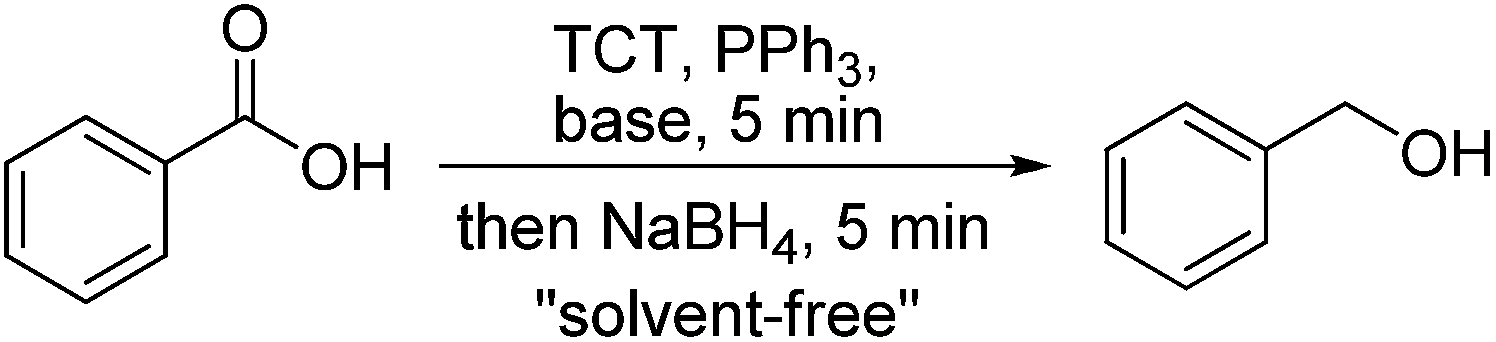
We next turned our attention to investigate substrate compatibility to obtain the scope and generality of the method. The best reaction condition (Table 1, entry 3) was applied with aromatic acids, aliphatic acids, and N-protected α-amino acids.18 For direct comparison, the reaction time again was fixed equally for all substrates without further optimization, except for the less reactive substrates. After product isolation, 1H NMR, 13C NMR and GC-MS data were recorded and compared with those reported in literature to confirm product formation.
According to Table 2, aromatic carboxylic acids especially benzoic acid and its electron-rich derivatives reduced readily to provide the expected alcohols in good to excellent yields (entries 1–6). Only the case of 3-(dimethylamino)benzoic acid, the product was obtained in moderate yield (entry 7). Benzoic acid derivatives containing halogen substituents (Cl or I) gave the corresponding products in slightly lower yields (entries 8–10), while poor results were obtained with the less reactive substrates having strong electron-withdrawing NO2 group (entries 11 and 12). Obviously, longer time is required for activation of the less reactive 4-nitrobenzoic acid since the yield of the alcohol increased with prolonged acid activation step as indicated in parenthesis.
|
||
|---|---|---|
| Entry | Carboxylic acid | % Yield (Ref.) |
| a Unless otherwise specified, a mixture of TCT (0.271 mmol), PPh3 (0.054 mmol), carboxylic acid (0.271 mmol), and K2CO3 (0.406 mmol) was ground for 5 min before adding NaBH4 (0.541 mmol), followed by grinding for further 5 min. The yields in parenthesis were obtained with 10 min acid activation, followed by 5 min reduction. | ||
| 1 | R = C6H5 | 90 (ref. 19a) |
| 2 | R = 3-CH3C6H4 | 91 (ref. 19b) |
| 3 | R = 4-CH3C6H4 | 91 (ref. 19c) |
| 4 | R = 2-CH3OC6H4 | 89 (ref. 19d) |
| 5 | R = 4-CH3OC6H4 | 92 (ref. 19e) |
| 6 | R = 3,4-(CH3O)2C6H3 | 95 (ref. 19f) |
| 7 | R = 3-(CH3)2NC6H4 | 75 (ref. 19g) |
| 8 | R = 2-ClC6H4 | 88 (ref. 19h) |
| 9 | R = 2-IC6H4 | 85 (ref. 19i) |
| 10 | R = 4-ClC6H4 | 89 (ref. 19j) |
| 11 | R = 3-NO2C6H4 | 71 (ref. 19k) |
| 12 | R = 4-NO2C6H4 | 45(70) (ref. 19a) |
| 13 | R = Cinnamyl | 81 (ref. 19l) |
| 14 | R = 1-Naphthylacetyl | 76 (ref. 19m) |
| 15 | R = 5-Phenylvaleryl | 74 (ref. 19n) |
| 16 | Fmoc-Gly-OH | 77(87) (ref. 19o) |
| 17 | Fmoc-Ala-OH | 64(80) (ref. 19p) |
| 18 | Fmoc-Val-OH | 66(83) (ref. 19q) |
| 19 | Fmoc-Ile-OH | 61(78) (ref. 19q) |
| 20 | Z-Phe-OH | 75(84) (ref. 19r) |

For conjugated acid, cinnamic acid (entry 13) was reduced smoothly to give the expected allylic alcohol as the major product along with 20% of the saturated alcohol derived from the competitive C![[double bond, length as m-dash]](https://www.rsc.org/images/entities/char_e001.gif) C reduction based on GC-MS analysis. This result was in consistent with the previously reported works on borohydride reduction with the TCT/NMM system.7b Aliphatic acids including 1-napthylacetic acid and 5-phenylvaleric acid were less reactive than aromatic carboxylic acids and gave the corresponding alcohols in moderate yields (entries 14 and 15).
C reduction based on GC-MS analysis. This result was in consistent with the previously reported works on borohydride reduction with the TCT/NMM system.7b Aliphatic acids including 1-napthylacetic acid and 5-phenylvaleric acid were less reactive than aromatic carboxylic acids and gave the corresponding alcohols in moderate yields (entries 14 and 15).
For N-protected α-amino acids (entries 16–20), the method was less effective possibly due to steric hindrance of these substrates. Amino acids having 9-fluorenylmethyloxycarbonyl (Fmoc) and benzyloxycarbonyl (Z) as the amino protecting groups were reduced to the corresponding amino alcohols in moderate yields without loss of their optical purities indicating no racemization occurred under the applied condition. Upon increasing the time of the first grinding step from 5 min to 10 min, the yields of the corresponding amino alcohols were greatly improved indicating that for the less reactive or steric hindered substrates, the acid activation times need further adjustment to enhance the product yields.
Based on the above results, reaction mechanism for the TCT–PPh3 mediated carboxylic acid activation prior to borohydride reduction was proposed according to Scheme 1. Since the reaction requires 1 equiv. of TCT to achieve high conversion, the reaction is believed to proceed via nucleophilic displacement of one chloride atom of TCT with PPh3 to provide a triazinephosphonium chloride I. This highly reactive intermediate then undergoes rapid substitution with a carboxylic acid to give an acylated triazine II prior to reduction with NaBH4.
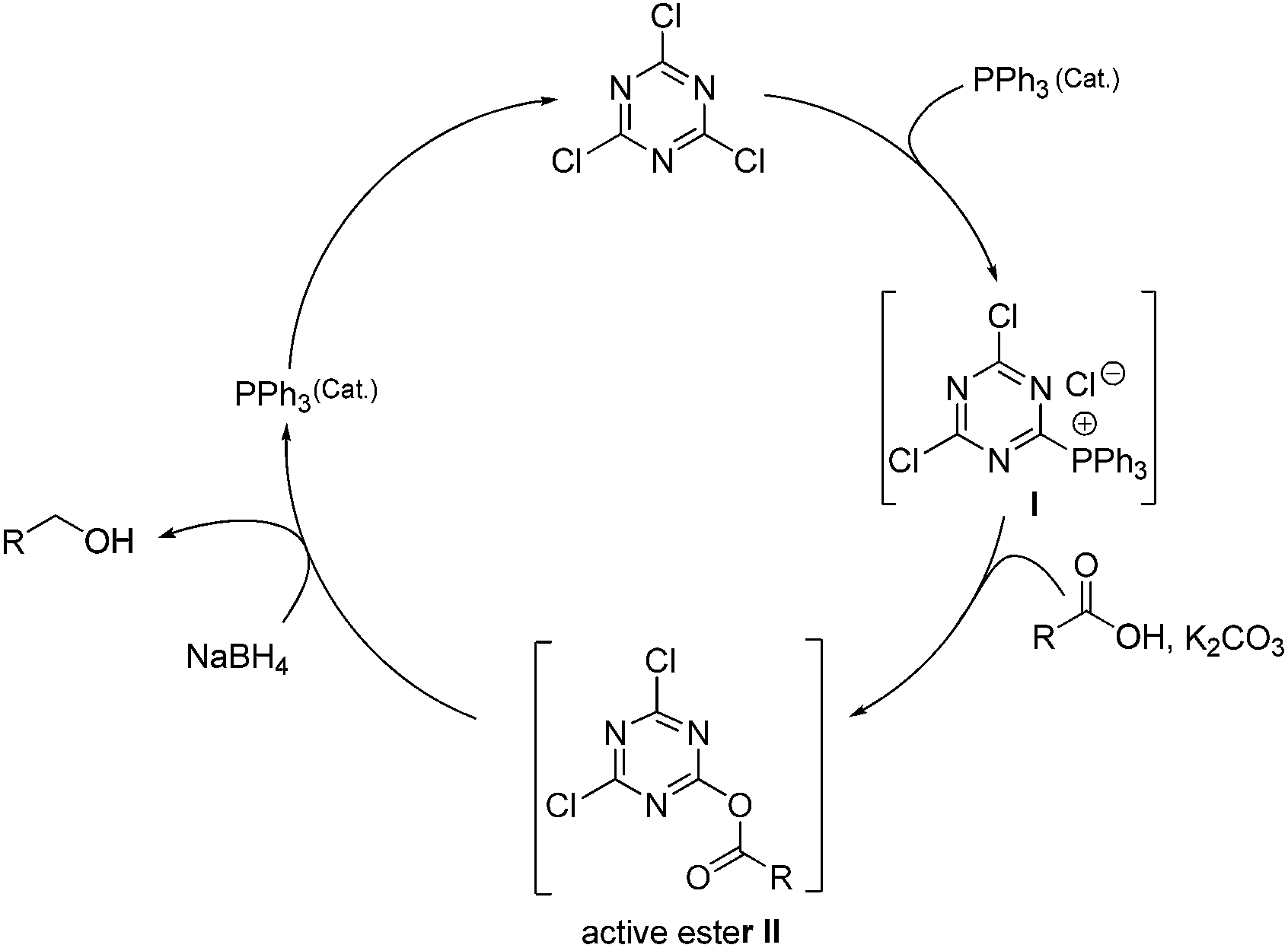 | ||
| Scheme 1 Proposed mechanism for NaBH4 reduction of carboxylic acid mediated by TCT–PPh3. | ||
It is important to note that in contrast to the reduction of carboxylic acids activated by the TCT/NMM system where aliphatic acids were more favorable,7 our system was more effective with aromatic carboxylic acids. This could presumably due to the π–π stacking interactions between the benzene ring of the aromatic acids with those of phosphonium salt I which accelerates the rate of formation of an active ester II.
In summary, this work reported the first solvent-free method for reduction of carboxylic acids to alcohols with NaBH4. Using TCT in combination with catalytic amount of PPh3 as an acid activator, a range of carboxylic acids could be readily reduced to the corresponding alcohols in good to excellent yields within short reaction times. This protocol offers several benefits over the existing methods including the use of inexpensive reagents, reduction of volatile organic solvent with time and energy efficiency. Applications of the developed reagent system on other functional group transformations are currently underway and outcome will be reported shortly.
Acknowledgements
The Center of Excellence for Innovation in Chemistry (PERCH-CIC), the National Research University Project under Thailand's Office of the Higher Education Commission, and the Graduate School, Chiang Mai University are gratefully acknowledged for financial support.Notes and references
- L. Zhenjiang, Synlett, 2005, 182–183 CrossRef CAS PubMed.
- (a) D. Setamdideh, Z. Karimi and A. Alipouramjad, J. Chin. Chem. Soc., 2013, 60, 590–596 CrossRef CAS; (b) M. Mohamadi, D. Setamdideh and B. Khezri, Org. Chem. Int., 2013, 127585 Search PubMed; (c) H. Mahdavi and E. Haghani, Chin. J. Chem., 2008, 26, 333–337 CrossRef CAS; (d) D. Setamdideh and B. Zeynizadeh, Z. Naturforsch., B: Chem. Sci., 2006, 61, 1275–1281 CAS; (e) B. Zeynizadeh and D. Setamdideh, J. Chin. Chem. Soc., 2005, 52, 1179–1184 CAS; (f) B. Zeynizadeh and S. Yahyaei, Z. Naturforsch., B: Chem. Sci., 2004, 59, 704–710 CAS; (g) B. Zeynizadeh and S. Yahyaei, Bull. Korean Chem. Soc., 2003, 24, 1664–1670 CrossRef CAS; (h) B. Tamami and H. Mahdavi, Tetrahedron, 2003, 59, 821–826 CrossRef CAS.
- (a) S.-D. Cho, Y.-D. Park, J.-J. Kim, J. R. Falck and Y.-J. Yoon, Bull. Korean Chem. Soc., 2004, 25, 407–409 CrossRef CAS; (b) E. Papavassilopoulou, P. Christofis, D. Terzoglou and P. Moutevelis-Minakakis, Tetrahedron Lett., 2007, 48, 8323–8325 CrossRef CAS PubMed; (c) M. M. Lakouraj, M. Tajbakhsh and M. S. Mahalli, Monatsh. Chem., 2008, 139, 117–123 CrossRef CAS.
- (a) T. Fujisawa, T. Mori and T. Sato, Chem. Lett., 1983, 835–838 CrossRef CAS; (b) B. T. Cho and N. M. Yoon, Synth. Commun., 1985, 15, 917–924 CrossRef CAS; (c) T. Okawara, N. Ikeda, T. Yamasaki and M. Furukawa, Chem. Pharm. Bull., 1988, 36, 3628–3631 CrossRef CAS; (d) Y. Suseela and M. Periasamy, Tetrahedron, 1992, 48, 371–376 CrossRef CAS; (e) J. W. Simek, T. Tuck and K. C. Bush, J. Chem. Educ., 1997, 74, 107–108 CrossRef CAS; (f) S. J. Zhang, W. X. Hu and H. Q. Chen, Chin. Chem. Lett., 2007, 18, 1463–1465 CrossRef CAS PubMed; (g) Y. Xu and Y. Wei, Synth. Commun., 2010, 40, 3423–3429 CrossRef CAS; (h) G. Nagendra, C. Madhu, T. M. Vishwanatha and V. V. Sureshbabu, Tetrahedron Lett., 2012, 53, 5059–5063 CrossRef CAS PubMed.
- G. Kokotos and C. Noula, J. Org. Chem., 1996, 61, 6994–6996 CrossRef CAS PubMed.
- R. P. McGeary, Tetrahedron Lett., 1998, 39, 3319–3322 CrossRef CAS.
- (a) A. D. Sagar, J. S. Pulle, S. M. Reddy and M. V. Yadav, J. Chem. Pharm. Res., 2011, 3, 1103–1108 CAS; (b) M. Falorni, A. Porcheddu and M. Taddei, Tetrahedron Lett., 1999, 40, 4395–4396 CrossRef CAS.
- S.-H. Hwang, M. A. Blaskovich and H.-O. Kim, Open Org. Chem. J., 2008, 2, 107–109 CAS.
- J. A. Morales-Serna, E. Garcia-Rios, J. Bernal, E. Paleo, R. Gavino and J. Cardenas, Synthesis, 2011, 1375–1382 CAS.
- R. H. Tale, K. M. Patil and S. E. Dapurkar, Tetrahedron Lett., 2003, 44, 3427–3428 CrossRef CAS.
- (a) B. Zeynizadeh and D. Setamdideh, Asian J. Chem., 2009, 21, 3588–3602 CAS; (b) B. T. Cho, S. K. Kang, M. S. Kim, S. R. Ryu and D. K. An, Tetrahedron, 2006, 62, 8164–8168 CrossRef CAS PubMed; (c) H. Shalbaf, Asian J. Chem., 2010, 22, 6761–6764 CAS; (d) B. Zeynizadeh and T. Behyar, J. Braz. Chem. Soc., 2005, 16, 1200–1209 CrossRef CAS PubMed; (e) W.-Y. Liu, Q.-H. Xu and Y.-X. Ma, Org. Prep. Proced. Int., 2000, 32, 596–600 CrossRef CAS; (f) D. Setamdideh, Z. Karimi and F. Rahimi, Orient. J. Chem., 2011, 27, 1621–1634 CAS.
- (a) L. De Luca, G. Giacomelli and M. Taddei, J. Org. Chem., 2001, 66, 2534–2537 CrossRef CAS; (b) B. Bandgar and S. Sawant, Synth. Commun., 2006, 36, 859–864 CrossRef CAS; (c) S. Masala and M. Taddei, Org. Lett., 1999, 1, 1355–1357 CrossRef CAS; (d) H. L. Rayle and L. Fellmeth, Org. Process Res. Dev., 1999, 3, 172–176 CrossRef CAS.
- K. Venkataraman and D. R. Wagle, Tetrahedron Lett., 1979, 3037–3040 CrossRef CAS.
- B. Kolesinska and Z. J. Kaminski, Tetrahedron, 2009, 65, 3573–3576 CrossRef CAS PubMed.
- L. F. Pedrosa, Synlett, 2008, 1581–1582 CrossRef CAS PubMed.
- G. Blotny, Tetrahedron, 2006, 62, 9507–9522 CrossRef CAS PubMed.
- V. A. Stenger, J. Chem. Eng. Data, 1996, 41, 1111–1113 CrossRef CAS.
- General procedure; unless otherwise specified, carboxylic acid (0.271 mmol), TCT (0.271 mmol), PPh3 (0.054 mmol) and K2CO3 (0.406 mmol) were mixed and ground for 5 min during which a few drop of CH2Cl2 was added to aid the grinding. After addition of NaBH4 (0.541 mmol), the mixture was ground for further 5 minute. The crude material was purified by short column chromatography using ethyl acetate/hexane as the eluent to afford pure product. All known products were characterized by 1H- 13C-NMR and GC-MS, and their spectroscopic data were consistent with those reported in the literature.
- (a) L. Ford, F. Atefi, R. D. Singer and P. J. Scammells, Eur. J. Org. Chem., 2011, 942–950 CrossRef CAS; (b) M. M. Mojtahedi, E. Akbarzadeh, R. Sharifi and M. S. Abaee, Org. Lett., 2007, 9, 2791–2793 CrossRef CAS PubMed; (c) L. Koren-Selfridge, H. N. Londino, J. K. Vellucci, B. J. Simmons, C. P. Casey and T. B. Clark, Organometallics, 2009, 28, 2085–2090 CrossRef CAS; (d) M. M. Heravi, N. Z. Ahari, H. A. Oskooie and M. Ghassemzadeh, Phosphorus, Sulfur Silicon Relat. Elem., 2005, 180, 1701–1712 CrossRef CAS; (e) H. Quiroz-Florentino, R. I. Hernandez-Benitez, J. A. Avina, E. Burgueno-Tapia and J. Tamariz, Synthesis, 2011, 1106–1112 CAS; (f) H. Kanho, S. Yaoya, N. Kawahara, T. Nakane, Y. Takase, K. Masuda and M. Kuroyanagi, Chem. Pharm. Bull., 2005, 53, 361–365 CrossRef CAS; (g) J. Cody and C. J. Fahrni, Tetrahedron, 2004, 60, 11099–11107 CrossRef CAS PubMed; (h) N. S. Shaikh, K. Junge and M. Beller, Org. Lett., 2007, 9, 5429–5432 CrossRef CAS PubMed; (i) D. Dolenc and B. Plesnicar, J. Org. Chem., 2006, 71, 8028–8036 CrossRef CAS PubMed; (j) R. Cano, M. Yus and D. J. Ramon, Tetrahedron, 2011, 67, 8079–8085 CrossRef CAS PubMed; (k) B. Basu, B. Mandal, S. Das, P. Das and A. K. Nanda, Beilstein J. Org. Chem., 2008, 4, 53 Search PubMed; (l) M. L. Clarke, M. B. Diaz-Valenzuela and A. M. Z. Slawin, Organometallics, 2007, 26, 16–19 CrossRef CAS; (m) L.-C. Li, J.-X. Jiang, J. Ren, Y. Ren, C. U. Pittman Jr and H.-J. Zhu, Eur. J. Org. Chem., 2006, 1981–1990 CrossRef CAS; (n) C. P. Owen, I. Shahid, M. S. Olusanjo, C. H. Patel, S. Dhanani and S. Ahmed, J. Steroid Biochem. Mol. Biol., 2008, 111, 117–127 CrossRef CAS PubMed; (o) Y. Harayama, M. Yoshida, D. Kamimura, Y. Wada and Y. Kita, Chem.–Eur. J., 2006, 12, 4893–4899 CrossRef CAS PubMed; (p) H. S. Lalithamba and V. V. Sureshbabu, Indian J. Chem., Sect. B: Org. Chem. Incl. Med. Chem., 2010, 49B, 1372–1378 CAS; (q) V. V. S. Babu, K. Sudarshan and N. S. Sudarshan, Indian J. Chem., Sect. B: Org. Chem. Incl. Med. Chem., 2006, 45B, 1880–1886 CAS; (r) P. S. Kumar, G. D. K. Kumar and S. Baskaran, Eur. J. Org. Chem., 2008, 6063–6067 CrossRef CAS.
Footnote |
| † Electronic supplementary information (ESI) available: Experimental procedure and spectroscopic data. See DOI: 10.1039/c4ra08643k |
| This journal is © The Royal Society of Chemistry 2014 |