Yongfeng Huang,
Pengju Pan*,
Guorong Shan and
Yongzhong Bao
State Key Laboratory of Chemical Engineering, Department of Chemical and Biological Engineering, Zhejiang University, 38 Zheda Road, Hangzhou 310027, China. E-mail: panpengju@zju.edu.cn; Tel: +86-571-87951334
First published on 15th September 2014
Polylactide-b-poly(ethylene-co-butylene)-b-polylactide (PLA–PEB–PLA) triblock copolymers containing PLA segments with different stereo-regularities such as poly(L-lactide) (PLLA), poly(D-lactide) (PDLA), and poly(D,L-lactide) (PDLLA) were prepared via the ring-opening polymerization of various lactides using α,ω-dihydroxy PEB as the macromolecular initiator. Molecular weight and chemical composition of copolymers were adjusted by changing the monomer-to-initiator ratio. Morphological, thermal, mechanical, and shape memory behaviors of PLA–PEB–PLA were explored. As confirmed by small angle X-ray scattering (SAXS) and transmission electrical microscopy (TEM), PLA–PEB–PLA adopted ordered microphase-separated morphology, depending on the copolymer composition and crystallizability of PLA segments. Spherical, hexagonally packed cylindrical, and lamellar structures were observed in PLA–PEB–PLA upon increasing the volume fraction of PLA. However, the morphological order was diminished in PLLA–PEB–PLLA/PDLA–PEB–PDLA enantiomeric blends, due to the preferential stereocomplexation of PLLA and PDLA segments before microphase separation. PLA–PEB–PLA showed the properties of thermoplastic elastomers. Their Young's modulus and tensile strength increased while the strain at break decreased upon increasing the fraction of PLA hard segments or with the crystallization or stereocomplexation of PLA domains. Interestingly, PLA–PEB–PLA elastomers showed shape memory behavior, which could be controlled by the crystallizability of PLA hard segments.
Even though PLA has relatively high mechanical strength and modulus, it is too brittle and subject to break at a low strain. Therefore, toughening of PLA is frequently required in practical applications.7 A common approach to improve the toughness of polymer is the controlled incorporation of other component in polymerization, for example, block copolymerization. Many studies have demonstrated that the incorporation of soft segments is effective to improve the toughness of PLA.8–12 Particularly, ABA triblock copolymers, in which A and B blocks are incompatible and microphase-separated, have improved physical properties (e.g., toughness) and can be used as thermoplastic elastomers (TPEs). The end-block A is a hard, semicrystalline or high Tg thermoplastic, while the midblock B is a soft, rubbery, and low Tg polymer. Because the amorphous, racemic PLA has relatively high Tg and the enantiopure PLA is semicrystalline, they are ideal candidates used as the end-blocks of TPEs.13–24 A lot of soft midblocks such as polyisobutylene,13 poly(dimethylsiloxane),14 poly(1,3-trimethylene carbonate),15 poly(1,5-dioxepan-2-one),16 polyisoprene (PI),18 polymenthide (PM),19,20 and poly(6-methyl-ε-caprolactone) (PMCL)21 have been incorporated into PLA to prepare TPEs, which were demonstrated to be highly effective to overcome the brittleness of PLA. Furthermore, the physical properties of TPEs can be readily modulated through varying the tacticity, crystallizability, and crystalline polymorphs of PLA blocks.15,20
Besides the chemical structures, microphase-separated morphology has been a critical factor governing the physical properties of ABA-type TPEs. At the specific copolymer composition, microphase separation of ABA triblock copolymer results in hard microdomains of A blocks behaving as the physical crosslinks in B soft matrix. This microphase-separated morphology is highly desired for high-performance TPEs. The volume fraction f and the production (χN) of Flory–Huggins parameter χ between blocks and degree of polymerization (N) are predominant factors in determining the microphase separation of block copolymers.25 However, the microphase separation becomes much more complicated when the crystallizable blocks are present.26 In this case, either break-out or confined crystallization of polymer segments takes place during microphase separation, depending on the strengths of crystallization and microphase-separation driving forces. As far as the block copolymers of PLA are concerned, the stereocomplex crystallization between enantiopure low-molecular-weight PLLA and PDLA has stronger driving force than their individual homo-crystallizations, because of the H-bond interactions between PLLA and PDLA segments.27–29 Therefore, the homo and stereocomplex crystallizations of PLA will alter the microstructures and morphology of block copolymers, further leading to the change of physical properties.
In this article, we selected poly(ethylene-co-butylene) (PEB) as the soft midblock and synthesized PLA–PEB–PLA TPEs from the ring-opening polymerization (ROP) of lactide using α,ω-dihydroxy telechelic PEB as a macromolecular initiator. Tacticity and stereostructure of PLA blocks were controlled by the types of lactides. Chemical structure, thermal, morphological, mechanical, and shape memory behaviors of PLA–PEB–PLA copolymers were investigated using 1H NMR spectroscopy, differential scanning calorimetry (DSC), wide-angle X-ray diffraction (WAXD), small-angle X-ray scattering (SAXS), transmission electronic microscopy (TEM), atomic force microscopy (AFM), dynamic mechanical analysis (DMA), and tensile test. Roles of homo and stereocomplex crystallizations of PLA hard blocks on the microphase-separated morphology and physical performances of copolymers were examined and discussed.
| Triblocka | Yield (%) | Mnb (kg mol−1) | Mnc (kg mol−1) | PDIc | mPLAd (%) | fPLAe (%) | Tg,PEB (°C) | Tg,PLA (°C) |
|---|---|---|---|---|---|---|---|---|
| a The numerals denote the Mn (in kg mol−1) of corresponding PLA and PEB blocks derived from NMR data.b Mn measured by 1H NMR.c Mn and polydispersity index (PDI) measured by GPC.d Mass fractions of PLA in copolymers derived from 1H NMR.e Volume fractions of PLA in copolymers derived from 1H NMR. | ||||||||
| DL–EB–DL 6.6–25–6.6 | 85 | 38.2 | 49.1 | 1.73 | 35 | 26 | −48.2 | 45.2 |
| DL–EB–DL 8.2–25–8.2 | 77 | 41.4 | 52.3 | 1.64 | 40 | 31 | −46.4 | 47.7 |
| DL–EB–DL 16–25–16 | 73 | 57.0 | 56.4 | 1.54 | 56 | 47 | −48.1 | 47.8 |
| L–EB–L 3.6–25–3.6 | 85 | 32.2 | 42.5 | 1.72 | 22 | 16 | −47.4 | 50.4 |
| L–EB–L 6.5–25–6.5 | 87 | 38.0 | 48.2 | 1.58 | 34 | 26 | −47.0 | 52.8 |
| L–EB–L 11–25–11 | 92 | 47.0 | 52.1 | 1.54 | 46 | 37 | −47.7 | 54.1 |
| L–EB–L 15–25–15 | 83 | 55.0 | 56.6 | 1.37 | 55 | 45 | −47.8 | 55.5 |
| D–EB–D 3.4–25–3.4 | 82 | 31.8 | 41.0 | 1.73 | 21 | 16 | −47.8 | 50.5 |
| D–EB–D 6.1–25–6.1 | 87 | 37.2 | 43.2 | 1.56 | 33 | 25 | −47.4 | 52.0 |
| D–EB–D 10–25–10 | 78 | 45.0 | 47.5 | 1.50 | 44 | 35 | −48.4 | 52.9 |
| D–EB–D 15–25–15 | 81 | 55.0 | 54.2 | 1.38 | 54 | 44 | −47.2 | 55.2 |
| L–EB–L 4.3–15–4.3 | 90 | 23.6 | 29.3 | 1.75 | 36 | 28 | −47.2 | 52.3 |
| L–EB–L 10–15–10 | 87 | 35.0 | 42.0 | 1.31 | 57 | 48 | −48.4 | 55.3 |
| D–EB–D 4.5–15–4.5 | 89 | 24.0 | 32.1 | 1.64 | 38 | 29 | −48.7 | 51.6 |
| D–EB–D 11–15–11 | 89 | 37.0 | 45.3 | 1.31 | 59 | 49 | −47.8 | 52.8 |
Copolymer film with a thickness of 0.6–0.7 mm was obtained by casting its chloroform solutions (5 wt%) on a PTFE dish, followed by evaporation of solvent at 25 °C for 24 h. The film was further dried at 70 °C in vacuo for 24 h. For the L–EB–L/D–EB–D blend film, solutions of L–EB–L and D–EB–D with the similar compositions were mixed in 1
:
1 (wt%) ratio before casting.
Molecular weight and its distribution were measured on a Waters gel permeation chromatography (GPC, Waters Co., Milford, MA, USA) consisted of a Waters degasser, a Waters 1515 isocratic HPLC pump, a Waters 2414 RI detector, and two PL-gel mix C columns. The temperature of column was 30 °C and THF was used as the mobile phase. GPC was calibrated by the polystyrene standards.
Thermal behavior of copolymer was determined on a NETZSCH 214 Polyma DSC (NETZSCH, Germany) equipped with an IC70 intracooler. Sample was loaded into an aluminum DSC pans and initially heated from −70 to 190 °C (or 240 °C) at 10 °C min−1 and held at this temperature for 2 min to erase the thermal history. It was then fast cooled to −70 °C at 100 °C min−1, followed by a reheating to 190 (or 240 °C) at 10 °C min−1 to observe the cold-crystallization and melting behavior. Glass transition temperature (Tg) was obtained from the second heating process.
WAXD and SAXS were measured on the beamline BL16B1 in Shanghai Synchrotron Radiation Facility (SSRF). The wavelength of radiation source is 0.124 nm. The sample-to-detector distances were 0.13 and 2.5 m for WAXD and SAXS measurements, respectively. Scattering patterns were collected by a Rayonix SX-165 CCD detector (Rayonix, Illinois, USA) with a resolution of 2048 × 2048 pixels and a pixel size of 80 × 80 μm2 at room temperature. All the data was corrected from the background and air scattering. The acquisition times in WAXD and SAXS measurements were 30 and 60 s, respectively. Two-dimensional (2D) data was converted into the one-dimensional profile by circularly averaging with a Fit2D software.
TEM images were obtained on a JEM-1230 TEM instrument (JEOL, Tokyo, Japan) operated at an acceleration voltage of 80 kV. The sample was cryo-microtomed at −90 °C on a Leica EM UC7 ultramicrotome (Leica, Germany) and exposed to OsO4 vapors for 1 h at room temperature before measurement.
Viscoelastic properties of copolymers were measured on a DMA (Q800, TA, USA) at a frequency of 5 Hz. The temperature sweep was taken at a heating rate of 3 °C min−1 from −100 to 230 °C. Rectangular sample with a dimension of 30 × 6.3 × 0.6 mm3 was used for measurement.
Uniaxial tensile tests were conducted on a SANS electronic universal testing machine at room temperature. Dumbbell specimen with a length of 50 mm, cross-section width of 4.0 mm, and thinness of ∼0.6 mm was cut from the cast film. The crosshead speed of tensile test is 20 mm min−1. Data analysis was based on at least five measurements on each sample performed at the same conditions.
![]() | ||
| Fig. 1 1H NMR spectra of PEB-3.6k, PEB-25k, and PLA–PEB–PLA in CDCl3. The insets showed enlarged spectrum in 3.4–4.4 ppm. | ||
PLA–PEB–PLA copolymers were synthesized by the ROP of lactide using α,ω-dihydroxyl PEB as the macroinitiator. Copolymer composition and molecular weight were adjusted through varying the lactide-to-macroinitiator feed ratio. ROP of lactide showed relatively high yield (Table 1). The resonance peaks corresponding to the methyl, methine, and terminal methine protons of PLA are seen at ∼1.5 (peak k), 5.1 (peak l), and 4.3 ppm (peak m) in the 1H NMR spectrum of PLA–PEB–PLA (Fig. 1), respectively.34 In the triblock copolymer, the chemical shifts attributed to PEB block were essentially the same as those of PEB macroinitiator. After ROP, the resonance peak for CH2 proton of PEB macroinitiator linked to the terminal hydroxyl group (peak d of PEB-25k) shifted from 3.65 to 4.06 ppm (peak d of PLA–PEB–PLA). The molecular weights of triblock copolymers were measured by GPC and were also calculated by comparing NMR peak intensities of methyl proton of PEB block and methine proton of PLA block (Table 1). Both the molecular weights measured from GPC and NMR increased and its polydispersity index decreased with increasing the PLA block length. These results proved that PLA–PEB–PLA triblock copolymers were successful synthesized.
![]() | ||
| Fig. 2 DSC heating curves for solvent-cast samples of (a) PLA–PEB–PLA, PLLA, PEB and (b) PLLA–PEB–PLLA/PDLA–PEB–PDLA 1/1 blends. | ||
Upon heating of melt-quenched samples (Fig. 3a), all the copolymers showed two different Tgs in −47 to −49 and 45–55 °C, attributed to the PEB- and PLA-rich domains, respectively. Tg of PEB-rich domain was relatively invariant over the composition and molecular weight. However, Tg of PLA-rich domain increased with increasing the length of PLA block (Table 1), in agreement with the results of PLA homopolymers.36 The copolymers bearing PDLLA blocks had lower Tg than those containing enantiopure PLLA or PDLA blocks, because of the amorphous characteristics of PDLLA.37
![]() | ||
| Fig. 3 DSC heating curves for melt-quenched samples of (a) PLA–PEB–PLA, PLLA, PEB and (b) PLLA–PEB–PLLA/PDLA–PEB–PDLA 1/1 blends. | ||
Crystallization behavior of melt-quenched copolymers strongly depended on the molecular weight. Even though the PLA homopolymers with lower molecular weights can crystallize faster,36 no prominent cold-crystallization and melting was observed for the copolymers or enantiomeric blends containing the shorter PLLA or PDLA blocks such as L–EB–L 6.5–25–6.5, D–EB–D 6.1–25–6.1, and L–EB–L 6.5–25–6.5/D–EB–D 6.1–25–6.1 blend (Fig. 3). Confinement and steric effects of PEB domains on the crystallization of PLA blocks could be responsible for this behavior. For the copolymers or enantiomeric blends bearing the longer PLLA or PDLA blocks, a cold-crystallization exotherm was observed between the Tg and melting temperature (Tm) of PLA (Fig. 3), in agreement with the result of PLLA homopolymer. Similar to the solvent-cast enantiomeric blends, PLLA/PDLA stereocomplex crystallites with the higher Tm were exclusively generated during the heating of melt-quenched enantiomeric blends.
Crystalline structure of PLA–PEB–PLA and their enantiomeric blends were examined by WAXD (Fig. 4 and S1†). DL–EB–DL copolymers did not show any diffraction peak in WAXD patterns. WAXD patterns of L–EB–L and D–EB–D copolymers were essentially the same as that of PLLA homopolymer. L–EB–L and D–EB–D copolymers formed the α-form homocrystallites and the relative intensity of diffraction peaks increased with increasing the PLA block length (Fig. 4a and S1a†). It is notable that the used X-ray had a wavelength of 0.124 nm, which was different from the conventional X-ray (0.154 nm). Therefore, the Bragg angles of WAXD peaks were different from the literatures,36 while the calculated lattice dimensions were the same. The enantiomeric L–EB–L/D–EB–D blends just exhibited diffractions of stereocomplex crystallites in both solvent casting (Fig. 4b) and melt crystallization (Fig. S1b†). This is consistent with the reports of Tsuji et al. that the stereocomplex crystallization is preferential in the low-molecular-weight PLLA/PDLA blends, regardless of the crystallization conditions.38,39
![]() | ||
| Fig. 5 SAXS patterns of (a) solvent-cast and (b) melt-quenched PLA–PEB–PLA copolymers and PLLA homopolymer. | ||
On the basis of the principal scattering peak, average spacing of microphase-separated domains (D) was evaluated by D = 2π/q*. Morphological behavior of PLA–PEB–PLA is influenced by its preparation procedure and thermal history. Although most of the solvent-cast and melt-quenched samples showed the similar SAXS patterns and D values (Table 2), several features should be addressed by comparing their scattering patterns (Fig. 5). First, the melt-quenched and solvent-cast DL–EB–DL copolymers exhibited almost the same SAXS profiles and D values, since PDLLA was non-crystallizable and remained the similar amorphous structures in these two kinds of samples. Second, the principal reflections were not observed in the solvent-cast L–EB–L copolymers bearing longer PLLA blocks (e.g., L–EB–L 11–25–11 and L–EB–L 15–25–15) (Fig. 5a), while they could be clearly seen after melt-quenching (Fig. 5b). Third, solvent-cast L–EB–L 3.6–25–3.6 sample showed a shoulder at q = 0.188 nm−1 compared to its melt-quenched analog, indicating the presence of hexagonally packed cylinders of PLLA in a matrix of PEB with a domain spacing of 33.4 nm. All of these results suggested that the crystallization of PLA segments in solvent casting decreased the morphological orderness. During the evaporation of solvent, the crystallization of PLA segments and microphase separation of PLA and PEB blocks occurred simultaneously. When the crystallization driving force is stronger than that of microphase separation, the break-out crystallization of crystallizable segments will span different microdomains and destroy the microphase-separated morphology.26
| Sample | Morphologya | Melt quenched | Solvent cast | ||
|---|---|---|---|---|---|
| q* (nm−1) | Db (nm) | q* (nm−1) | Db (nm) | ||
| a Morphology was evaluated from the SAXS data.b Domain spacing, D = 2π/q*. | |||||
| DL–EB–DL 6.6–25–6.6 | Cylindrical | 0.187 | 33.5 | 0.185 | 33.9 |
| DL–EB–DL 16–25–16 | Cylindrical | 0.174 | 36.1 | 0.171 | 36.7 |
| L–EB–L 3.6–25–3.6 | Spherical | 0.293 | 21.4 | 0.286, 0.188 | 21.9, 33.4 |
| L–EB–L 6.5–25–6.5 | Cylindrical | 0.184 | 34.1 | 0.183 | 34.3 |
| L–EB–L 11–25–11 | Lamellar | 0.143 | 43.9 | — | — |
| L–EB–L 15–25–15 | Lamellar | 0.111 | 56.6 | — | — |
| L–EB–L 4.3–15–4.3 | Cylindrical | 0.285 | 22.0 | 0.263 | 23.9 |
| L–EB–L/D–EB–D blend | Disorder | — | — | — | — |
Morphologies of PLA–PEB–PLA copolymers were determined by comparing the followed reflections with the principal reflection using the ratio q/q*. Volume fraction of blocks is a predominant factor in determining the ordered structure of microphase separation. Sample of L–EB–L 3.6–25–3.6 with a low fPLA (0.16) mainly corresponded to the spherical morphology, in which PLA spheres dispersed in the amorphous PEB matrix (Fig. 5b). As the fPLA increased to above 0.37 (e.g., L–EB–L 11–25–11 and L–EB–L 15–25–15), broad scattering peaks at 2, 3, and 4q* were observed in SAXS profiles, indicating the lamellar morphology.41 The copolymers with a medium fPLA (e.g., L–EB–L 6.5–25–6.5, L–EB–L 4.3–15–4.3, and DL–EB–DL 6.6–25–6.6) showed the higher-ordered reflections at √3, √4, and √7q*, consistent with the hexagonally packed cylindrical morphology of PLA in PEB matrix.41,42
Generally, the domain spacing of PLA–PEB–PLA increased with increasing fPLA (Table 2). As fPLA increased from 0.16 (L–EB–L 3.6–25–3.6) to 0.45 (L–EB–L 15–25–15), the domain spacing of melt-quenched L–EB–L increased from 21.4 to 56.6 nm, in agreement with those of PLA–PI–PLA copolymers with the similar fPLA values.18 Even though L–EB–L 6.5–25–6.5 and L–EB–L 4.3–15–4.3 samples had the similar fPLA, the domain spacing of the former is larger, due to the increased molecular weight and segregation length.
Notably, even though the similar copolymer compositions, the DL–EB–DL 16–25–16 (fPLA = 0.47) sample adopted a hexagonally packed cylindrical morphology, while the L–EB–L 15–25–15 sample (fPLA = 0.45) formed a lamellar morphology (Fig. 5 and Table 2). This may be due to the different compatibility of PDLLA/PEB and PLLA/PEB pairs. Generally, the semicrystalline PLLA segments would have worse compatibility with PEB than amorphous PDLLA segments, resulting in the larger χN parameter of L–EB–L than DL–EB–DL under the similar molecular weights. Therefore, lamellar morphology would be favored for L–EB–L copolymer.25 On the other hand, the crystallization of PLLA blocks in L–EB–L copolymer can also drive the preferential separation into a lamellar structure.26
Microphase-separated morphologies of PLA–PEB–PLA copolymers were also confirmed by TEM and AFM (Fig. 7 and 8). Both TEM and AFM results indicated that the copolymers with smaller fPLA (e.g., L–EB–L 3.6–25–3.6) formed the spherical morphology, even though the relatively broad distribution of sphere size. TEM and AFM images of L–EB–L 11–25–11 and L–EB–L 15–25–15 exhibited stripes of alternating contrast or finger print region, which could correspond to the lamellae. The light region of stripes may correspond to the crystalline PLLA domains, while the stained dark regions presumably correspond to the PEB and amorphous fraction of PLA.
Morphological behavior of PLA–PEB–PLA is strongly affected by stereocomplexation of PLLA and PDLA blocks. We cannot observe the distinct principal reflections and other ordered oscillations at higher scattering angle in the SAXS patterns of L–EB–L/D–EB–D blends (Fig. 6), particularly for the solvent-casting samples. This is much different from those observed for L–EB–L and DL–EB–DL (Fig. 5). Even though the melt-quenched blends exhibited several broad scattering peaks, these scattering peaks could not be assigned to a specific ordered structures. With combination of TEM and AFM data (Fig. 7 and 8), we concluded that the microphase-separated morphology of enantiomeric blends lacked of long-range orderness, which was likely due to the preferential stereocomplexation between PLLA and PDLA segments. Because of the H-bond interactions between PLLA and PDLA segments,27–29 the driving force of stereocomplexation would overwhelm that of microphase separation. Previous studies have demonstrated that the stereocomplexation can lead to the aggregation of PLLA/PDLA chains from the solution state.43 Therefore, stereocomplexation would precede the microphase separation upon solvent evaporation when casting the L–EB–L/D–EB–D blends. The stereocomplex crystallites would interrupt the microphase separation and prevent the enantiomeric blends from forming long-range ordered morphology. As seen in Fig. 6, the melt-quenched samples showed more distinct principal reflections than those of solvent-cast sample, indicating the former had relatively more ordered microphase-separated structure. This is due to the fact that the PLLA/PDLA stereocomplex crystallization was partially prevented in the melt-quenching process.
| Sample | Tensile strength (MPa) | Young's modulus (MPa) | Strain at break (%) |
|---|---|---|---|
| DL–EB–DL 6.6–25–6.6 | 1.45 ± 0.12 | 2.44 ± 0.19 | 394 ± 32 |
| DL–EB–DL 8.2–25–8.2 | 1.56 ± 0.09 | 3.76 ± 0.18 | 284 ± 19 |
| DL–EB–DL 16–25–16 | 1.60 ± 0.05 | 4.25 ± 0.40 | 274 ± 21 |
| L–EB–L 3.6–25–3.6 | 0.80 ± 0.04 | 2.53 ± 0.25 | 242 ± 12 |
| L–EB–L 6.5–25–6.5 | 2.34 ± 0.09 | 7.62 ± 0.70 | 291 ± 19 |
| L–EB–L 11–25–11 | 2.98 ± 0.11 | 13.4 ± 0.99 | 215 ± 18 |
| L–EB–L 15–25–15 | 6.48 ± 0.28 | 84.1 ± 4.99 | 97 ± 13 |
| L–EB–L 4.3–15–4.3 | 2.78 ± 0.09 | 8.52 ± 0.41 | 224 ± 7 |
| L–EB–L 3.6–25–3.6/D–EB–D 3.4–25–3.4 | 1.47 ± 0.01 | 5.89 ± 0.35 | 144 ± 6 |
| L–EB–L 6.5–25–6.5/D–EB–D 6.1–25–6.1 | 3.34 ± 0.12 | 14.3 ± 0.75 | 126 ± 8 |
| L–EB–L 4.3–15–4.3/D–EB–D 4.5–15–4.5 | 3.63 ± 0.06 | 12.6 ± 0.71 | 126 ± 10 |
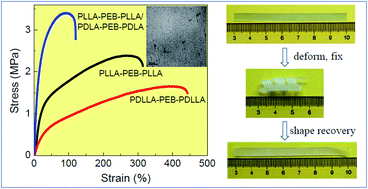
Mechanical properties of triblock copolymers were strongly dependent on the copolymer composition and crystalline structure of PLA blocks (Fig. 9 and Table 3). For the copolymers containing the same PEB block length, the tensile strength and Young's modulus increased while the strain at break generally decreased as the fPLA increased (Fig. 9 and S2†). In the case of L–EB–L copolymers, increasing the PLLA content from 34 (L–EB–L 6.5–25–6.5) to 55 wt% (L–EB–L 15–25–15) led to a 10-fold increase of modulus, a 177% increase of tensile strength, while a 67% decrease of the strain at break. For the triblock copolymers with the similar PEB/PLLA ratio (e.g., L–EB–L 6.5–25–6.5 and L–EB–L 4.3–15–4.3), the tensile strength and Young's modulus increased while the strain at break decreased with the decrease of PEB block length.
Under the similar copolymer compositions, the triblock copolymers exhibited larger strain at break, smaller strength and modulus, and higher transparency when the PEB soft block was connected to the PDLLA glassy end blocks (Fig. 9 and S4†). This may be due to the more ductility of PDLLA hard domains than that of PLLA. The best ductility was shown with the strain at break of 394% for DL–EB–DL 6.6–25–6.6 sample, meeting the mechanical properties of TPEs. The good mechanical behavior of PLA–PEB–PLA was attributed to the alternating structure comprised of hard PLA and soft rubbery PEB blocks. The triblock copolymers assembled into the hard and soft domains in microphase separation. The hard block domains acted as physical cross-linking and provided higher strength and modulus, while the soft domains afforded the enhanced ductility. Notably, the strain at break of PLA–PEB–PLA triblock copolymers was lower than that of several PLA-containing TPEs reported in literatures such as PLA–PM–PLA20 and PLA–PMCL–PLA.21 This is likely due to the low molecular weight, broad molecular weight distribution and relatively stiffness of PEB midblock used in this work.
Stereocomplexation of L–EB–L/D–EB–D blend led to different mechanical properties of triblock copolymer. Relative to the DL–EB–DL and L–EB–L copolymers, the 1/1 L–EB–L/D–EB–D blends were difficult to form uniform films in solution casting. Only the blends with smaller PLA fractions (e.g., L–EB–L 3.6–25–3.6/D–EB–D 3.4–25–3.4 and L–EB–L 6.5–25–6.5/D–EB–D 6.1–25–6.1) formed the integrated films, while the solution-cast films of copolymers with higher PLA fractions (e.g., L–EB–L 11–25–11/D–EB–D 10–25–10 and L–EB–L 15–25–15/D–EB–D 15–25–15) ruptured during solvent evaporation (Fig. S4†). This demonstrated that stereocomplexation significantly increased the brittleness of materials. The enantiomeric blends had higher modulus and tensile strength while smaller strain at break than the DL–EB–DL and L–EB–L copolymers with similar compositions. An increase in tensile strength of about 43% and an enhancement in Young's modulus of 88% were observed for the L–EB–L 6.5–25–6.5/D–EB–D 6.1–25–6.1 blend when compared to the L–EB–L 6.5–25–6.5 copolymer. The higher tensile strength and modulus of stereocomplex crystallites than homo-crystalline or amorphous PLA were responsible for this behavior.45
Fig. 10 showed the representative storage modulus and loss tangent (tan
δ) curves for PLA–PEB–PLA and their enantiomeric blends. We observed the abrupt decrease of storage modulus in the temperature ranges of −50 to −10, 50–90, and >100 °C, corresponding to the glass transitions of PEB, PLA, and melting or softening of PLA, respectively. Two relaxation peaks were detected in the tan
δ curves at −50–−10 and 50–90 °C of triblock copolymers, ascribed to the glass transition of PEB and PLA blocks, respectively. Notably, the glass transition of PLA in L–EB–L/D–EB–D blends are less obvious than those observed in DL–EB–DL and L–EB–L (Fig. 10, S5 and S6†), which may be due to the high degree of crystallinity of PLLA/PDLA stereocomplex crystallites. The temperatures corresponding to the glass transition peak of PEB segments changed little with varying the PLLA content, indicating that the mobility of soft block was not influenced by the restriction imposed by the hard phase. DMA curves of triblock copolymers varied with the copolymer composition and crystalline structure of PLA segments. Analogous to the results of tensile test, increasing the content of PLA hard segments resulted in an enhancement of storage modulus (Fig. 10, S5 and S6†). Compared to the copolymers with amorphous hard block, crystallization of PLA blocks increased the storage modulus and this increase is more remarkable for the stereocomplex crystallized L–EB–L/D–EB–D blends.
![]() | ||
Fig. 10 Representative DMA curves of (a) storage modulus and (b) tan δ as a function of temperature for PLA–PEB–PLAs and their enantiomeric blends. | ||
![]() | ||
| Fig. 11 Shape memory properties of PLA–PEB–PLA. Left: permanent shape; middle: temporary shape; right: recovered permanent shape. | ||
In PLA–PEB–PLA copolymers, the hard phase formed from PLA segments provided the mechanical strength for the material and was also responsible for the fixation of permanent shape. The change of flexibility of PLA segments above the transition temperature (Tg of PLA) accounted for the shape memory effect of triblock copolymers. The glass transition of PLA in amorphous region was responsible for the shape memory ability of PLA–PEB–PLA copolymers.46,47 In the case of DL–EB–DL, the amorphous PDLLA segments showed entropy elasticity with heating to the deformation temperature above Tg. The entropy increased and decreased at the same quantity during the shape memory, so the amorphous segments would lead the material recovering to its original shape.48 Because the crystallization of PLLA segments decreased the amount of polymer chains in the amorphous glassy regions, the shape memory ability of L–EB–L copolymers was diminished with the crystallization of PLLA blocks.
Footnote |
| † Electronic supplementary information (ESI) available: Figures showing WAXD patterns, transparency, tensile stress–strain curves, DMA profiles, and shape recovery ability of PLA–PEB–PLA. See DOI: 10.1039/c4ra08612k |
| This journal is © The Royal Society of Chemistry 2014 |