
DOI:
10.1039/C4RA08481K
(Paper)
RSC Adv., 2014,
4, 53411-53418
Peptide-modified conducting polymer as a biofunctional surface: monitoring of cell adhesion and proliferation†
Received
11th August 2014
, Accepted 7th October 2014
First published on 7th October 2014
Abstract
Here, we report the electropolymerization of 3-(2,5-di(thiophen-2-yl)-1H-pyrrol-1-yl)aniline monomer on indium tin oxide (ITO) glass and its use as a coating material for cell culture applications. Functional amino groups on the conducting polymer provide post-modification of the surface with the arginylglycylaspartic acid (RGD) peptide via EDC chemistry. Scanning electron microscopy, atomic force microscopy, and contact angle and surface conductivity measurements were carried out for the surface characterization. The peptide-conjugated surface was tested for adhesion and proliferation of several cell lines such as monkey kidney epithelial (Vero), human neuroblastoma (SH-SY5Y), and human immortalized skin keratinocyte (HaCaT). These cells were cultured on RGD-modified, polymer-coated ITO glass as well as conventional polystyrene surfaces for comparison. The data indicate that the RGD-modified surfaces exhibited better cell adhesion and proliferation among all surfaces compared. Cell imaging studies up to 72 h in length were performed on these surfaces using different microscopy techniques. Therefore, the novel biofunctional substrate is a promising candidate for further studies such as monitoring the effects of drugs and chemicals on cellular viability and morphology as well as cell-culture-on-a-chip applications.
Introduction
The mechanisms of life and their effects on disease form the basis of biological research. Due to the dynamic nature of biological organization, the monitoring of living cells and the effects of drugs and chemicals on mammalian cells has essential importance. In recent years, lab-on-a-chip (LOC) systems have been introduced to monitor cellular activities and morphology changes quickly and accurately. These systems have many different advantages such as miniaturization, increased sensitivity, high throughput screening capability, and reduced cost.1 Because the lab-on-a-chip is a reliable candidate for monitoring living cells, an enormous amount of research has been conducted for designing functional surfaces with increased sensitivity.2,3
Polymers have been preferred for use as a surface material for many years, owing to their modification capabilities with different side groups. Examples of polymers used as surface materials include polystyrene, polypyrole, polyaniline, and polythiophen.4–6 Conducting polymers are promising materials for tissue engineering and electrochemical-based bioanalytical systems due to their alterable physical, chemical, and electrical properties.7,8 Electrochemically deposited polymers are advantageous because their thickness and morphological properties can be controlled by changing the applied voltage or current.9–13 Up to now, a number of strategies have been developed to obtain increased biocompatibility of conducting polymers. One of them is to modify these polymers with several bioactive molecules such as enzymes, nucleic acids, polypeptides, and antibodies in order to increase biocompatibility and selectivity.14–19
Cell adhesion, which occurs for anchorage-dependent cells before various events such as cell proliferation, cell migration, and differentiated cellular function, is a very important step for microarray platforms, development of miniaturized bioanalytical systems, and cell-substrate platforms for tissue engineering applications.20,21 Cell adhesion is directly affected by surface hardness, topographical properties, and electrical charge of biomaterials.22–24 Researchers have developed numerous surfaces that have different properties to investigate cell adhesion.25–27 Surfaces coated with extracellular matrix (ECM) proteins, such as positively charged poly-L-lysine, fibronectin, collagen, and laminin, have widespread usage due to their cellular adhesive properties.28–30 Although ECM proteins increase the cell adhesion on surfaces, they have several disadvantages such as possessing uncontrollable thickness, containing different cell recognition motifs, and being subject to proteolytic degradation.31–33 Therefore, it is important to design surfaces with controlled thickness and suitable distribution of bioactive molecules for cell adhesion. RGD (R: arginine, G: glycine and D: aspartic acid) is a tripeptide that is frequently used as a cell adhesion motif.31 It is advantageous to use RGD instead of ECM proteins owing to its controlled orientation on surfaces. Additionally, it is a molecule that is stable against sterilization processes, denaturation, and enzymatic degradation.34
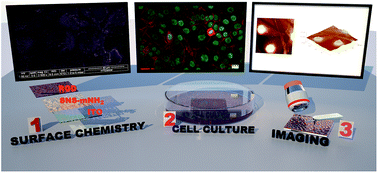
In this work, the monomer 3-(2,5-di(thiophen-2-yl)-1H-pyrrol-1-yl)aniline (SNS-mNH2) was synthesized according to a similar procedure in the literature.35 The corresponding monomeric structure has a great advantage due to its amino group, which is open to amide bonding. In addition, the thiophenepyrrole–thiophene easily polymerizes. Indium tin oxide (ITO)-coated glass was used as the working electrode. ITO-glass is most advantageous for light microscopy techniques due to its transparent nature. Modified ITO surfaces can be combined with polydimethylsiloxane (PDMS) and such polymers to create cell culture chambers for lab-on-a-chip systems.1,36–40 The conducting polymer SNS-mNH2 was electrochemically deposited onto ITO-glass by a cyclic voltammetry (CV) technique. In order to provide cell adhesion on modified surfaces, the RGD peptide was used. Poly-(SNS-mNH2) served as an excellent immobilization matrix. Introduction of RGD onto the polymer-coated surface was performed through covalent binding using the well-established two-step carbodiimide coupling method.41 Surface properties and morphology were analyzed by contact angle measurement, scanning electron microscopy (SEM), and atomic force microscopy (AFM). African green monkey kidney (Vero), human keratinocyte (HaCaT), and human neuroblastoma (SH-SY5Y) cell lines were cultivated and monitored by fluorescence microscopy (FM) to test cell adhesion and proliferation on modified surfaces. In addition, cell morphology on modified surfaces was examined by SEM and AFM.
Results and discussion
Synthesis of 3-(2,5-di(thiophen-2-yl)-1H-pyrrol-1-yl)aniline
Structure of the SNS-mNH2 was characterized by 1H-NMR and 13C-NMR spectra. Characteristic peaks for SNS-mNH2 in 13C-NMR spectroscopy (Fig. S1†) are listed below: 13C NMR (400 MHz, CDCl3) δ: 191.46, 143.77, 133.74, 132.18, 129.94, 128.20, 126.97, 123.79, 120.11, 116.43, 115.70, and 109.48. In the 1H-NMR, the zero chemical shift was assigned to TMS. Characteristic peaks for SNS-mNH2 in 1H-NMR spectroscopy (Fig. 1) are listed below: C18H14N2S2, δH (CDCl3): 3.68 (s, 2H, Ha), 6.44 (dd, 2H, Hb), 6.53 (m, 2H, Hc), 6.74 (dd, 2H, Hd), 6.97 (dd, 2H, He), 7.07 (m, 2H, Hf), 7.57 (dd, 2H, Hg), 7.74 (dd, 2H, Hh).
 |
| | Fig. 1 1H-NMR spectra of the SNS-mNH2 monomer. | |
Electrochemical polymerization of the monomer
Poly-(SNS-mNH2) film was prepared via potentiodynamic electrochemical polymerization. In the first cycle of the cyclic voltammogram of the polymer (Fig. 2), the monomer is oxidized to its radical cation at +0.84 V. Monomer oxidation is immediately followed by chemical coupling that yields oligomers in the vicinity of the electrode. Once these oligomers reach a certain length, they precipitate onto the ITO-glass, where the chains can continue to grow in length.42 Chain growth can be monitored by the appearance of a peak (+0.36 V) corresponding to the reduction of the oxidized polymer while scanning in the cathodic direction. A second positive scan reveals another oxidation peak (+0.52 V) at a lower potential than the monomer oxidation peak, which is due to the oxidized polymer. Another noticeable fact is the increase in monomer oxidation peak current in the subsequent scans. As the peak current is directly proportional to the electrode area, this increase in the peak current may be attributed to an increase in the area due to the electrodeposited polymer.43
 |
| | Fig. 2 Repeated potential-scan electropolymerization of the SNS-mNH2 monomer in 0.1 M NaClO4/LiClO4/acetonitrile electrolyte/solvent system at a scan rate of 100 mV s−1 on ITO-glass (up to 10 cycles). | |
Modified surface characterization
Fig. S2† shows CV of poly-(SNS-mNH2) at different scan rates. The current responses were directly proportional to the scan rate indicating that the polymer films were electroactive and well adhered to the surface. The scan rates for the anodic and cathodic peak currents show a linear dependence as a function of the scan rate in the range from 25 to 250 mV s−1 (Fig. S2† inset). This demonstrates that the electrochemical processes are not diffusion limited and reversible even at very high scan rates. Surface modification impacts on the electrochemical signal transduction were investigated by differential pulse voltammetry (DPV), which provides detailed information regarding redox characteristics of chemicals. DPV of bare ITO (ITO), polymer coated ITO (ITO/SNS-mNH2) and RGD-modified ITO (ITO/SNS-mNH2/RGD) surfaces were performed between +0.5 V and −0.3 V. A decrease in the peak current values was observed for SNS-mNH2-deposited (−0.179 mA; ΔEPc = +0.24 V) and RGD-modified surfaces (−0.065 mA; ΔEPc = +0.25 V) when compared to bare ITO (−0.359 mA; ΔEPc = +0.20 V) (Fig. 3). This might be due to the increased thickness of possible diffusion layers on the electroactive surface.
 |
| | Fig. 3 Differential pulse voltammetry results of ITO (blue), ITO/mSNS-NH2 (red) and ITO/SNS-mNH2/RGD (black) in 5.0 mM [Fe(CN)63−/4−] at a scan rate of 50 mV s−1 (n = 3). | |
Two-probe measurements were performed to gain information regarding the changes of electrical conductivity of the surfaces before and after modification with the peptide sequence. Two methods are commonly employed for the measurement of conductivity of conducting materials. These have been referred to as 2-probe and 4-probe methods. For semiconductors and insulators where sample resistivity is very high, the contact resistance becomes negligible, and the 2-probe method is applicable. The electrical conductivities of the samples were obtained from surface resistance measurements by the 2-probe method, as their resistances are relatively high. The conductivity of the modified surfaces was determined to be 3.0 × 10³, 1.0 × 10³, and 0.9 × 10³ (Ω cm)−1 for ITO, ITO/SNS-mNH2, and ITO/SNS-mNH2/RGD, respectively. According to the results, there is a decrease in the conductivity of the surfaces after each modification step; however, conductivity of the surface is maintained. The ultimate surface has substantially higher conductive properties when compared to similar conducting polymers.44,45 Thus, it is possible to use the proposed surface in platforms that are conductive and biofunctionalized to improve cell adhesion. In order to gain information on the hydrophilicity changes of the surfaces before and after conjugation with the RGD peptide, contact angle measurements were performed. A drop in the advancing angle from 83.6° ± 1.1° to 78.9° ± 0.9° was observed after RGD immobilization on the –NH2-functional surface (n = 5 and p = 0.0079).
Surface morphologies before and after biomolecule immobilizations were examined by SEM. According to Fig. 4a and b, conducting polymer was grown homogeneously on the ITO glass. However, the surface morphology of the RGD-modified surface (Fig. 4c) depicts a rough coating on the surface. This clearly shows that the RGD peptide is well-immobilized onto the polymer film.
 |
| | Fig. 4 SEM images of (a) ITO, (b) ITO/mSNS-NH2, and (c) ITO/SNS-mNH2/RGD surfaces (with 50 000× magnification). | |
AFM also supplies morphological information regarding surfaces. Fig. 5 shows the characteristic AFM images of the surface topography. The polymer-coated surface is fairly smooth according to 2D (Fig. 5a) and 3D (Fig. 5b) images. It is obvious that the immobilization of the RGD peptides results in the heterogeneity of the formed structure on the surface. However, increased roughness after RGD immobilization was observed in 2D (Fig. 5c) and 3D (Fig. 5d) images. Root mean squares (RMS) of roughness were measured as 1.8 nm and 2.2 nm for the polymer-coated and RGD-modified surfaces, respectively.
 |
| | Fig. 5 (a) 2D, (b) 3D topographic AFM height images of ITO/mSNS-NH2, and (c) 2D, (d) 3D topographic AFM height images of ITO/SNS-mNH2/RGD surfaces. | |
In terms of increasing surface roughness, the AFM and SEM results are consistent with each other. The increased surface roughness has a direct effect on cell adhesion and proliferation in a cell type-dependent manner.23,24,46–48 Therefore, investigating the cellular morphology of different cell lines on surfaces has essential importance.
Cell culture studies
The conducting polymer thickness on the glass surface can be controlled by changing the scan number during electropolymerization.49 The polymers were deposited on the ITO glass with scans of 5, 10, and 25 cycles. The film thickness of the poly-(SNS-mNH2) was determined to be 16.0 ± 2.1, 26.0 ± 5.1, and 31.0 ± 0.7 nm for 5, 10, and 25 cycles, respectively (n = 3). After the modification of each surface, cell adhesion experiments were performed as described in the experimental section. The relationship between the average cell number per mm2 and film thickness is shown in Fig. 6. The 26 nm polymer-deposited surface was the best effective substrate for cell adhesion. However, significantly lower cell adhesion was observed with the 16 nm film thickness. This might be due to less functional amino groups for RGD binding. The 31 nm polymer-deposited surface showed non-homogenous film formation, some structural defects, and significantly lower cell adhesion similar to that observed for the 16 nm polymer. One possible reason for this could be that structural deformations on the polymer might decrease the RGD binding or hinder the correct conformation of RGD from interacting with the cells. Also, previous studies have shown that the material topography, stiffness, charge, and wettability can also affect cell adhesion and proliferation.50–52 As a result, the modified surface prepared with 26 nm polymer thickness was selected for subsequent experiments.
 |
| | Fig. 6 Effects of film thickness on the number of Vero cells after a 24 h incubation on RGD-functionalized surfaces (n = 3). The maximum cell-adhesive surface (26 nm thickness) was accepted as 100%. | |
Time-dependent adhesion and proliferation behaviors of Vero cells on the ITO/SNS-mNH2, ITO/SNS-mNH2/RGD, and commercially used polystyrene (PS) surfaces were investigated. Although the ITO/SNS-mNH2 surface showed similar cell adhesion properties at 4, 24, and 48 h, it was observed that the polymer-coated surface negatively affected cell proliferation at 72 h. Because the cell adhesion to RGD peptide-modified surfaces is time-dependent and increases after the initial cell adhesion, higher cell proliferation differences were observed at 72 h.53 Therefore, the RGD-modified surface had better cell proliferation after the initial cell adhesion than the polymer-coated and PS surfaces owing to cell-adhesive peptide modification (Fig. 7).
 |
| | Fig. 7 Time-dependent Vero cell adhesion and proliferation on ITO/SNS-mNH2, ITO/SNS-mNH2/RGD, and control polystyrene surfaces (n = 3). | |
Vero cell morphology after 72 h incubation on an RGD-modified surface was examined by AFM. An AFM image of a single layer of fixed and proliferated cells on the modified surface is shown in Fig. S3.† On the ITO/SNS-mNH2/RGD surface, healthy and well proliferating cells were observed.
The effects of surface modification on proliferation behaviors of Vero, HaCaT, and SH-SY5Y cell lines were compared. Fig. 8 shows that all of the cell lines attach and spread on the RGD-modified surface to a greater extent than the polymer-coated surface. Although HaCaT and Vero cell lines could not spread over polymer-coated surfaces, an enhancement of cell proliferation was observed on RGD-functionalized surfaces. However, in Fig. 8, the SH-SY5Y cell line grows as clusters that are on top of each other and extend short neurites out of the clusters without any differentiation due to its characteristic features.54 This cell line had a maximum proliferation that was greater than other cell lines on RGD-modified and also polymer-modified surfaces due to its highly aggressive characteristics.55,56 Proliferation behaviour of this cell line on polymer-coated and RGD-modified surfaces was further examined by SEM (Fig. S4†).
 |
| | Fig. 8 Proliferation behaviors of (a) Vero, (b) HaCaT, and (c) SH-SY5Y cell lines after 72 h incubation on control polystyrene, ITO/SNS-mNH2, and ITO/SNS-mNH2/RGD surfaces. Actin (red) and DAPI (blue) staining were performed. Scale bar: 50 μm. | |
The relationship between the average number of cells per mm2 and different cell lines is shown in Fig. 9. The ITO/SNS-mNH2/RGD surfaces showed higher cell proliferation for all of the cell lines as compared to the control and polymer-coated surfaces. The spreading of all cells on the RGD-modified surfaces indicates that the cells interact with the RGD motif that was immobilized on the surface of the conducting scaffolds. Cells can interact with RGD in an integrin-dependent manner and begin to organize actin fibers to proliferate on surfaces.
 |
| | Fig. 9 Number of Vero, HaCaT, and SH-SY5Y cell lines after 72 h incubation on control polystyrene, ITO/SNS-mNH2, and ITO/SNS-mNH2/RGD surfaces (n = 3). Asterisks indicate the differences compared to the PS surface for each cell line. | |
Experimental
Materials
ITO-coated glasses (24 × 24 mm) were obtained from Teknoma, Turkey. The ITO-coated glass had a sheet resistance of 8–10 ohm sq−1 with a thickness of 150–170 μm.
RGD peptide, EDC (1-ethyl-3-(3-dimethylaminopropyl) carbodiimide), lithium perchlorate (LiClO4), sodium perchlorate (NaClO4), ethanol, isopropanol, acetone, Triton X-100, formaldehyde (37%), and 4′,6-diamino-2-phenylindole (DAPI) were purchased from Sigma. Acetonitrile (ACN) was obtained from Merck; phosphate buffered saline (pH 7.4, PBS) was prepared using 8.0 g L−1 NaCl, 0.2 g L−1 KCl, 1.44 g L−1 Na2HPO4·2H20 and 0.2 g KH2PO4 (Merck).
Dulbecco's modified Eagle's medium (DMEM), DMEM/Ham's F12 mixture (F12), penicillin/streptomycin (P/S) (10
000/10
000 units) and 200 mM L-glutamine were purchased from Lonza. Foetal bovine serum (FBS) was purchased from Biowest. CytoPainter Phalloidin-iFluor 555 reagent was purchased from Abcam.
Apparatus
Voltammetric experiments were carried out with a PalmSens electrochemical measurement system (Palm Instruments, Houten, The Netherlands), where the modified ITO-glass was used as the working electrode. An Ag+/AgCl electrode (with 3.0 M KCl saturated with AgCl as the internal solution, Metrohm Analytical, CH-9101) and platinum electrode (Metrohm, Switzerland) were used as reference and counter electrodes, respectively. The electrodes were inserted into a conventional electrochemical cell (10 mL).
An Olympus CKX41 model inverted microscope equipped with a DC30 camera was used for cellular imaging.
A Keithley electrometer 2400 was used for the two-probe measurements. Electrical contacts were made using silver paste. AFM analyses were performed using a Veeco MultiMode V AS-130 (“J”) model microscope for surface characterization. A Philips XL-30S FEG model SEM was used. Contact angle measurements were performed by Attension Theta. All reported data are given as the average of three measurements ±SD.
Synthesis of 3-(2,5-di(thiophen-2-yl)-1H-pyrrol-1-yl)aniline
A modified procedure for the synthesis of SNS-mNH2, 3-(2,5-di(thiophen-2-yl)-1H-pyrrol-1-yl)aniline, was established. The polymer was synthesized from 1,4-di(2-thienyl)-1,4-butanedione and benzene-1,3-diamine in the presence of a catalytical amount of propionic acid. A round-bottom flask equipped with an argon inlet and magnetic stirrer was charged with 1,4-di(2-thienyl)-1,4-butanedione (0.35 M), benzene-1,3-diamine (0.45 M), propionic acid (0.36 M), and toluene. The resultant mixture was stirred and refluxed for 24 h under argon. Evaporation of the toluene, followed by flash column chromatography (SiO2 column that was eluted with dichloromethane), afforded the desired compound.
Construction of biofunctional surface
Initially, the ITO glasses were cleaned with sequential sonication in acetone, isopropyl alcohol, ethanol, and distilled water. Electrochemical polymerization of monomer was potentiodynamically carried out between the potential range of +0.5 V and +1.2 V (versus Ag+/AgCl) in 0.1 M NaClO4/LiClO4/ACN medium at a scan rate of 0.1 V s−1. The polymer-coated surface was washed with distilled water to remove unbound residues. The presence of the free amine groups on the conducting polymer backbone was utilized for the covalent attachment of RGD peptides via the formation of amide bonds. Thus, the EDC reaction was used to immobilize the RGD peptide onto the conducting polymer-coated surface. To activate carboxyl groups of the RGD peptide, RGD (0.05 mg mL−1) and 0.2 M EDC were dissolved in pH 7.4 PBS buffer and incubated at 1200 rpm for 15 min. Then, the polymer-coated surface was incubated with activated RGD peptide overnight. ITO-glasses were rinsed with PBS and distilled water three times to remove unbound molecules.
Surfaces were electrochemically characterized by CV and DPV. CV of poly-(SNS-mNH2) on ITO-glass was carried out between the potential range −0.5 V and +1.2 V (versus Ag+/AgCl) in 0.1 M NaClO4/LiClO4/ACN medium at different scan rates. DPV studies of ITO, ITO/SNS-mNH2, and ITO/SNS-mNH2/RGD surfaces were performed between +0.5 V and −0.3 V in 0.1 M KCl and 5.0 mM K4Fe(CN)6/100 mM PBS.
Film thickness was determined using cyclic voltammograms obtained during the electropolymerization process. The charge of the polymer was calculated from the area of the voltammogram, and thickness as a ratio of charge was calculated as previously reported.14,57
The experiments were conducted at ambient temperature (25 °C).
Cell culture
Vero and HaCaT cell lines were purchased from the ATCC and CLS, respectively. Both of the cell lines were maintained in DMEM supplemented with 10% FBS (Biowest), 1.0% P/S, and 2.0 mM L-glutamine at 37 °C in a humidified incubator with 5.0% CO2 in air. SH-SY5Y (ATCC) was maintained in a 1
:
1 mixture of DMEM/F12 supplemented with 10% FBS and 1.0% P/S at 37 °C in a humidified incubator with 5.0% CO2 in air. All cells were subcultured at 80% confluency by trypsinization every two or three days.
In all experiments, 5 × 101 cells per mm2 were seeded onto sterilized surfaces under common cell culture conditions. Modified ITOs were placed in 6-well plates to maintain the cell culture medium.
The effect of polymer thickness on Vero cell adhesion was investigated during a 24 h period. To determine time-dependent adhesion and proliferation behaviors, Vero cells were incubated at 37 °C for different incubation times (4, 24, 48, and 72 h) on various surfaces. In addition, Vero, HaCaT, and SH-SY5Y cells were cultured for 72 h to compare their proliferation behaviors on different surfaces. The conventional PS surface was used as a control for each experiment. Subsequently, cells were fixed, stained, and visualized by AFM as described in the sequential section.
Imaging
To determine the number of cells on surfaces, cells were fixed with 4.0% formaldehyde in PBS for 1 h at 37 °C after different incubation times. Permeabilization of cells was facilitated by treatment with 0.1% Triton X-100 for 4 min. Then, DAPI nuclear staining was performed for 5 min. The cell number was determined at three different locations for each sample using NIH Image J software. Three different experiments were performed for each condition.
CytoPainter Phalloidin-iFluor 555 reagent was used to stain the F-actin filaments of cells on surfaces. For F-actin staining, cells were fixed with 4.0% formaldehyde in PBS for 30 min. The permeabilization procedure described above was followed by actin staining for 60 min. After extensive washing with PBS, the cells were imaged using a fluorescent microscope with the appropriate filters (with 10× magnification).
For SEM and AFM analyses, cells were incubated for 72 h and fixed on surfaces with 4.0% formaldehyde in PBS for 1 h at 37 °C and then air dried for 24 h.58 AFM was used in tapping mode, and SEM analyses were carried out at 5.0 kV for all experiments.
The experiments were conducted at ambient temperature (25 °C) unless stated otherwise.
Statistical analysis
GraphPad Prism version 5.03 software (GraphPad Software, San Diego, CA) was used to obtain graphs and for statistical analyses. The non-parametric Mann–Whitney U-test was used to compare relative cell numbers per surface area among different surfaces.59 Statistical significance was denoted with *, **, and *** for p ≤ 0.05, p ≤ 0.01, and p ≤ 0.001, respectively.
Conclusions
Here, we demonstrate that the electrochemically polymerized SNS-mNH2 performs well as an immobilization matrix for RGD-facilitated cell adhesion. The constructed biofunctional platform is appropriate for optical measurements. Due to its high conductivity, it is also possible to use the proposed surface in electrochemical platforms. The RGD-modified surface is cost-effective and easily prepared. Therefore, the modified surface can be combined with lab-on-a-chip systems to monitor living cells and the effects of drugs and chemicals as well as for analyzing cellular dynamics via optical detection, electrochemical detection, or systems that use both.
Acknowledgements
This project was supported by the Scientific and Technological Research Council of Turkey (TUBITAK, project number 113Z918) and the Ege University Research Foundation (project numbers 12-TIP-104 and 14-FEN-023). METU Central Laboratory is acknowledged for the contact angle and AFM analyses. We thank IYTE MAM for SEM analyses. The authors also thank Prof. Dr S. Sakarya (Adnan Menderes University) and Prof. Dr H. O. Sercan (Dokuz Eylul University) for their support.
Notes and references
- E. Primiceri, M. S. Chiriacò, R. Rinaldi and G. Maruccio, Lab Chip, 2013, 13, 3789–3802 RSC.
- H. Andersson and A. van den Berg, Sens. Actuators, B, 2003, 92, 315–325 CrossRef CAS.
- K. Gupta, D.-H. Kim, D. Ellison, C. Smith, A. Kundu, J. Tuan, K.-Y. Suh and A. Levchenko, Lab Chip, 2010, 10, 2019–2031 RSC.
- P. R. Bidez, S. Li, A. G. MacDiarmid, E. C. Venancio, Y. Wei and P. I. Lelkes, J. Biomater. Sci., Polym. Ed., 2006, 17, 199–212 CrossRef CAS PubMed.
- R. A. D'Sa, P. J. Dickinson, J. Raj, B. K. Pierscionek and B. J. Meenan, Soft Matter, 2011, 7, 608–617 RSC.
- J. Yang, D. H. Kim, J. L. Hendricks, M. Leach, R. Northey and D. C. Martin, Acta Biomater., 2005, 1, 125–136 CrossRef PubMed.
- B. Demir, M. Seleci, D. Ag, S. Cevik, E. E. Yalcinkaya, D. O. Demirkol, U. Anik and S. Timur, RSC Adv., 2013, 3, 7513–7519 RSC.
- S. Demirci, F. B. Emre, F. Ekiz, F. Oğuzkaya, S. Timur, C. Tanyeli and L. Toppare, Analyst, 2012, 137, 4254–4261 RSC.
- N. K. Guimard, N. Gomez and C. E. Schmidt, Prog. Polym. Sci., 2007, 32, 876–921 CrossRef CAS PubMed.
- R. Ravichandran, S. Sundarrajan, J. R. Venugopal, S. Mukherjee and S. Ramakrishna, J. R. Soc., Interface, 2010, 7(suppl 5), S559–S579 CrossRef CAS PubMed.
- J. G. Hardy, J. Y. Lee and C. E. Schmidt, Curr. Opin. Biotechnol., 2013, 24, 847–854 CrossRef CAS PubMed.
- A. Gelmi, M. K. Ljunggren, M. Rafat and E. W. H. Jager, J. Mater. Chem. B, 2014, 2, 3860–3867 RSC.
- H. Azak, E. Guler, U. Can, D. O. Demirkol, H. B. Yildiz, O. Talaz and S. Timur, RSC Adv., 2013, 3, 19582–19590 RSC.
- F. E. Kanik, E. Rende, S. Timur and L. Toppare, J. Mater. Chem., 2012, 22, 22517–22525 RSC.
- A. B. Sanghvi, K. P. H. Miller, A. M. Belcher and C. E. Schmidt, Nat. Mater., 2005, 4, 496–502 CrossRef CAS PubMed.
- B. Seven, M. Bourourou, K. Elouarzaki, J. F. Constant, C. Gondran, M. Holzinger, S. Cosnier and S. Timur, Electrochem. Commun., 2013, 37, 36–39 CrossRef CAS PubMed.
- J. Wang and M. Jiang, Langmuir, 2000, 16, 2269–2274 CrossRef CAS.
- F. Ekiz, F. Oguzkaya, M. Akin, S. Timur, C. Tanyeli and L. Toppare, J. Mater. Chem., 2011, 21, 12337–12343 RSC.
- S. Demirci, F. B. Emre, F. Ekiz, F. Oguzkaya, S. Timur, C. Tanyeli and L. Toppare, Analyst, 2012, 137, 4254–4261 RSC.
- E. Sackmann and A.-S. Smith, Soft Matter, 2014, 10, 1644–1659 RSC.
- J. Y. Wong, R. Langer and D. E. Ingber, Proc. Natl. Acad. Sci. U. S. A., 1994, 91, 3201–3204 CrossRef CAS.
- B. J. Papenburg, E. D. Rodrigues, M. Wessling and D. Stamatialis, Soft Matter, 2010, 6, 4377–4388 RSC.
- H.-I. Chang and Y. Wang, Regenerative Medicine and Tissue Engineering—Cells and Biomaterials, InTech, Rijeka, Croatia, 2011, pp. 569–588 Search PubMed.
- B. Joddar and Y. Ito, J. Mater. Chem., 2011, 21, 13737–13755 RSC.
- G. Delaittre, A. M. Greiner, T. Pauloehrl, M. Bastmeyer and C. Barner-Kowollik, Soft Matter, 2012, 8, 7323–7347 RSC.
- M. Mrksich, Chem. Soc. Rev., 2000, 29, 267–273 RSC.
- S. P. Low, K. A. Williams, L. T. Canham and N. H. Voelcker, Biomaterials, 2006, 27, 4538–4546 CrossRef CAS PubMed.
- U. Geißler, U. Hempel, C. Wolf, D. Scharnweber, H. Worch and K. W. Wenzel, J. Biomed. Mater. Res., 2000, 51, 752–760 CrossRef.
- D. Liu, C. A. Che Abdullah, R. P. Sear and J. L. Keddie, Soft Matter, 2010, 6, 5408–5416 RSC.
- C. Werner, T. Pompe and K. Salchert, in Polymers for Regenerative Medicine, Springer, 2006, pp. 63–93 Search PubMed.
- S. E. D'Souza, M. H. Ginsberg and E. F. Plow, Trends Biochem. Sci., 1991, 16, 246–250 CrossRef.
- G. B. Fields, J. L. Lauer, Y. Dori, P. Forns, Y. C. Yu and M. Tirrell, Biopolymers, 1998, 47, 143–151 CrossRef CAS.
- D. J. Iuliano, S. S. Saavedra and G. A. Truskey, J. Biomed. Mater. Res., 1993, 27, 1103–1113 CrossRef CAS PubMed.
- U. Hersel, C. Dahmen and H. Kessler, Biomaterials, 2003, 24, 4385–4415 CrossRef CAS.
- E. Yildiz, P. Camurlu, C. Tanyeli, I. Akhmedov and L. Toppare, J. Electroanal. Chem., 2008, 612, 247–256 CrossRef CAS PubMed.
- G.-B. Lee, H.-C. Wu, P.-F. Yang and J. D. Mai, Lab Chip, 2014, 14, 2837–2843 RSC.
- Y.-S. Hsiao, C.-W. Kuo and P. Chen, Adv. Funct. Mater., 2013, 23, 4649–4656 CrossRef CAS.
- D. Bogojevic, M. D. Chamberlain, I. Barbulovic-Nad and A. R. Wheeler, Lab Chip, 2012, 12, 627–634 RSC.
- J. H. An, J.-S. Lee, J.-R. Chun, B.-K. Oh, M. D. A. Kafi and J.-W. Choi, J. Nanosci. Nanotechnol., 2012, 12, 5143–5148 CrossRef CAS PubMed.
- Y. Lin, X. Lu, X. Gao, H. Cheng, T. Ohsaka and L. Mao, Electroanalysis, 2013, 25, 1010–1016 CrossRef CAS.
- G. T. Hermanson, Bioconjugate techniques, Academic press, 2013 Search PubMed.
- M. Ak, A. Durmus and L. Toppare, J. Appl. Electrochem., 2007, 37, 729–735 CrossRef CAS PubMed.
- B. Lu, S. Zhen, S. Zhang, J. Xu and G. Zhao, Polym. Chem., 2014, 5, 4896–4908 RSC.
- P. Yang, J. Xie and W. Yang, Macromol. Rapid Commun., 2006, 27, 418–423 CrossRef CAS.
- S. Kant, S. Kalia and A. Kumar, J. Alloys Compd., 2013, 578, 249–256 CrossRef CAS PubMed.
- T. W. Chung, D. Z. Liu, S. Y. Wang and S. S. Wang, Biomaterials, 2003, 24, 4655–4661 CrossRef CAS.
- L. De Bartolo, M. Rende, S. Morelli, G. Giusi, S. Salerno, A. Piscioneri, A. Gordano, A. Di Vito, M. Canonaco and E. Drioli, J. Membr. Sci., 2008, 325, 139–149 CrossRef CAS PubMed.
- C. Luo, L. Li, J. Li, G. Yang, S. Ding, W. Zhi, J. Weng and S. Zhou, J. Mater. Chem., 2012, 22, 15654–15664 RSC.
- E. Guler, H. C. Soyleyici, D. O. Demirkol, M. Ak and S. Timur, Mater. Sci. Eng. C, 2014, 40, 148–156 CrossRef CAS PubMed.
- J. I. Rosales-Leal, M. A. Rodríguez-Valverde, G. Mazzaglia, P. J. Ramón-Torregrosa, L. Díaz-Rodríguez, O. García-Martínez, M. Vallecillo-Capilla, C. Ruiz and M. A. Cabrerizo-Vílchez, Colloids Surf., A, 2010, 365, 222–229 CrossRef CAS PubMed.
- H. B. Wang, M. Dembo and Y. L. Wang, Am. J. Physiol., 2000, 279, C1345–C1350 CAS.
- Y. Yang, K. Kulangara, R. T. S. Lam, R. Dharmawan and K. W. Leong, ACS Nano, 2012, 6, 8591–8598 CrossRef CAS PubMed.
- D. L. Hern and J. A. Hubbell, J. Biomed. Mater. Res., 1998, 39, 266–276 CrossRef CAS.
- J. Kovalevich and D. Langford, Methods Mol. Biol., 2013, 1078, 9–21 Search PubMed.
- J. Do, I. Kim, J. Lee and D.-K. Choi, BioChip J., 2011, 5, 165–174 CrossRef CAS.
- L. Zhang, H. Liang, W. Cao, R. Xu and X. L. Ju, Braz. J. Med. Biol. Res., 2014, 47, 548–553 CrossRef CAS PubMed.
- M. Kesik, F. E. Kanik, G. Hızalan, D. Kozanoglu, E. N. Esenturk, S. Timur and L. Toppare, Polymer, 2013, 54, 4463–4471 CrossRef CAS PubMed.
- M. J. Doktycz, C. J. Sullivan, P. R. Hoyt, D. A. Pelletier, S. Wu and D. P. Allison, Ultramicroscopy, 2003, 97, 209–216 CrossRef CAS.
- P. E. McKnight and J. Najab, in The Corsini Encyclopedia of Psychology, John Wiley & Sons, Inc., 2010 Search PubMed.
Footnote |
| † Electronic supplementary information (ESI) available. See DOI: 10.1039/c4ra08481k |
|
| This journal is © The Royal Society of Chemistry 2014 |
Click here to see how this site uses Cookies. View our privacy policy here.