
Photo and electronic excitation for low temperature catalysis over metal nanoparticles using an organic semiconductor

Weiran Zhengab, Simon Jonesa, Xinlin Hongb and Shik Chi Edman Tsang*a
aWolfson Catalysis Centre, Department of Chemistry, University of Oxford, Oxford, OX1 3QR, UK. E-mail: edman.tsang@chem.ox.ac.uk
bCollege of Chemistry and Molecular Sciences, Wuhan University, Wuhan 430072, People's Republic of China

Received 7th August 2014 , Accepted 28th August 2014

First published on 29th August 2014


Abstract

Simple supported metal catalysts are active for the destruction of a wide range of hazardous chemicals of environmental concerns, including CO, N2O and volatile organic compounds (VOCs), in air at elevated temperatures. However, they are severely restricted because of unfavourable enthalpy and intrinsic low activity under ambient conditions, in particular the inapplicability of using high temperatures in confined spaces. Here, we report a simple but significant means of electron promotion to metal nanoparticles by the use of an organic polythiophene as a support or support supplement, which gives rise to an active modified metal surface for selective catalysis at low temperatures with light or electromotive excitation. It is observed that the finite size of electronic structure of dispersed metal nanoparticles can be influenced by the conjugative bands of a polymer, which leads to the modification of its adsorptive properties. This renders the composite material active for a number of oxidation and decomposition reactions under ambient conditions, which outperforms the conventional catalysts. As a result, the present study forms a basis for further developments in the design and engineering of a new class of greener plastic nanocatalysts with facilitated electron promotion to metal catalysts for environmentally relevant chemical transformations.

Introduction

Over the past few years, pollution problems associated with industrialization, in many developing countries, have become significant. The release of toxic and hazardous industrial chemical substances into air, soil and water, in some regions, has caused catastrophic changes in the environment.1 For example, the recent severe smog problems in Chinese cities due to poor control of emissions have triggered alarms of the local government regarding health and safety in their living environment. In addition, the sudden built-up of a local high concentration of undesirable gases such as CO and VOCs in confined buildings (generally known as ‘building sickness’), living rooms, toilets and vehicles due to smoking of cigarettes, use of poor means of heating and contaminations in furniture may also induce health concerns. In order to address these problems, extensive research is currently underway to develop advanced analytical, biochemical, and physicochemical methods for the characterization and elimination of hazardous chemical compounds from air, soil, and water. The development of advanced materials for low (ambient) temperature selective catalysis is regarded to be superior to conventional approaches, such as absorption or high temperature incineration processes, because of the more favourable enthalpy, ease of processing and regeneration, and in some cases, the inapplicability of using high temperatures in confined spaces. The versatile employment of metal nanoparticles as catalysts for the destruction of hazardous chemicals is a well-accepted method because the small metal phase shows high activity for catalytic oxidation at elevated temperatures.2 For example, the catalytic combustion of CO and the destruction of volatile organic compounds (VOCs) in air over supported metal nanoparticles have been extensively studied. However, conventional supported metal catalysts are generally not active under ambient conditions, unless heat or additional means of activation such as the use of magnetic, electromotive or optical forces are applied to promote catalysis.3 The use of solar energy for pollution control has also been recently explored. Placing metal nanoparticles on inorganic transition metal semiconductor oxides such as TiO2 and ZnO is perhaps the most common way to harness solar energy to enable electronic promotion to the metal particles. However, the characteristic band gap of typical transition metal oxides matches ultraviolet radiation with generally a lower absorptivity of these materials in the solar region. In addition, the electronic promotion of metal nanoparticles via electromotive forces would require high conductive materials to reduce the ohmic losses of energy. Therefore, the most commonly used transition metal oxides are not ideal in these regards.

We recently observed a significant degree of electronic perturbation in small Pd nanoparticle by the partial adsorption of pendant NH2 or OH groups (contributing their lone pair of electrons to enhance the electron density of metals for molecular adsorption) of a rigid polymer support in close proximity under ambient conditions because of high surface coverage and a finite number of metallic electrons involved.4 This may suggest catalysis by metal nanoparticles could be significantly promoted by organic moieties for low temperature applications but there is very limited work in this area. In addition, recent research on the use of organic polymer semiconductors such as polypyrrole, polyparaphenylene and polythiophene (PTh) to provide useful electronic, optical and magnetic properties is rapidly increasing.5,6 Conjugated systems formed by pz orbitals of polymer semiconductors play a key role in altering the band structures of the materials, whereas the π–π* transitions typically lie between 1.5 and 3 eV, resulting in the absorption or emission of visible light.5 Compared to inorganic semiconductors, the band structures of polymer semiconductors are significantly narrower; however, because of the effective overlap of orbitals in symmetry, they generally lead to a higher efficiency of solar energy capture.7 In addition, the bandgap and conductivity are also temperature-sensitive and can be tuned using the morphology and functional groups of the polymers.8 Therefore, the use of polymer semiconductors has been widely studied as a key component in photocatalysis, such as the photoevolution of H2,9,10 photocatalytic fixation of CO2 (ref. 11) and numerous degradation reactions.12 Similar to inorganic semiconductors such as TiO2, the incorporation of metal nanoparticles, such as Au, Ag, and Pd, is commonly used to modify the properties of these conjugated polymers to further extend their potential applications as electronic devices, sensors, catalysts and solar cells. The hydrogenation of unsaturated organic molecules is one of the most referred examples.13–19 By obtaining hybrid materials of inorganic/polymer semiconductors, charge transfer from/to polymer was observed along with an enhancement of carrier lifetimes and interfacial properties.20 The theoretical investigation of the metal/organic semiconductor interface was also extensively studied.21 These hybrid materials have been briefly studied as electrocatalysts22–24 and catalysts for organic hydrogenation reactions.18,25 Despite the above studies on the modification of conductive polymers by the metal particles, a reverse scenario of using polymer semiconductors as a support to modify metal nanoparticles and its usage in energy and hazard gas destruction, in particular for photocatalytic decomposition at low temperatures has not been yet systematically explored, especially in gas phase reactions.26

In this paper, we report a simple but significant means for electronic promotion of Pd nanoparticles by using polythiophene as the support. It should be noticed that the term ‘electronic promotion’ refers to an electronic interaction between the metal and the conducting polymer, which promotes photo and electro-catalysis at low temperatures (not the electron flow direction in any specific electrochemical reaction).

Furthermore, it is demonstrated that the new composite material can significantly catalyse the combustion and decomposition of toxic gases and the VOCs of environmental concern at room temperature in the presence of light or an electromotive force. Therefore, the catalytic decomposition of formic acid (HCOOH), destruction of toxic nitrous oxide (N2O) in hydrogen and selective oxidation of carbon monoxide (CO) in air can be effectively promoted under ambient conditions. It is also clearly evident from CO stripping voltammetry, X-ray photoelectron spectroscopy and infrared spectroscopy that a strong charge transfer between the metal nanoparticles and the semiconductor polymer can take place at their interface through the thio-metal surface interaction. This preliminary work clearly supports the fact that organic semiconductor polymeric materials could be employed to be a substituent or additive to conventional inorganic supports to host metal nanoparticles for low temperature catalytic destruction of toxic gases with energy input from light or electricity. Thus, this may open up the possibility of developing a new technology of using flexible metal supported plastic nanocatalysts for pollution treatment.

Experimental

Chemicals

Thiophene, palladium(II) nitrate, silver nitrate, chloroform, ethanol, polyvinylpyrrolidone (PVP, Mw = 33[thin space (1/6-em)]000), iron(III) chloride, and 65 wt% hydrazine (N2H4) in water were purchased from Sigma-Aldrich and used as received. Amorphous carbon powder (Type 87L) was supplied by Johnson Matthey.

Synthesis of polythiophene (PTh)

Thiophene (2.68 g) was dissolved in a solution of chloroform (100 mL) in a 500 mL reaction vessel and maintained at 0 °C in an ice bath. FeCl3 (20.67 g) was dissolved in 100 mL of chloroform and was added dropwise into the abovementioned solution. The mixture was maintained at 0 °C for 16 h and consistently stirred at 600 rpm. The solution colour changed from orange to dark green after 10 min. Then, the mixture was centrifuged and 5 times washed with ethanol and distilled (DI) water. The colour of the solution changed to dark red on mixing with ethanol because of the reduction of oxidized PTh. The solid material was further collected and dried in air at 60 °C for 24 h. 1.46 g PTh was subsequently obtained, with a yield of 54.5%.

Synthesis of Pd/PTh–C, Ag/PTh and Ag–Pd/PTh–C

For the synthesis of 10 wt% Pd/PTh–C, a certain ratio of amorphous carbon powder and polythiophene were mixed in 50 mL ethanol, followed by ultrasonic dispersion at 30 °C for 1 h, which was then cooled down to 5 °C. 50 mg of Pd(NO3)2·2H2O was dissolved in the solution, and it was refluxed at 80 °C for 1 h to afford the complete reduction of Pd2+ to Pd0 by ethanol. The suspension was filtered and the solid was further washed with DI water, collected and dried at 60 °C for 24 h before use. Ag/PTh was prepared by mixing 28.7 mg of AgNO3 with polythiophene in water, followed by the dropwise addition of 50.48 μL of 65 wt% N2H4·H2O solution. The mixture was stirred at room temperature (RT) for 30 min. The suspension was filtered and washed with ethanol and DI water, then dried at 60 °C for 24 h. Ag–Pd/PTh–C was prepared as follows: 300 mg Pd/C or Pd/PTh–C catalyst was mixed with 200 mL of DI water. The solution was bubbled with H2 for 30 min. 28.7 mg of AgNO3 was dissolved in water and the solution was added to the aforementioned mixture and stirred for 30 min at RT. Then, 50.48 μL of 65 wt% N2H4·H2O solution was dropwise added to the mixture and stirred at RT for 30 min. The mixture was filtered, washed with DI water, collected and dried at 60 °C for 24 h before use.

Characterization

Powder X-ray diffraction (XRD). XRD analysis was performed using a PANalytical X'Pert Pro diffractometer, operating in the Bragg–Brentano focusing geometry and using Cu-Kα radiation (λ = 1.5418 Å) from a generator operating at 40 kV and 40 mA.
CO pulse chemisorption. The test was carried out on a ChemBET Pulsar TPR/TPD Automated Chemisorption Analyser from Quantachrome instruments. 30 mg of catalyst was used, which properly filled a quartz tube. The carrier gas was N2 (20 mL min−1). H2 was passed over the catalyst for 1 h at 40 °C to reduce the remaining PdO and physically remove adsorbed molecules before the CO pulse. When the sample was cooled down to RT and the TCD detector remained stable for 10 min under N2, the CO pulse was initiated. The analysis was stopped when no significant difference was observed in the neighbouring 3 peaks.
CO stripping voltammetry. A Compactstat electrochemical interface provided by IVIUM technologies was used. Before the experiment, a glassy carbon (GC) electrode surface was polished with 0.3 mm alumina slurry, and then rinsed with double distilled water in an ultrasonic bath. Then, 400 μL of DI water was mixed with 10 mg of catalyst, followed by the addition of 30 μL of 5 wt% perfluorosulfonic acid-polytetrafluoroethylene (PTFE) copolymer solution. The mixture was ultrasonically dispersed for 1 h. Then, 10 μL of the prepared ink was placed on the surface of the GC electrode and dried under vacuum for 1 h. The GC electrode was exposed to saturated CO at 0.2 V, followed by washing with 0.5 M H2SO4 and a pre-treatment of N2. The test was carried out in 0.5 M H2SO4 saturated with N2. Initially, two cycles were recorded at a scan rate of 10 mV s−1 with saturated calomel electrode (SCE) as the reference electrode. The entire system was maintained at RT and in the dark.
Thermogravimetric analysis. Analysis was performed using a Q50 TA thermogravimetric analysis system. A certain amount of catalyst was used and the analysis was carried out in air. The applied heating rate was 5 °C min−1.
Attenuated total reflectance Fourier transform infrared spectroscopy. ATR-IR was performed on a NICOLET 6700 instrument from Thermo Scientific. PVP-stabilized Pd was synthesized in ethylene glycol at 180 °C using Pd(NO3)2·2H2O as the metal precursor. The colloidal Pd nanoparticle was divided into two parts and dispersed in ethanol. One part was mixed with 3 wt% of polythiophene and further ultrasonically dispersed for 2 h at 50 °C. Subsequently, H2 was passed through both the solutions for 1 h to fully reduce the nanoparticles. Subsequently, CO was bubbled for 1 h. Then, the resulting ink solution was placed on the ATR crystal and allowed to dry under N2 for 1 h before the spectra were collected. When light was used, the spectra were collected 1 h after exposure to light.
Hydrogen evolution reaction (HER) activity test. Data were obtained on a Compactstat electrochemical interface provided by IVIUM technologies. 400 μL of DI water was mixed with 10 mg of catalyst and 30 μL of 5 wt% perfluorosulfonic acid-PTFE copolymer solution. The mixture was ultrasonically dispersed for 1 h. Then, 10 μL of the prepared ink was placed on to the surface of the GC electrode and dried under vacuum for 1 h. The GC electrode was further cleaned using 20 cycles of voltammetry scanning between −0.2 and 1.0 V. Then, the hydrogen evolution reaction was performed from 0.1 V to −0.6 V at a rate of 10 mV s−1 using a saturated calomel electrode (SCE) as the reference electrode. All tests were carried out at RT.
Ultraviolet-visible reflectance spectroscopy. The reflectance spectra were obtained on a PerkinElmer Lambda 750S. The resolution was set to 1 nm. KBr was mixed with the sample at a weight ratio of 500[thin space (1/6-em)]:[thin space (1/6-em)]1.
Raman spectroscopy. Raman characterization was performed on a PerkinElmer Raman Station 400F. The intensity of the laser was set at 5% to avoid destroying the polymer structure. The total scan time was 60 s.
Gas chromatography. Gas chromatography was used to analyse the gas produced by the catalytic reactions. Two TCD detectors were used: one with N2 as the carrier gas to detect H2, and another with helium (He) as the carrier gas to detect CO, O2, CO2 and N2O.

Catalytic test conditions

Formic acid decomposition. The tests were performed in a quartz reactor at a target temperature. The gas outlet was connected to a gas monitor and recorded when 10 mL of 50 vol% formic acid solution was mixed with 50 mg of catalyst.
CO oxidation. The CO oxidation reactions were performed in a 50 mL quartz reactor at 0.3 bar using 50 mg of catalyst with a gas mixture composed of 2.60% CO and 5.0% O2 in He. The reactor was sealed and the pressure was maintained at 0.3 bar. With and without irradiation, the concentrations of CO2, CO and O2 were analysed by gas chromatography using He as the carrier gas.
N2O decomposition. N2O decomposition reactions were performed in a 50 mL quartz reactor with 50 mg of Pd/C and Pd/2 wt% PTh/C with and without irradiation. The reactor was maintained at 0.3 bar, with 2500 ppm of N2O and 4.75% Ar in 95% H2. The entire system was kept at RT.
Transmission electron microscopy (TEM) and scanning electron microscopy (SEM). TEM was performed on a JEOL 2000FX. A drop of dilute aqueous solution of the catalyst was placed on a carbon copper grid and dried to prepare the sample. SEM was performed on a Hitachi S-4300 scanning electron microscope by coating the samples with Au.
X-ray photoelectron spectroscopy (XPS). XPS was performed using a VG Microtec ion pumped XPS system equipped with a nine channel CLAM4 electron energy analyzer. 200 W Mg X-ray excitation was used. The samples were analysed with reference to the adventitious C1s peak.

Results and discussion

Structure and properties

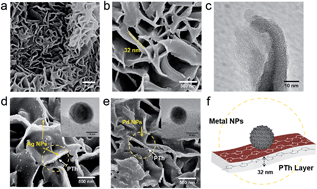
Polythiophene (PTh) was synthesized using FeCl3 as a catalyst to induce the polymerization of thiophene monomers according to a literature process27 with modifications. Subsequently, palladium nitrate dehydrate was dissolved in a mixed suspension of PTh and amorphous carbon followed by reduction with ethanol at a low temperature. As a result, 10 wt% of Pd nanoparticles was loaded on the support, which contained PTh ranging from 0.5 to 100 wt%. Although, the Pd–PTh on amorphous carbon was mainly studied as a catalyst, a high proportion of amorphous carbon can obscure the structural aspects of the Pd–PTh. Thus, XRD and TEM of Pd–PTh were performed without the support. The XRD and TEM (Fig. S1–S3) showed the crystalline size of Pd nanoparticles on all mixed supports was 4.5 ± 0.9 nm, whereas the mean size of Pd nanoparticles supporting on 100% PTh was 6.03 nm. The particle size gradually increased with the addition of PTh (Table 1). The morphology of the polymer appeared to be as laminated sheet-like structure (Fig. 1a and b), and there was no significant change in morphology upon the addition of Pd (Fig. 1e). The apparent metal area of Pd derived from the CO chemisorption progressively decreased with increasing PTh content because the increasing amount of sulfur atoms from the thiophene blocked the access to the Pd surface, leading to the poisoning of the exposed metal sites. Unlike the flexible polymer like polyvinylpyrrolidone (PVP) studied previously, polythiophene is a rigid polymer (sheet-like) because of the π-conjugate system across the polymer backbone. Thus, though the weight ratio of PTh increased to 20 wt% with a molar ratio of Pd to sulphur at 1[thin space (1/6-em)]:[thin space (1/6-em)]2.53, the metal surface area only decreased from 5.36 to 1.09 m2 g−1. In addition, no chemisorption of CO was observed, indicating that the Pd surface was entirely covered by the polythiophene, when 100% PTh was used. Noticeably, the Pd surface area slightly increased from 5.36 to 6.99 m2 g−1, when 0.5 wt% PTh was added to the carbon support. This result could be caused by a change in the morphology of Pd nanoparticles present on the internal surface of carbon, such that the polymer with a higher affinity for the metal surface may free some surface of the Pd particles from getting deeply buried inside the amorphous carbon. The crystalline structure of the PTh nanoparticles and Pd/PTh materials were also studied (Fig. 2a). Two broad peaks were clearly observed at 2θ ≈ 21.1° and 25.3°, corresponding to the chain-to-chain stacking.28 The d-spacing calculated based on the observed peaks was approximately 0.351–0.402 nm, which was in good agreement with the TEM images, shown in Fig. 2b. A few weak peaks were also shown in the XRD pattern, indicating the existence of intermolecular ordered stacking structures. After the addition of Pd nanoparticles, the peaks of Pd nanoparticles were also observed. However, the peak intensity at 2θ ≈ 25.3° was attenuated, suggesting that certain degree of the chain-to-chain stacking of polymer sheets was disrupted due to the deposited Pd nanoparticles. The peak was also slightly shifted to a lower angle, which is indicative of a longer equilibrium distance of the stacked chains due to the presence of Pd nanoparticles.
Table 1 Pd surface areas of 10 wt% Pd on PTh–C support with different contents. Pd surface areas were measured by CO pulse chemisorption and mean Pd particle sizes were determined from the TEM images
PTh percentage/% Pd/PTh molar ratio Pd surface area/m2 g−1 catalyst Mean Pd particle size/nm
0 1[thin space (1/6-em)]:[thin space (1/6-em)]0 5.36 4.16
0.5 1[thin space (1/6-em)]:[thin space (1/6-em)]0.06 6.99 4.21
1 1[thin space (1/6-em)]:[thin space (1/6-em)]0.13 4.46 4.07
2 1[thin space (1/6-em)]:[thin space (1/6-em)]0.25 4.37 4.32
5 1[thin space (1/6-em)]:[thin space (1/6-em)]0.63 3.58 5.18
10 1[thin space (1/6-em)]:[thin space (1/6-em)]1.27 2.59 5.58
20 1[thin space (1/6-em)]:[thin space (1/6-em)]2.53 1.09 6.21
100 1[thin space (1/6-em)]:[thin space (1/6-em)]12.7 0.01 6.03


image file: c4ra08297d-f1.tif
Fig. 1 (a) & (b) SEM images, (c) TEM image of the layered structure of polythiophene; (d) SEM image of Ag/polythiophene; (e) SEM image of Pd/polythiophene; the inserts of (d) and (e) are corresponding TEM images of metal particles; (f) a pictorial illustration of metal–polythiophene hybrid structure.

image file: c4ra08297d-f2.tif
Fig. 2 (a) XRD pattern of PTh powder and 10 wt% Pd/PTh catalyst; the observed peaks of PTh are marked with * symbol. (b) TEM images of 10 wt% Pd/5 wt% PTh–C catalyst.

It is well accepted that polythiophene is an organic semiconductor with a narrow band gap.5 As seen in Fig. 3, the bandgap calculated from the UV/Vis diffuse reflectance spectrum of our synthetic polythiophene is observed to be 1.95 ± 0.01 eV (this band structure has been extensively studied and presented in the literature to be 1.96 eV (ref. 29)) using the Kubelka–Munk equation. This corresponds to the energy of a visible photon with a wavelength of 636 nm. Three local absorption peaks are clearly shown in the UV/Vis spectra of PTh: the first peak at 276 nm is attributed to the n–π* transition of thiophene rings; the second peak at 379 nm to the π–π* transition of thiophene rings and the third strongest broad peak from 455 nm to 635 nm to the π–π* transition of the conjugated polymer backbone. The position of the broadened adsorption edge is known to reflect the extent of electron conjugation and the coexistence of different chain lengths of the conjugation system within the PTh sheets.27 UV/Vis spectra showed that following the in situ reduction, Pd nanoparticles were formed on the surface of the PTh polymer, the three peaks remained unchanged, but a clear extension of the absorption edge towards a shorter wavelength was observed compared to the sample without the Pd. This result suggests that the conjugated structure of PTh was perturbed by Pd. The calculation indicates that the band gap of PTh significantly shifted with the introduction of Pd nanoparticles from 1.95 ± 0.01 eV to 1.98 ± 0.01 eV. Thus, a typical Schottky junction with electronic interactions between the polymer chains and Pd nanoparticles is apparent, which appears to enlarge the band gap value of polymer by removing the excited electrons from the polymer to the Pd metal. However, when Ag nanoparticles were doped in the polymer, the band gap was substantially reduced to 1.83 ± 0.01 eV, indicating that the excited electron was injected from the Ag nanoparticles (plasmonic effect) to the polymer, which also induced peak shifts in the UV-Vis spectrum. In addition, two new peaks in the UV/Vis spectrum were shown at 220 nm and 450 nm, corresponding to the adsorption edge of Ag nanoparticles and surface plasmon resonance (SPR) peak of Ag nanoparticles, respectively. Thus, there is a clear electron interaction between the metal and the PTh. Further, the investigations regarding the electronic interactions between Pd and neighbouring atoms of the PTh by synchrotron XPS could be useful. It should be noticed that there was no apparent change in the peak number and peak shape of the fundamental Raman vibration spectra with and without the incorporation of metal (either Pd or Ag), which is indicative of the good stability of the polymer (see Fig. S4 and Table S1).


image file: c4ra08297d-f3.tif
Fig. 3 (a) UV/Vis diffuse reflectance spectra of PTh particles and 10 wt% Pd/PTh; (b) Kubelka–Munk equation plots of the corresponding UV/Vis spectra; see ESI for equation.

In regards to the employment of polymer as a catalyst support, its thermal stability is of main concern. Thermogravimetric analysis (TGA) shown in Fig. 4a demonstrates that PTh remains stable until 300 °C, followed by a gradually decomposition in air with the completion of the process at 480 °C. The doping of Pd nanoparticles clearly reduces the decomposition temperature by approximately 40 °C, suggesting a catalytic effect. In contrast, for the Ag doped PTh, the decomposition temperature apparently increases. It is clear that Pd nanoparticles can accept excited electrons from the polymer via a positive charge transfer, which attenuates the stability of the polythiophene. This facilitates a stronger surface adsorption of the polymer, which leads to the catalytic cleavage of the organic structure on the Pd metal surface.4 In contrast, we observe that Ag, with a higher band energy than Pd, can donate electrons to polythiophene (negative charge transfer), thus rendering the conjugated structure more stable. Therefore, it is concluded that metal nanoparticles can exert a strong electronic interaction with the polymer as shown above. In this paper, further studies on Pd were carried out because most of the catalytic oxidation and decomposition reactions at low temperatures would require electronic contribution from the catalytic metal surface to the adsorbate(s) for their subsequent activation.


image file: c4ra08297d-f4.tif
Fig. 4 (a) TGA curves of PTh and 10 wt% metal loaded PTh samples: 10 wt% Ag/PTh and 10 wt% Pd/PTh, in air atmosphere; (b) COads stripping voltammograms at 10 wt% Pd with different supports in 0.5 M H2SO4 solution after exposing to saturated CO at 0.2 V Pd/C catalyst; Pd/1 wt% PTh–C catalyst and Pd/5 wt% PTh–C catalyst. First cycle is shown as dark line and second cycle as red line to illustrate the total oxidation of adsorbed CO during stripping.

The electrochemical characterization of the Pd doped sample was therefore performed. CO-stripping voltammetry in 0.5 M H2SO4 was conducted to evaluate the CO tolerance and electro-oxidation of the Pd nanoparticles supported on the conductive polymer. Pure PTh showed no activity in CO stripping, and it can be seen from Fig. 4b that when CO stripping is performed over the typical Pd/C material, the hydrogen adsorption/desorption takes place in the region from −0.1 V to 0 V. From the upper oxidation curve, the pre-adsorbed CO on Pd is electrochemically oxidized by water at approximately 0.6 V to 1.0 V (max. at 0.9 V) with a corresponding reduction of Pd–O at approximately 0.4 V in the lower reduction curve. Fig. 4b also clearly shows that in the presence of 1 wt% conducting polymer PTh, a new CO oxidation peak at a lower onset potential of approximately 0.7 V is detected. This new peak is attributed to the oxidation of CO on Pd, which is electronically modified directly from the underneath PTh polymer in parallel with the typical 0.9 V peak of Pd on carbon. The lower potential for the CO stripping indicates that Pd on PTh/C is more electron rich than Pd/C. This information is consistent with the results obtained from the UV-vis reflectance and the TGA data. It should be noted that the relative size of the lower potential peak of CO on Pd/PTh/C increases at the expense of the high potential peak of CO on Pd/C when PTh reaches 5 wt%. Thus, this suggests that with the addition of PTh, the CO adsorption peak on the Pd can be stripped off easily using a lower potential, which indicates that the composite material clearly shows a higher CO tolerance than the unmodified one. In addition, Fig. S5 also shows that the electrochemically active surface gradually decreases with increasing PTh content (total peak size), which is in agreement with the result of CO chemisorption. Apparently, the thiophene moieties of PTh can strongly block the Pd sites by CO adsorption.

A comparison of polarization curves for the catalytic hydrogen evolution reaction (HER) from water for Pd/C with Pd/PTh/C at various compositions is shown in Fig. 5a. It was found that no hydrogen was produced on PTh/C or PTh. The addition of polythiophene dramatically increases the activity of Pd for hydrogen production, resulting in higher hydrogen evolution rates. At a fixed potential of −0.4 V, the current density is measured to be 20.47 mA cm−2 for Pd/10 wt% PTh/C compared to 3.48 mA cm−2 for Pd/C. Considering that some active sites on Pd/PTh–C were blocked by the addition of PTh, the superior catalytic activity for hydrogen production of PTh modified Pd is prominent. We attribute this result to the higher intrinsic activity of the PTh modified metal site and the enhanced electron transfer obtained by using the conductive polymer. This clearly suggests that electrochemical catalytic activity can be promoted using PTh as a modifier.


image file: c4ra08297d-f5.tif
Fig. 5 (a) Hydrogen evolution reaction (HER) activities of 10 wt% Pd supported on the PTh–C mixture in 0.1 M HClO4 solution at the rate of 10 mV s−1; (b) ATR-IR spectra of CO adsorption on polymer-stabilized colloidal Pd nanoparticles with and without exposure to light; PVP and PTh were used as stabilizers.

ATR-FTIR using CO as a surface probe was used to characterize the samples. Fig. 5b shows that two CO adsorption modes are identified: linear adsorption at 2054 cm−1 and a bridge mode at 1938 cm−1, respectively. Comparing to Pd on electrochemically inert polyvinylpyrrolidone polymer, the addition of 3 wt% of PTh to PVP-stabilized Pd nanoparticles can induce a strong electron promotion to Pd. There are distinctive red shifts for both the peaks with the CO bridge peak moving towards a lower wavenumber of 1927 cm−1 upon the addition of PTh (a shift of 11 cm−1). The degree of metal surface coverage of CO was reported to affect the peak position of the bridge form due to the different extent of dipole–dipole coupling.31 After adding PTh to the PVP–Pd colloid, we found that the metal surface sites were reduced to 76% according to the integrated peaks of the bridge form before and after the addition. As a result, a 13CO/12CO co-adsorption experiment was performed to evaluate the coverage effect and the actual shift caused by the electronic change due to the PTh (Fig. S6). At the equivalent surface coverage, the 12CO bridge peak (76%) of PVP–Pd actually shifted from 1938 cm−1 to 1934 cm−1 (the position of the 13CO bridge peak (24%) appeared in the expected regime as previously reported30), which is considerably smaller than that of the PVP–PTh–Pd sample. This result clearly suggests that the majority of the CO shift is caused by the electronic donation of PTh to Pd, where the contribution from the CO dipole–dipole interaction is of less significance. A further red shift of this peak to 1918 cm−1 can be seen in the figure, when an intense light is applied. In contrast, there is no equivalent peak shift for the PVP–Pd nanoparticles. This result also demonstrates that PTh can enhance the electron density of Pd, causing a red-shift of the adsorbed CO modes (promoting electron back-donation to the CO). This effect could account for the facilitated CO oxidation at a lower potential, when PTh is used as the support in the CO stripping voltammetry. In addition to the electrochemical promotion, radiation (the UV light source details are provided in the ESI) is also another means of exciting an electron transfer from the semiconductor polymer to the Pd nanoparticle for catalysis. Characterization by X-ray photoelectron spectroscopy was carried out and the results are shown in Fig. S8. The spectra for polythiophene were also collected and used as a standard for comparison (Fig. S7-1). With the introduction of Pd, two pairs of spin–orbital coupling peaks of Pd can be clearly seen. The binding energy peaks for PdII3d5/2 and PdII3d3/2 (338.13 eV and 343.33 eV) were attributed to the Pd(II) directly bonded to the S atom of polythiophene. The lower binding energy peaks for Pd03d5/2 and Pd03d3/2 (336.12 eV and 341.32 eV) correspond to the Pd nanoparticles that are not in the direct contact of polythiophene; presumably, the particles are buried deep in the porous carbon structure (see the CO stripping experiments). Also, it was found that there were two C1s signals observed in the XPS spectrum: one could be attributed to amorphous carbon (285.10 eV) and the other to the C atoms from polythiophene (286.85 eV). The value of the S2p3/2 peak was in a good agreement with the literature value of thiophene compound with reference to the C1s. In the case of Ag/PTh, only one pair of spin–orbital coupling peaks of Ag was observed due to the fact that the synthesised Ag particles, 30–50 nm from TEM (Fig. S3) and SEM, were considerably larger than those of the Pd, without the considerable amount of ultrafine Ag nanoparticles within the porous carbon.

Catalytic performance

Formic acid decomposition was employed to investigate the catalytic activity of Pd nanoparticles on polythiophene. The catalytic activity of Pd was also measured under the light illumination. Control experiments showed that pure PTh and PTh/C contributed no catalytic activity for formic acid decomposition, CO oxidation and N2O decomposition with or without light illumination. It is known that the higher electron density of the promoted Pd can enhance the rate of formic acid decomposition due to the stronger adsorption of the molecule by the electron back-donation of the metal.4 Fig. 6a clearly shows that the initial rate of formic acid decomposition in the dark increases from 2.59 mmolgas h−1 m−2Pd to 8.48 mmolgas h−1 m−2Pd, when 2 wt% PTh is added to the Pd/C, suggesting a strong electronic promotion from polythiophene to the Pd nanoparticles. It should be noted that the formic acid decomposition rate is normalized to metal site exposed, a further increase in the PTh content above 2% has substantially reduced the rate. This result is indicative of electron withdrawing due to the excessive adsorption of S atoms (Fig. 6b). Upon light illumination as an energy input, it is clearly observed that the catalytic rates of PTh containing samples are dramatically enhanced, but not for the Pd/C sample without PTh. The optimal rate is found to be 17.5 mmolgas h−1 m−2Pd with the 2 wt% PTh sample when light is applied, which is more than double the rate of the same catalyst in the dark. According to the model proposed by Kazuhiko Seki30 (Fig. 7), the Fermi level of PTh is higher than that of Pd. Thus, polythiophene with a band gap of 1.99 eV is clearly capable of adsorbing photon energy and promoting its π-electrons in the PTh to the metal via sulphur adsorption. More detailed reaction data and metal surface area measurements are compiled in ESI (Table S2). It has been reported32 that the electron rich Ag could render Pd more active for formic acid decomposition. Thus, AgPd with and without the polythiophene modification were tested. Table S2 clearly shows that the bimetallic catalyst is indeed more active than Pd. The increase in temperature also results in a higher apparent reaction rate. Thus, the combination of using Ag–Pd bimetallic nanoparticles, blending 2 wt% PTh to carbon support, light illumination and at a slightly elevated temperature (40 °C) results in a superior initial activity of 122.3 mmolgas h−1 m−2Pd (TOF = 2927 h−1), which is higher than that of most values reported in the literature. This result clearly suggests that the catalytic decomposition of VOCs including the organic acids can be promoted to take place under mild conditions. Note that though formic acid may not be an important VOC, it represents a class of volatile organic molecules that can be easily quantified over this novel highly active catalyst for their catalytic destruction under light activation.
image file: c4ra08297d-f6.tif
Fig. 6 (a) Formic acid decomposition over 10 wt% Pd on different supports in the dark: carbon support; 0.5 wt% PTh in carbon; 1 wt% PTh in carbon; 2 wt% PTh in carbon; 5 wt% PTh in carbon; 10 wt% PTh in carbon; 20 wt% PTh in carbon. (b) A plot of initial rate (measured at 3 min) vs. PTh content in the dark and light; 30 mg catalyst, 10 mL 50 vol% formic acid, 25 °C, 100 min.

image file: c4ra08297d-f7.tif
Fig. 7 (a) Illustration of Pd nanoparticle and PTh composite, (b) electronic promotion effect of PTh on Pd in formic acid decomposition reaction, when light is introduced to excite the semiconductor polymer.

As mentioned, even a small amount of carbon monoxide in air is of great concern in confined spaces. However, catalytic CO oxidation at room temperature is challenging because CO and O2 co-adsorption on metal surface are generally highly activated processes. It is interesting to note from the Fig. S5 that CO can be oxidised to CO2 over Pd/PTh/C catalyst at room temperature by an electromotive force. Fig. 8a also shows a significant promotional effect on the rate of CO oxidation to CO2 in dilute O2 over supported Pd on carbon with the addition of PTh with and without the light illumination at a considerably milder temperature range of 25–80 °C. Thus, this represents an initial result that demonstrates the enhancement of CO oxidation on the conductive polymer as a support. The reactor and conditions are yet to be optimised for such a conversion in order to produce a more practical device for indoor pollution treatment.


image file: c4ra08297d-f8.tif
Fig. 8 (a) CO conversions over 50 mg of Pd/C and Pd/2 wt% PTh/C with and without illumination at different temperatures; at 0.3 bar; with 2.60% of CO and 5.0% O2 in He; reaction time of 2 hours. (b) N2O decomposition over 50 mg of Pd/C and Pd/2 wt% PTh/C with and without illumination at different times; 0.3 bar, with 2500 ppm N2O, 4.75% Ar in 95% H2 at RT.

The catalytic removal of trace N2O is another challenge of environmental concern. A small amount of this gas can be produced from combustion engines or electrical discharge, contaminating the quality of air. N2O is known to readily dissociate on a metal surface into N2 and Oads at room temperature, but the strong Oads could instantly poison the metal surface. It has been also reported that a small amount of H2 co-fed to the metal catalyst can regenerate the metal surface,33 which could be blended with a gas mixture or produced in situ by electrochemical activation, as described in Fig. 5a. As a result, a mixture of gas with 2500 ppm of N2O in H2 was used to investigate the catalytic activity of the new composite material. As seen from Fig. 8b, Pd/C catalyst takes 57 minutes to achieve 95% conversion, while it takes 35 minutes for the Pd/PTh–C catalyst to reach the comparable conversion. Under light excitation, <25 minutes is required for the same conversion by the PTh-promoted catalyst. Repeated testing of the new composite is presented in Fig. S8. As seen from the figure, the ratio of N2O decomposition activity reaches the highest point at approximately 15 min with a steady state but decreases with additional time due to the progressive consumption of N2O in our batch reactor. In the period of no irradiation, there is no difference in the rate between the dark and light experiment. Thus, there is no apparent deactivation for this cyclic testing. This may also suggest that the effect does not exist due to the photolytic damage of the polythiophene during the irradiation and reaction.

Conclusions

In conclusion, in this preliminary work, we demonstrate that the incorporation of polythiophene polymer as a support or support supplement can exert a significant electronic influence on the embedded metal nanoparticles. The electronically modified supported Pd nanoparticles allow the catalytic oxidation of CO, decomposition of N2O and VOCs under considerable moderate conditions at higher rates due to the strong perturbation of the finite quantity of mobile electrons of the dispersed metal nanoparticles because of the addition of the polymer. In addition, the intrinsic visible light absorption, high thermal and electrical conductivity and mouldable nature of the conducting polymer can further facilitate selective catalysis at low temperatures via different activation methods over a wide variety of reactor systems. It is envisaged that this simple chemical modification can be directly applied to the existing metal supported catalysts. It is also shown for the first time that a simple carbon supported Pd metal catalyst modified with a conductive polymer can give high activities to some important reactions of environmental concern and outperform conventional catalysts by alternative means of activations. Apparently, there is further scope for improvement of these preliminary findings to enhance the metal–polymer interactions for optimal catalysis (i.e. higher metal dispersion, dedicated functionalities for electronic interaction and more vigorous stability and mechanical strength). With regards to the growing demands for greener catalysts for environmental pollutants and the limitations of versatile but active nanocatalysts at milder conditions, the surface modification of Pd by the conductive organic polythiophene polymer via sulphur adsorption onto the metal surface may thus find new uses in catalytic post-treatment of a wide range of hazardous chemicals.

Acknowledgements

The authors wish to thank the EPSRC, UK. WZ acknowledges China Scholarship Committee (CSC) for a visiting scholarship to enable him to study at Oxford University. We also thank Dr Ashley Shepherd (University of Oxford) for XPS testing, Dr Simon Fairclough (University of Oxford) for EDX and TEM testing, and Mr Yue Yu (Wuhan University) for SEM.

Notes and references

  1. H. Akimoto, Science, 2003, 302, 1716–1719 CrossRef CAS PubMed.
  2. P. Snytnikov, V. Sobyanin, V. Belyaev, P. Tsyrulnikov, N. Shitova and D. Shlyapin, Appl. Catal., A, 2003, 239, 149–156 CrossRef CAS.
  3. L. Liu, F. Zhou, L. Wang, X. Qi, F. Shi and Y. Deng, J. Catal., 2010, 274, 1–10 CrossRef CAS.
  4. S. Jones, J. Qu, K. Tedsree, X.-Q. Gong and S. C. E. Tsang, Angew. Chem., Int. Ed., 2012, 124, 11437–11440 CrossRef.
  5. T. A. Skotheim and J. Reynolds, Conjugated Polymers: Theory, Synthesis, Properties, and Characterization, CRC Press, 2006 Search PubMed.
  6. A. MacDiarmid, Angew. Chem., Int. Ed., 2001, 40, 2581–2590 CrossRef CAS.
  7. J. Peet, J. Y. Kim, N. E. Coates, W. L. Ma, D. Moses, A. J. Heeger and G. C. Bazan, Nat. Mater., 2007, 6, 497–500 CrossRef CAS PubMed.
  8. J. Roncali, Chem. Rev., 1997, 97, 173–206 CrossRef CAS PubMed.
  9. T. Maruyama and T. Yamamoto, J. Phys. Chem. B, 1997, 5647, 3806–3810 CrossRef.
  10. X. Wang, K. Maeda, A. Thomas, K. Takanabe, G. Xin, J. M. Carlsson, K. Domen and M. Antonietti, Nat. Mater., 2009, 8, 76–80 CrossRef CAS PubMed.
  11. T. Kawai, T. Kuwabara and K. Yoshino, J. Chem. Soc., Faraday Trans., 1992, 88, 2041–2046 RSC.
  12. B. Muktha, G. Madras, T. N. G. Row, U. Scherf and S. Patil, J. Phys. Chem. B, 2007, 111, 7994–7998 CrossRef CAS PubMed.
  13. J.-X. Jiang, C. Wang, A. Laybourn, T. Hasell, R. Clowes, Y. Z. Khimyak, J. Xiao, S. J. Higgins, D. J. Adams and A. I. Cooper, Angew. Chem., Int. Ed., 2011, 50, 1072–1075 CrossRef CAS PubMed.
  14. C. Moorlag, B. C. Sih, T. L. Stott and M. O. Wolf, J. Mater. Chem., 2005, 15, 2433–2436 RSC.
  15. L. Zhai and R. D. McCullough, J. Mater. Chem., 2004, 14, 141–143 RSC.
  16. T. Xu and Q. Qiao, Energy Environ. Sci., 2011, 4, 2700–2720 CAS.
  17. K. R. Edelman, K. J. Stevenson and B. J. Holliday, Macromol. Rapid Commun., 2012, 33, 610–615 CrossRef CAS PubMed.
  18. S. Harish, J. Mathiyarasu, K. L. N. Phani and V. Yegnaraman, Catal. Lett., 2008, 128, 197–202 CrossRef.
  19. S. Fujii, M. Kodama and S. Matsuzawa, in Advances in Nanocomposite Technology, ed. A. Hashim, 2011 Search PubMed.
  20. C. K. Yong, K. Noori, Q. Gao, H. J. Joyce, H. H. Tan, C. Jagadish, F. Giustino, M. B. Johnston and L. M. Herz, Nano Lett., 2012, 12, 6293–6301 CrossRef CAS PubMed.
  21. J. C. Scott, J. Vac. Sci. Technol., A, 2003, 21, 521–531 CAS.
  22. M. T. Giacomini, E. A. Ticianelli, J. McBreen and M. Balasubramanian, J. Electrochem. Soc., 2001, 148, A323–A329 CrossRef CAS.
  23. M. T. Giacomini, M. Balasubramanian, S. Khalid, J. McBreen and E. A. Ticianellia, J. Electrochem. Soc., 2003, 150, A588–A593 CrossRef CAS.
  24. S. Jung, H. Jung, J. Ho, H. Kim, S. Sung, B. Yoo, D. Ha, C. Lee and Y. Lee, J. Electroanal. Chem., 2011, 655, 39–44 CrossRef.
  25. Y. Gao, C.-A. Chen, H.-M. Gau, J. A. Bailey, E. Akhadov, D. Williams and H.-L. Wang, Chem. Mater., 2008, 20, 2839–2844 CrossRef CAS.
  26. K. Mallick, K. Mondal, M. Witcomb and M. Scurrell, J. Mater. Sci., 2008, 43, 6289–6295 CrossRef CAS.
  27. X.-G. Li, J. Li, Q.-K. Meng and M.-R. Huang, J. Phys. Chem. B, 2009, 113, 9718–9727 CrossRef CAS PubMed.
  28. D. Kelkar and A. Chourasia, Chem. Chem. Technol., 2011, 5, 309–315 Search PubMed.
  29. I. F. Perepichka, D. F. Perepichka, H. Meng and F. Wudl, Adv. Mater., 2005, 17, 2281–2305 CrossRef CAS.
  30. A. Ortega, F. M. Hoffman and A. M. Bradshaw, Surf. Sci., 1982, 119, 79–94 CrossRef CAS.
  31. H. Ishii, K. Sugiyama, E. Ito and K. Seki, Adv. Mater., 1999, 11, 605–625 CrossRef CAS.
  32. K. Tedsree, T. Li, S. Jones, C. W. A. Chan, K. M. K. Yu, P. A. J. Bagot, E. A. Marquis, G. D. W. Smith and S. C. E. Tsang, Nat. Nanotechnol., 2011, 6, 302–307 CrossRef CAS PubMed.
  33. R. Burch, G. A. Attard, S. T. Daniells, D. J. Jenkins, J. P. Breen and P. Hu, Chem. Commun., 2002, 2738–2739 RSC.

Footnote

Electronic supplementary information (ESI) available: TEM images; EDX analysis of Pd–PTh composite; XPS characterization; Raman spectra; CO stripping voltammograms; 12CO/13CO adsorption ATR-FTIR test. See DOI: 10.1039/c4ra08297d

This journal is © The Royal Society of Chemistry 2014
Click here to see how this site uses Cookies. View our privacy policy here.