Claudia Contea,
Angela Scalab,
Gabriel Siracusanoc,
Nancy Leoned,
Salvatore Patanèe,
Francesca Ungaroa,
Agnese Miroa,
Maria Teresa Sciortinoc,
Fabiana Quaglia*a and
Antonino Mazzaglia*b
aDepartment of Pharmacy, University of Napoli Federico II, Via Domenico Montesano 49, 80131 Napoli, Italy. E-mail: quaglia@unina.it; Fax: +39 81 678707; Tel: +39 81 678707
bCNR-ISMN Institute of Nanostructured Materials c/o Dept. of Chemical Sciences of the University of Messina, V.le F. Stagno d'Alcontres 31, 98166 Messina, Italy. E-mail: antonino.mazzaglia@ismn.cnr.it; Fax: +39 90 3974108; Tel: +39 90 3974108
cDepartment of Biological and Environmental Sciences, University of Messina, Viale F. Stagno D'Alcontres 31, 98166, Messina, Italy
dCNR-IPCF Institute for Chemical and Physical Processes, V.le F. Stagno d'Alcontres 37, Faro Superiore, 98166 Messina, Italy
eDepartment of Matter Physics and Electronic Engineering, University of Messina, V.le F. Stagno d'Alcontres 31, 98166 Messina, Italy
First published on 5th September 2014
Due to their poor solubility and propensity to aggregate in aqueous media, therapeutic application of several photosensiting agents, such as phthalocyanines, in photodynamic therapy (PDT) of solid tumors is severely hampered. With the aim to propose a novel nanotechnological approach, in this paper biodegradable nanoassemblies based on heptakis (2-oligo(ethyleneoxide)-6-hexadecylthio-)-β-CD (SC16OH) and zinc-phthalocyanine (ZnPc) were developed and tested. Nanoassemblies, prepared by the emulsion–solvent evaporation technique, displayed a hydrodynamic diameter around 200 nm, a negative zeta potential and a satisfactory entrapment efficiency of ZnPc. Steady-state and time resolved fluorescence emission spectroscopy studies showed the entrapment of ZnPc as a monomer in the carrier, with a low tendency to self-aggregate and consequently a fairly good propensity to generate singlet oxygen after photoactivation. The interaction of ZnPc with SC16OH was elucidated by 1H-NMR, which suggested the formation of complexes between drug and both hydrophobic and hydrophilic moieties of the amphiphile. Finally, in vitro potential of the nanoassembly was evaluated in HeLa cells by following cellular uptake and photobiological activity. Overall, results suggest the suitability of the nanoassembly based on SC16OH for delivering ZnPc to cancer cells, thus inducing photodynamic anticancer effects.
Phthalocyanines are currently being intensively investigated as potential PS for PDT. Since they strongly absorb light in the red and near infrared (NIR) regions of the visible spectrum which correspond to the tissue optical window, they can in theory be activated within deeper tissue regions. In addition, their minimal absorption at 400–600 nm would minimize the effects of skin photosensitization caused by sunlight. However, their use in clinical PDT is limited by their poor water solubility and strong tendency to form aggregates.4,5
The use of cyclodextrins (CDs) in this field has attracted increasing interest, prompted by their ability to act as hosts for several hydrophobic molecules. Being characterized by an internal hydrophobic cavity, CDs can accommodate well-fitting groups through the combination of hydrophobic, van der Waals and hydrogen-bonding interactions, thus forming non-covalent inclusion complexes with distinctive biological properties.6 Recently, research efforts have been devoted to the design and synthesis of macrocyclic amphiphiles of hydrophobically modified CDs obtained by functionalizing primary and/or secondary rim with linear or branched aliphatic chains of different lengths (C2–C18) through different chemical bonds (ester, ether or amide).7 CD amphiphilic derivatives (aCD), which can be non-ionic, cationic or anionic, are prone to give a wide array of supramolecular nanostructures through self-assembly or by incorporation in lipid membranes, including monolayers, vesicles, micelles with great potential as drug delivery nanoconstructs.3–6,8–11 Organization of self-assembled aCDs is driven by the balance between hydrophobic and hydrophilic moieties and depends on the nature and length of the grafted chains at the different sides. For example, the introduction of lipophilic alkylthio “tails” and oligo(ethylene glycol) “head groups” leads to the formation of non-ionic vesicles in water, which were characterized by a strong colloidal stability as well as a potentially low immunogenic effect.10,12
Various natural or synthetic CDs, including aCDs, have been extensively studied in the delivery of phthalocyanines,13–15 porphyrins,16,17 and curcumin.18,19 Several strategies, infact, have been developed in PS delivery to overcome their main therapeutic restrictions, including chemical conjugation or entrapment in colloidal nanocontainers.20,21 Ravoo's group reported a self-assembly based on an adamantane-functionalized hexaanionic water-soluble zinc(II) phthalocyanine inserting on the surface CD vesicles.22 Furthermore, several non-ionic and cationic amphiphilic derivates of β-CD assemblying in supramolecular nanostructures able to host hydrophilic PS have been recently investigated.23–26
Generally, this class of aCDs shows high versatility towards PS complexation26 as well as the potential to target biological sites27 or to be modified with stimuli-responsive groups.28 These premises prompt toward the use of engineered multifunctional nanoconstructs based on aCD in therapy, diagnosis, and biosensing.
With the aim to design novel phototherapeutic nanoassemblies, our recent results mainly rely with model systems based on the self-assembly in aqueous solution of aCDs and negatively charged porphyrins. To the best of our knowledge, the design of a photosensitizing nanosystem based on aCD and a water insoluble PS, widely employed for PDT, has not been reported yet.
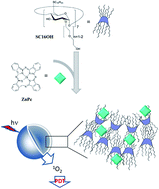
Along this direction, here we propose a CD nanoassembly embedding the highly hydrophobic PS ZnPc (Scheme 1).
The system was prepared by the emulsion–solvent evaporation method and characterized in term of size, surface charge, morphology and release properties. Emitting features of the nanoassembly were evaluated by pointing out at the entrapment of ZnPc as a monomer and its propensity to appreciably generate singlet oxygen. NMR studies gave insight on complex between amphiphile and ZnPc elucidating the assistance of both hydrophobic and hydrophilic moiety of aCD in the formation of the nanoassembly. Finally, in vitro uptake and photoactivation of the nanoassembly were evaluated in HeLa cells.
:
1 (1 mL). This solution was poured in water (10 mL) and sonicated for 2 min at 3 W (Sonicator 3000, Misonix, USA) by a microtip probe under controlled temperature of 4 °C. Thereafter, the organic solvent was evaporated by mechanical stirring for 4 h at room temperature. Nanoassembly was collected by ultracentrifugation (278
000 × g, 30 min, 4 °C) after washing twice with distilled water to remove unencapsulated drug. Nanoassembly was then redispersed in water (2 mL), freeze-dried for 24 h (Modulyo, Edwards, UK) and kept at 4 °C. Recovery yield of production process was evaluated by weighting the solid residue after freeze-drying. Results are expressed as the ratio of the actual nanoassembly weight to the theoretical SC16OH weight × 100.
Zeta potential was determined by analysing a nanoassembly dispersion in water on a Zetasizer Nano Z (Malvern Instruments Ltd.). Results are reported as mean of three separate measurements of three different batches (n = 9) ± SD.
The morphology of NPs was examined by transmission electron microscopy (TEM) (CM 12 Philips, The Netherlands) using samples stained with a 2% phosphotungstic acid solution.
Scanning Near-Field Optical Luminescence (SNOL) measurements were performed using a homemade setup based on a Zeiss optical microscope. A laser beam at 532 nm was coupled to a bended optical fiber that locally illuminates the sample in the near field regime. The distance between the sample and the nano-aperture of the optical fiber was kept constant by a feedback based on a tuning fork mechanism. The laser light was filtered out placing a razofilter at 533 nm in the optical path and the luminescence was detected by a phototube connected to the video port of the microscope. Sample was prepared by diluting (about 1
:
4) in ultrapure water nanoassembly dispersion up to 0.5 mg mL−1. After 1 h of sonication, a drop of dispersion was casted on Si (100) surface. SNOL images were reported by using green colour which is conventionally used to increase the contrast between differently luminescent regions.
ZnPc loading was evaluated by dissolving a known amount of freeze-dried nanoassembly (1 mg) in 1 mL of THF under magnetic stirring for 1 h and analysing the solution as previously described.30
Time-resolved fluorescence measurements were carried out by a time-correlated-single-photon-counting (TCSPC) home-made apparatus.31,32 The collected data were then analyzed using the non-linear least-squares iterative reconvolution procedures based on the Marquardt algorithm. In the case of total fluorescence decay curves, the fitting was performed on the basis of the multiexponential decay law32
![]() | (1) |
:
100) or a nanoassembly aqueous dispersion (1 mg mL−1). The sample was irradiated at 610 nm using a 150 W ozone-free xenon-arc lamp (Jobin Yvon) with a slit width of 10 nm for different times (15, 30 and 45 min). All the solutions are optically matched at the excitation wavelength (610 nm). Sample containing nanoassembly was centrifuged at 16
090 × g (Mikro 20, Hettich) for 30 minutes. The supernatant was collected and analysed by spectrophotometry at 400 nm to evaluate ADPA absorption. The production of singlet oxygen was monitored by the decrease of OD at 400 nm as a function of the irradiation time. Results are reported as ratio between sample OD after irradiation and sample OD before irradiation. The mean of three independent experiments ± SD is reported.
:
6 ratio in RPMI-1640 supplemented with 100 units per mL of penicillin and 10% fetal bovine serum (FBS).
| Cell viability (%) = [(OD before lamp − OD after lamp)/OD before lamp] × 100 |
:
500 since higher ZnPc amounts could not be solubilized in the THF/DCM mixture. Recovery yield of the preparation process, size, polydispersity index, zeta potential and ZnPc loading of nanoassembly are summarized in Table 1. As clearly shown, properties of the nanoassembly were not significantly affected by the presence of PS. Recovery yield of the formulations was around 80%, evidencing that during the preparation of nanoassembly, PS and SC16OH macroscopic aggregation did not occur.
| Unloaded-SC16OH nanoassembly | ZnPc/SC16OH nanoassembly | |
|---|---|---|
| a Actual loading is expressed as the amount of PS (mg) encapsulated per 100 mg of nanoassembly.b Ratio between actual and theoretical loading × 100. | ||
| ZnPc (% w/w) | — | 0.2 |
| Yield (%) | 84 | 77 |
| Mean DH (nm ± SD) | 215 ± 10 | 200 ± 10 |
| P.I. | 0.144 | 0.221 |
| Zeta potential (mV ± SD) | −26.6 ± 3.5 | −25.6 ± 2.5 |
| ZnPc actual loadinga (ent. efficiencyb) | — | 0.152 ± 0.04 (76.0 ± 13.8) |
ZnPc/SC16OH displayed a hydrodynamic diameter around 200 nm with an unimodal size distribution. Size and absence of macroscopic aggregation were confirmed by TEM microscopy (Fig. 1). A negative value of zeta potential suggested a great stability of colloidal dispersions in water due to organization of the oligo-ethylene moieties on the surface, in line with our previous findings.34 Concerning entrapment, ZnPc was incorporated in the nanoassembly with an efficiency as high as 76%. ZnPc/SC16OH could be dispersed in water up to 10% w/v corresponding to a ZnPc entrapped amount around 152 μg mL−1 which is in line with that found in Cremophor EL, a highly toxic intravenous vehicle for administering lipophilic drugs.35
Releases studies on ZnPc/SC16OH shown in Fig. 2 demonstrated that ZnPc was partially released with a sustained pattern only in the presence of a 10% v/v of polysorbate 80 in the external medium acting as PS solubilizer. As reported in an our previous study,34 the crystalline nature and the progressive dissolution of SC16OH nanoassembly contributed to modulated release of entrapped molecules, thus suggesting a release mechanism based on diffusion and progressive dissolution of nanoparticles.
![]() | ||
| Fig. 2 Release profile of ZnPc from ZnPc/SC16OH dispersed in PBS at pH 7.4 and placed in a dialysis bag (MWCO = 3500 Da, Spectra/Por®).34 External medium was PBS at pH 7.4 enriched with 10% v/v of polysorbate 80 to ensure sink conditions. Release profile of free ZnPc at the same concentration of that present inside ZnPc-nanoassembly is reported for comparison. Data are reported as mean of three independent experiments ± SD. | ||
In parallel, steady-state fluorescence emission spectra (Fig. 4A) on samples prepared by dispersing an appropriate amount of powder in water were carried out. Fig. 4A shows the emission spectrum of ZnPc/SC16OH in aqueous solution mainly characterized by bands centered at ≅680, 710 nm which are typical of metal-phthalocyanines. The excitation spectra of ZnPc/SC16OH (Fig. 4B) showed the peculiar Q band centered at 672 nm which is typical of monomeric ZnPc. Both spectroscopic evidences indicate the good dispersion of the hydrophobic PS in aqueous solution, due to the entrapment in SC16OH.
It is widely recognized that phthalocyanines, as well as other lipophilic PS, suffer strong aggregation in different media, thus forming oligomers with low triplet quantum yield and photodynamic efficacy. In order to clarify the interaction of ZnPc with SC16OH inside nanoassembly, time-resolved fluorescence and anisotropy were measured. From fluorescence time decay (Fig. S1A†), it results that free ZnPc in DMSO has a lifetime of 3 ± 0.4 ns, and this value remains unaffected when ZnPc is entrapped in the nanoassembly. Fluorescence lifetime indicates that ZnPc is plausibly entrapped in monomeric form,36 as already evidenced in the excitation spectra (Fig. 4B). The longer rotational correlation time >20 ns (Supplementary material S1B) in ZnPc/SC16OH as compared to ZnPc in DMSO (τR ≅ 0.6 ns and a limiting anisotropy of 0.05) was due to the fact that the dye is rotating together with larger particles. The similar fluorescence lifetime of ZnPc (3 ± 0.4 ns) in organic solvents (both in THF/DCM mixture used in nanoassembly preparation and in DMSO)36 and in the aqueous dispersion of nanoassembly, suggests that clusters of residual organic solvent could assist the drug interaction in the mesoporous structure of nanoassembly.37
In an attempt to distinguish interaction sites and to get insights on supramolecular structure, 1H-NMR studies on ZnPc/SC16OH nanoassembly in CDCl3 were performed.38 First of all, 1H-NMR spectrum of ZnPc/SC16OH nanoassembly in CDCl3 (Fig. 5A) was compared with that of free ZnPc in d6-DMSO (Fig. 5C), as free ZnPc is not soluble in CDCl3. The 1H-NMR spectrum of free ZnPc in d6-DMSO (Fig. 5C) showed signals at 8.27 and 9.44 ppm, assigned to protons in β- and α-positions, respectively.
![]() | ||
| Fig. 5 1H-NMR spectra of ZnPc/SC16OH nanoassembly in CDCl3 (T = 25 °C) (A). The insets report a magnification of ZnPc signals of ZnPc/SC16OH in CDCl3 (B) and free ZnPc in d6-DMSO (C). | ||
From 1H-NMR of ZnPc/SC16OH nanoassembly in CDCl3 (Fig. 5A) no detectable shifts of the signals of CD (which are fairly broad because of presumable formation of aggregates in CDCl3) were registered. On the other hand, more than two signals were found for both protons of ZnPc in ZnPc/SC16OH (Fig. 5B). In particular, the α-protons show resonances at 9.50 and 9.78 ppm, and those in β-position at 8.10 and 8.20 ppm, respectively. These findings evidenced how PS can be allocated in portions of SC16OH with different polarity. Indeed, we believe that both the oligo-ethyleneglycol and the thioalkyl moieties of SC16OH may host ZnPc.
In particular, a comparable time-dependent production of singlet oxygen was found for free ZnPc and ZnPc/SC16OH. These data are in line with previous results obtained with similar nanoassembly made of amphiphilic block copolymers recently developed.30 Therefore, it is possible to conclude that the irradiation can photochemically activate ZnPc, also if entrapped in a nanocontainer, following production of singlet oxygen which can diffuse through the amphiphilic matrix and react with the external environment.
Having ascertained the photodynamic potential of ZnPc/SC16OH nanoassembly to produce cytotoxic singlet oxygen, its biological behaviour, in terms of cellular uptake and cytotoxicity, was investigated in HeLa cancer cells.
Due to the low actual loading of ZnPc into nanoassembly with a consequently low sensibility in detecting ZnPc emission, the uptake of nanoassembly in HeLa cells was traced after replacing ZnPc with Nile-Red (Nr/SC16OH nanoassembly). Overall properties of Nr/SC16OH nanoassembly were very similar to those of ZnPc/SC16OH (ESI S3†). HeLa cells were treated with Nr/SC16OH and incubated for 1 hour at 37 °C and 4 °C, separately (Fig. 7). Cells incubated at 37 °C (Fig. 7A) showed the red emitting nanoassembly inside macro-nanoassembly disseminated into the cytoplasm. On the other hand, a weak emission signal in cells incubated at 4 °C (Fig. 7B) indicated that the treatment at lower temperature impairs the internalization of fluorescent nanoassembly. Thus, nanoassembly can be internalized in HeLa cells and the uptake was mediated by endocytosis, which is strongly inhibited at low temperatures.39
To evaluate the biological effect of ZnPc/SC16OH, the percentage of viable HeLa cells after different times from treatment was measured (Fig. 8). A slight reduction in terms of viability was detected in samples incubated with unloaded nanoassembly (from ∼100% to ∼87% of cell viability) at all tested experimental times.
Variation of cell viability before and after irradiation was found after 24, 48 and 72 h upon treatment with free ZnPc and ZnPc/SC16OH was as effective as ZnPc in DMSO in inducing cell death, thus suggesting that ZnPc inclusion in the CD matrix did not affect significantly its biological behaviour. Nevertheless, maximum photodynamic activity was found after 24 h, in line with ZnPc mode of action,35 which, at this time and upon irradiation, showed significant amount of ROS and activation of the molecular mechanisms of cell death.35,40
Several groups have investigated the photodynamic efficacy of free35 and modified ZnPc,41 ZnPc-loaded systems,42 and ZnPc conjugates,43 by elucidating their in vitro mechanism and in vivo biodistribution.43 Interestingly, even if preliminar, our results show high PDT potential of nanoassembly based on ZnPc/SC16OH also at low concentrations of entrapped ZnPc, similarly to not-nanoassembled cationic derivatives of ZnPc.41
However further investigations are necessary to gain more knowledge about the endocytic mechanisms and intracellular pathways utilized by nanoassembly based on these aCD, as well as a full understanding of how their properties can influence distribution in different cellular compartments where photodamage and cell death are generated.
Footnote |
| † Electronic supplementary information (ESI) available: Time-resolved fluorescence measurements (Fig. S1); depolarized fluorescence spectra (Fig. S2); overall properties of Nr/SC16OH nanoassembly. See DOI: 10.1039/c4ra07847k |
| This journal is © The Royal Society of Chemistry 2014 |