Rathinam Yuvakkumara,
A. Joseph Nathanaelb and
Sun Ig Hong*a
aDepartment of Nanomaterials Engineering, Chungnam National University, Daejeon, 305-764, South Korea. E-mail: sihong@cnu.ac.kr; Fax: +82 42 8225850; Tel: +82 42 8216595
bDepartment of Nano, Medical and Polymer Materials, Yeungnam University, Gyeongsan 712-749, South Korea
First published on 2nd September 2014
Sustainable new insights into the development of Co3O4 as a natural litigation agent via cobalt–ellagate complex formation were revealed using Nephelium lappaceum L. peel-waste resources. Suggestive cell (3T3) suffering was more obvious at 500 μg ml−1 Co3O4 dosages, with a decrease in cell viability of ∼30%. This material is a potentially suitable candidate for applications in biomedicine and sustainable materials development.
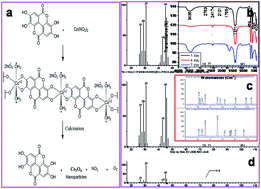
The formation scheme for Co3O4 nanostructures using rambutan peel extract is shown in Fig. 1a. Polyphenols, phenolic derivatives (dihydroxy benzene), hydroxyl groups, and plant polyphenolic ellagic acid compounds have routinely been utilized to form stable complexes with metal ions such as copper, zinc and others.3 Ellagic, gallic and tannic acids have also been used in the preparation of metal nanoparticles.3 Rambutan extract has been utilised to induce chemical attraction towards cobalt ions (Co2+) and bring together square planar cobalt–ellagate complexes due to its extensive polyphenolic ring system; these complexes undergo direct decomposition at 450 °C in static air to form Co3O4 nanostructures. Ellagic acid from rambutan and its phenolic derivatives ligate divalent metal ions in the approximate pH range of 3–5 to form square planar complexes. IR spectroscopy confirms the role of rambutan extract in Co3O4 formation (Fig. 1b), and rambutan peel phenolic –OH groups (3300–3500 cm−1) support the Co3O4 formation mechanism (Fig. 1a). Ester oxygen atoms and phenolic hydroxyl groups of polyphenols form a p-track conjugation effect when hydroxyl groups bind with metals as square planar metal–phenolate complexes (cobalt–ellagate complex) via the chelating effect. Ellagic acid attaches to Co2+ ions when the pH is between 3 and 6. With the objective of examining metal–phenolate complex formation and determining the exact pH at which an ellagate anion begins to ligate, a series of analyses were carried out. Rambutan ellagic components experienced ligation of free ellagic acid to form metal–ellagate complexes at lower pH; this stabilises metal ions by forming cobalt–ellagate complexes. Rambutan peel wastes have significant potential to facilitate cobalt–ellagate complexation due to their polyphenols and strong electron-losing capacity. The IR data showed the strong peak of aromatic hydroxyl groups [1633 (C
C stretch due to the aromatic ring system), 1386 (C–C stretching of aromatic rings) and 831 (aromatic hydroxyl groups) cm−1], C–H stretching (alkanes, 2753 cm−1) and C–H stretching (aromatics, 831 cm−1). The O–H, C–C, C
C and C–H vibrations in the final product resulted from the bio-inspired synthesis of Co3O4; they are attributed to the residual carbon compounds in the final biosynthesized Co3O4 products. The strong peak observed in the hydroxyl region of 3300–3500 cm−1 may be due to the phenolic –OH groups, supporting the possible mechanism of Co3O4 formation reported elsewhere.3 The IR results indicate the presence of both Co3O4 and secondary compounds of rambutan extract (Fig. 1b), demonstrating the importance of functional groups in Co3O4 synthesis. Strong aromatic hydroxyl groups of rambutan extract (1633, 1386 and 831 cm−1) ligate with cobalt ions to form cobalt–ellagate complexes at pH 5; the pH of complex formation varies depending on the metal ion. The quinoid-containing keto–enol system due to the two-electron oxidation of hydroxyl groups (2416 cm−1) of the phenolic extract ring system was reported elsewhere.3 The signal at 445 cm−1 was attributed to the metal–oxygen (M–O) vibrational band, while the peaks between 400 and 600 cm−1 were attributed to Co3O4.
![]() | ||
| Fig. 1 (a) Co3O4 formation mechanism, (b) FTIR – Co3O4, (c) HPLC and (d) GC-MS pattern of rambutan extract. | ||
The role of the phenolic compounds in rambutan peel extract was evaluated using HPLC. The highest observed peak was a well-defined ellagic acid peak (retention time: 6.4 min; Fig. 1c).24 The additional peaks at retention times of 8, 13 and 14 min (geraniin peak; 10–15 min) were most likely due to ethanolic major compound of Nephelium lappaceum peel extract.25 The major compounds detected in rambutan peel extract were ellagic acid and geraniin. Peak height formation at 6.4 min was dependent upon the incubation time required to form bio-inspired Co3O4. The active principal components of the extract were ellagic acid (phenolic OH; Rt – around 31–33 min) and gallic acid (Rt – around 42 min; Fig. 1d – GC-MS method). HPLC and GC-MS confirmed the effects of rambutan ellagic and gallic acid phenolic components on the Co3O4 biosynthesis. Extract active polyphenols (ellagic acid, corilagin and geraniin), alkaloids, flavonoids and vitamin ingredients are largely responsible for their antioxidant, radical scavenging, and antiviral effects. GC-MS, HPLC and FTIR analysis confirmed the natural phenolic antioxidant compounds in rambutan extract. The results of these analyses indicate that the mixture of many compounds in rambutan extract plays a key role in the formation of bio-inspired Co3O4. The ellagic acid in the rambutan extract may readily attract the cations to trigger Co3O4 synthesis. All these results cumulatively support the synthesis of bio-inspired Co3O4 in the presence of rambutan peel extract. Thus, the products formed after 1, 4 and 7 days of incubation have mixed characteristics of Co3O4 and rambutan peel extract. Strong peaks from cobalt and oxygen atoms, along with other peaks from C atoms, were also observed – likely due to the rambutan extract ellagic acid (Fig. S3†).
TEM was employed to characterize the growth and morphology of the formed products after 1, 4 and 7 days of reaction. We expected the presence of various Co3O4 morphologies in the final products. This is reflected in the TEM images of the Co3O4 nanostructures formed after different incubation times with rambutan extract (Fig. 2a–l). The direct decomposition of incubated complexes at 450 °C in static air resulted in the formation of Co3O4 nanostructures from the reaction products (Fig. 2a–l). The size and number of the formed nanorods increased with incubation time (Fig. 2a–l). Initially, various nanostructures were observed. A significant morphological difference was observed between samples formed after 1, 4 and 7 days of reaction. The samples incubated for 1 day showed only the formation of a rod-like structure (Fig. 2a), while the samples incubated for 4 days (Fig. 2e) showed a mixture of nanorods and small spherical particles. The formation of agglomerated nanorods along with the spherical structures was evident in the sample incubated for 7 days. Hence, the formation of the products with the combined characteristics of bio-inspired Co3O4 and rambutan extract secondary compounds is dependent upon incubation period (Fig. 2i). In general, the biocompatibility of nanomaterials is usually shape-sensitive.26–34 As shown in Fig. 2e and i, a slight agglomeration of nanorods was observed at increased incubation times. This aggregation might be induced by the long-term incubation during the synthetic process. A mixture of the rod and spherical orientations is predominantly observed for the long incubation period (Fig. 2i), which may due to the combined characteristics of the bio-inspired Co3O4 and the rambutan extract secondary compounds. Co3O4 SAED images at 10 (nm−1) scales reveal a highly-crystalline nature with increasing particle size; an increased diffraction spot as well as diffraction rings appeared after 7 days of incubation (Fig. 2l).
![]() | ||
| Fig. 2 TEM images of products formed after (a–d) 1, (e–h) 4, and (i–l) 7 days of reaction of a mixture of 0.1 M Co(NO3)2·6H2O and 10 ml extract. | ||
The narrow and strong characteristic XRD peaks revealed a pure Co3O4 nanostructure with good crystallinity (Fig. S1†). The characteristic Co3O4 reflections are 111, 220, 311, 400, 422, 511 and 440 (2θ = 19, 30, 35, 43, 56, 57 and 62), which are all indexed to the face-centred-cubic structure phase of Co3O4 (JCPDS card no. 43-1003). Fig. S2† shows well-defined Co3O4 Raman peaks at 191, 510, 608, 470, and 675 cm−1, which are assigned to the Raman active modes of Co3O4 (T2g, Eg, and A1g symmetries, respectively). The survey XPS spectrum and Co3O4 high resolution XPS spectra are shown in Fig. S3.† The XPS survey spectrum (Fig. S3†) clearly revealed Co and O peaks. Binding energies around 780 and 793 eV were attributed to Co 2p3/2 and 2p1/2 electrons, respectively. The lone and sharp peak at 780 eV for the Co 2p3/2 core level is associated with Co species in completely oxidized states. The intense peak at 531 eV observed in the O1s spectrum (Fig. S3†) was attributed to Co3O4 oxygen.
Based on the observed results, rambutan peel ellagic acid favours bio-inspired Co3O4 nanostructures. In the past, such behaviour has been observed in the presence of ellagic acid.3 It is evidenced that Co2+ ions preferentially react with rambutan peel's ellagic acid due to natural ligation at lower pH, resulting in the formation of square planar cobalt–ellagate complexes. Thus, the interactions with rambutan extract favour biomedical applications due to the presence of polyphenolic systems, which might have potential in human breast cancer cell treatments. It appears that rambutan extract not only ligates cobalt ions, but also favours bio-inspired Co3O4, leading to possible biomedical applications.
Because of the abovementioned potential biomedical applications, incubation-treated Co3O4 (1 day) were analysed for cytotoxicity to investigate the biocompatibility of the product. Co3O4 cytotoxicity at low incubation time was assessed on human breast cancer cell line (3T3) using MTT assay. The cell morphology, proliferation and viability of a control and 10, 50, 100 and 500 μg ml−1 of product were explored (Fig. 3a–e). The assay is based on the reduction of soluble yellow tetrazolium salt to insoluble purple formazan crystals by metabolically active cells. Only live cells are able to take up tetrazolium salt. The enzyme mitochondrial dehydrogenase present in the mitochondria of live cells is able to convert internalized tetrazolium salt to purple formazan crystals. Cells are lysed and dissolved in DMSO solution, and colour development is then determined in an ELISA reader at 570 nm. Fig. 3a–e shows the morphologies of 3T3 in the absence (Fig. 3a-control) and presence (Fig. 3b–e) of product at different dosages. Fig. 3a (control) shows high contact and confluent culture of elongated cell lines. Product dosages of 10, 50, 100 and 500 μg ml−1 promoted decreased cell adherence and increased cell number with round morphologies. Fig. 3b–e showed spherical particle formation indicative of cell suffering. These effects were more noticeable at 500 μg ml−1 (Fig. 3e), which is in agreement with viability results (Fig. 3f). Fig. 3e shows a highly confluent culture with distinctive spherical cell shape. The 500 μg ml−1 treatment promoted significant alterations in cell morphology (Fig. 3e), resulting in predominantly round, dark cells characteristic of cell distress and correlated with a decrease in viability (∼30%; Fig. 3f). The cell viabilities for treatment with 10, 50, 100 and 500 μg ml−1 of prepared samples were 57.3, 48.6, 40 and 26%, respectively (Fig. 3f). Among the dosage levels, 10 μg ml−1 resulted in the highest viability (∼57 ± 2%, Fig. 3f) due the increased dissolved oxygen level in the cells. Upon increasing dosage, cell viability was decreased to 26 ± 3% as a result of the toxic effect caused by the high concentration of Co3O4.
The obtained biocompatibility results have been compared with other reported data. For example, Tong et al. studied drug delivery and biocompatibility applications of Co3O4 by measuring cell viability of different concentrations of Co3O4 nanoparticles (25, 50, 100, 200, 500, and 1000 μg ml−1).35 Even though cell viability decreased as a function of concentration, they found that none of the cell samples fell below 80% viability. In a separate study to determine the potential toxicity of Co3O4 to human cells, Papis et al. measured cell viability on ECV-304 and HepG2 cells.36 A dose- and time-dependent reduction in cell viability was observed, with a more cytotoxic effect for Co3O4 nanoparticles for better cancer treatment. Recently, Darolles et al. evaluated the cytotoxicity of cobalt particles on BEAS-2B cells after 24 h exposure to the culture medium.37 They investigated a large range of particle concentrations from 125 to 2500 μg ml−1. A dose-dependent signal decrease was observed, which would normally be interpreted as an indication of cobalt-particle-induced toxicity. Moreover, significant differences between the toxic concentrations were observed between different assays. However, the viabilities obtained in the present study were found to be more favourable than the dose-dependence of Co3O4 particles tested from the reported results. Although various methods measure different endpoints such as dose and time dependence and are differentially sensitive, cell viability results obtained using rambutan peel extract assisted bio-inspired Co3O4 particles may have positive interference. We therefore concluded that a short incubation of a 500 μg ml−1 dose of the bio-inspired Co3O4 product could be used as an effective material for biomedical applications.
Rambutan extract-assisted Co3O4 biomimetic syntheses with different incubation times were explored. Rambutan phenolic compounds had pronounced effects on successful Co3O4 preparation. Control cells showed high contact and confluent culture of elongated cell lines, and 10, 50, 100 and 500 μg ml−1 Co3O4 product dosages promoted cell adhesion reduction and increased cell number with round morphology, suggesting cell distress. A short incubation of a 500 μg ml−1 dose of the bio-inspired Co3O4 product could be used as an effective material to inhibit human breast cancer cell line (3T3).
Footnotes |
| † Electronic supplementary information (ESI) available: Experimental, application procedures, XRD, Raman, XPS data of 1, 4 and 7 days of reaction product from the mixture of 0.1 M Co(NO3)2·6H2O and 10 mL extract. See DOI: 10.1039/c4ra07646j |
| ‡ Co3O4 synthesis: 0.1 M (Co(NO3)2·6H2O) was prepared in 50 ml DD water and 10 ml rambutan peel extract was slowly added drop wise into solution under magnetic stirring at 80 °C for 2 h to form cobalt–ellagate complexes. Complex formed after adequate time of stirring and incubation was calcinated in muffle furnace at 450 °C direct decomposition in static air atmosphere to get pure Co3O4.5,6 |
| This journal is © The Royal Society of Chemistry 2014 |