
DOI:
10.1039/C4RA07644C
(Paper)
RSC Adv., 2014,
4, 53939-53945
Benzotrithiophene polymers with tuneable bandgap for photovoltaic applications
Received
26th July 2014
, Accepted 2nd October 2014
First published on 2nd October 2014
Abstract
Four benzotrithiophene (BTT) based donor–acceptor polymers have been prepared by alternating with diketopyrrolopyrrole (DPP), thiazolo[5,4-d]thiazole (TTz), thieno[3,4-c]pyrrole-4,6-dione (TPD) and thiadiazolo[3,4-g]quinoxaline (DTBTQx). The BTT-based polymers possess good solubility in common organic solvents and excellent thermal stability. PBTTDPP and PBTTDTBTQx possessed an optical bandgap of 1.27 eV and 1.20 eV, with absorption spectra extending to the near-infrared region. The bulk-heterojunction solar cells delivered a highest PCE of 1.39%, with a short circuit current of 5.46 mA cm−2, an open-circuit voltage of 0.51 V and a fill factor of 0.50.
1. Introduction
Polymer solar cells (PSCs) as a renewable energy source have progressed rapidly over recent years because of their low cost, light weight, flexibility, and easy structural modifications.1–3 PSCs based on conjugated polymers as electron donor materials blended with fullerene derivatives as an electron acceptor material have been the mainstream structure and achieved 8–10% power conversion efficiency (PCE) using a single or tandem bulk heterojunction (BHJ) device structure.4–8
Great efforts have been made to the design and synthesis of narrow bandgap conjugated polymers adopting “donor–acceptor” (D–A) approach, where D and A units are copolymerized in order to ensure a good match with the solar spectrum and to achieve the suitable frontier orbital energy levels for efficient exciton generation while at the same time guaranteeing a driving force for electron transfer.9 For the consideration of lowing polymer's bandgap and increasing the open-circuit voltage (Voc) of PSC device, polymer with a relatively low bandgap and a low-lying HOMO is needed for high-performing solar cells.10 Another critical factor in achieving high-efficiency solar cell is the morphology control and optimization for active layer. The optimal morphology can be tuned with the device engineering such as selection of suitable processing solvent, blend weight ratio for active layer, high boiling-point processing additive and thermal annealing.11
Since considerable progress has been obtained for low bandgap materials and the process of optimization active morphology, it is still urgent to use the solar radiation effectively. One choice is the tandem structure device using two complementary donor materials with different absorption bands which could effectively harvest larger ratio of the solar radiation and maximize the Voc and reduce thermal loss of photonic energy compared with the single device.4,12,13 The tandem junction solar cells show highest reported PCE of 10.6% (ref. 4) and triple junction solar cells also show promising performance.14 It is thus demanding to design and synthesis narrow bandgap polymers with wide absorption spectra for tandem or multi-junction solar cells.
Benzo[1,2-b:3,4-b′:5,6-d′′]trithiophene (BTT) unit was proposed since its similar electron-donating strength with the well-known benzo[1,2-b:4,5-b′]dithiophene (BDT).15,16 Its highly planar and extended aromatic conjugated structure is favorable for the intermolecular π–π* stacking and crystallinity of BTT polymers. Availability for alkylation to solve solubility issue, BTT unit emerges as a valuable D unit candidate for D–A polymers with a deeper HOMO for PSCs. The BTT alternating benzo[1,2,5]thiadiazole (BT) polymer was first explored for BHJ solar cells with a PCE of 2.2%.16 The large phase separation morphology of active layer limited the further improvement of devices. The alternating polymer of BTT and bithiazole (BTz) showed a deeper HOMO (−5.65 eV) and delivered a PCE of 5.06% in cell devices, the highest value among all BTz-based polymers.17 The PSCs based on alternating polymers of BTT and other acceptors also demonstrated a good PCE around ∼5%.18,19
Diketopyrrolopyrrole (DPP) and donor segments alternating D–A polymers have been extensively studied, due to their features of wide absorption range, narrow bandgaps, reduced interchain π–π stacking distance and high charge mobilities.20 DPP-based PSCs have thus shown promising performance.21–23 Thiazolo[5,4-d]thiazole (TTz) and thieno[3,4-c]-pyrrole-4,6-dione (TPD) also showed characteristics as promising electron-accepting units for high-efficiency PSCs.24–26 Thiadiazolo[3,4-g]quinoxaline (DTBTQx) adopting benzothiadiazole framework but fused with quinoxaline moiety demonstrated strong electron with-drawing ability with the presence of four imine nitrogen atoms. The DTBTQx-based copolymers showed PCEs ∼1% in recent photovoltaic applications.27,28
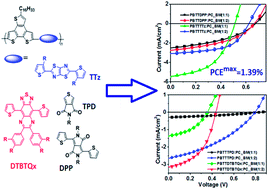
In this paper, four new BTT-based D–A copolymers PBTTDPP, PBTTTTz, PBTTTPD and PBTTDTBTQx by alternating with DPP, TTz, TPD, or DTBTQx have been synthesized. The solubility, optical, electrochemical and photovoltaic properties of the copolymers were systematically investigated. Bulk heterojunction solar cells with a structure of ITO/PEDOT4083 (40 nm)/PC71BM (80 nm)/Al (80 nm) were studied. By adjusting the composition of the polymer–PC71BM active layer, PBTTTTz–PC71BM (1
:
1, w/w) cells exhibited a highest PCE of 1.39%, with a Jsc of 5.46 mA cm−2, Voc of 0.51 V, and FF of 0.50.
2. Results and discussion
2.1. Monomers and polymers synthesis
In this study, 5-hexadecylbenzo[1,2-b:3,4-b′:5,6-d′′]trithiophene15 and DPP, TTz, TPD, DTBTQx based monomers (M2,29 M3,25 M4,30 M5 (ref. 27)) were all prepared according to the slightly modified procedures in literature. Tin reagent of BTT (M1) was firstly prepared in the study. With M1 at hand, BTT-based polymers PBTTDPP, PBTTTTz, PBTTTPD and PBTTDTBTQx were directly synthesized by the Stille coupling reaction between M1 and M2 (M3, M4, or M5). Good yields (65%–80%) of polymers were obtained with the optimized reaction conditions, where Pd2(dba)3 was used as the catalyst and P(o-tol)3 as ligand and chlorobenzene as solvent. The as-prepared polymers showed excellent solubility in common organic solvents such as tetrahydrofuran, chloroform, chlorobenzene and o-dichlorobenzene.
The molecular weights of the as-prepared polymers were measured by gel permeation chromatography (GPC) with polystyrene as a standard calibration. As summarized in Table 1. PBTTDPP, PBTTTTz, PBTTTPD and PBTTDTBTQx exhibited a number-average molecular weight (Mn) of 11.5, 22.7, 14.9 and 17.4 kDa, respectively, with a corresponding polydispersity index (PDI) of 1.65, 4.62, 2.40 and 1.34. Among them, PBTTTTz showed a rather high PDI of 4.62, which should be attribute to the longer alkyl chains attached to thiazolo[5,4-d]thiazole core.
Table 1 Polymerization results and thermal properties of copolymers
| Polymer |
Yield (%) |
Mna (kDa) |
Mwa (kDa) |
PDIa |
Tdb (°C) |
| Mw, Mn and PDI of the polymers were determined by GPC using polystyrene standards in THF. The 5% weight-loss temperatures under N2 and heat from 50 to 800 °C at a rate of 20 °C min−1. |
| PBTTDPP |
80 |
11.5 |
19.0 |
1.65 |
373 |
| PBTTTTz |
75 |
22.7 |
104.9 |
4.62 |
386 |
| PBTTTPD |
74 |
14.9 |
35.7 |
2.40 |
410 |
| PBTTDTBTQx |
65 |
17.4 |
23.3 |
1.34 |
360 |
The thermal properties of the polymers were investigated by thermogravimetric analysis (TGA). As shown in Fig. 1, the degradation temperature (Td, temperature corresponding to 5% weight loss) of four polymers is 373 °C, 386 °C, 410 °C and 360 °C, respectively. These high Td values suggested the good thermal stability of the polymers for the application in photovoltaic devices.
 |
| | Fig. 1 TGA plots of the copolymers with a heating rate of 20 °C min−1 under N2 atmosphere. | |
2.2. Optical properties
The optical properties of polymers were investigated by UV-visible (UV-vis) analysis in chloroform and their solid films. The measured spectra are shown in Fig. 2, with the corresponding data summarized in Table 2. The four polymers all exhibited a similar two-absorption-peak profile,31 i.e., the first absorption band at the shorter wavelength around 300–420 nm and the second band at the longer wavelength for PBTTDPP, PBTTTTz and PBTTDTBTQx, while PBTTTPD exhibited two absorption peaks at 470 and 620 nm. The first region was originated from the π–π* transition of the polymeric backbone, while the later was attributed to the intramolecular charge transfer (ICT) interaction between the BTT unit and the acceptor units. In solution, four polymers PBTTDPP, PBTTTTz, PBTTTPD, PBTTDTBTQx showed absorption peaks 657 nm, 580 nm, 620 nm and 728 nm, respectively, in longer wavelength region. In solid state, the polymers displayed similar absorption profiles but widened absorption at long wavelength region, with a maximum absorption peaking at 670 nm, 583 nm, 475 nm and 750 nm respectively, which was 13 nm, 3 nm, 5 nm and 22 nm red-shifted than that of their solutions. PBTTDPP and PBTTDTBTQx films also displayed two shoulder peaks at 628 nm and 814 nm in long wavelength region. The obviously broadened and red-shifted UV-vis absorption spectra of polymer films indicates the increased intermolecular interactions and aggregation in solid state, presumably resulted from stronger π–π stacking of the backbones.
 |
| | Fig. 2 Normalized UV-vis absorption spectra of polymers in dilute o-DCB the solution and in solid state. | |
Table 2 Optical and electrochemical properties of BTT-based copolymers
| Polymer |
UV-vis |
CV |
| λmaxa (nm) |
λonseta (nm) |
λmaxb (nm) |
λonsetb (nm) |
Eoptgc (eV) |
Eoxonset (V) |
HOMOd (eV) |
LUMOe (eV) |
| Absorption in solution. Absorption in film. Eoptg = 1240/λonset. HOMO = −e(Eoxonset + 4.4) (eV). LUMO = HOMO + Eoptg. |
| PBTTDPP |
657 |
947 |
670 |
975 |
1.27 |
0.56 |
−4.96 |
−3.69 |
| PBTTTTz |
580 |
715 |
583 |
761 |
1.63 |
0.75 |
−5.15 |
−3.52 |
| PBTTTPD |
470, 610 |
667 |
475 |
690 |
1.80 |
1.01 |
−5.41 |
−3.61 |
| PBTTDTBTQx |
728 |
991 |
750 |
1031 |
1.20 |
0.40 |
−4.80 |
−3.60 |
The evident shoulder peak of PBTTDPP was owe to the intermolecular aggregation state because of the strong polarity of the lactam group of DPP unit and increased vibronic coupling associated with molecular rigidity.29 The shoulder peak of PBTTTPD was also related to the strong effect of the lactam group of TPD unit.32,33
The optical bandgap (Eoptg) of polymers was determined from the absorption onset of polymer films. The Eoptg of PBTTDPP, PBTTTTz, PBTTTPD and PBTTDTBTQx was estimated as 1.27, 1.63, 1.80 and 1.20 eV, respectively. The distinct Eoptg values suggested that the electron-withdrawing ability of accepting units is TPD < TTz < DPP < DTBTQx. The absorption spectrum of PBTTDTBTQx extends even to the near infrared region, indicating DTBTQx possesses much stronger electron-withdrawing ability than DPP, TPD and TTz. In comparison to the Eoptg value of PBTTBT (1.75 eV)16 and PBTTBTz (2.05 eV),17 the optical bandgap of our polymers was effectively tailored to match the solar spectrum.
2.3. Electrochemical study
The HOMO and LUMO energy levels of polymers are important consideration for the photovoltaic applications. The cyclic voltammetry (CV) curves of four BTT-based copolymer films are showed in Fig. 3. All polymers displayed oxidation potentials but no obvious reduction potentials were observed, which was similar to those BTT-based polymers reported by I. McCulloch.18 The onset potential for oxidation (Eoxonset) was observed to be 0.56, 0.75, 1.01 and 0.40 V for PBTTDPP, PBTTTTz, PBTTTPD and PBTTDTBTQx, respectively. The HOMO energy level of the polymers was thus calculated to be −4.96, −5.15, −5.41 and −4.80 eV, respectively, from the onset oxidation potentials.34 Taking into consideration the air oxidation threshold value of the HOMO level for polymers was −5.2 eV,35 the higher HOMO levels of PBTTDPP, PBTTTTz and PBTTDTBTQx may lead to instability in the air, but the deeper HOMO level of PBTTTPD should be beneficial for chemical stability in ambient conditions. At the same time, the deeper HOMO of PBTTTPD is anticipated for higher Voc of the PSCs, since the Voc is nearly linearly dependent on the difference between the HOMO level of the donor and the LUMO level of the acceptor.1 Considering the relationship of Eoptg and HOMO energy levels of the polymers,34 the LUMO level of PBTTDPP, PBTTTTz, PBTTTPD and PBTTDTBTQx was determined to be −3.69, −3.52, −3.61 and −3.60 eV, respectively. The HOMO and LUMO energy levels data of the copolymers are summarized in Table 2. The LUMO levels of the four polymers were high enough for charge transfer from the polymer donor to fullerene acceptor, because the difference between the LUMO level of polymer and that of fullerene derivatives e.g. PC71BM (−3.91 eV) should be at least 0.3–0.4 eV to ensure charge transfer driving force.1
 |
| | Fig. 3 Cyclic voltammogram of polymer film on platinum plate in acetonitrile solution of 0.1 M Bu4NPF6 at scan rate of 50 mV s−1. | |
A close look at the HOMO and LUMO energy levels of the polymers, we could find four BTT-based polymers exhibited tuneable energy levels with the incorporated electron-accepting units (TPD, TTz, DPP and DTBTQx). Among of them, TPD-containing PBTTTPD showed the largest bandgap with the deepest HOMO energy level. The energy levels of TTz-, DPP- or DTBTQx-containing polymers were tailored by simultaneously raising the HOMO and lowering the LUMO levels of the polymers. PBTTDPP exhibited similar HOMO energy levels with the BTT-DPP alternating polymer developed by McCulloch.18
2.4. Photovoltaic properties
The BHJ solar cells were fabricated with blend films of polymer and PC71BM as active layers a device structure of ITO/PEDOT4083/polymer–PC71BM/Al. PC71BM was chosen owing to its stronger light absorption in the visible region than that of PC61BM.9 PEDOT4083 was used to replace the conventional hole transport layer PEDOT:PSS [poly(3,4-ethylenedioxylenethiophene):poly(styrenesulphonic acid)] due to its better ambient stability. Furthermore, PEDOT:PSS layer possesses high acidity which causes the corrosion and hygroscopicity to ITO electrode.36 The polymer/PC71BM layer was spin-coated from o-DCB, providing a thickness of approximately 80 nm film. Different polymer–PC71BM weight ratios, such as 1
:
1 and 1
:
2, were investigated to optimize the photovoltaic properties. Fig. 4 shows the representative current density–voltage (J–V) curves of PSCs devices based on the BTT-based copolymer/PC71BM active layer under the illumination of AM1.5G (100 mW cm−2). The corresponding Voc, Jsc, FF, and PCE values of the devices are summarized in Table 3.
 |
| | Fig. 4 J–V characteristics of optimal photovoltaic devices of BTT-based copolymer/PC71BM active layer. | |
Table 3 Photovoltaic properties of polymer solar cells based on polymer–PC71BM under the illumination of AM1.5G (100 mW cm−2)
| Copolymer |
D/A |
Voc (V) |
Jsc (mA cm−2) |
FF |
PCEb (%) |
| ITO/PEDOT4083/active layer/Al. Values in parentheses are average values and variances of 10 devices. |
| PBTTDPP |
1 : 1a |
0.68 |
2.55 |
0.41 |
0.71 (0.69 ± 0.02) |
1 : 2a |
0.67 |
2.79 |
0.43 |
0.80 (0.78 ± 0.03) |
| PBTTTTz |
1 : 1a |
0.51 |
5.46 |
0.50 |
1.39 (1.36 ± 0.03) |
1 : 2a |
0.62 |
3.09 |
0.56 |
1.07 (1.03 ± 0.05) |
| PBTTTPD |
1 : 1a |
0.83 |
1.30 |
0.34 |
0.37 (0.35 ± 0.02) |
1 : 2a |
0.79 |
2.64 |
0.37 |
0.78 (0.75 ± 0.03) |
| PBTTDTBTQx |
1 : 1a |
0.36 |
2.36 |
0.42 |
0.36 (0.34 ± 0.01) |
1 : 2a |
0.43 |
3.16 |
0.48 |
0.65 (0.63 ± 0.02) |
For PBTTDPP–PC71BM devices with a weight ratio of 1
:
1 for the blend, the devices showed a highest PCE of 0.7%, with a Jsc of 2.55 mA cm−2, a Voc of 0.68 V, and FF of 0.41. The PBTTDPP–PC71BM (1
:
2, w/w) devices exhibited a slightly improved PCE of 0.8%, with a Jsc of 2.79 mA cm−2, a Voc of 0.67 V and FF of 0.43.
PBTTTTz–PC71BM (1
:
1, w/w) devices showed a relatively high PCE of 1.38%, with a Jsc of 5.46 mA cm−2, a Voc of 0.51 V and FF of 0.50. The performance of the devices may have enough space for further optimization, e.g. fabrication the active layer with high-boiling point processing additives, polar solvents treatment and thermal annealing of active layers.37,38 PBTTTTz–PC71BM (1
:
2, w/w) exhibited certain decrease in PCE (1.07%), mainly resulting from the decrease of Jsc (from 5.46 to 3.09 mA cm−2) though the FF and Voc improved. This may be presumably owing to the larger phase separation in the active layer while the PC71BM increased.16 Significantly, the PBTTTTz based devices showed the best PCE which mainly attributed to the high FF (∼0.50) among the four BTT-based polymers devices.
PBTTTPD–PC71BM (1
:
1, w/w) device exhibited a PCE of 0.37%. However, the PCE doubled when increased the loading the PC71BM to 1
:
2 weight ratio, due to the obvious raise of Jsc and FF. This behaviour may be explained with the enhanced adequate electron and hole percolation that lead to efficient charge dissociation and collection with the increased content of PC71BM.39 Compared with the devices based on other three polymers, PBTTTPD devices displayed the highest Voc of 0.75 V–0.83 V, which is mainly due to its low-lying HOMO level (−5.41 eV) since Voc is related to the energy difference between fullerene's LUMO and polymer's HOMO levels.1 The PBTTDTBTQx–PC71BM device showed the lowest Voc around 0.35–0.43 V, mainly due to its high-lying HOMO level (−4.80 eV). PBTTDTBTQx–PC71BM devices with a weight ratio of 1
:
1 and 1
:
2 showed a PCE of 0.20% and 0.65%, respectively. The relatively low device efficiency may be further improved with relevant treatment of the active layer.
Compared the photovoltaic performance of four BTT-based polymers, PBTTTTz delivered a highest PCE of 1.39%, with a Jsc of 5.46 mA cm−2, a Voc of 0.51 V and a fill factor of 0.50. Although the moderate value of Voc is due to the higher HOMO level, the obviously increased Jsc probably owing to the higher molecular weight10 contributed the resulted performance. Interestingly, the Voc value varied relatively larger by different composition of the active layer compared with other polymer devices. PBTTDPP and PBTTTPD showed almost the same photovoltaic performances. For PBTTDTBTQx, similar with PBDTDTBTQx27 by replacing BTT unit with BDT, showed low Jsc and FF values for the devices. This can be explained with its too bulk alkyl chains, which hindered the π–π stacking and the even higher HOMO level.
To further reveal the low efficiency performances of BTT-based polymers devices, the charge transport properties of the polymers were further characterized with field-effect transistor (FET) devices. With the structure of bottom-gate and top-contact (BGTC) geometry and gold source/drain electrodes,33 polymer layer was spin-coated from o-DCB solution without annealing treatment. The hole mobility of PBTTDPP, PBTTTTz, PBTTTPD and PBTTDTBTQx device was calculated to be 2.0 × 10⁻², 4.5 × 10⁻², 1.6 × 10⁻², and 2.9 × 10⁻² cm2 V−1 s−1, respectively. These hole mobilities of BTT-based polymers are even lower than that of co-polymers between BTT and thiophene or thieno[3,2-b]thiophene.40 The highest mobility observed for PBTTTTz accounted for the higher Jsc and Voc of photovoltaic performances. The low hole mobility of polymers led to low PCE of cell devices, especially the low Jsc and FF values.
As reported, the BTT-BT alternating polymer based devices processed from chloroform–o-DCB (4/1, v/v) exhibited a PCE of 2.2%.16 And BTT-BTz alternating polymer based devices processed from chlorobenzene with 1,8-diiodooctane additive showed a PCE of 5.06%.17 The device performance of our four BTT-based copolymers, we think, could be further optimization with suitable device engineering, such as fabrication active layers with mixed solvents and processing additive as well as thermal annealing of active layers.
3. Conclusions
In summary, four BTT-based D–A polymers have been developed and evaluated for photovoltaic application. All polymers possessed high molecular weight and excellent thermal stability. PBTTDPP and PBTTDTBTQx exhibited broad absorption range which ensured a good match with the solar spectrum and optical bandgap of 1.27 eV, 1.20 eV respectively. The HOMO energy levels for BTT-based copolymers ranged from −4.80 eV to −5.41 eV and PBTTTPD possessed a lower HOMO level of −5.41 eV. The PBTTTTz–PCBM (1
:
1, w/w) device showed a best PCE of 1.39%, with a Jsc of 5.46 mA cm−2, a Voc of 0.51 V and FF of 0.50. It is worthwhile to note that all BTT polymers based devices were not optimized and thus have enough space for further improvement. This work may provide certain insight for the exploration of BTT polymers for PSC applications.
4. Experimental section
4.1. Characterization
1H NMR and 13C NMR spectra were measured on a Bruker AVANCE 500 MHz (Bio-Spin Corporation, Europe) spectrometer with chloroform-d as solvent and tetramethylsilane (TMS) as internal standard. GPC analysis was performed on a Waters 717–2410 instrument with polystyrenes as the reference standard and THF as eluent (flow rate 1.0 ml min−1). TGA was carried out using a TA instrument TGA/SDTA851e at heating rate of 20 °C min−1 under nitrogen gas flow. The temperature of degradation (Td) corresponds to the temperature for 5% weight loss of the polymer. UV-vis absorption spectra were recorded on an Evolution 220 UV-vis instrument. CV measurements were carried out using a CHI 600D electrochemical workstation, equipped with a standard three-electrode configuration where the polymer film on platinum disk was employed as working electrode, Ag/AgNO3 as reference electrode, and Pt wire as counter electrode. The measurements were conducted in anhydrous acetonitrile with tetrabutylammonium hexafluorophosphate (Bu4NPF6, 0.1 mM) under an argon atmosphere at a scan rate of 50 mV s−1. Polymer's HOMO energy levels were obtained from the oxidation potentials using the ferrocene/ferrocenium (Fc/Fc+) as the internal standard with the assumption that the energy level of Fc/Fc+ is 4.8 eV below vacuum. The LUMO levels are calculated using HOMO and optical bandgap Eg according to the following equations:
| HOMO = −e(Eox + 4.40) (eV) |
where Eox is the onset oxidation potential.
4.2. Fabrication and characterization of PSCs
The BHJ solar cells were fabricated with a structure of ITO/PEDOT4083 (40 nm)/polymer–PC71BM (80 nm)/Al (80 nm). Polymer–PC71BM (1
:
1, 1
:
2, w/w) solutions dissolved in anhydrous 1,2-dichlorobenzene (o-DCB) were stirred 24 h prior to use. ITO-coated glass was pre-cleaned with DI water, acetone, and isopropanol in an ultrasonication bath and then the substrates were treated by UV/ozone for 20 min. Firstly, poly(3,4-ethylenedioxythiophene) (PEDOT4083) thin film (40 nm) was spin-coated onto the substrate and then annealed at 150 °C for 15 min in air. Then, the active layer polymer–PC71BM (1
:
1, 1
:
2, w/w) was spin-cast onto the PEDOT4083 layer in a glove box which formed from a solvent of o-DCB solution (concentration, 30 mg ml−1) at 1000 rpm for 2 min, and then dried under N2 to obtain a thickness of ∼80 nm layer. Finally, Al layer (80 nm), thermally deposited under vacuum, was used as the counter electrode. As defined by a shadow mask, the effective device area was 0.16 cm−2. The photovoltaic characteristics were measured with a Keithley 2400 source meter under AM 1.5G illumination at 100 mW cm−2 in a nitrogen filled glove-box. A silica photodiode (Hamamatsu S1133, with KG-5 visible color filter) was employed as a standard to confirm the light intensity.
4.3. Materials
All starting materials and reagents were obtained from commercial suppliers and used without further purification unless otherwise noted. Tetrahydrofuran (THF) and chlorobenzene were distilled from sodium/benzophenone prior to use. N,N-Dimethylformamide (DMF) was dried and distilled from CaH2. Column chromatography was carried out using 300–400 nm mesh silica. Analytical thin layer chromatography was performed on pre-coated plates of silica gel, and visualization was made using ultraviolet light (254 nm). 5-Hexadecylbenzo[1,2-b:3,4-b′:5,6-d′′]-trithiophene,15 3,6-bis(5-bromo-thiophen-2-yl)-2,5-di-2-ethylhexylpyrrolo[3,4-c]pyrrole-1,4-dione,29 1,3-dibromo-5-dodecyl-4H-thieno[3,4-c]pyrrole-4,6(5H)-dione,25 2,5-bis(5-bromo-3-(icosan-9-yloxy)-thiophen-2-yl)thiazolo[5,4-d]thiazole,30 6,7-bis(3,4-bis(dodecyloxy)phenyl)-4,9-bis-(5-bromothiophen-2-yl)-[1,2,5]thiadiazol-o[3,4-g]quinoxaline27 were synthesized according to the literature procedures that were slightly modified. The synthetic route for four polymers using still coupling is shown in Scheme 1. The synthetic procedure for M1 and polymers are as follows.
 |
| | Scheme 1 Synthetic route for the BTT-based copolymers. | |
2,8-Bis(trimethylstannyl)-5-hexadecylbenzo[1,2-b:3,4-b′:5,6-d′′]trithiophene (M1). To a solution of 5-hexadecylbenzo[1,2-b:3,4-b′:5,6-d′′]trithiophene (0.8 g, 1.7 mmol) in THF (8 ml) cooled at −78 °C was added n-BuLi (2.4 M in hexanes, 1.7 ml, 4.2 mmol) drop wise within 10 min. After completely added, the reaction was stirred 1 h at −78 °C. The mixture was warmed to room temperature and stirred for another 1 h, and subsequently cooled to −78 °C, trimethyltin chloride (1.0 M in THF, 4.2 ml, 4.2 mmol) was added and the reaction mixture was stirred for a future 1 h. The mixture was warmed to room temperature overnight. The reaction was quenched with water and the reaction mixture was extracted with ethyl acetate. The combined organic phases dried over MgSO4, and the solvent removed in vacuo to give the crude product. The target product was obtained by recrystallizing from isopropyl alcohol as a white solid (0.81 g, 60%). 1H NMR (500 MHz, CDCl3) δ (ppm): 7.76 (s, 1H), 7.61 (s, 1H), 7.48 (s, 2H), 7.42 (s, 1H), 3.02 (t, J = 7.5 Hz, 2H), 1.83 (m, 2H), 1.45–1.26 (m, 26H), 0.89 (t, J = 7.0 Hz, 3H), 0.49 (s, 18H).
Synthesis of polymers. The polymers PBTTDPP, PBTTDPP, PBTTTPD and PBTTDTBTQx were prepared with Stille coupling reactions. Typically, M1 (0.25 mmol) and M2 (or M3, M4, M5) (0.25 mmol) were dissolved in 6 mL of dry chlorobenzene. The solution was degassed with argon for 30 min, then Pd2(dba)3 (4.6 mg, 2 mol%) and P(o-tol)3 (6.11 mg, 4 mol%) was added into the solution. The solution was stirred at 110 °C for 72 h under argon atmosphere. The end-capping agent 2-(tributylstannyl)thiophene (0.1 equiv.) was added. Another capping agent, 2-bromothiophene (0.1 equiv.), was added 2 h later. The reaction mixture was heated overnight. After cooling to room temperature, the mixture was added into the stirred methanol dropwise. The collected precipitated polymer was extracted with methanol, acetone, hexane and chloroform in a Soxhlet for 24 h sequentially. The chloroform solution was concentrated and purified by flash silica gel chromatography using chloroform as eluent. The product was then concentrated and re-precipitated in MeOH. The polymer was obtained after drying in vacuo.
PBTTDPP. Shiny purple black solid (0.20 g, 80%); 1H NMR (500 MHz, CDCl3) δ (ppm): 8.99 (m, 2H), 7.48 (m, 3H), 7.13 (m, 2H), 4.76 (m, 2H), 4.00 (m, 4H), 3.00 (m, 2H), 1.52–0.89 (br, 59H); anal. calcd (%) for (C58H74N2O2S5)n: C, 70.26; H, 7.52; N, 2.83; S, 16.17; found: C, 70.95; H, 7.63; N, 2.75; S, 16.12.
PBTTTTz. Dark purple solid (0.25 g, 75%); 1H NMR (500 MHz, CDCl3) δ (ppm): 7.48 (m, 2H), 6.86 (m, 3H), 4.08 (m, 2H), 3.11 (m, 2H), 1.69–0.9 (br, 111H); anal. calcd (%) for (C80H120N2O2S7)n: C, 70.33; H, 8.85; N, 2.05; S, 16.43; found: C, 71.25; H, 8.77; N, 2.01; S, 16.34.
PBTTTPD. Dark purple solid (0.15 g, 74%); 1H NMR (500 MHz, CDCl3) δ (ppm): 8.20 (m, 1H), 7.34 (m, 1H), 7.09 (m, 1H), 3.63 (m, 2H), 2.85 (m, 2H), 1.69–1.26 (br, 48H), 0.88 (m, 6H); anal. calcd (%) for (C46H61NO2S4)n: C, 70.09; H, 7.80; N, 1.78; S, 16.27; found: C, 69.12; H, 8.13; N, 1.74; S, 16.24.
PBTTDTBTQx. Dark purple solid (0.30 g, 65%); 1H NMR (500 MHz, CDCl3) δ (ppm): 9.01 (m, 1H), 7.70 (m, 6H), 7.95 (m, 5H), 4.25 (m, 10H), 1.81–0.88 (br, 123H); anal. calcd (%) for (C104H146N4O4S6)n: C, 73.10; H, 8.61; N, 3.28; S, 11.26; found: C, 72.05; H, 8.75; N, 3.21; S, 11.19.
Acknowledgements
We gratefully acknowledged the financial support from National Natural Science Foundation of China (Grant no. 21074055, 21374120 and 51225301), the Program for New Century Excellent Talents in University (NCET-12-0633), the Jiangsu Province Natural Science Fund for Distinguished Young scholars (BK20130032), the Doctoral Fund of Ministry of Education of China (no. 20103219120008), and the Fundamental Research Funds for the Central Universities (3092013111006).
Notes and references
- P. M. Beaujuge and J. M. J. Fréchet, J. Am. Chem. Soc., 2011, 133, 20009 CrossRef CAS PubMed.
- M. C. Scharber and N. S. Sariciftci, Prog. Polym. Sci., 2013, 38, 1929 CrossRef CAS PubMed.
- A. Facchetti, Chem. Mater., 2011, 23, 733 CrossRef CAS.
- J. You, L. Dou, K. Yoshimura, T. Kato, K. Ohya, T. Moriarty, K. Emery, C.-C. Chen, J. Gao, G. Li and Y. Yang, Nat. Commun., 2013, 4, 1446 CrossRef PubMed.
- L. Dou, J. You, J. Yang, C.-C. Chen, Y. He, S. Murase, T. Moriarty, K. Emery, G. Li and Y. Yang, Nat. Photonics, 2012, 6, 180 CrossRef CAS.
- Z. He, C. Zhong, S. Su, M. Xu, H. Wu and Y. Cao, Nat. Photonics, 2012, 6, 591 Search PubMed.
- C. E. Small, S. Chen, J. Subbiah, C. M. Amb, S.-W. Tsang, T.-H. Lai, J. R. Reynolds and F. So, Nat. Photonics, 2012, 6, 115 CrossRef CAS.
- L. Dou, J. Gao, E. Richard, J. You, C.-C. Chen, K. C. Cha, Y. He, G. Li and Y. Yang, J. Am. Chem. Soc., 2012, 134, 10071 CrossRef CAS PubMed.
- Y.-J. Cheng, S.-H. Yang and C.-S. Hsu, Chem. Rev., 2009, 109, 5868 CrossRef CAS PubMed.
- L. Bian, E. Zhu, J. Tang, W. Tang and F. Zhang, Prog. Polym. Sci., 2012, 37, 1292 CrossRef CAS PubMed.
- S. Kouijzer, J. J. Michels, M. van den Berg, V. S. Gevaerts, M. Turbiez, M. M. Wienk and R. J. Janssen, J. Am. Chem. Soc., 2013, 135, 12057 CrossRef CAS PubMed.
- J. You, L. Doua, Z. Hongc, G. Li and Y. Yang, Prog. Polym. Sci., 2013, 38, 1909 CrossRef CAS PubMed.
- T. Ameri, G. Dennler, C. Lungenschmied and C. J. Brabec, Energy Environ. Sci., 2009, 2, 347 CAS.
- W. Li, A. Furlan, K. H. Hendriks, M. M. Wienk and R. A. J. Janssen, J. Am. Chem. Soc., 2013, 135, 5529 CrossRef CAS PubMed.
- C. B. Nielsen, J. M. Fraser, B. C. Schroeder, J. Du, A. J. P. White, W. Zhang and I. McCulloch, Org. Lett., 2011, 13, 2414 CrossRef CAS PubMed.
- C. B. Nielsen, B. C. Schroeder, A. Hadipour, B. P. Rand, S. E. Watkins and I. McCulloch, J. Mater. Chem., 2011, 21, 17642 RSC.
- X. Zhao, D. Yang, H. Lv, L. Yin and X. Yang, Polym. Chem., 2013, 4, 57 RSC.
- C. B. Nielsen, R. S. Ashraf, B. C. Schroeder, P. D'Angelo, S. E. Watkins, K. Song, T. D. Anthopoulos and I. McCulloch, Chem. Commun., 2012, 48, 5832 RSC.
- S.-C. Lan, P.-A. Yang, M.-J. Zhu, C.-M. Yu, J.-M. Jiang and K.-H. Wei, Polym. Chem., 2013, 4, 1132 RSC.
- J. Lee, A.-R. Han, H. Yu, T. J. Shin, C. Yang and J. H. Oh, J. Am. Chem. Soc., 2013, 135, 9540 CrossRef CAS PubMed.
- P. Shen, H. Bin, L. Xiao and Y. Li, Macromolecules, 2013, 46, 9575 CrossRef CAS.
- W. Li, K. H. Hendriks, A. Furlan, W. S. C. Roelofs, M. M. Wienk and R. J. Janssen, J. Am. Chem. Soc., 2013, 135, 18942 CrossRef CAS PubMed.
- I. Meager, R. S. Ashraf, S. Mollinger, B. C. Schroeder, H. Bronstein, D. Beatrup, M. S. Vezie, T. Kirchartz, A. Salleo, J. Nelson and I. McCulloch, J. Am. Chem. Soc., 2013, 135, 11537 CrossRef CAS PubMed.
- S. Subramaniyan, H. Xin, F. S. Kim, S. Shoaee, J. R. Durrant and S. A. Jenekhe, Adv. Energy Mater., 2011, 1, 854 CrossRef CAS.
- C. Cabanetos, A. E. Labban, J. A. Bartelt, J. D. Douglas, W. R. Mateker, J. M. J. Fréchet, M. D. McGehee and P. M. Beaujuge, J. Am. Chem. Soc., 2013, 135, 4656 CrossRef CAS PubMed.
- H.-S. Chung, W.-H. Lee, C. E. Song, Y. Shin, J. Kim, S. K. Lee, W. S. Shin, S.-J. Moon and I.-N. Kang, Macromolecules, 2014, 7, 97 CrossRef.
- J. Hai, W. Yu, E. Zhu, L. Bian, J. Zhang and W. Tang, Thin Solid Films, 2014, 562, 75 CrossRef CAS PubMed.
- T. Cai, Y. Zhou, E. Wang, S. Hellström, F. Zhang, S. Xu, O. Inganäs and M. R. Andersson, Sol. Energy Mater. Sol. Cells, 2010, 94, 1275 CrossRef CAS PubMed.
- L. Huo, J. Hou, H.-Y. Chen, S. Zhang, Y. Jiang, T. L. Chen and Y. Yang, Macromolecules, 2009, 42, 65641 Search PubMed.
- J. Hai, B. Zhao, F. Zhang, C.-X. Sheng, L. Yin, Y. Li, E. Zhu, L. Bian, H. Wu and W. Tang, Polymer, 2013, 54, 4930 CrossRef CAS PubMed.
- J. Hai, G. Shi, J. Yu, E. Zhu, L. Bian, W. Ma and W. Tang, New J. Chem., 2014, 38, 4816–4822 RSC.
- H. Zhong, Z. Li, F. Deledalle, E. C. Fregoso, M. Shahid, Z. Fei, C. B. Nielsen, N. Yaacobi-Gross, S. Rossbauer, T. D. Anthopoulos, J. R. Durrant and M. Heeney, J. Am. Chem. Soc., 2013, 135, 2040 CrossRef CAS PubMed.
- J. Hai, W. Yu, B. Zhao, Y. Li, L. Yin, E. Zhu, L. Bian, J. Zhang and H. Wu, Polym. Chem., 2014, 5, 1163 RSC.
- W. Tang, L. Ke, L. Tan, T. Lin, T. Kietzke and Z.-K. Chen, Macromolecules, 2007, 40, 6164 CrossRef CAS.
- B. C. Thompson, Y. G. Kim and J. R. Reynolds, Macromolecules, 2005, 38, 5359 CrossRef CAS.
- C.-H. Hsieh, Y. –J. Cheng, P.-J. Li, C.-H. Chen, M. Dubosc, R.-M. Liang and C.-S. Hsu, J. Am. Chem. Soc., 2010, 132, 4887 CrossRef CAS PubMed.
- H. Zhou, Y. Zhang, J. Seifter, S. D. Collins, C. Luo, G. C. Bazan, T.-Q. Nguyen and A. J. Heeger, Adv. Mater., 2013, 25, 1646 CrossRef CAS PubMed.
- Y. Wang, Y. Liu, S. Chen, R. Peng and Z. Ge, Chem. Mater., 2013, 25, 3196 CrossRef CAS.
- A. Gadisa, W. Mammo, L. M. Andersson, S. Admassie, F. Zhang, M. R. Andersson and O. Inganäs, Adv. Funct. Mater., 2007, 17, 3836 CrossRef CAS.
- B. C. Schroeder, C. B. Nielsen, Y. J. Kim, J. Smith, Z. Huang, J. Durrant, S. E. Watkins, K. Song, T. D. Anthopoulos and I. McCulloch, Chem. Mater., 2011, 23, 4025 CrossRef CAS.
|
| This journal is © The Royal Society of Chemistry 2014 |
Click here to see how this site uses Cookies. View our privacy policy here.