Preparation, modification and characterization of polymeric hollow fiber membranes for pressure-retarded osmosis

Pravin G. Ingole, Kee Hong Kim, Chul Ho Park, Won Kil Choi and Hyung Keun Lee*
Greenhouse Gas Research Center, Korea Institute of Energy Research (KIER), 71-2 Jang-dong, Yuseong-gu, Daejeon-305343, Republic of Korea. E-mail: hklee@kier.re.kr; Tel: +82-42-860-3647

Received 25th July 2014 , Accepted 26th September 2014

First published on 26th September 2014


Abstract

The present study evaluated the performance of polymeric hollow fiber membranes in the pressure-retarded osmosis (PRO) process for power generation. This study systematically investigated ways to develop a high flux and high power density. The polyethersulfone (PES) membrane support was modified by coating with polydopamine (PDA). After polydopamine coating, the effect of an additive during interfacial polymerization to make a thin film composite (TFC) layer on the polydopamine-coated layer was studied. At the time of interfacial polymerization, we added tributyl phosphate (TBP) as an additive in the organic monomer solution to increase the water flux and power density. The modified membranes were then well characterized by ATR-FTIR, SEM, AFM, TEM, porometry, and contact angle analysis; their performance in salt rejection, water permeability, and power density was evaluated. The relationship between the performance of the TBP additive and the physicochemical properties of the polyamide layers, that is, the free volume, surface roughness and hydrophilicity, seemed very high. The experimental results indicate that the addition of TBP additives changes the retention properties of the composite membrane; a certain concentration of TBP additives retained in the membrane increases the membrane water flux along with power density.

1. Introduction

Increasing population, rising water demand and impairment, and increasing demands of energy use over the past decades has stimulated the exploration of alternative water and energy resources. The emerging osmotically driven membrane processes present a possible sustainable solution for the global needs of both clean water and, more importantly, clean energy.1–7 Electricity is the fundamental energy source for civilized and industrial society. With increasing industrialization globally, the total energy consumption has increased by 6%, annually, supplied by MW-sized power plants using hydroelectric, nuclear, and thermoelectric power. However, these technologies are associated with environmental challenges such as CO2 emissions, radioactive contamination, and climate change. Accordingly, many countries have been developing and exploring various clean renewable energy technologies, e.g., photovoltaic, solar heat, wind, and ocean thermal energy conversion. Electricity must be supplied continuously to avoid blackouts under forecast loads. Therefore, it is not possible for current renewable energies to serve as the primary electricity supply due to limitations in operating times that arise due to location, temperature, and weather.

Power generation by using pressure-retarded osmosis (PRO) offers the possibility of developing osmotic pressure gradients for a wide range of applications. PRO is an emerging platform technology that has the potential to sustainably produce electric power.8–10 Early PRO studies using asymmetric reverse osmosis (RO) membranes observed extremely low power density due to their thick support layers.11–14 Recent developments show that zeolites present a good material for increasing the flux, and they are also useful in microsystems for chemical synthesis and energy generation.15–19 Interfacial polymerization (IP) has proven to be an excellent method for obtaining a very thin active layer on a support membrane.20,21 Since then, a lot of progress has been made in the field of osmotic membrane fabrication. Recently, our group also fabricated and modified a number of TFC membranes consisting of polyethersulfone porous substrates for energy generation.22

Polyethersulfone (PES) is a high-performance thermoplastic polymer with outstanding thermal stability, flame resistance and flexibility. It is widely used as a substrate for hollow fiber composite membranes.23 Li et al. successfully fabricated defect-free, polymeric dual-layer hollow fiber membranes consisting of an ultrathin, dense-selective polyamide-imide (PAI) layer and a polyethersulfone (PES) support for gas separation application. It was observed that a lower outer-layer dope flow rate does not necessarily result in the formation of an ultrathin, dense-selective layer upon the PES supporting layer.24 Our group also has good experience in fabricating and modifying PES hollow fiber membranes for diverse applications, like water vapor removal,25 gas separation,26 etc. Rahimpour et al. applied the asymmetric polyethersulfone and thin-film composite polyamide nanofiltration membranes for water softening.27 A number of commercial high-pressure nanofiltration membranes are asymmetric membranes without composite structure, such as NP010 and NP030 made by Nadir Corporation. The material used in this membrane is also polyether sulfone.

Polydopamine (PDA) is a polymer with chemistry similar to the adhesive secretions of mussels.28–30 It is formed from the spontaneous polymerization of dopamine in an alkaline aqueous solution. The polar groups in the PDA layer, such as hydroxyl and amine groups, bequeath the substrates with improved hydrophilicity and anti-fouling ability.31 A subsequent study using PDA-modified membranes for osmotically driven membrane processes was first done by Arena et al.32 This was done through the application of PDA to TFC membrane support layer(s). Significant improvements in the water flux of PDA-modified TFC PRO membranes were observed in the pressure-retarded osmosis (PRO) orientation.33

We selected the PES hollow fiber membrane for PDA modification. Our study systematically investigated the effects of additive, DA coating, TFC on PDA coating, coating times, and pressure on the membrane performance and PRO performance using self-assembling PES hollow fiber membranes as substrate materials. As a consequence, this study may not only present a systematic investigation on the development of novel and well-constructed TFC hollow fiber membranes for PRO with enhanced power density through an IP concept and surface modification, but also provide useful insights and guidelines to design next-generation membranes for PRO applications.

2. Experimental

2.1. Materials

Polyethersulfone (PES, Ultrason® E6020P, BASF, Germany), used as the base polymer, was purchased from General Electric Company. N-Methyl-2-pyrrolidone (NMP) with purity more than 99.5% was purchased from Merck and used as solvent without further purification. Lithium chloride (LiCl, Sigma-Aldrich) was used as pore former in the dope solution. Dopamine, diamine monomer m-phenylenediamine (MPD) acid chloride monomer trimesoyl chloride (TMC), and tributylphosphate (TBP) were purchased from Sigma-Aldrich. Hexane, the solvent for TMC, and methanol were purchased from Fisher Scientific. Deionized water (DI) obtained from a Milli-Q ultrapure water purification system (Millipore) was used as the solvent for diamine monomers. Sodium chloride was purchased from Fisher Scientific.

2.2. Methods

2.2.1. Preparation of PES hollow fiber membrane. A PES hollow fiber membrane was fabricated using the dry/wet phase inversion method. PES has excellent thermal and dimensional stability as well as strong chemical resistance.34 PES also has a high degree of chain rigidity because of its regular and polar backbone. The method to fabricate the hollow fiber membrane has been explained elsewhere.35 In this present work, the dope solution and internal coagulant (D.I. water) were passed through a double-pipe spinneret of 0.16/0.9 mm inner/outer diameter with an air gap maintained at 0.5 cm. The dope solution was composed of 18.0 wt% PES, and 77.0 wt% N-methylpyrrolidone and 5.0 wt% lithium chloride were used as the solvent and additive, respectively. The hollow fiber was passed through the first coagulation bath, where phase inversion occurred rapidly. After that, it was moved to the second coagulation bath, where the hollow fiber was washed out and coiled around the winder. The as-spun fibers were rinsed in a water bath for six days to remove the remaining solvent. Then, fibers were post-treated with methanol for two hours to improve flux and dried for six days. Fig. 1 represents the schematic diagram of the hollow fiber membrane spinning system.
image file: c4ra07619b-f1.tif
Fig. 1 Schematic diagram of the HFM spinning system.
2.2.2. Preparation of membranes for dopamine coating on the hollow fiber membrane. The PDA modification followed the procedure set forth in previous work.28 Since PDA formation only occurs in the aqueous phase, the newly prepared solution was shaken vigorously at 25 °C to avoid the formation of large PDA particles. The cleaned PES membranes were immersed in a solution of 2 mg ml−1 DA–HCl at pH 8.5 (PBS buffer). After the desired polymerization time (1 h), the coated membranes were washed with double-distilled water for 24 h to remove the redundant dark brown precipitates. Polymerization occurs at room temperature with non-agitated solutions exposed to the air. PDA polymerization can be observed upon the addition of dopamine, where the formation of PDA is indicated by the change in color of the polymerizing dopamine solution from clear, to orange, and finally, to brown. The fiber color changes as shown in Fig. S1 (ESI).
2.2.3. Polyamide active layer fabrication. The thin film composite membrane was prepared by coating the selective layer in situ on the surface of the polydopamine-coated hollow fiber membrane by interfacial polymerization of m-phenylenediamine (MPD) with trimesoyl chloride (TMC). The polydopamine-coated hollow fiber membrane was immersed in an aqueous solution containing 1.0 wt% of MPD for 3–5 min followed by draining for 2–5 min to remove excess solution. It was then immersed into a hexane solution of TMC of the desired concentration (0.1 wt%) with 0.1 wt% TBP additive for 60 s, followed by draining of the excess solution. The polymerization reaction occurs on the surface of the polydopamine-coated hollow fiber membrane, resulting in the formation of an ultrathin layer of cross-linked co-polyamide. The composite membrane so obtained was cured in hot air circulation at 70–80 °C for 5 min, whereby the polymer layer attains chemical stability.36 After heat treatment, the membrane was dried at room temperature for 2 h and then stored in DI water until next use. Table 1 discloses the compositions of aqueous and non-aqueous solutions and the reaction times used for interfacial polymerization.
Table 1 Dopamine coating conditions for the preparation of selective layer
Entry Membrane code Dopamine coating Composition Reaction time (s)
MPD (wt/wt%) TMC (wt/wt%)
1 PES/PA-M1 0 h 1.0 0.1 60
2 PA without additive-M2 1 h 1.0 0.1 60
3 PA with additive-M3 1 h 1.0 0.1 60


2.2.4. Membrane flux performance. A schematic diagram of the bench-scale PRO setup is shown in Fig. 2. PDA-coated thin film composite membranes were evaluated for permeate flux and rejection on a PRO test kit. A high pressure pump was used to transport and pressurize the draw solution that passed through the active surface side of the hollow fiber membrane module. The active layer of the membrane always faced the draw solution for the PRO tests. Membrane permeate flux (i.e., volumetric flux of water) was determined at predetermined time intervals by measuring the weight changes of the feed tank with a digital mass balance connected to a computer data logging system. Testing was done with NaCl solution at different operating pressures. A hollow fiber membrane module was prepared with an effective membrane area of around 7.2 cm2 and a length of around 20.0 cm. A standardized digital conductivity meter (UTV, US) was used to measure the salt concentrations in the feed and product water for determining membrane selectivity. The volume of permeate collected was used to describe flux in terms of liter per square meter of active membrane area per hour (L m−2 h−1). For the details regarding calculations, please see the ESI.
image file: c4ra07619b-f2.tif
Fig. 2 Pressure-retarded osmosis (PRO) testing unit.
2.2.5. Membrane characterization.
2.2.5.1. Attenuated total reflection-Fourier transform infrared spectroscopy (ATR-FTIR). The PDA-coated selective thin film composite membranes were characterized by variable angle attenuated total reflectance Fourier transform infrared (ATR-IR) spectroscopy to elucidate the chemical structure of the selective thin film composite membranes. ATR-FTIR spectra were recorded on ALPHA-P Spectrometer with a diamond ATR cell (Bruker) in the range of 600–4000 cm−1. A total of 30 scans were performed at a resolution of 4 cm−1 with a germanium crystal at temperature of 25 ± 1 °C. A program written for the V2 software from Bruker was used to record the spectra and for the selection of the corresponding backgrounds.
2.2.5.2. Membrane morphology. The performance of composite membranes largely depends on the chemical composition of the selective thin film and the morphology of the membrane, which depends on fabrication parameters controlling the kinetics and diffusion rates of the reactants, hydrolysis of reactants, cross-linking, and post-treatment. Therefore, study of the membrane morphology is highly relevant to understand the membrane performance.

The morphology of membranes was studied by scanning electron microscope (SEM, S-4700, Hitachi) using dried, fractured, and gold-sputtered samples at a potential of 5–20 kV. The surface topography of membranes was studied by atomic force microscope/surface probe microscope using Nanoman AFM system (Veeco) in tapping mode. A small strip of membranes was placed on a specific sample holder, and 3 μm × 3 μm areas were scanned. Mean roughness (Ra), root mean square Z values (Rms), and maximum vertical distance between the highest and lowest data points (Rmax) were used to quantify the surface topology of the membranes. The internal structure of the selective layer was observed in transmission electron microscope (TEM) (JEOL JEM-2100 TEM) at an accelerating voltage of 200 kV.


2.2.5.3. Water contact angle of membranes. Surface hydrophilicity of membrane substrates was evaluated by contact angle drop shape geometry (DSA100, Germany) using Milli-Q deionized water as the probe liquid at room temperature. To minimize the experimental error, the contact angle was randomly measured at more than 10 different locations for each sample, and the average value was reported.
2.2.5.4. Porosity analysis. Membrane effective porosity refers to the volume fraction of the connected voids to the total void volume and may be given by following equation:
 
image file: c4ra07619b-t1.tif(1)
Here, ε is membrane effective porosity, and Vcp and Vv are the volume of through pores and total void volume.

For the details concerning pore size analysis and calculations, please see the ESI.

3. Results and discussion

3.1. Membrane physicochemical characteristics

3.1.1. ATR-FTIR. Fig. 3 presents the FT-IR results for a comparison between the PES substrate and the composite membranes. FTIR spectra displaying peaks at around 1107, 1151, 1243, 1291, 1322, 1487 and 1578 cm−1 are characteristic of the PES membrane material. In particular, peaks at around 1487 and 1574 cm−1 are characteristic of PES. The FTIR spectrum of the PDA-coated PES-1 h substrate is composed of bands attributed to both the PDA layer and PES substrates. The peak at 1610 cm−1 was attributed to the aromatic ring stretching vibrations and N–H bending vibrations, and the peak at 3400 cm−1 was attributed to the catechol –OH groups and N–H groups. After surface coating of PDA, compared with the PES membrane, several new absorption signals appeared, and a broad peak between 3600 and 3000 cm−1 was attributed to the stretching vibrations of N–H/O–H. The intense peak at 1610 cm−1 is the overlapped peaks of C–C vibrations of the aromatic ring and the N–H bending vibrations. These changes in the characteristic peaks indicated the existence of PDA on the membrane surface and that the PDA coating was successful. The peak at 1654 cm−1 is attributed to stretching vibration of C[double bond, length as m-dash]O, which is formed by the oxidation of the catechol groups into quinine during the self-polymerization.23,37 In addition, the presence of two main peaks at around 1670 and 1550 cm−1 corresponding to amides I (C[double bond, length as m-dash]O) and II (N–H), respectively, indicate the formation of polyamide (PA) thin film.
image file: c4ra07619b-f3.tif
Fig. 3 ATR-FTIR spectra of PES/PA-M1, PDA-coated PES-1 h, PDA/PA without additive-M2, and PDA/PA with additive-M3 membranes with operation pressure.
3.1.2. Morphological analysis. The morphology of the composite membranes was observed in scanning electron microscope. The top and transverse section of the composite membrane (Fig. 4) clearly indicates a thin, dense top layer (selective layer) and a porous, thick bottom layer (support layer). Fig. 4a and b show SEM images of the selected PES membranes. The polydopamine-coated membrane (Fig. 4c) shows a dispersed granular surface with visible open-pore structure. The thickness of the coated membrane is clearly seen in the figure. The cross-sectional morphology of the resultant TFC coated on polydopamine hollow fiber membranes is shown in Fig. 4d. Polyamide membranes having a dispersed granular surface with visible open-pore structure are shown in Fig. 4d (TFC membrane). Since the active polyamide layer was synthesized on the outer surface of the polydopamine-coated hollow fiber substrate, the structure of the membrane substrate is very different before and after interfacial polymerization. This thin PA layer is the functional selective layer whose nature primarily determines the water permeability and power density of the resulting TFC-PRO membrane. The MPD + TMC PA selective layers formed on PDA-coated HF substrates are thinner membrane materials, as clearly shown in Fig. 4d. The physico-chemical properties of the intermediate PDA layer may play the most important role in determining the PRO performance of these TFC membranes.
image file: c4ra07619b-f4.tif
Fig. 4 SEM images of (a and b) PES substrate, (c) after polydopamine coating, and (d) interfacial polymerization forming a polyamide (PA) thin film coating with additive.

Fig. S1 (ESI) illustrates the evolution of colour change with time of the PDA-functionalized PES hollow fiber membranes before and after coating with thin film composite polyamide layer. Clearly, dopamine has successfully self-polymerized and coated on the PES hollow fiber membranes' top surface; it can be observed that the thickness increases after coating of PDA, and it is proven by SEM images before and after coating of PDA, as shown in Fig. 4.

3.1.3. Surface morphologies of the thin-film layer by AFM. The roughness of the outer surface of the hollow fiber membranes was determined by AFM. Fig. 5 shows the 3-dimensional (3D) micrographs indicating the surface topology of the substrate and the TFC membrane. From the three-dimensional AFM images in Fig. 5, it can be observed that PES substrates coated by PDA before and after thin film composite formation have different top surface roughness. Table 2 summarizes the surface roughness parameters in terms of Ra, Rms and Rmax for substrate PES, PDA 1 h coated membrane, along with TFC membrane. Generally, the modified membranes have improved hydrophilicity, smoothened surface, smaller surface pores and narrower pore size distribution compared to the uncoated substrate.38–40 These improvements may affect the formation of the selective polyamide layer and influence the PRO performance of the resultant TFC membranes.
image file: c4ra07619b-f5.tif
Fig. 5 AFM images of the selected (a) PES/PA-M1, (b) PDA/PA without additive-M2, and (c) PDA/PA with additive-M3 PDA-coated hollow fiber membranes.
Table 2 Surface roughness values of the thin film composite membranes
Membranes Rms (nm) Ra (nm) Rmax (nm)
PES/PA-M1 9.18 7.79 81.13
PA without additive-M2 14.78 11.24 90.3
PA with additive-M3 18.65 13.15 169.6


With the addition of TBP into the TMC organic solution, the surface morphology of the membrane prepared without TBP addition was changed. The addition of TBP in the TMC organic solution during interfacial polymerization tends to increase the ridge portion of the polyamide TFC membrane.41 The AFM image of the membrane with no TBP addition shows a ridge-and-valley structure. The membrane with the addition of 0.1 wt% TBP in the TMC organic solution indicates that the surface of the TFC polyamide film has a broad ridge and a loose structure compared to the membrane without TBP addition.

3.1.4. Transmission electron microscopy (TEM). A more detailed structural characterization is revealed by TEM images, as shown in Fig. 6. Transmission electron microscopy is a highly relevant technique to visualize the internal structure of the thin layer of membranes due to its high-resolution power and possibility to achieve contrast between areas having different chemical structures.42 The porous polyethersulfone support, having a significant proportion of sulfur atoms, is vaguely darker than the PDA and polyamide layer. In Fig. 6, we show the surface of the hollow fiber membrane after formation of TFC, i.e. Fig. 6a; Fig. 6b is a scan on the 0.1 μm scale, and here we found pores of various sizes. Fig. 6c shows scans after cutting the hollow fiber membrane to show the TFC layer on the surface of the PES support membrane. The darker part of the skin is almost as thin as in the original membrane, and no penetration of the pores of the support by the polymer is observed (Fig. 6c). The bright and dark regions in the TEM images arise from the difference in electron densities between the PDA main chains and the PA side chains. It may be seen from the micrographs that the amine-dominated interlayer (Fig. 6b and c) fills the cavities of the polyethersulfone support and largely varies in thickness.
image file: c4ra07619b-f6.tif
Fig. 6 TEM images of the selected PDA-coated hollow fiber membranes: (a) PES/PA-M1, (b) PDA/PA without additive-M2 and (c) PDA/PA with additive-M3.
3.1.5. Contact angle. Table 3 shows the water contact angle of the PES substrate, the top surface of PDA-coated PES substrates, as well as the TFC membrane. Consistent with the observation that the contact angle decreases after coating of PDA, TFC coating results in a rapid decrease in water contact angle from 108° (±5) of the PES to 51° (±4). Furthermore, dopamine may penetrate into the pores inside the substrate and attach onto the pore wall via self-polymerization reaction during the PDA modification process, which can enhance their hydrophilicity.43 The contact angle results after interfacial polymerization with and without additives are shown in Table 3.
Table 3 Contact angle measurement results of membranes
Entry Membrane name (time) Contact angle (°)
1 PES substrate 108 ± 5
2 PES/PA-M1 73 ± 4
3 PA without additive-M2 57 ± 4
4 PA with additive-M3 51 ± 4


3.1.6. Pore size analysis. To measure the effective porosity, gas is pressurized over the fluid-saturated membrane. The fluid from the largest pore is blown out first, and gas starts flowing through the membrane. This point is called bubble point, and the diameter of the pore is known as the bubble point diameter. As gas pressure is increased continuously, smaller pores subsequently open, and the flow of gas increases. At the stage when gas flows through all the pores present in the membrane at a specified pressure range, the flow of gas through the wet membrane equals the flow of gas through the dry membrane. At this point, the diameter of the pores is noted as smallest pores. The pores present in the membrane lies between the largest and the smallest pores. The porosity analysis of the membrane is given in Table 4 and Fig. 7.
Table 4 Porosity analysis of the PES/PA-M1, PA without additive-M2, and PA with additive-M3 membranes
Membrane parameters PES/PA-M1 PA without additive-M2 PA with additive-M3
Smallest pore diameter (μm) 1.33 1.513 1.712
Mean flow pore diameter (μm) 1.782 1.854 2.141
Bubble point diameter (μm) 2.292 2.324 2.512
% Distribution of max. pore flow 74.34 78.54 85.34
Diameter at max. pore flow (μm) 1.521 1.652 1.872


image file: c4ra07619b-f7.tif
Fig. 7 Pore size distribution in the selected PDA-coated hollow fiber membranes: (a) PES/PA-M1, (b) PDA/PA without additive-M2 and (c) PDA/PA with additive-M3.

It is seen that the porosity of the membrane increases after addition of TBP at the time of interfacial polymerization in the organic solution. Further, membrane prepared from organic solution without additive and only PES/PA contained small pores compared to those prepared from the organic solution containing the additive. It means that additive content in the membrane preparation solution strongly influences the porosity of the membrane.

3.2. Membrane performance

3.2.1. Water permeability. Fig. 8 shows that osmotic water flux increased significantly following modification of the M2 and M3 membranes with and without additives. The hollow fiber membrane module was first compacted with DI water at an applied pressure, ΔP, of 1.0 bar. The applied pressure was increased up to 8 bar. The pure water flux results obtained for the modified membranes were interesting and unexpected. The modified membranes exhibited an increased hydraulic permeability (Fig. 8). The increased permeability of the PDA-modified membrane is likely due to the hydrophilization of the support layer at the interface of the PES layer and the polyamide selective layer. By increasing the hydrophilic character of this interface, transport of water from the polyamide layer is more favourable. We presume that water transporting through the -new hydrophilic support layer encounters less surface energy resistance than normally associated with an unmodified hydrophobic PES support. This observation is similar to those reported previously, where the PDA-modified M2 and M3 membranes exhibited an increase in flux.33 We have clearly observed after adding TBP that there is tremendous change in flux, as shown in Fig. 8. Fig. S2 (ESI) shows a snapshot of the MD simulation system. The system consists of two square membranes (3.3 nm long in the x and y directions and 1.5 nm thick in the z direction) separating two KCl solutions of different concentrations. The membrane atoms are located in a face-centred cubic fashion in the xy plane. The membrane consists of a semipermeable pore (only water can go through the pore, and ions do not go through the pore) of diameter 7 Å at the centre of the membrane.
image file: c4ra07619b-f8.tif
Fig. 8 Variation in pure water flux using PES/PA-M1, PDA/PA without additive-M2 and PDA/PA with additive-M3 membranes with operation pressure.
3.2.2. Salt rejection. Salt rejection was characterized by keeping the applied pressures up to 8 bar and measuring the rejection of 500 ppm NaCl solution using a calibrated conductivity meter. Observed NaCl rejection, R, was determined from the difference in feed (Cf) and permeate (Cp) salt concentrations.
 
R = 1 − Cp/Cf (2)

The rejection values for each sample are the average of three different measurements collected over a ∼10 min period. The temperature of the system was maintained at 25 °C throughout the experiment. Fig. 8 shows the variation in pure water flux, and Fig. 9 shows the variation in salt rejection (500 ppm) with operation pressure. With the addition of additive in TMC solution, NaCl rejection by the polyamide thin film increases. The maximum NaCl rejection and flux was 98.23% and 26.32 L m−2 h−1, respectively, observed on the PA with additive-M3 on 1 h-coated PDA hollow fiber membrane. The thin film displayed high free volume and was therefore expected to display high flux. Our experimental results show that the increase in flux by using MPD as diamine monomer crosslinked after addition of the additive in TMC could be due to the increased free volume within the thin film.


image file: c4ra07619b-f9.tif
Fig. 9 Variation in salt rejection using PES/PA-M1, PDA/PA without additive-M2, and PDA/PA with additive-M3 membranes with operation pressure.

3.3. Water flux and power density

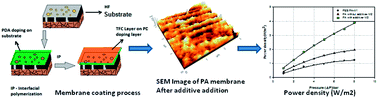
The PRO performance of PDA-coated TFC (MPD + TMC) before and after the addition of the additive using 0.6 M NaCl solution as the draw solution and deionized water as the feed solution was tested under PRO modes. The TFC on PES membrane, made before addition of the additive, shows a poor water flux, as low as 5.78 L m−2 h−1 under the PRO mode with 1.24 W m−2 power density. However, the water flux dramatically increases when the TBP additive is added at the time of preparation of the PA active layer, and it reaches up to 18.26 L m−2 h−1 with 3.9 W m−2 power density at 8 bar by using PA with additive-M3 on 1 h PDA-coated TFC membrane (as shown in Fig. 10 and Fig. 11, respectively).
image file: c4ra07619b-f10.tif
Fig. 10 Variation in water flux using PES/PA-M1, PDA/PA without additive-M2, and PDA/PA with additive-M3 membranes with operation pressure.

image file: c4ra07619b-f11.tif
Fig. 11 Variation in power density using PES/PA-M1, PDA/PA without additive-M2, and PDA/PA with additive-M3 membranes with operation pressure.

To evaluate the impact of additive on the formation of PA layer on PDA-coated PES hollow fiber membranes for PRO applications, the membranes were tested for osmotic flux in the PRO mode. The PES/PA-M1, PA without additive-M2 and PA with additive-M3 membranes were compared, and the results have been shown in figures. The additive-included, PDA-modified PA membranes exhibited substantial flux improvement, indicative of an increased hydrophilicity of the membrane support layer. This increased hydrophilic nature promotes water transport through the support layer and to the interior interface of the polyamide layer.33

3.4. Effect of tributyl phosphate (TBP) additive on the performance of hollow fiber membranes

As we have seen, after adding tributyl phosphate (TBP) at the time of TFC membrane preparation, there is a tremendous effect on membrane performance. The experimental results indicated that after addition of TBP, the retention properties of the composite membrane are different; a certain concentration of TBP additives can be retained in the membrane properties under the same circumstances, so that membrane water flux increased. The PA with additive-M3 membrane made from a PDA coating time of 1 h shows the highest water permeability and power density. A relatively high-flux polyamide TFC membrane could be fabricated by adding the additive in organic solution. The rejection levels were similar for all of the membranes, at 97.5–98.2%. For the membranes using TBP as an additive in the organic solution, an increase in the water flux was observed with no significant loss of salt rejection.

Polyamide film formation takes place in three steps: embryonic film formation, which is a fast process, followed by a slowdown in polymerization depending upon the permeability of the initial film formed, and finally a shift to a diffusion-controlled process. The initial layer formed during the embryonic film formation is the actual barrier layer controlling the separation characteristics of the thin film and divides the film in two regions; each region is rich in one type of monomer and end group. In the diffusion-controlled step, film growth takes place until the monomers diffusing through the film are consumed by other monomers and/or unreacted functional groups of the film.44 Furthermore, membranes prepared using 1.0% concentration of MPD solutions with 0.1% TMC concentration exhibited higher flux with high power density. Interfacial polymerization between MPD and TMC occurs on the organic side; the reaction is diffusion-controlled and exists as a self-limiting phenomenon. The reaction time plays an important role in determining the extent of polymerization and thereby the cross-linking degree and thickness of the top skin layer, as well as the resulting membrane performance.45 The power densities of the modified membranes are presented in Fig. 11. The highest power density of 3.9 W m−2 was obtained from the PDA/PA modified with additive (M3) membrane at 8 bar operating pressure, which is noticeably higher than the reported asymmetric TFC membrane, 1.5 W m−2 at 11 bar pressure.46

4. Conclusions

In this study, we demonstrate, for the first time, the fabrication of a TFC membrane via interfacial polymerization on a PDA-coated hollow fiber membrane with tributyl phosphate (TBP) as an additive in the organic monomer solution to increase the water flux and power density. Thin, crosslinked aromatic polyamide barrier layer films and support membranes were characterized by ATR-FTIR spectroscopy, SEM, AFM, TEM and pore size analysis, versus water permeability, selectivity and power density. All the prepared membranes demonstrated higher flux and high power density values when convection was present as a result of thrilling. Overall, these results suggest that the surface patterns induced hydrodynamic secondary flows at the membrane-feed interface that were effective in increasing power density. This improved fabrication process can provide a new paradigm for the preparation of high-performance TFC-PRO membranes. The modified membranes must possess tough mechanical properties to withstand the compression, trim and elongation stresses during the high-pressure PRO process without showing structural damage and sacrificing much water flux. The support membrane pore morphology and hydrophilicity have a strong impact on a membrane's performance in osmotically driven processes. Our results show that coating on the polyethersulfone hollow fiber support layer containing polydopamine and polyamide causes an increase in water flux in PRO mode in osmotically driven processes and an increase in water flux during the addition of additive and applied pressure-driven PRO tests.

Acknowledgements

This work was conducted under the framework of Research and Development Program of the Korea Institute of Energy Research (KIER) (B3-2441-02).

Notes and references

  1. M. Elimelech and W. A. Phillip, Science, 2011, 333, 712–717 CrossRef CAS PubMed.
  2. M. Elimelech and R. McGinnis, Membr. Technol., 2009, 4, 10–11 CrossRef.
  3. Q. Schiermeier, Nature, 2008, 452, 260–261 CrossRef CAS PubMed.
  4. S. Patel, Power, 2011, 155, 13–14 Search PubMed.
  5. R. L. McGinnis and M. Elimelech, Environ. Sci. Technol., 2008, 42, 8625–8629 CrossRef CAS PubMed.
  6. R. J. Aaberg, Refocus, 2003, 4, 48–50 CrossRef.
  7. M. C. Y. Wong, K. Martinez, G. Z. Ramon and E. M. V. Hoek, Desalination, 2012, 287, 340–349 CrossRef CAS.
  8. X. Song, Z. Liu and D. D. Sun, Energy Environ. Sci., 2013, 6, 1199–1210 CAS.
  9. C. Klaysom, T. Y. Cath, T. Depuydt and I. F. J. Vankelecom, Chem. Soc. Rev., 2013, 42, 6959–6989 RSC.
  10. J. T. Arena, B. McCloskey, B. D. Freeman and J. R. McCutcheon, J. Membr. Sci., 2011, 375, 55–62 CrossRef CAS.
  11. A. Tiraferri, N. Y. Yip, W. A. Phillip, J. D. Schiffman and M. Elimelech, J. Membr. Sci., 2011, 367, 340–352 CrossRef CAS.
  12. J. Wei, C. Qiu, C. Y. Tang, R. Wang and A. G. Fane, J. Membr. Sci., 2011, 372, 292–302 CrossRef CAS.
  13. S. Chou, L. Shi, R. Wang, C. Y. Tang, C. Qiu and A. G. Fane, Desalination, 2010, 261, 365–372 CrossRef CAS.
  14. R. Patel, W. S. Chi, S. H. Ahn, C. H. Park, H. K. Lee and J. H. Kim, Chem. Eng. J., 2014, 247, 1–8 CrossRef CAS.
  15. J. L. H. Chau, A. Y. L. Leung and K. L. Yeung, Lab Chip, 2003, 3, 53–55 RSC.
  16. S. M. Kwan and K. L. Yeung, Chem. Commun., 2008, 3631–3633 RSC.
  17. K. L. Yeung, S. M. Kwan and W. N. Lau, Top. Catal., 2009, 52, 101–110 CrossRef CAS.
  18. C. Yuan, Q. Liu, H. Chen and A. Huang, RSC Adv., 2014, 4, 41982–41988 RSC.
  19. M. G. Buonomenna, RSC Adv., 2013, 3, 5694–5740 RSC.
  20. J. E. Cadotte, R. J. Petersen, R. E. Larson and E. E. Erickson, Desalination, 1980, 32, 25–31 CrossRef.
  21. R. E. Larson, J. E. Cadotte and R. J. Petersen, Desalination, 1981, 38, 473–483 CrossRef CAS.
  22. P. G. Ingole, W. Choi, K. H. Kim, H. D. Jo, W. K. Choi, J. S. Park and H. K. Lee, Desalination, 2014, 345, 136–145 CrossRef CAS.
  23. L. Shi, S. R. Chou, R. Wang, W. X. Fang, C. Y. Tang and A. G. Fane, J. Membr. Sci., 2011, 382, 116–123 CrossRef CAS.
  24. F. Y. Li, Y. Li, T.-S. Chung, H. Chen, Y. C. Jean and S. Kawi, J. Membr. Sci., 2011, 378, 541–550 CrossRef CAS.
  25. S. H. Yun, P. G. Ingole, K. H. Kim, W. K. Choi, J. H. Kim and H. K. Lee, Chem. Eng. J., 2014, 258, 348–356 CrossRef CAS.
  26. K. H. Kim, C. H. Hyung, P. G. Ingole, J. H. Kim and H. K. Lee, J. Appl. Polym. Sci., 2014, 131 DOI:10.1002/app.39711.
  27. A. Rahimpour, M. Jahanshahi, N. Mortazavian, S. S. Madaeni and Y. Mansourpanah, Appl. Surf. Sci., 2010, 256, 1657–1663 CrossRef CAS.
  28. H. Lee, N. F. Scherer and P. B. Messersmith, Science, 2006, 103, 12999–13003 CAS.
  29. H. Lee, Y. Lee, A. R. Statz, J. Rho, T. G. Park and P. B. Messersmith, Adv. Mater., 2008, 20, 1619–1623 CrossRef CAS PubMed.
  30. H. Lee, S. M. Dellatore, W. M. Miller and P. B. Messersmith, Science, 2007, 318, 426–430 CrossRef CAS PubMed.
  31. L. P. Zhu, J. H. Jiang, B. K. Zhu and Y. Y. Xu, Colloids Surf., B, 2011, 86, 111–118 CrossRef CAS PubMed.
  32. J. T. Arena, B. D. McCloskey, B. D. Freeman and J. R. McCutcheon, J. Membr. Sci., 2011, 375, 55–62 CrossRef CAS.
  33. P. G. Ingole, W. Choi, K. H. Kim, C. H. Park, W. K. Choi and H. K. Lee, Chem. Eng. J., 2014, 243, 137–146 CrossRef CAS.
  34. K. H. Kim, P. G. Ingole, J. H. Kim and H. K. Lee, Polym. Adv. Technol., 2013, 24, 997–1004 CrossRef CAS.
  35. K. H. Kim, P. G. Ingole, J. H. Kim and H. K. Lee, Chem. Eng. J., 2013, 233, 242–250 CrossRef CAS.
  36. P. G. Ingole, H. C. Bajaj and K. Singh, Desalination, 2012, 305, 54–63 CrossRef CAS.
  37. L. P. Yang, S. L. Phua, J. H. Teo and X. H. Lu, ACS Appl. Mater. Interfaces, 2011, 3, 3026–3032 CAS.
  38. P. G. Ingole, K. Singh and H. C. Bajaj, Indian J. Chem. Technol., 2011, 18, 197–206 CAS.
  39. P. G. Ingole, H. C. Bajaj and K. Singh, RSC Adv., 2013, 3, 3667–3676 RSC.
  40. P. G. Ingole, K. Singh and H. C. Bajaj, Desalination, 2011, 281, 413–421 CrossRef CAS.
  41. I.-C. Kim, B.-R. Jeong, S.-J. Kim and K.-H. Lee, Desalination, 2013, 308, 111–114 CrossRef CAS.
  42. V. Freger, J. Gilron and S. Belfer, J. Membr. Sci., 2002, 209, 283–292 CrossRef CAS.
  43. D. J. Miller, D. R. Paul and B. D. Freeman, Polymer, 2014, 55, 1375–1383 CrossRef CAS.
  44. R. Nadler and S. Srebnik, J. Membr. Sci., 2008, 315, 100–105 CrossRef CAS.
  45. P. W. Morgan and S. L. Kwolek, J. Polym. Sci., Part A: Polym. Chem., 1996, 34, 531–559 CrossRef CAS.
  46. X. Li, S. Zhang, F. Fu and T.-S. Chung, J. Membr. Sci., 2013, 434, 204–217 CrossRef CAS.

Footnote

Electronic supplementary information (ESI) available. See DOI: 10.1039/c4ra07619b

This journal is © The Royal Society of Chemistry 2014
Click here to see how this site uses Cookies. View our privacy policy here.