
DOI:
10.1039/C4RA07394K
(Paper)
RSC Adv., 2014,
4, 44282-44290
Preparation and characterization of surface modified boron nitride epoxy composites with enhanced thermal conductivity
Received
21st July 2014
, Accepted 10th September 2014
First published on 10th September 2014
Abstract
Hexagonal boron nitride (h-BN) microparticles, modified by surface coupling agent 3-aminopropyl triethoxy silane (APTES), were used to fabricate thermally conductive epoxy/BN composites, and the effects of modified-BN content on the thermal and insulating properties were investigated. It was found that incorporation of h-BN particles in the epoxy matrix significantly enhanced the thermal conductivity of the composites. With 30 wt% modified-BN loading, the thermal conductivity of the composites was 1.178 W m−1 K−1, 6.14 times higher than that of the neat epoxy. Fabricated epoxy/BN composites exhibited improved thermal stability, storage modulus, and glass transition temperature with increased BN content. The composites also possessed excellent electrical insulation properties. These results revealed that epoxy/BN composites are promising as efficient heat-releasing materials for thermal management and microelectronic encapsulation.
1. Introduction
With the continued trend toward electronic device miniaturization, the need for reliable, higher performance packaging materials is also increasing. Selection of packaging materials is crucial for signal and power transmission, heat dissipation, and protection from moisture and contaminants.1–3 To improve reliability of microelectronic devices and protect them from premature failure, the heat generated by operating devices should be dissipated by heat sinks and packaging materials with high thermal conductivity. Polymer matrix composites, combining the advantages of matrix and filler component, are increasingly utilized for thermal management and microelectronic packaging because of their superior performances, remarkable processability and most importantly, low cost.4 However, most polymeric materials are typically thermal insulator with low thermal conductivities of 0.1–0.5 W m−1 K−1,5 which hinder effective dissipation of the heat generated by operating devices. Extensive research has been conducted on the thermal conductivity enhancement of composite materials by incorporation of inorganic fillers, such as carbon nanotubes (CNTs) and graphene,6,7 ceramic oxides (Al2O3, SiO2)8,9 and nitrides (BN, AlN).10,11
Among the fillers, CNTs, graphene, and graphite platelets (comprising of few graphene layers)7 are more promising for improving thermal conductivity of composites, due to their high theoretical thermal conductivities of 2000–3000 W m−1 K−1.6 The high aspect ratios of these fillers effectively promote formation of thermally conductive pathways at relatively low loadings. But, these fillers can make the composites electrically conductive, e.g. incorporation of 0.2 wt% CNTs into a polymer matrix increases its electrical conductivity by nearly 105.12 This is detrimental to their applications as packaging materials that require both high thermal conductivity and high electrical insulation property. The common ceramic fillers, with high electric resistivity, such as alumina (Al2O3) and silica (SiO2), possess low intrinsic thermal conductivity. Substantial loading of these fillers, 50 wt% or higher, for the purpose of obtaining composites with high thermal conductivity, will result in poor mechanical and processing properties. Therefore, preparation of well-balanced composites with desired thermal and electric insulation properties at low filler loading is a challenge.
Hexagonal boron nitride (h-BN), known as “white graphite”, is a platelet-shaped high aspect ratio synthetic ceramic, consisting of layers hexagonal crystals. The platelets possess high intrinsic thermal conductivity along the basal plane (001) direction of 2D ordered BN crystals.13 Furthermore, h-BN is electrically insulating and has high chemical and thermal stability with low dielectric constant, about 4, compared with Al2O3, SiO2 and AlN.14 These properties make h-BN as promising filler for fabrication of high thermally conductive composites. Recent studies have revealed remarkable increase in the thermal conductivity of polymer matrix composites filled with h-BN particles,15 BN nanosheets (BNNSs)16 and BN nanotubes (BNNTs).17 While large-scale preparation of BNNSs or BNNTs is still a great challenge and few researchers have prepared it at gram scale, BN platelet particles are easily fabricated and are available in large quantities and industrial scale.
Because of high surface energy and amphiphobic nature, BN particles hardly form homogeneous dispersion in the polymer matrices, causing high thermal resistance at the interfaces. The thermal resistance, known as thermal boundary resistance, reduces the thermal transport by phonon scattering and destroying the coherence of phonon propagation.18 Surface modification, therefore, is necessary to improve the BN particles wettability and adhesion to the matrix materials. However, easy and effective methods of modifying the BN surfaces by grafting high density of functional groups are lacking. This is due to the basal planes of h-BN, with no surface functional groups for chemical bonding, physical interlocking and inadequate bonding sites on the edge planes for hydroxyl or amino groups, result in low chemical activity of the BN.19 Silane coupling agent has been widely used as the surfactant to modify or functionalize the surfaces of inorganic particles.10,20 The boron sites in the BN lattice have been activated by oxidation in concentrated acid solutions, yielding hydroxyl groups at the BN surfaces.21–23 Subsequently, the hydroxylated BN can be further modified by grafting with surface coupling agent for better adhesion and dispersion of BN particles in the matrix.
Epoxy resins are widely applied as the matrix materials for microelectronic packaging due to their good adhesion and excellent mechanical properties, thermal stability, electrical insulation and ease of processing. In this study, a series of thermally conductive epoxy/BN composites were fabricated by using micro-scaled BN platelets as fillers via a blending and casting method. To enhance the dispersibility and interfacial affinity of the fillers within the polymer matrix, the silane coupling agent of 3-aminopropyl triethoxy silane (NH2CH2CH2CH2Si(OC2H5)3, APTES) was introduced to functionalize the oxidized surface of BN fillers that were pretreated with mixed acid solutions. We studied the effects of surface modification and loading level of BN particles on the thermal conductivity as well as thermal and insulating properties of the composites.
2. Experimental
2.1 Materials
Hexagonal boron nitride (h-BN) powder (purity >99.0%, 3–5 μm; Qingzhou Materials Co., China) with platelet morphology was used. The thermal conductivity of BN along the basal planes of the hexagonal crystal structure was about 280 W m−1 K−1 at room temperature. Diglycidyl ether of bisphenol-A liquid epoxy resin (WSR 618) was purchased from Nantong Xingchen Synthetic Material Co., China. Acid anhydride curing agent of methyl tetrahydrophthalic anhydride (MeTHPA), along with latent catalyst of 2,4,6-tri(dimethylaminomethyl) phenol (DMP-30), was supplied by Puyang Huicheng Electronic Material Co., China. The 3-aminopropyl triethoxysilane (APTES), used as coupling agent, was purchased from Aladdin Chemistry Co. Concentrated sulfuric acid, nitric acid, toluene and ethanol were supplied by Tianjin Huadong Chemical Corporation. Toluene was purified with molecular sieves to remove water prior to use. Other chemicals were directly used without further purification.
2.2 Surface modification
The surface hydroxylation of BN particles was achieved through strong oxidation of micro-BN yielding hydroxyl groups bounded to the boron atoms in the edge planes of the BN particles. This involved ultrasonic mixing of 5 g BN in a 200 mL solution of concentrated sulfuric acid and nitric acid (1
:
3) for 10 h. The suspended solution was then magnetic stirred continuously in an 80 °C oil bath for 72 h. The resulting suspension was centrifuged and washed with deionized water for several times until the filtrate was neutral, then dried at 60 °C for 12 h.
The details of silane grafting of hydroxylated BN by using 3-aminopropyl triethoxysilane (APTES) follow: in a 250 mL, three-necked flask, 3 g BN and appropriate amount of the silane coupling agent (APTES, 3–5 wt% of BN particles) were dispersed into 120 mL dry toluene solution. The resulting mixture was ultrasonicated for 60 min and refluxed at 110 °C under N2 atmosphere and magnetic stirring for 8 h. The suspension cooled to room temperature. Then it was filtered and quickly washed with anhydrous ethanol. The BN product was sonicated in ethanol for 20 min and filtered again. This procedure was repeated three times to ensure the surface of BN particles free of residual coupling agent. The silane modified BN was dried in a vacuum oven at 80 °C for 24 h.
2.3 Preparation of epoxy/BN composites
The epoxy composites were prepared by solution blending and casting method as follows: desired amounts of BN particles (1, 3, 5, 7, 10, 20 and 30 wt%) and 20 g epoxy resin were mixed in a 250 mL flask, stirred and degassed at 80 °C for 30 min. The solution was cooled to ambient temperature. Then, 17 g curing agent (MeTHPA) and 0.4 g catalyst (DMP-30) were gradually added into the mixture. To ensure homogeneous dispersion of fillers, the composite solutions were sonicated and vigorously stirred at 60 °C for 1 h. Subsequently, the solutions were poured into a preheated steel mold and adequately degassed. The composites were cured at 80 °C for 2 h in an oven and post-cured at 150 °C for 4 h. The dimensions of resulting molded samples were 60 mm × 60 mm × 3 mm.
2.4 Characterization
Fourier transform infrared (FTIR) spectra were recorded by a Bruker Vector-22 FTIR spectrometer in the range of 4000–400 cm−1. The crystal structure of boron nitride particles were determined by SmartLab X-ray diffraction patterns (XRD) with Cu Kα radiation. Thermo-gravimetric analysis (TGA) was carried out with a SDT Q600 instrument, from room temperature to 800 °C at a heating rate of 10 °C min−1 under nitrogen atmosphere. Dynamic mechanical analysis (DMA) was performed on a DMA Q800 (TA Instruments, USA) in a single-cantilever mode. Samples were heated to 250 °C with a rate of 3 °C min−1 and a frequency of 1 Hz.
The morphology and dispersion of fillers in the epoxy matrix were obtained in a field emission scanning electron microscopy (FE-SEM, Nava NanoSEM 450, FEI). The fractured surfaces of samples were gold coated before SEM examination. The chemical compositions of raw BN and silane-modified BN particles were analyzed by energy-dispersive X-ray spectroscopy (EDX) on NanoSEM 450. The tensile tests were performed according to the ISO 527-1993, using electronic universal testing machine SANS-CMT6104. The surface and volume resistivity of the epoxy composites were measured on an ultrahigh electric resistor (ZC36, China). The applied voltage to the test samples was 250 V or 1000 V.
The thermal conductivity of neat epoxy and its composites at room temperature were determined; using TC 3000 Series Thermal Conductivity Apparatus (Xi'an Xiatech Electronic Technology Co., China) by a transient hot-wire technique. The widely used transient hot-wire technique is an accurate, reliable, and fast method of determining the thermal conductivity of gases, liquids, and solids without convective errors.24 In this method, a thin metallic wire, as a line heat source and temperature sensor, is suspended between two flat testing samples. When the wire temperature is raised by a constant heat flux, it conducts heat to the surrounding medium, i.e. testing samples. The rate of heat transfer associated with the thermal conductivity of surrounding materials, is reflected by the temperature changes of the wire. Thus, the thermal conductivity λ of testing medium, neat epoxy and its composite samples is calculated by:
| |
 | (1) |
where,
q is the heat generation per unit time per unit length of the wire, Δ
T is the temperature changes of the wire and
t is the measuring time.
24
3. Results and discussion
3.1 Surface modification on BN particles
It is well known that the thermal transport performance of composites is largely dependent on the interfacial interaction between matrix and the filler. Therefore, surface of inorganic particles should be modified to improve compatibility with epoxy resin and reduce interfacial thermal resistance, which is responsible for phonon scattering. Silane is often used as the surfactant to functionalize the surface of BN particles.
Comparative FTIR spectra for APTES, raw BN, acid-treated BN and silane-modified BN are shown in Fig. 1. The strong characteristic absorption peak of raw BN at 1376 cm−1 resulted from the in-plane B–N stretching vibration. The peak around 819 cm−1 was the B–N–B out-of-plane bending vibration25 and the broad band at 3442 cm−1 was for the hydroxyl groups and amino groups at the edge planes of BN or the surface moisture. To enhance wettability and increase chemical activity of surface groups, the BN particles were oxidized by treatment in mixed strong acids. Boron sites were activated by addition of hydroxyl groups at the BN surface that reacted with APTES molecules and H+ attached to the electron lone pair of N atoms in BN. The increase in the broad absorption peak at around 3442 cm−1 is attributed to B–OH stretching, and an additional peak at 1627 cm−1 corresponds to the N–H+ vibration mode (Fig. 1b). For silane-modified BN, some new absorption bands clearly appeared as the result of hydroxylated BN-APTES reaction (Fig. 1c). The peaks, centered at 2922 cm−1 and 2852 cm−1, can be attributed, respectively, to the asymmetric and symmetric –CH2– stretching vibrations. The peak around 1100 cm−1 was assigned to Si–O stretching. The B–N in-plane and out-of-plane peaks slightly shifted from 1376 cm−1 and 819 cm−1 to 1373 cm−1 and 817 cm−1, respectively, probably due to the effect of new covalent bonds from grafting APTES molecules to the BN surfaces on the B–N lattice vibrations.
 |
| | Fig. 1 FTIR spectra of (a) raw BN, (b) acid-treated BN, (c) silane-modified BN and (d) APTES. | |
Energy-dispersive X-ray spectroscopy (EDX) was performed to analyze the atomic composition of modified BN particles, as shown in Fig. 2a. Slight amount of C and Si appeared in modified BN samples, indicating that APTES molecules were successfully grafted onto BN surface. Fig. 2b depicts the XRD patterns of as-received BN and surface modified BN. The diffraction peaks correspond to (002), (100), (101), (102), (004) and (110) planes of the hexagonal crystal of boron nitride, respectively, with lattice parameters of a = 0.2504 nm and c = 0.6656 nm (JCPDS ICSD 34-0421).26 The BN crystal structure, largely affecting the thermal conductivity of composites, did not change after modification. The degree of 3-dimensional order of BN can be characterized by the graphitizing index (G.I.) and calculated by:
| | |
G.I. = [area (100) + area (101)]/area (102)
| (2) |
where, a smaller G.I. value would mean more 3-dimensional order in BN, corresponding to larger area (102).
27 The G.I. values of BN, before and after modification, were calculated as 1.9 and 1.7, respectively, indicating that samples had a perfectly ordered structure. The perfect 3-dimensional geometry of fillers played an important role in facilitating the thermally conductive network formation.
15
 |
| | Fig. 2 (a) EDX analysis of the modified BN and (b) XRD patterns of raw BN and modified BN. | |
Thermo-gravimetric analysis (TGA) was further performed to evaluate the effect of functionalization on the BN surface (Fig. 3). The TGA curve for modified BN showed two weight losses in temperatures around 200 °C and 500 °C, whereas the raw BN showed no weight loss up to 800 °C. The weight loss around 200 °C is attributed to the removal of hydroxyl groups that were introduced through oxidation process in the mixed acids. The loss around 500 °C is due to degradation of silane molecules, in consistence with FTIR and EDX analyses. The grafting degree of organic molecules was low, possibly on account of chemical stability of boron nitride. Only the edge planes could be efficiently oxidized to produce functional groups. However, excessive grafting of silane coupling agent would reduce the thermal conductivity, because it could form a thermal barrier layer that may cause phonon scattering.18
 |
| | Fig. 3 TGA curves of raw BN and modified BN. | |
3.2 Thermal conductivity
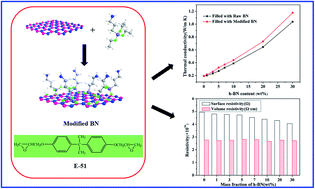
To obtain the superior thermal conductivity (TC) of ceramic particles-filled composites, either the thermal conductive pathways should be maximized through high filler loading or the interfacial contact resistance be reduced by the enhancement of filler-matrix affinity. We used a transient hot-wire method to directly measure the thermal conductivity of the neat epoxy and its composites at room temperature. Fig. 4 shows the thermal conductivity of epoxy composites loading with different content of raw and modified BN fillers, ranging from 0 to 30 wt%. The thermal conductivity of the neat epoxy was only 0.192 W m−1 K−1 at 23 °C. With increased loading level of BN fillers, with and without surface modification, the thermal conductivity of the corresponding composites were enhanced non-linearly, compared to that of the pure resin, and the growth rate was accelerated. This phenomenon can be explained by the dependence of thermal conductivity on the filler content. At the low mass fractions, BN particles were randomly embedded in the matrix with no contact. As the BN content continuously increased, BN particles could sufficiently contact and easily form the thermally conductive pathways and networks, leading to higher thermal conductivity. More effective thermal conductivity could be expected at the BN content higher than 30 wt%. Evidently, the surface modification led to increased thermal conductivity for epoxy composites at the same filler content (Table 1). The thermal conductivity was 1.178 W m−1 K−1 with loading of 30 wt% modified BN particles, which was 6.14 times higher than that of pure epoxy resin, whereas a lower value of 1.037 W m−1 K−1 could be obtained by adding the same content of raw BN particles. These findings can be explained as follows: (1) plate-like BN particles, with molecularly smooth basal planes, resulted in poor dispersibility and less homogeneity in the epoxy matrix than that after surface modification. This is because the weaker filler–matrix interaction led to the aggregation or void of pristine BN. Poor dispersion with numerous aggregations and voids could cause the phenomenon of reciprocal phonon vector, which serves as a heat reservoir and restrict the heat flow diffusion.28 (2) Silane layers played an important role in compatibility and interfacial affinity between fillers and epoxy matrix. Silane molecules act as a bridge, one end is connected to the BN particle and the other end reacts to curing matrix resin. The strong interfacial interactions, caused by silane modification, could reduce interfacial thermal resistance, resulting in higher thermal conductivity. Gu et al.10 obtained a thermal conductivity of 1.052 W m−1 K−1 for silane modified BN-filled epoxy composites at the loading of 60 wt%. In this study, the weight fraction of BN particles was lower than 30 wt%, and BN was activated by oxidation to yield hydroxyl groups at the edge planes to improve its wetting properties before silane modification. The results indicated that grafting with silane coupling agent on the hydroxylated BN surface may have better interfacial thermal transfer, resulting in higher thermal conductivity.
 |
| | Fig. 4 Thermal conductivity of the epoxy/BN composites as a function of BN content. | |
Table 1 Thermal conductivity improvement of the compositesa
| Filler |
Improvement Δ (%) |
| 0 wt% |
1 wt% |
3 wt% |
5 wt% |
7 wt% |
10 wt% |
20 wt% |
30 wt% |
| Δ = (λc − λe)/λe, λc for the composite thermal conductivity and λe for the neat epoxy thermal conductivity. |
| BN |
— |
5.2 |
21.4 |
41.1 |
67.7 |
102.1 |
235.4 |
440.1 |
| Modified BN |
— |
13.0 |
35.9 |
68.8 |
93.2 |
129.2 |
280.7 |
513.5 |
3.3 Morphology
To further analyze the microstructure of epoxy composites and assess the dispersion state of BN particles in epoxy resin, the fractured surfaces of specimens with different filler content were observed by FE-SEM. Fig. 5a shows that fracture surface of neat epoxy is very smooth and the shape of crack propagation appears as river patterns, which is a typical feature of brittle fracture.29 All composites exhibited a wrinkled rough fracture surface, and the BN particles were randomly exposed or embedded in epoxy matrix. This phenomenon was due to the local polymer deformation or matrix shear yielding, which could be explained by a crack deflection mechanism caused by adding BN fillers.29,30 For 10 wt% raw BN-filled composites (Fig. 5b), owing to the poor wettability and high surface energy of BN platelets, large embedded microplatelets formed agglomerated bundles and caused voids on the fracture surface, indicating weak interfacial adhesion between fillers and matrix. Poor dispersion state may have caused a decrease in phonon mean free path due to structure boundary scattering and defect scattering,25 meaning an inefficient heat transfer. The surface-modified BN platelets exhibited desirable homogeneity and dispersion in epoxy composites (Fig. 5c and d), and the regions of agglomeration and voids could not be observed, even at higher addition of fillers (Fig. 5d). This is because the enhanced interfacial compatibility of the surface modified BN particles and epoxy assist in good dispersion of BN particles in the matrix. Moreover, the silane molecules, wrapped on the BN surface, interfered with interparticles attractions, thereby hindering agglomeration of the particles. Such uniform dispersion and good compatibility are beneficial to the formation of efficient thermally conductive networks.
 |
| | Fig. 5 FE-SEM images of the fractured surface of samples: (a) neat epoxy, (b) 10 wt% raw BN-filled epoxy composite, (c) 10 wt% modified BN-filled epoxy composite, (d) 30 wt% modified BN-filled epoxy composite. | |
3.4 Thermal stability
Addition of inorganic fillers into a polymer matrix may cause some impacts on the thermal properties of the resulting composites that are important parameters in processing and application of materials. The thermal stability of neat epoxy and modified BN-filled composites were evaluated by TGA at a heating rate of 10 °C min−1 under nitrogen atmosphere (Fig. 6). Pertinent parameters are shown in Table 2. All fabricated composites exhibited similar thermal degradation behavior, varying from 50 °C to 800 °C, comparable to the neat epoxy, indicating that addition of BN particles did not change the thermal decomposition mechanism for the epoxy resin. Under an anhydride curing system, the neat epoxy demonstrated high thermo-oxidative stability with the temperature for 10 wt% (T10%) and 50 wt% weight loss (T50%) at 378.0 and 425.4 °C, respectively. For epoxy composites, the existence of BN particles considerably improved the thermal stability and delayed the degradation process. As the BN content increased from 0 to 30 wt%, the T10% and T50% of the composites reached up to 393.4 and 448.8 °C, respectively, rose by 15.4 and 23.4 °C, compared to neat epoxy. The enhancement of thermal stability accounted for the escape of less volatile degradation components. Besides the fact that BN platelets, as heat-resistant layers and mass transfer barriers, have obstructing effects on the thermal degradation process, the restricted thermal mobility of the epoxy segments, due to the enhancement of interfacial affinity, was another important factor for enhancement of thermal stability. This finding was also reflected by the fact that more char yielded experimentally at 800 °C than the total theoretical BN and pure epoxy residues. For example, the char yield of 30 wt% modified BN filled composite was 36 wt%, which was higher than sum of the corresponding values for pure epoxy (3.68 wt%) and added BN fillers (30 wt%).
 |
| | Fig. 6 Dependence of thermal stability on the content of fillers for epoxy/BN composites. | |
Table 2 Thermal and dynamic mechanical properties of neat epoxy and its composites
| Sample |
TGA |
DMA |
| T10% (°C) |
T50% (°C) |
Ycat 800 °C (%) |
Tg (°C) |
tan δ |
| Neat epoxy |
378.0 |
425.4 |
3.68 |
144.5 |
1.09 |
| Epoxy/5 wt% BN |
384.6 |
428.2 |
8.22 |
147.6 |
1.06 |
| Epoxy/10 wt% BN |
389.2 |
432.4 |
15.15 |
148.6 |
1.03 |
| Epoxy/20 wt% BN |
385.3 |
437.6 |
24.74 |
149.2 |
0.96 |
| Epoxy/30 wt% BN |
393.4 |
448.8 |
36.00 |
149.5 |
0.84 |
3.5 Dynamic mechanical properties
Dynamic mechanical analysis (DMA) can effectively evaluate the viscoelastic properties of the polymer composites, such as the storage modulus, loss modulus and tan
δ, which reveal molecular relaxation processes of the individual component and also the interaction among the component of the composites.31 Fig. 7a presents the storage modulus (E′) versus temperature curve for the neat epoxy and modified BN-filled composites. In both glassy and rubbery states, the E′ values of epoxy composites were significantly higher than that of the neat epoxy. For instance, the E′ values of the neat epoxy and corresponding composites filled with 5%, 10%, 20% and 30 wt% modified BN at 50 °C were, respectively, 1574, 1657, 1880, 2292 and 2490 MPa. The variation in the storage modulus was closely associated with the fillers content, because the applied stress could be transferred from the epoxy matrix to the BN particles11 with inherent high modulus.
 |
| | Fig. 7 (a) Storage modulus and (b) loss tangent versus temperature for epoxy/BN composites. | |
Fig. 7b shows the variation of loss tangent (tan
δ) as a function of temperature for the neat epoxy and its composites obtained by DMA. The tan
δ, defined as the ratio of loss modulus to storage modulus, was another important parameter related to the phase transition and molecular motions. Herein, the temperature of the tan
δ maximum peak was determined as the glass transition temperature (Tg). Compared with the neat epoxy, the composites showed a slightly higher Tg with the increased modified BN content. Table 2 shows that the Tg of the neat epoxy and 5%, 10%, 20% and 30 wt% modified BN-filled composites are, respectively, 144.5, 147.6, 148.6, 149.2 and 149.5 °C. The increase in Tg could be attributed to the combined effects of two opposite factors. On one hand, the strong interfacial interaction between epoxy matrix and fillers could partially restrict the motions of the polymer chain segments and delay the occurrence of relaxation behavior at the glass transition region, leading to an increase of Tg. On the other hand, incorporation of fillers could cause difficulty for the composites to attain the same degree of curing as the neat epoxy, thereby the crosslinking density decreases, leading to a decrease of Tg. In this study, the reduction of crosslinking density, caused by the fillers, is less than the restriction of chain motions for the composites. The end result is that the Tg shifts to higher temperature with the increase of BN fillers. Other studies have reported similar observations on the polymer/BN composites.11,14,32 It is also notable that the height of the tan
δ peak gradually decreased with the addition of BN fillers, indicating strong interaction at the interfaces.
3.6 Mechanical properties
Mechanical properties of particle-filled polymer composites depend on the efficiency of stress transfer across the interface between matrix and the filler.32 Fig. 8 shows the effect of BN content on the tensile strength of epoxy/BN composites. The tensile strength showed an initial increase followed by a downward trend with the addition of BN. At the loading of 3 wt% raw BN and modified BN, the tensile strength of epoxy composites increased up to 72.32 and 75.34 MPa, respectively, compared to that of neat epoxy (68.42 MPa). The mechanical reinforcement can be attributed to the effective absorption of fracture energy and prevention of crack propagation by BN platelets. The drastic decrease in tensile strength, as a result of high loading of BN, may be explained by the fact that excessive fillers served as local stress-concentration points in the resin matrix. Similar to the thermal conductivity behavior, it was shown that modified BN exhibited more mechanical improvement than raw BN. This enhancement may be attributed to the good dispersion of BN particles and improved adhesion as well as the compatibility between the matrix and particles originating from surface treatment that was evidenced by SEM images.
 |
| | Fig. 8 Tensile strength of the epoxy/BN composites as a function of BN content. | |
3.7 Electrical insulation properties
As for thermally conductive composite materials, the electrical insulation property is also a key factor critical to the thermal management application and microelectronic packaging such as the thermal interface materials (TIM) and light emitting diodes (LED). Materials with high electrical insulation can ensure the security and stability of the electronic components when they operate under electric filed. Fig. 9 presents the surface and volume resistivity of the neat epoxy and fabricated composites measured at room temperature (23 °C). The surface resistivity slightly and continuously decreased with the addition of the filler content, whereas the volume resistivity exhibited insignificant change and still maintained almost the same level as the neat epoxy. After applying a voltage of 250 V, the surface and volume resistivity of 30 wt% modified BN-filled composites were 4.05 × 10¹⁶ Ω and 2.71 × 10¹⁶ Ω cm, and for the neat epoxy were 4.95 × 10¹⁶ Ω and 2.77 × 10¹⁶ Ω cm, respectively. In addition, all the test samples showed no dielectric breakdown even at the 1000 V applied electric field i.e., the maximum voltage of the tester. The composites prepared in this study retained good electrical insulation properties, because of the inherent electrical insulating characteristic of the BN fillers and epoxy. These epoxy/BN composites possessed desirable properties for packaging materials that required both high thermal conductivity and electrical insulation properties.
 |
| | Fig. 9 Electrical insulation properties of epoxy/BN composites as a function of BN content. | |
4. Conclusion
Thermally conductive composites with different BN content were successfully fabricated from silane-modified BN particles embedded in the epoxy matrix. The grafting of silane molecules onto the surface of BN particles improved the wettability and homogeneous dispersion of BN in the epoxy matrix with a strong interface interaction. The intrinsic large in-plane thermal conductivity of embedded BN and well-designed surface modification gave epoxy composites a superior thermal transport performance. The thermal conductivity of 1.178 W m−1 K−1 was obtained at 30 wt% modified-BN loading, 6.14 times higher than that of the neat epoxy. In addition, the fabricated epoxy composites possessed improved thermal stability, storage modulus, and Tg with increased BN content. Furthermore, the electrical insulation property of epoxy composites maintained almost the same level as the neat epoxy and showed no dielectric breakdown even at 1000 V. The present epoxy/BN composites, equipped with both high thermal conductivity and electrical insulation property, offer great potential for thermal management application and microelectronic encapsulation.
Acknowledgements
The support by Key Lab for Micro- and Nano-Scale Boron Nitride Materials in Hebei Province is appreciated.
References
- Y. Hwang, M. Kim and J. Kim, RSC Adv., 2014, 4, 17015 RSC.
- S. Choi, H. Im and J. Kim, Nanotechnology, 2012, 23, 065303 CrossRef PubMed.
- H. Y. Ng, X. Lu and S. K. Lau, Polym. Compos., 2005, 26, 778 CrossRef CAS.
- L. Fang, C. Wu, R. Qian, L. Xie, K. Yang and P. Jiang, RSC Adv., 2014, 4, 21010 RSC.
- X. Huang, P. Jiang and T. Tanaka, IEEE Electr. Insul. Mag., 2011, 27, 8 CrossRef.
- T. Morishita, M. Matsushita, Y. Katagiri and K. Fukumori, J. Mater. Chem., 2011, 21, 5610 RSC.
- A. Yu, P. Ramesh, X. Sun, E. Bekyarova, M. E. Itkis and R. C. Haddon, Adv. Mater., 2008, 20, 4740 CrossRef CAS.
- J. Hong, J. Lee, D. Jung and S. E. Shim, Thermochim. Acta, 2011, 512, 34 CrossRef CAS PubMed.
- L. Ren, K. Pashayi, H. R. Fard, S. P. Kotha, T. B. Tasciuc and R. Ozisik, Composites, Part B, 2014, 58, 228 CrossRef CAS PubMed.
- J. Gu, Q. Zhang, J. Dang and C. Xie, Polym. Adv. Technol., 2012, 23, 1025 CrossRef CAS.
- R. Qian, J. Yu, L. Xie, Y. Li and P. Jiang, Polym. Adv. Technol., 2013, 24, 348 CrossRef CAS.
- C. Tang, Y. Bando, C. Liu, S. Fan, J. Zhang, X. Ding and D. Golberg, J. Phys. Chem. B, 2006, 110, 10354 CrossRef CAS PubMed.
- M. T. Huang and H. Ishida, J. Polym. Sci., Part B: Polym. Phys., 1999, 37, 2360 CrossRef CAS.
- T. Li and S. L. Hsu, J. Phys. Chem. B, 2010, 114, 6825 CrossRef CAS PubMed.
- B. Xie, X. Huang and G. Zhang, Compos. Sci. Technol., 2013, 85, 98 CrossRef CAS PubMed.
- Z. Lin, A. Mcnamara, Y. Liu, K. Moon and C. Wong, Compos. Sci. Technol., 2014, 90, 123 CrossRef CAS PubMed.
- C. Zhi, Y. Bando, T. Terao, C. Tang, H. Kuwahara and D. Golberg, Adv. Funct. Mater., 2009, 19, 1857 CrossRef CAS.
- K. Kim, M. Kim, Y. Hwang and J. Kim, Ceram. Int., 2014, 40, 2047 CrossRef CAS PubMed.
- K. Sato, H. Horibe, T. Shirai, Y. Hotta, H. Nakano, H. Nagai, K. Mitsuishi and K. Watari, J. Mater. Chem., 2010, 20, 2749 RSC.
- S. Yuen, C. M. Ma, C. Chiang, J. Chang, S. Huang, S. Chen, C. Chuang, C. Yang and M. Wei, Composites, Part A, 2007, 38, 2527 CrossRef PubMed.
- G. Ciofani, G. G. Genchi, I. Liakos, A. Athanassiou, D. Dinucci, F. Chiellini and V. Mattoli, J. Colloid Interface Sci., 2012, 374, 308 CrossRef CAS PubMed.
- Y. Xue, X. Jin, Y. Fan, R. Tian, X. Xu, J. Li, J. Lin, J. Zhang, L. Hu and C. Tang, Polym. Compos., 2014, 35, 1707 CrossRef CAS.
- A. S. Nazarov, V. N. Demin, E. D. Grayfer, A. I. Bulavchenko, A. T. Arymbaeva, H. Shin, J. Choi and V. E. Fedorov, Chem.–Asian J., 2012, 7, 554 CrossRef CAS PubMed.
- W. Yu and S. U. Choi, Rev. Sci. Instrum., 2006, 77, 076102 CrossRef PubMed.
- J. Yu, X. Huang, C. Wu, X. Wu, G. Wang and P. Jiang, Polymer, 2012, 53, 471 CrossRef CAS PubMed.
- M. Du, Y. Wu and X. Hao, CrystEngComm, 2013, 15, 1782 RSC.
- Y. Xue, A. Elsanousi, Y. Fan, J. Lin, J. Li, X. Xu, Y. Lu, L. Zhang, T. Zhang and C. Tang, Solid State Sci., 2013, 24, 1 CrossRef CAS PubMed.
- S. Yang, C. M. Ma, C. Teng, Y. Huang, S. Liao, Y. Huang, H. Tien, T. Lee and K. Chiou, Carbon, 2010, 48, 592 CrossRef CAS PubMed.
- L. M. McGrath, R. S. Parnas, S. H. King, J. L. Schroeder, D. A. Fischer and J. L. Lenhart, Polymer, 2008, 49, 999 CrossRef CAS PubMed.
- B. Wetzel, F. Haupert and M. Q. Zhang, Compos. Sci. Technol., 2003, 63, 2055 CrossRef CAS.
- W. Jin, W. Zhang, Y. Gao, G. Liang, A. Gu and L. Yuan, Appl. Surf. Sci., 2013, 270, 561 CrossRef CAS PubMed.
- L. Qin, G. Li, J. Hou, X. Yu, H. Ding, Q. Zhang, N. Wang and X. Qu, Polym. Compos., 2014 DOI:10.1002/pc.23078.
|
| This journal is © The Royal Society of Chemistry 2014 |
Click here to see how this site uses Cookies. View our privacy policy here.