
DOI:
10.1039/C4RA07049F
(Paper)
RSC Adv., 2014,
4, 45540-45547
Three-dimensional flower-like hybrid BiOI–zeolite composites with highly efficient adsorption and visible light photocatalytic activity
Received
13th July 2014
, Accepted 15th September 2014
First published on 15th September 2014
Abstract
Three-dimensional flower-like hybrid BiOI–zeolite composites were synthesized via a simple, facile and environmentally-benign hydrothermal method. And the synthetic mechanism of the flower-like BiOI–zeolite hierarchical structures was discussed. The as-obtained BiOI–zeolite samples exhibited excellent performance in the degradation of methylene blue solution under visible light irradiation. The influence of different Bi/I molar ratios and surfactants was studied. The degradation rate of MB by BiOI–zeolite composite photocatalysts can reach 94.8% under visible light irradiation for 10 min, when the Bi/I molar ratio is 1
:
1 and is surfactant free. This implies its huge application potential as photocatalysts in degradation of pollutants under visible light.
1. Introduction
Nowadays, the photocatalytic degradation of pollutants is attracting considerable attention as one of the most promising methods for solving environmental problems.1–4 A large number of investigations have focused on semiconductor-based photocatalytic materials.3–7 Titanium dioxide (TiO2), as an important semiconductor, was intensively investigated because of its peculiar chemical and physical behaviors, such as strong oxidative power, good stability, low cost and non-toxicity.3,8,9 However, TiO2 photocatalysis is effective only under ultraviolet irradiation (λ < 380 nm) because of its relatively wide band gap (Eg = 3.2 eV),5,8 so developing more efficient visible-light-driven photocatalysts is indispensable.
Recently, bismuth oxyhalides (BiOX, X = Cl, Br, I), as novel ternary oxide semiconductors, have been extensively investigated as visible-light-driven photocatalysts owing to their unique layered structure and high activity.1,2,10–13 Among the members of the BiOX family, as an important V–VII ternary semiconductor compound, BiOI has the smallest band gap about 1.8 eV (ref. 10–13) with a high efficiency under visible light. BiOI, belonging to the Sillén family expressed by a unique layered structure characterized by [Bi2O2] slabs separated by double slabs of I atoms in a tetragonal matlockite structure,2,11,14 has drawn increasing attention for the application in photocatalysis. In view of that, many methods were developed for the synthesis of different BiOX morphologies as photocatalysts. Up to now, different morphologies of BiOI, for example, three-dimensional (3D) hierarchical structures,13–15 nanoparticles,16 nanoplates17,18 and nanolamellas,19 have been fabricated successfully.
Unfortunately, the individually BiOI shows limited photocatalytic efficiency,10,17 and the quick recombination of photo-generated charge carriers still exists in BiOI. Not only that, dispersive BiOI photocatalysts have a lot of defects including unstability, susceptible to aggregate and difficult recovery. So, it is still in need of studies on enhancing the photocatalytic activity of BiOI under considering the practical application. Recently, in order to prevent the quick recombination of electron/holes, researchers have designed and prepared some compound semiconductor materials, such as TiO2/BiOI,20 ZnO/BiOI,21 BiOCl/BiOI11,22 and BiOBr/BiOI.23 In addition, for other semiconductor materials (such as TiO2, ZnO, CdS, etc.), there are lots of reports about overcome these disadvantages including instability and very susceptible to aggregate by using some suitable, inert porous supporters (silica, alumina, activated carbon and zeolite),3,4,24–26 for example, TiO2/zeolite,3,24 ZnO/zeolite,4,25 CdS/zeolite,26 etc. To our best knowledge, zeolite is an attractive sorptive material owing to its unique uniform pore channel sizes, high adsorption capacity, hydrophobic and hydrophilic properties. Furthermore, zeolite would provide a high thermal stability and a photostable inorganic framework.3,27,28 Up to now, little attention is paid to the BiOI–zeolite composite material. So, in this paper, in order to take full advantage of the photocatalytic performance of BiOI and zeolite adsorption performance simultaneously, we investigate the photocatalysis mechanism of BiOI and firstly report a low-cost facile synthetic pathway for the preparation of the well-defined hierarchical flower-like hybrid BiOI–zeolite structures. As-synthesized BiOI–zeolite composites have shown much higher adsorption efficiency and visible light photocatalytic activity.
2. Experimental
2.1 Sample preparation
The adequate pure-form zeolites were dealed with nature zeolite by the acid washing method. All the reagents were of AR grade and were used without further purification, and all the aqueous solutions were prepared using distilled water. The BiOI–zeolite nanocomposites were obtained via a simple hydrothermal method. In a typical synthesis, 1 g zeolite was firstly added to 1 mmol of Bi(NO3)3·5H2O (about 4.8 g) dissolved in 10 mL ethanol, the mixture was stirred for 1 h at room temperature. Meanwhile different molar quantities (0.25, 1, 3 and 5 mmol) of KI was dissolved in 10 mL of deionized water, and the KI solution was added dropwisely into the Bi(NO3)3·5H2O–zeolite mixed solution and stirred magnetically for 1 h at room temperature, then transferred to a 20 mL Teflon-lined autoclave (the mixed solution was added up to 80% of the total volume) and maintained at 180 °C for 7 h then was cooled to room temperature naturally. The resulting precipitate was filtrated, washed with ethanol and deionized water thoroughly and then dried at 60 °C in air.
For the purpose of comparison, BiOI–zeolite powders were also prepared by using different kinds of surfactants, viz. polyvinylpyrrolidone (PVP, 0.1 g), cetyltrimethyl-ammonium bromide (CTAB, 0.1 g), the mixture of polyvinylpyrrolidone (PVP, 0.05 g) & citric acid (CA, 0.05 g), and polyethylene glycol-2000 (PG-2000, 0.1 g).
2.2 Characterization
The morphology of samples was observed by a field emission scanning electron microscope (FE-SEM: S-4800I, Hitachi, Japan) at 3.0 keV, energy-dispersive X-ray spectroscopy (EDS) was carried out in the SEM and transmission electron microscopy (TEM, JEOL 100CX-II). The pore size distribution and nitrogen ad/desorption isotherms were calculated using Nova 3000e Surface Area Analyzers. X-ray diffraction (XRD) analysis was performed with a Rigaku D/max-2500 using Cu Kα radiation (λ = 0.154059 nm). Diffuse reflectance spectra of composite photocatalytic materials were recorded by means of a UV-vis spectrophotometer (TU-1901) equipped with an integrating sphere. A BaSO4 pellet was used as a reference, and the spectra were recorded at room temperature in the spectral range 200–800 nm.
The photocatalytic performance of the as-prepared samples was characterized by decomposing methylene blue (MB) in a batch experiment under visible light irradiation (a 500 W Xe lamp (CHF-XM500) combined with a cutoff filter (λ > 420 nm) as a visible light source) at room temperature. The photodecomposition reactions were carried out in a quartz reactor, equipped with a cold finger to avoid thermal reactions. In a typical reaction, 0.1 g of the BiOI–zeolite sample was added to 20 mL of methylene blue aqueous solution with a concentration of 20 mg L−1 at room temperature. In the cycling test, samples will be moved to the constant temperature oven when an cycle experiment of MB degradation test has been done, then dried at 60 °C in air. And the as-obtained sample will be used for the next cycle repeatedly. At predetermined time intervals, the samples were removed from the solution by centrifugation. The concentration of methylene blue left in the supernatant solution was monitored by using a UV-vis spectroscopy (Shimadzu UV-160A) at 665 nm. The rate of the degradation of MB was evaluated by using the balance equation as below:
| |
 | (1) |
where
D is the rate of the degradation of MB at time
t (min),
A0 is the initial absorbance value of MB in the solution,
At is the absorbance value of MB at time
t.
3. Results and discussion
3.1 Phase structure
Fig. 1 shows the X-ray diffraction patterns of BiOI–zeolite composites (without surfactant and Bi/I = 1). These peaks at 19.4° (002), 29.6° (102), 31.6° (110), 39.4° (004), 45.4° (200), 51.3° (114), 55.1° (212) and 66.3° (214) are indexed to that of tetragonal BiOI (JCPDS, no. 10-0445). And there are some obvious peaks of zeolite at 2θ = 10° (220), 20.9° (531), 22.4° (444) and 26.6° (642) (JCPDS, no. 39-0218). No signals other than those of the BiOI–zeolite phases can be detected, indicating that the samples are phase-pure. The intensity of the (102) peaks of the as-prepared BiOI–zeolite samples are higher than those of the (110) peaks even other all peaks. The (110)/(102) intensity ratios of the as-prepared BiOI–zeolite are 0.698, whereas those based on JCPDS data for polycrystalline samples are 0.55, which indicates the presence of a special anisotropic growth along the (110) plane during the synthesis of the as-prepared BiOI–zeolite samples.15
 |
| | Fig. 1 X-ray diffraction patterns of BiOI–zeolite (without surfactant and Bi/I = 1). | |
3.2 Morphological structure and surface composition
The morphology structure of the samples was observed by FE-SEM (Fig. 2(a) and (b)) and TEM (Fig. 2(c)) images. As shown in Fig. 2, the sample BiOI–zeolite (without surfactant and Bi/I = 1) takes on flower-like hierarchical architectures, which are constructed by many straight nanosheets. And these nanoplates stacked and intercrossed with one another, forming a lot of nano- and macro-pores on the surface. The size of which can be estimated to be about 1–3 μm by the FE-SEM and TEM investigation as shown in Fig. 2. In addition, Fig. 2(d) shows a rose diagram compared with FE-SEM images of the as-prepared BiOI–zeolite composites (Fig. 2(b)).
 |
| | Fig. 2 The morphology structure of BiOI–zeolite (without surfactant and Bi/I = 1): SEM images (a and b), TEM image (c) and rose diagram (d). | |
The composition of as-prepared samples (without surfactant and Bi/I = 1) was determined by energy-dispersive X-ray spectroscopy (EDS), as shown in Fig. 3, which unambiguously demonstrates the coexistence of Bi, O and I elements in the samples (the ratio of Bi/I is nearly 1). The mass (atomic) percentage of the element of O, Al, Si, Bi and I in the as-prepared BiOI–zeolite composites structure are 17.77 wt% (54.63 at%), 2.36 wt% (4.3 at%), 10.48 wt% (18.35 at%), 40.04 wt% (9.43 at%) and 26.83 wt% (10.4 at%), respectively. So the total mass (atomic) percentage of these elements is 97.48 wt% (97.11 at%). This result means the synthetic samples are almost pure.
 |
| | Fig. 3 EDS elemental analysis of BiOI–zeolite (without surfactant and Bi/I = 1). | |
3.3 Nitrogen adsorption–desorption and pore-size distribution
The porosity of the BiOI–zeolite samples (without surfactant and Bi/I = 1) was investigated by using nitrogen adsorption and desorption isotherms (Fig. 4). The isotherms were of type IV (Brunauer–Deming–Deming–Teller (BDDT) classification) with a distinct hysteresis loop observed in the range of 0.7–1.0 P/P0, which indicates the presence of mesopores (4–50 nm). This is also confirmed by the corresponding pore size distribution curve (inset in Fig. 4). The pore-size distribution indicates that the pore diameters are mainly located at about 12 nm besides plenty of micropores. From the isotherms, the Brunauer–Emmett–Teller (BET) specific surface area of the BiOI–zeolite architectures was determined to be 14.2 m2 g−1.
 |
| | Fig. 4 Nitrogen adsorption and desorption isotherms and corresponding pore-size distributions (inset) of BiOI–zeolite (without surfactant and Bi/I = 1). | |
3.4 Optical properties and photocatalytic mechanism
The UV-vis DRS spectra of as-synthesized BiOI–zeolite composites (without surfactant and Bi/I = 1) is shown in Fig. 5. The BiOI–zeolite architectures display the strong absorption ranged from 250 nm to 680 nm, indicating that the BiOI–zeolite composites are able to absorb visible light. For a semiconductor, the optical adsorption near the band edge followed the equation: αhν = A(hν − Eg)n/2, where α, ν, Eg and A are the absorption coefficient, light frequency, band gap, and a constant, respectively. Because of the indirect inter-band transition characteristic of BiOI semiconductor, the value of n is 4.29,30 So the band gap energy of the BiOI–zeolite composites can be calculated from the plot of (αhν)1/2 versus photon energy (hν) is 1.8 eV (inset in Fig. 5). To the best of our knowledge, the band gaps of BiOCl, BiOBr, and BiOI are about 3.2 (about λ = 387 nm), 2.8 (about λ = 443 nm), and 1.8 eV (about λ = 689 nm), respectively. This fact indicates that the band gap of BiOX (X = Cl, Br, I) decreases with increasing X atomic number.15,16,18 So the BiOI composite material shows the superiority over other composite samples of BiOX objectively when these materials are used in visible light photocatalytic activity.
 |
| | Fig. 5 The diffuse reflection spectrum of as-prepared BiOI–zeolite samples (without surfactant and Bi/I = 1) and the inset is the (αhν)1/2–hν curve (inset). | |
The valence band edge of the as-prepared samples can be estimated in this study according to the following empirical equation:
Where
EVB is the valence band edge potential,
X is the absolute electronegativity of the semiconductor, which is the geometric mean of the electronegativity of the constituent atoms, and the value of
X for BiOI is
ca. 5.99 eV,
Ee is the energy of free electrons on the hydrogen scale (about 4.5 eV),
Eg is the band gap energy of the semiconductor.
2,12,30–32 Following
eqn (2), so the calculated bottom of the CBs and top of the VBs of BiOI–zeolite composites are 0.59 eV and 2.39 eV, respectively. According to this result, a schematic illustration of photocatalysis for the samples can be shown in
Fig. 6. Due to the more negative standard redox potential of Bi
V/Bi
III (1.59 eV
vs. NHE), so there are no ˙OH production (˙OH/OH is 1.99 eV
vs. NHE) and photogenerated holes wound directly photocatalytic oxidize MB.
12,13 However, only the high-energy part (irradiation energy is higher than 2.436 eV (510 nm)) can result in the photogenerated electrons exciting up to a reformed higher CBs potential than
E0 (O
2/˙O
2−) (−0.046 eV
vs. NHE).
12 So only specific light wavelength (between 400 and 510 nm) can be used to detect ˙O
2−. This photocatalytic mechanism may occur some change due to their changeable internal morphology structures, and more studies also are need.
 |
| | Fig. 6 Schematic illustration of photocatalysis for BiOI–zeolite. | |
In this work, there are two main reaction routes including adsorbent process (porous support-zeolite and the novel 3D flower-like BiOI hierarchical structures with excellent adsorption capability) and photocatalytic degradation process (BiOI) in the experimental process for photocatalytic degradation of MB by using the as-prepared samples (BiOI–zeolite composites). And for the whole experimental process, adsorption and photocatalytic degradation are complementary each other. The MB organic molecules were firstly adsorbed on the surface of BiOI hierarchical structures and the outside or inside of zeolites. Meanwhile, the photocatalytic degradation process would take place in the surface of BiOI hierarchical structures under visible-light, and the presence of pores and thin nanoplates (Fig. 2) are beneficial to the separation of electron–holes (its unique layered structure makes that the photocarrier can effectively separate and transmission between layers) and light harvesting (the effect can be amplified by reflecting the light back and forth a few times between layers), therefore the flower-like 3D hierarchical structures improve the photocatalytic activity. With the of reaction time, the concentration of MB solution (on the surface of BiOI hierarchical structures) were gradually reduced, then MB organic molecules in the inside or outside of zeolite would be transferred to the surface of BiOI hierarchical structures, this is based on the principle of diffusion. So, these two main processes played a role in the MB adsorption degradation experiment repeatedly until the end of the experiment.4
3.5 Effect of reaction conditions and plausible growth mechanism
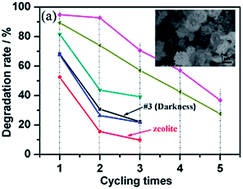
The influence of varying the amount of KI and different cycling times is studied and the degradation efficiency of MB for the BiOI–zeolite composites (zeolite) under visible-light (or in the darkness) is displayed in Fig. 7. Fig. 7(a) shows the photocatalytic activities of zeolite and BiOI–zeolite composite photocatalysts without surfactant for different molar quantities (0.25, 1, 3 and 5 mmol) of KI for 10 min under visible-light in different cycling times (1, 2, 3, 4 and 5), and the corresponding rate of Bi/I are 4
:
1 (#4), 1
:
1 (#3), 1
:
3 (#2) and 1
:
5 (#1), respectively. The degradation rate of zeolite, #1, #2, #3 and #4 can reach 52.4%, 67.6%, 81.5%, 94.8% and 89.4% under visible light irradiation when photocatalytic activity test was carried out for 10 min, respectively. The cycling tests for zeolite, #1, #2, #3 and #4 are carried, the degradation efficiency of zeolite, #1 and #2 is very low (the degradation rate of zeolite, #1 and #2 is 9.9%, 21.8% and 39.1% for 10 min, respectively) under visible-light after three cycles, as seen in Fig. 7(a), the BiOI–zeolite composite (without surfactant) under Bi/I = 1 is better than other synthetic samples (including #4) conclusionally. The corresponding sample morphology of BiOI–zeolite samples (without surfactant) prepared with different Bi/I molar ratio (1
:
5, 1
:
3, 1
:
1 and 4
:
1) are obtained by SEM, and the results are shown in Fig. 8. When the Bi/I molar ratio are 1
:
5 (#1) (Fig. 8(a)) 1
:
3 (#2) (Fig. 8(b)) and 4
:
1 (#4) (Fig. 8(d)), the synthetic samples are composed with some irregular structures. However, the BiOCl–zeolite samples (without surfactant and Bi/I = 1) (Fig. 8(c)) have formed scaly hierarchical structures, and the arrangement of hierarchical structure is also clear. So it can be seen that the Bi/I molar ratio plays an important role on the micro morphology of BiOI–zeolite. In order to verify whether such degradation was caused by adsorption of zeolite or photocatalysis of BiOI, the adsorption profile of #3 is provided through MB decoloration experiment under the darkness (Fig. 7(a)). The result displays the two main reaction routes including adsorbent process (porous support-zeolite and the novel 3D flower-like BiOI hierarchical structures with excellent adsorption capability) and photocatalytic degradation process (BiOI) are complementary each other in the experimental process for photocatalytic degradation of MB by using the as-prepared samples (BiOI–zeolite composites). In addition, whether can be long time using in the practical application is also a notable issue for a catalyst. Therefore, the cycling tests for #3 (BiOI–zeolite composite (without surfactant and Bi/I = 1)) is carried. As shown in Fig. 7(b), with the increase of cycling times, the time to achieve high degradation efficiency requires more and more. It takes 240 min (4 h) when the photocatalytic efficiency reaches more than 90% (about 93.7%) for #3 after four cycles, and it requires more than 6 h after five cycles, still exhibiting effective photocatalytic ability. There are two main aspects of the influence factors on the photocatalytic activity reduced after repeated use. On the one hand, with an increasing number of cycles, the adsorption performance of zeolite will be weaken. It is due to some impurities will remain in the internal structure of zeolite. On the other hand, a part of the BiOI sample will be “poisoning” when the BiOI–zeolite composites are used in the MB degradation test repeatedly. And the part of the BiOI sample will not participate in photocatalytic activity, so the photocatalytic activity will reduce after repeated use. From the above results, we can infer that the BiOI–zeolite composites (Bi/I = 1) is relative stable during the photocatalytic process.
 |
| | Fig. 7 Decolouration of methylene blue for BiOI–zeolite composite (#3) (under the darkness), zeolite and BiOI–zeolite with different Bi/I molar ratio (4 : 1 (#4), 1 : 1 (#3), 1 : 3 (#2) and 1 : 5 (#1)) (under visible-light) for 10 min (a) and BiOI–zeolite composite (Bi/I = 1) (b) without surfactant in different cycling times. | |
 |
| | Fig. 8 SEM images of BiOI–zeolite samples (without surfactant) prepared with different Bi/I molar ratio: 1 : 5 (#1) (a), 1 : 3 (#2) (b), 1 : 1 (#3) (c), 4 : 1 (#4) (d). | |
Fig. 9(a–d) shows the SEM images of BiOI–zeolite (Bi/I = 1) samples prepared using different kinds of surfactants, viz. polyvinylpyrrolidone (PVP, 0.1 g) (Fig. 9(a)), cetyltrimethyl-ammonium bromide (CTAB, 0.1 g) (Fig. 9(b)), the mixture of polyvinylpyrrolidone (PVP, 0.05 g) & citric acid (CA, 0.05 g) (Fig. 9(c)), and polyethylene glycol-2000 (PG-2000, 0.1 g) (Fig. 9(d)). Meanwhile, Fig. 9(e and f) presents the SEM images of BiOI–zeolite (Bi/I = 1) samples without the assistance of surfactant. When CTAB (Fig. 9(b)) and PG-2000 (Fig. 9(d)) are used, the synthetic samples are composed of nanosheets. When PVP (Fig. 9(a)) and the mixture of PVP & CA (Fig. 9(d)) are used as surfactant, there is the formation of 3D flower-like hierarchical structures. Compared to PVP and the mixture of PVP & CA, the 3D flower-like hierarchical structures of BiOI–zeolite (Bi/I = 1) samples without the assistance of surfactant (Fig. 9(e and f)) are more, and this 3D structures are evenly distributed for BiOI–zeolite (Bi/I = 1) samples without the assistance of surfactant. So it is apparent that the morphologies of BiOI–zeolite nanomaterials are not surfactant dependent.
 |
| | Fig. 9 SEM images of BiOI–zeolite samples (Bi/I = 1) prepared with the assistance of surfactants: PVP (a), CTAB (b), PVP & CA (c), PG-2000 (d), none (e and f). | |
The plausible mechanism for the formation of 3D flower-like BiOI–zeolite hierarchical structures is proposed (Fig. 10). It is a four-stage growth process, which involves dissolution, mixture, nucleation & growth and self-assembly. In the first stage (dissolution), Bi(NO3)3·5H2O dissolved in ethanol, meanwhile KI was dissolved in deionized water. Then the second stage (mixture), zeolite was added to Bi(NO3)3·5H2O solution. The next phase (nucleation & growth), KI solution was added dropwisely into the Bi(NO3)3·5H2O–zeolite mixed solution, the primary crystals were formed firstly after KI solution was added into the mixed solution system, then these primary crystals spontaneously aggregated into large particles owing to the tendency to reduce the total surface energy. As the reaction proceeds, the rudimentary nanosheet structures of BiOI were formed via nucleation & growth process, where some active crystal faces (such as, (110), etc.) on the surface of the formed BiOI aggregations would grow along the oriented direction. In the last stage (self-assembly), the reaction system transferred to here Teflon-lined autoclave. Under the condition of high temperature and high pressure, this process leads to the formation of compact hierarchical microstructures with more nanosheets and eventually forms 3D flower-like hierarchical structures. In the process, the rate of Bi/I in the reaction system is a important factor due to it determines the formation and development of the microstructures, this is because the rate of Bi/I is the contributing driving force for growth in the kinetically and thermodynamically controlled process.15,33 Fig. 10 can also be divided into two parts: the mechanism figure of morphology change process and the diagrammatic picture of experimental process.
 |
| | Fig. 10 Synthetic mechanism illustration for the formation of 3D flower-like BiOI–zeolite hierarchical structures. | |
4. Conclusions
In order to simultaneous use the photocatalysis of BiOI and absorption of zeolite, three-dimensional flower-like hybrid BiOI–zeolite composites were prepared via a simple, facile, and environmentally-benign method. The as-obtained BiOI–zeolite samples exhibit excellent performance on the degradation of MB under visible light irradiation. It is found that the optimal Bi
:
I molar ratio is 1
:
1, and without the assistance of surfactant for the synthesis of 3D flower-like BiOI–zeolite composites. The degradation rate of BiOI–zeolite composite photocatalysts can reach 94.8% under visible light irradiation when photocatalytic activity test was carried out for 10 min. The results showed that the as-prepared three-dimensional flower-like hybrid BiOI–zeolite composites present a potential application in degradation of pollutants under visible light.
Acknowledgements
The authors gratefully acknowledge financial support from National Natural Science Foundation of China (no. 51102174) and Natural Science Foundation of Tianjin (11JCYBJC27000).
References
- Y. N. Wang, K. J. Deng and L. Z. Zhang, Visible light photocatalysis of BiOI and its photocatalytic activity enhancement by in situ ionic liquid modification, J. Phys. Chem. C, 2011, 115, 14300–14308 CAS.
- Y. Y. Li, J. S. Wang, H. C. Yao, L. Y. Dang and Z. J. Li, Efficient decomposition of organic compounds and reaction mechanism with BiOI photocatalyst under visible light irradiation, J. Mol. Catal. A: Chem., 2011, 334, 116–122 CrossRef CAS PubMed.
- Z. F. Liu, Z. C. Liu, Y. Wang, Y. B. Li, L. Qu, L. E, J. Ya and P. Y. Huang, Photocatalysis of TiO2 nanoparticles supported on natural zeolite, Mater. Tech., 2012, 27, 267–271 CrossRef CAS PubMed.
- Z. C. Liu, Z. F. Liu, T. Cui, J. W. Li, J. Zhang, T. Chen, X. C. Wang and X. P. Liang, Photocatalysis of two-dimensional honeycomb-like ZnO nanowalls on zeolite, Chem. Eng. J., 2014, 235, 257–263 CrossRef CAS PubMed.
- J. Ouyang, M. Chang and X. Li, CdS-sensitized ZnO nanorod arrays coated with TiO2 layer for visible light photo-electrocatalysis, J. Mater. Sci., 2012, 47, 4187–4193 CrossRef CAS.
- W. Wei, Y. Dai and B. B. Huang, First-principles characterization of Bi-based photocatalysts: Bi12TiO20, Bi2Ti2O7, and Bi4Ti3O12, J. Phys. Chem. C, 2009, 113, 5658–5663 CAS.
- Y. Q. Yang, G. K. Zhang, S. J. Yu and X. Shen, Efficient removal of organic contaminants by a visible light driven photocatalyst Sr6Bi2O9, Chem. Eng. J., 2010, 162, 171–177 CrossRef CAS PubMed.
- W. X. Zhao, Z. B. Bai, A. L. Ren, B. Guo and C. Wu, Sunlight photocatalytic activity of CdS modified TiO2 loaded on activated carbon fibers, Appl. Surf. Sci., 2010, 256, 3493–3498 CrossRef CAS PubMed.
- R. W. Mathews, Photooxidation of organic impurities in water using thin films of titanium dioxide, J. Chem. Phys., 1987, 91, 3328–3333 CrossRef.
- H. Liu, W. R. Cao, Y. Su, Z. Chen and Y. Wang, Bismuth oxyiodide–graphene nanocomposites with high visible light photocatalytic activity, J. Colloid Interface Sci., 2013, 398, 161–167 CrossRef CAS PubMed.
- W. D. Wang, F. Q. Huang and X. P. Lin, xBiOI–(1 − x)BiOCl as efficient visible-light-driven photocatalysts, Scr. Mater., 2007, 56, 669–672 CrossRef CAS PubMed.
- L. Q. Ye, J. N. Chen, L. H. Tian, J. Y. Liu, T. Y. Peng, K. J. Deng and L. Zan, BiOI thin film via chemical vapor transport: photocatalytic activity, durability, selectivity and mechanism, Appl. Catal., B, 2013, 130–131, 1–7 CAS.
- L. H. Ai, Y. Zeng and J. Jiang, Hierarchical porous BiOI architectures: facile microwave nonaqueous synthesis, characterization and application in the removal of congo red from aqueous solution, Chem. Eng. J., 2014, 235, 331–339 CrossRef CAS PubMed.
- B. Zhang, G. B. Ji, M. A. Gondal, Y. S. Liu, X. M. Zhang, X. F. Chang and N. W. Li, Rapid adsorption properties of flower-like BiOI nanoplates synthesized via a simple EG-assisted solvothermal process, J. Nanopart. Res., 2013, 15, 1773–1781 CrossRef.
- L. Chen, R. Huang, M. Xiong, Q. Yuan, J. He, J. Jia, M. Y. Yao, S. L. Luo, C. T. Au and S. F. Yin, Room-temperature synthesis of flower-like BiOX (X = Cl, Br, I) hierarchical structures and their visible-light photocatalytic activity, Inorg. Chem., 2013, 52, 11118–11125 CrossRef CAS PubMed.
- J. Henle, P. Simon, A. Frenzel, S. Scholz and S. Kaskel, Nanosized BiOX (X = Cl, Br, I) particles synthesized in reverse microemulsions, Chem. Mater., 2007, 19, 366–373 CrossRef CAS.
- C. L. Yu, J. C. Yu, C. F. Fan, H. R. Wen and S. J. Hu, Synthesis and characterization of Pt/BiOI nanoplate catalyst with enhanced activity under visible light irradiation, Mater. Sci. Eng., B, 2010, 166, 213–219 CrossRef CAS PubMed.
- X. Zhang, Z. H. Ai, F. L. Jia and L. Z. Zhang, Generalized one-pot synthesis, characterization, and photocatalytic activity of hierarchical BiOX (X = Cl, Br, I) nanoplate microspheres, J. Phys. Chem. C, 2008, 112, 747–753 CAS.
- F. Fang, L. Chen and L. M. Wu, Syntheses, morphologies and properties of BiOI nanolamellas and BiSI nanorods, Chin. J. Struct. Chem., 2009, 28, 1399–1406 CAS.
- H. Q. Li, Y. M. Cui, W. S. Hong, L. Hua and D. L. Tao, Photodegradation of methyl orange by BiOI-sensitized TiO2, Rare Met., 2012, 31, 604–610 CrossRef CAS PubMed.
- J. Jiang, X. Zhang, P. B. Sun and L. Z. Zhang, ZnO/BiOI heterostructures: photoinduced charge-transfer property and enhanced visible-light photocatalytic activity, J. Phys. Chem. C, 2011, 115, 20555–20564 CAS.
- T. B. Li, G. Chen, C. Zhou, Z. Y. Shen, R. C. Jin and J. X. Sun, New photocatalyst BiOCl/BiOI composites with highly enhanced visible light photocatalytic performances, Dalton Trans., 2011, 40, 6751–6758 RSC.
- W. D. Wang, F. Q. Huang, X. P. Lin and J. H. Yang, Visible-light-responsive photocatalysts xBiOBr–(1 − x)BiOI, Catal. Commun., 2008, 9, 8–12 CrossRef CAS PubMed.
- J. Chen, L. Eberlein and C. H. Langford, Pathways of phenol and benzene photooxidation using TiO2 supported on a zeolite, J. Photochem. Photobiol., A, 2002, 148, 183–189 CrossRef CAS.
- M. Khatamian, Z. Alaji and A. A. Khandar, Synthesis and characterization of polycrystalline ZnO/HZSM-5 nanocomposites, J. Iran. Chem. Soc., 2011, 8, 44–54 CrossRef.
- A. N. Ejhieh and Z. Banan, A comparison between the efficiency of CdS nanoparticles/zeolite A and CdO/zeolite A as catalysts in photodecolorization of crystal violet, Desalination, 2011, 279, 146–151 CrossRef PubMed.
- D. Caputo, F. Iucolano, F. Pepe and C. Colella, Modeling of water and ethanol adsorption data on a commercial zeolite-rich tuff and prediction of the relevant binary isotherms, Microporous Mesoporous Mater., 2007, 105, 260–267 CrossRef CAS PubMed.
- C. Colella and A. F. Gualtieri, Cronstedt's zeolite, Microporous Mesoporous Mater., 2007, 105, 213–221 CrossRef CAS PubMed.
- J. Hu, S. X. Weng, Z. Y. Zheng, Z. X. Pei, M. L. Huang and P. Liu, Solvents mediated-synthesis of BiOI photocatalysts with tunable morphologies and their visible-light driven photocatalytic performances in removing of arsenic from water, J. Hazard. Mater., 2014, 264, 293–302 CrossRef CAS PubMed.
- D. K. Ma, S. M. Zhou, X. Hu, Q. R. Jiang and S. M. Huang, Hierarchical BiOI and hollow Bi2WO6 microspheres: topochemical conversion and photocatalytic activities, Mater. Chem. Phys., 2013, 140, 11–15 CrossRef CAS PubMed.
- W. D. Zhang, Q. Zhang and F. Dong, Visible-light photocatalytic removal of NO in air over BiOX (X = Cl, Br, I) single-crystal nanoplates prepared at room temperature, Ind. Eng. Chem. Res., 2013, 52, 6740–6746 CrossRef CAS.
- Q. C. Liu, D. K. Ma, Y. Y. Hu, Y. W. Zeng and S. M. Huang, Various bismuth oxyiodide hierarchical architectures: alcohothermal-controlled synthesis, photocatalytic activities, and adsorption capabilities for phosphate in water, ACS Appl. Mater. Interfaces, 2013, 5, 11927–11934 CAS.
- K. X. Ren, K. Zhang, J. Liu, H. D. Luo, Y. B. Huang and X. B. Yu, Controllable synthesis of hollow/flower-like BiOI microspheres and highly efficient adsorption and photocatalytic activity, CrystEngComm, 2012, 14, 4384–4390 RSC.
|
| This journal is © The Royal Society of Chemistry 2014 |
Click here to see how this site uses Cookies. View our privacy policy here.