
DOI:
10.1039/C4RA06941B
(Paper)
RSC Adv., 2014,
4, 42855-42872
Magneto-structural correlation, antioxidant, DNA interaction and growth inhibition activities of new chloro-bridged phenolate complexes†
Received
10th July 2014
, Accepted 27th August 2014
First published on 28th August 2014
Abstract
A new class of chloro-bridged dinuclear nickel(II) and copper(II) phenolate complexes (1–8) were synthesized from 4-substituted-2-((2-(piperazin-1-yl)ethylimino)methyl)phenols (L1−4) and characterized. The XRD analysis of complexes 4 and 8 shows two mononuclear units connected through a bridged chlorine atom that gives dinuclear complexes. The stability of the complexes has been determined using a spectrophotometric method. Complexes 5–8 possess significant antioxidant activity against the DPPH radical. The binding studies of complexes with CT-DNA suggest partial intercalative/electrostatic interaction and the cleavage ability for pBR322 DNA shows the involvement of the hydroxyl radical as an intermediate in the cleavage reaction. The IC50 value of complexes 2, 6 and 8 against the HepG2 cell line is comparable with that of cisplatin. To find the extent of nuclear chromatin cleavage, propidium iodide staining and comet assays were employed. Among the newly synthesized complexes, copper(II) complexes exhibited superior biological activity when compared to their nickel(II) analogues.
Introduction
DNA is a store and carrier of genetic information in a cell and it is the primary intracellular target of anticancer drugs. The interaction between the small molecules and DNA can cause DNA damage, blocking the division of cancer cells, and resulting in cell death.1 The DNA cleavage is an enzymatic reaction which comprises various biological processes as well as biotechnological manipulation of genetic material. Nowadays, exploring and designing novel molecules capable of interacting with DNA, and triggering apoptosis is one of the strategies for researchers to discover effective DNA-targeted anticancer drugs for chemotherapy.2
In modern medicinal field, widely and effectively used antitumor drugs are Pt-based cisplatin [cis-diamminedichloro platinum(II)], carboplatin [cis-diammine(cyclobutane-1,1-di carboxylato-O,O′)platinum(II)], and oxaliplatin [((1R,2R)-cyclo hexane-1,2-diamine)(ethanedioato-O,O′)platinum(II)], but they possess inherent limitations such as ototoxicity, nephrotoxicity, peripheral neuropathy and neurotoxicity, nausea, myeolotoxicity, and tumor resistance.3 Hence, the efforts to mitigate the drawbacks have prompted researchers to develop other transition metal-based drugs. In this connection, attempts are being made to replace these drugs with more efficacious, less toxic, and target specific non-covalently DNA binding (intercalation, groove binding and external static electronic effects) chemotherapeutic agents. Among the DNA binding modes, intercalation is the most important one, in which the molecules can intercalate between the base-pairs of double helix DNA, forming π–π overlapping interaction, and it is related to the antitumor activity of the molecule.4 Nickel5 and copper6 complexes are regarded as most promising alternatives to platinum complexes as anticancer drugs. Nickel(II) complexes display interesting binding and cleavage reactivity with the nucleic acids.7 Copper is known to play significant role in biological systems, as pharmacological agents and copper(II) complexes are found to exhibit prominent antitumor activity.8
Phenolic Schiff base ligands have received increasing attention because of their ease of formation, mixed hard–soft donor character, versatile coordination behavior and their diversified applications.9 Transition metal ions play a pivotal role in a vast number of diverse biological processes, and their metal complexes have been widely exploited, because of their unique spectral, electrochemical, magnetic and catalytic signatures but also due to the fact that by changing the ligand environment one can tune the DNA interaction of a metal complex.10 A further reason for using metal containing compounds as structural scaffolds relates to the kinetic stabilities of their coordination spheres in the biological environment.11 In past decades, several phenolic based transition metal complexes were reported as they are avid DNA intercalative binders as well as DNA cleavers.12 Moreover, transition metal complexes are intensely coloured due to localized MLCT (metal to ligand charge transfer transition), and this transition is particularly important as it is perturbed when complex interacts with DNA, providing a spectroscopic probe.
The foregoing facts stimulated us to focus on the studies of biological activities of new halo-bridged dinuclear complexes containing phenolate ligands, which is continuation of our recent report.13 Amongst the metal ions chosen, we have opted for bio-compatible metal ions, Ni and Cu. These metal complexes are better suited for medical applications because of their favorable rate of ligand exchange and their ability to mimic iron binding to certain bio-molecules. Herein, we report the synthesis and characterization of chloro-bridged dinuclear nickel(II) and copper(II) complexes containing Schiff base ligand, 4-substituted-2-((2-(piperazin-1-yl)ethylimino)methyl)phenol. Antioxidant, DNA interaction and growth inhibitory activities of complexes were performed in order to investigate their biological efficacy.
Results and discussion
Synthesis and spectral properties
The chloro-bridged dinuclear nickel(II) and copper(II) complexes (1–8) have been isolated by direct reaction of ligands (L1−4) with an equimolar ratio of metal(II) chlorides in methanol. The ligands were used without further purification for the complexation reactions. All complexes are obtained in good yield, and they are soluble in H2O, DMF, DMSO and 5 mM Tris–HCl/50 mM NaCl buffer (pH 7.2). The synthesized metal complexes were characterized by means of the spectroscopic methods. All the resulted complexes are characterized by the molar ratio between the ligand and metal ion (2
:
2). The following series of complexes have been obtained and crystallographically characterized.
IR spectra of complexes are compared with those of free ligands to gain evidence for the coordination mode with the metal ions. All complexes exhibit bands in the region of 1655–1637 and 1309–1290 cm−1 due to v(C
N) and v(Ar–O), respectively, which were observed at lower frequency than that of free ligands, suggest the coordination via imine nitrogen and phenoxide atom, and further confirmed by single crystal XRD structure of complexes 4 and 8. A broad band in the region 3452–3379 cm−1 indicates v(O–H) stretching of methanol–water and water molecules for nickel(II) and copper(II) complexes, respectively, and the broadness of O–H stretching is due to hydrogen bonding. All complexes exhibit a medium intensity bands in the region of 2964–2929 and 1549–1524 cm−1 due to N–H stretching and bending of piperazinium ion,14 respectively. The ESI-MS results of complexes 1–8 exhibit peaks corresponds to the half unit of the complexes.
The 1H NMR spectra (Fig. S1†) of diamagnetic nickel(II) complexes (1–4) show the considerable changes in the chemical shift of the proton signals when compared with the respective ligands, which we have reported recently.13 The complexes exhibit the signal for the coordinated azomethine proton at 8.42–8.54 ppm, and these are shifted downfield with respect to the corresponding resonance in the free ligands, indicating that the metal–nitrogen bond is retained in solution. The signals of aromatic (6.74–7.64 ppm) and aliphatic protons (methyl and methylene protons; 2.01–3.72 ppm) appear in their usual positions with slight downfield shifts when compared with the free ligands. The resonance signal of the NH proton is appeared to be shifted significantly. Further, the broad signal (10.94–10.99 ppm) was observed for the OH proton of the methanol. The NMR spectra gave additional information about the structure of the complexes, which are consistent with the crystal structure of complex 4.
In DMF medium, complexes 1–8 exhibit two intense bands in the UV region (250–400 nm) attributed to the intraligand charge transfer transitions (π–π*, n–π*). The bathochromic shift of n–π* transition band in complexes suggests the coordination of azomethine with metal center.15 In the visible region, the nickel(II) complexes (1–4) show two absorption bands around 624–644 and 930–973 nm whereas the copper(II) complexes (5–8) exhibit one absorption band in the region of 655–668 nm characteristic of metal(II) ion located in distorted octahedral16 and square-pyramidal17 environment, respectively. The crystal structure of complexes 4 and 8 have been determined by using single crystal XRD analysis which is consistent with the absorption spectral data and hence the proposed structure of complexes.
Description of crystal structure of [(NiL4(CH3OH)2)2(μ-Cl)] (Cl)3·(H2O)2, 4
Suitable single crystals of green coloured nickel(II) complex [(NiL4(CH3OH)2)2(μ-Cl)](Cl)3·(H2O)2, 4 was obtained by slow evaporation of the reaction mixture for several days in dark room which crystallizes in a monoclinic space group C2/c. Half of the title molecule forms the asymmetric unit and two halves of the molecule are related through centre of inversion. The ORTEP diagram of the molecule 4 showing the atom numbering scheme is given in Fig. 1, while their selected bond lengths and angles are given in Table S1.† The measured unit cell dimensions are a = 10.1699(4), b = 16.8523(8), c = 24.8924(11) Å, β = 98.768(2) and Z = 4. The solved structure contains one mononuclear Ni(II) unit with an half coordinating chorine atom which bridges the another half unit through a 2-fold axis along [0 1 0] direction at (1/2, y, 3/4) to form the title compound. Apart from these, the structure contains three non coordinating chloride anions and two water molecules. The symmetry operation connecting the bridging chlorine atom is about 1 − x, y, 3/2 − z.
 |
| | Fig. 1 ORTEP representation of complex 4 showing an atom numbering scheme and displacement ellipsoid (30% probability level). All the hydrogen atoms are omitted for clarity. | |
The nickel(II) ion in complex is hexacoordinated and best described as a distorted octahedral coordination geometry with two nitrogen atom, an imine (N1) and piperazine (N2), one phenolate (O1) and two methanol solvent (O2, O3) oxygen atoms in addition to one bridged chlorine (Cl1) atom between the metal centers Ni(1) and Ni(2). The bond distances of Ni(1)–N(1), Ni(1)–N(2), Ni(1)–O(1) and Ni(1)–Cl(1) are 2.0085(18), 2.222(2), 1.9974(16) and 2.388(5), respectively. The fifth and sixth coordination positions of the nickel(II) ion is occupied by two methanol solvent molecules with Ni(1)–O(2) and Ni(1)–O(3) distance of 2.0748(17) and 2.1181(16) Å, respectively and O(2)–Ni(1)–O(3) angle of 176.51(7)°. The deprotonation of phenolic hydrogen atom followed by the coordination of nickel with oxygen atom leads to shortening of carbon–oxygen bond and lengthening of carbon–carbon bond. For example, the observed C(1)–O(1) bond length is 1.302(3) Å as against 1.351(3) Å for free bromophenol related Schiff base ligand and C(1)–C(2) and C(1)–C(6) bond lengths are 1.401(4) and 1.422(3) Å, respectively, which are higher than the aromatic C–C distances of the same bromophenol related Schiff base ligand.18 The dimeric complex [(NiL4(CH3OH)2)2(μ-Cl)](Cl)3·(H2O)2 associates with a Ni(1)–Ni(1)#1 distance of 4.096(4) Å, which is shorter than that of reported dinuclear chloro-bridged Ni(II) complex.19
Non-covalent (like π-stacking) interactions with aryl hydrogen and hydrogen bonding network are important class in supramolecular chemistry and crystal engineering.20 The molecular packing in the crystalline solid is constituted by intramolecular and intermolecular hydrogen and halogen bonds (Fig. 2) and the hydrogen bonding parameters are listed in Table S2.† The lattice chloride anions are able to act as a proton acceptor, interacting with the partially charged N–H group and O–H group of lattice water molecules. The intramolecular hydrogen bonding exhibit between O(2)–H⋯O(1)′ and O(2)′–H⋯O(1). The adjacent molecules are connected through O(3)–H⋯O(4), N(3)–H⋯Cl(2) and N(3)–H⋯Cl(3) interactions to form a two dimensional supramolecular sheet extending parallel to [0 1 0] plane. The final R-value of complex 4 was 0.0333, and the final electrodensity map contains maximum and minimum peak heights of 0.581 and −0.500 e Å−3, respectively.
 |
| | Fig. 2 Intra- and intermolecular hydrogen bonding network in complex 4. | |
Description of crystal structure of [(CuL4Cl)2(μ-Cl)]Cl·(H2O)7, 8
Dark green crystals of complex [(CuL4Cl)2(μ-Cl)]Cl·(H2O)7, 8 suitable for X-ray diffraction studies was obtained by the slow evaporation of reaction mixture for several weeks in dark room, which crystallizes in the monoclinic space group P21/n. Similar to complex 4, a chlorine atom forms bridge between the two copper atoms. The ORTEP representation of the molecule showing the numbering scheme is given in Fig. 3, while their selected bond lengths and angles are given in Table S3.† The measured unit cell dimensions are a = 13.8391(4), b = 14.3968(4), c = 20.2234(7) Å, β = 98.6740(10) and Z = 4. The solved structure shows one chlorine atom bridges two mononuclear Cu(II) complexes through a 2-fold screw axis along [0, 1, 0] direction at (1/4, y, 1/4) with screw component [0, 1/2, 0] to form the dinuclear title complex. Apart from these, the structure contains one uncoordinated chlorine atom and seven water molecules occupy the crystal lattice as free molecules.
 |
| | Fig. 3 ORTEP representation of complex 8 showing an atom numbering scheme and displacement ellipsoid (30% probability level). All the hydrogen atoms are omitted for clarity. | |
The copper(II) ions in complex 8 is pentacoordinated and the geometry around the copper nuclei is best described as square-pyramidal with a large contribution from the distortion constant (or) structural index parameter (τ) values of 0.002 and 0.335 for Cu(1) and Cu(2), respectively (τ = (β − α)/60, where β and α (in °) are the two largest L–M–L angles O(1)–Cu(1)–N(2) = 167.64(13)°; N(1)–Cu(1)–Cl(1) = 167.48(11)°; O(2)–Cu(2)–N(5) = 173.97(13)°; N(4)–Cu(2)–Cl(3) = 153.82(12)°, a regular trigonal-bipyramid (TBP) and square-based pyramid (SP) have τ values of 1 and 0, respectively).21 The geometry and the bond distances/angles around the metal atoms Cu(1) and Cu(2) differ from each other. Among the two metal centers Cu(2) has comparatively larger distortion than the Cu(1) ion. The adopted five coordination geometry of the two metal ions consists of an imine [Cu(1)–N(1) = 1.955(3) and Cu(2)–N(4) = 1.964(3) Å] and piperazine nitrogen atoms [Cu(1)–N(2) = 2.104(3) and Cu(2)–N(5) = 2.089(3) Å], one phenolate oxygen atom [Cu(1)–O(1) = 1.945(3) and Cu(2)–O(2) = 1.935(3) Å] and a bridged chlorine atom [Cu(1)–Cl(2) = 2.626(12) and Cu(2)–Cl(2) = 2.524(12) Å] between the two metal ions, Cu(1) and Cu(2). The fifth coordination site of the metal ions is occupied by the chlorine atom at a distance of 2.270(12) and 2.325(12) Å for Cu(1)–Cl(1) and Cu(2)–Cl(3), respectively. As observed for complex 8, the deprotonation of phenolic oxygen atom leads to shortening of C(4)–O(1) = 1.315(5), C(17)–O(2) = 1.310(5) Å bonds and the coordination of copper(II) atoms with O(1), O(2) leads to the lengthening of the C(3)–C(4) = 1.411(6), C(16)–C(17) = 1.411(6) Å and C(4)–C(5) = 1.419(6), C(17)–C(18) = 1.414(6) Å bonds compared to the bromophenol related Schiff base ligand.18 The Cu(1)–Cu(2) distance of 4.612(8) Å and Cu(1)–Cl(2)–Cu(2) bond angle of 127.11(5)° is higher than that reported for the mono chloro-bridged Cu(II) complex [Cu(2)–Cu(3) = 4.016(2) Å and Cu(2)–Cl(2)–Cu(3) = 106.56(5)°],22 due to lesser bending angle. Table S4† shows the hydrogen bonding parameters and Fig. S2† shows the representation of intra- and inter molecular hydrogen bonding of complex 8.
In complex 8, the bond lengths around both metal atoms Cu(1) and Cu(2) are differ from each one. Cu(2) metal atom displays lesser bond lengths with phenolic oxygen (O1), piperazine nitrogen (N5) and bridged-chlorine (Cl2) atom whereas higher distance with imine nitrogen (N4) atom when compared to same with respect to Cu(1) metal atom. But both the metal atoms Cu(1) and Cu(2) exhibit lower coordination bond lengths with tridentate ligand and bridged-chlorine atoms than that of nickel atoms Ni(1) and Ni(2) of complex 4, which implies the bond strength between metal and donor atoms.
Electrochemical properties
The molar conductivity values in DMF solution (10−3 M) at 25 °C, for complexes 1–4 and 5–8 are in the range 282–294 and 125–137 Ω−1 cm2 mol−1, due to tris-univalent and uni-univalent electrolytic behaviours, respectively.23 The electrochemical properties of complexes have gained our attention because, the redox properties provides information for its further application in electrochemistry and catalytic reactions. Generally, the electrochemical properties of complexes depend on a number of factors such as chelation, axial ligation, degree and distribution of unsaturation and substitution pattern.24 The redox behavior of all complexes has been investigated by cyclic voltammetry under similar experimental conditions.
The phenolic metal complexes usually undergo reduction at cathodic potentials, because of the negative influence and hard nature of phenoxide atoms in the ligand.25 The complex structure and the nature of the substituents at para position of the phenoxide ion in benzene ring influences the redox behavior in the negative potential range. Reduction process voltammograms for complexes 1–8 are shown in Fig. S3 & S4† and the results are given in Table S5.†
In cathodic region, all complexes show two reduction waves at different potentials. From the voltammograms, ΔEp value for the Ni(II) complexes for the first and second redox couple are more than 500 and 400 mV, respectively. This higher ΔEp value is due to the difference between the original complex and the reduced species. The cyclic voltammograms of Ni(II) and Cu(II) complexes show the first reduction potential values in the following order [ML3]2 > [ML4]2 > [ML1]2 > [ML2]2. The observed less negative potential of the first reduction process for complexes containing ligands L3&4, when compared to other complexes is due to the presence of electron withdrawing substituent at the para position of phenoxide ion in the phenyl ring and reduced at less negative potential, which decreases the electron density around the metal ions and favors easy reduction.
Based on the observations, the reduction processes for Ni(II) and Cu(II) complexes are irreversible. The following steps may involve in the reduction process:
The cyclic voltammograms of oxidation process for Ni(II) complexes 1–4 are shown in Fig. S5† and the oxidation peak values are given in Table S5.† The nature of the oxidation process is quasi-reversible and the following steps may involve in the oxidation process:
| NiII2 ⇌ NiIIINiII ⇌ NiIII2 |
When compared to the chloro complex, the bromo complex gives higher values of E11/2 and E21/2. This is due to the addition of an electron to the bromo complex is more difficult than the chloro complex as the basicity of the bromide ion is higher when compared to the chloride ion.
Determination of stability constants and thermodynamic parameters
The stability constants (ln
K) of the selected complexes in 90% aqueous DMF were determined at different ionic strengths (I = 0.05, 0.10 & 0.20) and temperatures (25, 35 & 45 ± 0.2 °C) using a spectrophotometric method. It was found that the stability constant value of the complexes is proportional to the ionic strength and inversely proportional to the temperature (Table 1). Thermodynamic stability constants (ln
Kθ) and thermodynamic parameters (ΔHθ, ΔSθ & ΔGθ) of the complexes were derived from the stability constants.26 The plots of ln Kθ versus 1/T at zero ionic strength gave linear curves (Fig. 4), showing that ΔHθ and ΔSθ are essentially independent of temperature over the temperature range considered. The ΔHθ and ΔSθ values were calculated from the plots (−ΔHθ/R = slope and ΔSθ/R = intercept, at 1/T = 0). The value of ΔGθ was calculated for each metal–ligand system by using the following equation, ΔGθ = −RT
ln
Kθ. The results of thermodynamic parameters implies the exothermic nature (−ΔHθ) of the metal–ligand interaction, and spontaneous (+ΔSθ & −ΔGθ) formation of the complexes.
Table 1 The stability constants (ln
K) at different temperatures and ionic strengths (I = mol dm−3), and the thermodynamic parameters
| Complex |
Temp. K |
ln K |
ln Kθ |
−ΔGθ/kJ mol−1 |
−ΔHθ/kJ mol−1 |
ΔSθ/J mol−1 K−1 |
| I = 0.20 |
I = 0.10 |
I = 0.05 |
| 2 |
298 |
7.660 |
7.636 |
7.625 |
7.613 |
18.86 |
17.86 |
62.64 |
| 308 |
7.617 |
7.605 |
7.599 |
7.593 |
19.44 |
| 318 |
7.612 |
7.595 |
7.586 |
7.578 |
20.04 |
| 4 |
298 |
7.496 |
7.486 |
7.478 |
7.472 |
18.51 |
9.11 |
61.76 |
| 308 |
7.485 |
7.474 |
7.469 |
7.463 |
19.11 |
| 318 |
7.474 |
7.463 |
7.456 |
7.451 |
19.70 |
| 6 |
298 |
7.628 |
7.622 |
7.619 |
7.616 |
18.87 |
18.71 |
62.68 |
| 308 |
7.633 |
7.616 |
7.604 |
7.596 |
19.45 |
| 318 |
7.629 |
7.601 |
7.595 |
7.582 |
20.05 |
| 8 |
298 |
7.606 |
7.555 |
7.534 |
7.508 |
18.60 |
9.59 |
62.12 |
| 308 |
7.566 |
7.536 |
7.522 |
7.506 |
19.22 |
| 318 |
7.575 |
7.530 |
7.513 |
7.491 |
19.81 |
 |
| | Fig. 4 The plot of thermodynamic stability constant of complexes 2, 4, 6 and 8 versus 1/T. | |
Magnetic properties
EPR and VSM studies. The 3d9 configuration of Cu(II) with square-pyramidal geometry have magnetic moment approximately given by the spin-only value of √3 μB. The room temperature magnetic moment (μeff) values for the chloro-bridged copper(II) complexes 5–8 were calculated by the equation, μeff = 2.828[χMT]1/2 and ranges from 1.49 to 1.52 BM, which is lower than the spin-only value of 1.73 BM for high spin Cu(II) center with S = 1/2, suggests the presence of intramolecular antiferromagnetic interaction between Cu(II) nuclei. X-band EPR spectra of all the dry and powdered copper(II) complexes exhibit a broad signal (Fig. S6†) with ‘g‖’ value 2.15–2.19, and the similar results obtained in DMF solution implies that the square-pyramidal geometries of the complexes, as observed in the X-ray crystal structure of complex 8, is retained in solution.Temperature-dependent magnetic susceptibilities of dry and powdered complexes 5–8 were measured in the temperature range 20–300 K at a constant applied magnetic field of 5000 Oe. The results of the magnetic measurements for complex 8 is displayed in terms of molar susceptibility (χM), effective magnetic moment (μeff), and χMT product versus thermal variation in Fig. 5. The molar susceptibility χM value increases smoothly from 0.9 × 10⁻³ cm3 mol−1 with decrease in temperature from 300 K, and between 80 to 20 K a rapid increase from 2.5 × 10⁻³ cm3 mol−1 to 9 × 10⁻³ cm3 mol−1 is observed. The change of magnetic moment with temperature in the dinuclear copper(II) complexes usually supported by the following factors: contribution of orbital momentum, intramolecular magnetic interaction between two metal centers and antiferromagnetic interaction.27 The effective magnetic moment of complex 8 decreases slowly from 1.50 μB at 300 K to 1.35 μB at 60 K and then decreases rapidly to 1.18 μB at 20 K indicating strong intramolecular antiferromagnetic exchange interaction between two Cu(II) nuclei. As T lowers from 300 to 55 K, the χmT product of 8 decreases monotonously from 0.28 to 0.22 cm3 K mol−1 and then rapid decrease to 0.18 cm3 K mol−1 at 20 K, due to temperature-independent paramagnetism. The observed behavior suggests the existence of an intramolecular antiferromagnetic interaction between copper(II) centers. The susceptibility data were least-squares fitted to the modified Bleaney–Bowers equation for Cu(II) dimers.28
| χM = Ng2β2/3kT[(1 − P)(3 + e−2J/kT)−1] + 0.45(P/T) + Nα |
where,
χM – molar magnetic susceptibility;
N – Avogadro's number;
g – average gyromagnetic ratio fixed at 2.18 obtained from EPR measurements;
β – Bohr magneton;
k – Boltzmann constant;
J – singlet-triplet energy separation;
P – percentage of monomeric impurities (0.0015);
Nα – temperature independent paramagnetism (TIP) usually assumed to be 120 × 10
−6 cm
3 mol
−1 for Cu(
II) dimers. From the best fit of Bleaney–Bowers equation, the singlet–triplet energy separation, −2
J, is calculated to be 228 cm
−1 at room temperature. The obtained −2
J value and increase of
χM, the decrease of
μeff and
χMT product upon lowering the temperature suggest the presence of an intramolecular antiferromagnetic interaction between the two Cu(
II) centers
via chloride-bridge. The observed lower −2
J value for complexes
7 (220 cm
−1) and
8 (228 cm
−1), when compared to complexes
5 (236 cm
−1) and
6 (239 cm
−1) is due to the presence of electron withdrawing substituents on the phenyl ring which decreases the electron density on the copper(
II) nuclei
i.e. reduction in electron density on the copper nuclei are less favorable for effective coupling resulting in a lower −2
J value.
29
 |
| | Fig. 5 Temperature dependence of χM, μeff and χMT product for complex 8 in the range 20–300 K. | |
Magneto-structural correlation. The strong antiferromagnetic interaction can be explained as follows: the magneto-structural parameters of complex 8 are compiled and the results are consistent with those of related mono chloro-bridged complexes.30 In a square-pyramidal geometry around the Cu(II) ions, the unpaired electron mainly resides in the dx2−y2 orbital i.e. magnetic orbital, and a half-filled band formed by combination of such orbitals correspond to the highest occupied band (HOB). The two copper(II) nuclei have a square-pyramidal geometry with a apices occupied by the bridged-chlorine for both Cu(1) and Cu(2), coupling can occur through this chloro-bridge. In a series of mono chloro-bridged copper(II) dimeric complexes, Hatfield et al.31 has suggested that a smooth correlation exists between the exchange parameter J and the ratio θ/R (where θ is the magnitude of the angle at the Cu(1)–Cl–Cu(2) bridge and R is the Cu–Cl distance). The overall magnetic behaviour can be expected for values of the quotient θ/R lower than approximately 40 and higher than 57 while antiferromagnetic character appears when this quotient θ/R is between these two values. Cortés et al.32 have reported that the increase in distortion of square-pyramidal toward the trigonal bipyramidal geometry causes an effective mixing of magnetic orbitals with the dz2 orbital and leads to stronger magnetic interactions and also observed an increase in antiferromagnetic coupling as the Cu–Cl–Cu angle increases. The increase in distance between metal centers influencing the exchange parameter J which becomes more negative. Thus, the observed −2J value (−228 cm−1) found for chloro-bridged copper(II) complex 8 can be explained by the presence of a relatively higher Cu(1)–Cl(2)–Cu(2) angle of 217.11(5)° and less Cu(1)–Cu(2) distance of 3.954 Å.33
Antioxidant studies
Many bioorganic redox processes generate free radicals such as superoxide anion radical (O2˙−) and hydroxyl radical (OH˙) that may induce oxidative damage in various components of the body (lipids, proteins and DNA) and have been implicated in aging and a number of life-limiting chronic diseases (cancer, hypertension, cardiac infarction, atherosclerosis, rheumatism, cataracts, etc.,).34 Efforts to counteract the damage caused by these species are gaining acceptance as a basis for novel therapeutic approaches and the field of preventive medicine is experiencing an upsurge of interest in useful antioxidants. The hydroxyl radical is by far the most potent and therefore the most dangerous oxygen metabolite, elimination of this radical is one of the major aims of antioxidant administration. DPPH assay is widely used for assessing the ability of radical scavenging activity and it is measured in terms of IC50 values. The hydroxyl radical in aqueous media was generated by the Fenton system. To explore the DPPH radical scavenging ability of the newly synthesized dinuclear complexes, we have carried out the experiments with the hope of developing potential antioxidants and therapeutic agents for certain chronic diseases.
The DPPH radical is a stable free radical which shows a strong absorption band at 517 nm in visible spectrum due to the presence of an odd electron. As this electron becomes paired off in the presence of a free radical scavenger, this absorption vanishes resulting in decolorization stoichiometrically with respect to the number of electrons taken up. The reactivity of free radicals can be neutralized by the donation of an electron or hydrogen. Lower the IC50 values, greater the hydrogen donating ability and thus the antioxidant activity of the free radical scavengers. We have compared the abilities of the present complexes to scavenge DPPH radicals with those of the well-known standards including natural antioxidant vitamin C and synthetic antioxidant BHT (butylated toluene) under the same experimental conditions. The IC50 values (Table 2) obtained from in vitro radical scavenging assay strongly support that complexes presented in this work possess excellent scavenging activity against DPPH radical, which is more or less equal to the standard antioxidants (vitamin C and BHT). Among these tested complexes, copper(II) complexes show better scavenging activity than nickel(II) analogous, because of the availability of an odd electron in copper(II) ion, which decreases the capacity to stabilize unpaired electrons and there by arrest the free radicals. The antioxidant efficacy (IC50) of the present complexes decreases in the order of 6 (85.3 ± 1.6) > 5 (88.1 ± 0.9) > 8 (92.9 ± 4.8) > 7 (95.8 ± 3.3) > 2 (124.1 ± 1.2) > 1 (131.8 ± 3.6) > 4 (166.3 ± 1.4) > 3 (186.5 ± 0.9). The scavenging effects of the copper(II) complexes is significantly higher than that of nickel(II) complexes containing the same ligands. These results clearly indicate that the synergic combination of ligand and metal ions plays vital role in the design of a potential antioxidant. The antioxidant property of different ligands follows the same order by changing metal ions. The presence of an electron releasing group at the para position to the phenoxo-ligand shows higher radical scavenging activity than that with an electron withdrawing group. Although the mechanism of radical scavenging activity of complexes under study remains unclear, these experimental results are helpful in designing more effective antioxidant agents against DPPH radical and also other free radicals.
Table 2 In vitro antioxidant and cytotoxicity assays for complexes
| Complexes |
IC50 ± SD (μM), DPPH |
IC50 ± SD (μM), HepG2 |
Comet assay score (%) |
| 24 h |
48 h |
| 1 |
131.8 ± 3.6 |
— |
— |
— |
| 2 |
124.1 ± 1.2 |
18.7 ± 0.3 |
5.4 ± 0.7 |
64.99 |
| 3 |
186.5 ± 0.9 |
— |
— |
— |
| 4 |
166.3 ± 1.4 |
— |
— |
— |
| 5 |
88.1 ± 0.9 |
— |
— |
— |
| 6 |
85.3 ± 1.6 |
9.3 ± 0.4 |
2.3 ± 0.6 |
82.12 |
| 7 |
95.8 ± 3.3 |
— |
— |
— |
| 8 |
92.9 ± 4.8 |
15.6 ± 1.1 |
3.9 ± 0.5 |
73.38 |
| Vitamin C |
144.6 ± 1.8 |
— |
— |
— |
| BHT |
91.4 ± 3.1 |
— |
— |
— |
| Cisplatin |
— |
10.2 ± 0.5 |
2.5 ± 0.3 |
— |
DNA binding studies
Biological investigations have been performed in Tris–HCl/NaCl buffer, so it was necessary to check the stability of complexes (1–8) in this buffer. A negligible absorbance and current change was observed after 48 h in electronic spectra and cyclic voltammetry, respectively. Little absorbance/current change without any considerable shift in wavelength/potential predicted the stability of complexes in this buffer.
Absorption spectral titration. In order to investigate the possible binding mode and propensity of the molecules to CT-DNA, various techniques are studied. Electronic absorption spectroscopy is one of the most widely used techniques to follow the interaction of metal complexes with DNA. Literature data demonstrate that the binding of metal complexes with DNA usually takes place through both covalent (via replacement of a labile group of complex by a nitrogen donor atom from the nucleotide of DNA such as guanine N7) and/or non-covalent (intercalative, electrostatic and surface (major/minor groove) binding) interaction. In general, hypochromism and hyperchromism are the known spectral changes typical of metal complexes associated with DNA helices.The hyperchromic effect is due to surface binding while the hypochromism accompanied by a significant red/blue shift is characteristic of strong π–π stacking interaction between the aromatic chromophore ligand of a metal complex and the aromatic rings of DNA bases with the extent of hypochromism commonly consistent with the strength of intercalation.35 The π* orbital of intercalated ligand of a complex is coupled with the π orbital of DNA bases. This coupling results in decreasing π–π* transition energy and bathochromism is observed. The coupling π orbitals, which are also partially filled by electrons, lowers the transition probability and concomitantly results in hypochromism.36
Fig. 6 shows the absorption spectra of complexes 4 & 7 in the absence and presence of CT-DNA (for other complexes, the spectra are shown in Fig. S7–S9†), and the resulting data is summarized in Table 3. Upon increasing the CT-DNA concentration, UV-Vis spectra of complex-DNA solutions clearly show the tendency of hypochromism with blue shift. The observed changes in the absorption bands of complexes 1–8 at a ratio (R) of [DNA]/[complex] = 10, unambiguously revealed the intercalative binding mode of complexes with CT-DNA.37 The presence of cationic charge on the coordination sphere would lead to electrostatic interaction with the negatively charged phosphate group in the backbone of the DNA. Additionally, hydrogen bonding is also possible in the interaction of DNA with complexes. DNA possesses several hydrogen bonding sites in the major as well as minor grooves. Since, complexes 1–8 contains –NH groups, there could be hydrogen bonding between complexes and base pairs in DNA.38 However, the hydrogen bonding is a weak interaction. The observed decrease in the order of hypochromism reflects the decrease in DNA binding affinities of complexes in the same order. To compare the binding affinities of complexes to DNA quantitatively, the intrinsic binding constant Kb of complexes 1–8 are calculated and found in the range 1.56 (±0.6)–1.96 (±0.4) × 104 M−1. The binding strength of complexes are more or less equal to the binding strength of the previously reported dinuclear complexes,39 and lower than that of the reported classical intercalators (EtBr, in Tris–HCl/NaCl buffer (25
:
40), pH 7.9 and [Ru(phen)2(dppz)]2+), in which the binding constants have been found to be in the order of 106–107 M−1.40
 |
| | Fig. 6 Absorption spectra of complexes 4 (a) & 7 (b) (50 μM) in Tris–HCl/NaCl (pH 7.2) buffer upon addition of CT-DNA (0–500 μM). Arrow shows the decrease in absorbance upon increasing concentration of DNA. Inset: plot of [DNA]/(εa − εf) vs. [DNA] for absorption titration of CT-DNA with complexes. | |
Table 3 Absorption spectral properties of complexes 1–8 bound to CT-DNA
| Complexes |
λ/nm |
R |
Change in absorption |
Δλ/nm |
H%a |
Kb ± SD (104 M−1) |
| H% = [(Afree − Abound)/Afree] × 100%. Measurements were made at R = 10, where R = [DNA]/[complex]; [DNA] = 0–500 μM; [complex] = 50 μM. ∼ shows the decimal (±0.05) difference in the results. |
| 1 |
372 |
10 |
Hypochromism |
6 |
18 |
1.68 ± ∼0.4 |
| 2 |
381 |
10 |
Hypochromism |
3 |
20 |
1.76 ± ∼0.3 |
| 3 |
382 |
10 |
Hypochromism |
4 |
17 |
1.62 ± ∼0.7 |
| 4 |
369 |
10 |
Hypochromism |
3 |
15 |
1.56 ± ∼0.6 |
| 5 |
359 |
10 |
Hypochromism |
12 |
24 |
1.85 ± ∼0.9 |
| 6 |
358 |
10 |
Hypochromism |
4 |
31 |
1.96 ± ∼0.4 |
| 7 |
358 |
10 |
Hypochromism |
6 |
24 |
1.83 ± ∼0.5 |
| 8 |
372 |
10 |
Hypochromism |
8 |
21 |
1.77 ± ∼0.3 |
Hence from the obtained results, it has been found that the copper(II) complexes exhibit higher binding affinity with CT-DNA than the nickel(II) complexes, and the binding strength of complexes decreases in the order 6 > 5 > 7 > 8 > 2 > 1 > 3 > 4. The obtained higher hypochromism and Kb value for complex 6 (complex 2 in the case of nickel(II) analogues) suggest its higher binding affinity to DNA than that for other complexes. This may be due to the presence of methyl group on the phenyl ring, which is involved in hydrophobic interaction with the hydrophobic DNA surface that leads to the enhancement of DNA binding affinity. Overall, the binding constant values imply the medium binding strength of the dinuclear complexes with CT-DNA.
Hydrodynamic (viscosity) measurements. To further investigate the binding mode and binding intensity of complexes with DNA, the DNA viscosity variance at 25 °C was studied by changing the concentration of complexes. Viscosity of DNA is sensitive to its length. Intercalating agents are expected to elongate the double helix to accommodate the ligands in between the base leading to an increase in the viscosity of DNA. In contrast, a partial/non-classical intercalation of ligand may provoke a bend or kink the DNA helix, reduce its effective length and concomitantly viscosity, whereas groove or electrostatic mode of binding cause little or no effect on the relative viscosity of DNA solution. Therefore viscosity measurements are regarded as the least ambiguous and most critical means of studying the binding mode of metal complexes with DNA in solution and provide stronger arguments for an intercalation mode of binding.41,42 The values of relative specific viscosity (η/η0), where η and η0 are the specific viscosities of DNA in the presence and absence of complex, are plotted against 1/R ([complex]/[DNA] = 0.05–0.5).Ethidium bromide (EtBr) usually increases the relative viscosity due the lengthening of DNA double helix, which results from intercalation. Upon increasing amount of complexes 1–8, the obtained plot shows only a minor change in relative viscosity of DNA (Fig. S10†), which indicates groove or electrostatic interaction along with partial intercalative mode of binding between DNA base pairs and each complex. Furthermore, the cationic complexes would interact with the polyanionic backbone of DNA, which supports the possible electrostatic interaction between DNA and complexes. The binding ability of complexes varies in the order 6 > 5 > 7 > 8 > 2 > 1 > 3 > 4. Thus, complexes show an increase in viscosity, which is lower than that for the classical intercalator EtBr.43 The highest increase in DNA viscosity was effected by complex 6, suggesting that complex dramatically increase the hydrodynamic length of DNA as a consequence of the untwisting of the base pairs and helical backbone of DNA needed to accommodate the intercalators.44 The results were in accordance with UV-Vis absorption spectral results.
Electrochemical titration. The metal complexes of high oxidation state play an important role in bioinorganic chemistry, because of their biological significance as redox enzyme models. To further explore the interaction mode between complexes and DNA, cyclic voltammetry was used which is considered to be a very sensitive analytical technique to determine changes in redox behaviour of metallic species in the presence of bio-molecules. The electrochemical investigations of metal-DNA interaction can provide a useful complement to spectroscopic methods and viscometric studies (e.g. for non-absorbing species, and yield information about interaction with both the reduced and oxidized form of the metal ion).45 In general, when the redox active metal complex binds to DNA via intercalation, the potential presents a positive shift, while in the case of electrostatic interaction, the potential will shift to a negative direction. If more than one potential exist simultaneously, a positive and negative shift of E1p and E2p, respectively, the molecule can bind to DNA by both intercalation and electrostatic interaction.40Since complexes 1–8 possess redox active moieties, their electrochemical properties are expected to be altered in the presence of DNA which can be followed by CV studies. On the incremental addition of CT-DNA (R = [DNA]/[complex]) to the metal complexes, no new reduction waves (Fig. 7) appeared and the observed decrease in current intensity is due to the diffusion of the equilibrium mixture of free and DNA-bound complex to the electrode surface which suggest the existence of same electrochemical behaviour upon addition of CT-DNA. The significant drop of cathodic peak current on the addition of DNA is observed i.e. the value of ipc decreases regularly with increase in DNA concentration. The slower mass transfer of complexes bound to DNA fragments leads to a decrease in concentration of the unbound redox-active species in solution. The decrease in voltammetric current with positive (E1p) and negative (E2p) potential shifts suggests the possible existence of intercalation along with electrostatic mode of interaction of complexes with DNA.40,46 The decrease in peak current is much higher for copper(II) complexes than for nickel(II) complexes upon addition of DNA which suggest the stronger binding affinity of the former to DNA than that of later and follows the order 6 > 5 > 7 > 8 > 2 > 1 > 3 > 4. The electrochemical studies corroborated well with the electronic absorption studies and thereby authenticate the strong interaction of CT-DNA with complexes 1–8.
 |
| | Fig. 7 Cyclic voltammograms of complexes 2 (a) & 6 (b) in the absence (solid line) and presence of CT-DNA (dotted line). [Complex] = [DNA] = 100 μM, and scan rate was 100 mV s−1. | |
Nuclease activity
The degradation of plasmid DNA explored by transition metal complexes has been interest of researchers. This can be achieved by targeting the basic components of DNA such as phospho-diester linkages, deoxyribose sugar or nucleobases. The nuclease activity of complexes 1–8 have been studied using supercoiled (SC) pBR322 DNA (33.3 μM) as a substrate in a medium of Tris–HCl/NaCl (pH 7.2) buffer at 37 °C by gel electrophoresis, in which the transition from the naturally occurring, covalently closed circular form to the open circular form and linear form was monitored. The migration of DNA in gel electrophoresis works under the influence of electric potential. DNA is negatively charged species, when placed under electric field, it will migrates toward anode and this migration depends on the size of DNA, electric field strength, gel density and the buffer nature. When circular pBR322 DNA is subjected to electrophoresis, relatively fast migration will be observed for the intact supercoiled form (Form I). If scission occurs on one strand (nicking), the supercoiled form will relax to generate a slower-moving nicked form (Form II). If both strands are cleaved, a linear form (Form III) that migrates between Form I and Form II will be generated. The observed results show appreciable nuclease activity by the copper(II) complexes (5–8) when compared to nickel(II) analogues (1–4) and no cleavage was observed for controls both in the absence and presence of H2O2. The appearance of electrophoresis band characteristic of nicked circular form (NC, Form II) and the absence of a band corresponding to linear circular form (LC, Form III) suggest that only single-strand DNA cleavage occurs for complexes.
Nuclease activity in the absence of H2O2. In general, the Ni(II) and Cu(II) complexes cleave DNA by hydrolytic pathway.47 Since the synthesized complexes satisfies one of the primary criteria for catalyzing hydrolytic cleavage of DNA, i.e. coordination of the phosphate moiety of DNA to the metal(II) center of complex, its DNA cleaving ability has been investigated with different concentration of complexes. The nuclease activity of complexes was observed in the absence of external agents and the increasing intensity of NC form was found with increase in concentration of complexes. The copper(II) complexes show (Fig. 8) prominent DNA cleavage to give nicked circular (NC) form (>75%), while nickel(II) complexes (Fig. S11†) fail to show the expected efficiency (<35%).
 |
| | Fig. 8 Hydrolytic cleavage of pBR322 DNA (33.3 μM) by complexes 6 (a) and 8 (b) in 5 mM Tris–HCl/50 mM NaCl buffer (pH 7.2). Lane 1, DNA alone; lane 2, DNA + 6/8 (25 μM); lane 3, DNA + 6/8 (50 μM); lane 4, DNA + 6/8 (75 μM); lane 5, DNA + 6/8 (100 μM); lane 6, DNA + 6/8 (150 μM); lane 7, DNA + 6/8 (200 μM); lane 8, DNA + 6/8 (250 μM). | |
From the obtained results and literature reports,48,49 the following interaction was concluded between metal ions and phosphate moiety of DNA. The metal(II) ions may bind with the phospho-diester bond of DNA through the coordinate linkage and/or electrostatic interaction, and the metal ions activate the central phosphorus atom of DNA, resulting in the formation of five coordinated phosphorus intermediate. Then, the activated phosphorus atom is attacked nucleophilically by the metal ions due to their Lewis acidity via charge neutralization, and finally one of the P–O ester bond of nucleic acid is cleaved.
The presence of more aromatic moiety and hard Lewis acid properties could play a vital role in the DNA cleavage process by hydrolytic pathway.49 The potency of the dinuclear complexes in nuclease activity follows the order 6 > 5 > 7 > 8 > 2 > 1 > 3 > 4. The difference in nuclease activity of complexes may be due to the influence of the substituted groups in complexes, which makes it interact with DNA more effectively. The cleavage ability of complexes might be due to the binding affinity of complexes with DNA, and the cleavage of DNA by complex is dependent on the concentration of complexes. To ascertain the hydrolytic cleavage mechanism, an additional cleavage experiments were conducted using enzymatic T4 ligase assay. The cleavage product of SC form by complexes, reacted with T4 ligase enzyme and result implies that 10–20% nicked form moves to SC form i.e. nicked circular form religated to closed circular and then supercoiled form. The observed result of T4 ligase enzymatic assay reveals the hydrolytic DNA breakage mechanism.
Nuclease activity in the presence of H2O2. The damage of plasmid DNA is also dependent on co-oxidant used. As shown in Fig. 9, in the presence of H2O2, the degradation of supercoiled Form I to nicked Form II is induced by complexes, in which the copper(II) complexes exhibit pronounced cleavage activity than the nickel(II) analogues. The oxidative cleavage mechanism was proposed as follows: when redox-active metal complexes interact with DNA in the presence of a co-oxidant, it is believed to produce different oxygen intermediates (reactive oxygen species), depending on specific complex and conditions. A non-diffusible metal-peroxo intermediate has been invoked in some cleavage reactions while in others, Fenton-like chemistry, which invokes release of freely diffusible hydroxyl (OH˙) or hydroperoxyl (HO2˙) radical, has been assumed. The metal complexes in the presence of H2O2 may generate reactive hydroxyl/hydroperoxyl radical that can damage the deoxyribose ring (C3′), or alternatively a metal-peroxo species may participate directly in the oxidation of deoxyribose ring.
 |
| | Fig. 9 Oxidative cleavage of pBR322 DNA (33.3 μM) by complexes 5 (a), 6 (b) and 8 (c) in the presence of H2O2 (40 μM) and DMSO (0.2 mM) in 5 mM Tris–HCl/50 mM NaCl buffer (pH 7.2). Lane 1, DNA control; lane 2, DNA + 5/6/8 (100 μM); lane 3, DNA + 5/6/8 (100 μM) + H2O2; lane 4, DNA + 5/6/8 (100 μM) + H2O2 + DMSO; lane 5, DNA + 5/6/8 (200 μM); lane 6, DNA + 5/6/8 (200 μM) + H2O2; lane 7, DNA + 5/6/8 (200 μM) + H2O2 + DMSO; lane 8, DNA + H2O2 + DMSO. | |
To understand the involvement of reactive oxygen species (ROS), inhibition experiment was carried out with standard scavengers of reactive oxygen intermediates in the electrophoresis studies under physiological conditions. DMSO has little influence on DNA cleavage, suggesting that the hydroxyl radical is involved in the DNA scission process. A possible hydroxyl radical based cleavage reaction is shown in Scheme S1.† In addition, the coordination environment of the central metal ions and geometry of complexes not only governs the DNA binding but also determine the nucleolytic action. Therefore, the difference in nuclease activity of complexes may be attributed to their proximity to DNA binding. The nuclease activity of redox mediated or photo activated metal complexes is an important element in the characterization of DNA recognition of transition metal complexes.
Growth inhibition activities
Cell viability analysis. Hydrolysis of DNA via phospho-diester bond is crucial at several stages in the cell cycle, including DNA repair and excision, integration and signal transduction.49 Meanwhile, damage of DNA backbone by hydrolytically has been reported to be related to antitumor potential,50 which prompts us to evaluate cytotoxicity of complexes. The toxicity of the complexes was examined against non-cancer cell line (Vero cell line), and the obtained results show that the negligible toxicity level (5–14%) of the complexes against the non-cancer cell line. In vitro cytotoxicity of the chloro-bridged dinuclear nickel(II) complex 2 and copper(II) complexes 6 and 8 against human hepatocellular liver carcinoma cell line HepG2 have been investigated in comparison with the widely used drug, cisplatin under identical conditions, by MTT reduction assay. The assay is based on the fact that only live cells reduce yellow MTT but not dead cells to blue farmazone products. Thus, the metabolic activity of the cells was assessed by their ability to cleave the tetrazolium rings of pale yellow MTT and form a water-insoluble dark blue farmazone crystal. Assay shows that complexes inhibit the growth of cells. The IC50 values (Fig. 10, Table 2) for 48 h incubation are lower than those for 24 h incubation and IC50 values decreases with increasing concentration of complexes, which clearly indicating that the cytotoxicity of dinuclear complexes are dose and time dependent.
 |
| | Fig. 10 Potency of complexes 2, 6 and 8 on HepG2 cells, after 24 (a) and 48 h (b) incubation. All determinations are expressed as a percentage of control (untreated cells). | |
The observed IC50 values reveal that the copper(II) complex 6 exhibited higher in vitro cytotoxicity against selected cancer cell line than 8 and 2, and also relatively equal to cisplatin. The metal complexes exhibit higher mortality at short time with lower concentration compared to others with higher concentration at longer duration. The bio-activities of anticancer metal complexes are dependent on their ability to bind with DNA and damage its structure resulting in the impairment of its function, which is followed by inhibition of replication and transcription processes and, eventually cell death, if the DNA lesions are not properly repaired.51 Further, it is also observed that the cytotoxicity of complexes increases with increase in reduction potential or easily oxidizable species.52 Thus, it is possible to correlate the cytotoxicity with redox potential. From CV data it is clear that the oxidizing tendency of complexes lies in the order corresponding with its ligands, L2 > L4 based on the substituent at the para position and the cytotoxicity follows the same order of an oxidizing tendency of complexes.
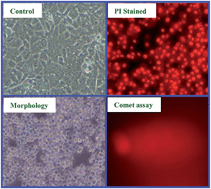
Cell morphology observation. Radical light inverted microscope was used to monitor the microscopic observations (Fig. 11), wherein treated cells showed obvious cellular morphological changes indicating unhealthy cells, whereas the control appeared normal. Control cells were irregular confluent aggregates with rounded and polygonal cells. The cells treated by complexes 2, 6 and 8 appeared to shrink, became spherical shape and cell spreading patterns were restricted.
 |
| | Fig. 11 Morphological and propidium iodide fluorescent staining of HepG2 cells. Untreated cells (a), treatment of 2 (b), 6 (c) and 8 (d) with the IC50 concentration (20× magnification). | |
Propidium iodide staining. Two types of cell death can be observed: an accidental cell death (necrosis) and programmed cell death (apoptosis). In necrosis, the cells undergo cell lysis and lose their membrane integrity, and severe inflammation is induced. However, apoptotic cells are transformed into small membrane-bound vesicles (apoptotic bodies) which are engulfed in vivo by macrophages, and no inflammatory response is found. Harmless removal of cells (cancer cells, for example) is one consideration in chemotherapy. Therefore, induction of apoptosis is one of the considerations in the development of anticancer drugs.Apoptosis is a naturally occurring gene-controlled process that plays a major role in tissue homeostasis and elimination of unwanted cells in animals without affecting normal/unaffected cells. Most of the cancer cells still remain sensitive to some apoptotic stimuli from chemo therapeutic agents, and in this context, the apoptosis-inducing ability of drugs seems to be a primary factor in determining their efficacy.53 Therefore, we have studied the mode of cell death induced by complexes 2, 6 and 8 by adopting fluorescent staining for morphological assessment of cell death, single-cell gel electrophoresis (comet assay) for detecting DNA fragmentation of the treated cells against control cells. Fluorescent dye PI is used to differentiate necrotic, apoptotic and normal cells of HepG2 cell line after treatment with the complexes.
Fig. 11 shows the characteristic morphological changes brought about in the cells by treatment with complexes 2, 6 and 8. The results obtained indicate that complexes induce cell death through different modes like mitotic catastrophe, necrosis and apoptosis. After treating the cells with IC50 concentration of complexes at different time intervals (24 and 48 h), we have observed cytological changes such as chromatin fragmentation, bi- and multinucleation, cytoplasmic vacuolation, nuclear swelling, cytoplasmic blebbing, and late apoptosis indication of dot-like chromatin condensation by adopting PI staining. PI staining of cell nuclei has significantly reduced the microscope time required for counting and for evaluating gross cell morphology.
The dead cells are viewed as red colour after staining with PI under the fluorescent light. A very negligible number of PI positive cells were observed in the control and more number of PI positive cells was observed in the case of cancer cells treated with complexes. The observed morphological changes suggest that complexes 6 and 8 possesses higher efficacy than 2 in killing the cells by apoptosis. The mechanism of cell death induced by complexes on liver carcinoma cell line (HepG2) appears to be apoptosis, as evidenced by fluorescent PI staining.
Alkaline single-cell gel electrophoresis analysis. The single-cell gel electrophoresis assay (comet assay) is considered as a rapid, simple, non-invasive, sensitive, visual and inexpensive technique to assess DNA fragmentation typical of toxic DNA damage and of an early stage of apoptosis,54 as compared to other techniques used for measuring and analyzing DNA strand breaks in mammalian cells. Comet assay gives an image of the changes that have occurred in the chromatin organization in a single-cell which is considered more accurate way to detect early nuclear changes in a cell population. DNA fragmentation is one of the characteristic features observed in apoptotic cells and is generally considered as the biochemical hallmark of the apoptosis, mitotic catastrophe or both and is detected at a single-cell level by the use of single-cell gel electrophoresis in agarose gel matrix. When a cell with damaged DNA is subjected to electrophoresis and then stained with EtBr, it appears as a comet, and the length of the comet tail represents the extent of DNA damage.55 Comets form as the broken ends of the negatively charged DNA molecules becomes free to migrate in the electric field toward the anode. Major understand about comet formation based on: (i) DNA migration is a function of both size and the number of broken ends of the DNA, and (ii) tail length increases with damage initially and then reaches a maximum. The comet tail length was analyzed by CASP software (Fig. S12†).Cells treated with complexes show statistically significant well-formed comets, whereas the control (untreated) cells fail to show a comet or broom-like tail appearance. The typical photos of the nucleoids of control cells were uniformly spherical in shape, reflecting the absence of any DNA damage. However, upon complete scoring of the nucleoids in experiments, reflecting a baseline level of DNA single-strand breaks. Hence, the average comet score of tail DNA for control HepG2 cells was 2.7% (Fig. 12). In contrast, comet score for complexes show significant numbers of nucleoids with larger comet tails, indicative of higher levels of DNA single-strand breaks. The comet assay score (%) of tail DNA for complexes 2, 6 and 8 were 64.99, 82.12 and 73.38, respectively. These results implies that complexes significantly increased number of tail DNA, tail length, tail moment and olive tail moment in HepG2 cell line when compared to control cells. The percentage of cells with tail DNA increased significantly after the cells were treated with complexes 2, 6 and 8 (Table 2). Also, for 24 h treatment the tail length observed for 6 is longer than others, which is consistent with the higher cytotoxicity and the morphological changes observed inside the cell. This clearly indicates that 6 indeed induce DNA fragmentation, which is further evidence for its higher ability to induce apoptotic cell death. On the basis of DNA fragmentation, the potency of the dinuclear complexes in anticancer activity follows the order 6 > 8 > 2.
 |
| | Fig. 12 Analysis of apoptotic inducing effect of control (a) and complexes 2 (b), 6 (c) and 8 (d) on HepG2 cells assessed by comet assay. | |
Results indicate the higher anticancer potency of the copper(II) complexes, which are comparable with the widely used drug cisplatin against HepG2 cell line. The present chloro-bridged phenolic complexes exhibit the moderate anticancer activity when compared to the reported phenolic complexes against the same cell line.56 The outcome of the comet assay shows that a single cell's DNA underwent degradation as consequence of direct DNA damage or rapid apoptosis. The high level of DNA damage induced by complexes reinforces the above results obtained by MTT and fluorescent staining assays. The results of MTT assay, the morphological assessment of cell death and comet assay revealed that complex 6 possesses a very prominent cytotoxicity than others, which is consistent with its strong DNA binding involving hydrophobic forces of interaction and efficient DNA cleavage and potent radical scavenging property.
Conclusions
In summary, a new series of chloro-bridged nickel(II) and copper(II) complexes 1–8 were synthesized and characterized. Single crystal X-ray investigation of complexes [(NiL4(CH3OH)2)2(μ-Cl)](Cl)3·(H2O)2, (4) and [(CuL4Cl)2(μ-Cl)]Cl·(H2O)7, (8) revealed distorted octahedral and square-pyramidal geometry, respectively, around the metal ions. Thermodynamic stability constants and thermodynamic parameters of the complexes have been determined spectrophotometrically. The temperature dependent magnetic susceptibility measurements of the copper(II) complexes (5–8) indicate strong antiferromagnetic coupling exchange interaction between the adjacent copper ions. The antioxidant property implies that complex 6 possesses effective radical scavenging activity against DPPH in terms of IC50 values. The DNA binding studies implies the partial intercalation along with electrostatic mode of binding with CT-DNA. The complex 6 displayed higher DNA binding propensity and nuclease activity than the other dinuclear complexes. Mechanistic studies of the nuclease activity indicated the possible role of hydroxyl radical as reactive oxygen species. Assay results suggest that, complexes 2, 6 and 8 exhibit apoptotic cell death against HepG2 cancer cells. Remarkably, complex 6 exhibit the highest anticancer activity with an IC50 value of 9.5 μM, relatively equal to the widely used drug cisplatin (IC50, 10.5 μM) against the same cell line. Apoptotic cell death was further evidenced from alkaline single-cell gel electrophoresis, and the assay results show that complexes indeed induce DNA fragmentation. This implies that a synergic combination of ligand and metal ion is important in the design of a potential anticancer drug, which correlates well with the ability of complexes to strongly bind and cleave DNA. The results obtained from the present work would be helpful to design and develop new chloro-bridged dinuclear complexes as potent therapeutic and anticancer agents for some chronic diseases.
Experimental
General methods and materials
Micro analysis (% CHN) was performed using Carlo Erba model 1106 elemental analyzer. IR spectra of ligands and complexes were recorded using KBr pellets in the range 4000–400 cm−1 on a Bruker Alpha FT-IR spectrophotometer. The 1H NMR spectra of the nickel(II) complexes were collected on VNMRS-400 spectrometer in DMSO (d6) at room temperature. UV-Vis spectra of complexes were recorded in HPLC grade DMF at 25 °C on Agilent-8453 spectrophotometer in the range of 200–1100 nm. ESI mass spectra were recorded on a Q-Tof micromass spectrograph using H2O as the mobile phase with an approximate concentration of 1.0 mmol dm−3. Cyclic voltammograms were obtained on CHI 602D (CH Instruments Co., USA) electrochemical analyzer under oxygen free conditions using a three-electrode cell with a DMF solution of TBAP (0.1 M) as the supporting electrolyte. A Pt wire, glassy carbon, and the Ag/AgCl electrode (saturated KCl solution) were used as counter, working and reference electrode, respectively. A ferrocene/ferrocenium (Fc/Fc+) couple was used as an internal standard. The reported potentials are relative to the Ag/AgCl electrode and E1/2 of the Fc/Fc+ couple. The concentration of complex solutions were taken around 1.0 × 10⁻³ M and, the scan rate was 100 mV s−1. Molar conductivity was measured with an Elico digital conductivity bridge model CM-88, using a freshly prepared DMF solution of complex. X-Band EPR spectra of the Cu(II) complexes were recorded at room temperature on a Varian EPR-E 112 spectrometer. The magnetic measurements were carried out on a PAR vibrating sample magnetometer (Model-155). The χMT data were collected over the temperature range 20–300 K with an applied magnetic field of 5000 Oe and instrument was calibrated using metallic nickel.
The ligands 2-((2-(piperazin-1-yl)ethylimino)methyl)phenol (L1), 4-methyl-2-((2-(piperazin-1-yl)ethylimino)methyl)phenol (L2), 4-chloro-2-((2-(piperazin-1-yl)ethylimino)methyl)phenol (L3) and 4-bromo-2-((2-(piperazin-1-yl)ethylimino)methyl)phenol (L4) were prepared by condensation of 1-(2-aminoethyl)piperazine with corresponding salicylaldehyde in methanol.13 All reagents and chemicals were purchased from commercial sources (SRL and S.D. Fine chemicals, India; Sigma-Aldrich, USA) and used without further purification. Solvents were dried and purified before being used according to standard procedure. Tetra(n-butyl)ammonium perchlorate (TBAP) used as the supporting electrolyte in the electrochemical measurements, was purchased from Fluka (Switzerland) and recrystallized from hot methanol. The calf thymus (CT) and pBR322 DNA were purchased from Bangalore Genei (India). Ethidium bromide (EtBr) was obtained from Sigma-Aldrich (USA).
Synthesis of dinuclear complexes
The chloro-bridged dinuclear nickel(II) 1–4 and copper(II) 5–8 complexes were prepared by following general synthetic procedure. To a stirred methanolic solution (10 mL) of NiCl2·6H2O (0.232 g, 1 mmol) or CuCl2·2H2O (0.170 g, 1 mmol), a methanolic solution (10 mL) of appropriate ligand L1−4 (1 mmol) was added slowly and stirring was continued for 2 h. The reaction mixture was refluxed for 6 h, filtered hot and kept aside for slow evaporation. The product was washed with cold methanol and dried in vacuo.
[(NiL1(CH3OH)2)2(μ-Cl)](Cl)3·(H2O)2 (1). Yield: 0.76 g (85.4%). Colour: green. Anal. calc. for C30H58Cl4N6Ni2O8, (FW: 890.01): C, 40.48; H, 6.57; N, 9.44%. Found: C, 40.45; H, 6.61; N, 9.42%. Selected IR data (KBr, ν, cm−1): 3388 v(O–H str. of CH3OH), 2947 v(N–H str. of >NH2+), 1650 v(C
N), 1549 v(N–H bend. of >NH2+), 1292 v(Ar–O). UV-Vis (DMF), λ/nm (ε/M−1 cm−1): 268 (19
184), 372 (11
465), 634 (938), 930 (315) nm. ESI-MS (H2O) display peaks at: [NiL1 + H]2+ (292), [NiL1]+ (291). Conductance (ΛM, Ω−1 cm2 mol−1) in DMF: 291.
[(NiL2(CH3OH)2)2(μ-Cl)](Cl)3·(H2O)2 (2). Yield: 0.79 g (86%). Colour: pale green. Anal. calc. for C32H62Cl4N6Ni2O8, (FW: 918.07): C, 41.86; H, 6.81; N, 9.15%. Found: C, 41.83; H, 6.86; N, 9.12%. Selected IR data (KBr, ν, cm−1): 3406 v(O–H str. of CH3OH), 2964 v(N–H str. of >NH2+), 1649 v(C
N), 1546 v(N–H bend. of >NH2+), 1290 v(Ar–O). UV-Vis (DMF), λ/nm (ε/M−1 cm−1): 268 (19
485), 381 (13
905), 644 (1830), 930 (894) nm. ESI-MS (H2O) display peaks at: [NiL2 + H]2+ (307), [NiL2]+ (305). Conductance (ΛM, Ω−1 cm2 mol−1) in DMF: 294.
[(NiL3(CH3OH)2)2(μ-Cl)](Cl)3·(H2O)2 (3). Yield: 0.78 g (81.3%). Colour: green. Anal. calc. for C30H56Cl6N6Ni2O8, (FW: 958.90): C, 37.58; H, 5.89; N, 8.76%. Found: C, 37.55; H, 5.93; N, 8.77%. Selected IR data (KBr, ν, cm−1): 3384 v(O–H str. of CH3OH), 2957 v(N–H str. of >NH2+), 1655 v(C
N), 1536 v(N–H bend. of >NH2+), 1294 v(Ar–O). UV-Vis (DMF), λ/nm (ε/M−1 cm−1): 268 (15
898), 382 (10
392), 624 (1637), 954 (765) nm. ESI-MS (H2O) display peaks at: [NiL3 + H]2+ (326), [NiL3]+ (325). Conductance (ΛM, Ω−1 cm2 mol−1) in DMF: 282.
[(NiL4(CH3OH)2)2(μ-Cl)](Cl)3·(H2O)2 (4). Yield: 0.73 g (69.7%). Colour: dark green. Anal. calc. for C30H56Br2Cl4N6Ni2O8, (FW: 1047.81): C, 34.39; H, 5.39; N, 8.02%. Found: C, 34.37; H, 5.42; N, 8.05%. Selected IR data (KBr, ν, cm−1): 3379 v(O–H str. of CH3OH), 2952 v(N–H str. of >NH2+), 1637 v(C
N), 1524 v(N–H bend. of >NH2+), 1309v(Ar–O). UV-Vis (DMF), λ/nm (ε/M−1 cm−1): 268 (17
099), 369 (10
826), 630 (1039), 973 (638) nm. ESI-MS (H2O) display peaks at: [NiL4 + H]2+ (371), [NiL4]+ (370). Conductance (ΛM, Ω−1 cm2 mol−1) in DMF: 285.
[(CuL1Cl)2(μ-Cl)]Cl·(H2O)7 (5). Yield: 0.63 g (73.1%). Colour: green. Anal. calc. for C26H52Cl4N6Cu2O9, (FW: 861.63): C, 36.24; H, 6.08; N, 9.75%. Found: C, 36.22; H, 6.14; N, 9.73%. Selected IR data (KBr, ν, cm−1): 3423 v(O–H str. of H2O), 2955 v(N–H str. of >NH2+), 1643 v(C
N), 1544 v(N–H bend. of >NH2+), 1296 v(Ar–O). UV-Vis (DMF), λ/nm (ε/M−1 cm−1): 272 (16
285), 359 (6422), 657 (278) nm. ESI-MS (H2O) display peaks at: [CuL1 + 2H]2+ (298), [CuL1]+ (296). Conductance (ΛM, Ω−1 cm2 mol−1) in DMF: 131. g‖ = 2.16. μeff = 1.51 BM, −2J = 236 cm−1 at 298 K.
[(CuL2Cl)2(μ-Cl)]Cl·(H2O)7 (6). Yield: 0.64 g (77.6%). Colour: green. Anal. calc. for C28H56Cl4N6Cu2O9, (FW: 889.68): C, 37.80; H, 6.34; N, 9.45%. Found: C, 37.81; H, 6.38; N, 9.43%. Selected IR data (KBr, ν, cm−1): 3452 v(O–H str. of H2O), 2934 v(N–H str. of >NH2+), 1642 v(C
N), 1538 v(N–H bend. of >NH2+), 1303 v(Ar–O). UV-Vis (DMF), λ/nm (ε/M−1 cm−1): 274 (14
302), 358 (5428), 668 (221) nm. ESI-MS (H2O) display peaks at: [CuL2 + 2H]2+ (311), [CuL2]+ (309). Conductance (ΛM, Ω−1 cm2 mol−1) in DMF: 137. g‖ = 2.15. μeff = 1.52 BM, −2J = 239 cm−1 at 298 K.
[(CuL3Cl)2(μ-Cl)]Cl·(H2O)7 (7). Yield: 0.71 g (76.3%). Colour: dark green. Anal. calc. for C26H50Cl6N6Cu2O9, (FW: 930.52): C, 33.56; H, 5.42; N, 9.03%. Found: C, 33.54; H, 5.47; N, 9.01%. Selected IR data (KBr, ν, cm−1): 3442 v(O–H str. of H2O), 2949 v(N–H str. of >NH2+), 1646 v(C
N), 1549 v(N–H bend. of >NH2+), 1304 v(Ar–O). UV-Vis (DMF), λ/nm (ε/M−1 cm−1): 272 (21
815), 358 (9934), 658 (423) nm. ESI-MS (H2O) display peaks at: [CuL3 + 2H]2+ (332), [CuL3]+ (330). Conductance (ΛM, Ω−1 cm2 mol−1) in DMF: 125. g‖ = 2.19. μeff = 1.49 BM, −2J = 220 cm−1 at 298 K.
[(CuL4Cl)2(μ-Cl)]Cl·(H2O)7 (8). Yield: 0.76 g (74.5%). Colour: dark green. Anal. calc. for C26H50Br2Cl4N6Cu2O9, (FW: 1019.42): C, 30.63; H, 4.94; N, 8.24%. Found: C, 30.61; H, 4.99; N, 8.21%. Selected IR data (KBr, ν, cm−1): 3419 v(O–H str. of H2O), 2929 v(N–H str. of >NH2+), 1647 v(C
N), 1526 v(N–H bend. of >NH2+), 1304 v(Ar–O). UV-Vis (DMF), λ/nm (ε/M−1 cm−1): 269 (14
125), 372 (5734), 655 (262) nm. ESI-MS (H2O) display peaks at: [CuL4 + 2H]2+ (362), [CuL4]+ (360). Conductance (ΛM, Ω−1 cm2 mol−1) in DMF: 128. g‖ = 2.18. μeff = 1.50 BM, −2J = 228 cm−1 at 298 K.
Single crystal X-ray diffraction
Single crystals of complexes 4 and 8 suitable for XRD measurements were sorted using polarizing microscope (Leica DMLSP). Crystals having good morphology were chosen for three-dimensional intensity data collection. Crystals with dimensions of 0.30 × 0.25 × 0.20 and 0.30 × 0.20 × 0.20 mm for complexes 4 and 8, respectively were mounted on a glass fiber for diffraction experiment. X-ray single crystal data were collected on a Kappa Apex2 CCD diffractometer equipped with a fine-focus sealed tube X-ray source and graphite monochromated Mo (Kα) radiation in the wavelength (λ) of 0.71073 Å at room temperature (293 ± 2 K). The intensity data were collected using ω and φ scans with frame width of 0.5°. The frame integration and data reduction were performed using Bruker SAINT-plus (Version 7.06a) software. Empirical absorption corrections were applied for complexes, using SADABS program.57 The structure was solved by using SIR92,58 and the full-matrix least-squares refinement on F2 was performed using SHELXL-97 program.59
The scattering factors incorporated in SHELXL-97 were used. After several cycles of refinement, the positions of hydrogen atoms were calculated and added to the refinement process. Molecular graphics, hydrogen bonding and packing figures were generated by using the softwares ORTEP 3.0,60 and Mercury 3.0.61 Details of the crystallographic data and structure refinement parameters for complexes 4 and 8 are summarized in Table 4.
Table 4 Crystal data and structure refinement for complexes 4 and 8
| Complex |
4 |
8 |
| CCDC |
907779 |
952060 |
| Empirical formula |
C30H56Br2Cl4N6Ni2O8 |
C26H50Br2Cl4N6Cu2O9 |
| Formula weight |
1047.85 |
1019.42 |
| Temperature (K) |
293 ± 2 |
293 ± 2 |
| Wavelength (Å) |
0.71073 |
0.71073 |
| Crystal system |
Monoclinic |
Monoclinic |
| Space group |
C2/c |
P21/n |
| a (Å) |
10.1699(4) |
13.8391(4) |
| b (Å) |
16.8523(8) |
14.3968(4) |
| c (Å) |
24.8924(11) |
20.2234(7) |
| α (°) |
90 |
90 |
| β (°) |
98.768(2) |
98.6740(10) |
| γ (°) |
90 |
90 |
| Volume (Å3) |
4216.4(3) |
3983.2(2) |
| Z |
4 |
4 |
| Calculated density (Mg m−3) |
1.651 |
1.700 |
| Absorption coefficient (mm−1) |
3.094 |
3.395 |
| F(000) |
2144 |
2064 |
| Crystal size (mm) |
0.30 × 0.25 × 0.20 |
0.30 × 0.20 × 0.20 |
| θ range for data collection (°) |
2.36–28.81 |
2.05–26.98 |
| Limiting indices |
−13 ≤ h ≤ 13, −22 ≤ k ≤ 22, −33 ≤ l ≤ 33 |
−17 ≤ h ≤ 17, −18 ≤ k ≤ 18, −25 ≤ l ≤ 25 |
| Reflections collected |
23 444 |
41 141 |
| Independent reflections |
5502 [R(int) = 0.0339] |
8638 [R(int) = 0.0667] |
| Max. and min. Transmission |
0.5766 and 0.4571 |
0.592 and 0.501 |
| Refinement method |
Full-matrix least-squares on F2 |
| Data/restrains/parameters |
5502/74/305 |
8638/6/456 |
| GOF on F2 |
1.037 |
1.055 |
| Final R indices [I > 2σ(I)] |
R1 = 0.0333, wR2 = 0.0740 |
R1 = 0.0426, wR2 = 0.0923 |
| R indices (all data) |
R1 = 0.0574, wR2 = 0.0816 |
R1 = 0.0894, wR2 = 0.1107 |
| Largest diff. peak and hole (e Å−3) |
0.581 and −0.5000 |
0.716 and −0.617 |
DPPH radical scavenging activity
An electron (or) hydrogen atom donation (or) free radical scavenging abilities of complexes was evaluated from the bleaching of DPPH in methanolic medium. A 0.1 mM DPPH solution was used to generate the stable radical,62 and the absorbance was measured for this DPPH solution at 517 nm (Ablank). Complexes of different concentrations (0–250 μM) were prepared in DMF and added (1 mL) to each DPPH solutions. The reaction mixtures were incubated for 30 min at room temperature (in dark) and the absorbance of these solutions (Asample) was measured at 517 nm against blank. DPPH free radical scavenging activity (or) inhibition (I%) of DPPH radicals for the various concentration of complexes were calculated from the following expression,
| I% = (Ablank − Asample/Ablank) × 100 |
The IC50 values were calculated by plotting I% values as a function of complex concentrations.
DNA binding studies
Absorption spectral titration. The application of electronic absorption spectra in DNA interaction is one of the most effective method to examine the binding mode and strength of metal complexes with DNA. A solution of calf thymus DNA in Tris–HCl buffer (5 mM Tris–HCl/50 mM NaCl, pH = 7.2) gave a ratio of UV absorbance at 260 and 280 nm (A260/A280) of about 1.87
:
1, indicating that the DNA was sufficiently free from proteins.63 Stock solutions of CT-DNA was prepared in Tris–HCl/NaCl buffer and stored at 4 °C for less than 4 days. The DNA concentration per nucleotide was determined from the absorption intensity at 260 nm using the molar absorption coefficient of 6600 M−1 cm−1.64 Stock solutions of complexes was prepared by using 5% DMF/Tris–HCl (0.5 mL DMF in 10 mL buffer) and diluting suitably with the corresponding buffer to the required concentrations for all the experiments. Absorption titration experiments were carried out by varying nucleic acid concentration (0–500 μM) and maintaining complex concentration constant (50 μM). Complex-DNA solutions were allowed to incubate for 30 min at room temperature before measurements were taken. While measuring the absorption spectra, equal amounts of DNA was added to both complex solution and the reference solution to eliminate the absorbance of DNA itself. Absorbances were recorded after each successive addition of DNA solution at room temperature. Titration curves were constructed from the fractional change in the absorption intensity as a function of DNA concentration.40 The intrinsic binding constant Kb can be obtained by the following equation:
| [DNA]/(εa − εf) = [DNA]/(εb − εf) + 1/Kb(εb − εf) |
where, [DNA] is the DNA concentration in M (nucleotide), εa – apparent extinction coefficient obtained by calculating Aobser/[complex], εf – extinction coefficient of complex in its free form, εb – extinction coefficient of complex in the fully bound form. Kb – is the intrinsic binding constant in M−1. Each set of data were fitted to the above equation, and the plot of [DNA]/(εa − εf) versus [DNA] gave a slope and the y-intercept which are equal to 1/(εb − εf) and 1/Kb(εb − εf), respectively. The intrinsic binding constant Kb was obtained from the ratio of the slope to the intercept.
Hydrodynamic (viscosity) measurements. Viscometric experiments were conducted on an Ostwald micro viscometer of 2 mL capacity, immersed in a water bath maintained at 25 ± 0.1 °C. The solutions of DNA (200 μM) and complexes (0–100 μM) were prepared by using Tris–HCl/NaCl buffer (pH = 7.2). Mixing of the solution was achieved by purging nitrogen gas through viscometer. The flow time was measured with a digital stopwatch and the experiment was repeated in triplicate to get the concurrent values. Data were presented as (η/η0)1/3 versus binding ratio (1/R) [complex]/[DNA],65 where η and η0 are the specific viscosity of DNA in the presence and absence of complex, respectively. The values of η and η0 were calculated from the relation,41
where, tb is the flow time of buffer alone, and t is the observed flow time for DNA in the absence and presence of complex. Relative viscosities for DNA were obtained from the relation, η/η0.
Electrochemical titration. Electrochemical techniques are best complementary to other related biophysical techniques that are applied to study the interaction between redox active molecules and bio-molecules.66 The solutions of complexes and DNA were prepared by using DMF and Tris–HCl/NaCl buffer (pH 7.2), respectively, in double distilled water. The concentration of complexes can be taken as 100 μM and also for DNA. Solutions were deaerated by purging with N2 gas for 5 minutes prior to the measurements.
Nuclease activity
The nuclease activity of complexes 1–8 on supercoiled plasmid DNA (pBR322) was monitored using agarose gel electrophoresis technique by determining its ability to convert supercoiled DNA (Form I) to nicked circular (Form II) and linear forms (Form III). In the cleavage reactions, plasmid DNA (33.3 μM) was treated with complexes (0–250 μM) and hydrogen peroxide (0.1 mM, co-reactant) in Tris–HCl/NaCl buffer (pH 7.2). To test the involvement of reactive oxygen species (ROS) during strand scission, we further investigated the influence of the hydroxyl radical scavenger (DMSO, 10 mM) during the cleavage reaction. The mixture was incubated for 1 h at 37 °C. A loading buffer containing 0.25% bromophenol blue, 0.25% xylene cyanol, 30% glycerol (3 μL) was added and the electrophoresis of cleavage products were performed on 0.8% agarose gel containing ethidium bromide (1 μg mL−1). The gels were run at 50 V for 1 h in TAE buffer (40 mM Tris base, 20 mM acetic acid, 1 mM EDTA, pH 8.3). The bands were viewed and imaged.
Ligation enzymatic assay was performed using T4 DNA ligase to determine whether the cleaved products consistent with hydrolytic cleavage of DNA. The cleavage product was purified by DNA gel extraction kit and incubated for 12 h at 16 °C with 1.5 μL of 10× ligation buffer, 1 μL of T4 ligase (4 units) and 2.5 μL of 1 mM ATP. Afterwards, the ligation products were stained with EtBr, electrophoresed and imaged.
Growth inhibition studies
Cell line and cell culture conditions. Human hepatocellular liver carcinoma cell line (HepG2) and Vero cell line were obtained from National Centre for Cell Science (NCCS), Pune, India. The cancer cells were cultured in Dulbecco's Modified Eagles Medium (DMEM) (St. Louis, Mo, USA), supplemented with 10% Fetal Bovine Serum (FBS) (Sigma Aldrich, USA), 100 μg mL−1 of streptomycin, 20 μg mL−1 of kanamycin acid sulphate and 7.5% sodium bicarbonate solution (Himedia, Mumbai, India) in 96-well culture plates at 37 °C in a humidified atmosphere of 5% CO2 in a CO2 incubator (Thermoscientific, Germany). MTT [3-(4,5-dimethylthiazol-2-yl)-2,5-diphenyltetrazolium bromide, a yellow tetrazole] was obtained from Himedia. All experiments were performed using cells from fifteenth passage.
Cell viability assay (MTT assay). In vitro anticancer potency of complexes 2, 6 and 8 was carried out by using MTT assay as described previously.67 HepG2 cells were cultured and seeded into 96 well plates approximately as 1 × 10⁵ cells in each well. Complexes in the concentration range of 2–10 μg mL−1 dissolved in deionized water was added to the wells. After treatment, the plates were incubated for 24–48 h in order to perform cytotoxic analysis using MTT assay. MTT was prepared at a concentration of 5 mg mL−1 and 10 μL of MTT was added in each well and incubated for 4 h. Purple color farmazone crystals formed were then dissolved in 100 μL of dimethyl sulphoxide (DMSO). These crystals were observed at 570 nm in a multi well ELISA plate reader. Optical density value was subjected to percentage of viability (%) by using the following formula.
Apoptosis evaluation by cell morphology and propidium iodide staining. To detect apoptosis, cells were judged according to their nuclear morphology and disintegration of their cell membranes, which is indicated by propidium iodide (PI) uptake.68 HepG2 cells were plated at a density of 1 × 10⁶ cells per well into a six-well plate and incubated overnight. At 90% confluence, the cells were treated with complexes 2, 6 and 8 at IC50 dose, washed with PBS fixed in methanol and acetic acid (3
:
1 v/v) for 10 min and stained with 50 μg mL−1 of PI for 20 min. Nuclear morphology of apoptotic cells with condensed/fragmented nuclei was examined under an Inverted phase contrast/fluorescent microscope (Radical).
Alkaline single-cell gel electrophoresis assay (comet assay). An alkaline single-cell gel electrophoresis (SCGE) technique69 is a neutral assay, first introduced by Östling and Johanson in 1984 which has been modified and extensively validated over the years, and is now commonly referred to as the ‘comet assay’.70 DNA damage was quantified by adopting comet assay as previously described.71 Cells used for the comet assay were sampled from a monolayer during the growing phase, 24 h after seeding. Cells were treated with complexes at IC50 dose and cells were harvested by a trypsinization process. Normal agarose in PBS (200 μL of 1% solution, pH 7.4) at 65 °C was dropped gently onto a fully frosted micro slide, covered immediately with a cover slip, and then placed over a frozen ice pack for ∼5 min. The cover slip was removed after the gel had set. The cell suspension from each samples, was mixed with 1% low-melting agarose (LMA) at 37 °C in a 1
:
3 ratio. This mixture (100 μL) was quickly applied on top of the gel, coated over the micro slide, and allowed to set as before. A third coating of 100 μL of 1% LMA was given on the gel containing the cell suspension and allowed to set. After solidification of the agarose, the cover slips were removed and the slides were immersed in ice-cold lytic solution (2.5 M NaCl, 100 mM Na-EDTA, 10 mM Tris-base and 0.1% Triton X100, 10% DMSO, pH 10) and placed in a refrigerator at 4 °C. All the above operations were performed under low lighting conditions to avoid DNA damage due to light. The slides, after being removed from the lytic solution were placed horizontally in an electrophoresis tank. The reservoirs were filled with electrophoresis buffer (300 mM NaOH, 1 mM Na-EDTA, pH 13) until the slides were just immersed in it and allowed to stand in the buffer for 20 min (to allow DNA unwinding), after which electrophoresis was carried out at 0.8 V cm−1 for 15 min. After electrophoresis, the slides were removed, washed thrice in neutralization buffer (0.4 M Tris, pH 7.5), and gently tapped to dry. Nuclear DNA was stained with 20 μL of propidium iodide (50 μg mL−1). Photographs were obtained using an Inverted florescence microscope at 20× magnification. The DNA contents in the head and tail were quantified by using CASP software.
Acknowledgements
AKR gratefully thanks UGC, New Delhi, for financial assistance through the Major Research Project grant [F. No. 39-797/2010 (SR)]. The authors thank to SAIF, IIT-M and CLRI, Chennai for Single crystal XRD and EPR studies, respectively.
References
-
(a) G. Zuber, J. C. Quada Jr and S. M. Hecht, J. Am. Chem. Soc., 1998, 120, 9368–9369 CrossRef CAS;
(b) S. M. Hecht, J. Nat. Prod., 2000, 63, 158–168 CrossRef CAS PubMed.
-
(a) A. R. Banerjee, J. A. Jaeger and D. H. Turner, Biochemistry, 1993, 32, 153–163 CrossRef CAS;
(b) Y. Jin and J. A. Cowan, J. Am. Chem. Soc., 2005, 127, 8408–8415 CrossRef CAS PubMed.
- G. Giaccone, R. S. Herbst, C. Manegold, G. Scagliotti, R. Rosell, V. Miller, J. S. Ochs and R. B. Natale, J. Clin. Oncol., 2004, 22, 777–784 CrossRef CAS PubMed.
- T. R. Krugh and J. W. Neely, Biochemistry, 1973, 12, 4418–4425 CrossRef CAS.
-
(a) S. Ramakrishnan, E. Suresh, A. Riyasdeen, M. A. Akbarsha and M. Palaniandavar, Dalton Trans., 2011, 40, 3245–3256 RSC;
(b) Y.-C. Liu, X.-Y. Song, Z.-F. Chen, Y.-Q. Gu, Y. Peng and H. Liang, Inorg. Chim. Acta, 2012, 382, 52–58 CrossRef CAS PubMed.
-
(a) P. U. Maheswari, S. Roy, H. D. Dulk, S. Barends, G. V. Wezel, B. Kozlevčar, P. Gamez and J. Reedijk, J. Am. Chem. Soc., 2006, 128, 710–711 CrossRef CAS PubMed;
(b) C. Marzano, M. Pellai, F. Tisato and C. Santini, Anti-Cancer Agents Med. Chem., 2009, 9, 185–211 CrossRef CAS.
- H. Wu, J. Yuan, Y. Bai, G. Pan, H. Wang and X. Shu, J. Photochem. Photobiol., B, 2012, 107, 65–72 CrossRef CAS PubMed.
-
(a) P. M. May and D. R. Williams, in Metal Ions in Biological Systems, ed. H. Sigel, Marcel Dekker, New York, 1981, p. 12 Search PubMed;
(b) T. Miura, A. Hori-i, H. Mototani and H. Takeuchi, Biochemistry, 1999, 38, 11560–11569 CrossRef CAS PubMed.
- S. Anbu, S. Shanmugaraju and M. Kandaswamy, RSC Adv., 2012, 2, 5349–5357 RSC.
-
(a) D. Kong, J. Reibenspies, J. Mao, A. Clearfield and A. E. Martell, Inorg. Chim. Acta, 2003, 342, 158–170 CrossRef CAS;
(b) S. Budagumpi, N. V. Kulkarni, G. S. Kurdekar, M. P. Sathisha and V. K. Revankar, Eur. J. Med. Chem., 2010, 45, 455–462 CrossRef CAS PubMed.
- E. Meggers, Curr. Opin. Chem. Biol., 2007, 11, 287–292 CrossRef CAS PubMed.
-
(a) S. Anbu, R. Ravishankaran, A. A. Karande and M. Kandaswamy, Dalton Trans., 2012, 41, 12970–12983 RSC;
(b) S. Tabassum, S. Amir, F. Arjmand, C. Pettinari, F. Marchetti, N. Masciocchi, G. Lupidi and R. Pettinari, Eur. J. Med. Chem., 2013, 60, 216–232 CrossRef CAS PubMed.
- J. Ravichandran, P. Gurumoorthy, C. Karthick and A. K. Rahiman, J. Mol. Struct., 2014, 1062, 147–157 CrossRef CAS PubMed.
- N. B. Colthrup, L. H. Daly and S. E. Wiberley, in Introduction to Infrared and Raman Spectroscopy, Academic Press, San Diego, CA, 3rd edn, 1990, pp. 1–73 Search PubMed.
- E. W. Ainscough, A. M. Brodie, J. D. Ranford and J. M. Waters, J. Chem.
Soc., Dalton Trans., 1997, 1251–1255 RSC.
- A. E. Underhill and D. E. Billing, Nature, 1966, 210, 834–835 CrossRef CAS.
- M. Chauhan, K. Banerjee and F. Arjmand, Inorg. Chem., 2007, 46, 3072–3082 CrossRef CAS PubMed.
- Z. H. Chohan, H. A. Shad, L. Toupet, T. B. Hadda and M. Akkurt, J. Chem. Crystallogr., 2011, 41, 159–162 CrossRef CAS.
- Y.-C. Liu, X.-Y. Song, Z.-F. Chen, Y.-Q. Gu, Y. Peng and H. Liang, Inorg. Chim. Acta, 2012, 382, 52–58 CrossRef CAS PubMed.
- G. R. Desiraju and T. Steiner, in The Weak Hydrogen Bond in Structural Chemistry and Biology, Oxford University Press, New York, 1999 Search PubMed.
- A. W. Addison, T. N. Rao, J. Reedijk, J. van Rijn and G. C. Verschoor, J. Chem. Soc., Dalton Trans., 1984, 1349–1356 RSC.
- M. B. Bushuev, Y. V. Gatilov, E. B. Nikolaenkova, V. G. Vasiliev and V. P. Krivopalov, Inorg. Chim. Acta, 2013, 395, 95–103 CrossRef CAS PubMed.
- W. J. Geary, Coord. Chem. Rev., 1971, 7, 81–122 CrossRef CAS.
- P. A. Connick and K. A. Macor, Inorg. Chem., 1991, 30, 4654–4663 CrossRef CAS.
- A. Benzekri, P. Dubourdeaux, J. M. Latour, P. Rey and J. Laugier, J. Chem. Soc., Dalton Trans., 1991, 3359–3365 RSC.
- T. Atalay and E. Özkan, Thermochim. Acta, 1994, 237, 369–374 CrossRef CAS.
- Md. J. Hossain, M. Yamasaki, M. Mikuriya, A. Kuribayashi and H. Sakiyama, Inorg. Chem., 2002, 41, 4058–4062 CrossRef CAS PubMed.
- B. Bleaney and K. D. Bowers, Proc. R. Soc. London, Ser. A, 1952, 214, 451–465 CrossRef CAS.
- W. Kaim and J. Rall, Angew. Chem., Int. Ed. Engl., 1996, 35, 43–60 CrossRef CAS PubMed.
- A. P. Neves, K. C. B. Maia, M. D. Vargas, L. C. Visentin, A. Casellato, M. A. Novak and A. S. Mangrich, Polyhedron, 2010, 29, 2884–2891 CrossRef CAS PubMed.
- W. E. Marsh, K. C. Patel, W. E. Hatfield and D. J. Hodgson, Inorg. Chem., 1983, 22, 511–515 CrossRef CAS.
- R. Cortés, L. Lezama, J. I. R. de Larramendi, G. Madariaga, J. L. Mesa, F. J. Zuñiga and T. Rojo, Inorg. Chem., 1995, 34, 778–786 CrossRef.
- O. F. Ikotun, E. M. Higbee, W. Ouellette, F. Lloret, M. Julve and R. P. Doyle, Eur. J. Inorg. Chem., 2008, 5281–5286 CrossRef CAS PubMed.
-
(a) C. S. Rivas, J. C. Espin and H. Wichers, Phytochem. Anal., 2000, 11, 330–338 CrossRef;
(b) K. Tsai, T. G. Hsu, H. Cheng, T. Y. Liu, C. F. Hsu and C. W. Kong, Free Radical Biol. Med., 2001, 31, 1465–1472 CrossRef CAS.
- S. Ramakrishnan, V. Rajendiran, M. Palaniandavar, V. S. Periasamy, B. S. Srinag, H. Krishnamurthy and M. A. Akbarsha, Inorg. Chem., 2009, 48, 1309–1322 CrossRef CAS PubMed.
- D. S. Raja, N. S. P. Bhuvanesh and K. Natarajan, Eur. J. Med. Chem., 2011, 46, 4584–4594 CrossRef CAS PubMed.
-
(a) S. A. Bejune, A. H. Shelton and D. R. McMillin, Inorg. Chem., 2003, 42, 8465–8475 CrossRef CAS PubMed;
(b) G. Dougherty and W. J. Pigram, Crit. Rev. Biochem., 1982, 12, 103–132 CrossRef CAS.
- M. T. Carter, M. Rodriguez and A. J. Bard, J. Am. Chem. Soc., 1989, 111, 8901–8911 CrossRef CAS.
- P. Zhao, L. C. Xu, J. W. Huang, K. C. Zheng, J. Liu, H. C. Yu and L. N. Ji, Biophys. Chem., 2008, 134, 72–83 CrossRef CAS PubMed.
- M. Cory, D. D. Mckee, J. Kagan, D. W. Henry and J. A. Miller, J. Am. Chem. Soc., 1985, 107, 2528–2536 CrossRef CAS.
- S. Satyanarayana, J. C. Dabrowiak and J. B. Chaires, Biochemistry, 1992, 31, 9319–9324 CrossRef CAS.
- L. Jin and P. Yang, J. Inorg. Biochem., 1997, 68, 79–83 CrossRef CAS.
- E. J. Gabbay, R. E. Scofield and C. S. Baxter, J. Am. Chem. Soc., 1973, 95, 7850–7857 CrossRef CAS.
- H.-L. Chen, H.-Q. Liu, B.-C. Tzeng, Y.-S. You, S.-M. Peng, M. Yang and C.-M. Che, Inorg. Chem., 2002, 41, 3161–3171 CrossRef PubMed.
- M. T. Carter and A. J. Bard, J. Am. Chem. Soc., 1987, 109, 7528–7530 CrossRef CAS.
- C. Tolia, A. N. Papadopoulos, C. P. Raptopoulou, V. Psycharis, C. Garino, L. Salassa and G. Psomas, J. Inorg. Biochem., 2013, 123, 53–65 CrossRef CAS PubMed.
- P. A. N. Reddy, M. Nethaji and A. R. Chakravarty, Eur. J. Inorg. Chem., 2004, 7, 1440–1446 CrossRef PubMed.
- D. Desbouis, I. P. Troitsky, M. J. Belousoff, L. Spiccia and B. Graham, Coord. Chem. Rev., 2012, 256, 897–937 CrossRef CAS PubMed.
- A. Sreedhara and J. A. Cowan, J. Biol. Inorg. Chem., 2001, 6, 337–347 CrossRef CAS.
- N. A. Rey, A. Neves, P. P. Silva, F. C. S. Paula, J. N. Silveira, F. V. Botelho, L. Q. Vieira, C. T. Pich, H. Terenzi and E. C. P. Maia, J. Inorg. Biochem., 2009, 103, 1323–1330 CrossRef CAS PubMed.
- B. K. Keppler and B. K. Holler, in Metal Complexes in Cancer Chemotherapy, Wiley-VCH, Weinheim, 1993, p. 37 Search PubMed.
- N. Milhazes, T. C. Oliveira, P. Martins, J. Garrido, C. Oliveira, A. C. Rego and F. Borges, Chem. Res. Toxicol., 2006, 19, 1294–1304 CrossRef CAS PubMed.
- I. M. Ghobrial, T. E. Witzig and A. A. Adjei, Ca-Cancer J. Clin., 2005, 55, 178–194 CrossRef.
- P. Moller, L. E. Knudsen, S. Loft and H. Wallin, Cancer Epidemiol., Biomarkers Prev., 2000, 9, 1005–1015 CAS.
- C. Alapetite, Int. J. Radiat. Biol., 1996, 69, 359–369 CrossRef CAS.
-
(a) R. Prabhakaran, P. Kalaivani, P. Poornima, F. Dallemer, G. Paramaguru, V. Vijaya Padma, R. Renganathan, R. Huang and K. Natarajan, Dalton Trans., 2012, 41, 9323–9336 RSC;
(b) K. Dhahagani, S. Mathan Kumar, G. Chakkaravarthi, K. Anitha, J. Rajesh, A. Ramu and G. Rajagopal, Spectrochim. Acta, Part A, 2014, 117, 87–94 CrossRef CAS PubMed.
- Bruker-Nonius, in APEX-II and SAINT-plus (Version 7.06a), Bruker AXS Inc., Madison, Wisconsin, USA, 2004 Search PubMed.
- A. Altomare, G. Cascarano, C. Giacovazzo and A. Guagliardi, J. Appl. Crystallogr., 1993, 26, 343–350 CrossRef.
- M. Sheldrick, Acta Crystallogr., Sect. A: Found. Crystallogr., 2008, 64, 112–122 CrossRef PubMed.
- L. J. Farrugia, J. Appl. Crystallogr., 1997, 30, 565 CrossRef CAS.
- C. F. Macrae, P. R. Edgington, P. McCabe, E. Pidcock, G. P. Shields, R. Taylor, M. Towler and J. van de Streek, J. Appl. Crystallogr., 2006, 39, 453–457 CrossRef CAS.
-
(a) M. Cuendet, K. Hostettmann and O. Potterat, Helv. Chim. Acta, 1997, 80, 1144–1152 CrossRef CAS PubMed;
(b) M. Burits and F. Bucar, Phytother. Res., 2000, 14, 323–328 CrossRef CAS.
- J. Marmur, J. Mol. Biol., 1961, 3, 208–218 CrossRef CAS.
- R. Reichmann, S. A. Rice, C. A. Thomas and P. Doty, J. Am. Chem. Soc., 1954, 76, 3047–3053 CrossRef.
- G. Cohen and H. Eisenberg, Biopolymers, 1969, 8, 45–55 CrossRef CAS PubMed.
- S. Mahadevan and M. Palaniandavar, Bioconjugate Chem., 1996, 7, 138–143 CrossRef CAS PubMed.
- T. Mosmann, J. Immunol. Methods, 1983, 65, 55–63 CrossRef CAS.
- G. Chandrasekher and D. Sailaja, Invest. Ophthalmol. Visual Sci., 2004, 45, 3577–3588 Search PubMed.
- O. Östling and K. J. Johanson, Biochem. Biophys. Res. Commun., 1984, 123, 291–298 CrossRef.
-
(a) V. J. McKelvey-Martin, M. H. Green, P. Schmezer, B. L. Pool-Zobel, M. P. De Meo and A. Collins, Mutat. Res., 1993, 288, 47–63 CrossRef CAS;
(b) A. R. Collins, Mol. Biotechnol., 2004, 26, 249–261 CrossRef CAS PubMed.
- N. P. Singh, M. T. MacCoy, R. R. Tice and E. L. Schneider, Exp. Cell Res., 1988, 175, 184–191 CrossRef CAS.
Footnote |
| † Electronic supplementary information (ESI) available: Tables S1–S5, Scheme S1 and Fig. S1–S10. CCDC 907779 and 952060. For ESI and crystallographic data in CIF or other electronic format see DOI: 10.1039/c4ra06941b |
|
| This journal is © The Royal Society of Chemistry 2014 |
Click here to see how this site uses Cookies. View our privacy policy here.