Controlled synthesis and luminescent properties of DyPO4:Eu nanostructures

Hua Lai*, Ying Du, Min Zhao, Kening Sun and Lei Yang*
Natural Science Research Center, Academy of Fundamental and Interdisciplinary Sciences, Harbin Institute of Technology, Harbin, Heilongjiang 150090, P.R. China. E-mail: leiyanghit@163.com; laihuahit@163.com; Fax: +86-0451-86412153

Received 10th July 2014 , Accepted 9th September 2014

First published on 9th September 2014


Abstract

In this paper, a simple hydrothermal method was designed for the selective synthesis of Eu-doped tetragonal DyPO4 and hexagonal DyPO4·1.5H2O nanocrystals. It was found that the hydrothermal conditions (temperature and pH) and organic additive are very important in determining the crystal structures and morphology of the final products. Low temperature and low pH (120 °C, pH = 2) are favorable for the formation of the hexagonal DyPO4·1.5H2O, while high temperature and high pH (200 °C, pH = 8) would be more suitable for the production of tetragonal DyPO4. When the organic additive ethylenediamine tetraacetic acid disodium salt (EDTA) was used, products with the same crystal structures (hexagonal DyPO4·1.5H2O) and different morphologies, such as nano/submicroprisms, and nanorods could be obtained. Furthermore, the luminescent properties of DyPO4:Eu with different crystal structures and morphologies were also investigated. Compared with the hexagonal DyPO4·1.5H2O, a small blue shift of the strongest excitation peak and increase in the intensity of the emission spectra can be observed for the tetragonal DyPO4. Our capability of obtaining hexagonal DyPO4·1.5H2O and tetragonal DyPO4 can not only provide some new information in the study of polymorph control and selective synthesis of inorganic materials, but also benefits the wide applications of DyPO4 due to the improved luminescent properties.

Introduction

In modern chemistry and materials science, selective synthesis of inorganic materials with desirable phases and morphologies is quite important in preparative chemistry and materials science, because the crystal structures and morphology of materials play crucial roles in both physical and chemical properties.1–6 Studies of phase and shape control of nanocrystals may greatly contribute to the understanding of quantum phenomena and give deep insights into the crystallization mechanism of materials on the nanosized scale.

Lanthanide orthophosphates are an important rare earth compound family due to their wide applications as phosphors, laser hosts, biolabeling and photo upconversion materials.7–9 According to previous studies, lanthanide orthophosphates can crystallize in the hexagonal, monoclinic, orthorhombic, or tetragonal polymorph under certain conditions.10–18 Among lanthanide orthophosphates, dysprosium orthophosphate exists in the boundary positions between the hexagonal and the tetragonal, which can give us the chance to control the sample structures between the two phases (for other rare earth orthophosphates, such as TbPO4, GdPO4, and EuPO4 often exhibit single hexagonal structure).13 Generally, hexagonal DyPO4 can be obtained at low temperatures through hydrothermal process, and tetragonal DyPO4 need relative high temperatures or solid-state reaction.19 Up to now, several research groups have tried to realize the controlled synthesis of DyPO4.19–22 For example, Fang et al. prepared wire-like DyPO4 with different crystal structures (tetragonal and hexagonal),19 and Zhong et al. reported the tetragonal DyPO4 with flower-like structures.21 Noticeably, only single crystal structure or morphology can be controlled, the research relating to the double control with crystal structure and morphology simultaneously are extremely rare, not to say the luminescent properties. In addition, although series of DyPO4 nanocrystals have been successfully synthesized by several groups, the optical properties of lanthanide-doped DyPO4 nanostructure are still rare. As is known, the emission spectrum of Eu3+ is very sensitive to the local chemical environment and can be used to probe structural differences. Thus, research about Eu3+ doped DyPO4 can help us further understand the polymorph conversion/phase transition processes and the structure-dependent properties. However, until not, such research is still limited.

Wet-chemistry synthetic routes, such as sol–gel, precipitation, hydrothermal methods, etc. are usually used to prepare the rare earth compound materials with nanosized scale,23,24 as they provide several adjustable parameters such as pH value, reaction temperature, ripening time, and solution concentration, thereby the size, shape, morphology, and structure of the synthesized materials can be effectively controlled.25,26 Furthermore, organic compounds, for example, ethylenediamine tetraacetic acid disodium salt (EDTA),27–29 which is used extensively as the stabilizer and structure-directing agent to control the nucleation, growth and alignment of crystals in a hydrothermal reaction. Although numerous inorganic materials with controlled shapes and structures have been prepared through controlling these conditions, to the best of our knowledge, there are no systematic accounts about the effects of hydrothermal conditions and organic additive on the structure and morphological growth process of DyPO4 nanostructures.

Herein, we report the controlled synthesis of DyPO4 nanostructures by a simple hydrothermal method. The crystal phase (hexagonal DyPO4·1.5H2O and tetragonal DyPO4), size, and morphologies of products can be controlled by simply controlling the experimental conditions, for example: temperature, pH and organic additive. Meanwhile, the related growth mechanism was also proposed and discussed. Furthermore, the luminescence property of DyPO4:Eu with different structures was also investigated, and it can be found that compared with the hexagonal DyPO4·1.5H2O, a little blue shift of the strongest excitation peak; and increase of intensity on the emission spectra can be observed for the tetragonal DyPO4. This paper provides a simple method to realize the controlled synthesis of DyPO4 with different phases and morphologies. We believe the results reported here can help us further understand the polymorph conversion/phase transition processes and the structure-dependent properties.

Experimental section

Materials

The rare earth oxides RE2O3 (RE = Eu and Dy) (99.999%) were purchased from Beijing Chemical Company, China. All chemicals are of analytical grade reagents and used directly without further purification.

Preparation of the samples

In a typical synthesis process, stoichiometric Dy2O3 and Eu2O3 were firstly added into a dilute HNO3 solution under heating with agitation until all of them were dissolved. Then 10 mL Dy(NO3)3 (0.2 M) was added into 20 mL aqueous solution containing a certain amount of EDTA. After vigorous stirring for 30 min, NH4H2PO4 (0.5 M, 6 mL) solution was added into the above solution and the pH of the solution was rapidly adjusted to the desired value by addition of NH3·H2O solution. After additional vigorous stirring for 30 min, the solution was transferred into a stainless steel autoclave with an inner Teflon vessel (volume, 50 mL). The autoclave was sealed, maintained at a certain temperature for 12 h and then naturally cooled to room temperature. After the reaction was complete, the solid product was centrifuged, washed with abundant deionized water, absolute alcohol, and finally dried at 80 °C in air for further characterization.

Instruments and characterization

The powder X-ray diffraction (XRD) patterns were recorded on a Rigaku D/max-2000 diffractometer with Cu Kα radiation (λ = 1.5418 Å). Scanning electron micrographs (SEM) were taken on a SU8010 field-emission scanning electron microscope (FE-SEM, HITACHI). The transmission electron microscopy (TEM) was performed using FEI Tecnai G2 S-Twin with a field-emission gun operating at 200 kV. Photoluminescence (PL) spectra were recorded on a Perkin Elmer (LS-55) with Xe lamp at room temperature.

Results and discussion

Influence of hydrothermal conditions

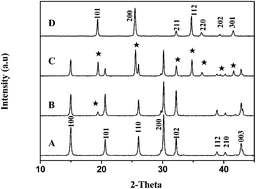
The obtained products were first examined by XRD. Fig. 1 shows the XRD patterns of sample prepared at different temperatures and pH values. When the reaction temperature is 120 °C and pH = 2, the as-prepared sample is pure hexagonal phase of DyPO4·1.5H2O. As shown in Fig. 1A, all diffraction peaks can be ascribed to hexagonal DyPO4·1.5H2O (JCPDS 21-0316). Increasing the pH to 6 while keeping the temperature is constant at 120 °C, a mixture of hexagonal phase DyPO4·1.5H2O and tetragonal phase DyPO4 (denoted with pentacle, JCPDS no. 11-0254) can be observed (Fig. 1B), and such mixture would has no variation with further increasing pH (see ESI Table 1). In addition to the pH, we also investigate the effect of temperature on the crystal structures of the samples. As shown in Fig. 1C, when the pH is constant at 6, and the temperature is increased to 180 °C, the obtained sample is still a mixture of hexagonal phase DyPO4·1.5H2O and tetragonal phase DyPO4. Noticeably, the intensity of correlative XRD peaks of hexagonal phase becomes weaker and tetragonal phase becomes stronger, indicating that the amount of tetragonal phase DyPO4 can be increased as the temperature is increased. Further increasing the temperature to about 200 °C, one can find that the hexagonal phase DyPO4·1.5H2O would disappear and the obtained sample is pure tetragonal phase DyPO4 (Fig. 1D). After a systematic investigation of the effect of both temperature and pH on the crystal structures, it can be found that the crystal structures can be controlled by simply controlling the reaction temperature and pH. It is reasonable to conclude that low temperature and low pH is favorable for the fabrication of hexagonal phase DyPO4·1.5H2O while high temperature and high pH would be more suitable for the production of tetragonal phase DyPO4 (see ESI Table 1).
image file: c4ra06916a-f1.tif
Fig. 1 XRD patterns of the as-synthesized DyPO4 samples under hydrothermal treatment for 12 h: (A) pure hexagonal DyPO4·1.5H2O (sample 1 120 °C and pH = 2); (B) a mixture of hexagonal DyPO4·1.5H2O and tetragonal DyPO4 (sample 3 120 °C and pH = 6); (C) a mixture of hexagonal DyPO4·1.5H2O and tetragonal DyPO4 (sample 7 180 °C and pH = 6); (D) pure tetragonal DyPO4 (sample 12 200 °C and pH = 8). (★ denotes as tetragonal DyPO4).

The morphology of the samples was examined by the SEM and TEM measurements. Fig. 2 illustrates the representative SEM images of the products obtained under hydrothermal treatment at different temperatures and pH values. As shown in Fig. 2a, a typical SEM image of sample obtained at 120 °C and pH 2 (sample 1) displays the morphology of nanorods with diameters of 40–80 nm and lengths ranging from 300–500 nm. When the pH value was increased from 2 to 6 while temperature was kept constant (at 120 °C), in addition to the nanorods, some nanoparticles with diameters of about 40–80 nm appeared (Fig. 2b, sample 3). As the pH is constant and the temperature is increased to about 180 °C, it can be found that the amount of nanoparticles is increased apparently and the nanoparticles become the major composition in the product (Fig. 2c, sample 7). Further increasing the temperature to about 200 °C, the nanorods would disappear and only the nanoparticles with diameters of 50–100 nm can be observed (Fig. 2d, sample 12). From the above, it can be found that the morphologies of the samples can also be controlled by simply controlling the temperature and pH.


image file: c4ra06916a-f2.tif
Fig. 2 SEM images of the products obtained under hydrothermal treatment at different temperatures and pH values: (a) pure hexagonal DyPO4·1.5H2O (sample 1); (b) a mixture of hexagonal DyPO4·1.5H2O and tetragonal DyPO4 (sample 3); (c) a mixture of hexagonal DyPO4·1.5H2O and tetragonal DyPO4 (sample 7); (d) pure tetragonal DyPO4 (sample 12).

To have a better understanding of the composite composed with both nanorods and nanoparticles, the sample 7 was further characterized by TEM. As shown in Fig. 3a, the sample is made up of nanorods and nanoparticles, which is consistent with SEM results (Fig. 2c). Fig. 3b shows the amplified TEM image of nanoparticles, in which a narrow size distribution can be observed clearly. The corresponding HRTEM image shows high crystallinity of the nanoparticles, and the clear lattice fringes with a d-spacing of 0.5 nm can be ascribed to the lattice fringes of the (100) plane (Fig. 3c). The typical TEM image of the nanorod is shown in Fig. 3d, from the HRTEM (Fig. 3e), it can be seen that the nanorod can be indexed as a hexagonal DyPO4·1.5H2O single crystal recorded from the [010] zone axis, and the image displays the interplanar distances of 0.63 nm that ascribes to the lattice spacing of the (200) planes of hexagonal DyPO4·1.5H2O, indicating that the [001] to be the preferred growth direction for DyPO4 nanorods. Fig. 3f shows the SAED pattern taken from a single nanorod, which can be indexed as a hexagonal DyPO4·1.5H2O single crystal. From the above, it can be concluded that the sample 7 is a mixture of the hexagonal DyPO4·1.5H2O and tetragonal DyPO4, which is in good agreement with the XRD results (Fig. 1c).


image file: c4ra06916a-f3.tif
Fig. 3 TEM, HRTEM, and SAED images of sample 7 obtained at 180 °C and pH = 6: (a) TEM image. (b) TEM image taken from a single nanoparticle; (c) HRTEM image taken from a single nanoparticle; (d) TEM image taken from a single nanorod; (e) HRTEM image taken from a single nanorod; (f) the corresponding SAED pattern of the nanorod.

Influence of organic additive

In this work, we also investigated the effect of organic additive EDTA on the sample and found that EDTA also plays an important role in controlling the phase, crystal size and morphologies. Without any organic additive, pure tetragonal DyPO4 can be obtained (Fig. 4A). Whereas when some EDTA is used, the structure of the sample is changed and the hexagonal DyPO4·1.5H2O can be observed (Fig. 4B).
image file: c4ra06916a-f4.tif
Fig. 4 XRD patterns of the as-synthesized samples under hydrothermal treatment for 12 h (180 °C and pH = 8) without (A) and with EDTA/Dy molar ratios of 9 (B).

In addition to the crystal phase, the morphology of the sample can also be controlled through adding the EDTA, which was investigated by the SEM and TEM. Fig. 5a shows the TEM image of the samples prepared without EDTA (temperature at 180 °C and pH = 8), from which, one can see that the sample is composed of nanoparticle with the average diameter ranging from 50 to 100 nm. The corresponding HRTEM image displays the interplanar distances of 0.49 nm, ascribed to the lattice spacing of the (100) planes of tetragonal DyPO4 (Fig. 5b). The polycrystalline electron diffraction (ED) ring (Fig. 5c), taken from the nanoparticles, can also be indexed as the tetragonal DyPO4 phase. When EDTA was added and other reaction conditions were keep constant, the morphologies of the products become quite different. The SEM (Fig. 5d) and TEM images (Fig. 5e) reveal that the sample consists of hexagonal prisms. The HRTEM image represents fringe separations of about 0.62 nm and 0.54 nm, which are well-coincident with distances of the (1010) and (1120) lattice planes of hexagonal DyPO4·1.5H2O, respectively (Fig. 5f). From the above, it can be found that the addition of EDTA can simultaneously change the crystal structures and morphology of the samples.


image file: c4ra06916a-f5.tif
Fig. 5 TEM (a), HR-TEM (b), ED images of DyPO4 samples obtained at 180 °C, pH = 8 without EDTA (c). SEM (d), TEM (e), HR-TEM (f) images of DyPO4 samples obtained at 180 °C, pH = 8 with EDTA.

In order to have a profound understanding of the influence of EDTA on the sample morphology, samples with different ratio of EDTA/Dy was prepared. When the molar ratios of EDTA/Dy = 1, quasi-spheres pills with the average diameter of about 200 nm and average length of about 150–200 nm were observed (Fig. 6a). With the increase of the molar ratios of EDTA/Dy to 3, the regular and well-defined nanoprisms with the average diameter of about 250 nm and average length of about 200–250 nm were obtained (Fig. 6b). Further increase of the molar ratios of EDTA/Dy to 6, the sizes of the nanoprisms were increased, the average diameter and length of the nanoprisms are about 300 nm and 400–500 nm, respectively (Fig. 6c). Noticeably, these nanoprisms seem to be connected with each other. When the reactant EDTA/Dy molar ratio was further increased to 9, the sizes of the nanoprisms would have no apparent variation, while they can separate from each other (Fig. 6d). From the morphological evolution displayed above, one can conclude that organic additive EDTA has an important influence on the morphologies of the final products in current synthesis process, and high concentration of EDTA in the solution is helpful for the production of perfect nanoprisms with larger size. In addition to the morphology, the effect of EDTA/Dy ratio on the sample structures was also examined, and it is found that all samples prepared with different EDTA/Dy ratios have the same hexagonal structures.


image file: c4ra06916a-f6.tif
Fig. 6 SEM images of DyPO4 prepared with EDTA/Dy molar ratios of: (a) 1, (b) 3, (c) 6, (d) 9, respectively, (the temperature is 180 °C, pH = 8, reaction time is 12 h).

In addition to the amount of EDTA, the effect of reaction time on the morphology was also investigated. Fig. 7a–c shows the SEM images of the products obtained with different reaction times (temperature is 180 °C and pH = 8, the ratio of EDTA/Dy = 9). When the reaction time is about 2 h, small particles were formed with an average diameter of about 100 nm (Fig. 7a). As the reaction time was increased, the nanoprisms would appear, and the sizes of such nanoprisms can be increased (Fig. 7b–c). From the above, one can find that at high temperature and high pH, when the EDTA was used, the obtained samples can transform from the tetragonal to the hexagonal, and the morphology is changed from the nanoparticles to the nanoprism. Herein, the influence of EDTA for samples prepared at low temperature and low pH was also investigated, and it can be found that only the samples sizes can be increased, the crystal phase and morphology have no apparent variation (ESI Fig. S1 and S2).


image file: c4ra06916a-f7.tif
Fig. 7 SEM images of DyPO4 powders hydrothermally synthesized under hydrothermal treatment for at 180 °C, pH = 8 with EDTA/Dy = 9 for different reaction time (a) 2, (b) 6, (c) 12 h.

Possible formation mechanism with various structures and morphologies

Hydrothermal conditions. As is known, DyPO4 exists in the boundary positions between the hexagonal and the tetragonal, it can be obtained either in the hexagonal phase or in the tetragonal phase depending on the experimental conditions. In this work, the DyPO4 nanocrystals with controlled crystal structure and shape were obtained in similar ways. During the crystal growth stage, the delicate balance between the thermodynamic growth and kinetic growth regimes can strongly govern the final structure of the nanocrystals.30,31 When the thermodynamic growth regime is driven by a sufficient supply of thermal energy, the most stable form of nanocrystals is preferred. In contrast, under nonequilibrium kinetic growth conditions, the kinetic growth regimes controlled by changing growth parameters are crucial for the determination of the nanocrystal geometry.

In our experiment, at lower temperature and lower pH, because the hexagonal phase is more thermodynamically stable than the tetragonal phase (at mild pressures and temperatures), it is understandable that the obtained products were in the hexagonal type. Meanwhile, according to previous report,13 the hexagonal LnPO4 has anisotropic nature, from the thermodynamic perspective, the activation energy for the c axis direction of growth is lower than that of growth perpendicular to the c axis.32 This means a higher growth rate along the c axis and a lower one perpendicular to the c axis would happen, and thus the 1D rod-like DyPO4 that grows preferentially along the [001] direction can be formed (Scheme 1a).


image file: c4ra06916a-s1.tif
Scheme 1 Schematic illustration for the possible formation mechanism of DyPO4. various morphologies prepared in the (a) absence and (b) presence of EDTA.

When the temperature and pH were increased, the obtained products become tetragonal phase DyPO4 nanoparticles, and such phenomena can be ascribed to the following reasons. Crystallographic phase transformation in solution usually operates through a dissolution–recrystallization process to minimize the surface energy of the system.32 In our experiment, the whole reaction can be given in the following equation:

Dy(NO3)3 + NH4H2PO4 + H2O ⇄ DyPO4 + NH4NO3 + 2HNO3

In this reaction system, the formation of DyPO4 was a process releasing H+, the byproduct is HNO3. This is a kind of strong acid, which can dissolve the as-obtained phosphate nucleus and thus speed up the dissolution, renucleation, and crystallization process as well as the Ostwald ripening process33–35 through the back reaction shown in the above equation. Tuning the solution pH can modulate the thermodynamics/kinetics of nucleation and growth of the system by controlling the interfacial tension (surface free energy). According to the acid–base surface properties of metal oxides, increasing the pH can decrease the surface charge density by desorption of protons and consequently increases the interfacial free energies of the system. Thermodynamic colloidal unstability may thus be reached; that is, in the specific reaction circumstance the primarily thermodynamic stable state (hexagonal type DyPO4·1.5H2O) becomes thermodynamic unstable, resulting in a considerable promoting of the ripening processes. The particles (hexagonal type DyPO4·1.5H2O) spontaneously grow by an Ostwald ripening process in order to reach a new thermodynamic equilibrium state, where the tetragonal type DyPO4 structure is more thermodynamically stable than the hexagonal type DyPO4·1.5H2O phase, henceforth making the phase transformation. Furthermore, high temperature is also helpful to supply enough energy to speed up the dissolution, renucleation, and crystallization process, which is also beneficial for the transformation of samples from the hexagonal phase to the tetragonal phase. In addition to the crystal structures, the morphology of the samples were also changed, and this is because that for tetragonal structured DyPO4, no anisotropic nature can be observed, therefore, as shown in Fig. 2d, the obtained tetragonal structured DyPO4 presents particle morphology (Scheme 1a).

Organic additive. As mentioned above, the addition of EDTA can also lead to the variation of the crystal structures and morphologies of the samples, and such changes can be explained as follows. It is reported that the adsorption of additives on certain crystal surfaces plays a crucial role in the polymorph selection for some materials.36–38 Herein, for the formation of hexagonal type DyPO4·1.5H2O, the existence of DyL (L4− = (CH2COO)2N(CH2)2N(CH2COO)24−) ought to be the key factor that induces the transformation from tetragonal DyPO4 to hexagonal DyPO4·1.5H2O. From Fig. 4a, it can be seen that DyPO4 prefers tetragonal phase under hydrothermal treatment at higher temperatures and higher pH (for example 180 °C, pH = 8). As reported previously, no anisotropic nature can be observed in the tetragonal DyPO4, therefore, the prepared DyPO4 sample presents particle morphology (Scheme 1a). When the EDTA was used, DyL would form due to the strong chelating interactions between Dy3+ ions and HxL(4−x)−. In this case, L4− occupies most of the coordination sites of Dy3+ and “protects” it efficiently. The strong steric hindrance of L4− and repulsion between coordinating atoms forced DyPO4 to crystallize in hexagonal DyPO4·1.5H2O with lower symmetry.13 As a result, as shown in Fig. 4b, hexagonal DyPO4·1.5H2O would be preferred under the action of EDTA. In this process, EDTA chelated with Dy3+ and functioned as a “block”. Meanwhile, according to LaMer's model, the formation of such complexes could control the concentration of free Dy3+ ion concentration in solution, and thus help to control the nucleation and growth of the crystals in the view of dynamic process.39 Under the hydrothermal conditions the chelating of DyL complexes would be weakened and an anion-exchange reaction between PO43− and L would take place. This competition reaction gives rise to the formation of DyPO4 nuclei. During the subsequent crystal stage, because of the selective adsorption of organic additive, the growth along [001] orientation is inhibited to some degree and that of the growth sideways along [100] and [010] directions are enhanced relatively, resulting in the formation of nanoprism structure with more well-defined faces. Noticeably, because of different hydrothermal conditions such as temperature and solution pH were used, the growth environments of the nanocrystals were different, and thus selective adsorption of L on different facets of growing DyPO4, resulting in that the relative growth rates of DyPO4 along the [001] versus [100] directions are different. As a consequence, the products achieved under the different experimental conditions take a wealth of shapes of hex-structures such as hexagonal nanoprisms, and nanorods. The whole formation mechanisms of different products are presented in Scheme 1b.

Luminescence properties

In addition to the crystal structure and morphology, the luminescence properties of the as-prepared samples were also investigated. Eu3+ is adopted as a doping ion to probe structural differences because its emission spectrum is very sensitive to the local chemical environment. It should be noted that the doped samples were prepared by a similar hydrothermal treatment as the undoped samples, and that the doping alters neither the crystal structure nor the morphology of the host material (ESI Fig. S3 and S4). However, the luminescent intensity is dependent on the concentration of Eu, and the sample with Eu concentration of 8 mol% has the highest luminescent intensity (ESI Fig. S5). Therefore, two samples (doped with 8 mol% Eu) with different crystal structures (tetragonal and hexagonal phases) and shapes (nanoparticles and nanorods) were chosen for the luminescent research. As shown in Fig. 8, one can observe that both the excitation and emission properties are different for samples with different crystal structures and morphologies. The excitation spectra (black line) of two samples consist of a broadband caused by the oxygen-to-europium charge transfer band (CTB) and a group of sharp lines arising from the f–f transition within the Eu3+ 4f6 electron configuration (280–450 nm). These speaks (between 280 nm and 450 nm) correspond to the direct excitation of the Eu3+ ground state into higher levels of the 4f-manifold such as 7F05L6 at 395 nm. Through comparison, it can be seen that two important points are obviously different, one is the position of CTB, and the other is the relative intensity of CTB. From the spectra, it can be clearly seen that the position of CTB for DyPO4:Eu with tetragonal structure shows obvious blue shift compared to that for DyPO4·1.5H2O:Eu with hexagonal structure, and this can be explained by the different lengths of Eu–O bonds in the two samples. Generally, the peak position of the CTB is dependent on the length of Eu–O bond: the longer the Eu–O bond is, the longer the wavelength of CTB position will be. In the lattice of hexagonal DyPO4:Eu, the Ln3+ ion is eight-coordinate, each Dy ion is coordinated to eight oxygen atoms, and the average length of the eight Dy–O bonds is 2.41 Å. This is also corroborated by the structural data reported by Milligan et al.40 In the lattice of tetragonal DyPO4:Eu, the Dy atom is eight-coordinated to oxygen atoms with two unique metal–oxygen bond distances. Each of these discrete lengths are tetrahedrally oriented orthogonal to one another thus forming a distorted dodecahedron. The average length of the eight Dy–O bonds is 2.32 Å in tetragonal DyPO4. After doping, the Eu ions would replace some Dy ions. Therefore, the average Eu–O bond distance is somewhat longer in hexagonal DyPO4·1.5H2O:Eu nanocrystals than that in tetragonal DyPO4:Eu nanocrystals. From the above, it would be easy to understand the blue shift phenomenon for the tetragonal structured DyPO4:Eu. Meanwhile, the relative intensity of CTB and the strongest transition of Eu3+ (395 nm) are different in two samples, the absorption of Eu3+ in DyPO4:Eu with tetragonal structure is stronger than DyPO4·1.5H2O:Eu with hexagonal structure, suggesting the energy transfer from Eu–O charge transfer (CT) states to 4f levels of Eu3+ in the former is much more efficient than that in the later.
image file: c4ra06916a-f8.tif
Fig. 8 Excitation (black line)(λem = 593 nm) and emission (red line) (λex = 250 nm) spectra of 8 mol% Eu3+-doped DyPO4·1.5H2O with hexagonal structure obtained at 120 °C, pH = 2 and DyPO4 with tetragonal structure obtained at 200 °C, pH = 8.

The emission spectra (red line) consist of sharp lines ranging from 580 to 720 nm, which are associated with the transitions from the excited 5D0 level to 7FJ (J = 1–4) levels of Eu3+ activators. The most intense emission is the 5D07F1 transition located in the range of 580–600 nm, corresponding to the red emission, which is in good accordance with the Judd–Ofelt theory.41 We can see from the spectra that the spectral splitting (5D07F2) of tetragonal DyPO4:Eu and hexagonal DyPO4·1.5H2O:Eu type is quite different owing to the stark effect of the different crystal fields. Noticeably, the emission intensity of the hexagonal DyPO4·1.5H2O:Eu is lower than that for the tetragonal DyPO4:Eu, and such decrease can be explained as the following reasons. First, for Eu3+ ions doped phosphors, the structure of the host and the lattice sites of Eu3+ ions is a very important factor that affects emission efficiency. The DyPO4:Eu with a tetragonal crystal structure offers a crystal site with a D2d space group which has very low inversion symmetry, whereas the hexagonal DyPO4·1.5H2O:Eu with a tetragonal crystal structure offers a crystal site with a C3h space group which has higher inversion symmetry,13 therefore can results in a higher intensity of the transitions. Second, as reported previously.42,43 the morphologies and sizes of the samples can also affect the luminescence properties. The sample of tetragonal DyPO4:Eu has nanoparticles shape, whereas the sample of hexagonal DyPO4·1.5H2O:Eu has nanorods shape. Different sizes and shapes result in different combinations between the surface and the adsorbed species so as to produce different quenching abilities of the emissions of the Eu3+ ions, which can further influence the emission intensities. Finally, as is known, OH ions covered on the surfaces of the phosphors are a kind of very efficient quenchers of the luminescence of Ln3+ through multiphonon relaxation. The existence of hydrates in the hexagonal DyPO4·1.5H2O will affect unavoidably the emission intensity. To sum up, the crystal structure, shape, and size as well as the OH ions covered on the surfaces of the phosphors account for the difference of the luminescence properties of Eu3+-doped tetragonal and hexagonal DyPO4 products.

Conclusions

In summary, we have succeeded in controllable synthesis of tetragonal DyPO4 and hexagonal DyPO4·1.5H2O nanocrystals by a simple hydrothermal method. It is found that the hydrothermal conditions (temperature and pH) and organic additive are very important in determining the crystal structures and morphology of final products. Low temperature and low pH (120 °C, pH = 2) are favourable for the formation of the hexagonal DyPO4·1.5H2O, while high temperature and high pH (200 °C, pH = 8) would be more suitable for the production of tetragonal DyPO4. In addition, organic additives (EDTA) can induce the polymorph transformation from tetragonal DyPO4 to hexagonal DyPO4·1.5H2O. For 8 mol% Eu3+-doped samples with different crystal phases of tetragonal and hexagonal structure, not only do the positions of the CTB bands vary significantly but the emission intensity of the hexagonal DyPO4·1.5H2O:Eu is lower than that for the tetragonal DyPO4:Eu. These findings indicate that the luminescence properties of a material are strongly related to its crystal structure, the shape, and size. The results reported here can not only help us further understand the polymorph conversion/phase transition processes and the structure-dependent properties, but also potentially be used in a wide range of applications, such as the field of light display systems, lasers, and optoelectronic devices.

Acknowledgements

This work is supported by “China Postdoctoral Science Foundation (20110490105); Innovation Talent Research Fund of Harbin Science and Technology Bureau (2009RFXX047).

Notes and references

  1. W. P. Huang, X. H. Tang, Y. Q. Wang, Y. Koltypin and A. Gedanken, Chem. Commun., 2000, 1415–1416 RSC.
  2. J. Lu, P. F. Oi, Y. Y. Peng, Z. Y. Meng, Z. P. Yang, W. C. Yu and Y. T. Qian, Chem. Mater., 2001, 13, 2169–2172 CrossRef CAS.
  3. X. Wang and Y. D. Li, J. Am. Chem. Soc., 2002, 124, 2880–2881 CrossRef CAS PubMed.
  4. X. Wang and Y. D. Li, Chem.–Eur. J., 2003, 9, 300–306 CrossRef CAS PubMed.
  5. X. J. Chen, H. F. Xu, N. S. Xu, F. H. Zhao, W. J. Lin, G. Lin, L. Fu, Z. L. Huang, H. Z. Wang and M. M. Wu, Inorg. Chem., 2003, 42, 3100–3106 CrossRef CAS PubMed.
  6. N. Blagden and R. J. Davey, Cryst. Growth Des., 2003, 3, 873–885 CAS.
  7. G. Büehler and C. Feldmann, Angew. Chem., Int. Ed., 2006, 45, 4864–4867 CrossRef PubMed.
  8. F. Meiser, C. Cortez and F. Caruso, Angew. Chem., Int. Ed., 2004, 43, 5954–5957 CrossRef CAS PubMed.
  9. S. Heer, O. Lehmann, M. Haase and H. U. Güdel, Angew. Chem., Int. Ed., 2003, 42, 3179–3182 CrossRef CAS PubMed.
  10. A. W. Xu, Y. P. Fang, L. P. You and H. Q. Liu, J. Am. Chem. Soc., 2003, 125, 1494–1495 CrossRef CAS PubMed.
  11. Y. W. Zhang, Z. G. Yan, L. P. You, R. Si and C. H. Yan, Eur. J. Inorg. Chem., 2003, 25, 4099–4104 CrossRef.
  12. Z. G. Yan, Y. W. Zhang, L. P. You, R. Si and C. H. Yan, J. Cryst. Growth, 2004, 262, 408–414 CrossRef CAS PubMed.
  13. Y. P. Fang, A. W. Xu, R. Q. Song, H. X. Zhang, L. P. You, J. C. Yu and H. Q. Liu, J. Am. Chem. Soc., 2003, 125, 16025–16034 CrossRef CAS PubMed.
  14. R. J. Kijkowska, Mater. Sci., 2003, 38, 223–228 CrossRef CAS.
  15. R. J. Kijkowska, Mater. Sci., 2003, 38, 229–234 CrossRef CAS.
  16. D. F. Mullica and D. A. Grossie, J. Solid State Chem., 1985, 58, 71–77 CrossRef CAS.
  17. W. O. Milligan and D. F. Mullica, Inorg. Chim. Acta, 1982, 60, 39–43 CrossRef CAS.
  18. W. O. Milligan and D. F. Mullica, Inorg. Chim. Acta, 1983, 70, 133–136 CrossRef CAS.
  19. Y. P. Fang, A. W. Xu, A. M. Qin and R. J. Yu, Cryst. Growth Des., 2005, 5, 1221–1225 CAS.
  20. R. X. Yan, X. M. Sun, X. Wang, Q. Peng and Y. D. Li, Chem.–Eur. J., 2005, 11, 2183–2195 CrossRef CAS PubMed.
  21. S. L. Zhong, L. F. Luo, L. Wang and L. F. Zhang, Powder Technol., 2012, 230, 151–157 CrossRef CAS PubMed.
  22. M. Y. Guan, F. F. Tao, J. H. Sun and Z. Xu, Langmuir, 2008, 24, 8280–8283 CrossRef CAS PubMed.
  23. M. Yang, H. P. You, Y. H. Zheng, K. Liu, G. Jia, Y. H. Song, Y. J. Huang, L. H. Zhang and H. J. Zhang, Inorg. Chem., 2009, 48, 11559–11565 CrossRef CAS PubMed.
  24. W. S. Song, H. N. Choi, Y. S. Kim and H. J. Yang, Mater. Chem., 2010, 20, 6929–6934 RSC.
  25. C. J. Jia, L. D. Sun, F. Luo, X. C. Jiang, L. H. Wei and C. H. Yan, Appl. Phys. Lett., 2004, 84, 5305 CrossRef CAS PubMed.
  26. W. H. Di, X. J. Wang, B. J. Chen, S. Z. Lu and X. G. Ren, Appl. Phys. Lett., 2006, 88, 11907 CrossRef PubMed.
  27. H. L. Zhu, E. Z. Zhu, H. Yang, L. N. Wang, D. L. Jin and K. H. Yao, J. Am. Ceram. Soc., 2008, 91, 1682–1685 CrossRef CAS PubMed.
  28. X. H. Ji, X. N. Song, J. Li, Y. B. Bai, W. S. Yang and X. G. Peng, J. Am. Chem. Soc., 2007, 129, 13939–13948 CrossRef CAS PubMed.
  29. H. X. Dong, Y. C. Liu, P. P. Yang, W. X. Wang and J. Lin, Solid State Sci., 2010, 12, 1652–1660 CrossRef CAS PubMed.
  30. Y. W. Jun, Y. Y. Jung and J. Cheon, J. Am. Chem. Soc., 2002, 124, 615–619 CrossRef CAS PubMed.
  31. Y. W. Jun, J. S. Choi and J. Cheon, Angew. Chem., Int. Ed., 2006, 45, 3414–3439 CrossRef CAS PubMed.
  32. L. Vayssieres, N. Beermann, S. E. Lindquist and A. Hagfeldt, Chem. Mater., 2001, 13, 233–235 CrossRef CAS.
  33. S. H. Yu, L. Biao, M. S. Mo, J. H. Huang, X. M. Liu and Y. T. Qian, Adv. Funct. Mater., 2003, 13, 639–647 CrossRef CAS.
  34. H. G. Yang and H. C. Zeng, J. Phys. Chem. B, 2003, 107, 12244–12255 CrossRef CAS.
  35. J. W. Mullin, Crystallization, Butterworth-Heinemann, Oxford, 3rd edn, 1997 Search PubMed.
  36. G. Falini, S. Albeck, S. Weiner and L. Addadi, Science, 1996, 271, 67 Search PubMed.
  37. A. M. Belcher, X. H. Wu, R. J. Christensen, P. K. Hansma, G. D. Stucky and D. E. Morse, Nature, 1996, 381, 56 CrossRef CAS.
  38. A. LÓpez-Macipe, J. Gómez-Morales and R. Rodríguez-Clemente, J. Cryst. Growth, 1996, 166, 1015 CrossRef.
  39. Z. Q. Li and Y. Zhang, Angew. Chem., Int. Ed., 2006, 45, 7732–7735 CrossRef CAS PubMed.
  40. W. O. Milligan, D. F. Mullica, G. W. Beall and L. A. Boatner, Inorg. Chim. Acta, 1982, 60, 39–43 CrossRef CAS.
  41. B. R. Judd, Phys. Rev., 1962, 127, 750–761 CrossRef CAS.
  42. X. C. Wu, Y. R. Tao, C. Y. Song, C. J. Mao, L. Dong and J. J. Zhu, J. Phys. Chem. B, 2006, 110, 15791–15796 CrossRef CAS PubMed.
  43. H. J. Zhou, Y. B. Mao and S. S. Wong, J. Mater. Chem., 2007, 17, 1707–1713 RSC.

Footnote

Electronic supplementary information (ESI) available: XRD pattern of DyPO4 powders hydrothermally synthesized under hydrothermal treatment for at 120 °C, pH = 2 with EDTA/Dy molar ratios of: (a) 1, (b) 3, (c) 9. SEM images of DyPO4 powders hydrothermally synthesized under hydrothermal treatment for at 120 °C, pH = 2 with EDTA/Dy molar ratios of: (a) 1, (b) 3, (c) 9. See DOI: 10.1039/c4ra06916a

This journal is © The Royal Society of Chemistry 2014
Click here to see how this site uses Cookies. View our privacy policy here.