

TiO2 hollow fibers with internal interconnected nanotubes prepared by atomic layer deposition for improved photocatalytic activity†
Hsueh-Shih Chen*a,
Po-Hsun Chena,
Jeng-Liang Kuob,
Yang-Chih Hsueha and
Tsong-Pyng Perng*a
aDepartment of Materials Science and Engineering, National Tsing Hua University, Hsinchu 300, Taiwan. E-mail: chenhs@mx.nthu.edu.tw; tpperng@mx.nthu.edu.tw
bMaterial and Chemical Laboratories, Industrial Technology Research Institute, Sec. 2, Kuan-Fu Road, Hsinchu 300, Taiwan
First published on 12th August 2014
Abstract
TiO2 hollow fibers with internal interconnected nanotubes were prepared by atomic layer deposition using a polysulfone–polyvinylpyrrolidone hollow fiber membrane as the template. The interconnected nanotubes form a titanium oxide network containing the dual characteristics of nano-sized pores and channels with adjustable spaces by the cycle number of the atomic layer deposition, and the titanium oxide network further constructs a centimeter-long hollow fiber. This unique macro–nano composite structure enables us to construct a large scale nanoreactor, which has been demonstrated to possess a higher performance (∼33%) for photo-degrading the organic water contaminants in a continuous flow than conventional P25 TiO2 nanopowder under the same test conditions.
The synthesis of simple nanostructures such as nano-thin films, nanorods/wires/tubes, and nanoparticles, has been well developed over the past decades. Nanostructures with more complex morphologies, that is, multi-level structures with diverse interiors such as core-in-hollow shell (yolk–shell),1 yolk-mesoporous shell,2,3 core/mesoporous shell,4 multishell/multiwall,5,6 and multichamber/multichannel7,8 structures have recently been synthesized and cataloged as a third-generation nanostructures.9 Some of these multilevel nanostructures have been demonstrated to exhibit unconventional properties and benefits in various applications.1–4 Recent advances in the atomic layer deposition (ALD) process enable researchers to prepare complex metal oxide nanostructures using either natural or artificial templates. As ALD is able to form a conformal coating with precise control over the film thickness at atomic scale on either 2D or 3D substrates with a high aspect ratio, it has been employed to prepare protection layer,10 nanotube array,11,12 multiwalled nanotubes,13,14 hollow fibers,15–17 and other complex patterns.18–20 The ALD technique has largely extended the application of complex nanostructures in energy- and environmental-related areas, such as dye-sensitized solar cells,21,22 photonics,23 plasmonics,24 photocatalysis,25 self-cleaning film.26
In this paper, we present a macro–nano composite structure: TiO2 hollow fibers (HFs) composed of interconnected nanotubes, which possess both intertubular pores and channels inside the nanotubes. The HFs were synthesized by combining ALD with a polyvinylpyrrolidone (PVP) modified polysulfone (PSf) hollow fiber membrane as the template and it possess an efficient photocatalytic degradation of organic water contaminants in a continuous flow.
TiO2 HFs were prepared by the ALD process using a hydrophilic PSf–PVP hollow fiber membrane as the template. The synthesis of the polymer membrane via the phase separation method can be found elsewhere.27,28 The PSf–PVP hollow fiber membranes used in the present study were prepared at a factory level by the wet spinning process.29,30 The polymer precursor solution contained 12–20 wt% PSf, 2–10 wt% PVP, and 70–86 wt% n-methyl-pyrrolidone (NMP).
The use of the ALD technique to prepare metal oxide films or nanotubes has been previously presented.11,12,31,32 The process has shown high conformity and excellent repeatability. To synthesize TiO2 interconnected nanotubes that form hollow fibers, TiCl4 and H2O were employed as precursors for Ti and O, respectively. The ALD of the TiO2 on the polymer hollow fiber membranes was carried out with the length of pulse time: 100 ms and 80 ms for TiCl4 and H2O, respectively. For all syntheses, the temperature of the polymer template was maintained at 100 °C. As-grown samples were annealed at 450 °C for 2 h to form the anatase phase of the TiO2 hollow fibers. For the deposition of silver, the hollow fibers were immersed in a 10−3 M silver nitrate solution for 10 min, followed by the illumination of the solution with UV light of 100 W for 30 s to produce silver nanoparticles on TiO2. The photo-induced growth was terminated by removing the UV lamp and pouring distilled water into the solution. The samples were finally washed with distilled water several times to remove residual silver nitrate.
A reactor for photodegradation test was designed in the form of a replaceable cassette, which was comprised of a bundle of the TiO2 HFs and a quartz tube. The TiO2 HFs were loaded into the quartz tube with two open ends, where one end could be fixed by the holder of the reactor system and the other end was open to receive the fluid flow. When carrying out a reaction, the nanoreactor cassette was connected to a circulation system, which included a dry pump, a reactor holder, a piping system, and a flow meter. The nanoreactor cassette could be quickly removed or loaded into the system.
Methylene blue (C16H18N3SCl, MB) was used as a test reagent to demonstrate the feasibility of the nanoreactor. 200 ml of 2 × 10⁻⁶ M MB aqueous solution was loaded into the reactor system and circulated by the dry pump. The average flow rate was approximately 2.6 ml s−1. The reaction temperature was maintained at 24 °C. A black-light UV-A lamp equipped with a filter (λ = 365 nm, operated at ∼12 mW cm−2) was used as the light source. A blank test in the dark was also performed. A batch-type reactor containing the same amounts of TiO2 HFs and MB solution in a beaker covered by a quartz window was tested for reference. No stirring was applied to this system in order to examine the effect of continuous flow. In order to compare the performance of the current nanoreactor cassette design with that of commercial materials, a mixture of the same amounts of commercial P25 TiO2 nanopowder (Degussa P25, average diameter ∼20 nm) and MB solution was loaded to the circulation system without the nanoreactor to test the photocatalytic activity. All experimental parameters including UV-A illumination were the same, except that an additional centrifugation was performed to separate the P25 nanoparticles from the mixture after illumination. The photocatalytic reaction was monitored via the variation of the MB concentration measured by UV-vis spectroscopy.
Some polymers, such as cellulose fibers have been used as a template to prepare TiO2 hollow fibers with solid walls by the ALD method.15 The polymer may be easily removed by an organic solvent or post thermal treatment.30 As polysulfone can film with good mechanical properties and thermal stability,33 it is suitable to be used as a template in the ALD process. However, pure PSf is less hydrophilic and contains limited reactive functional groups, such as hydroxyl groups on its surface. Because the ALD process requires a substrate with a reactive surface to allow precursor molecules to adsorb or react with the substrate surface, PSf was blended with PVP to produce hydrophilic PSf–PVP in order to chemically improve the PSf surface reactivity. The maximum hydrophilicity of the PSf–PVP hollow fiber membranes was achieved from a precursor solution containing 17 wt% PSf, 5 wt% PVP, and 78 wt% NMP. In the water inhalation test, the casted PSf–PVP film reached nearly 400% of its original weight, thus showing high hydrophilicity of the fibers (data not shown). The PSf template used in the present study was in the form of a hollow fiber membrane and the porosity (ratio of volume of pores to volume of membrane) of the fiber membrane was ∼70%.
Fig. 1 shows representative scanning electron microscopic (SEM) images of a typical PSf–PVP hollow fiber membrane. The lower magnification image indicates that the fiber possesses a hollow structure with inner and outer diameters of ∼150 and ∼250 μm, respectively (Fig. 1a). In general, the hollow fiber membrane is a circular membrane, which allows the fluid to flow from the inside surface to the outside of the hollow fiber (inside-out type) or from the outside surface to the inside (outside-in type). In the present case, the wall (i.e., membrane) contains a thick outer layer with large pores as a support and an inner active layer with small pores usually used for the filtration or dialysis. Fig. 1b shows that the fiber wall has a porous structure formed by interconnected nanofibers. The pore diameter on the outer surface typically ranges from 500 to 1000 nm, as shown in Fig. 1c. On the inner surface, the pore diameter is generally between 10 to 100 nm, as shown in Fig. 1d.
 | ||
| Fig. 1 SEM images of an individual hollow fiber membrane. (a) Cross-section image of the hollow fiber membrane. The positions b, c, and d correspond to images (b–d). The image on the right illustrates the structure of the hollow fiber, which has the membrane structure composed of an outer supporting layer and an inner active layer. Higher magnifications of the hollow fiber membrane: (b) cross-section of fiber wall (inset shows a higher resolution image), (c) outer surface, and (d) inner surface. | ||
The fabrication process of TiO2 interconnected nanotubes in the form of HFs by ALD is schematically shown in Fig. 2. The overcoating of ALD TiO2 on the PSf–PVP fiber membrane first forms interconnected core/shell polymer/TiO2 nanowires within the hollow fiber wall (middle image in Fig. 2). The polymer template can be removed by annealing the PSf–PVP/TiO2 composite hollow fiber at an elevated temperature. The pore size of the fiber membrane can be controlled by the thickness of the coating (i.e., ALD cycle number), while the inner diameter of the nanotubes can be determined by the polymer template.
 | ||
| Fig. 2 Fabrication procedure of TiO2 interconnected nanotubes in the form of hollow fibers by ALD. | ||
Fig. 3a presents the ALD saturation curve of TiO2 on the PSf–PVP hollow fiber membrane template. The weight increase in the TiO2 deposited with 400 cycles saturates at about 0.12 s, showing that further increase in the precursor pulse time does not thicken the TiO2 coating, indicating a complete coverage of the precursor molecules, i.e., a typical ALD process. The growth rate of TiO2 is estimated to be ∼0.58 Å per cycle according to the SEM and transmission electron microscopic (TEM) observations, similar to that on Si substrates by the same ALD system,11 indicating that the PSf–PVP hollow fiber is a suitable template for the ALD process. Fig. 3b shows the SEM image of the cross section of the as-prepared TiO2 HFs prepared by 400 ALD cycles. It is morphologically the same as the PSf–PVP template that shows great conformity to the ALD process. The polymer template is encapsulated by the TiO2 thin layer, shown by a higher magnification image as shown in Fig. 3c.
 | ||
| Fig. 3 (a) The ALD saturation curve of TiO2 on PSf–PVP fiber membrane. The TiCl4 pulse time was varied for depositing the 400 cycles of TiO2, while the water pulse time was kept constant. (b) SEM image of the cross section of the as-deposited PSf–PVP/TiO2 hollow fiber. (c) Higher magnification image of the fiber wall. The polymer template is slightly axially deformed in the cross section region after it was cut (inset image). (d) Annealed at 450 °C for 2 h shows that the TiO2 hollow fiber contains three dimensional interconnected nanotubes. The top right inset shows schematic nanopores among the interconnected nanotubes and nanochannels inside the nanotubes. The lower left inset shows that the wall thickness is 23.5 nm. | ||
The uniform coating in the interior of the hollow fiber membrane indicates that the precursors are able to permeate through the pores inside the membrane and react with the template surface. After annealing at 450 °C for 2 h, the polymer template was removed, leaving only TiO2 HFs, as shown in Fig. 3d. The TiO2 hollow fiber is composed of interconnected TiO2 nanotubes, which possess not only intertubular nanopores similar to those of the polymer template, but also additional nanochannels within themselves (upper right inset in Fig. 3d). The wall thickness of the nanotubes is estimated to be 23.5 nm, corresponding to the 400 ALD cycles of TiO2. The features of the interconnected nanotubes can be appreciated by the comparison of the micrographs from SEM and TEM. A representative SEM micrograph with a higher magnification of TiO2 hollow fibers prepared by 400 cycles of ALD and annealed at 450 °C is shown in Fig. 4a. It shows that the nanotubes are connected with each other and they form nanoscaled pores and channels. A portion of the sample was then examined by TEM, as shown in Fig. 4b. The intertubular pores and channels inside the nanotubes can be more clearly identified, and their dimensions are measured. For example, the diameters of two through channels and the width of a through pore are measured to be approximately 29 nm, 75 nm, and 320 nm, respectively (Fig. 4b). The wall thickness of a single nanotube is measured to be 23.33 nm (Fig. 4c), which is consistent with that estimated from the SEM (Fig. 3d). In addition, the wall thickness is reduced to 5.48 nm with 100 cycles of ALD (Fig. 4d). Compared with conventional solution methods,34–38 The ALD method offers the advantages of more precise control over the film thickness and better uniformity for metal oxide coating.
 | ||
| Fig. 4 Electron micrographs of annealed TiO2 hollow fibers composed of interconnected nanotubes. (a) SEM image (400 cycles of ALD), (b) TEM image of interconnected nanotubes (400 cycles of ALD), (c) TEM image of a single nanotube (400 cycles of ALD), and (d) TEM image of a single nanotube (100 cycles of ALD). | ||
The TiO2 HFs are considered as a catalyst in the photocatalytic reaction since they can be easily assembled to a larger bundle. In practical applications, such as water purification, a powder photocatalyst may not be cost effective as it needs an additional solid–liquid separation process that increases the running cost and time. A reactor with an immobilized photocatalyst can solve this problem. However, the efficiency of a general reactor is normally poor as the catalysts have small surface areas. A feasible reaction system with a nanoreactor cassette containing TiO2 HFs is shown in Fig. 5a. In the design, a liquid is circulated by a pump to flow through the cassette nanoreactor continuously and flush the TiO2 HFs bundle from the top inlet. Each HF acts like a micro fixed-bed reactor and provides a superior contact area including the inner/outer surfaces of the hollow fiber and the internal interconnected nanotubes, as schematically shown by the SEM image in Fig. 5b. Moreover, the nanostructured surface may exhibit a light-trapping effect because of the increasing traveling length of the incident light that can enhance the light absorption, and thus improve the photocatalysis.39,40 The dimensions of the TiO2 HFs can be varied by the PSf–PVP template, which has been produced on a large scale (e.g., tens of meters) in our group. Therefore, a larger scale nanoreactor may be constructed and realized through this hollow fiber structure.
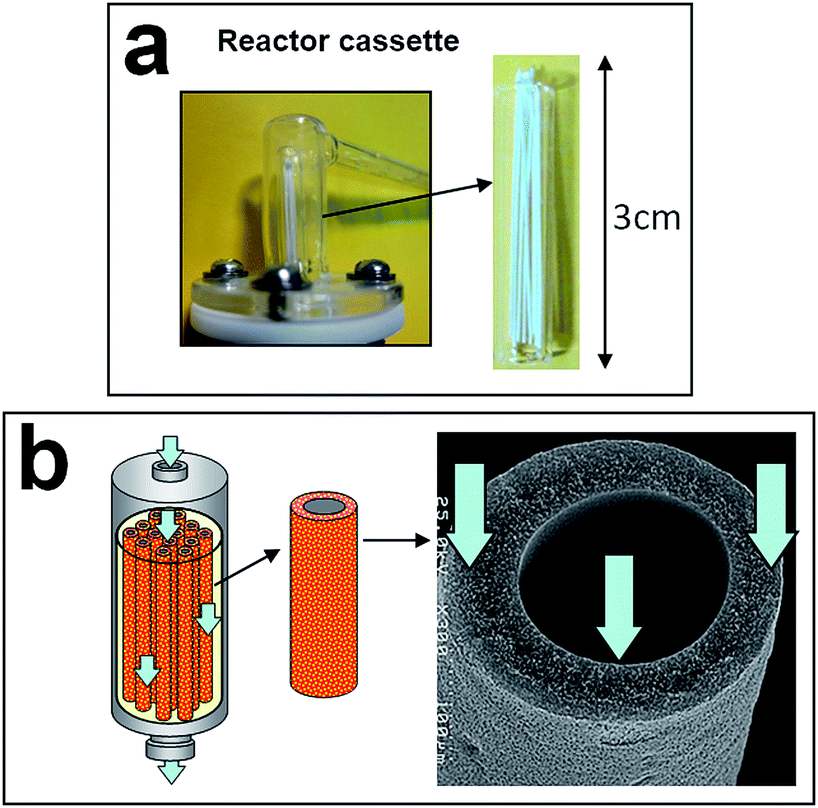 | ||
| Fig. 5 (a) Image of the nanoreactor system containing a nanoreactor cassette. (b) Nanoreactor cassette containing TiO2 hollow fibers prepared with 400 cycles of ALD TiO2. (c) Image of the nanoreactor cassette when the system is operated (left). Schematic flow paths through a TiO2 hollow fiber based on the SEM image (right). | ||
The photocatalytic property of the TiO2 HFs is compared with that of commercial P25 TiO2 powder. From BET analyses, the obtained surface area of the P25 nanopowder is 38.0 m2 g−1, whereas for the TiO2 HFs is 28.2 m2 g−1. To exclude the effect of the photolysis of MB below 350 nm or above 450 nm, a UV-A lamp with a wavelength at 365 nm and a lower intensity was used. Fig. 6 shows the average photodegradation rate curves for the TiO2 HFs and P25 with the same surface area and weight (inset). The TiO2 HFs in a flow nanoreactor have considerably better performance than those in a static batch reactor (red dotted curve), which is because of the improvement in the mass transfer of MB toward the HFs surface. For the same weight of the catalysts (inset), the TiO2 HFs have a photocatalytic performance close to the P25 TiO2 powder in the flow nanoreactor operated with the same parameters. When silver is further loaded onto the TiO2 HFs, the nanoreactor exhibits a better performance (∼11.5%) than both P25 TiO2 powder and pure TiO2 HFs because silver can trap photoelectrons, which results in more holes to oxidize MB.11 If the photodegradation rate of a catalyst with the same surface area is considered, Fig. 6 exhibits that the TiO2 HFs have a higher photodegradation rate than commercial P25 powder by ∼33% after 6 h of operation. The enhanced efficiency can be ascribed to improved reaction kinetics and motion confinement effect for the MB molecules flowing within the intertubular nanopores and nanochannels of the HFs.41 For the former effect, the HFs can absorb only a small amount of MB in a static solution in the dark until the absorption is saturated. When they are under UV-A illumination (red curve) photodegradation takes place, but only leads to a small decrease in the MB concentration. In the case of a flushing flow, the MB may also enter the nanopores/nanochannels by forced permeation of the liquid for further reaction and faster kinetics, as already illustrated in Fig. 5b. For the latter effect, as the dimensions of the nanopores/nanochannels (20–300 nm, estimated from SEM and TEM) are considerably smaller than the diffusion length of MB (∼100 μm), the motion of the MB molecules could be confined within the HFs, which would increase the probability of collision between the TiO2 surface and the MB molecules. Therefore, the TiO2 HFs have an enhanced photocatalytic ability compared with conventional nanostructured catalysts.
 | ||
| Fig. 6 Average photodegradation rate curves of MB by TiO2 HFs, HFs deposited with Ag, and P25 powder per surface area in a flow nanoreactor under 365 nm UV illumination (∼12 mW cm−2). TiO2 HFs in a flow nanoreactor in dark (black curve) and a static nanoreactor containing TiO2 HFs (red curve) are used as references. The inset shows average photodegradation rate curves of TiO2 HFs and P25 with the same weight. | ||
A potential application of TiO2 HFs is for the purification of drinking water. In the current cassette design, where the HFs are directly loaded into the reactor to carry out the reaction, no additional powder–liquid separation process is needed. In contrast, solid photocatalysts, such as the P25 TiO2 nanopowder have been proved to cause adverse potential effect to human health.42 It is questionable to use such nanopowder for drinking water or other health-related applications. The development of the present TiO2 HFs-based nanoreactor system is still at the preliminary stage, and it is expected that the system can be further improved. For example, in the present study the lamp was fixed on one side of the nanoreactor such that that only a fraction of the hollow fiber bundles were illuminated by the UV light (Fig. 5a). The photocatalysis may not be efficient because the decomposition of MB mainly takes place only within a few micrometers near the illuminated TiO2 surface.43 This may be further improved by using a tubular UV lamp. Future studies would be focused on the reaction kinetics of the nanoreactor in relation to the flow rate, channel space/path, effect of contaminant molecular size, reaction temperature/pressure, gaseous reaction, etc. The evaluation of a scale-up for the nanoreactor and its applications in water-splitting and gas reforming is underway.
In summary, TiO2 HFs with internal interconnected nanotubes have been synthesized by atomic layer deposition using hydrophilic polysulfone–polyvinylpyrrolidone hollow fibers as the template. The nanostructured interconnected nanotubes, which possess both intertubular nanopores and nanochannels form a titanium oxide network that further constructs a centimeter-long hollow fiber. A continuous flow nanoreactor containing TiO2 hollow fiber bundles has been constructed. It has shown good performance in the photocatalytic degradation of MB. The nanoreactor is designed in the form of a cassette, which is replaceable and needs no additional solid–liquid separation. Therefore, it is more time-efficient, cost-effective, and feasible for practical applications.
Notes and references
- Y. Yin, R. M. Rioux, C. K. Erdonmez, S. Hughes, G. A. Somorjai and A. P. Alivisatos, Science, 2006, 304, 711 CrossRef PubMed.
- J. C. Park, J. U. Bang, J. Lee, C. H. Ko and H. Song, J. Mater. Chem., 2010, 20, 1239 RSC.
- P. M. Arnal, M. Comotti and F. Schuth, Angew. Chem., Int. Ed., 2006, 45, 8224 CrossRef CAS PubMed.
- S. H. Joo, J. Y. Park, C. K. Tsung, Y. Yamada, P. Yang and G. A. Somorjai, Nat. Mater., 2009, 8, 126 CrossRef CAS PubMed.
- M. Yang, J. Ma, C. L. Zhang, Z. Z. Yang and Y. F. Lu, Angew. Chem., Int. Ed., 2005, 44, 6727 CrossRef CAS PubMed.
- C. J. Jia, L. D. Sun, Z. G. Yan, Y. C. Pang, L. P. You and C. H. Yan, J. Phys. Chem. C, 2007, 111, 13022 CAS.
- H. Y. Chen, Y. Zhao, Y. L. Song and L. Jiang, J. Am. Chem. Soc., 2008, 130, 7800 CrossRef CAS PubMed.
- Y. Zhao, X. Y. Cao and L. Jiang, J. Am. Chem. Soc., 2007, 129, 764 CrossRef CAS PubMed.
- Y. Zhao and L. Jiang, Adv. Mater., 2009, 21, 3621 CrossRef CAS PubMed.
- N. D. Hoivik, J. W. Elam, R. J. Linderman, V. M. Bright, S. M. George and Y. C. Lee, Sens. Actuators, A, 2003, 103, 100 CrossRef CAS.
- Y. C. Liang, C. C. Wang, C. C. Kei, Y. C. Hsueh, W. H. Cho and T. P. Perng, J. Phys. Chem. C, 2011, 115, 9498 CAS.
- W. T. Chang, Y. C. Hsueh, S. H. Huang, K. I. Liu, C. C. Kei and T. P. Perng, J. Mater. Chem. A, 2013, 1, 1987 CAS.
- C. Bae, Y. Yoon, H. Yoo, D. Han, J. Cho, B. H. Lee, M. M. Sung, M. G. Lee, J. Kim and H. Shin, Chem. Mater., 2009, 21, 2574 CrossRef CAS.
- D. Gu, H. Baumgart, T. M. Abdel-Fattah and G. Namkoong, ACS Nano, 2010, 4, 753 CrossRef CAS PubMed.
- S. W. Choi, J. Y. Park, C. Lee, J. G. Lee and S. S. Kim, J. Am. Ceram. Soc., 2011, 94, 1974 CrossRef CAS PubMed.
- J. T. Korhonen, P. Hiekkataipale, J. Malm, M. Karppinen, O. Ikkala and R. H. A. Ras, ACS Nano, 2011, 5, 1967 CrossRef CAS PubMed.
- Q. Peng, B. Gong and G. N. Parsons, Nanotechnology, 2011, 22, 155601 CrossRef PubMed.
- J. Huang, X. Wang and Z. L. Wang, Nano Lett., 2006, 6, 2325 CrossRef CAS PubMed.
- M. Knez, A. Kadri, C. Wege, U. Gosele, H. Jeske and K. Nielsch, Nano Lett., 2006, 6, 1172 CrossRef CAS PubMed.
- M. Liu, X. Li, S. K. Karuturi, A. I. Y. Tok and H. J. Fan, Nanoscale, 2012, 4, 1522 RSC.
- L. Liu, S. K. Karuturi, L. T. Su and A. I. Y. Tok, Energy Environ. Sci., 2011, 4, 209 CAS.
- T. W. Hamann, A. B. F. Martinson, J. W. Elam, M. J. Pellin and J. T. Hupp, J. Phys. Chem. C, 2008, 112, 10303 CAS.
- D. P. Gaillot, O. Deparis, V. Welch, B. K. Wagner, J. P. Vigneron and C. J. Summers, Phys. Rev. E: Stat., Nonlinear, Soft Matter Phys., 2008, 78, 031922 CrossRef.
- S. D. Standridge, G. C. Schatz and J. T. Hupp, Langmuir, 2009, 25, 2596 CrossRef CAS.
- Y. Gu, X. Liu, T. Niu and J. Huang, Mater. Res. Bull., 2010, 45, 536 CrossRef CAS PubMed.
- C. J. W. Ng, H. Gao and T. T. Y. Tan, Nanotechnology, 2008, 19, 445604 CrossRef PubMed.
- H. A. Tsai, C. Y. Kuo, J. H. Lin, D. M. Wang, A. Deratani, C. Pochat-Bohatier, K. R. Lee and J. Y. Lai, J. Membr. Sci., 2006, 278, 390 CrossRef CAS PubMed.
- J. T. Tsai, Y. S. Su, D. M. Wang, J. L. Kuo, J. Y. Lai and A. Deratani, J. Membr. Sci., 2010, 362, 360 CrossRef CAS PubMed.
- S. G. Li, G. H. Koops, M. H. V. Mulder, T. Boomgaard and C. A. Smolders, J. Membr. Sci., 1994, 94, 329 CrossRef CAS.
- J. J. Qin, J. Gu and T. S. Chung, J. Membr. Sci., 2001, 182, 57 CrossRef CAS.
- C. C. Wang, C. C. Kei, Y. W. Yu and T. P. Perng, Nano Lett., 2007, 7, 1566 CrossRef CAS PubMed.
- C. C. Wang, C. C. Kei and T. P. Perng, Nanotechnology, 2011, 22, 365702 CrossRef PubMed.
- Y. Hwang and M. D. Edger, J. Polym. Sci., Part B: Polym. Phys., 1996, 34, 2853 CrossRef CAS PubMed.
- W. Ghadiri, N. Taghavinia, S. M. Zakeeruddin, M. Gratzel and J. E. Moser, Nano Lett., 2010, 10, 1632 CrossRef PubMed.
- H. S. Chen, R. V. Kumar and B. A. Glowacki, Mater. Chem. Phys., 2010, 122, 305 CrossRef CAS PubMed.
- H. S. Chen, S. H. Huang and T. P. Perng, ACS Appl. Mater. Interfaces, 2012, 4, 5188 CAS.
- H. S. Chen, R. V. Kumar and B. A. Glowacki, J. Sol–Gel Sci. Technol., 2009, 51, 102 CrossRef CAS.
- H. S. Chen, S. H. Huang and T. P. Perng, Surf. Coat. Technol., 2013, 233, 140 CrossRef CAS PubMed.
- C. J. Chang and S. T. Hung, Thin Solid Films, 2008, 517, 1279 CrossRef CAS PubMed.
- C. J. Chang and E. H. Kuo, Colloids Surf., A, 2010, 363, 22 CrossRef CAS PubMed.
- H. S. Chen, P. H. Chen, S. H. Huang and T. P. Perng, Chem. Commun., 2014, 50, 4379 RSC.
- H. E. Jawad, A. R. Boccaccini, N. N. Ali and S. E. Harding, Nanotoxicology, 2011, 5, 372 CrossRef CAS PubMed.
- S. P. Albu, A. Ghicov, J. M. Macak, R. Hahn and P. Schmuki, Nano Lett., 2007, 7, 1286 CrossRef CAS PubMed.
Footnote |
| † Electronic supplementary information (ESI) available. See DOI: 10.1039/c4ra06807f |
| This journal is © The Royal Society of Chemistry 2014 |