A facile green synthesis of reduced graphene oxide by using pollen grains of Peltophorum pterocarpum and study of its electrochemical behavior

O. S. Asiq Rahmana, V. Chellasamya, N. Ponpandianb, S. Amirthapandianc, B. K. Panigrahic and P. Thangadurai*a
aCentre for Nanoscience and Technology, Pondicherry University, Kalapet, Puducherry – 605 014, India. E-mail: thangaduraip.nst@pondiuni.edu.in; Fax: +91-413-2656758; Tel: +91-413-2654974
bDepartment of Nanoscience and Technology, Bharathiar University, Coimbatore – 641 046, India
cIon Beam and Computer Simulation Section, Materials Science Group, Indira Gandhi Centre for Atomic Research, Kalpakkam – 603 102, India

Received 25th June 2014 , Accepted 13th October 2014

First published on 15th October 2014


Abstract

Reduced graphene oxide (RGO) was prepared from graphite oxide (GO) by using pollen grains (Pgs) of Peltophorum pterocarpum as a reducing agent, and was then studied for its electrochemical behavior. The RGOs were also prepared without and with hydrazine hydrate as the reducing agent for comparison. All the RGOs were studied by X-ray diffraction, and by Raman and FTIR spectroscopies. The microstructure was studied by scanning and transmission electron microscopies, and the phase formation was further confirmed by electron energy loss spectroscopy. Reduction by the Pgs was comparable to that by hydrazine hydrate. Cyclic voltammetry studies showed the good electrochemical performance of RGO with a maximum specific capacitance of 27.1 F g−1 (at a scan rate of 5 mV s−1). This synthesis method is reported to be a green method, due to the non-hazardous nature of Pgs to the environment and cost effective.

1. Introduction

Graphene is a two-dimensional sp2 hybridized with a single atomic thickness of carbon layers1 and is different from fullerenes and carbon nanotubes. A single and a few layers of graphene exhibits excellent properties, including high surface area, as well as excellent chemical, electrical, thermal and mechanical properties. Mostly, carbon materials, such as activated carbon, mesoporous carbon, carbon aerogel, and carbon nanotubes, are used as electrode materials for electrochemical double layer capacitors because of their high surface area and low cost. Recently, numerous applications of graphene have been reported, including, very importantly, the development of electrochemical energy conversion and storage devices, including supercapacitors and electrochemical double layer capacitors.2–5 In the case of supercapacitors, they are low cost, possess longer cycle-life, experience no memory effect, require only a very simple charging circuit, and are generally much safer than batteries. Graphene and its nanocomposites have become potential electrode materials because of their high theoretical specific surface area (2630 m2 g−1) and electrical conductivity.6,7

The large-scale production of graphene using physicochemical methods, such as epitaxial growth on silicon carbide or metal substrates, has been reported. However, such methods produce lower yields, are defect induced and have unusual properties. Therefore, research on high yielding synthesis methods has achieved immense importance for the production of graphene. Several processes have been developed to synthesize single- and few-layer graphene based on the exfoliation of graphite, chemical or thermal reduction of GO, chemical vapor deposition (CVD), intercalative expansion of graphite and by epitaxial growth. The chemical reduction of graphite oxide (GO) to graphene or to reduced graphene oxide (RGO) has been a challenging subject of research over a period of time. Strong and toxic reducing agents and surfactants play a crucial role to complete the reduction of GO in an aqueous medium. However, sodium borohydride, hydrazine and their derivatives are highly toxic and explosive. In order to overcome this problem, many attempts have been made to develop a novel aqueous and environmental friendly reduction procedures by using bacterial respiration, ascorbic acid, potassium hydroxide, polyvinylpyrrolidone, polyallylamine, and baker's yeast proteins.8–17 With this motivation, we used pollen grains (Pgs) to produce high quality and defect-free graphene sheets. The pollen grains are a reproductive cell of a plant and are an environmental friendly reducing agent. They can also be used as a biotemplate for the synthesis of many materials.18 The plant Peltophorum pterocarpum is an ornamental tree, abundant in the Indian subcontinent, and its Pgs were used as a reducing agent for GO in the two different procedures. The efficiency of the reduction by Pgs is compared with the GO prepared with and without hydrazine hydrate as the reducing agent. The thorough structural, microstructural and electrochemical behavior of these RGOs were studied and reported.

2. Materials and methods

2.1 Synthesis of GO

The GO was prepared from natural graphite flakes by a modified Hummers method.19,20 A mixture of 2 g of graphite flakes in 50 ml of concentrated sulfuric acid in a flask was sonicated for 1 h in an ultrasonic water bath. The mixture was then stirred for 2 h and cooled down to 0 °C in an ice bath. Then, 5 g of NaNO3 and 7.3 g of KMnO4 were added in small portions to the solution, which turned in color to dark greenish. When the addition was completed, the temperature of the reaction mixture was raised to 35 °C under constant stirring. After 2 h, it was quenched by adding 200 ml of ice water, and stirring was continued for another 6 h. The color of the solution changed from dark greenish to dark brown. In order to eliminate the excess content of KMnO4 and MnO2, 7 ml of H2O2 was added and the color changed from dark brown to light yellowish green. The resultant GO was filtered and washed with HCl (3%) and water several times and finally vacuum dried at 40 °C for 24 h to obtain the GO powder.

2.2 Synthesis of RGO

2.2.1 Synthesis of RGO using hydrazine hydrate. The exfoliation of GO to graphene oxide was performed by mixing 35 mg of GO in 100 ml of water, followed by ultrasonication for 3 h to make a homogeneous brown dispersion. In order to chemically reduce the graphene oxide to RGO, 1.5 ml hydrazine hydrate was added to the homogeneous dispersion, followed by the addition of 10 ml aqueous ammonia. The reactant mixture was then heated in an oil bath at 120 °C in a water-cooled condenser for 30 h. Finally, the RGO was vacuum filtered and dried in a vacuum oven at room temperature (RT) overnight.21 Henceforth, this sample is referred to as HRGO.
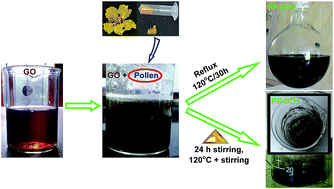
2.2.2 Synthesis of RGO using Pgs. The Pgs collected from the tree Peltophorum pterocarpum (from the campus of Pondicherry University, India) were dried in natural light for a few hours and used as such without any further treatment. The RGO was prepared using Pgs by two methods. In the first method, 0.08 g of Pgs was mixed with the graphene oxide solution and sonicated for 10 min, followed by 24 h of stirring at RT. The reaction temperature was then raised to 120 °C such that the solution evaporated off, leaving RGO powder, which looked black in color. This sample was heat-treated at 450 °C for 1.5 h in an Ar gas environment to remove the unreacted Pgs. The product is free of Pgs and this sample is henceforth referred to as PRGO1. The second method was similar to the PRGO1 preparation but instead of 24 h stirring at room temperature, the reactant solution (graphene oxide + Pgs) was refluxed at 120 °C for 30 h. The final product was vacuum filtered and dried overnight at RT and heat-treated at 550 °C for 2 h in an Ar gas environment to remove the remaining Pgs. Henceforth, this RGO will be referred to as PRGO2. For comparing the role of Pgs in the reduction of GO, the RGO was prepared without any reducing agent by a similar process to HRGO, and henceforth it is referred to as WRGO.

2.3 Characterization

The structural phase analysis of GO and RGOs was carried out by recording the X-ray diffraction (XRD) pattern in a powder X-ray diffractometer (Rigaku, Ultima-IV) in reflection mode using Cu-Kα1 (1.5406 Å) radiation in a θ–2θ geometry (step size – 0.02°; data range – 5°–50°; integration time – 1 s). Raman spectroscopy was carried out in a laser confocal Raman microscope (Renishaw, UK, Model: Invia) using a laser excitation wavelength of λex = 514 nm. The microstructure was studied by scanning electron microscopy (SEM) (Quanta, FESEM, FEI) and transmission electron microscopy (TEM) (Libra 200FE, Carl Zeiss). The operating voltages for SEM and TEM were 30 and 200 kV, respectively. Since graphene is conducting by itself, no conductive coatings were used for the SEM measurements. The specimens for the TEM measurements were prepared by dispersing the RGO samples in ethanol, followed by ultrasonication and drop-casting it on a copper TEM grid without a support film. Elemental analysis was performed by electron energy loss spectroscopy (EELS) conducted in the TEM microscope equipped with an in-column Ω-filter. Fourier transform infrared spectroscopy (FTIR) was performed (Thermo scientific, Model: Nicolet iS10) on the graphene:KBr pellet. For the electrochemical measurements, the samples were prepared by mixing them with N-methyl-2-pyrrolidone (NMP) and isopropyl alcohol, to make it into a syrupy form, and were coated onto a glassy carbon electrode (GCE, CH Instruments Inc.) of 3 mm diameter and then dried in air. Cyclic voltammetry (CV) measurements were carried out in the potentiostat/galvanostat (Solartron 1287A) in a three electrode configuration with Ag/AgCl as the reference electrode and Pt as the counter electrode for five different scan rates (5, 10, 20, 40 and 50 mV s−1) in the potential window from −1 to +1 V. Data analysis of the CV curves was performed using the Corrview software supplied along with the equipment.

3. Results and discussion

Fig. 1 shows the powder XRD patterns of the GO and RGO samples. Usually, the pristine graphite shows a diffraction peak at 26.6° along the (002) plane with a d-spacing of 3.4 Å.22 If the graphite is oxidized and turns to GO, the diffraction plane (002) of graphite is expected to disappear with a shift to 10.14° and a d-spacing of 8.7 Å. This increase in d-space is due to the introduction of a large number of oxygen containing functional groups on the surface and in between the graphite sheets. Fig. 1a shows the XRD pattern of GO and a diffraction peak at 10.14° confirms the formation of GO. Implantation of functional groups in between the graphite sheets overcomes the inter-sheet van der Waals forces and enlarges the interlayer spacing.11,22 The XRD pattern of HRGO is presented in Fig. 1b. A broad peak at 23.66° and a small peak at 42.88° is observed, corresponding to the (002) and (100) planes of graphene (RGO), respectively. Hydrazine hydrate is known to be a good reducing agent and can reduce the GO. The XRD patterns of PRGO1 and PRGO2 are presented in Fig. 1c and d, respectively. A broad diffraction peak corresponding to the (002) plane of RGO appears at ∼20° in the case of PRGO1 and also appears at 25.66° for PRGO2. The XRD patterns for the HRGO, PRGO1 and PRGO2 shown in Fig. 1 look similar to each other with a slight shift in the case of PRGO1. Therefore, the structure of PRGO1 and PRGO2 is almost the same as that of HRGO. Thus, the XRD results confirm the complete and efficient reduction of GO by Pgs. The XRD pattern for WRGO is presented in Fig. S1 of the electronic supplementary information (ESI) and shows an incomplete reduction, as evidenced from the unidentified peaks appearing at 15.88° and 12.08°. This indicates the important role of Pgs in the reduction of RGO.
image file: c4ra06203e-f1.tif
Fig. 1 X-ray diffraction patterns for the (a) GO, (b) HRGO, (c) PRGO1, and (d) PRGO2.

Fig. 2 shows the FTIR transmittance spectra of GO, HRGO, pure Pgs (marked as grains), PRGO1, and PRGO2. The spectrum of Pgs is taken as the control spectrum for comparing with the same for PRGOs. A broad peak occurs in the range from 3000 to 3700 cm−1, centered at 3420 cm−1, which is caused by a stretching vibration of –OH of adsorbed water molecules. The IR band observed at 1651 cm−1 in GO and HRGO is due to the bending vibrations of –OH in water molecules. The bands observed at 1734 and 1068 cm−1 are due to the stretching vibrations of the C[double bond, length as m-dash]O and C–O bonds of –COOH groups, respectively.22,23 The bands at 1500 and 1600 cm−1 have been attributed to the C[double bond, length as m-dash]C bond vibration,23 and the peak at 1576 cm−1 indicates the C[double bond, length as m-dash]C bond. The existence of these oxygen-containing groups reveals that graphite is oxidized. These polar groups, especially the surface hydroxyl groups, lead to the easy formation of hydrogen bonds between graphite and water molecules, and this can further explain why GO has good hydrophilicity. The other functional groups present in the HRGO, PRGO1 and PRGO2 are also marked in the FTIR spectra in Fig. 2. It should be noted that the presence of oxygen in all these samples (HRGO, PRGO1 and PRGO2) is also confirmed by EELS, which will be discussed later.


image file: c4ra06203e-f2.tif
Fig. 2 The FTIR transmittance spectra of GO, HRGO, Pgs, PRGO1 and PRGO2.

It is necessary to understand the constituents of the Pgs and to know what causes the reduction. The Pgs of Peltophorum pterocarpum have been studied for their constituents by sodium dodecyl sulphate polyacrylamide gel electrophoresis (SDS-PAGE).24 The crude extract of the Pgs were identified to contain 20 protein bands (by Lowry's method) with a molecular weight ranging from 17 to 98 kDa. By performing the periodic acid-Schiff (PAS) staining, three bands at 98, 76, and 66 kDa, corresponding to glycoproteins, were found.24 These glycoproteins perform the job of reducing GO to PRGO1 and PRGO2 in this study. There are reports available25 on the reduction of GO by plant extracts, which were proved to contain biomolecules such as proteins, amino acids, vitamins and enzymes. These biomolecules present in the plant extract play a role of reduction systems and hence reduced GO.32 The presence of these electron rich functional groups was confirmed by FTIR studies. The FTIR spectra for the Pgs were analyzed in comparison with the reported results.25 The FTIR bands corresponding to amide I (1656 cm−1), amide II (1546 cm−1) and amide III (1252 cm−1) are observed in the Pgs used in this work (see the FTIR spectrum of “grains” in Fig. 2). After confirming the presence of these electron rich functional groups in Pgs, it can be concluded that the reducing biomolecule protein groups present in the Pgs of Peltophorum pterocarpum played a role in the reduction of GO to RGO (PRGO1 and PRGO2).

The Raman spectra of GO, HRGO, PRGO1 and PRGO2 are presented in Fig. 3. Usually, a Raman peak of natural graphite occurs at 1574 cm−1, which is known as the G band and is a characteristic peak of a single crystal graphite caused by a stretching vibration of sp2 type C–C bonds. The Raman peak at 1350 cm−1 is a D band caused by the grain size, as well as the disordered structures and defects of graphite, i.e., by double-resonance Raman scattering. In addition, a peak at 2725 cm−1 is the 2D band of natural graphite.26 The Raman spectrum of GO in Fig. 3 shows two Raman peaks at 1355 and 1597 cm−1, corresponding to D and G bands respectively. The intensity ratio of D to G band (ID/IG) is determined to be 0.8, which confirms the formation of GO. When compared to graphite, the D and G Raman bands in GO are broadened and shifted to 1355 and 1597 cm−1, indicating the oxidation of graphite. In the case of HRGO, the D and G bands are observed at 1349 and 1587 cm−1, respectively. Similar features are also observed in the case of PRGO1 and PRGO2. In the cases of HRGO, PRGO1 and PRGO2, the D and G bands were shifted closer to the peak position of graphite, indicating the reduction of GO. The intensity ratio ID/IG changes from 0.8 (GO) to 1.35 (HRGO). For PRGO1 and PRGO2, the intensity ratios are 0.93 and ∼0.87 respectively, and these values are higher than that of GO, indicating an increase in the average size of the sp2 domain upon the reduction of GO.27


image file: c4ra06203e-f3.tif
Fig. 3 Raman spectra of GO, HRGO, PRGO1, and PRGO2 acquired with laser excitation of λex = 514 nm.

Microscopic studies for the Pgs using SEM shows that their microstructure has a tricolporate aperture and reticulate ornamentation and that the shape is oblate spheroidal. Typical SEM images of the Pgs are presented in Fig. 4, and a similar morphology has already been reported.24 Fig. 5 shows the low and high magnification SEM micrographs in pairs for GO in Fig. 5a and b, HRGO in Fig. 5c and d, PRGO1 in Fig. 5e and f and PRGO2 in Fig. 5g and h. Fig. 5a and b clearly show that the GO has formed like bundles and is not well exfoliated. The HRGO samples are well exfoliated, as expected, and this can be seen in Fig. 5c and d. The SEM images of PRGO1 and PRGO2 without annealing are presented in Fig. S2 of ESI, which shows the presence of Pgs along with the RGO sheets in both cases. These Pgs were removed by heating, as explained in the experimental section. The SEM images of PRGO1 and PRGO2 after heat treatment are shown in Fig. 5e and f and 5g and h, respectively. It can be clearly seen that all of them have well-exfoliated graphene sheets.


image file: c4ra06203e-f4.tif
Fig. 4 FESEM micrographs of pollen grains of Peltophorum pterocarpum shows (a) tricolporate aperture and reticulate ornamentation, and (b) an oblate spheroidal shape. These images were acquired in E-SEM mode without any conductive coating on the Pgs.

image file: c4ra06203e-f5.tif
Fig. 5 Low and high magnification FESEM micrographs of (a and b) GO, (c and d) HRGO, (e and f) PRGO1, and (g and h) PRGO2. Left and right are the low and high magnification images respectively.

Composition analyses of the PRGO1 and PRGO2 were performed by energy dispersive spectroscopy carried out in the SEM microscope. The EDS spectra for PRGO1 and PRGO2 are presented in Fig. S3 of the ESI, and show the dominant presence of C, with a trace of oxygen. Note that no other impurity elements were found.

Bright-field TEM micrographs of the HRGO, PRGO1, and PRGO2 are presented in Fig. 6a, b and c, respectively. The selected area electron diffraction (SAED) patterns are presented as insets in the respective TEM images. Wrinkles and folds are seen in the graphene sheets in all of the three samples and these are the signatures of the well-exfoliated single graphene sheets. The SAED patterns show sharp rings, indicating a short-range ordered HRGO and PRGO1. However, the diffraction spots seen in the SAED of PRGO2 confirms its better crystalline nature. The core-loss EELS spectra for the C–K edges of all the RGOs samples are presented in Fig. 6d. The background subtraction of the EELS spectra was carried out using a standard power law function I = AEr, where A and r are the fitting parameters.28 The shape of the C–K edge was analyzed in comparison with the C–K edge data for graphite, amorphous carbon and graphene oxide, and describes the atomic and electronic structure of graphene oxide by the EELS experiment and by density of states calculations.29 The other detailed report on graphene by EELS was also used for a comparative analysis of the observed C–K ionization edge.30,31 The peaks marked as A and B in Fig. 6d correspond to the π* and σ* electronic transitions, respectively, for graphene. The fine structures of the C–K ionization edge of RGOs are exact matches with graphene.30,31 The other two phases such as graphite and amorphous carbon have completely different fine structures.29 It is also important to note that the shape of the C–K EELS spectrum of GO is different from that of graphene. The difference in the fine structures of GO and HRGO is compared and presented in the inset of Fig. 6d. In corroboration of the results reported earlier,29–31 it can be concluded that the formed carbon phase is RGO in all the three cases of HRGO, PRGO1 and PRGO2. However, a signature of oxygen is also found in the RGO samples, and the oxygen O–K-edge of these samples are present in Fig. 7, and this result is in consistent with the C–O and C[double bond, length as m-dash]O bands observed in FTIR. These results confirm the well-formed RGO phase by the Pgs. By taking into account all of the above-discussed results (XRD, FTIR, Raman, SEM, and TEM), Fig. 8 presents the schematic illustration of the reduction of GO by the pollen grains of Peltophorum pterocarpum.


image file: c4ra06203e-f6.tif
Fig. 6 The bright-field TEM images of (a) HRGO, (b) PRGO1, (c) PRGO2 and (d) the EELS spectra of the HRGO, PRGO1 and PRGO2 samples. Inset of the TEM images are the corresponding SAED patterns of the respective samples. The inset of (d) is the comparison between the EELS fine structures of GO and HRGO. Background subtraction of the core-loss EELS spectra was performed using the power law function.

image file: c4ra06203e-f7.tif
Fig. 7 The O–K core-loss EELS spectra of reduced graphene HRGO, PRGO1 (inset), and PRGO2. The spectra are presented as such without any processing. Background subtraction of the core-loss EELS spectra was performed using the power law function.

image file: c4ra06203e-f8.tif
Fig. 8 Schematic illustration for the reduction of GO to RGO by the Pgs of Peltophorum pterocarpum. The electron rich functional groups present in the biomolecules of the Pgs are the cause of the reduction of GO.

Fig. 9(a), (b) and (c) present the cyclic voltammograms of HRGO, PRGO1 and PRGO2 acquired for the six different scan rates of 5, 10, 20, 40, 50 and 100 mV s−1. The electrolyte used was 0.5 M of Na2SO4 with a potential window of −1 to +1 V. The GCE/sample combination was used as the working electrode. As expected, the area under the CV cycle was found to increase with increasing the scan rate. The CV curves of all the RGOs show a quasi-rectangular shape because of the increase in the current with the applied voltage. The specific capacitance (F g−1) of the RGOs were calculated from half of the integrated area (IdV, in Coulomb per s per V) of the CV curves using the formula,

 
image file: c4ra06203e-t1.tif(1)


image file: c4ra06203e-f9.tif
Fig. 9 Cyclic voltammograms of (a) HRGO, (b) PRGO1 and (c) PRGO2 acquired at different scan rates. The number marked in the CV curves denotes the scan rate in mV s−1 with which the data were acquired. Measurements were taken using a three electrode configuration, with GCE/RGO as the working electrode, Ag/AgCl as the reference electrode and Pt as the counter electrode with 0.5 M Na2SO4 solution as electrolyte.

The specific capacitance values obtained for the HRGO, PRGO1 and PRGO2 for the different scan rates are presented in Table 1. The specific capacitances of HRGO, PRGO1, and PRGO2 lie in the range of 480.4–214.8 F g−1, 27.1–3.1 F g−1 and 4.8 to 0.9 F g−1, respectively, for scan rates varying from 5 to 100 mV s−1. The specific capacitance of PRGO1 is 15.7 F g−1 for the scan rate of 10 mV s−1, and it is comparable to the reported values,32 which are 17 to 21 F g−1. The PRGO2 gives a relatively lower specific capacitance of 2.8 F g−1 for the scan rate of 10 mV s−1.

Table 1 Specific capacitance of HRGO, PRGO1 and PRGO2 obtained from the cyclic voltammograms acquired for six different scan rates (from eqn (1))
Samples/scan rate (mV s−1) Specific capacitance (F g−1)
5 10 20 40 50 100
HRGO 480.4 454.7 356.4 246.6 214.8
PRGO1 27.1 15.7 11.0 6.4 5.2 3.1
PRGO2 4.8 2.8 1.9 1.2 1.2 0.9


Fig. 10 shows the plot of the maximum current (Imax) versus the square root of the scan rate (υ1/2) for HRGO, PRGO1 and PRGO2. The maximum currents for the HRGO, PRGO1, and PRGO2 were taken from the peak of the positive potential. All the plots were fitted with a linear function. The linear dependence of the capacitive current with the square root of the scan rate shows a double layer capacitor like behavior for these RGOs.33


image file: c4ra06203e-f10.tif
Fig. 10 Plot of maximum current (Imax) versus the square root of the scan rate obtained from the CV curves for (a) HRGO, (b) PRGO1 and (c) PRGO2.

4. Conclusion

A green synthesis method as a cost effective way of reducing GO to RGO by using the Pgs of Peltophorum pterocarpum is demonstrated. The Pgs were neither bought from any company nor processed, but were used as-received from the plant and therefore the preparation cost was cut down significantly. The product was compared with the one obtained by using hydrazine hydrate with the latter being used as a control sample. Pollen grains reduced the GO, but not comparable to hydrazine hydrate, which was the best reducing agent for the preparation of graphene. The RGOs were thoroughly studied for their structure and microstructure, and showed good exfoliation by this method. The specific capacitance of the reduced graphene oxide by the Pgs is 27.1 F g−1 (at a scan rate of 5 mV s−1), and this is comparable to the already reported values for RGO prepared using bio-routes. The overall conclusion is that the Pgs of Peltophorum pterocarpum can effectively be used to prepare RGOs without environmental hazards and that the RGO would be useful to make bilayer capacitors.

Acknowledgements

The financial support from UGC-India (F. no. 41-934/2012 (SR)) is gratefully acknowledged. The Central Instrumentation Facility of Pondicherry University is also acknowledged.

References

  1. A. K. Geim and A. H. MacDonald, Graphene: Exploring Carbon Flatland, Phys. Today, 2007, 60, 35–41 CrossRef CAS PubMed.
  2. M. Orlita, C. Faugeras, P. Plochocka and P. Neugebauer, et al. Approaching the Dirac point in high mobility multi-layer epitaxial graphene, Phys. Rev. Lett., 2008, 101, 267601–267604 CrossRef CAS.
  3. Y. Liu, X. Dong and P. Chen, Biological and chemical sensors based on graphene materials, Chem. Soc. Rev., 2012, 41, 2283–2307 RSC.
  4. F. Bonaccorso, Z. Sun, T. Hasan and A. C. Ferrari, Graphene photonics and optoelectronics, Nat. Photonics, 2010, 4, 611–622 CrossRef CAS.
  5. J. S. Bunch, A. M. van der Zande, S. S. Verbridge and I. W. Frank, et al. Electromechanical Resonators from Graphene Sheets, Science, 2007, 315, 490–493 CrossRef CAS PubMed.
  6. S. D. Perera, A. D. Liyanage, N. Nijem and J. P. Ferraris, et al. Vanadium oxide nanowire–graphene binder free nanocomposite paper electrodes for supercapacitors: a facile green approach, J. Power Sources, 2013, 230, 130–137 CrossRef CAS PubMed.
  7. J. Xia, F. Chen, J. Li and N. Tao, Measurement of the quantum capacitance of graphene, Nat. Nanotechnol., 2009, 4, 505–509 CrossRef CAS PubMed.
  8. E. W. Schmidt, Hydrazine and its Derivatives, Wiley-Interscience, New York, 2001 Search PubMed.
  9. S. Stankovich, D. A. Dikin, R. D. Piner and K. A. Kohlhaas, et al. Synthesis of graphene based nanosheets via chemical reduction of exfoliated graphite oxide, Carbon, 2007, 45, 1558–1565 CrossRef CAS PubMed.
  10. D. Yang, A. Velamakanni, G. Bozoklu and S. Park, et al. Chemical analysis of graphene oxide films after heat and chemical treatments by X-ray photoelectron and micro-raman spectroscopy, Carbon, 2009, 47, 145–152 CrossRef CAS PubMed.
  11. M. J. McAllister, J.-L. Li, D. H. Adamson and H. C. Schniepp, et al. Single sheet functionalized graphene by oxidation and thermal expansion of graphite, Chem. Mater., 2007, 19, 4396–4404 CrossRef CAS.
  12. X. Fan, W. Peng, Y. Li and X. Li, et al. Deoxygenation of exfoliated graphite oxide under alkaline conditions: a green route to graphene preparation, Adv. Mater., 2008, 20, 4490–4493 CrossRef CAS.
  13. K. Ai, Y. Liu, L. Lu and X. Cheng, et al. A novel strategy for making soluble reduced graphene oxide sheets cheaply by adopting an endogenous reducing agent, J. Mater. Chem., 2011, 21, 3365–3370 RSC.
  14. S. Gurunathan, J. W. Han, V. Eppakayala and J. Kim, Microbial reduction of graphene oxide by Escherichia coli: a green chemistry approach, Colloids Surf., B, 2013, 102, 772–777 CrossRef CAS PubMed.
  15. O. Akhavan and E. Ghaderi, Escherichia coli bacteria reduce graphene oxide to bactericidal graphene in a self-limiting manner, Carbon, 2012, 50, 1853–1860 CrossRef CAS PubMed.
  16. G. Wang, F. Qian, C. W. Saltikov and Y. Jiao, et al. Microbial reduction of graphene oxide by shewanella, Nano Res., 2011, 4(6), 563–570 CrossRef CAS PubMed.
  17. E. C. Salas, Z. Sun, A. Luttge and J. M. Tour, Reduction of graphene oxide via bacterial respiration, ACS Nano, 2010, 4(8), 4852–4856 CrossRef CAS PubMed.
  18. F. Song, H. Su, J. Han and W. M. Lau, et al. Bioinspired Hierarchical Tin Oxide Scaffolds for Enhanced Gas Sensing Properties, J. Phys. Chem. C, 2012, 116, 10274–10281 CAS.
  19. W. S. Hummer and R. E. Offeman, Preparation of graphite oxide, J. Am. Chem. Soc., 1958, 80, 1339 CrossRef.
  20. N. Hu, R. Gao, Y. Wang and Y. Wang, et al. The preparation and characterization of non-covalently functionalized graphene, J. Nanosci. Nanotechnol., 2012, 12(1), 99–104 CrossRef CAS PubMed.
  21. D. Li, M. B. Muller, S. Giljie and R. B. Kaner, et al. Processable aqueous dispersions of graphene nanosheets, Nat. Nanotechnol., 2008, 3, 101–105 CrossRef CAS PubMed.
  22. A. Kaniyoor, T. T. Baby and S. Ramaprabhu, Graphene synthesis via hydrogen induced low temperature exfoliation of graphite oxide, J. Mater. Chem., 2010, 20, 8467–8469 RSC.
  23. A. Bagri, C. Mattevi, M. Acik and Y. J. Chabal, et al. Structure evolution during the reduction of chemically derived graphene oxide, Nat. Chem., 2010, 2, 581–587 CrossRef CAS PubMed.
  24. J. Mandal, I. Roy and S. Gupta-Bhattacharya, Clinical and immunobiochemical characterization of airborne Peltophorum pterocarpum (yellow gulmohar tree) pollen: a dominant avenue tree of India, Ann. Allergy, Asthma, Immunol., 2011, 106, 412–420 CrossRef CAS PubMed.
  25. D. Mhamane, W. Ramadan, M. Fawzy and A. Rana, et al. From graphite oxide to highly water dispersible functionalized graphene by single step plant extract-induced deoxygenation, Green Chem., 2011, 13, 1990–1996 RSC.
  26. L. M. Malard, M. A. Pimenta, G. Dresselhaus and M. S. Dresselhaus, Raman spectroscopy in graphene, Phys. Rep., 2009, 473, 51–87 CrossRef CAS PubMed.
  27. W. Cheng and L. Yan, Centimeter-sized dried foam films of Graphene: Preparation, Mechanical and Electronic Properties, Adv. Mater., 2012, 24(46), 6229–6233 CrossRef PubMed.
  28. R. F. Egerton, Electron Energy Loss Spectroscopy in the Electron Microscope, Plenum Press, New York, 3rd edn, 2011, pp. 260–264 Search PubMed.
  29. K. A. Mkhoyan, A. W. Contryman, J. Silcox and D. A. Stewart, et al. Atomic and Electronic Structure of Graphene-Oxide, Nano Lett., 2009, 9(3), 1058–1063 CrossRef CAS PubMed.
  30. A. Dato and M. Frenklach, Substrate-free microwave synthesis of graphene: experimental conditions and hydrocarbon precursors, New J. Phys., 2010, 12(125013), 1–24 Search PubMed.
  31. A. Dato, V. Radmilovic, Z. Lee and J. Phillips, et al. Substrate-Free, Gas-Phase Synthesis of Graphene Sheets, Nano Lett., 2008, 8(7), 2012–2016 CrossRef CAS PubMed.
  32. S. Thakur and N. Karak, Green reduction of graphene oxide by aqueous phytoextracts, Carbon, 2012, 50, 5331–5339 CrossRef CAS PubMed.
  33. A. Liu, C. Li, H. Bai and G. Shi, Electrochemical Deposition of Polypyrrole/Sulfonated Graphene Composite Films, J. Phys. Chem. C, 2010, 114, 22783–22789 CAS.

Footnote

Electronic supplementary information (ESI) available. See DOI: 10.1039/c4ra06203e

This journal is © The Royal Society of Chemistry 2014
Click here to see how this site uses Cookies. View our privacy policy here.