

Band gap engineering design for construction of energy-levels well-matched semiconductor heterojunction with enhanced visible-light-driven photocatalytic activity†
Hongwei Huang*a,
Shuobo Wanga,
Yihe Zhang*a and
Paul K. Chub
aNational Laboratory of Mineral Materials, School of Materials Science and Technology, China University of Geosciences, Beijing, 100083, PR China. E-mail: hhw@cugb.edu.cn; zyh@cugb.edu.cn; Tel: +86-10-82332247
bDepartment of Physics and Materials Science, City University of Hong Kong, Tat Chee Avenue, Kowloon, Hong Kong, China
First published on 15th August 2014
Abstract
Energy-levels well-matched Mg1−xCuxWO4 (0.1 < x < 0.5)/Bi2WO6 heterojunctions with Type II staggered conduction bands and valence bands have been successfully constructed by band gap engineering based on solid-solution design and synthesized by a facile one-step hydrothermal method. X-ray diffraction (XRD), X-ray photoelectron spectroscopy (XPS), scanning electron microscopy (SEM), transmission electron microscopy (TEM), high-resolution transmission electron microscopy (HRTEM) and UV-vis diffuse reflectance spectra (DRS) were utilized to characterize the crystal structures, morphologies and optical properties of the as-prepared products. The as-designed Mg0.7Cu0.3WO4/Bi2WO6 heterojunctions consisting of nanocube and nanoplate structures exhibit much higher visible-light-driven (VLD) photocatalytic activity than the two individual components for the degradation of RhB and photocurrent generation. The photoluminescence (PL) spectra, photoelectrochemical measurement, active-species trapping and quantification experiments all indicated that the fabrication of energy-levels well-matched overlapping band structures can greatly facilitate the separation and easy transfer of photogenerated electrons and holes, thus resulting in remarkably enhanced photocatalytic activity. This work provides a novel strategy for semiconductor heterojunction construction and energy band structure regulation.
1. Introduction
The semiconductor photocatalysis technique is receiving great attention due to its potential applications in the treatment of organic contamination for environmental remediation.1–3 However, the application of traditional photocatalysts, e.g. TiO2 and ZnO, was limited by their inability to absorb visible light, though they may exhibit excellent photocatalytic performance under UV irradiation.4–6 To cope with these problems, great efforts have been made in the development of new photocatalysts with visible-light response and improvement of the photocatalytic activity.7,8 Among these strategies, the fabrication of heterojunction photocatalysts by the coupling of two semiconductors with appropriate energy band levels has been a significant approach that can effectively separate and transfer the photogenerated electron–hole pairs, thus resulting in high photocatalytic activity.9–11 Nevertheless, construction of a heterojunction system demands that the energy band levels of the two semiconductors must be overlapping and well matched. Therefore, the most crucial problem in constructing a heterojunction is to seek and couple photocatalysts with matched conduction band (CB) and valence band (VB).Recently, bismuth tungstate (Bi2WO6), as the most studied example of the Aurivillius oxide family with perovskite-like structure, has been found to exhibit excellent photocatalytic performance under visible light, which can be ascribed to its layered structure and moderate band gap (2.6 ∼ 2.8 eV).12,13 In order to further improve the photocatalytic activity of Bi2WO6, various modifications were adopted, including element doping (such as F, B, Fe, Mo, etc.)14–17 and especially coupling with heterogeneous semiconductors, for instance, TiO2/Bi2WO6,18 ZnWO4/Bi2WO6,19 WO3/Bi2WO6,20 BiOI/Bi2WO6,21 C3N4/Bi2WO6 (ref. 22) and BiIO4/Bi2WO6.23 Here, we describe a novel design strategy to develop a visible-light-driven (VLD) heterojunction system with Bi2WO6 utilizing the tungstate solid solution Mg1−xCuxWO4 due to the following considerations: (1) the narrow-band-gap semiconductor CuWO4 ensures the absorption of visible light.24 (2) Compared with the high electronegativity of the Zn (4.45 eV) and Cd atoms (4.33 eV), the much lower electronegativity of the Mg atom (3.75 eV) than the Cu atom (4.48 eV) could adjust the CB and VB positions and might construct overlapping band structures in the heterojunction. (3) As belonging to the tungstate family, they can be developed via a facile one-step hydrothermal method.
In this study, the above considerations have been successfully justified. We have prepared Mg0.7Cu0.3WO4/Bi2WO6 composite photocatalysts consisting of Mg0.7Cu0.3WO4 nanocubes decorated with Bi2WO6 nanoplates by a one-step hydrothermal method. Under visible-light irradiation, the Mg0.7Cu0.3WO4/Bi2WO6 composite exhibited much higher photocatalytic activity than those of the two individual components, which was verified by the photodegradation of rhodamine B (RhB) and photoelectrochemical measurements. The enhancement of the VLD photocatalytic activity was ascribed to the high separation efficiency for photogenerated electron–hole pairs at the intimate interface of the heterojunctions.
2. Experimental section
2.1 Materials and synthesis procedure
The raw materials Bi(NO3)3·5H2O, Mg(NO3)2·6H2O, Cu(NO3)2·6H2O and Na2WO4·2H2O, as well as other reagents including ethylenediaminetetraacetic acid disodium salt (EDTA-2Na), isopropanol (IPA), benzoquinone (BQ) and nitroblue tetrazolium (NBT) from commercial sources, were all AR grade and used as received without further purification. Mg1−xCuxWO4 (x = 0, 0.1, 0.2, 0.3, 0.4 and 1) and Mg0.7Cu0.3WO4/Bi2WO6 samples were synthesized by a hydrothermal method.In a typical synthesis of Mg1−xCuxWO4 (x = 0, 0.1, 0.2, 0.3, 0.4 and 1), total amounts of 0.001 mol Mg(NO3)2·6H2O and Cu(NO3)2·6H2O (molar numbers 0.001![[thin space (1/6-em)]](https://www.rsc.org/images/entities/char_2009.gif) :0, 0.0009:0.0001, 0.0008:0.0002, 0.0007:0.0003, 0.0006:0.0004 and 0:0.001, respectively) were dissolved in 30 ml deionized water, and the beaker was placed in an ultrasonic bath for 10 min to dissolve raw materials. Meanwhile, 0.001 mol Na2WO4·2H2O was dissolved in 30 ml deionized water to obtain a clear solution. Then the solution was mixed and then stirred for 3 h at room temperature. The resulting suspension was subsequently transferred into a 100 ml Teflon-lined stainless steel autoclave and heated at 180 °C for 24 h. After cooling, the products were collected by filtration, washed repeatedly with deionized water, and then dried at 60 °C for 12 h.
:0, 0.0009:0.0001, 0.0008:0.0002, 0.0007:0.0003, 0.0006:0.0004 and 0:0.001, respectively) were dissolved in 30 ml deionized water, and the beaker was placed in an ultrasonic bath for 10 min to dissolve raw materials. Meanwhile, 0.001 mol Na2WO4·2H2O was dissolved in 30 ml deionized water to obtain a clear solution. Then the solution was mixed and then stirred for 3 h at room temperature. The resulting suspension was subsequently transferred into a 100 ml Teflon-lined stainless steel autoclave and heated at 180 °C for 24 h. After cooling, the products were collected by filtration, washed repeatedly with deionized water, and then dried at 60 °C for 12 h.
In a typical synthesis of a Mg0.7Cu0.3WO4/Bi2WO6 sample with a molar ratio 1:4, 0.008 mol Bi(NO3)3·5H2O, 0.0007 mol Mg(NO3)2·6H2O and 0.0003 mol Cu(NO3)2·6H2O were added to 30 ml deionized water, and the beaker was placed in an ultrasonic bath for 10 min to dissolve raw materials. Meanwhile, 0.005 mol Na2WO4·2H2O was dissolved in 30 ml deionized water to obtain a clear solution. Then the solution was mixed, and then stirred for 3 h. The resulting suspension was subsequently transferred into a 100 ml Teflon-lined stainless steel autoclave and heated at 180 °C for 24 h. After cooling, the products were collected by filtration, washed repeatedly with deionized water, and then dried at 60 °C for 12 h. According to this method, different molar ratios of Mg0.7Cu0.3WO4/Bi2WO6 samples of 1:2, 1:6 and 1:10 were prepared, respectively. Pure Bi2WO6 samples were also synthesized under the same conditions as references.
2.2 Catalyst characterization
Powder X-ray diffraction (XRD) was performed on an X/max-rA Advance diffractometer with Cu Kα radiation. X-ray photoelectron spectroscopy (XPS) with Al Kα X-ray (hv = 1486.6 eV) irradiation operating at 150 W was employed to investigate the chemical composition and surface properties of the samples. An S-4800 scanning electron microscope (SEM) was used to observe the general morphology and microstructure of the products. Transmission electron microscopy (TEM) and high-resolution transmission electron microscopy (HRTEM) analyses were performed using a JEM-2100F electron microscope (JEOL, Japan). A PerkinElmer Lambda 35 UV-vis spectrometer was utilized to record the UV-vis diffuse reflectance spectra (DRS). The photoluminescence (PL) spectra were measured on a JOBIN YVON FluoroMax-3 fluorescence spectrophotometer with a 150 W xenon lamp as the excitation lamp.2.3 Photocatalytic activity experiment
The photocatalytic activities of Mg0.7Cu0.3WO4, Bi2WO6 and Mg0.7Cu0.3WO4/Bi2WO6 heterojunctions were evaluated by decomposition of RhB under visible-light irradiation with a 1000 W xenon lamp (λ > 420 nm). A total of 50 mg of as-prepared photocatalyst was dispersed in an aqueous solution of RhB (50 ml, 0.01 mM). First, the dye solution and photocatalyst were strongly magnetically stirred in the dark for 1 h to obtain adsorption–desorption equilibrium. Under irradiation, about 2 ml of the suspension was taken at given time intervals and then was separated by centrifugation. The concentration of RhB was analyzed by recording the absorbance at the characteristic band of 553 nm using a Cary 5000 UV-vis spectrophotometer.2.4 Photoelectrochemical measurements
Photoelectrochemical measurements were carried out in a three-electrode system with a 0.1 M Na2SO4 electrolyte solution. Saturated calomel electrodes (SCE) and platinum wire were used as the reference electrodes and counter electrode, respectively. The working electrodes were Bi2WO6 and 1:4 Mg0.7Cu0.3WO4/Bi2WO6 film electrodes. The photoelectrochemical measurements were performed on an electrochemical system (CHI-660B, China) with light intensity 1 mW cm−2. The photocurrent (PC) generation and electrochemical impedance spectra (EIS) of the photocatalysts with visible light on and off were measured at 0.0 V. A 5 mV sinusoidal AC perturbation was applied to the electrode over the frequency range of 0.05–105 Hz.
2.5 Active-species trapping and ˙O2− quantification experiments
To detect the active species generated in the photocatalytic reaction, various scavengers, including 1 mM BQ (a quencher of ˙O2−), 1.0 mM IPA (a quencher of ˙OH) and 1 mM EDTA-2Na (a quencher of h+) were added.25,26 The method was similar to the former photocatalytic activity experiment. NBT (0.025 mM, exhibiting an absorption maximum at 259 nm) was utilized to determine the amount of ˙O2− generated from Mg0.7Cu0.3WO4/Bi2WO6 heterojunctions. The production of ˙O2− was quantitatively analyzed via recording the concentration of NBT with a UV-vis spectrophotometer. This method was also similar to the former photocatalytic activity and active-species trapping experiments with NBT replacing the RhB.3. Results and discussion
3.1 Band gap engineering design of Mg1−xCuxWO4 solid-solution and Mg0.7Cu0.3WO4/Bi2WO6 heterojunctions
The ultraviolet-visible diffuse reflectance spectra of Mg1−xCuxWO4 (x = 0, 0.1, 0.2, 0.3, 0.4 and 1) samples are displayed in Fig. 1a. In semiconductors, the square of the absorption coefficient is linear with energy for direct optical transitions in the absorption edge region; whereas the square root of the absorption coefficient is linear with energy for indirect transitions.27 The absorption edges of MgWO4 and CuWO4 are caused by direct and indirect transitions, respectively.28 Since the visible-light absorption of Bi2WO6 was caused by band gap transition,29 the band gap of Bi2WO6 was estimated from the plot of absorption versus energy (Fig. S1†). As the energy levels of MgWO4 and CuWO4 do not match that of Bi2WO6 (Fig. 1c), they could not form effective heterojunctions favoring the separation and transfer of charge carriers. In order to construct energy-level matched band structures, the solid solution of Mg1−xCuxWO4 was synthesized to adjust the energy band structure, especially the position of the conduction band (CB) and valence band (VB). When the amount of Mg is larger than that of Cu (x ≤ 0.4) in the solid solution of Mg1−xCuxWO4, it possesses a direct band gap.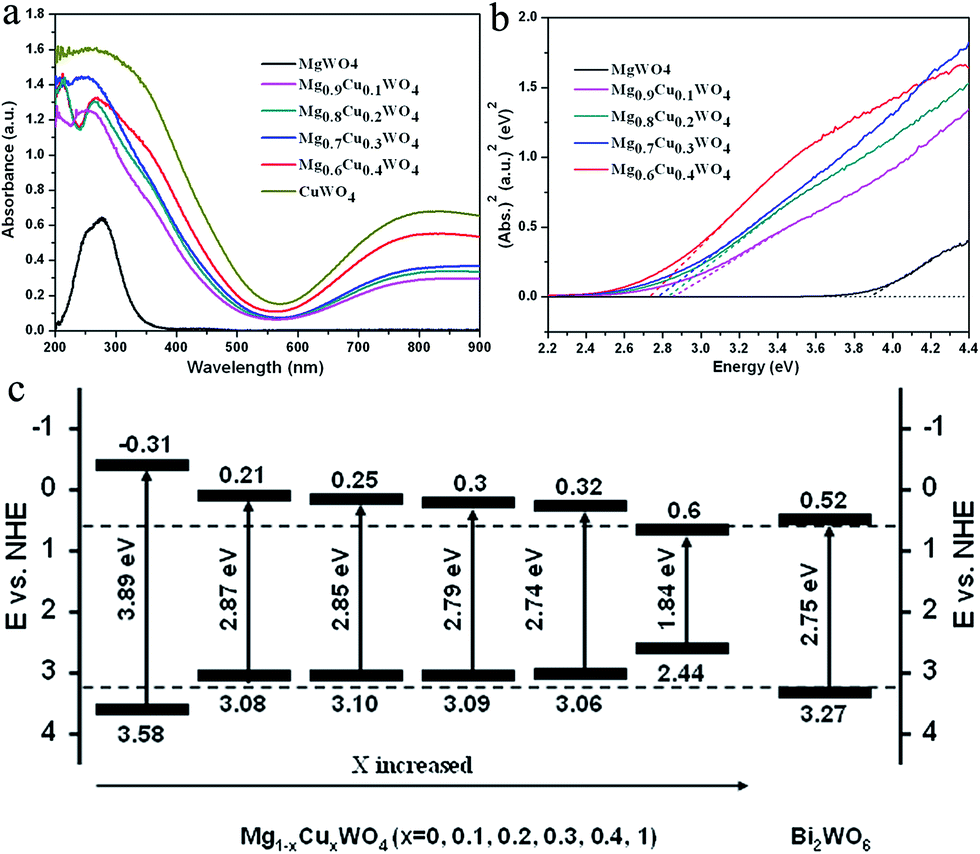 | ||
| Fig. 1 (a) UV-vis diffuse reflectance spectra and (b) band gap energies of Mg1−xCuxWO4 (x = 0, 0.1, 0.2, 0.3, 0.4 and 1) samples. (c) Comparison of energy levels of Mg1−xCuxWO4 (x = 0, 0.1, 0.2, 0.3, 0.4 and 1) and Bi2WO6. | ||
The band positions of semiconductors can be predicted using the electronegativity concept, and the CB and VB potentials of the semiconductor at the point of zero charge can be calculated by the following equation:30
| EVB = X − Ee + 0.5Eg | (1) |
| ECB = EVB − Eg | (2) |
Fig. 2 displays the UV-vis DRS spectra of Mg0.7Cu0.3WO4, Bi2WO6, and Mg0.7Cu0.3WO4/Bi2WO6 heterostructures. The absorption edge of pure Bi2WO6 is located at about 450 nm in the visible region while that of Mg0.7Cu0.3WO4 is at approximately 550 nm. In contrast, all the Mg0.7Cu0.3WO4/Bi2WO6 heterostructures exhibit red shifts on their absorption edges compared with pure Bi2WO6, and their edges range from 450 to 550 nm.
 | ||
| Fig. 2 UV-vis diffuse reflectance spectra of Mg0.7Cu0.3WO4/Bi2WO6 with different molar ratios. | ||
3.2 Characterization of Mg0.7Cu0.3WO4/Bi2WO6 heterojunctions
As presented in Fig. 3a, orthorhombic phase Bi2WO6 with space group Pca2 possesses an Aurivillius layered structure, which is composed of [Bi2O2]2+ layers together with WO6 octahedra between them. Shown in Fig. 3b is the schematic crystal structure of monoclinic phase Mg1−xCuxWO4. It is composed of Mg1−xCuxO6 and WO6 octahedra. Judging from the crystal structure, Mg1−xCuxWO4 may display a cube-like surface morphology. X-ray powder diffraction (XRD) was utilized to verify the Mg1−xCuxWO4 (x = 0, 0.1, 0.2, 0.3, 0.4 and 1) solid solution as shown in Fig. 4a. It is obvious that MgWO4, Mg0.9Cu0.1WO4, Mg0.8Cu0.2WO4, Mg0.7Cu0.3WO4, Mg0.6Cu0.4WO4 and CuWO4 with monoclinic structures were successfully synthesized. Moreover, it can also be seen that the diffraction peaks of the Mg1−xCuxWO4 solid solution shift from the 2θ position of MgWO4 to that of CuWO4 with the increase in Cu content, further indicating the successful preparation of the Mg1−xCuxWO4 (x = 0, 0.1, 0.2, 0.3, 0.4 and 1) series. | ||
| Fig. 3 Crystal structure of (a) orthorhombic phase Bi2WO6 and (b) monoclinic phase Mg0.7Cu0.3WO4. | ||
 | ||
| Fig. 4 XRD patterns of (a) Mg1−xCuxWO4 (x = 0, 0.1, 0.2, 0.3, 0.4 and 1) and (b) Mg0.7Cu0.3WO4/Bi2WO6 with molar ratios 0:1, 1:10, 1:6, 1:4, 1:2 and 1:0. | ||
Fig. 4b depicts the XRD patterns of the as-prepared Mg0.7Cu0.3WO4, Bi2WO6 and Mg0.7Cu0.3WO4/Bi2WO6 heterojunctions. From the image, it can be seen that the pure Bi2WO6 sample exhibits high purity and crystallinity. The diffraction peaks can be identified as the orthorhombic phase of Bi2WO6 (PDF#39-0256). Due to the high content and intensity of the Bi2WO6 diffraction peaks, the Mg0.7Cu0.3WO4/Bi2WO6 heterojunctions with molar ratio <1:4 display similar diffraction peaks to the pure Bi2WO6.22 In the Mg0.7Cu0.3WO4/Bi2WO6 composites with molar ratios 1:4 and 1:2, the characteristic diffraction peaks of Mg0.7Cu0.3WO4 were successfully detected, confirming the coexistence of both Mg0.7Cu0.3WO4 and Bi2WO6.
The X-ray photoelectron spectroscopy (XPS) analysis was employed to investigate the chemical composition and surface chemical states of the Mg0.7Cu0.3WO4/Bi2WO6 heterostructures. The typical survey XPS spectrum indicates that Bi, W, O, Mg and Cu elements could be detected for the 1:4 Mg0.7Cu0.3WO4/Bi2WO6 heterostructure (Fig. 5a). The XPS peak for C 1s (285 eV) is ascribed to adventitious hydrocarbon from the XPS instrument. Fig. 5b–f show the high-resolution XPS spectra. As shown in Fig. 5b, the binding energies of W 4f7/2 and W 4f5/2 are located at 37.6 and 35.5 eV, respectively.31 Two strong peaks at 159.4 and 164.7 eV with a difference (delta) in binding energies of 5.35 eV shown in Fig. 5c are attributed to Bi 4f7/2 and Bi 4f5/2, respectively, which are characteristic of Bi3+ in Bi2WO6.32 The O 1s peaks for the Mg0.7Cu0.3WO4/Bi2WO6 heterostructure (Fig. 5d) can be deconvoluted into three peaks at 530.1 eV, 531.2 eV and 532.5 eV, which correspond to the lattice oxygen, –OH hydroxyl groups and chemisorbed water, respectively.16 As for the high-resolution Mg and Cu XPS spectra (Fig. 5e and f, respectively), two peaks at 1303.0 eV and 935.1 eV are associated with Mg 1s (ref. 33) and Cu 2p3/2,34 respectively. The XPS results further confirmed the coexistence of Mg0.7Cu0.3WO4 and Bi2WO6 in the Mg0.7Cu0.3WO4/Bi2WO6 heterostructures.
 | ||
| Fig. 5 XPS spectra of the 1:4 Mg0.7Cu0.3WO4/Bi2WO6 heterostructures: (a) survey, (b) W 4f, (c) Bi 4f, (d) O 1s, (e) Mg 1s and (f) Cu 2p. | ||
To further confirm the composition of the heterojunctions quantitatively, ICP elemental analyses were performed on the Mg0.7Cu0.3WO4/Bi2WO6 products. The results (Table S2†) showed that the molar ratios of Mg:Cu:Bi:W are in accordance with the expected values.
The surface morphology of Mg0.7Cu0.3WO4/Bi2WO6 with molar ratios 1:0, 1:2, 1:4, 1:6, 1:10 and 0:1 has been observed by scanning electron microscopy (SEM) as shown in Fig. 6. It can be seen that Mg0.7Cu0.3WO4 (Fig. 6a) and Bi2WO6 (Fig. 6f) possess nanocube and nanoplate structures, respectively. With the increase in the Bi2WO6/Mg0.7Cu0.3WO4 molar ratio, the content of the nanoplates also increased (Fig. 6a–d). Fig. 6c and S2† showed that the as-prepared products of Mg0.7Cu0.3WO4/Bi2WO6 with molar ratio 1:4 consist of irregular nanocubes and nanoplates, and the crystal dimension of the nanocubes was estimated to be from several tens of nanometers to one micron, and the thicknesses of the nanosheets of Bi2WO6 are in the range of 40–50 nm (Fig. S2†). The Mg0.7Cu0.3WO4/Bi2WO6 heterojunction was further characterized by TEM. The low-magnification TEM images in Fig. 7a and b confirmed the nanocube and nanoplate morphologies of the sample. The high-resolution transmission electron microscopy (HRTEM) image (Fig. 7c) and fast Fourier transform (FFT) images (Fig. 7d and f) confirmed the single crystal natures of Mg0.7Cu0.3WO4 and Bi2WO6. The lattice-resolved HRTEM images indicate that the spacings of the lattice are 0.181 and 0.310 nm (as seen in Fig. 7e and g, respectively), which is consistent with the spacings of the corresponding (022) and (131) planes of monoclinic Mg0.7Cu0.3WO4 and orthorhombic Bi2WO6, respectively. The interface between Bi2WO6 and Mg0.7Cu0.3WO4 crystals can also be observed from the image.
 | ||
| Fig. 6 SEM images of as-prepared products with Mg0.7Cu0.3WO4/Bi2WO6 molar ratios: (a) 1:0, (b) 1:2, (c) 1:4, (d) 1:6, (e) 1:10 and (f) 0:1. | ||
 | ||
| Fig. 7 (a and b) TEM, (c) HRTEM images, (d and f) FFT (fast Fourier transition) patterns and (e and g) inverse FFT patterns of the lattice fringe of Mg0.7Cu0.3WO4/Bi2WO6 heterostructures. | ||
3.3 Photocatalytic performance
On the basis of the above results, improved photocatalytic activity would be obtained when Mg1−xCuxWO4 (x = 0.1, 0.2, 0.3 and 0.4) and Bi2WO6 were combined into heterojunctions. Since Mg0.7Cu0.3WO4 exhibits the highest photocatalytic activity (Fig. S3†) among the solid-solution samples, the photodegradation of RhB has been investigated to evaluate the photocatalytic activity of as-prepared Mg0.7Cu0.3WO4/Bi2WO6 heterojunctions under visible-light irradiation. The degradation degree of RhB was examined by determining the change in its characteristic absorption peak at 554 nm. As displayed in Fig. 8a, the pure Mg0.7Cu0.3WO4 and Bi2WO6 show relatively poor activity. When Mg0.7Cu0.3WO4 and Bi2WO6 were combined to construct Mg0.7Cu0.3WO4/Bi2WO6 heterostructures, it was found that the photocatalytic activity of Mg0.7Cu0.3WO4/Bi2WO6 heterojunctions with a molar ratio higher than 1:10 is significantly improved compared with pure Mg0.7Cu0.3WO4 and Bi2WO6. When the theoretical molar ratio of Mg0.7Cu0.3WO4 to Bi2WO6 was 1:4, the highest photocatalytic activity was obtained, resulting in a degradation efficiency of RhB of 97.2% after 2 h irradiation. As shown in Fig. 8b, the characteristic absorption peak of RhB at 554 nm decreases with increasing time, which is consistent with the degradation curve.
 | ||
| Fig. 8 (a) Photocatalytic degradation curves of RhB under irradiation of visible light for Mg0.7Cu0.3WO4/Bi2WO6 with different molar ratios. (b) Temporal absorption spectral patterns of RhB during the photodegradation process over 1:4 Mg0.7Cu0.3WO4/Bi2WO6. (c) Apparent rate constants for the photodegradation of RhB over Mg0.7Cu0.3WO4/Bi2WO6 with different molar ratios. | ||
Besides, in order to quantitatively understand the reaction kinetics of the photocatalytic degradation process of RhB, a kinetic study was performed by employing the pseudo-first-order model:35,36
| ln(C0/C) = kappt | (3) |
:0, 1:2, 1:4, 1:6, 1:10 and 0:1, respectively. The results show that 1:4 Mg0.7Cu0.3WO4/Bi2WO6 demonstrates the highest kapp value (1.62 h−1), which is almost 30 and 5.4 times higher than those of pure Mg0.7Cu0.3WO4 and Bi2WO6, respectively, indicating that Mg0.7Cu0.3WO4/Bi2WO6 is an excellent composite photocatalyst under visible light.
3.4 Investigation of photocatalytic mechanism
Photoluminescence (PL) emission spectra can serve as a useful approach to investigate the separation and transfer efficiency of photogenerated charge carriers in semiconductors, since PL emissions may result from the recombination of free carriers.37 Generally, a decrease in recombination rate leads to a lower PL intensity, thus higher photocatalytic activity. Fig. 9 presents the PL spectra of the Mg0.7Cu0.3WO4/Bi2WO6 composites with molar ratios 1:2, 1:4, 1:6 and 1:10 at room temperature. It can be seen that 1:4 Mg0.7Cu0.3WO4/Bi2WO6 displays the lowest emission peaks and thus possesses the highest photocatalytic activity, which is in good agreement with the results from the photodegradation experiment.
 | ||
| Fig. 9 PL spectra of Mg0.7Cu0.3WO4/Bi2WO6 with molar ratios 1:2, 1:4, 1:6 and 1:10. | ||
Fig. 10a shows the photocurrent of Bi2WO6 and 1:4 Mg0.7Cu0.3WO4/Bi2WO6 samples generated in an electrolyte under visible light, which may indirectly correlate with the generation and transfer of the photoinduced charge carriers in the photocatalytic process.38 As shown in the figure, the observed photocurrent generation is quite reversible and shows good reproducibility, indicating that the electrode is stable. Compared to pure Bi2WO6, 1:4 Mg0.7Cu0.3WO4/Bi2WO6 exhibits an obviously enhanced photocurrent response, which is about 4 times that of pristine Bi2WO6. This remarkably enhanced photocurrent response further confirmed the more efficient separation and transfer of photoinduced electron–hole pairs occurring at the interface of the Mg0.7Cu0.3WO4/Bi2WO6 heterojunction.
 | ||
| Fig. 10 (a) Comparison of transient photocurrent response and (b) EIS Nyquist plots of Bi2WO6 and 1:4 Mg0.7Cu0.3WO4/Bi2WO6 with light on/off cycles under visible-light irradiation (λ > 420 nm, [Na2SO4] = 0.1 M). | ||
As the separation and transfer processes of charges in the electrode–electrolyte interface region are supposed to be indicated by the electrochemical impedance spectra (EIS) Nyquist plots,39 EIS technology can be used to investigate the photocatalytic performance. Fig. 10b shows Nyquist plots of Bi2WO6 and 1:4 Mg0.7Cu0.3WO4/Bi2WO6 with and without visible-light irradiation. It can be seen that the arc radius of 1:4 Mg0.7Cu0.3WO4/Bi2WO6 is smaller than that of Bi2WO6, which indicates that the heterojunction possesses a stronger ability in the separation and transfer of photogenerated electron–hole pairs.
To detect the active species during the photodegradation of RhB over Mg0.7Cu0.3WO4/Bi2WO6 heterojunctions, a trapping experiment was carried out by adding various scavengers to the photodegradation system. We utilized ethylenediaminetetraacetic acid disodium salt (EDTA-2Na), isopropanol (IPA) and benzoquinone (BQ) as hole (h+), hydroxyl radical (˙OH) and superoxide radical (˙O2−) scavengers, respectively.25,26 It can be seen that the photodecomposition of RhB was almost unaffected by adding IPA. In contrast, the degradation efficiency for RhB was inhibited by about 100% and 80% with the addition of EDTA-2Na and BQ, respectively (Fig. 11a). Thus it can be supposed that photogenerated holes (h+) and ˙O2− are the main active species of Mg0.7Cu0.3WO4/Bi2WO6 for RhB degradation under visible-light irradiation.
 | ||
| Fig. 11 (a) Photodegradation of RhB over 1:4 Mg0.7Cu0.3WO4/Bi2WO6 in the presence of different scavengers. (b) Absorption spectra of NBT with 4 h visible-light irradiation (λ > 420 nm). | ||
To further understand the change in active species over the Mg0.7Cu0.3WO4/Bi2WO6 heterojunction, detailed ˙O2− quantification experiments have been carried out. Fig. 11b shows the absorption spectra centered at 259 nm of NBT under visible-light irradiation (λ > 420 nm) for 4 h during the photocatalytic reaction. It is obvious that the absorption peak gradually decreased with increasing irradiation time, which confirms that ˙O2− plays an important role in the photocatalytic reaction over Mg0.7Cu0.3WO4/Bi2WO6 heterojunctions. It further demonstrates that in the Mg0.7Cu0.3WO4/Bi2WO6 heterojunction (Scheme 1), the photogenerated electrons on Mg0.7Cu0.3WO4 could easily transfer to Bi2WO6, leading more photogenerated electrons to react with O2 to produce ˙O2− and take part in the decomposition of RhB. Meanwhile, the holes (h+) migrate from Bi2WO6 to the VB of Mg0.7Cu0.3WO4, making charge separation more efficient and reducing the recombination probability, which is in good agreement with the photocatalytic activity.
 | ||
| Scheme 1 Schematic diagrams of Mg0.7Cu0.3WO4/Bi2WO6 heterostructures under visible-light irradiation. | ||
4. Conclusions
In summary, energy-levels well-matched Mg0.7Cu0.3WO4/Bi2WO6 heterojunctions have been successfully constructed through semiconductor band gap engineering based on solid-solution design and synthesized by a facile hydrothermal method. The as-designed Mg0.7Cu0.3WO4/Bi2WO6 heterojunctions consisting of nanocube and nanoplate structures exhibit highly improved visible-light-driven photocatalytic performance compared to the pure component samples. This was also confirmed by the photoelectrochemical measurements. The optimum photocatalytic activity of the 1:4 Mg0.7Cu0.3WO4/Bi2WO6 sample for the degradation of RhB was almost 30 and 5.4 times higher than those of pristine Mg0.7Cu0.3WO4 and Bi2WO6, respectively. Active-species trapping and quantification measurements indicated that superoxide radicals (˙O2−) and photogenerated holes (h+) play a crucial role in the photodegradation of RhB over Mg0.7Cu0.3WO4/Bi2WO6 heterojunctions. The fabrication of well-matched overlapping band structures can result in efficient photogenerated charge transfer between Mg0.7Cu0.3WO4 and Bi2WO6, enhancing the VLD photocatalytic reactivity.
Acknowledgements
This work was supported by the Fundamental Research Funds for the Central Universities (2652013052), and the National Natural Science Foundation of China under Grants 50590402, and 91022036, and the National Basic Research Project of China (2010CB630701, and 2011CB922204).Notes and references
- M. W. Kanan and D. G. Nocera, Science, 2008, 321, 1072 CrossRef CAS PubMed.
- A. Kubacka, M. Fernández-García and G. Colón, Chem. Rev., 2012, 112, 1555 CrossRef CAS PubMed.
- H. Tong, S. X. Ouyang, Y. P. Bi, N. Umezawa, M. Oshikiri and J. H. Ye, Adv. Mater., 2012, 24, 229 CrossRef CAS PubMed.
- A. L. Linsebigler, G. Lu and J. T. Yates, Chem. Rev., 1995, 95, 735 CrossRef CAS.
- X. Chen and S. S. Mao, Chem. Rev., 2007, 107, 2891 CrossRef CAS PubMed.
- F. Z. Liu, Y. H. Leung, A. B. Djurišić, A. M. Ching Ng and W. K. Chan, J. Phys. Chem. C, 2013, 117, 12218 CAS.
- Q. Li, H. Meng, P. Zhou, Y. Q. Zheng, J. Wang, J. G. Yu and J. R. Gong, ACS Catal., 2013, 3, 882 CrossRef CAS.
- H. W. Huang, Y. He, Z. S. Lin, L. Kang and Y. H. Zhang, J. Phys. Chem. C, 2013, 117, 22986 CAS.
- J. Cao, B. Xu, B. Luo, H. Lin and S. Chen, Catal. Commun., 2011, 13, 63 CrossRef CAS PubMed.
- L. Q. Ye, J. Y. Liu, Z. Jiang, T. Y. Peng and L. Zan, Appl. Catal., B, 2013, 142, 1 Search PubMed.
- T. H. Yu, W. Y. Cheng, K. J. Chao and S. Y. Lu, Nanoscale, 2013, 5, 7356 RSC.
- H. Cheng, B. Huang, Y. Dai, X. Qin, X. Zhang, Z. Wang and M. Jiang, J. Solid State Chem., 2009, 182, 2274 CrossRef CAS PubMed.
- M. Ge, Y. Li, L. Liu, Z. Zhou and W. Chen, J. Phys. Chem. C, 2011, 115, 5220 CAS.
- R. Shi, G. L. Huang, J. Lin and Y. F. Zhu, J. Phys. Chem. C, 2009, 113, 19633 CAS.
- Y. Fu, C. Chang, P. Chen, X. L. Chu and L. Y. Zhu, J. Hazard. Mater., 2013, 254, 185 CrossRef PubMed.
- S. Guo, X. F. Li, H. Q. Wang, F. Dong and Z. B. Wu, J. Colloid Interface Sci., 2012, 369, 373 CrossRef CAS PubMed.
- Y. Tian, L. D. Zhang and J. X. Zhang, J. Alloys Compd., 2012, 537, 24 CrossRef CAS PubMed.
- M. Shang, W. Z. Wang, L. Zhang, S. M. Sun, L. Wang and L. Zhou, J. Phys. Chem. C, 2009, 113, 14727 CAS.
- D. Q. He, L. L. Wang, D. D. Xu, J. L. Zhai, D. J. Wang and T. F. Xie, ACS Appl. Mater. Interfaces, 2011, 3, 3167 CAS.
- M. S. Gui, W. D. Zhang, Y. Q. Chang and Y. X. Yu, Chem. Eng. J., 2012, 197, 283 CrossRef CAS PubMed.
- H. Q. Li, Y. M. Cui and W. S. Hong, Appl. Surf. Sci., 2013, 264, 581 CrossRef CAS PubMed.
- Y. L. Tian, B. B. Chang, J. L. Lu, J. Fu, F. N. Xi and X. P. Dong, ACS Appl. Mater. Interfaces, 2013, 5, 7079 CAS.
- H. W. Huang, S. B. Wang, Na. Tian and Y. H. Zhang, RSC Adv., 2014, 4, 5561 RSC.
- J. E. Yourey, K. J. Pyper, J. B. Kurtz and B. M. Bartlett, J. Phys. Chem. C, 2013, 117, 8708 CAS.
- L. Ye, J. Liu, C. Gong, L. Tian, T. Peng and L. Zan, ACS Catal., 2012, 2, 1677 CrossRef CAS.
- X. J. Bai, L. Wang and Y. F. Zhu, ACS Catal., 2012, 2, 2769 CrossRef CAS.
- X. Zhang, Z. H. Ai, F. L. Jia and L. Z. Zhang, J. Phys. Chem. C, 2008, 112, 747 CAS.
- J. E. Yourey, J. B. Kurtz and B. M. Bartlett, Inorg. Chem., 2012, 51, 10394 CrossRef CAS PubMed.
- L. W. Zhang, Y. Man and Y. F. Zhu, ACS Catal., 2011, 1, 841 CrossRef CAS.
- Y. Ohko, K. Hashimoto and A. Fujishima, J. Phys. Chem. A, 1997, 101, 8057 CrossRef CAS.
- Y. G. Su, B. L. Zhu, K. Guan, S. S. Gao, L. Lv, C. F. Du, L. M. Peng, L. C. Hou and X. J. Wang, J. Phys. Chem. C, 2012, 116, 18508 CAS.
- H. Liu, W. R. Cao, Y. Su, Y. Wang and X. H. Wang, Appl. Catal., B, 2012, 111, 271 CrossRef PubMed.
- J. S. Corneille, J. W. He and D. W. Goodman, Surf. Sci., 1994, 306, 269 CrossRef CAS.
- J. Morales, L. Sánchez, F. Martín, J. R. Ramos-Barrado and M. Sánchez, Thin Solid Films, 2005, 474, 133 CrossRef CAS PubMed.
- C. H. Wu, H. W. Chang and J. M. Chern, J. Hazard. Mater., 2006, 137, 336 CrossRef CAS PubMed.
- Y. He, Y. H. Zhang, H. W. Huang, N. Tian and Y. Luo, Inorg. Chem. Commun., 2014, 40, 55 CrossRef CAS PubMed.
- X. J. Wang, Q. Wang, F. T. Li, W. Y. Yang, Y. Zhao, Y. J. Hao and S. J. Liu, Chem. Eng. J., 2013, 234, 361 CrossRef CAS PubMed.
- H. Kim, P. Borse, W. Choi and J. Lee, Angew. Chem., Int. Ed., 2005, 44, 4585 CrossRef CAS PubMed.
- Z. Hosseini, N. Taghavinia, N. Sharifi, M. Chavoshi and M. Rahman, J. Phys. Chem. C, 2008, 112, 18686 CAS.
Footnote |
| † Electronic supplementary information (ESI) available: Diffuse reflectance spectra of Bi2WO6, CB and VB of Mg1−xCuxWO4, SEM image and ICP elemental analysis of Mg0.7Cu0.3WO4/Bi2WO6 heterojunction and photocatalytic degradation curves of Mg1−xCuxWO4 samples. See DOI: 10.1039/c4ra05708b |
| This journal is © The Royal Society of Chemistry 2014 |