Design of a highly active Pt/Al2O3 catalyst for low-temperature CO oxidation

Nihong An*ab, Xiaoling Yuanb, Bo Panb, Qinglin Lia, Suying Lib and Wenxiang Zhang*b
aState Key Laboratory of Advanced Technologies for Comprehensive Utilization of Platinum Metals, Sino-Platinum Co. Ltd., Kunming Institute of Precious Metals, Kunming, 650106, China. E-mail: annh09@mails.jlu.edu.cn; Fax: +86-871-68329993; Tel: +86-871-68328747
bState Key Laboratory of Theoretical and Computational Chemistry, College of Chemistry, Jilin University, Changchun, 130021, China. E-mail: zhwenx@ jlu.edu.cn; Fax: +86-431-85168420; Tel: +86-431-85155390

Received 12th June 2014 , Accepted 14th August 2014

First published on 14th August 2014


Abstract

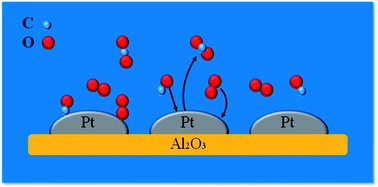
A series of Al2O3 supported platinum catalysts (Pt/Al2O3), were prepared by a colloid deposition route. The Pt chemical state and nanostructure over the Pt/Al2O3 catalysts were characterized after calcination treatment using X-ray photoelectron spectroscopy and transmission electron microscopy. The Pt chemical state and nanostructure depended on the treatment temperature: a metallic Pt surface was formed on the Pt/Al2O3 catalysts calcined at low temperature, whereas oxidized Pt existed after the relatively high temperature treatment. The Al2O3 support acted as an anchor and inhibited the sintering of Pt particles on the catalyst surface through intimate interaction between Al2O3 and Pt. The Pt/Al2O3 catalyst pre-treated at 200 °C (i.e., Pt/Al2O3-200) exhibited relatively high activity for CO oxidation. According to the results of catalyst characterization, Pt/Al2O3-200 could efficiently govern O2 adsorption by trapping O2 molecules on Pt sites and producing active oxygen species. That is, the surface metallic Pt could facilitate the adsorption and activation of O2 molecules even with the CO pre-adsorption on the surface of Pt particles.

Introduction

Since Haruta and coworkers demonstrated that supported gold nanoparticles (NPs) could be highly active for low-temperature CO oxidation,1–3 particular attention has been focused on developing highly active noble metal catalysts.4–12 Some metal oxide-supported Pt catalysts have recently been reported to have high activity in the low-temperature oxidation of CO. Deng and co-workers,10 for example, found that FeOx-supported Pt catalysts prepared using a co-precipitation method exhibited high CO oxidation activity at ambient temperatures. Zhang's group13,14 has reported that a single-atom Pt1/FeOx catalyst shows both excellent stability and high activity for CO oxidation, and preferential oxidation of CO in the presence of H2.

Abundant knowledge has been accumulated about the effects of Pt particle size15 and oxidation state,16 Pt-support interaction,17 feed moisture18 and also others.19 Deng et al.10 proposed that the presence of two adjacent, but different, active sites (Pt for CO and FeOx for O2) with low apparent activation energies accounted for this high activity of FeOx-supported Pt catalysts, while the contributions of the SMSIs (strong metal–support interactions) and Pt particle size effects cannot be ruled out. In spite of this progress, the nature of active platinum for CO oxidation still remains an issue of debate. It remains an interesting subject to understand the role of the supports and the nature of active sites.

As one of the most common supports, alumina would be preferable support for Pt catalysts as compared with other metal oxides because of its cheapness, high and thermally stable surface area, well controllable porosity, and relative inertness toward steam. However, traditional liquid-phase methods are less effective in preparing highly active Al2O3 supported noble metal (e.g. Au, Pt, etc.) catalysts for low-temperature oxidation reactions (e.g., CO oxidation).6,10,20 In previous work, some efficient supported noble metal (Au and Pt) catalysts were prepared for CO oxidation at low temperature.18,21–24 It is found that colloidal deposition method is very suitable for preparing high active Pt catalysts. Here, we extended our previous work using “inactive” Al2O3 as support and prepared a series of high-performance Pt catalysts. We found that under mild conditions, adjusting the Pt loading and calcination temperature greatly enhanced the catalyst's performance toward low-temperature oxidation of CO. On the other hand, the catalyst's structure and behaviour was much more easily investigated on the Al2O3 support to explore the intrinsic Pt active centres. The results would be conducive to the estimation of potentialities of Pt/Al2O3 catalysts as applied for combustion of CO impurities contained in air and automobile exhaust. Some important results obtained are also discussed in the paper.

Experiment

Catalyst preparation

The Pt/Al2O3 catalysts were prepared by a colloid deposition method described elsewhere,18 while the Pt colloidal solution was prepared according to the literature procedure.25 Typically, a glycol solution of NaOH (120 mL, 0.25 M) was added into a glycol solution of H2PtCl6 (100 mL, 2 g/100 mL) with stirring for 1 h to form a brown solution. The resulting colloidal solution can be obtained by heating the brown solution at 90 °C for 1 h under the protection of Ar.

Then, the mixed solution of Pt colloid and Al2O3 was heated at 80 °C under stirring to achieve deposition process. The solid was isolated and washed thoroughly with distilled water. Finally, the product was calcined at 200 °C in a flow of 20% O2/Ar to obtain the resulting supported Pt catalysts. The platinum contents of Pt/Al2O3 series are 0.2%, 0.5% and 1.0% to study the effect of platinum loadings. But for investigation of the effect of the calcinations temperature, the catalysts were calcined at 200 °C, 300 °C, 400 °C and 500 °C to obtain the resulting supported Pt catalysts (Pt/Al2O3-T), where T represents the calcination temperature.

Catalyst characterization

Transmission electron microscopic (TEM) images were obtained using H8100-IV election microscopic operated at 200 kV. N2 adsorption isotherms of the samples were obtained at −196 °C on ASAP 2010 Micromeritics instrument. The specific surface area was determined by using the linear portion of the Brunauer–Emmett–Teller (BET) model and the average pore size was calculated by using the Barrett–Jovner–Halenda (BJH) formula from the desorption branch of N2 adsorption isotherm. Before these measurements, the samples were degassed under vacuum at 200 °C for 8 h.

The X-ray photoelectron spectra (XPS) measurements were carried out on an ESCALAB250 X-ray photoelectron spectrometer, using Al Kα radiation as the excitation source. The XPS spectra were corrected by adjusting the C 1s peak to a position of 284.6 eV.

The differential heat of adsorption was carried out using Tian–Calvet calorimeter (Setaram C 80 II). Prior to the microcalorimetric measurements, the catalysts were vacuumized at 10−3 Pa for 24 h. Then, probe molecule was injected quantificationally every time until the system pressure up to 600 Pa. Adsorbates were purified by a freezing-evacuation-melt processing before the adsorption.

Temperature programmed reduction by H2 (H2-TPR) measurements were carried out using an adsorption instrument equipped with a TCD. The samples were loaded and pretreated with Ar at 100 °C for 30 min to remove the adsorbed carbonates and hydrates. The H2-TPR experiment was performed under the mixture of 5% H2 in N2 flow (30 mL min−1) over 20 mg of catalyst at a heating rate of 10 °C min−1. The uptake amount during the reduction was measured by a thermal conductivity detector (TCD).

Catalytic test

For CO oxidation tests, a solid catalyst sample (40–60 mesh) was loaded between two glass wool beds in a quartz tube reactor. The gas mixture consisted of 0.5% CO, 10% O2, balanced with Ar. The total flow rate was 100 mL min−1. Kinetic data were taken after 10 min on stream at each reaction temperature. The products analysis was carried out by Shimadzu GC-8A gas chromatography (TCD).

Results and discussion

Catalytic performance in CO oxidation

The catalytic performances of CO oxidation over the Pt/Al2O3 catalysts with different Pt loading are shown in Fig. 1. Under the reaction condition, T50 (temperature at which 50% CO conversion is achieved) was 83 °C for 1.0% Pt/Al2O3, while it was 112 °C for 0.5% Pt/Al2O3, and 140 °C for 0.2% Pt/Al2O3 catalyst. Among them, 1.0% Pt/Al2O3 exhibited the best catalytic activity, and CO was completely oxidized at about 100 °C.
image file: c4ra05646a-f1.tif
Fig. 1 Catalytic performance of CO oxidation over the Pt/Al2O3 catalysts with different Pt loading.

Based on the results above, it is found that Pt loading is an important factor for influencing the catalytic performance of the Pt/Al2O3 catalysts. It is evident that the Pt loading of 1.0% is suitable to prepare high active Pt/Al2O3 catalyst. And then we focused study on the 1.0% Pt/Al2O3 catalysts for CO oxidation. The effects of calcinations temperature varied from 200 to 500 °C on the activity of 1.0% Pt/Al2O3 catalysts are shown in Fig. 2. Among them, Pt/Al2O3-200 showed the highest catalytic activity toward the complete oxidation of CO. Complete conversion of CO was achieved at 100 °C. For Pt/Al2O3-300, Pt/Al2O3-400 and Pt/Al2O3-500, complete conversion of CO was achieved at 110 °C, 120 °C and 130 °C, respectively. It should be mentioned here that, under the test conditions, pure Al2O3 was inactive for the oxidation of CO to CO2 even when the reaction temperature increased to 130 °C.


image file: c4ra05646a-f2.tif
Fig. 2 Catalytic performance of the 1% Pt/Al2O3 catalysts calcined at different temperatures.

Fig. 3 shows the conversions of CO over Pt/Al2O3-200 at different O2 concentration. The catalyst obtained 13% CO conversion at 1% O2 initially. CO conversion could hardly be observed after 300 min. Improving O2 concentration up to 5% and 10%, CO oxidation was greatly promoted, and complete CO conversion was achieved. Moreover, CO could be oxidized completely for more than 110 min at the condition of 10% O2 than that of 5% O2. This result indicated that the increase of O2 concentration did not inhibit but enhance the stability of the catalysts.


image file: c4ra05646a-f3.tif
Fig. 3 Catalytic performance of 1% Pt/Al2O3 under conditions with different content of O2.

Structure and properties characteristics of the catalysts

The XRD patterns of the Pt/Al2O3 catalysts are shown in Fig. 4. For all catalysts, the diffraction patterns were corresponding to those of γ-Al2O3. Although introduction of platinum usually induces the appearance of a small peak of metallic platinum, it is not discernible in the present case because of the overlap of the diffraction peaks of platinum at 39.7°, 46.0° and 67.5° with those of γ-Al2O3 at 38.5°, 45.8° and 67.0°. And it may also be a sign that Pt particles should be very small and highly dispersed on the surface of the Pt/Al2O3 catalysts.
image file: c4ra05646a-f4.tif
Fig. 4 XRD analysis of the Pt/Al2O3 catalysts, (A) 200 °C, (B) 300 °C, (C) 400 °C, (D) 500 °C.

Fig. 5 shows the TEM images of Pt colloid, Pt/Al2O3-200 and Pt/Al2O3-500. The Pt clusters in the native solution were uniform sphere with a small particle size and narrow size distribution (1.9 ± 0.2 nm). Depositing on the support, the size of the Pt particles in Pt/Al2O3-200 had no obvious change in comparison with the colloidal Pt particles, and the Pt particles were homogeneously dispersed on the surface of Al2O3. Notably, no obvious aggregation of Pt particles occurred even when the catalyst was calcined at 500 °C (i.e., Pt/Al2O3-500), indicating the excellent stability of the Pt NPs against thermal-sintering.


image file: c4ra05646a-f5.tif
Fig. 5 TEM images of Pt colloid (A) and 1% Pt/Al2O3 catalysts calcined at 200 °C (B) and 500 °C (C).

Table 1 summarizes the specific surface areas, pore volumes and average pore diameters of the Pt/Al2O3 catalysts together with pure Al2O3. There are little differences of surface areas among these catalysts except Pt/Al2O3-500. In general, catalysts with larger specific surface areas would be favourable to the dispersion of active species (i.e., Pt particles), and can provide more interfaces for reactant adsorption, thus could result in higher catalytic activity. In our case, there are no direct relationship between the specific surface area of Al2O3 supports and the catalytic activities of the Pt/Al2O3 catalysts. These results suggest that the catalytic performance of the Pt/Al2O3 catalysts should be mainly governed by the nature of active component sites, such as the chemical states of Pt species and electronic property of Pt NPs. Here, the physical properties of catalysts should not be a determinative factor in influencing the catalytic activity of the Pt/Al2O3 catalysts, and the Al2O3 supports do scarcely make direct contribution to the catalytic activity of supported Pt/Al2O3 catalysts.

Table 1 Characteristics results of the Pt/Al2O3 catalysts
Sample Surface areaa (m2 g−1) Pore volumea (cm3 g−1) Average pore diametera (nm) Binding energy of Pt 4f7/2 (eV) Pt0 relative intensity (%)
Pt0 Pt2+ Pt4+
a Derived from N2 adsorption–desorption isotherm.
Al2O3 376 0.59 6.2
Pt/Al2O3-200 334 0.56 7.2 71.5 72.7 85
Pt/Al2O3-300 323 0.55 7.1 71.4 72.3 52
Pt/Al2O3-400 341 0.63 7.4 71.2 72.8 29
Pt/Al2O3-500 289 0.64 7.7 72.2 73.5


The XPS spectra of Pt 4f for the Pt/Al2O3 catalysts are shown in Fig. 6. The deconvolution of the Pt 4f photopeak provided three different contributions at 71.2–71.5 eV, 72.1–72.7 eV and 73.5 eV for the Pt/Al2O3 catalysts. The former BE value mainly characterized Pt0, whereas the latter two would correspond to Pt2+ and Pt4+, respectively.26 Table 1 shows the binding energies of Pt 4f7/2 as well as the relative surface concentrations of Pt0 species for these Pt/Al2O3 catalysts. Pt/Al2O3-200 catalyst mainly consisted of metallic platinum species like Pt0 species, while Pt/Al2O3-300 and Pt/Al2O3-400 catalysts mainly consisted of oxidized Pt2+ species. With the further increase of calcination temperature, more highly oxidized Pt species (i.e., Pt4+) were detectable in Pt/Al2O3-500. Based on these results, it can be concluded that Pt/Al2O3-200 possesses the highest proportion of metallic Pt species, and the proportion of oxidized platinum species increases with improving the calcination temperature. However, the XPS data is not good enough for the exact quantitative analysis of Pt species. It could be mainly attributed to the fact that there is not a large enough amount of Pt exist on the measured sample surface to generate a response signal, and may also be a sign that the surface area of alumina is too low to permit high loading of Pt.


image file: c4ra05646a-f6.tif
Fig. 6 XPS spectra of Pt 4f region for 1% Pt/Al2O3 calcined at varied temperatures, (A) 200 °C, (B) 300 °C, (C) 400 °C, (D) 500 °C.

The H2-TPR profiles of Al2O3 and the Pt/Al2O3 catalysts calcined at different temperatures are shown in Fig. 7. For Pt/Al2O3-200, it exhibited two reduction peaks of peak I and peak III, which were attributed to the reduction of Pt2+ and Al2O3. Compared with the TPR profile of pure Al2O3, the reduction temperature of Al2O3 support was shifted to a relative lower temperature region, which has a close relationship with the metal–support interaction. This result is consistent with the previous reports that the intimate contact between Pt and cerium in the Pt/Ce–TiO2, Pt/CeO2 catalysts facilitated the reducibility of the support at low temperatures.27,28 As the calcination temperature up to 300 °C and 400 °C, the intensity of peak I became stronger gradually, indicating part of metallic state platinum could be oxidized to the platinum in higher valence states (i.e., Pt2+) by the characterization results of XPS. For Pt/Al2O3-400, an additional reduction peak II appeared at about 280 °C, attributed to the reduction of Pt4+ and peak III was divided into two reduction peaks located at 400 °C and 560 °C, due to the weakened metal–support interaction. The former was ascribed to the reduction of Al2O3, intimately contacted with Pt while the latter was due to the reduction of the bulk Al2O3. Notably, for Pt/Al2O3-500, peak II disappeared and the intensity of the reduction peak at 400 °C became stronger. This reduction peak could be mainly ascribed to the reduction of part of Al2O3, and may also include the reduction of Pt4+ as the presence of Pt4+ species has been verified by the characterization results of XPS.


image file: c4ra05646a-f7.tif
Fig. 7 TPR spectra of Al2O3 support and 1% Pt/Al2O3 catalysts calcined at varied temperatures.

Fig. 8 shows the changes in the differential heat of CO and O2 adsorption on Pt/Al2O3-200 catalyst. Firstly, the differential heat of O2 adsorption was 620 kJ mol−1 at 30 °C. With the pulse of O2 for three times, the differential heat of O2 adsorption decreased to zero, and the cumulative coverage was 4.5 μmol g−1. It indicated that few strong oxygen adsorbed sites existed on the catalyst surface at 30 °C. For the differential heat of CO adsorption, the cumulative coverage of CO was 20 μmol g−1 at 30 °C. As the adsorption temperature up to 100 °C, a higher coverage of CO was found on Pt/Al2O3-200 catalyst, which could provide well distributed adsorption sites. It should be noted that the differential adsorption energy of CO on Pt reached 340 kJ mol−1 at 30 °C. In reported literatures,29,30 the differential adsorption energy was less than 200 kJ mol−1 while the differential adsorption energy of more than 200 kJ mol−1 should be ascribed to the heat of reaction. In this study, the differential adsorption energy of CO on Pt of more than 200 kJ mol−1 could also be due to the heat of reaction. Combined with previous work,31 it is found that an oxidation reaction (CO + O* → CO2) happened when CO was adsorbed on the Pt/Fe2O3 catalysts. For Pt/Al2O3, a similar reaction could exist and it may be the reason for the differential adsorption energy of more than 200 kJ mol−1. For the sample that pre-treated with CO at 100 °C, O2 adsorption was conducted at 30 °C after the vacuum treatment for 24 h. The differential heat of O2 adsorption was 986 kJ mol−1, which is higher than that of catalyst directly conducted in O2 at 30 °C (620 kJ mol−1) and the amount of oxygen adsorbed sites increased simultaneously. These results indicate that the CO oxidation reaction occurs during the process of re-absorption of oxygen and the pre-treatment of CO do not inhibit the adsorption of oxygen on the catalyst.


image file: c4ra05646a-f8.tif
Fig. 8 Differential heat of CO and O2 adsorption on 1% Pt/Al2O3 catalyst.

Discussion

For supported noble metal catalysts, it is well-known that the Pt catalysts prepared with reducible supports or so-called “active supports” (i.e., TiO2, Fe2O3 and CeO2) usually achieved much higher activities than the Pt catalysts prepared with irreducible supports or “inert supports” (i.e., Al2O3 and SiO2) for the low-temperature CO oxidation.14,32 The “active supports” could drastically affect the catalytic performance of supported noble metal catalysts by influencing the shape or electronic property of noble metal nanoparticles, by creating new active sites (e.g., perimeter), or by providing (transferring) active oxygen species.15,33 In this study, the distinct catalytic activities were observed on the Pt/Al2O3 catalysts and Pt/Al2O3-200 could oxidize CO completely at low temperature. Concerning the inert nature of Al2O3 support, it can be imagined that Al2O3 will not provide direct contribution to the catalytic oxidation of CO, or to influence the redox property of Pt species during the catalytic reaction process. Factually, the Al2O3 support acted as an anchor and inhibited the sintering of Pt particles on the catalyst surface, which could be attributed to the presence of a suitable interaction between Pt particle and support based on the TPR results.

Previous studies on platinum catalysts have concluded that chemical states of platinum species should be an important factor for oxidation reactions.26,34 For instance, Gracia et al.34 found that the catalytic activity of the supported Pt/Al2O3 catalyst could be closely correlated with the composition of platinum species, and fully oxidized Pt particles exhibit low activity for CO oxidation. Carberry35 found that a catalyst pre-reduced with CO was more active for CO oxidation than the one pre-treated in oxygen. In our case, the results of catalytic test showed that the catalyst of 1% Pt/Al2O3-200 possessed relatively high catalytic activity, while the XPS study revealed that abundant metallic Pt was present in the catalyst. Hence, our results are in good agreement with the previous literatures, and provide further evidence that the metallic platinum species is preferable to enhance the catalytic activity of the platinum based catalysts.26,34

Whilst the above-mentioned studies appear to show that platinum in the metallic state is the most active form, they did not give more indication of the exact nature of the active surface. Burch et al.36 found that over a platinum catalyst, the most active surface of a platinum catalyst is one which contains both adsorbed oxygen and adsorbed reagent in reasonable amounts. For CO oxidation, it is generally accepted that a competition for adsorption sites between oxygen and CO was present on these Pt catalysts.3,10 CO is strongly and almost exclusively adsorbed onto Pt, resulting in the unavailability of active oxygen. CO oxidation over those Pt catalysts proceeds in a competitive Langmuir–Hinshelwood way.37,38 We now turn to a consideration of our results (see Fig. 3) in contrast to the information from the literature on supported catalysts and model systems. At low O2 content (i.e., low oxygen pressures), oxygen will be unable to compete with CO for adsorption sites and so the activity will be independent of the oxygen partial pressure. At higher O2 content (i.e., high oxygen pressures), however, where oxygen can compete more effectively, the oxygen pressure will affect the reaction activity. It indicates that adsorption of both reagents on the surface is required. The results of the differential heat of CO and O2 adsorption confirmed that the pre-treatment of CO did not inhibit the adsorption of oxygen on the catalyst. And CO oxidation occurs during the process of re-absorption of oxygen. Hence, a conclusion could be reached that the reaction occurs by a Langmuir–Hinshelwood mechanism involving the reaction of adsorbed oxygen with adsorbed CO. A similar conclusion is also proposed in previous literatures reported by Yao,39 and Trimm and Lam.40

Then, the reactivity of the adsorbed oxygen appears to be important. However, the interaction between platinum and oxygen and the nature of the surface is very complex and sensitive to the exact preparation condition. Since real catalysts will contain small platinum particles which exhibited different chemical states, the exact nature of the oxygen on the surface may vary from one sample to another. The present results revealed that the activity of platinum catalysts decreased with the surface is progressively changed from a reduced state to an oxidized one. Further to this, Drozdov et al.41 have found, from measurements of the heat of adsorption of oxygen, that oxygen is bound more weakly on platinum metal than on the bulk oxide. Therefore, the metal would be expected to be more active. Indeed, both Niwa et al.42 and Briot et al.43 have found their more active catalysts to contain more easily removed oxygen. Here it may be proposed that the pre-treatment of the Pt/Al2O3 catalysts at different temperature was able to influence the oxidation state of Pt (or the degree of Pt oxidation), and then the catalysts had different O2 absorption and activation abilities, which should play an important role in determining the catalytic activity.

Conclusions

The calcination temperature could significantly influence the physicochemical properties as well as the catalytic performance of the Pt/Al2O3 catalysts for CO oxidation. 1% Pt/Al2O3-200 catalyst exhibited relatively high catalytic activity. The Al2O3 support acted as an anchor and inhibited the sintering of Pt particles on the catalyst surface through an intimate interaction between Pt and Al2O3. As a result of further systematic investigation on the Pt catalysts, it is proposed that the pre-treatment of the Pt/Al2O3 catalysts at different temperature was able to influence the oxidation state of Pt (or the degree of Pt oxidation), and then the catalysts had different O2 absorption and activation abilities. Pt/Al2O3-200 could efficiently govern O2 adsorption by trapping O2 molecules on Pt sites and producing active oxygen species. That is, the surface metallic Pt could facilitate the adsorption and activation of O2 molecules even with the CO pre-adsorption on the surface Pt particles.

Notes and references

  1. M. Haruta, N. Yamada, T. Kobayashi and S. Iijima, J. Catal., 1989, 115, 301–309 CrossRef CAS.
  2. M. Haruta and M. Daté, Appl. Catal., A, 2001, 222, 427–437 CrossRef CAS.
  3. M. Haruta, Gold Bull., 2004, 37, 27–36 CrossRef CAS.
  4. A. Bongiorno and U. Landman, Phys. Rev. Lett., 2005, 95, 106102 CrossRef.
  5. B. Yoon, H. Hakkinen, U. Landman, A. S. Worz, J. M. Antonietti, S. Abbet, K. Judai and U. Heiz, Science, 2005, 307, 403–407 CrossRef CAS PubMed.
  6. O. S. Alexeev, S. Y. Chin, M. H. Engelhard, L. Ortiz-Soto and M. D. Amiridis, J. Phys. Chem. B, 2005, 109, 23430–23443 CrossRef CAS PubMed.
  7. L. C. Wang, X. S. Huang, Q. Liu, Y. M. Liu, Y. Cao, H. Y. He, K. N. Fan and J. H. Zhuang, J. Catal., 2008, 259, 66–74 CrossRef CAS PubMed.
  8. Y. Bi, L. Chen and G. Lu, J. Mol. Catal. A: Chem., 2007, 266, 173–179 CrossRef CAS PubMed.
  9. Y. N. Sun, Z. H. Qin, M. Lewandowski, E. Carrasco, M. Sterrer, S. Shaikhutdinov and H. J. Freund, J. Catal., 2009, 266, 359–368 CrossRef CAS PubMed.
  10. L. Liu, F. Zhou, L. Wang, X. Qi, F. Shi and Y. Deng, J. Catal., 2010, 274, 1–10 CrossRef CAS PubMed.
  11. H. Zhu, Z. Ma, J. C. Clark, Z. Pan, S. H. Overbury and S. Dai, Appl. Catal., A, 2007, 326, 89–99 CrossRef CAS PubMed.
  12. Y. Xu, J. Ma, Y. Xu, L. Xu, L. Xu, H. Li and H. Li, RSC Adv., 2013, 3, 851–858 RSC.
  13. Q. Fu, W. X. Li, Y. Yao, H. Liu, H. Y. Su, D. Ma, X. K. Gu, L. Chen, Z. Wang, H. Zhang, B. Wang and X. Bao, Science, 2010, 328, 1141–1144 CrossRef CAS PubMed.
  14. K. Liu, A. Wang and T. Zhang, ACS Catal., 2012, 2, 1165–1178 CrossRef CAS.
  15. K. Villani, W. Vermandel, K. Smets, D. Liang, G. Van Tendeloo and J. A. Martens, Environ. Sci. Technol., 2006, 40, 2727–2733 CrossRef CAS.
  16. M. Hatanaka, N. Takahashi, N. Takahashi, T. Tanabe, Y. Nagai, A. Suda and H. Shinjoh, J. Catal., 2009, 266, 182–190 CrossRef CAS PubMed.
  17. S.-i. Ito and K. Tomishige, Catal. Commun., 2010, 12, 157–160 CrossRef CAS PubMed.
  18. S. Li, G. Liu, H. Lian, M. Jia, G. Zhao, D. Jiang and W. Zhang, Catal. Commun., 2008, 9, 1045–1049 CrossRef CAS PubMed.
  19. T. Baidya, A. Gupta and P. A. Deshpandey, J. Phy. Chem. C, 2009, 113, 4059–4068 CrossRef CAS.
  20. M. Ojeda, B. Z. Zhan and E. Iglesia, J. Catal., 2012, 285, 92–102 CrossRef CAS PubMed.
  21. G. Y. Wang, W. X. Zhang, H. L. Lian, D. Z. Jiang and T. H. Wu, Appl. Catal., A, 2003, 239, 1–10 CrossRef CAS.
  22. H. Lian, M. Jia, W. Pan, Y. Li, W. Zhang and D. Jiang, Catal. Commun., 2005, 6, 47–51 CrossRef CAS PubMed.
  23. N. An, Q. Yu, G. Liu, S. Li, M. Jia and W. Zhang, J. Hazard. Mater., 2011, 186, 1392–1397 CrossRef CAS PubMed.
  24. N. An, W. Zhang, X. Yuan, B. Pan, G. Liu, M. Jia, W. Yan and W. Zhang, Chem. Eng. J., 2013, 215–216, 1–6 CAS.
  25. Y. Wang, J. Ren, K. Deng, L. Gui and Y. Tang, Chem. Mater., 2000, 12, 1622–1627 CrossRef CAS.
  26. F. Şen and G. Gökaǧaç, J. Phy. Chem. C, 2007, 111, 5715–5720 CrossRef.
  27. Y. Nagai, T. Hirabayashi, K. Dohmae, N. Takagi, T. Minami, H. Shinjoh and S. i. Matsumoto, J. Catal., 2006, 242, 103–109 CrossRef CAS PubMed.
  28. Y. Nagai, K. Dohmae, Y. Ikeda, N. Takagi, T. Tanabe, N. Hara, G. Guilera, S. Pascarelli, M. A. Newton, O. Kuno, H. Jiang, H. Shinjoh and S. i. Matsumoto, Angew. Chem., Int. Ed., 2008, 47, 9303–9306 CrossRef CAS PubMed.
  29. B. t. Heinrichs, P. Delhez, J.-P. Schoebrechts and J.-P. Pirard, J. Catal., 1997, 172, 322–335 CrossRef CAS.
  30. N. Al-Sarraf, J. T. Stuckless and D. A. King, Nature, 1992, 360, 243–245 CrossRef CAS.
  31. N. An, S. Li, P. N. Duchesne, P. Wu, W. Zhang, J. F. Lee, S. Cheng, P. Zhang, M. Jia and W. Zhang, J. Phy. Chem. C, 2013, 117, 21254–21262 CrossRef CAS.
  32. S. Bonanni, K. Aït-Mansour, W. Harbich and H. Brune, J. Am. Chem. Soc., 2012, 134, 3445–3450 CrossRef CAS PubMed.
  33. S. Arrii, F. Morfin, A. J. Renouprez and J. L. Rousset, J. Am. Chem. Soc., 2004, 126, 1199–1205 CrossRef CAS PubMed.
  34. F. J. Gracia, J. T. Miller, A. J. Kropf and E. E. Wolf, J. Catal., 2002, 209, 348–354 Search PubMed.
  35. J. J. Carberry, Acc. Chem. Res., 1985, 18, 358–363 CrossRef CAS.
  36. R. Burch and P. K. Loader, Appl. Catal., B, 1994, 5, 149–164 CrossRef CAS.
  37. A. Martínez-Arias, A. B. Hungría, M. Fernández-García, A. Iglesias-Juez, J. A. Anderson and J. C. Conesa, J. Catal., 2004, 221, 85–92 CrossRef.
  38. A. Bourane and D. Bianchi, J. Catal., 2004, 222, 499–510 CrossRef CAS PubMed.
  39. Y.-F. Y. Yao, Ind. Eng. Chem. Prod. Res. Dev., 1980, 19, 293–298 CrossRef CAS.
  40. D. L. Trimm and C.-W. Lam, Chem. Eng. Sci., 1980, 35, 1405–1413 CrossRef CAS.
  41. V. A. Drozdov, P. G. Tsyrulnikov, V. V. Popovskii, N. N. Bulgakov, E. M. Moroz and T. G. Galeev, React. Kinet. Catal. Lett., 1985, 27, 425–427 CrossRef CAS.
  42. M. Niwa, K. Awano and Y. Murakami, Appl. Catal., 1983, 7, 317–325 CrossRef CAS.
  43. P. Briot, A. Auroux, D. Jones and M. Primet, Appl. Catal., 1990, 59, 141–152 CrossRef CAS.

This journal is © The Royal Society of Chemistry 2014
Click here to see how this site uses Cookies. View our privacy policy here.