

Fabrication of magneto-responsive microgears based on magnetic nanoparticle embedded PDMS†
Ivna Kavre *a,
Gregor Kostevca,
Slavko Kraljbc,
Andrej Vilfand and
Dušan Babiča
*a,
Gregor Kostevca,
Slavko Kraljbc,
Andrej Vilfand and
Dušan Babiča
aFaculty of Mathematics and Physics, University of Ljubljana, Jadranska 19, 1000 Ljubljana, Slovenia. E-mail: ivnakavre@gmail; dusan.babic@fmf.uni-lj.si
bNanos Scientificae d.o.o. (Nanos Sci), Teslova 30, 1000 Ljubljana, Slovenia. E-mail: slavko.kralj@ijs.si
cDepartment for Material Synthesis, Jožef Stefan Institute, Jamova 39, 1000 Ljubljana, Slovenia. E-mail: slavko.kralj@ijs.si
dDepartment of Condensed Matter Physics, Jožef Stefan Institute, Jamova 39, 1000 Ljubljana, Slovenia. E-mail: andrej.vilfan@ijs.si
First published on 13th August 2014
Abstract
We present a new fabrication method for nonspherical magnetically responsive microparticles. It is based on photo- and soft-lithography and is suitable for production of prism shaped magnetic microparticles. Approximately 105 particles per run can be produced. The key element of the fabrication is the soft polydimethylsiloxane (PDMS) mold with hollows obtained by replica molding from a hard (SU-8 photoresist) master. The master is microfabricated by photolithography. The PDMS mold is filled with commercially available magnetic PDMS followed by the addition of superparamagnetic nanoclusters which enhance the magnetic susceptibility of the particles. After the cross-linking process particles are extracted from the mold and dispersed in the water. A magneto-responsive behavior of so produced microparticles is demonstrated in an experiment with magnetic microgears subjected to a rotating magnetic field of different strengths and frequencies. At low frequencies a microgear follows the rotation of the field whereas above the critical frequency the microgear rotation frequency decreases with increasing field frequency. The observed dependence is well explained with a model assuming that the magnetic torque on a microgear results from an anisotropic effective susceptibility as well as finite relaxation time of the magnetization. We also demonstrate that a magnetic microgear can transmit rotation to one or several non-magnetic microgears.
I. Introduction
Miniaturization presents a challenge in many areas of science and technology. There are two main advantages of the miniaturization process: cost and time optimisation. A substantial potential for miniaturization lies in the application of magnetic microparticles in different fields including medicine (bioimaging, biosensing, tissue repair, transport of drugs and nucleic acids),1–4 materials science (fabrication of photonic crystals and microdisplays),5–8 microfluidics (fabrication of nanomotors and nanomachines),9–12 colloidal matter (building blocks for self-assembly or model for biological systems),13,14 etc. For these applications mass production of magnetic microparticles with precise control over their size, shape and composition is required.In most experiments up-to-date colloids containing hard-walled spherical particles interacting either via isotropic or anisotropic interactions were used. For example spherical microparticles have been used as a model system for problems from statistical physics,15,16 as functional units in microfluidic devices,17 and as building blocks of self-assembled materials.18 As a natural follow up the number of experiments with nonspherical microparticles is increasing.19–22 In these experiments a particle shape presents an additional degree of freedom, potentially leading to a richer and thus more complex behavior.
Nonspherical magnetic microparticles can be fabricated both by bottom-up and by top-down approaches. There are very few examples of fabrication by bottom-up methods23,24 while top-down methods include approaches employing templating and photolithography.25–30
In this paper we present a method based on photolithography31.32 and soft-lithography33–36 which offers a possibility of producing prism shaped magnetic microparticles using a thermocurable material, polydimethylsiloxane (PDMS) which is one of the most widely used silicon-based organic polymers in soft-lithography. With proper chemical treatment a PDMS can be made magnetic and thus the method can be used to produce magnetic or non-magnetic microparticles.
II. Experimental
A Fabrication of magnetic PDMS microparticles
In this section we describe in detail the microparticle fabrication method. The process is schematically illustrated in Fig. 1 and 2.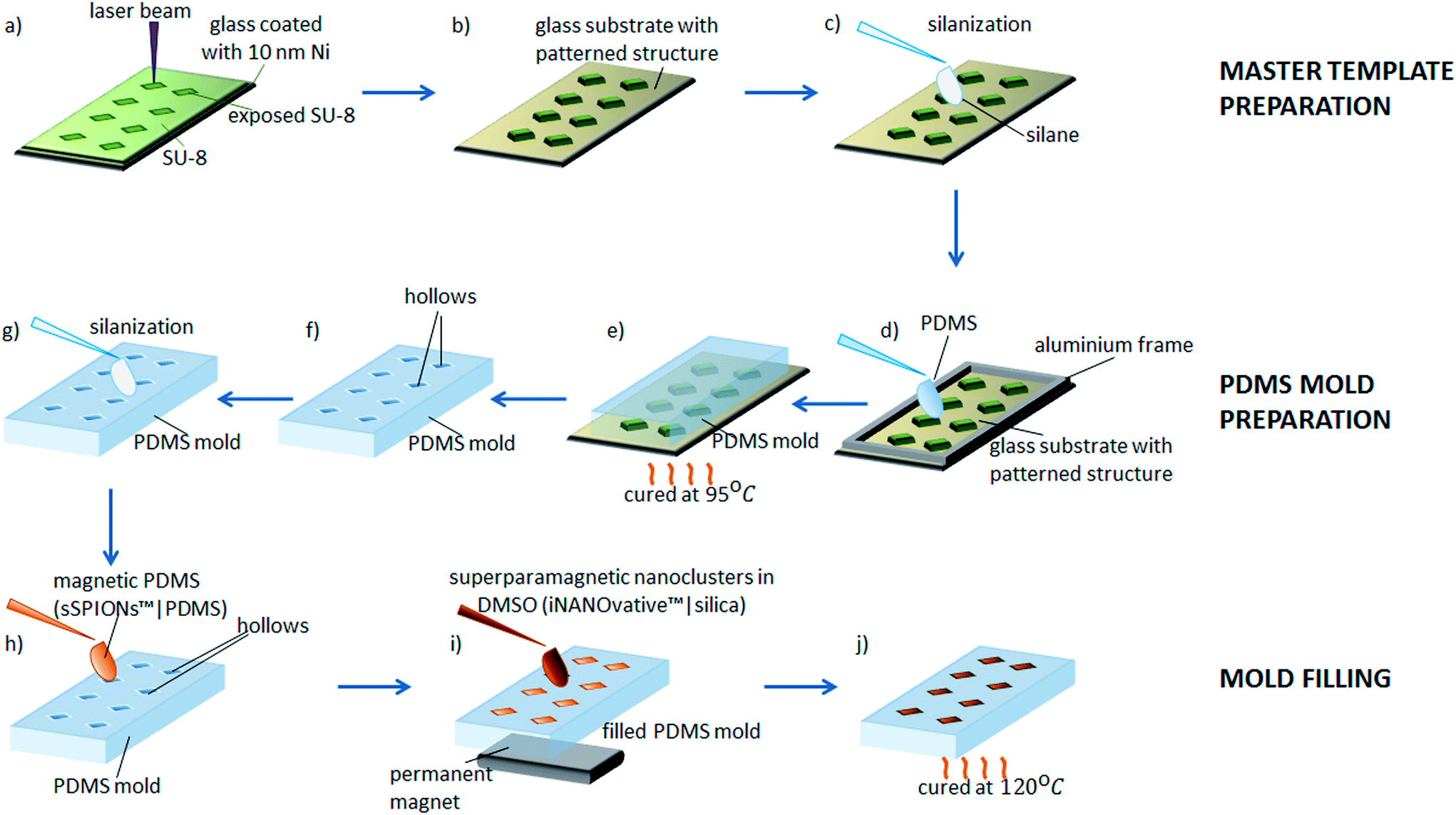 | ||
| Fig. 1 Fabrication of prism shaped magnetically responsive microparticles: schematic representation of the master template preparation, PDMS mold preparation and mold filling. | ||
 | ||
| Fig. 2 Final steps in the microparticle fabrication process: release of the particles and experimental cell preparation. | ||
• The SU-8 master with the desired patterned structure is fabricated by maskless photolithography, using a micropatterning device based on the direct laser imaging (LDI) system – LPKF ProtoLaser D.32 Besides the quick pattern illumination this approach allows a design of different patterns in relatively short time (much shorter than the time needed for fabricating a new mask). A photoresist is applied on a substrate (glass slide) by standard spin-coating technique forming a film (∼9 μm height – see ESI_1†). For improved adhesion the slide is precoated with a thin (10 nm) layer of nickel deposited by spattering37 (Fig. 1a).
• After exposure, the sample is developed (2 minutes, mr-Dev 600 developer, MicroChemicals) and hardbaked (180 °C, 1 hour) producing a mechanically and chemically stable pattern required for the mold fabrication (Fig. 1b).
• Before PDMS mold preparation, the template surface is silanized (octadecyldimethyl (3-trimethoxysilylpropyl) ammonium chloride; 60% in methanol; ABCR GmbH & Co. KG) in order to facilitate separation of the cured PDMS mold from the patterned substrate (Fig. 1c).
• An aluminium frame (length: ∼20 mm, width: ∼20 mm, height: ∼10 mm, thickness: ∼3 mm; see ESI_2†) is placed on the master template around the structure and filled with uncured PDMS to obtain a cuboid shaped mold for the ease of use (Fig. 1d).
• The sample is baked (90–95 °C, 20–30 min) (Fig. 1e).
• After PDMS cross-linking, the mold is peeled from the master template and is a negative replica of the master structure (Fig. 1f).
• Before filling the microhollows, the mold is silanized for easier release of the microparticles from the mold (Fig. 1g).
• A droplet (30 μl) of commercial magnetic PDMS (sSPIONs™|PDMS) is deposited onto a PDMS mold and the excess material is carefully removed (Fig. 1h). The magnetic PDMS is composed of superparamagnetic maghemite nanoparticles homogeneously dispersed in viscous PDMS and is stable from chemical and colloidal point of view (see ESI_3†).
• The magnetic susceptibility of microparticles prepared with solely the magnetic PDMS is too small to observe interparticle magnetic interaction in an external magnetic field of the order few mT (see ESI_3†). To enhance their magnetic responsiveness the process is supplemented with the additional step of magnetic doping: a droplet (50 μl) of superparamagnetic nanoclusters (iNANOvative™|silica) dispersed in dimethyl sulfoxide (DMSO) is deposited over the structure in PDMS mold (see ESI_3†). The mold is then placed on top of a permanent magnet (B = 1 T, 15 minutes) to magnetically attract the nanoclusters from DMSO into the magnetic PDMS (Fig. 1i).
• The mold is then cured on a hot plate (120 °C, 3 hours minimum) (Fig. 1j).
• After curing the excess material is carefully removed (Fig 2a).
• PDMS mold is treated with plasma (3 min) in order to activate the particles' surface and a droplet (12–15 μl) of positive photoresist (AZ1505, MicroChemicals) is deposited on the mold (Fig. 2b).
• The mold is pressed against a glass slide and cured on a hotplate (95 °C, 60 min). After cooling the mold is gently removed leaving photoresist with an array of microparticles sticking to it surface (Fig. 2c).
• A droplet (30 μl) of 10% aqueous PVA (polyvinyl alcohol, 87–89% hydrolyzed, Sigma Aldrich) is deposited on the structure and the sample is heated on a hotplate (65 °C, 20 min) – water evaporates and the PVA layer solidifies (Fig. 2d).
• The PVA layer containing microparticles is peeled from the substrate. Subsequently the microparticles are released by dissolving PVA in water (500 μl). To prevent particle agglomeration, a 2% BSA (bovine serum albumin, Aldrich) solution is used (Fig. 2e).
• The resulting PVA–water solution is exchanged with ultraclean water by sedimenting the microparticles at the bottom of the centrifuge tube and replacing the upper volume of the liquid. Sedimentation is performed using a permanent magnet (Fig. 2f).
• The water mixture of microparticles (∼9 μm height, see ESI_1†) is used to fill the experimental cell (consisting of spacers and cover glass) by capillary action. Subsequently the experimental cell is sealed with UV glue to prevent evaporation and possible currents (Fig. 2g and h).
• Since the magnetic microparticles are fabricated with magnetic PDMS and superparamagnetic nanoclusters, the saturation magnetization of the doped magnetic PDMS lies between the values of the saturation magnetization of magnetic PDMS (6.2 emu g−1) and the one of superparamagnetic nanoclusters (43.2 emu g−1) and is approx. 15.4 emu g−1. Furthermore, the microparticles demonstrate no remanent magnetization and no coercivity field at room temperature (see ESI_3†).
B Fabrication of non-magnetic SU-8 microgears
The SU-8 microgears are fabricated by maskless photolithography (like the master template for mold preparation) on a standard glass slide coated with a thin layer of Ni. The purpose of the Ni layer is to enable the non-destructive release of the particles from the substrate by etching. The lift-off is achieved with a droplet (50 μl) of etchant, which is left on the structure (20 min) to completely dissolve the Ni layer. The floating particles are picked up with a pipette and placed in a centrifuge tube. The etchant is exchanged with water by sedimenting the particles at the bottom of the tube by centrifugation and replacing the upper volume of the liquid. This process is repeated 4 times. To prevent particle agglomeration, 500 μl of 2% BSA solution is added.C Experimental set-up
The experimental set-up consists of laser tweezers and a magnetic system that generates a rotating magnetic field.Laser tweezers are built around a commercial inverted optical microscope (Zeiss Axiovert 200M, Achroplan 63/0.9W) and are composed of a Nd:YAG laser, acousto-optic deflectors and a beam steering controller (Aresis Tweez). The laser tweezers are used only for positioning of individual microparticles and are switched off during the measurements.
The magnetic system consists of three orthogonal pairs of coils in approximately Helmholtz configuration (for x, y and z directions) powered by a 6-channel computer-controlled current source. The magnetic system offers the possibility to generate rotating magnetic field of adjustable strength and rotation frequency (max 10 mT, 300 Hz).
III. Results and discussion
A Experiments
In Section II we described a method for fabricating non-spherical magnetic microparticles. To demonstrate their application potential we carried out an experiment with magnetic and non-magnetic microgears in aqueous dispersion (Fig. 3b–d). | ||
| Fig. 3 (a) Experimental set-up, (b)–(d) bright field image of microgears in aqueous dispersion: (b) small magnetic microgears (9-tooth), (c) larger magnetic microgears (11-tooth), (d) magnetic (black) and non-magnetic (transparent) microgears on SU-8 micropillars. | ||
The sample containing microgears dispersed in water was placed above the microscope objective in the center of the magnetic system's coil configuration (Fig. 3a, ESI_4†). The substrate was patterned with SU-8 micropillars which served as axes for the microgears. The experiments were performed with one magnetic microgear (9 or 11 teeth, 39 μm and 46 μm in diameter and 8 μm thick respectively) and with a pair of microgears: one magnetic and one non-magnetic. In both cases dependence of the microgear rotation frequency was measured as a function of the magnetic field strength and its rotation frequency.
At low frequencies the microgear follows the rotation of the field. Above a critical frequency phase slippage occurs and the rotation frequency decreases with increasing field frequency. A similar effect was reported for particles in ferrofluids,38 paramagnetic ellipsoids,39 and beads with a permanent magnetic moment.40
Fig. 4a shows the trajectory of a rotating microgear as a function of time and Fig. 4b its angular velocity as a function of the angle between the field and the gear. The latter clearly shows a half-turn periodicity which indicates that the driving torque is caused by an anisotropic susceptibility. A permanent magnetic moment would, on the contrary, show a full turn periodicity. The angular velocity also shows a small bias in the direction of the rotating field, which can be attributed to magnetic relaxation38 and becomes stronger at higher frequencies.
 | ||
| Fig. 4 Trajectories of a rotating 9-tooth microgear, (ffield = 3 Hz, B = 1.5 mT). (a) Orientation angles of the microgear and the magnetic field as a function of time. (b) The angular velocity of the microgear as a function of the angle between the field and the microgear. A period of π reveals that the torque on the microgear is caused by an anisotropy in the susceptibility. A small bias in the direction of the rotating field (dashed line) is caused by the relaxation of magnetization. | ||
B Theoretical model
To understand the rotation of microgears we propose a model based on the following assumptions: (i) the angular velocity of a microgear in viscous environment is proportional to the magnetic torque acting on it:41
 | (1) |
(ii) If one aligns the coordinate system with the axes of magnetic anisotropy of a gear, the magentization caused by a static field is
 | (2) |
![[B with combining right harpoon above (vector)]](https://www.rsc.org/images/entities/i_char_0042_20d1.gif) = B(cos
= B(cos![[thin space (1/6-em)]](https://www.rsc.org/images/entities/char_2009.gif) α, sinα, 0) the contribution of magnetization described by eqn (2) to the torque on the particle is
α, sinα, 0) the contribution of magnetization described by eqn (2) to the torque on the particle is
 | (3) |
(iii) The magnetization responds to a time dependent field with a relaxation rate 1/τ:
 | (4) |
The following derivation also remains valid if the expression contains a weighted sum of several relaxation processes with different time constants. In the limit of fast relaxation, τ → 0, one can use a linear approximation for B(t′) and eqn (4) simplifies to
 | (5) |
The resulting torque is
 | (6) |
In the limit of a weak anisotropy and fast relaxation the contributions are additive. If the field is rotating such that its direction is given by φfield = ωt, the sum of both torques MA and MR induces a rotation rate
 | (7) |
 | (8) |
 | (9) |
For ω < ωo a phase locked solution, ϕ = const exists and the microgear follows the rotation of the field. Above the critical frequency, phase slippage occurs and the time in which the gear stays behind the field by one period (1/n turn) can be expressed as
 | (10) |
In this time the gear rotates by  and its average angular speed is
 | (11) |
Alternatively, the rotation frequency of the microgear can be expressed as
 | (12) |
This equation will be used to fit the measured frequencies as a function of the field frequency. Without the relaxation term (R = 0) it becomes identical to that derived in ref. 38.
C One magnetic microgear
We measured the average rotation frequency of a small (9 teeth) and a larger (11 teeth) microgear for different field strengths (1, 1.5 and 2 mT), as a function of the applied field frequency (Fig. 5) (ESI_5†: movie1–movie4). The data were reproduced by eqn (12) and show that the microgear rotation frequency and the field frequency have the same value up to a critical frequency, after which the microgear rotation frequency decreases with increasing field frequency. The fitted critical frequencies fo depend quadratically on the strength of the magnetic field fo ∼ B2 as expected if the torque is caused by anisotropy and relaxation, eqn (7). | ||
| Fig. 5 Rotation frequency of a single microgear with 9 teeth (a) and 11 teeth (b) as a function of the field rotation frequency for 3 different field strengths. The continuous lines show the dependence according to eqn (12), fitted to the measured data. The insets show the obtained critical frequency fo plotted against B2, confirming fo ∼ B2. | ||
For the same field strength the critical frequency of the larger microgear is lower than the smaller one. This can be understood as follows. The rotational drag coefficient due to a thin viscous layer between a rotating disc and a surface scales with the fourth power of the radius, γ ∼ r4. With the volume of a microgear V ∼ r2 and the assumption that the numerical anisotropy ε is independent of r, eqn (7) predicts ωo ∼ r−2. This would mean that the critical frequencies of the 9- and 11- tooth microgear should differ by a factor of 1.39, which is in good agreement with the measured ratio (Fig. 5) of 1.43.
D Meshed magnetic and non-magnetic microgear
By combining magnetic and non-magnetic microgears more complex configurations can be realized. In the simplest case of two microgears the magneto-responsive gear acted as power-unit for the non-magnetic gear. Fig. 6a shows the rotation frequency of a pair of meshed microgears (9 teeth) for various field strengths (1, 1.5 and 2 mT), as a function of the applied field frequency. | ||
| Fig. 6 (a) Rotation frequency of a pair of microgears (one magnetic and one non-magnetic) with 9 teeth as a function of the field rotation frequency for different field strengths. (b) Comparison of the microgear (circles: one magnetic; squares: pair of microgears) rotation frequency as a function of the field strength for a field rotation frequency 20 Hz. | ||
Fig. 6b shows the microgear rotation frequency (circles – one magnetic microgear and squares – pair of microgears) as a function of the magnetic field strength for the field rotation frequency 20 Hz. The rotation frequency for a pair of microgears is lower than for a single microgear (ESI_5†: movie5, movie6). According to eqn (7) both R and ωo (and fo) are inversely proportional to the drag coefficient γ. One can expect the drag coefficient of two coupled gears to be at least 2γ, which would lead to parameters R/2 and fo/2. Eqn (12) would then predict that the frequency of two gears should be 1/2 that of a single gear at high frequencies and 1/4 at intermediate. In reality the frequency reduction in the presence of a second gear is somewhat higher (Fig. 6b), indicating that the meshed gears have a higher friction coefficient, or possibly an additional elastic interaction which is not included in the model. More complex configurations could be realized by adding further microgears (ESI_5†: movie7).
IV. Conclusions
We have shown that the fabrication of highly magneto-responsive nonspherical microparticles using photo- and soft lithography has the prospect for a number of new materials-based applications. We demonstrated a potential microfluidic application of such microparticles by producing magneto-responsive microgears. These microgears can be driven with a rotating magnetic field. The gear rotation frequency shows a non-monotonous dependence on the field frequency. At low frequencies the gear is phase locked to the field. Above a critical frequency phase slippage occurs and the rotation frequency decreases with increasing field frequency. A simple model reproduces both dynamical regimes. We also demonstrated that magnetic microgears together with non-magnetic ones can be assembled into microtransmissions.Acknowledgements
The authors acknowledge funding by the European Union Seventh Framework Program (FP7) ITN Marie Curie and the Slovenian Research Agency, grant J1-5437. The authors also thank the company Nanos Scientificae d.o.o. (Nanos Sci.; http://www.nanos-sci.com) for kindly provided magnetic PDMS (sSPIONs™|PDMS) and superparamagnetic nanoclusters (iNANOvative™|silica), Dr Petar Panjan from Department of Thin Films and Surfaces (IJS) who prepared the nickel coated substrates, as well as Uroš Jorgačevski who manufactured the aluminium frames.Notes and references
- A. K. Gupta and M. Gupta, Biomaterials, 2005, 26, 3995 CrossRef CAS PubMed.
- Q. A. Pankhurst, J. Connolly, S. K. Jones and J. Dobson, J. Phys. D: Appl. Phys., 2003, 36, R167 CrossRef CAS.
- P. A. Voltairas, D. I. Fotiadis and L. K. Michalis, J. Biomech. Eng., 2002, 35, 813 CrossRef CAS.
- L. Mair, K. Ford, M. R. Alam, R. Kole, M. Fisher and R. Superfine, J. Biomed. Nanotechnol., 2009, 5, 182 CrossRef CAS PubMed.
- L. He, M. Wang, J. Ge and Y. Yin, Acc. Chem. Res., 2012, 45, 1431 CrossRef CAS PubMed.
- Y. Lu, Y. Yin and Y. Xia, Adv. Mater., 2001, 13, 415 CrossRef CAS.
- J. H. Lee, J. W. Jun, S. I. Yeon, J. S. Shin and J. Cheon, Angew. Chem., 2006, 118, 8340 (Angew. Chem. Int. Ed., 2006, 45, 8160) CrossRef PubMed.
- Y. Hu, L. He and Y. Yin, Small, 2012, 8, 3795 CrossRef CAS PubMed.
- B. Kavcic, D. Babic, N. Osterman, B. Podobnik and I. Poberaj, Appl. Phys. Lett., 2009, 95, 023504 CrossRef PubMed.
- J. M. Ng, I. Gitlin, A. D. Stroock and G. M. Whitesides, Electrophoresis, 2002, 23, 3461 CrossRef CAS.
- P. Tierno, R. Golestanian, I. Pagonabarraga and F. Sagues, Phys. Rev. Lett., 2008, 101, 218304 CrossRef.
- A. Ghosh and P. Fischer, Nano Lett., 2009, 9, 2243 CrossRef CAS PubMed.
- M. Wang, L. He and Y. Yin, Mater. Today, 2013, 16, 110 CrossRef CAS PubMed.
- M. Vilfan, A. Potočnik, B. Kavčič, N. Osterman, I. Poberaj, A. Vilfan and D. Babič, Proc. Natl. Acad. Sci. U. S. A., 2010, 107, 1844 CrossRef CAS PubMed.
- D. Babič, C. Schmitt and C. Bechinger, Chaos, 2005, 15, 026114 CrossRef PubMed.
- J. M. Brader, R. Evans and M. Schmidt, Mol. Phys., 2003, 101, 3349 CrossRef CAS.
- T. Sawetzki, S. Rahmouni, C. Bechinger and D. W. M. Marr, Proc. Natl. Acad. Sci. U. S. A., 2008, 105, 20141 CrossRef CAS PubMed.
- G. Kokot, M. Vilfan, N. Osterman, A. Vilfan, B. Kavčič, I. Poberaj and D. Babič, Biomicrofluidics, 2011, 5, 034103 CrossRef PubMed.
- C. F. Brooks, G. G. Fuller, C. W. Frank and C. R. Robertson, Langmuir, 1999, 15, 2450 CrossRef CAS.
- M. Adams, Z. Dogic, S. L. Keller and S. Fraden, Nature, 1998, 393, 349 CrossRef CAS PubMed.
- A. Donev, F. H. Stillinger, P. M. Chaikin and S. Torquato, Phys. Rev. Lett., 2004, 92, 255506 CrossRef.
- B. Mihiretie, J. C. Loudet and B. Pouligny, Europhys. Lett., 2012, 100, 48005 CrossRef CAS.
- J. Zhu and R. C. Hayward, J. Am. Chem. Soc., 2008, 130, 7496 CrossRef CAS PubMed.
- J. H. Park, G. von Maltzahn, L. Zhang, M. P. Schwartz, E. Ruoslahti, S. N. Bhatia and M. J. Sailor, Adv. Mater., 2008, 20, 1630 CrossRef CAS PubMed.
- S. Q. Choi, S. G. Jang, A. J. Pascall, M. D. Dimitriou, T. Kang, C. J. Hawker and T. M. Squires, Adv. Mater., 2011, 23, 2348 CrossRef CAS PubMed.
- B. Wang, H. C. Shum and D. A. Weitz, ChemPhysChem, 2009, 10, 641 CrossRef CAS PubMed.
- D. K. Hwang, D. Dendukuri and P. S. Doyle, Lab Chip, 2008, 8, 1640 RSC.
- J. Nunes, K. P. Herlihy, L. Mair, R. Superfine and J. M. DeSimone, Nano Lett., 2010, 10, 1113 CrossRef CAS PubMed.
- S. Y. Lee and S. Yang, Angew. Chem., 2013, 31, 8318 (Angew. Chem., Int. Ed., 2013, 52, 8160) CrossRef PubMed.
- J. W. Tavacoli, P. Bauër, M. Fermigier, D. Bartolo, J. Heuvingh and O. du Roure, Soft Matter, 2013, 9, 9103 RSC.
- R. Menon, A. Patel, D. Gil and H. I. Smith, Mater. Today, 2005, 8, 26 CrossRef CAS.
- B. Kavcic, D. Babic, N. Osterman, B. Podobnik and I. Poberaj, Microsyst. Technol., 2012, 18, 191 CrossRef CAS.
- Y. Xia and G. M. Whitesides, Annu. Rev. Mater. Sci., 1998, 28, 153 CrossRef CAS.
- B. D. Gates, Q. Xu, M. Stevart, D. Ryan, C. G. Willson and G. M. Whitesides, Chem. Rev., 2005, 105, 1171 CrossRef CAS PubMed.
- Y. Xia, J. Tien, D. Qin and G. M. Whitesides, Langmuir, 1996, 12, 4033 CrossRef CAS.
- I. Wong and C.-M. Ho, Microfluid. Nanofluid., 2009, 7, 291 CrossRef CAS PubMed.
- B. Navinšen and J. Fine, Vacuum, 1986, 36, 711 CrossRef.
- G. Helgesen, P. Pieranski and A. T. Skjeltrop, Phys. Rev. Lett., 1990, 64, 1425 CrossRef.
- P. Tierno, J. Claret, F. Sagues and A. Cēbers, Phys. Rev. E: Stat., Nonlinear, Soft Matter Phys., 2009, 79, 021501 CrossRef.
- X. J. A. Janssen, A. J. Schellekens, K. van Ommering, L. J. van IJzendoorn and M. W. J. Prins, Biosens. Bioelectron., 2009, 24, 1937 CrossRef CAS PubMed.
- J. Happel and H. Brenner, Low Reynolds number hydrodynamics: With special applications to particulate media, Springer, 1983 Search PubMed.
- K. I. Morozov and A. Leshansky, Nanoscale, 2014, 6, 1580 RSC.
Footnote |
| † Electronic supplementary information available: Experimental details and movies. See DOI: 10.1039/c4ra05602g |
| This journal is © The Royal Society of Chemistry 2014 |