
E. Roumeli*a,
A. Avgeropoulosb,
E. Pavlidoua,
G. Vourliasa,
Th. Kyratsic,
D. Bikiarisd and
K. Chrissafis*a
aSolid State Physics Section, Physics Department, Aristotle University of Thessaloniki, 541 24 Thessaloniki, Greece. E-mail: eroumeli@auth.gr; hrisafis@physics.auth.gr
bPolymers' Laboratory, Department of Materials Science Engineering, University of Ioannina, University Campus, 45110 Ioannina, Greece
cDepartment of Mechanical and Manufacturing Engineering, University of Cyprus, 1678 Nicosia, Cyprus
dLaboratory of Polymer Chemistry and Technology, Department of Chemistry, Aristotle University of Thessaloniki, 541 24 Thessaloniki, Greece
First published on 15th September 2014
A comprehensive investigation of the mechanical and thermal property reinforcement of silane-crosslinked polyethylene nanocomposites, containing small amounts of multi-walled carbon nanotubes (MWCNTs) and nanodiamonds (NDs), is presented in this work. Lower filler concentrations allowed a satisfactory dispersion, enabling the successful reinforcement of the matrix in every aspect. As the nanofiller content increased, the formed aggregates enlarged and the performance of the composites became more brittle. The measured stiffness enhancement of all the composites was found to be mainly influenced by the crystalline characteristics of the matrix and filler–matrix adhesion. Moreover, it was concluded that filler dispersion and filler–matrix interactions govern the ultimate strength and toughness behavior of these composites, which were found to slightly increase in minimum filler concentrations. Fractography was employed to study the embrittleness of the composites with higher filler loadings, and the observations revealed that a ductile to brittle transition is caused by a micro-deformation mechanism change in these composites. Furthermore, the prepared composites had a significantly improved thermal conductivity, which was mainly related to their superior specific heat capacity, while a great thermal stability enhancement was also revealed.
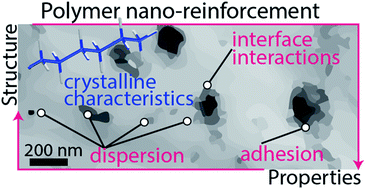
The cornerstone of all these efforts is the thorough and systematic investigation of micro-structure property relationships in the produced nanocomposites.5,13–19 After such a study has been performed, the corresponding hybrids or composites could be re-designed in order to yield materials of preferred performance. Nevertheless, fundamental reports on factors influencing nanocomposites' reinforcement are rather rare and even more so, in polymer nanocomposites.
It has been established that the polymer's crystal structure, molecular weight distribution and macromolecular chain conformation among others, can greatly influence its mechanical properties,20–23 while filler dispersion, purity and adhesion can govern its reinforcement.24–27 Noteworthy progress has also been made in the area of configuring the macromolecular conformation around the nanofiller-rich regions within the matrix, in which different chain dynamics have been reported and therefore, can be crucial to the final reinforcement of the composite.28–32
In the present work, we prepared a series of silane-crosslinked high density polyethylene (PEX) nanocomposites containing small amounts of MWCNTs and nanodiamonds (NDs) using melt-mixing. The mechanical performance and thermal properties of the prepared composites were thoroughly investigated in order to determine the factors governing their final performance. The measured significant stiffness improvement was related to the presence of the filler as well as polymer's microstructural characteristics and filler dispersion and adhesion, while the outstanding thermal conductivity and thermal stability enhancements were related to the presence of the fillers, their geometry, dispersion and interactions with the matrix.
Polyethylene's crosslinking was performed following the two-step silane grafting and water curing process.33 High density polyethylene (HDPE) grafted with vinyl trimethoxysilane (VTMS) (HDPE-g-VTMS) was kindly supplied by Sioplas S.A., Sioplas S.A. and exhibited the following characteristics: average molecular weight per number,
n = 28
000 g mol−1; average molecular weight per weight,
w = 120
200 g mol−1 and intrinsic viscosity, [η] = 1.54 dl g−1. A catalyst masterbatch containing the same HDPE along with dibutyltin dilaurate (DBTDL), internal lubricants, stabilizers and various antioxidants was also supplied by Sioplas S.A. The catalyst, in the step of curing in water at 90 °C for 24 h, accelerates the hydrolysis reaction of the grafted silyl groups and the subsequent condensation of silanols to form siloxane bonds.
Crystallinity calculations of the studied materials were performed by fitting the XRD profiles at the area of 10° < 2θ < 40° with Gaussian–Lorentzian cross product curves and incorporating the fitting parameters in the following expression:35
![]() | (1) |
An estimation of crystal size (lc) was obtained from the DSC data using the Thomson–Gibbs equation:36
![]() | (2) |
In addition, the heat capacity of each sample was determined by temperature modulated differential scanning calorimetry (DSC Q 200, TA Instruments). The samples were heated from 25 °C to 95 °C with an underlying heating rate of 2.5 °C min−1, modulation amplitude of 0.53 °C and a period of 80 s. The value of specific heat capacity at 50 °C was obtained for all the studied materials and used for the determination of thermal conductivity. The thermal conductivity specifically at 50 °C was selected as an intermediate operating temperature in a geothermal piping system.
Fowkes' theory25 is based on two fundamental assumptions: that surface forces and energies are additive and that a geometric mean can be used for the work of adhesion for each type of force/energy. According to that method, the surface free energy (γ) of the solid (subscript, s), liquid (subscript, l) and their corresponding polar and dispersive contributions (superscripts p and d respectively) are related with the measured contact angle (θ) by the following expression:
![]() | (3) |
Other theories have also been proposed falling under the same concept but approaching the problem with alternative mathematical principles. One of the most widely accepted methods for polymer interfacial energy calculations, proposed by Wu,39 combines by a harmonic mean equation the polar and dispersive forces found in polymer matrices. It is based on the following equation applied for 2 liquids of different polarity:
![]() | (4) |
Using both these methods, the specific free energy and its contributions from polar and dispersive forces respectively were evaluated for all the nanocomposites. Moreover, using Girifalco–Good's formula, the interaction parameter (φ) was determined from the following equation.40
![]() | (5) |
In Fig. 1d–f images of the PEX/3 wt% MWCNTs/5 wt% NDs composites are presented. Large NDs/MWCNTs arrays from 200 to 600 nm could be distinguished throughout the whole section. In Fig. 1e and f particularly, some really small NDs aggregations (10–25 nm) were revealed, while most of the NDs present in the section were accumulated in large aligned arrays of 100 nm to 1 μm. A closer observation of the arrayed nanofillers reveals that some MWCNTs are embedded in NDs aggregates (indicated by black arrows) while most of them are arrayed separately in the space between NDs aggregations (indicated by white arrows).
In Fig. 1g and h images of the PEX/5 wt% MWCNTs/3 wt% NDs and PEX/5 wt% MWCNTs/5 wt% NDs composites are presented respectively. The large filler aggregates formation seems inevitable through these images. Both small and rather large filler aggregations can be distinguished. Some single MWCNTs are found to be lying in the matrix (indicated by white arrows), while most of them were again found to be embedded within the large NDs aggregations (indicated by black arrows).
Thus, from the microscopy observations, it was found that while low filler concentrations allow a satisfying dispersion, when their concentration increases, the composites are dominated by large filler aggregations. Therefore, as filler dispersion is a crucial factor which quite often determines the matrix reinforcement, an overall more significant improvement is expected in the lower filler concentrations.
| Material | Elastic modulus (MPa) | Stress at yield (MPa) | Stress at break (MPa) | Elongation at break (%) | Toughness (J m−3) |
|---|---|---|---|---|---|
| Neat PEX | 675 ± 35 | 19.8 ± 0.5 | 22 ± 2.0 | 420 ± 21 | 1893 ± 151 |
| 1 wt% MWCNTs–1 wt% NDs | 765.5 ± 9 | 24.0 ± 0.9 | 23.0 ± 1.8 | 460 ± 40 | 2003 ± 100 |
| 1 wt% MWCNTs–3 wt% NDs | 745 ± 17 | 22.8 ± 0.4 | 17.9 ± 0.9 |
341 ± 10 | 1305 ± 20 |
| 1 wt% MWCNTs–5 wt% NDs | 736 ± 11 | 22.5 ± 0.5 | 17.2 ± 0.8 | 288 ± 65 | 1230 ± 20 |
| 2 wt% MWCNTs–1 wt% NDs | 785 ± 28 | 32.5 ± 0.8 | 20.7 ± 3.1 | 379 ± 100 | 1510 ± 50 |
| 2 wt% MWCNTs–3 wt% NDs | 770 ± 54 | 24.4 ± 2.0 | 17.5 ± 2.3 | 288 ± 20 | 1280 ± 55 |
| 2 wt% MWCNTs–5 wt% NDs | 730 ± 25 | 23.7 ± 0.9 | 16.2 ± 0.8 | 240 ± 60 | 1011 ± 100 |
| 3 wt% MWCNTs–1 wt% NDs | 795.5 ± 16 | 24.3 ± 1.4 | 18.6 ± 1.4 | 350 ± 20 | 1398 ± 520 |
| 3 wt% MWCNTs–3 wt% NDs | 754.3 ± 30 | 23.3 ± 0.8 | 16.4 ± 0.5 | 246 ± 40 | 1130 ± 100 |
| 3 wt% MWCNTs–5 wt% NDs | 722 ± 17 | 22.6 ± 0.9 | 15.4 ± 0.2 | 195 ± 80 | 960 ± 100 |
| 5 wt% MWCNTs–1 wt% NDs | 808 ± 13 | 24.6 ± 0.9 | 18.3 ± 0.9 | 215 ± 60 | 910 ± 100 |
| 5 wt% MWCNTs–3 wt% NDs | 780 ± 25 | 23.4 ± 0.1 | 16.0 ± 1.4 | 180 ± 5 | 825 ± 50 |
| 5 wt% MWCNTs–5 wt% NDs | 756 ± 6 | 22.9 ± 0.3 | 16.2 ± 0.6 | 165 ± 35 | 800 ± 50 |
In the composites with only NDs, a monotonously decreasing trend for the yield stress was found with increasing NDs concentration. This behavior is also found in every set of mixed composites. The composite with 2 wt% MWCNTs/1 wt% NDs had the highest yield strength compared to all the mixed composites, which is 12.7 MPa higher than the neat polymer's. The observed total stiffness reinforcement (factoring in both the elastic modulus and the yield strength) was found to be more significant in the 2 wt% MWCNTs/1 wt% NDs, 5 wt% MWCNTs/1 wt% NDs and 3 wt% MWCNTs/1 wt% NDs.
Our previous findings regarding the strength at break of PEX nanocomposites indicate that the incorporation of a low amount of MWCNTs in PEX leads to a significant reinforcement, while for higher loadings the strength of the composites is almost the same as neat PEX. Furthermore, the incorporation of NDs leads to an even more significant ultimate strength reinforcement for the lowest concentrations, but as their content increases, the reinforcement monotonously decreases, reaching values notably lower than PEX. In the mixed composites, increasing NDs content tends to monotonously decrease their ultimate strength, while a similar effect was found with increasing MWCNTs content. Therefore, the composites with the lowest amounts of MWCNTs and NDs have the highest strength at break, which is lower in any case that the corresponding strength of the composites with only one type of filler.41,42 Besides that, the strength of all the composites, except the one with 1% MWCNTs −1% NDs, is lower compared to neat PEX.
The elongation at break values clearly decrease with increased MWCNTs and NDs contents. However they are higher compared to the composites with the corresponding amount of MWCNTs,41 but lower than those with the corresponding NDs concentration.42 This fact highlights that the presence of spherical NDs does help in maintaining a high level of plasticity, but the presence of elongated MWCNTs is bound to interfere with that effect, leading to drastic reductions of the possible elongation prior to failure. This may be due to fact that the shape of MWCNTs and their aggregates is more irregular than that of NDs and penetrates more bulk polymer area, resulting in more nanoconfined regions in which the macromolecular chains have disturbed functionality and dynamics and therefore more of them cannot follow their normal deformation route.30,43,44 The same conclusion can be drawn if the MWCNTs incorporation into PEX is seen through the prism of the far more defects caused in the matrix, as the MWCNTs penetrate more crystallites than NDs.
Considering the observed strength at yield, strength at break and elongation at break behaviors, the toughness behavior can be justified. The nanocomposites with the lowest MWCNTs content (1–2 wt%) and 1 wt% NDs have the highest toughness, which is decreasing with increasing NDs loading. Nonetheless, only the nanocomposite with 1 wt% MWCNTs and 1 wt% NDs has higher toughness than neat PEX. The composites with higher MWCNTs content have much lower toughness which is again decreasing with increasing NDs concentration. The inferior toughness of the composites with increased filler concentrations, which can also be seen through the selected stress–strain curves in Fig. 2, points to a ductile to brittle transition on their fracture behavior. The higher filler content results in a notably more brittle deformation response. Therefore, from the tensile testing results, a possible deformation mechanism change can be proposed as the main reason for the observed ductile to brittle transition of the composites.20,27,43,45,46 As a possible deformation mechanism change can be revealed through fractography images, a thorough examination of the composites' fractured surfaces was performed and will be presented in the following section.
The tensile testing findings suggest that when MWCNTs and NDs are incorporated into PEX, the stiffness of the matrix is significantly increased but the ultimate strength and toughness are only slightly increased in the case of the minimum filler concentrations in which filler dispersion was found to be better. As the nanofiller content increases, the fracture performance of the composites becomes more brittle. Even though all the mixed composites had a notably higher stiffness compared to neat PEX, their overall reinforcement was less significant compared to the composites with only one type of filler. The different stiffness and toughness behavior of the nanocomposites suggests that these properties are probably also influenced by different factors besides the presence of the fillers and their dispersion. In the following sections, the matrix crystalline characteristics along with filler dispersion and adhesion effects on the mechanical properties of the mixed nanocomposites will be evaluated and a thorough examination of the fracture behavior of the composites will be presented.
Regarding the influence of crystal size on the yield strength of the composites, the calculated values which are presented in Fig. 4, reveal that all the composites had larger crystal size, compared to the neat polymer. Even though a monotonously decreasing trend with increasing NDs concentration was not detected by these calculations, the fact that a larger mean crystal size was found for all of the composites, supports their enhanced yield strength.20–23 Thus, the stiffness reinforcement, which is due to the presence of the fillers, seems to have a clear connection with the crystalline characteristics of the prepared nanocomposites. The higher crystallinity and enlarged crystals positively influence the stiffness of these composites.
It has been proposed that an increase in the yield strength can also be caused by a decrease of macromolecular chain mobility, and therefore, yield strength may serve as a qualitative measure of macromolecular chain mobility.51,52 In the present case we detected a higher yield strength and larger crystal size for all the nanocomposites, compared to the neat polymer, which can be rationalized in the following way: larger crystals lead to large nanoconfined areas within the bulk of the polymer, in which macromolecular mobility is restricted,30–32 and hence, this can support the observed higher yield strength of the composites. Moreover, the larger crystals can bear more adequately the externally applied load, supporting a more efficient load transfer in the composites, due to the presence of the fillers.34
![]() | (6) |
![]() | ||
| Fig. 5 Elastic modulus experimental (symbols) and fitted values (lines) using Einstein's model and adhesion parameter variation against NDs concentration. | ||
The intermolecular filler–matrix interactions can be indirectly evaluated through the liquid–solid surface interaction parameters, as calculated through the contact angle results analyses previously presented. In Table 2 the results of contact angle measurements and specific free energy analyses are summarized. For every set of composites, the contact angle values using water droplets were found to be higher than the corresponding one of neat PEX, in agreement with our previous findings on PEX/NDs composites.42 Therefore, the weak hydrophilic nature of PEX was found to be converted to hydrophobic as a consequence of nanofillers incorporation, even if no straightforward increasing contact angle trend could be revealed.
| Material | Contact angle (°) | Fowkes specific free energy contributions (J m−2) | Wu specific free energy contributions (J m−2) | Interactions parameter | |||||
|---|---|---|---|---|---|---|---|---|---|
| Water | CH2I2 | Total | Dispersive | Polar | Total | Dispersive | Polar | ||
| Neat PEX | 80.4 ± 3.8 | 55.4 ± 3.3 | 32.7 ± 4.4 | 25.6 ± 2.2 | 7.3 ± 2.1 | 39.2 ± 3.4 | 27.7 ± 1.5 | 11.6 ± 1.8 | 0.25 |
| 1 wt% MWCNTs–1 wt% NDs | 101.2 ± 6.1 | 61.3 ± 1.7 | 27.5 ± 2.9 | 26.9 ± 1.9 | 0.7 ± 1.0 | 29.9 ± 3.8 | 26.6 ± 1.4 | 3.3 ± 2.4 | 0.34 |
| 1 wt% MWCNTs–3 wt% NDs | 106.6 ± 2.6 | 48.0 ± 2.0 | 37.8 ± 7.11 | 38.0 ± 5.7 | 0.2 ± 1.4 | 37.4 ± 1.6 | 37.4 ± 1.5 | 0.0 ± 0.1 | 0.19 |
| 1 wt% MWCNTs–5 wt% NDs | 105.7 ± 1.7 | 46.7 ± 1.0 | 38 ± 0.89 | 37.9 ± 0.8 | 0.0 ± 0.1 | 37.6 ± 3.3 | 37.5 ± 2.5 | 0.1 ± 0.8 | 0.18 |
| 2 wt% MWCNTs–1 wt% NDs | 97.1 ± 4.6 | 56.8 ± 1.0 | 30 ± 2.33 | 28.9 ± 1.3 | 1.1 ± 0.9 | 32.7 ± 2.6 | 28.2 ± 0.8 | 4.5 ± 1.8 | 0.28 |
| 2 wt% MWCNTs–3 wt% NDs | 106.9 ± 2 | 47.7 ± 2.0 | 37.7 ± 1.53 | 37.6 ± 1.4 | 0.1 ± 0.1 | 38.6 ± 7.3 | 38.9 ± 6.1 | −0.4 ± 1.3 | 0.19 |
| 2 wt% MWCNTs–5 wt% NDs | 102.5 ± 1 | 47.7 ± 0.9 | 36.4 ± 0.68 | 36.4 ± 0.6 | 0.0 ± 0.6 | 36.0 ± 1.1 | 34.4 ± 0.7 | 1.6 ± 0.4 | 0.19 |
| 3 wt% MWCNTs–1 wt% NDs | 87.5 ± 4.5 | 58.5 ± 1.5 | 29.8 ± 3.37 | 25.4 ± 1.5 | 4.4 ± 1.9 | 35.2 ± 2.7 | 26.6 ± 0.8 | 8.7 ± 1.9 | 0.29 |
| 3 wt% MWCNTs–3 wt% NDs | 110.2 ± 2 | 46.4 ± 1.7 | 39.8 ± 1.55 | 39.4 ± 1.3 | 0.4 ± 0.3 | 35.0 ± 1.6 | 30.0 ± 0.8 | 5.0 ± 0.8 | 0.19 |
| 3 wt% MWCNTs–5 wt% NDs | 104.5 ± 1.3 | 51.5 ± 1.4 | 34.2 ± 1.06 | 34.2 ± 1.1 | 0.0 ± 0.1 | 34.1 ± 1.7 | 33.0 ± 1.1 | 1.1 ± 0.5 | 0.23 |
| 5 wt% MWCNTs–1 wt% NDs | 103.6 ± 1.2 | 56.1 ± 1.2 | 31.2 ± 0.96 | 31.0 ± 0.9 | 0.1 ± 0.1 | 31.9 ± 1.3 | 30.0 ± 0.8 | 1.9 ± 0.5 | 0.28 |
| 5 wt% MWCNTs–3 wt% NDs | 109.4 ± 3.6 | 51.3 ± 2.0 | 36 ± 1.92 | 35.8 ± 1.7 | 0.1 ± 0.3 | 35.0 ± 2.4 | 30.0 ± 1.0 | 5.0 ± 1.4 | 0.23 |
| 5 wt% MWCNTs–5 wt% NDs | 111.5 ± 1.3 | 57.2 ± 1.2 | 32.4 ± 0.98 | 32.3 ± 0.9 | 0.1 ± 0.1 | 28.7 ± 18.5 | 29.8 ± 16.3 | −1.1 ± 2.2 | 0.3 |
For the PEX/1 wt% MWCNTs/1–5 wt% NDs composites, specific free energy as calculated using Fowkes' and Wu's formulas, was found to be increasing with increasing NDs content while remaining lower than neat PEX. The values of the dispersive and polar contributions to specific free energy calculated by using both methods are also listed in Table 2. The results reveal a clear trend caused by the NDs presence: while the dispersive forces clearly become higher when NDs concentration increases, the polar forces are almost eliminated. For all the other mixed-filler composites, similar conclusions can be drawn. The balance of dispersive and polar forces contribution to specific free energy follows the same scheme as in the previously discussed composites.
In the case of the mixed nanocomposites, a straightforward correlation of the interfacial interactions with the measured strength and toughness is not always possible as was in the case with only NDs.42 Due to the fact that the polar forces contribution to the specific free energy of the composites was found to be negligible, only the dispersive interactions parameter should be considered in such an investigation. A decreasing trend of the interaction parameter with increasing NDs content was detected in almost every set of composites. This finding may be explained by the fact that as filler content increases, more and larger filler aggregations are formed, as evidenced from the microscopy observations, leading to an overall lower matrix–filler interaction possibility.
The composite with 1 wt% MWCNTs/1 wt% NDs had the highest interaction parameter values, which implies that these enhanced interactions can support the superior ultimate strength and toughness found in this composite from the tensile experiments. Moreover, the general trend of decreasing dispersive interactions parameter with increasing NDs concentration which was found in all the composites, can also be correlated with their measured strength and toughness decrease. In some composites this behavior is less pronounced or not straightforward, like in the PEX/3 wt% MWCNTs/1–5 wt% NDs composites, but the general conclusion remains the same. Particularly for the PEX/3 wt% MWCNTs/1–5 wt% NDs composites, the fact that through TEM images presented in Fig. 1d–f, the fillers aggregations were found to form large arrays, suggests that their mechanical behavior might be more complicated and affected mainly by filler dispersion. Similarly, the large filler aggregations which are formed in the PEX/5 wt% MWCNTs/1–5 wt% NDs composites suggest that their mechanical performance will most probably be governed by their poor dispersion and large aggregation state, rather than their seemingly high interaction parameter. Indeed, the dispersive interactions parameter variations with NDs concentration cannot be linearly related to the measured significant decrease of the composites' toughness.
More specifically, the exterior of composites with low filler concentrations (Fig. 6a and b) appears rather smooth with the small and shallow crack openings. Higher filler concentrations (Fig. 6c and d) result in rougher surfaces dominated by notably larger and deeper cracks. A closer look-up of the outer surface of a PEX/1% MWCNTs–5%NDs specimen shown in Fig. 6d reveals a deep 600 μm crack opening along with other smaller cracks in the applied force direction. The large depth of the crack opening and the abrupt cut of the material's fibrils along with their small deformation degree can also be seen through that image.
![]() | ||
| Fig. 6 Fractured specimens of PEX with: (a) 1% MWCNTs/1% NDs, (b) 2% MWCNTs/1% NDs, (c) 2% MWCNTs/5% NDs and (d) 1% MWCNTs/5% NDs. | ||
Another critical factor which is changed as a consequence of filler concentration is the fibrillar density and the corresponding degree of fibrils' deformation prior to failure. As evidenced from Fig. 7a and b, the polymer's dense fibrillar structure was maintained for the low filler composites, while the fibrils appear to have experienced significant deformation prior to failure. This suggests that the main energy-absorbing mechanism, which is shear banding in these cases (Fig. 7a and 8a, b) is efficiently functioning thus allowing a large material strain response and a ductile performance.45 As the filler concentration increased (Fig. 7c–h), the polymer fibrils appear to have been abruptly cut while experiencing a significantly smaller deformation degree. This observation points out that failure had occurred fast, prior to notable deformation and therefore, these composites have a brittle fracture performance.
Another major difference in the fracture behavior of the composites with low and higher filler loadings is their deformation mechanism. Apparently, for the low filler concentration composites, shear banding is the predominant deformation mechanism (Fig. 8a and b), while for higher filler loadings, crazing becomes the principle fracture mechanism (Fig. 8c and d). Shear banding can be related to the higher ductility of the samples with low filler content, while crazing denotes more brittle composites.45
Through fractography observations, many nanotubes and polymer-covered nanotubes were found to either be hanging from the cut edges, or bridging the separated polymer lumps, thus highlighting the sufficient load transfer between the fillers and the matrix (Fig. 9a–c) as also suggested by other groups for polymer/nanotubes composites.54,55
In some composites with high filler content, the fractography observations indicate the possibility that fracture occurred in the nanoconfined filler-aggregation areas (Fig. 9d–f). The aggregates act as stress concentrators prohibiting the efficient load carrying over the formed cracks and thus, leading to lower toughness and premature failure. This is plausible as in the nanoconfined regions the fluctuating density and hindered chain mobility can lead to severely different deformations of the molecular chains and therefore, premature failure.44 The images also reveal that in the highly loaded composites, the surrounding matrix in the crack opening is not severely deformed (Fig. 7e, g, 8d and 9d), confirming that crack coalescence progressed rather fast, before significant strain was achieved.
Therefore, from the study of the stretched specimens of the mixed composites, it was confirmed that increasing filler content leads to a toughness decrease and a more pronounced embrittlement of the polymer. It was also suggested that the premature failure occurs in the large filler aggregations which constitute stress concentrators. The tensile testing finding that increasing filler concentration leads to a ductile to brittle transition in the composites was confirmed and related to a micro-deformation mechanism transformation, from shear banding to crazing.
| Material | Thermal diffusivity (mm2 s−1) | Cp (J g−1 K−1) | Thermal conductivity (W m−1 K−1) |
|---|---|---|---|
| Neat PEX | 0.165 ± 0.001 | 1.18 ± 0.09 | 0.17 ± 0.010 |
| 1 wt% MWCNTs–1 wt% NDs | 0.175 ± 0.002 | 2.23 ± 0.04 | 0.34 ± 0.005 |
| 1 wt% MWCNTs–3 wt% NDs | 0.179 ± 0.001 | 2.47 ± 0.02 | 0.41 ± 0.005 |
| 1 wt% MWCNTs–5 wt% NDs | 0.191 ± 0.002 | 2.43 ± 0.04 | 0.44 ± 0.080 |
| 2 wt% MWCNTs–1 wt% NDs | 0.183 ± 0.001 | 2.21 ± 0.17 | 0.38 ± 0.030 |
| 2 wt% MWCNTs–3 wt% NDs | 0.192 ± 0.002 | 2.20 ± 0.04 | 0.38 ± 0.005 |
| 2 wt% MWCNTs–5 wt% NDs | 0.185 ± 0.001 | 2.50 ± 0.18 | 0.42 ± 0.035 |
| 3 wt% MWCNTs–1 wt% NDs | 0.177 ± 0.002 | 2.62 ± 0.06 | 0.43 ± 0.010 |
| 3 wt% MWCNTs–3 wt% NDs | 0.178 ± 0.001 | 2.76 ± 0.07 | 0.44 ± 0.010 |
| 3 wt% MWCNTs–5 wt% NDs | 0.182 ± 0.001 | 2.58 ± 0.21 | 0.45 ± 0.035 |
| 5 wt% MWCNTs–1 wt% NDs | 0.191 ± 0.001 | 2.00 ± 0.31 | 0.34 ± 0.050 |
| 5 wt% MWCNTs–3 wt% NDs | 0.187 ± 0.002 | 2.18 ± 0.21 | 0.38 ± 0.040 |
| 5 wt% MWCNTs–5 wt% NDs | 0.183 ± 0.001 | 2.34 ± 0.42 | 0.38 ± 0.070 |
Such a reinforcement combined with improved mechanical performance can be considered substantially satisfactory from an industrial point of view since, e.g. in an under-floor piping installation a thermal conductivity increase higher than 50% leads to an overall cost depreciation in less than two years.
In Fig. 10a the mass loss curves of the nanocomposites with 1 wt% MWCNTs/1–5 wt% NDs are presented. An obvious progressive increase in the thermal stability was found with increasing NDs content, presenting the same trend as the one detected regarding the thermal conductivity of the composites. The temperatures at which the sample has experienced a mass loss of 0.5 and 1% respectively, denoted as T0.5 and T1, are often used as thermal stability indications. In the present case, a progressive increase of 16.9, 26.7 and 28.7 °C was found for the T0.5 with increasing NDs concentration, while the corresponding increase of T1 was 12.7, 21 and 26 °C respectively. The observed progressive significant thermal stability enhancement can be attributed to the formation of more nanoconfined regions around the nanofillers, in which the local density fluctuations and hindered macromolecular chain mobility lead to a chemical reactivity decrease.30 Therefore, it is reasonable that an increased filler concentration would lead to a thermal stability increase. The mass residue of the measured samples also follows the expected increasing trend as the nanofillers are left as solid residues while polymer decomposes completely.
In Fig. 10b the mass loss curves of the nanocomposites with 2 wt% MWCNTs/1–5 wt% NDs are presented. Again, a noteworthy enhancement of the thermal stability can be seen in all of these composites. Even though the differences in the mass loss curves of PEX/2 wt% MWCNTs/3 wt% NDs and PEX/2 wt% MWCNTs/5 wt% NDs are extremely small, a clear thermal stability increase can be seen both of them. In details, the T0.5 increase was found to range between 10.8–19.6 °C for the three composites while the T1 increase was 11–14.3 °C. The mass residue also confirmed the presence of the nanofillers in the matrix.
In Fig. 10c the mass loss curves of the nanocomposites with 3 wt% MWCNTs/1–5 wt% NDs are shown, presenting the highest thermal stability enhancement found in the studied composites. Even though the differences between the mass loss curves of the three composites are very small, they still point out the significant effect that the combination of MWCNTs and NDs have on PEX matrix. The measured T0.5 increase was 20.5, 33.1 and 35.2 °C for increasing NDs concentration while T1 increased 16.3, 24.6 and 26.5 °C respectively. In this case also the mass residue was found to follow the expected increasing trend with increasing filler content. It is noteworthy that these particular composites presented the more significantly enhanced thermal stability and thermal conductivity of all the composites.
Finally, the mass loss curves of PEX/5 wt% MWCNTs/1–5 wt% NDs composites are shown in Fig. 10d revealing again a notable thermal stability enhancement of PEX. The T0.5 increase varied between 9.5–16.5 °C while the T1 increase ranged between 6.3–13.7 °C. In this case also the final residues of the measured samples followed the expected increasing trend with increasing filler content. Therefore, from the thermogravimetry measurements, it was revealed that the presence of MWCNTs and NDs leads to a great enhancement of the thermal stability of PEX, which can be explained in the framework of the increased nanoconfined areas within the matrix.
From the thermal behavior of the mixed composites, a modest increase in thermal diffusivity and a notable increase in specific heat capacity with increasing NDs concentration were found to yield a significant thermal conductivity improvement. Furthermore, the presence of MWCNTs and NDs led to a great enhancement of the thermal stability of PEX, which can be explained in the framework of the increased nanoconfined areas within the matrix.
| This journal is © The Royal Society of Chemistry 2014 |