An Efficient synthesis of Weinreb amides and ketones via palladium nanoparticles on ZIF-8 catalysed carbonylative coupling

Tuan Thanh Dang, Anqi Chen and Abdul Majeed Seayad*
Institute of Chemical and Engineering Sciences, 8 Biomedical Grove, #07-01 Neuros, Singapore 138665. E-mail: abdul_seayad@ices.a-star.edu.sg; Fax: +65-6464-2102; Tel: +65-6799-8527

Received 16th May 2014 , Accepted 23rd June 2014

First published on 24th June 2014


Abstract

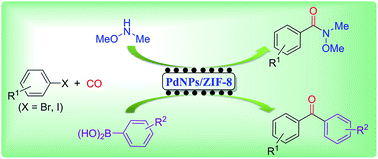
Heterogeneously catalysed carbonylative coupling reactions such as aminocarbonylation and Suzuki-carbonylation are reported using Pd nanoparticles supported on ZIF-8 for efficient and environmentally attractive synthesis of Weinreb amides and ketones from aryl bromides or iodides. The catalyst is air stable, offers high activity with very low palladium leaching and is recyclable. The presence of a phosphine ligand was required when aryl bromides were used as substrates, while no ligand was necessary when aryl iodides were used.

Introduction

Carbonylative coupling is an environmentally attractive three-component methodology to synthesize several value added carbonyl functionalised compounds such as carboxylic acid/esters, amides, ketones, etc. from readily available starting materials.1 Among the amides, an important class is the Weinreb amides (N-methoxy-N-methyl amides) that are widely used as acylating agents to afford a variety of value added carbonyl compounds having applications in the syntheses of complex natural products, pharmaceuticals and fine chemicals.2 In the conventional method, Weinreb amides are produced by the direct reaction of N,O-dimethylhydroxyamine hydrochloride (DMHA·HCl) with an acid chloride in the presence of a base.3 Other acid derivatives such as anhydrides, lactones, esters and amides could also be used.2,4 Direct reaction of carboxylic acids with DMHA could be a simple alternative, however this requires various coupling agents to generate the activated carbonyl component for coupling,5 thus making it environmentally unattractive. Under this context, the aminocarbonylation6 strategy in which an activated metal–acyl complex is catalytically generated in situ for coupling with DMHA offers an environmentally benign method for Weinreb amide synthesis. In spite of its advantages only a few reports7–10 are available on this promising reaction, mainly using homogeneous palladium catalysts.

Buchwald and co-workers7 reported an efficient catalyst system comprising of Pd(OAc)2 in the presence of Xantphos as a ligand to afford a variety of Weinreb amides in up to 99% yield from the corresponding aryl bromides under atmospheric pressure of carbon monoxide at 80 °C. The same catalyst system was used by Odell and co-workers8 in the presence of Mo(CO)6 or W(CO)6 as a carbon monoxide source under microwave irradiation conditions and by Venturello and co-workers9 to synthesise α,β-unsaturated Weinreb amides from the corresponding heterocyclic triflates. Recently, Kollár and co-workers reported Pd(OAc)2 in the presence of PPh3 as an alternative homogeneous catalyst for aryl and alkeny iodides as substrates, however at 40–60 bar pressure of carbon monoxide.10 Most of these homogeneously catalyzed aminocarbonylation reactions to synthesize Weinreb amides have the obvious disadvantage of separation of the catalyst from the product and its subsequent recycle. In addition, small amounts of palladium residues in the product would be a concern for pharmaceutical applications. Hence, an efficient heterogeneous catalyst system is required to make this promising aminocarbonylation strategy as an industrially viable and sustainable alternative route to Weinreb amide synthesis. However, to the best of our knowledge, a promising heterogeneous catalyst system for this purpose is not reported so far. Recently, we have reported palladium nanoparticles supported on MOF-5 (Metal Organic Framework)11 and ZIF-8 (Zeolitic Imidazolate Framework)12 as promising heterogeneous catalysts for the synthesis of various amides under aminocarbonylation conditions.13 Herein, we report an easy and environmentally attractive synthesis of various functionalised Weinreb amides from the corresponding aryl bromides or iodides following aminocarbonylation strategy in the presence of recyclable palladium nanoparticles supported on ZIF-8 (Pd/ZIF-8) as an efficient catalyst. The efficiency of the catalyst system was also demonstrated for the synthesis of ketones using Suzuki-carbonylation strategy.

Results and discussion

An initial investigation showed that synthesis of the Weinreb amide, N-methoxy-N,4-dimethylbenzamide (2a) could be achieved in up to 72% yield from p-bromotoluene (1a) as a standard substrate and DMHA·HCl using 1 wt% Pd/ZIF-8 (ref. 14) as the catalyst in the presence of dpePhos as a ligand and K2CO3 as a base at 3 bar of carbon monoxide and 105 °C after 12 h of reaction (Table 1, entry 1).
Table 1 Optimizations of aminocarbonylation of p-bromotoluene with N,O-dimethylhydroxyamine hydrochloridea

image file: c4ra04614e-u1.tif

Entry Base PCO (bar) Ligand Catalyst Yieldb (%)
a Conditions: p-bromotoluene (1a, 1 mmol), N,O-dimethylhydroxyamine hydrochloride (DMHA·HCl, 1.5 mmol), 1 wt% Pd/ZIF-8 (24 mg, 0.21 mol%), ligand (1 mol%), K2CO3 (2.5 equiv.), toluene (2 mL) 105 °C, 12 h.b Yield was determined by 1H-NMR using mesitylene as an internal standard.c p-Iodotoluene (1a′) was used as the substrate.
1 K2CO3 3 dpePhos Pd/ZIF-8 72
2 K2CO3 3 PPh3 Pd/ZIF-8 12
3 K2CO3 3 dppf Pd/ZIF-8 38
4 K2CO3 3 dppp Pd/ZIF-8 14
5 K2CO3 3 BINAP Pd/ZIF-8 19
6 K2CO3 3 Xantphos Pd/ZIF-8 >99
7 K2CO3 1 Xantphos Pd/ZIF-8 99
8 Na2CO3 1 Xantphos Pd/ZIF-8 96
9 K3PO4 1 Xantphos Pd/ZIF-8 23
10 Et3N 1 Xantphos Pd/ZIF-8 68
11 (i-Pr)2NEt 1 Xantphos Pd/ZIF-8 92
12 K2CO3 1 Xantphos Pd/MOF-5 95
13 K2CO3 1 Xantphos Pd/MCM-41 75
14 K2CO3 1 Pd/ZIF-8 92c
15 K2CO3 3 Pd/ZIF-8 >99c


A ligand optimization study (Table 1) showed that, under these conditions, common ligands such as PPh3, dppf, dppp, and BINAP provided lower yields (<40%) of the desired product (entries 2–5), while quantitative yield was achieved when Xantphos was used as the ligand. To our delight, near quantitative yield was also achieved even at 1 bar pressure of carbon monoxide using Xantphos as the ligand (entry 7). Among the bases screened, K2CO3 performed the best and Na2CO3 was also effective with only a slight decrease in the yield (96%). However, when K3PO4 was used, the yield decreased drastically to 23%. Soluble organic bases can also be used and up to 68% and 92% yields were observed in the presence of triethylamine and Hünig base, respectively. Pd/MOF-5 as a catalyst gave a comparable yield of 95%, while Pd/MCM-41 gave a lower yield of 75%. Interestingly, no ligand was necessary when p-iodotoluene (1a′) was used as the substrate at atmospheric pressure of CO and up to 92% yield was achieved at 1 bar of carbon monoxide and was increased to quantitative yield upon increasing the pressure to 3 bar.

Next, we applied these optimized conditions to explore the synthesis of various functionalized Weinreb amides from the corresponding functionalized aryl bromides and iodides. Initially, relatively inexpensive and readily available aryl bromides were chosen as substrates in the presence of Xantphos ligand at 3 bar pressure of carbon monoxide to ensure higher conversion when less reactive aryl bromides were also used (Table 2). Good to excellent isolated yields were obtained with unsubstituted (1b) and para-substituted (1a, 1c, and 1g–k) aryl bromides. Sterically demanding o-Me substituted aryl bromide (1d) gave up to 75% yield of 2d. Mono- and multi-methoxy substituents at various positions of the aromatic ring (1e and 1f) were well tolerated and the corresponding Weinreb amides 2e and 2f were obtained in 94–96% yields.

Table 2 Synthesis of Weinreb amides from aryl bromides using Pd/ZIF-8 catalyzed aminocarbonylationa

image file: c4ra04614e-u2.tif

a Conditions: aryl bromide (1(a–o), 1 mmol), N,O-dimethylhydroxyamine hydrochloride (DMHA·HCl, 1.5 mmol), 1 wt% Pd/ZIF-8 (24 mg, 0.21 mol%), Xantphos (1 mol%), K2CO3 (2.5 equiv.), toluene (2 mL), CO (3 bar), 105 °C, 12 h. Isolated yields are given.b Incomplete conversion observed.
image file: c4ra04614e-u3.tif


Presence of other halogen atoms such p-Cl and p-F was also tolerated and the products 2g and 2h were formed in 95% and 77% yields, respectively. Electron withdrawing NO2 substituent gave 2i in good yield of 79%, whereas up to 98% yield of 2j was achieved from p-CN substituted aryl bromide. Unprotected amino (1k), aldehyde (1l) and keto (1m) groups at para position were well tolerated and the corresponding Weinreb amides 2k, 2l and 2m were obtained in 68%, 84% and 78%, respectively, demonstrating good functional group compatibility of the catalyst system. Heteroaromatic Weinreb amides 2n and 2o were also easily obtained in excellent yields from the corresponding heteroaryl bromides 1n and 1o using the present catalyst system.

More reactive aryl iodides as the substrate did not require phosphine ligands under the present aminocarbonylation conditions and various functionalized Weinreb amides were obtained in good to excellent yields at 3 bar pressure of carbon monoxide at 105 °C as shown in Table 3. Similar to the case of aryl bromides, several functional groups were tolerated including nitro (2i), hydroxy (2p), and carbonyl (2q) groups.

Table 3 Synthesis of Weinreb amides from aryl iodides using Pd/ZIF-8 catalyzed aminocarbonylationa

image file: c4ra04614e-u4.tif

a Conditions: aryl iodide (1 mmol), N,O-dimethylhydroxyamine hydrochloride (DMHA·HCl, 1.5 mmol), 1 wt% Pd/ZIF-8 (24 mg, 0.21 mol%), Xantphos (1 mol%), K2CO3 (2.5 equiv.), toluene (2 mL), CO (3 bar), 105 °C, 12 h. Isolated yields are given.b Incomplete conversion observed.
image file: c4ra04614e-u5.tif


Interestingly, bromide as a functional group was well tolerated under ligand free condition and the para- and meta-bromo-substituted Weinreb amides 2r and 2s were obtained in up to 88% isolated yields. The bromo-substituted Weinreb amides can be further functionalized using common protocols to afford several value added products and intermediates. For instance, 4-bromobenzophenone (3) was prepared in 82% isolated yield from 4-bromo-N-methoxy-N-methylbenzamide (2r) by reaction with phenyl magnesium bromide (Scheme 1) and was further coupled with acetamide using copper catalyst15 affording N-(4-benzoylphenyl)acetamide (4), an intermediate for the synthesis of Mebendazole16 (5), which is an anthelmintic drug.


image file: c4ra04614e-s1.tif
Scheme 1 Synthesis of Mebendazole from 4-bromo-N-methoxy-N-methylbenzamide.

Direct synthesis of ketone is possible if DMHA·HCl is replaced with a suitable coupling partner. Accordingly, Suzuki-carbonylation17 was examined using iodobenzene (6) and p-methoxyphenylboronic acid (7) as the standard substrates under the optimized carbonylation condition using 1 wt% Pd/ZIF-8 as the catalyst in the absence of ligands. As shown in Table 4, the product ketone (8) was obtained in up to 55% yield, however, the biaryl 9 was formed as a side product in substantial amount when inorganic bases were used (entries 1–4, Table 4). To our delight, formation of the 9 by the direct coupling between aryl iodide and aryl boronic acid was completely suppressed when organic bases such as Hünig base and triethylamine were used and the product 8 was obtained in 36% and 42% yields respectively. The yield was further improved to 85% when 6 bar pressure of carbon monoxide was used with the reaction time prolonged to 24 h (entry 7, Table 4).

Table 4 Synthesis of ketone via Suzuki-carbonylation of iodobenzenea

image file: c4ra04614e-u6.tif

Entry Base PCO (bar) Time (h) Yieldb (%)
8 9
a Conditions: iodobenzene (6, 0.5 mmol), p-methoxyphenylboronic acid (7, 1.5 equiv.), 1 wt% Pd/ZIF-8 (24 mg, 0.42 mol%), base (2.5 equiv.), toluene (2 mL) 105 °C.b Yield was determined by GC using hexadecane as an internal standard.c 78% isolated yield.
1 K2CO3 3 12 46 30
2 K3PO4 3 12 55 22
3 Na2CO3 3 12 46 25
4 NaHCO3 3 12 12 4
5 (i-Pr)2NEt 3 12 36 N.d.
6 Et3N 3 12 42 N.d.
7 Et3N 6 24 85c N.d.


With aryl bromide as a substrate, presence of a phosphine ligand was found to be necessary for Suzuki-carbonylation using 1 wt% Pd/ZIF-8 as the catalyst. CataCXium A was found to be one of the best ligands under the present catalyst system in the presence of triethylamine as a base. As shown in Scheme 2, up to 74% yield to the ketone 11 was achieved at 10 bar of carbon monoxide for 18 h at 100 °C from bromobenzene 1b and the boronic acid 10.


image file: c4ra04614e-s2.tif
Scheme 2 Suzuki-carbonylation of aryl bromides.

The 1 wt% Pd/ZIF-8 catalyst was found to be recyclable and no appreciable change in catalytic performance was observed after six cycles for the aminocarbonylation of p-iodotoluene. Very low palladium leaching (<3 ppm) was observed in each run. A filtrate test was carried out to investigate the possible involvement of homogeneously catalysed reaction. No appreciable reaction was observed when the filtrate of an aminocarbonylation reaction, after removing the solid catalyst, was subjected to a second aminocarbonylation reaction by adding fresh reaction mixture. This observation could possibly indicate that the catalytic reaction pathway originating from the leached out palladium leading to a homogeneous pathway may be much less important compared to a heterogeneous pathway.

When aryl bromides were used as a substrate for both amino- and Suzuki-carbonylations, presence of a suitable phosphine ligand was found to be necessary together with 1 wt% Pd/ZIF-8 as the catalyst. The adsorbed phosphine ligand onto palladium nanoparticles could alter the electronic properties to facilitate the activation of less reactive aryl bromides during the initial oxidative addition step.18 Though presence of phosphine ligands could potentially enhance leaching of palladium into solution thereby driving the reaction through homogeneous pathway, low leaching (<4 ppm)13a and efficient recyclability of the catalyst observed shows either such homogeneous pathway is negligible owing to the stability19 of Pd/ZIF-8 catalyst or the efficient re-adsorption of palladium on to the support (ZIF-8) after a potential homogeneous reaction (quasi-heterogeneous catalysis).20 Further mechanistic investigation is necessary to understand the dynamic nature of Pd nanoparticles21 and the appropriate share of heterogeneous and homogeneous reaction pathways in the absence and presence of ligands when Pd/ZIF-8 is used as a catalyst under the present reaction conditions.

The scalability of the reaction was also investigated using both p-bromo- and p-iodo-toluene (1a and 1a′) under the optimized conditions using 5 mmol of substrate using 24 mg of catalyst for 24 h, achieving a TON of about 1500 with about 68–70% yields.

Conclusions

We have reported an easy synthesis of Weinreb amides using an efficient and recyclable heterogeneous catalyst from the corresponding aryl bromides or iodides with N,O-dimethylhydroxyamine hydrochloride under relatively mild aminocarbonylation conditions. This procedure offers a sustainable alterative synthesis of various functionalized Weinreb amides in high yields. The potential application of this catalyst system has been demonstrated for the synthesis of an intermediate towards the synthesis of anthelmintic drug Mebendazole from the corresponding Weinreb amide. The possibility of direct synthesis of ketones by Suzuki-carbonylation was also demonstrated. The catalyst Pd/ZIF-8 could be efficiently recycled and the Pd leaching was found to be less than 3 ppm. Scale up possibility was also demonstrated in a gram scale achieving a TON of about 1500.

Experimental section

General information

All chemicals and reagents were purchased from Aldrich or Alfa Aesar and were used without further purification. For chromatographic purifications, technical-grade solvents were used. Reactions were checked by thin layer chromatography (TLC) using Merck Silica Gel 60 F254 plates under UV light. The chromatographic purification of the products was performed on silica gel. NMR-spectra were measured in the given solvent at room temperature on a Bruker Avance 400 (400 MHz, 1H-NMR; 100 MHz, 13C-NMR). Chemical shifts δ are given in parts per million (ppm) relative to tetramethylsilane (TMS) for 1H- and 13C-NMR spectra and also calibrated against the solvent residual peak. Multiplicities are reported as follows: s = singlet, d = doublet, t = triplet, q = quartet, m = multiplet, br = broad signal or as a combination of them. Coupling constants (J) are given in Hertz (Hz).

Preparation of 1 wt% Pd/ZIF-8 catalyst13a

K2PdCl4 (16.32 mg, 0.05 mmol) was dissolved in 30 mL of water to form an orange solution. 0.5 g of ZIF-8 was added into the solution, and the mixture was stirred for 30 minutes at room temperature. Then, 2.0 mL of polyvinyl alcohol (PVA) solution (1 wt%) was introduced. After stirring for 20 minutes, a solution of hydrazine (1.0 mL, excess) in 30 mL of water was added drop-wise for 60 min into the reaction mixture under strong stirring. Colour of the mixture turned to gray immediately upon addition. After stirring for another 60 minutes, the dark solid was isolated by filtration, washed 2 times with water (10 mL), one time with methanol followed by dry ether (10 mL) and dried overnight under vacuum at 100 °C. Pd on support (1.0 wt%) was obtained as a gray powder, and stored under nitrogen atmosphere. ICP analysis showed 92–96% palladium incorporation. BET specific surface area of the catalyst is found to be 1303 m2 g−1. The sharp XRD peaks showed good crystallinity and were nearly identical to the support itself.14 The Pd nanoparticles having a size distribution of 4–9 nm are well distributed on the external surface of ZIF-8 and no obvious aggregation was observed.

General procedure for aminocarbonylation

A 10 mL glass vial containing a magnetic stirrer bar was charged with a mixture of 1 wt% Pd/ZIF-8 (24 mg, 0.21 mol% Pd), Xantphos (5.8 mg, 1.0 mol%), K2CO3 (345 mg, 2.5 mmol), aryl bromide (1.0 mmol), DMHA·HCl (1.5 mmol) and 2 mL of toluene. The vial was placed in a HEL CAT-7 pressure reactor, which was purged with nitrogen, followed by carbon monoxide and was filled with the required pressure (1–3 bar) of carbon monoxide. The reaction was continued with stirring for 12 h at 105 °C, cooled to room temperature and was analyzed by NMR after filtering through a short pad of Celite and evaporating the solvents and volatiles. In most cases the compound was nearly pure and was further purified by column chromatography using gradient elution with EtOAc–hexane (10[thin space (1/6-em)]:[thin space (1/6-em)]1–1[thin space (1/6-em)]:[thin space (1/6-em)]1). No ligand was added when aryl iodide was used as the substrate instead of aryl bromide.
N-Methoxy-N,4-dimethylbenzamide7 (2a). The general procedure was followed by using p-bromotoluene (171 mg, 1.0 mmol) and DMHA·HCl (143.4 mg, 1.5 mmol) for 12 h at 105 °C. The product was isolated after column chromatography (elution with hexane–ethyl acetate 10[thin space (1/6-em)]:[thin space (1/6-em)]1–1[thin space (1/6-em)]:[thin space (1/6-em)]1) as a colorless liquid 173.6 mg (0.97 mmol, 97%). 1H NMR (400 MHz, CDCl3): δ 2.37 (s, 3H), 3.34 (s, 3H), 3.55 (s, 3H), 7.19 (d, J = 7.6, 3H), 7.58 (d, J = 7.6, 3H); 13C NMR (100 MHz, CDCl3): δ 21.5, 34.0, 61.0, 128.4, 128.8, 131.3, 141.0, 170.1. Compound 2a was also obtained by aminocarbonylation of p-iodotoluene (218 mg, 1.0 mmol) and DMHA·HCl (143.4 mg, 1.5 mmol) for 12 h at 105 °C. The product was isolated after column chromatography (elution with hexane–ethyl acetate 10[thin space (1/6-em)]:[thin space (1/6-em)]1–1[thin space (1/6-em)]:[thin space (1/6-em)]1) as a colorless liquid 168.2 mg (0.94 mmol, 94%).
N-Methoxy-N-methylbenzamide7 (2b). The general procedure was followed by using bromobenzene (157 mg, 1.0 mmol) and DMHA·HCl (143.4 mg, 1.5 mmol) for 12 h at 105 °C. The product was isolated after column chromatography (elution with hexane–ethyl acetate 10[thin space (1/6-em)]:[thin space (1/6-em)]1–1[thin space (1/6-em)]:[thin space (1/6-em)]1) as a colorless liquid 156.8 mg (0.95 mmol, 95%). 1H NMR (400 MHz, CDCl3): δ 3.35 (s, 3H), 3.54 (s, 3H), 7.36–7.46 (m, 3H), 7.65 (m, 2H); 13C NMR (100 MHz, CDCl3): δ 33.9, 61.1, 128.1, 128.3, 130.7, 134.3, 170.1. Compound 2b was also obtained by aminocarbonylation of o-iodotoluene (218 mg, 1.0 mmol) and DMHA·HCl (143.4 mg, 1.5 mmol) for 12 h at 105 °C. The product was isolated after column chromatography (elution with hexane–ethyl acetate 10[thin space (1/6-em)]:[thin space (1/6-em)]1–1[thin space (1/6-em)]:[thin space (1/6-em)]1) as a yellow oil 141.5 mg (0.79 mmol, 79%).
N,4-Dimethoxy-N-methylbenzamide22 (2c). The general procedure was followed by using 1-methoxy-4-bromobenzene (187 mg, 1.0 mmol) and DMHA·HCl (143.4 mg, 1.5 mmol) for 12 h at 105 °C. The product was isolated after column chromatography (elution with hexane–ethyl acetate 10[thin space (1/6-em)]:[thin space (1/6-em)]1–1[thin space (1/6-em)]:[thin space (1/6-em)]1) as a colorless liquid 183.2 mg (0.94 mmol, 94%). 1H NMR (400 MHz, CDCl3): δ 3.35 (s, 3H), 3.56 (s, 3H), 3.84 (s, 3H), 6.90 (d, J = 7.6, 3H), 7.72 (d, J = 7.6, 3H); 13C NMR (100 MHz, CDCl3) δ 34.0, 55.5, 61.0, 113.4, 126.2, 130.7, 161.7, 169.5.
N-Methoxy-N,2-dimethylbenzamide22 (2d). The general procedure was followed by using o-bromotoluene (171 mg, 1.0 mmol) and DMHA·HCl (143.4 mg, 1.5 mmol) for 12 h at 105 °C. The product was isolated after column chromatography (elution with hexane–ethyl acetate 10[thin space (1/6-em)]:[thin space (1/6-em)]1–1[thin space (1/6-em)]:[thin space (1/6-em)]1) as a yellow oil 134.2 mg (0.75 mmol, 75%). 1H NMR (400 MHz, CDCl3): δ 2.26 (s, 3H), 3.21 (s, 3H), 3.44 (s, 3H), 7.11 (m, 2H), 7.20 (m, 2H); 13C NMR (100 MHz, CDCl3): δ 18.9, 32.9, 60.9, 125.3, 126.0, 129.0, 130.0, 134.6, 135.2, 170.8.
N,3,4-Trimethoxy-N-methylbenzamide23 (2e). The general procedure was followed by using 4-bromo-1,2-dimethoxybenzene (217 mg, 1.0 mmol) and DMHA·HCl (143.4 mg, 1.5 mmol) for 12 h at 105 °C. The product was isolated after column chromatography (elution with hexane–ethyl acetate 10[thin space (1/6-em)]:[thin space (1/6-em)]1–1[thin space (1/6-em)]:[thin space (1/6-em)]1) as a colorless liquid 216.1 mg (0.96 mmol, 96%). 1H NMR (400 MHz, CDCl3): δ 3.29 (s, 3H), 3.51 (s, 3H), 3.84 (s, 3H), 3.85 (s, 2H), 6.81 (d, J = 7.6, 1H), 7.32 (m, 1H), 7.26 (s, 1H); 13C NMR (100 MHz, CDCl3): δ 34.0, 55.9, 56.0, 60.9, 110.2, 112.1, 122.1, 126.1, 148.4, 151.2, 169.3.
N,3,4,5-Tetramethoxy-N-methylbenzamide23 (2f). The general procedure was followed by using 5-bromo-1,2,3-trimethoxybenzene (247 mg, 1.0 mmol) and DMHA·HCl (143.4 mg, 1.5 mmol) for 12 h at 105 °C. The product was isolated after column chromatography (elution with hexane–ethyl acetate 10[thin space (1/6-em)]:[thin space (1/6-em)]1–1[thin space (1/6-em)]:[thin space (1/6-em)]1) as a colorless solid 242.2 mg (0.95 mmol, 95%). 1H NMR (400 MHz, CDCl3): δ 3.31 (s, 3H), 3.56 (s, 3H), 3.84 (s, 9H), 6.93 (s, 2H); 13C NMR (100 MHz, CDCl3): δ 34.0, 56.3, 60.9, 61.2, 106.0, 129.1, 140.2, 152.8, 169.4. Compound 2f was also obtained by aminocarbonylation using 5-iodo-1,2,3-trimethoxybenzene (294 mg, 1.0 mmol) and DMHA·HCl (143.4 mg, 1.5 mmol) for 12 h at 105 °C. The product was isolated after column chromatography (elution with hexane–ethyl acetate 10[thin space (1/6-em)]:[thin space (1/6-em)]1–1[thin space (1/6-em)]:[thin space (1/6-em)]1) as a white solid 232.1 mg (0.91 mmol, 91%).
4-Chloro-N-methoxy-N-methylbenzamide7 (2g). The general procedure was followed by using p-chlorobromobenzene (191.5 mg, 1.0 mmol) and DMHA·HCl (143.4 mg, 1.5 mmol) for 12 h at 105 °C. The product was isolated after column chromatography (elution with hexane–ethyl acetate 10[thin space (1/6-em)]:[thin space (1/6-em)]1–1[thin space (1/6-em)]:[thin space (1/6-em)]1) as a colorless liquid 187.1 mg (0.94 mmol, 94%). 1H NMR (400 MHz, CDCl3): δ 3.24 (s, 3H), 3.43 (s, 3H), 7.27 (d, J = 7.6, 3H), 7.56 (d, J = 7.6, 3H); 13C NMR (100 MHz, CDCl3): δ 33.3, 60.9, 128.1, 129.7, 132.3, 136.5, 168.4.
4-Fluoro-N-methoxy-N-methylbenzamide24 (2h). The general procedure was followed by using p-bromofluorobenzene (175 mg, 1.0 mmol) and DMHA·HCl (143.4 mg, 1.5 mmol) for 12 h at 105 °C. The product was isolated after column chromatography (elution with hexane–ethyl acetate 10[thin space (1/6-em)]:[thin space (1/6-em)]1–1[thin space (1/6-em)]:[thin space (1/6-em)]1) as a colorless liquid 140.9 mg (0.77 mmol, 77%). 1H NMR (400 MHz, CDCl3): δ 3.35 (s, 3H), 3.53 (s, 3H), 7.05 (m, 2H), 7.73 (m, 2H); 13C NMR (100 MHz, CDCl3): δ 33.7, 61.1, 115.2 (d, J = 21.8 Hz), 130.1 (d, J = 83.4 Hz), 130.9 (d, J = 8.6 Hz), 164.2 (d, J = 251.1 Hz), 168.8.
N-Methoxy-N-methyl-4-nitrobenzamide24 (2i). The general procedure was followed by using 1-bromo-4-nitrobenzene (202 mg, 1.0 mmol) and DMHA·HCl (143.4 mg, 1.5 mmol) for 12 h at 105 °C. The product was isolated after column chromatography (elution with hexane–ethyl acetate 10[thin space (1/6-em)]:[thin space (1/6-em)]1–1[thin space (1/6-em)]:[thin space (1/6-em)]1) as a colorless liquid 165.9 mg (0.79 mmol, 79%). 1H NMR (400 MHz, CDCl3): δ 3.33 (s, 3H), 3.49 (s, 3H), 7.78 (d, J = 7.6, 3H), 8.19 (d, J = 7.6, 3H); 13C NMR (100 MHz, CDCl3): δ 33.1, 61.4, 123.2, 129.2, 140.1, 148.8, 167.7. Compound 2i was also obtained by aminocarbonylation of 1-iodo-4-nitrobenzene (249 mg, 1.0 mmol) and DMHA·HCl (143.4 mg, 1.5 mmol) for 12 h at 105 °C. The product was isolated after column chromatography (elution with hexane–ethyl acetate 10[thin space (1/6-em)]:[thin space (1/6-em)]1–1[thin space (1/6-em)]:[thin space (1/6-em)]1) as a colorless liquid 201.4 mg (0.96 mmol, 96%).
4-Cyano-N-methoxy-N-methylbenzamide23 (2j). The general procedure was followed by using 4-bromobenzonitrile (182 mg, 1.0 mmol) and DMHA·HCl (143.4 mg, 1.5 mmol) for 12 h at 105 °C. The product was isolated after column chromatography (elution with hexane–ethyl acetate 10[thin space (1/6-em)]:[thin space (1/6-em)]1–1[thin space (1/6-em)]:[thin space (1/6-em)]1) as a colorless liquid 186.1 mg (0.98 mmol, 98%). 1H NMR (400 MHz, CDCl3): δ 3.32 (s, 3H), 3.48 (s, 3H), 7.66 (d, J = 7.6, 3H), 7.73 (d, J = 7.6, 3H); 13C NMR (100 MHz, CDCl3): δ 33.2, 61.3, 114.1, 118.1, 128.8, 131.8, 138.3, 167.9.
4-Amino-N-methoxy-N-methylbenzamide25 (2k). The general procedure was followed by using bromotoluene (172 mg, 1.0 mmol) and DMHA·HCl (143.4 mg, 1.5 mmol) for 12 h at 105 °C. The product was isolated after column chromatography (elution with hexane–ethyl acetate 10[thin space (1/6-em)]:[thin space (1/6-em)]1–1[thin space (1/6-em)]:[thin space (1/6-em)]1) as a colorless liquid 122.3 mg (0.68 mmol, 68%). 1H NMR (400 MHz, CDCl3): δ 3.29 (s, 3H), 3.53 (s, 3H), 3.93 (s, 2H, br, NH2), 6.57 (d, J = 7.6, 3H), 7.56 (d, J = 7.6, 3H); 13C NMR (100 MHz, CDCl3): δ 34.2, 60.7, 113.7, 122.8, 130.6, 149.3, 169.8.
4-Formyl-N-methoxy-N-methylbenzamide (2l). The general procedure was followed by using p-bromobenzaldehyde (185 mg, 1.0 mmol) and DMHA·HCl (143.4 mg, 1.5 mmol) for 12 h at 105 °C. The product was isolated after column chromatography (elution with hexane–ethyl acetate 10[thin space (1/6-em)]:[thin space (1/6-em)]1–1[thin space (1/6-em)]:[thin space (1/6-em)]1) as a colorless liquid 162.1 mg (0.84 mmol, 84%). 1H NMR (400 MHz, CDCl3): δ 3.34 (s, 3H), 3.50 (s, 3H), 7.78 (d, J = 7.6, 3H), 7.88 (d, J = 7.6, 3H), 10.03 (s, 1H); 13C NMR (100 MHz, CDCl3): δ 33.4, 61.3, 128.7, 129.3, 137.5, 139.8, 168.8, 191.7. HRMS (ESI TOF): calcd for C10H12NO3 [M + H]+ 194.0812; found: 194.0811.
4-Acetyl-N-methoxy-N-methylbenzamide8 (2m). The general procedure was followed by using 1-(4-bromophenyl)ethan-1-one (199 mg, 1.0 mmol) and DMHA·HCl (143.4 mg, 1.5 mmol) for 12 h at 105 °C. The product was isolated after column chromatography (elution with hexane–ethyl acetate 10[thin space (1/6-em)]:[thin space (1/6-em)]1–1[thin space (1/6-em)]:[thin space (1/6-em)]1) as a colorless liquid 161.5 mg (0.78 mmol, 78%). 1H NMR (400 MHz, CDCl3): δ 2.58 (s, 3H), 3.32 (s, 3H), 3.49 (s, 3H), 7.70 (d, J = 7.6, 2H), 7.94 (d, J = 7.6, 2H); 13C NMR (100 MHz, CDCl3): δ 26.7, 33.4, 61.2, 127.9, 128.5, 138.3, 138.4, 168.9, 197.4.
N-Methoxy-N-methylnicotinamide8 (2n). The general procedure was followed by using 3-bromopyridine (158 mg, 1.0 mmol) and DMHA·HCl (143.4 mg, 1.5 mmol) for 12 h at 105 °C. The product was isolated after column chromatography (elution with hexane–ethyl acetate 10[thin space (1/6-em)]:[thin space (1/6-em)]1–1[thin space (1/6-em)]:[thin space (1/6-em)]1) as a colorless liquid 157.6 mg (0.95 mmol, 95%). 1H NMR (400 MHz, CDCl3): δ 3.23 (s, 3H), 3.41 (s, 3H), 7.21 (ddd, J = 7.9, 4.9, 0.9 Hz, 1H), 7.88 (dt, J = 7.9, 2.0 Hz, 1H), 8.53 (dd, J = 4.9, 1.7 Hz, 1H), 8.80 (dd, J = 2.2, 1.0 Hz, 1H); 13C NMR (100 MHz, CDCl3): δ 33.0, 61.1, 122.8, 129.7, 135.9, 149.1, 151.2, 167.2.
N-Methoxy-N-methylpyrimidine-5-carboxamide26 (2o). The general procedure was followed by using 5-bromopyrimidine (159 mg, 1.0 mmol) and DMHA·HCl (143.4 mg, 1.5 mmol) for 12 h at 105 °C. The product was isolated after column chromatography (elution with hexane–ethyl acetate 10[thin space (1/6-em)]:[thin space (1/6-em)]1–1[thin space (1/6-em)]:[thin space (1/6-em)]1) as a colorless liquid 163.8 mg (0.98 mmol, 98%). 1H NMR (400 MHz, CDCl3) δ 3.37 (s, 3H), 3.56 (s, 3H), 7.06 (s, 2H), 9.24 (s, 1H); 13C NMR (100 MHz, CDCl3): δ 33.0, 61.6, 127.9, 156.8, 159.9, 164.9.
4-Hydroxy-N-methoxy-N-methylbenzamide27 (2p). The general procedure was followed by using p-iodophenol (220 mg, 1.0 mmol) and DMHA·HCl (143.4 mg, 1.5 mmol) for 12 h at 105 °C. The product was isolated after column chromatography (elution with hexane–ethyl acetate 10[thin space (1/6-em)]:[thin space (1/6-em)]1–1[thin space (1/6-em)]:[thin space (1/6-em)]1) as a colorless liquid 101.4 mg (0.56 mmol, 56%). 1H NMR (400 MHz, CDCl3): δ 3.35 (s, 3H), 3.55 (s, 3H), 6.82 (d, J = 7.6, 3H), 7.58 (d, J = 7.6, 3H), 8.59 (s, br, OH); 13C NMR (100 MHz, CDCl3): δ 34.5, 61.1, 115.3, 124.2, 130.7, 159.7, 170.2.
5-Formyl-N,2,3-trimethoxy-N-methylbenzamide (2q). The general procedure was followed by using 3-iodo-4,5-dimethoxybenzaldehyde (292 mg, 1.0 mmol) and DMHA·HCl (143.4 mg, 1.5 mmol) for 12 h at 105 °C. The product was isolated after column chromatography (elution with hexane–ethyl acetate 10[thin space (1/6-em)]:[thin space (1/6-em)]1–1[thin space (1/6-em)]:[thin space (1/6-em)]1) as a yellow solid 237.8 mg (0.94 mmol, 94%). 1H NMR (400 MHz, CDCl3): δ 3.31 (s, br, 3H), 3.46 (s, br, 3H), 3.90 (s, 3H), 3.92 (s, 3H), 7.36 (s, 1H), 7.43 (s, 1H), 9.83 (s, 1H); 13C NMR (100 MHz, CDCl3): δ 32.3, 56.1, 61.3, 61.5, 111.4, 123.6, 130.5, 132.2, 151.0, 153.0, 167.8, 190.3. HRMS (ESI TOF): calcd for C12H16NO5 [M + H]+ 254.1023; found: 254.1023.
4-Bromo-N-methoxy-N-methylbenzamide24 (2r). The general procedure was followed by using 4-bromo-1-iodobenzene (283 mg, 1.0 mmol) and DMHA·HCl (143.4 mg, 1.5 mmol) for 12 h at 105 °C. The product was isolated after column chromatography (elution with hexane–ethyl acetate 10[thin space (1/6-em)]:[thin space (1/6-em)]1–1[thin space (1/6-em)]:[thin space (1/6-em)]1) as a colorless liquid 214.7 mg (0.88 mmol, 88%). 1H NMR (400 MHz, CDCl3): δ 3.36 (s, 3H), 3.54 (s, 3H), 7.55 (d, J = 7.6, 3H), 7.58 (d, J = 7.6, 3H); 13C NMR (100 MHz, CDCl3): δ 33.7, 61.3, 125.3, 130.2, 131.4, 133.0, 168.9.
3-Bromo-N-methoxy-N-methylbenzamide28 (2s). The general procedure was followed by using 3-bromo-1-iodobenzene (283 mg, 1.0 mmol) and DMHA·HCl (143.4 mg, 1.5 mmol) for 12 h at 105 °C. The product was isolated after column chromatography (elution with hexane–ethyl acetate 10[thin space (1/6-em)]:[thin space (1/6-em)]1–1[thin space (1/6-em)]:[thin space (1/6-em)]1) as a colorless liquid 212.3 mg (0.85 mmol, 85%). 1H NMR (400 MHz, CDCl3): δ 3.29 (s, 3H), 3.49 (s, 3H), 7.22 (m, 1H), 7.48–7.62 (m, 2H), 7.7 (s, 1H); 13C NMR (100 MHz, CDCl3): δ 33.5, 61.1, 121.9, 126.7, 129.6, 131.2, 133.5, 136.0, 168.1.
4-Bromobenzophenone29 (3). An ether solution of phenylmagnesium bromide (3.0 M, 0.2 mL, 0.6 mmol) was introduced into a 10 mL of ether solution of 4-bromo-N-methoxy-N-methylbenzamide (97.6 mg, 0.4 mmol) under stirring at 0 °C and the reaction mixture was stirred overnight. The crude mixture was worked up with 20 mL of HCl (2 M) solution and 30 mL EtOAc. The product was isolated after column chromatography (elution with hexane–ethyl acetate 10[thin space (1/6-em)]:[thin space (1/6-em)]1–5[thin space (1/6-em)]:[thin space (1/6-em)]1) as a white solid 85.6 mg (0.328 mmol, 82%). 1H NMR (400 MHz, CDCl3): δ 7.44–7.55 (m, 2H), 7.56–7.65 (m, 3H), 7.68 (d, J = 8.7 Hz, 2H), 7.74–7.82 (m, 2H); 13C NMR (100 MHz, CDCl3): δ 127.6, 128.5, 130.0, 131.6, 131.7, 132.7, 136.5, 137.3, 195.6.
N-(4-Benzoylphenyl)acetamide18 (4). Dry dioxane (0.8 mL) was added to a mixture of 78.3 mg (0.3 mol) of 3, acetamide (0.6 mmol), CuI (5.7 mg, 10 mol%), cyclohexane-1,2-diamine (6.8 mg, 20 mol%) and K2CO3 (125 mg, 0.9 mmol), in a 5 mL Schlenk flask. The reaction mixture was degassed using argon for 2 min and was heated at 120 °C for 24 h under stirring. The crude mixture was worked up with 20 mL of saturated NaCl solution and 30 mL EtOAc. The product was isolated after column chromatography (elution with hexane–ethyl acetate 10[thin space (1/6-em)]:[thin space (1/6-em)]1–2[thin space (1/6-em)]:[thin space (1/6-em)]1) as a white solid 53.8 mg (0.225 mmol, 75%). 1H NMR (400 MHz, CDCl3): δ 2.19 (s, 3H), 7.40–7.29 (m, 1H), 7.46 (m, 1H), 7.56 (d, J = 8.7 Hz, 1H) 7.70–7.59 (m, 2H), 8.24 (s, br, OH). 13C NMR (100 MHz, CDCl3): δ 23.9, 117.9, 127.4, 129.0, 130.8, 131.4, 132.3, 137.0, 140.9, 167.6, 194.7.
4-Methoxybenzophenone (8)30. A 10 mL glass vial containing a magnetic stirrer bar was charged with a mixture of 1 wt% Pd/ZIF-8 (24 mg, 0.42 mol% Pd), Et3N (303 mg, 3 mmol), iodobenzene (0.5 mmol) and (4-methoxyphenyl)boronic acid (0.75 mmol) and 2 mL of toluene. The vial was placed in a HEL CAT-7 pressure reactor, which was purged with nitrogen, followed by carbon monoxide and was filled with the required pressure of carbon monoxide. The reaction was continued with stirring for 24 h at 105 °C, cooled to room temperature and was analyzed by NMR after filtering through a short pad of Celite and evaporating the solvents and volatiles. The crude product was purified by column chromatography by gradient elution with EtOAc–hexane (10[thin space (1/6-em)]:[thin space (1/6-em)]1–1[thin space (1/6-em)]:[thin space (1/6-em)]1) to provide the ketone (8) as a colorless solid, 83 mg (0.39 mmol, 78%). 1H NMR (400 MHz, CDCl3) δ: 3.88 (s, 3H), 6.95–6.98 (m, 2H), 7.47 (dd, J = 7.5,7.9 Hz, 2H), 7.54–7.59 (m, 1H), 7.75 (dd, J = 1.4, 8.5 Hz, 2H), 7.81–7.85 (m, 2H); 13C NMR (100 MHz, CDCl3) δ: 55.6, 113.7, 128.3, 129.8, 130.3, 131.9, 132.7, 138.5, 163.4, 195.6.
(3,4-Methylenedioxyphenyl)phenylmethanone (11)31. The procedure for the preparation of 8 was followed in a Parr reactor at 10 bar of CO by using bromobenzene (2b, 157 mg, 1.0 mmol), 3,4-(methylenedioxy)phenylboronic acid (10, 249 mg, 1.5 mmol), Pd/ZIF-8 (24 mg, 1 wt%, 0.21 mol% Pd), Et3N (606 mg, 6 mmol), and CataCXium A (10.8 mg, 2 mol%) in 7 mL dry toluene for 18 h at 120 °C. Purification by flash chromatography (PE–Et2O = 10[thin space (1/6-em)]:[thin space (1/6-em)]1–1[thin space (1/6-em)]:[thin space (1/6-em)]1) gave 167.2 mg (0.74 mmol, 74%) of the ketone 11 as a yellow oil; 1H NMR (400 MHz, CDCl3): δ 6.05 (s, 2H), 6.85 (dq, J = 1.8, 1.1 Hz, 1H), 7.37 (dd, J = 9.1, 1.3 Hz, 2H), 7.46 (ddd, J = 8.1, 6.6, 1.2 Hz, 2H), 7.52–7.60 (m, 1H), 7.68–7.78 (m, 2H); 13C NMR (100 MHz, CDCl3): δ 101.9, 107.8, 110.0, 126.9, 128.3, 129.8, 132.1, 138.3, 148.1, 151.6, 195.2.

Recycle experiments

The recycle experiments were conducted using the isolated catalyst after the standard aminocarbonylation of p-iodotoluene. The catalyst was isolated by centrifugation and decanting the solution, washed twice with fresh toluene and charged to the subsequent aminocarbonylation reaction.

Filtration test

Filtrate test32 was conducted by adding fresh reaction mixture (without the catalyst) to the filtrate of the standard aminocarbonylation reaction of iodotoluene.

Scale-up synthesis

Scale-up reactions were conducted in a Parr 25 mL Hastelloy-C high pressure reactor. 5 mmol of p-iodotoluene in 10 mL of toluene was added to 24 mg of 1 wt% Pd/ZIF-8, 2.5 equiv of K2CO3, and 7.5 mmol N,O-dimethylhydroxyamine hydrochloride and charged to the Parr reactor. After purging with nitrogen, 3 bar carbon monoxide was charged and the reaction was carried out for 24 h at 105 °C. The reactor was cooled to room temperature and the reaction mixture was analyzed by GC and NMR for product after filtering off the catalyst and inorganic materials. Similarly, the scale up of p-bromotoluene was conducted in the presence of Xantphos ligand.

Acknowledgements

This work was funded by “GSK-EDB Singapore Partnership for Green and Sustainable manufacturing” and the Institute of Chemical and Engineering Sciences (ICES), Agency for Science, Technology and Research (A*STAR), Singapore.

Notes and references

  1. (a) L. Kollar. Modern Carbonylation Methods, Wiley-VCH, Weinheim, 2008 Search PubMed; (b) S. Sumino, A. Fusano, T. Fukuyama and I. Ryu, Acc. Chem. Res., 2014, 47, 1563 CrossRef CAS PubMed; (c) S. T. Gadge and B. M. Bhanage, RSC Adv., 2014, 4, 10367 RSC; (d) X.-F. Wu, H. Neumann and M. Beller, Chem. Soc. Rev., 2011, 40, 4986 RSC; (e) X. Feng, J. Song, H. Liu, L. Wang, X. Yu and M. Bao, RSC Adv., 2013, 3, 18985 RSC.
  2. (a) A. Kamal, N. Shankaraiah, N. Markandaya, L. K. Reddy and S. Reddy, Tetrahedron Lett., 2008, 49, 1465 CrossRef CAS PubMed; (b) T. Yoshino, F. Ng and S. J. Danishefsky, J. Am. Chem. Soc., 2006, 128, 14185 CrossRef CAS PubMed; (c) L. Z. Dias and M. A. De Sousa, Tetrahedron Lett., 2003, 44, 562 Search PubMed; (d) A. Zamri and M. A. Abdallah, Tetrahedron, 2000, 56, 249 CrossRef CAS; (e) J. Liu, N. Ikemoto, D. Petrillo and J. D. Armstrong, Tetrahedron Lett., 2002, 43, 8223 CrossRef CAS; (f) D. A. Evans, S. W. Kaldor, T. K. Jones, J. Clardy and T. J. Stout, J. Am. Chem. Soc., 1990, 112, 7001 CrossRef CAS; (g) B. N. Manjunath, N. P. Sane and I. S. Aidhen, Eur. J. Org. Chem., 2006, 2851 CrossRef CAS; (h) J.-M. Nuzillard, A. Boumendjel and G. Massiot, Tetrahedron Lett., 1989, 30, 3779 CrossRef CAS; (i) C. Beney, A. Boumendjel and A.-M. Mariotte, Tetrahedron Lett., 1998, 39, 5779 CrossRef CAS; (j) K. Ando, Synlett, 2001, 1272 CrossRef CAS; (k) S. Fortin, F. Dupont and P. Deslongchamps, J. Org. Chem., 2002, 67, 5437 CrossRef CAS PubMed; (l) A. Avenoza, C. Cativiela, J. M. Peregrina, D. Sucunza and M. M. Zurbano, Tetrahedron: Asymmetry, 2001, 12, 1383 CrossRef CAS; (m) K. E. Rodriques, Tetrahedron Lett., 1991, 32, 1275 CrossRef CAS; (n) V. Selvamurugan and I. S. Aidhen, Tetrahedron, 2001, 57, 6065 CrossRef CAS; (o) V. Selvamurugan and I. S. Aidhen, Synthesis, 2001, 2239 CrossRef CAS; (p) T. Olpp and R. Bruckner, Angew. Chem., Int. Ed., 2005, 44, 1553 CrossRef CAS PubMed; (q) K. R. Prasad and A. Chandrakumar, Tetrahedron, 2007, 63, 1798 CrossRef CAS PubMed; (r) K. R. Prasad and P. Anbarasan, Tetrahedron: Asymmetry, 2006, 17, 2465 CrossRef CAS PubMed; (s) K. R. Prasad and P. Anbarasan, J. Org. Chem., 2007, 72, 3155 CrossRef CAS PubMed; (t) N. Satyamurthi, J. Singh and I. S. Aidhen, Synthesis, 2000, 375 CrossRef CAS PubMed; (u) B. Sivaraman and I. S. Aidhen, Synlett, 2007, 959 Search PubMed , reviews on Weinreb amides, see: ; (v) M. Mentzel and H. M. R. Hoffmann, J. Prakt. Chem., 1997, 339, 517 CrossRef CAS; (w) J. Singh, N. Satyamurthi and I. S. Aidhen, J. Prakt. Chem., 2000, 342, 340 CrossRef CAS; (x) S. Balasubramaniam and I. S. Aidhen, Synthesis, 2008, 23, 3707 Search PubMed.
  3. S. Nahm and S. M. Weinreb, Tetrahedron Lett., 1981, 22, 3815 CrossRef CAS.
  4. (a) T. Raghuram, S. Vijayasaradhi, J. Singh and I. Singh, Synth. Commun., 1999, 29, 3215 CrossRef CAS; (b) F. D'Aniello, A. Mann and M. J. J. Taddei, J. Org. Chem., 1996, 61, 4870 CrossRef; (c) S. Nakamura and M. Shibasaki, Tetrahedron Lett., 1994, 35, 4145 CrossRef CAS; (d) M. Miyashita, Y. Toshimitu, T. Shiratani and H. Irie, Tetrahedron: Asymmetry, 1993, 4, 1573 CrossRef CAS; (e) M. Furber, M. E. Cooper and D. K. Donald, Tetrahedron Lett., 1993, 34, 1351 CrossRef CAS; (f) R. S. Garigipati, D. M. Tschaen and S. M. Weinreb, J. Am. Chem. Soc., 1985, 107, 7790 CrossRef CAS; (g) Y. Hamada, F. Yokokawa, M. Kabeya, K. Hatano, Y. Kurono and T. Shiori, Tetrahedron, 1996, 52, 8297 CrossRef CAS; (h) J. A. Marshall, B. M. Seletsky and G. P. Luke, J. Org. Chem., 1994, 59, 3413 CrossRef CAS; (i) M. Murakami, Y. Hoshino, H. Ito and Y. Ito, Chem. Lett., 1998, 163 CrossRef CAS.
  5. (a) L. De Luca, G. Giacomelli and M. Taddei, J. Org. Chem., 2001, 66, 2534 CrossRef CAS; (b) C. O. Kangani, D. E. Kelley and B. W. Day, Tetrahedron Lett., 2006, 47, 6289 CrossRef CAS PubMed; (c) T. Niu, W. Zhang, D. Huang, C. Xu, H. Wang and Y. Hu, Org. Lett., 2009, 11, 4474 CrossRef CAS PubMed; (d) I. Maugars, J. Poncet and P. Jouin, Tetrahedron, 1990, 46, 2807 CrossRef; (e) M. Falorni, G. Giacomelli and A. M. Spanedda, Tetrahedron: Asymmetry, 1998, 9, 3039 CrossRef CAS; (f) J. Einhorn, C. Einhorn and J. L. Luche, Synth. Commun., 1990, 20, 1105 CrossRef CAS; (g) M. Braun and D. Waldmuller, Synthesis, 1989, 856 CrossRef CAS; (h) J. C. S. Woo, E. Fenster and G. R. Dake, J. Org. Chem., 2004, 69, 8984 CrossRef CAS PubMed; (i) A. R. Tunoori, J. M. White and G. I. Georg, Org. Lett., 2000, 2, 4091 CrossRef CAS PubMed; (j) M. P. Sibi, C. C. Stessman, J. A. Schultz, J. W. Christensen, J. Lu and M. Marvin, Synth. Commun., 1995, 25, 1255 CrossRef CAS.
  6. (a) A. Schoenberg and R. F. Heck, J. Org. Chem., 1974, 39, 3327 CrossRef CAS; (b) A. Brennführer, H. Neumann and M. Beller, Angew. Chem., Int. Ed., 2009, 48, 4114 CrossRef PubMed; (c) R. Grigg and S. P. Mutton, Tetrahedron, 2010, 66, 5515 CrossRef CAS PubMed; (d) C. F. J. Barnard, Organometallics, 2008, 27, 5402 CrossRef CAS; (e) S. Roy and G. W. Gribble, Tetrahedron, 2012, 68, 9867 CrossRef CAS PubMed; (f) A. Schoenberg and R. F. Heck, J. Org. Chem., 1974, 39, 3327 CrossRef CAS; (g) Y. Uozumi, T. Arii and T. Watanabe, J. Org. Chem., 2001, 66, 5272 CrossRef CAS; (h) M. V. Khedkar, T. Sasaki and B. M. Bhanage, ACS Catal., 2013, 3, 287 CrossRef CAS; (i) S. Ho, G. Bondarenko, D. Rosa, B. Dragisic and A. Orellana, J. Org. Chem., 2012, 77, 2008 CrossRef CAS PubMed; (j) V. Fuente, C. Godard, C. Claver and S. Castillon, Adv. Synth. Catal., 2012, 354, 1971 CrossRef CAS; (k) Z. S. Qureshi, S. A. Revankar, M. V. Khedkar and B. M. Bhanage, Catal. Today, 2012, 198, 148 CrossRef CAS PubMed; (l) F. Tinnis, O. Verho, K. P. Gustafson, C. W. Tai, J. E. Bäckvall and H. Adolfsson, Chem.–Eur. J., 2014, 20, 5885 CrossRef CAS PubMed; (m) H. Mei, J. Hu, S. Xiao, Y. Lei and G. Li, App. Catal., A, 2014, 475, 40 CrossRef CAS PubMed; (n) R. Skoda-Foldes and L. Kollar, Curr. Org. Chem., 2002, 6, 1097 CrossRef CAS.
  7. (a) J. R. Martinelli, D. M. M. Freckmann and S. L. Buchwald, Org. Lett., 2006, 21, 4843 CrossRef PubMed; (b) J. R. Martinelli, D. A. Watson, D. M. M. Freckmann, T. E. Barder and S. L. Buchwald, J. Org. Chem., 2008, 73, 7102 CrossRef CAS PubMed.
  8. A. Wieckowska, R. Fransson, L. R. Odell and M. Larhed, J. Org. Chem., 2011, 76, 978 CrossRef CAS PubMed.
  9. A. Deagostino, P. Larini, E. G. Occhiato, L. Pizzuto, C. Prandi and P. Venturello, J. Org. Chem., 2008, 73, 1941 CrossRef CAS PubMed.
  10. A. Takács, A. Petz and L. Kollár, Tetrahedron, 2010, 66, 4479 CrossRef PubMed.
  11. (a) J. L. C. Rowsell, E. C. Spenser, J. Eckert, J. A. K. Howard and O. M. Yaghi, Science, 2005, 309, 1350 CrossRef CAS PubMed; (b) D. Bradshaw, A. Garai and J. Huo, Chem. Soc. Rev., 2012, 41, 2344 RSC.
  12. (a) R. Banerjee, A. Phan, B. Wang, C. Knobler, H. Furukawa, M. O'Keeffe and O. M. Yaghi, Science, 2008, 319, 939 CrossRef CAS PubMed; (b) K. S. Park, Z. Ni, A. P. Côté, J. Y. Choi, R. Huang, F. J. U. Romo, H. K. Chae, M. O'Keeffe and O. M. Yaghi, Proc. Natl. Acad. Sci. U. S. A., 2006, 103, 10187 Search PubMed.
  13. (a) T. T. Dang, Y. Zhu, J. S. Y. Ngiam, S. C. Ghosh, A. Chen and A. M. Seayad, ACS Catal., 2013, 3, 1406 CrossRef CAS; (b) T. T. Dang, Y. Zhu, S. C. Ghosh, A. Chen, C. L. L. Chai and A. M. Seayad, Chem. Commun., 2012, 48, 1805 RSC.
  14. See [ref. 13a] for detailed characterization (SEM, TEM and XRD) of palladium nanoparticles on ZIF-8 (1 wt% Pd/ZIF-8) catalyst.
  15. (a) D. S. Surry and S. L. Buchwald, Chem. Sci., 2010, 1, 13 RSC; (b) F. Monnier and M. Taillefer, Angew. Chem., Int. Ed., 2009, 48, 6954 CrossRef CAS PubMed.
  16. N. R. Ayyangar, R. J. Lahoti and T. Daniel, Org. Prep. Proced. Int., 1991, 23, 627 CrossRef CAS.
  17. (a) M. Cai, G. Ding, W. Hao and J. Peng, Green Chem., 2011, 13, 190 RSC; (b) H. Neumann, A. Brennfuehrer and M. Beller, Chem.–Eur. J., 2008, 14, 3645 CrossRef CAS PubMed; (c) T. Hayashi, T. Ishiyama, H. Kizaki, N. Miyaura, A. Suzuki and A. Suzuki, J. Org. Chem., 1998, 63, 4726 CrossRef; (d) P. J. Tambade, Y. P. Patil, A. G. Panda and B. M. Bhanage, Eur. J. Org. Chem., 2009, 3022 CrossRef CAS; (e) J.-J. Brunet and R. Chauvin, Chem. Soc. Rev., 1995, 2, 89 RSC; (f) A. Ahlburg, A. T. Lindhardt, R. H. Taaning, A. E. Modvig and T. Skrydstrup, J. Org. Chem., 2013, 78, 10310 CrossRef CAS PubMed; (g) K. M. Bjerglund, T. Skrydstrup and G. A. Molander, Org. Lett., 2014, 16, 1888 CrossRef CAS PubMed; (h) Z. S. Qureshi, K. M. Deshmukh, P. J. Tambade and B. M. Bhanage, Synthesis, 2011, 243 CAS; (i) D. Mingji, B. Liang, C. Wang, Z. You, J. Xiang, G. Dong, J. Chen and Z. Yang, Adv. Synth. Catal., 2004, 346, 1669 CrossRef; (j) E. Maerten, F. Hassouna, S. Couve-Bonnaire, A. Mortreux, J.-F. Carpentier and Y. Castanet, Synlett, 2003, 12, 1874 Search PubMed; (k) H. Li, M. Yang, Y. Qi and J. Xue, Eur. J. Org. Chem., 2011, 2662 CrossRef; (l) M. Khedkar, P. J. Tambade, Z. S. Qureshi and B. M. Bhanage, Eur. J. Org. Chem., 2010, 6981 CrossRef CAS; (m) A. Petz, G. Peczely, Z. Pinter and L. Kollar, J. Mol. Catal. A: Chem., 2006, 255, 97 CrossRef CAS PubMed.
  18. (a) T. Tagata and M. Nishida, J. Org. Chem., 2003, 68, 9412 CrossRef CAS PubMed.
  19. (a) Z. Guo, C. Xiao, R. V. Maligal-Ganesh, L. Zhou, T. W. Goh, X. Li, D. Tesfagaber, A. Thiel and W. Huang, ACS Catal., 2014, 4, 1340 CrossRef CAS; (b) H.-L. Jiang, B. Liu, T. Akita, M. Haruta, H. Sakurai and Q. Xu, J. Am. Chem. Soc., 2009, 131, 11302 CrossRef CAS PubMed; (c) H. Furukawa, K. E. Cordova, M. O'Keeffe and O. M. Yaghi, Science, 2008, 319, 939 CrossRef PubMed.
  20. (a) D. A. Conlon, B. Pipik, S. Ferdinand, C. R. LeBlond, J. R. Sowa Jr, B. Izzo, P. Collins, G.-J. Ho, J. M. Williams, Y.-J. Shi and Y. Sun, Adv. Synth. Catal., 2003, 345, 931 CrossRef CAS; (b) S. P. Andrews, A. F. Stepan, H. Tanaka, S. V. Ley and M. D. Smitha, Adv. Synth. Catal., 2005, 347, 647 CrossRef CAS; (c) J. P. Simeone and J. R. Sowa Jr, Tetrahedron, 2007, 63, 12646 CrossRef CAS PubMed; (d) H. Ke, H. Chen and G. Zao, Appl. Organomet. Chem., 2013, 28, 54 CrossRef; (e) S. Jayasree, A. Seayad and R. V. Chaudhari, Chem. Commun., 1999, 1067 RSC; (f) Y. Nishina, J. Miyata, R. Kawaib and K. Gotoh, RSC Adv., 2012, 2, 9380 RSC.
  21. (a) A. S. Kashin and V. P. Ananikov, J. Org. Chem., 2013, 78, 11117 CrossRef CAS PubMed; (b) A. Balanta, C. Godard and C. Claver, Chem. Soc. Rev., 2011, 40, 4973 RSC; (c) V. P. Ananikov and I. P. Beletskaya, Organometallics, 2012, 31, 1595 CrossRef CAS.
  22. G. I. Georg, A. R. Tunoori and J. M. White, Org. Lett., 2000, 2, 4091 CrossRef PubMed.
  23. B. Etienne, H. Abdallah, P. B. Jean-Francois and A. M. Jean-Daniel, Org. Lett., 2010, 12, 4042 CrossRef PubMed.
  24. C. W. Muir, A. R. Kennedy, J. M. Redmond and A. J. B. Watson, Org. Biomol. Chem., 2013, 11, 3337 CAS.
  25. K. Joong-Gon and J. D. Ok, Bull. Korean Chem. Soc., 2010, 31, 171 CrossRef.
  26. C. Brands, G. Dolling and W. Kennedy, Synthesis, 2001, 12, 1784 Search PubMed.
  27. M. Cowart, R. Faghih, M. P. Curtis, G. A. Gfesser, Y. L. Bennani, L. A. Black, L. Pan, K. C. Marsh, J. P. Sullivan, T. A. Esbenshade, G. B. Fox and A. A. Hancock, J. Med. Chem., 2005, 48, 38 CrossRef CAS PubMed.
  28. C. Marlon, F. Ramin, C. P. Michael, G. A. Gregory, B. L. Youssef, B. A. Lawrence, P. Liping, M. C. Kennan, S. P. James, E. A. Timothy, F. B. Gerard and H. A. Arthur, J. Med. Chem., 2005, 48, 38 CrossRef PubMed.
  29. T. Ishiyama, H. Kizaki, T. Hayashi, A. Suzuki and N. Miyaura, J. Org. Chem., 1998, 63, 4726 CrossRef CAS.
  30. M. Cai, J. Peng, L. Zha and G. Zheng, Eur. J. Org. Chem., 2009, 1585 CrossRef CAS.
  31. (a) A. M. Echavarren and J. K. Stille, J. Am. Chem. Soc., 1988, 110, 1557 CrossRef CAS; (b) H. Xu, K. Ekoue-Kovi and C. Wolf, J. Org. Chem., 2008, 73, 7638 CrossRef CAS PubMed.
  32. N. T. S. Phan, M. Van Der Sluys and C. W. Jones, Adv. Synth. Catal., 2006, 348, 609 CrossRef CAS.

Footnote

Electronic supplementary information (ESI) available: 1H and 13C NMR Spectra of compounds, HRMS of 2l & 2p, recycle and leaching studies. See DOI: 10.1039/c4ra04614e

This journal is © The Royal Society of Chemistry 2014
Click here to see how this site uses Cookies. View our privacy policy here.