
HPLC coupled with a spectrophotometer as a reliable setup for the study of absorption properties of imidazolium ionic liquids using bmimBF4 as an example†
N. Gutowska*a and
A. Maciejewski*ab
aPhotochemistry and Spectroscopy Laboratory, Faculty of Chemistry, Adam Mickiewicz University, ul. Umultowska 89b, 61-614 Poznań, Poland. E-mail: nataliag@amu.edu.pl; iwonam@amu.edu.pl
bCenter for Ultrafast Laser Spectroscopy, Adam Mickiewicz University, ul. Umultowska 85, 61-614 Poznań, Poland
First published on 16th June 2014
Abstract
The absorption spectra of the same ionic liquid published by many authors show significant differences, which are interpreted as being caused by the presence of many difficult to eliminate impurities. This paper presents an innovative use of an HPLC system coupled with a spectrophotometer, which allows separation of impurities from bmimBF4, and to a high degree, separation of bmimBF4-related species, determination of their relative content and measurement of their absorption spectra. The absorption spectra of bmimBF4 aggregates and water complexes show a long-wavelength absorption band (λmax = 278 nm) but with different molar absorption coefficients, ε. The absorption spectrum measured by a spectrophotometer is a sum of the absorption spectra of all species derived from bmimBF4 and the impurities that it contains, while the use of the proposed setup provides reliable results on the spectral properties of different compounds showing complex and/or difficult to study properties even if they contain numerous impurities.
1. Introduction
Ionic liquids (ILs) have been the subject of intense study because of their interesting physicochemical properties and their wide range of applications, in many of which the purity of the ILs is of extreme importance.1–5 The presence of impurities most often is a consequence of using not pure enough substrates or solvents in the synthesis. Impurities can also appear in the process of synthesis. Therefore, much attention has been paid to the methods of their syntheses and their purification to achieve a purity high enough for spectral investigation. However even if the product of the synthesis appears pure according to the measurements performed by standard analytical methods (such as NMR or IR), it does not mean that it is pure or even colourless.6 On the other hand, NIR studies of bmimOTf suggest that this method can distinguish dried and undried IL.6a Shen et al. have presented an effortless method to prepare colourless ILs using water as a solvent.6b Furthermore these authors claim that NMR spectroscopy has not been able to distinguish between a coloured and a decolourised IL. The absorption spectra taken before and after purification of ILs were analysed. The authors claim that when the absorption spectrum after the next purification step does not change it means that the product is sufficiently pure.6c The quality of purification is also evaluated by electronic spectroscopy. In view of the above, detailed knowledge of the absorption and emission properties of the most often studied imidazolium ILs is essential. We have found seven absorption spectra of 1-butyl-3-methylimidazolium hexafluorophosphate (bmimPF6) reported in the literature,7–13 five absorption spectra of 1-butyl-3-methylimidazolium bis(trifluoromethanesulphonyl)imide (bmimNTf2),8,14–17 and four absorption spectra of 1-butyl-3-methylimidazolium tetrafluoroborate (bmimBF4).6b,9–11 Unfortunately, we could not find any paper in which the authors compare the absorption spectrum obtained in their laboratory with the previously measured absorption spectra of the same IL. The only exception known to us is a paper by Katoh,8 who compared three absorption spectra of neat bmimPF6 and found that the absorption spectrum he obtained showed a much lower absorption in the range λ ≥ 250 nm than that reported in two other papers.12,13 Comparison of the four absorption spectra of bmimBF4 reported in literature revealed that all of them showed significant differences, despite very careful purification of the IL, as emphasised by the authors.6b,9–11 Similarly, considerable differences were found when comparing the absorption spectra of the other imidazolium ILs. No two identical, independently measured absorption spectra of the same IL have been obtained as yet! This implies that the imidazolium ILs contain such impurities that are difficult to remove by many purification methods hitherto applied. According to some research groups, impurities are responsible for the formation of a long-wavelength absorption tail.18–20 Other authors claim that the long-wavelength absorption band (beyond 280 nm) originates from different species formed by the IL itself.9,10,12,13,15 Imidazolium ILs undoubtedly show heterogeneous properties as evidenced by efficient association and nanostructural organization.21 BmimBF4 and other imidazolium ILs either neat or in solvent, in particular in water, form aggregates of different structures and properties, in which the solvent molecules are also involved.22–25 This has been proved by different experimental methods22–24 and theoretical calculations.3,25Electronic absorption spectroscopy offers very high sensitivity, but its main limitation is the additivity of the absorption measured. Thus, on the basis of the absorption spectra measured by a spectrophotometer no conclusions can be drawn about the species formed by a given IL, i.e., their spectral properties and the impurities that the IL contains. A strategy for optimizing the use of this method is to couple it with an HPLC system. A combination of these two independent analytical methods permits the investigation of untypical absorption properties not only of ILs but also of many other compounds, especially those with complex properties. Using HPLC coupled with a spectrophotometer it is possible to separate the different species, formed by the compound under study, from each other and from the impurities in the compound. The absorption properties of all the species present can be analysed simultaneously. A similar system has been earlier employed by us for the investigation of very weakly emitting compounds with elimination of the effect of emissions from impurities.26
The aim of this study is to determine the absorption properties of bmimBF4 and to assess the influence of the absorbing impurities present in this IL on them. It was highly important to determine the real origin of the long-wavelength absorption tail, always observed in the absorption spectra of imidazolium ILs, especially in view of the serious controversies regarding its origin. Taking into account the differences in literature results for the same IL, we decided to investigate the same IL (bmimBF4) of the highest available purity purchased from three different companies (specialising in the synthesis of ILs). The three samples are labelled as X, Y, Z. The purity declared by the producers was for X ≥ 99%, for Y ≥ 98% and for Z 99%. The measurements we wanted to undertake were expected to establish which parts of the spectra are definitely the result of absorption by IL and which come from the presence of impurities. It should be emphasised that the only difference between the three samples X, Y and Z could be the type and amount of impurities. Taking great care to use the same concentration of the samples, the same solvent and the same conditions of measurements, the presence of the same IL species is ensured.
2. Results and discussion
2.1 Traditional absorption measurements using a spectrophotometer
We started with the traditional spectrophotometer measurements of the absorption spectra of the three samples of bmimBF4 used at a concentration of 2.65 M in a 40% acetonitrile (ACN) and 60% H2O v/v mixture. The absorption spectra of the bmimBF4 samples labelled as X, Y, Z shown in Fig. 1 revealed considerable differences in the range λ ∼ 245–400 nm. For sample X the absorbance at λ = 278 nm was over twice as high as for the samples Y and Z, which must be a result of the absorbance of impurities. | ||
| Fig. 1 Absorption spectra of three samples of bmimBF4 (c = 2.65 M in 40% ACN and 60% H2O v/v mixture) purchased from three different companies and labelled X, Y, Z (optical path l = 0.1 cm). | ||
The absorption spectra of all of the samples showed a broad absorption band in the range λ = 250–300 nm, and the absorption spectrum of X showed another band at λmax ∼ 335 nm, extending to λ > 400 nm. The absorption spectra of samples Y and Z showed a long-wavelength tail reaching λ ∼ 400 nm. A similar long-wavelength absorption has been observed for neat bmimBF4.6b,9–11 All absorption spectra of bmimBF4, both those of X, Y and Z and those reported in above mentioned papers6b,9–11 differed in shape, intensity and thus molar absorption coefficients ε(λ). In the long-wavelength range, λ ∼ 250–300 nm, the values of ε for bmimBF4, neat10,11 and at a concentration of 2.65 M (X, Y and Z) were very small; ε < 1 M−1 cm−1. It can be expected that, because of such a small ε for the IL studied, the influence of impurities on the absorption spectra measured can be considerable and can lead to erroneous interpretations of the results. It is clear that just 1% of some impurities with an ε = 100 M−1 cm−1would give an absorbance of the same magnitude as that of the IL studied! On the other hand, in the short-wavelength range the influence of impurities on the absorption spectra measured must be much weaker because of the much higher ε of the ILs in that spectral range. For bmimPF6 at λmax = 210 nm, ε is equal to 4080 M−1 cm−1,7 and for bmimNTf2 (c = 3 × 10⁻⁴ M in ACN solution) it is ε211 = 5000 M−1 cm−1.8 It should be pointed out that only in two papers,7,8 have the authors measured absorption spectra for bmimPF6 and bmimNTf2, respectively, in the short-wavelength range of λ = 200–250 nm! Thus, in the ESI (Fig. S1†), we present the absorption spectrum of bmimBF4 (sample Z) measured by us in this spectral range. The use of a cuvette with a very short optical path of 0.001 cm permitted measurements of the absorption spectrum of bmimBF4 at the highest possible concentration c = 0.53 M. This absorption spectrum is very similar to those of bmimPF6 and bmimNTf2, both in shape and position; also the calculated ε210 ∼ 3900 M−1 cm−1 is similar. This result confirms that the bmim cation is responsible for the absorption of bmimBF4 (imidazolium ILs). On the basis of the absorption spectra of bmimBF4 measured over a wide range of concentrations 0.5 M–1 × 10⁻⁵ M, it can be concluded that the position of the maximum of the absorption band does not depend on the IL concentration, but εmax slightly increases with decreasing concentration (εmax ∼ 4200 M−1 cm−1 for c = 1 × 10⁻⁵ M).
2.2 Absorption measurements using HPLC-abs
The system of HPLC coupled with a photodiode spectrophotometer (HPLC-abs) has not been used as yet in studies such as those presented in this work. A single measurement performed with this system gives (1) absorption chromatograms for all wavelengths and (2) absorption spectra for all the retention times (tR). Analysis of these experimental results permits the determination of the part of the absorption coming from bmimBF4 and its impurities, the presence of species formed from IL and determination of their absorption spectra. A comparison of the HPLC-abs results following chromatographic separation with those obtained without such a separation should reveal the reasons for the differences in the absorption spectra of samples X, Y and Z (Fig. 1), and for the differences in all hitherto published absorption spectra of bmimBF4. In particular we anticipated being able to explain the origin of the long-wavelength absorption tail (λ > 250 nm) in the absorption spectrum, which has been commonly observed for bmimBF4 and other imidazolium ILs.6b,9–15,17,27,28The very high reproducibility of the absorption chromatograms and absorption spectra measured in the HPLC-abs system lead naturally to the assumption that the parts of the absorption that are identical for the three samples X, Y and Z come from the species formed from bmimBF4 itself, while the other parts of the absorption must originate from absorbing impurities. Because of the too high viscosity of neat (c = 5.3 M) bmimBF4 and the characteristics of measurements performed in HPLC-abs, we carried out measurements on the IL in low viscosity solvents (concentration of 2.65 M). The best eluent was a mixture of ACN and H2O (40/60 v/v), which was also used as the solvent. These solvents have often been used in studies of the spectral properties of many ILs including bmimBF4. All measurements for X, Y, Z were made under the same experimental conditions.
Because of the high concentration of bmimBF4 and the high value of its molar absorption coefficient ε211 ∼ 3900 M−1 cm−1 at the maximum of the short-wavelength absorption band (λmax = 211 nm), the absorbance in the spectral range λ = 200–230 nm was too high to be measured for retention times corresponding to the main chromatographic peak. That is why absorption chromatograms were taken at λ = 232 nm (Fig. 2a) (ε232 ∼ 160 M−1 cm−1), for which the absorbance at the chromatographic peak maximum was the highest possible and accurately measured (Fig. 2a inset). Taking into account the high purity of Z (99%) and the relatively high value of ε232 ∼ 160 M−1 cm−1, it can be assumed that for sample Z (whose absorbance for λ = 232 nm is the lowest, A232 ∼ 1.9), the chromatographic peak shows the distribution of the bmimBF4 concentration with time. A very similar shape of this peak was recorded for sample Z in the absorption chromatograms in the range λ = 232–238 nm (ESI Fig. S2†), which means that in this range of wavelength, the main peak observed in the absorption chromatograms comes almost exclusively from bmimBF4. For the other two samples, especially for sample X, a small part of the peak, near tRmax (for which A232 ∼ 2) comes from the absorbing impurities (ESI Fig. S3†). Fig. 2b presents absorption chromatograms at λ = 278 nm (corresponding to the maximum of the long-wavelength band in the absorption spectra, as seen in Fig. 2c for samples Y and Z), for which significant differences in the shape and intensity have been noted in the traditionally measured absorption spectra (see Fig. 1 and ref. 6b and 9−11). In both absorption chromatograms (λ = 232 nm and λ = 278 nm) absorption is observed in a wide range of tR, from 6 min to over 15 min.
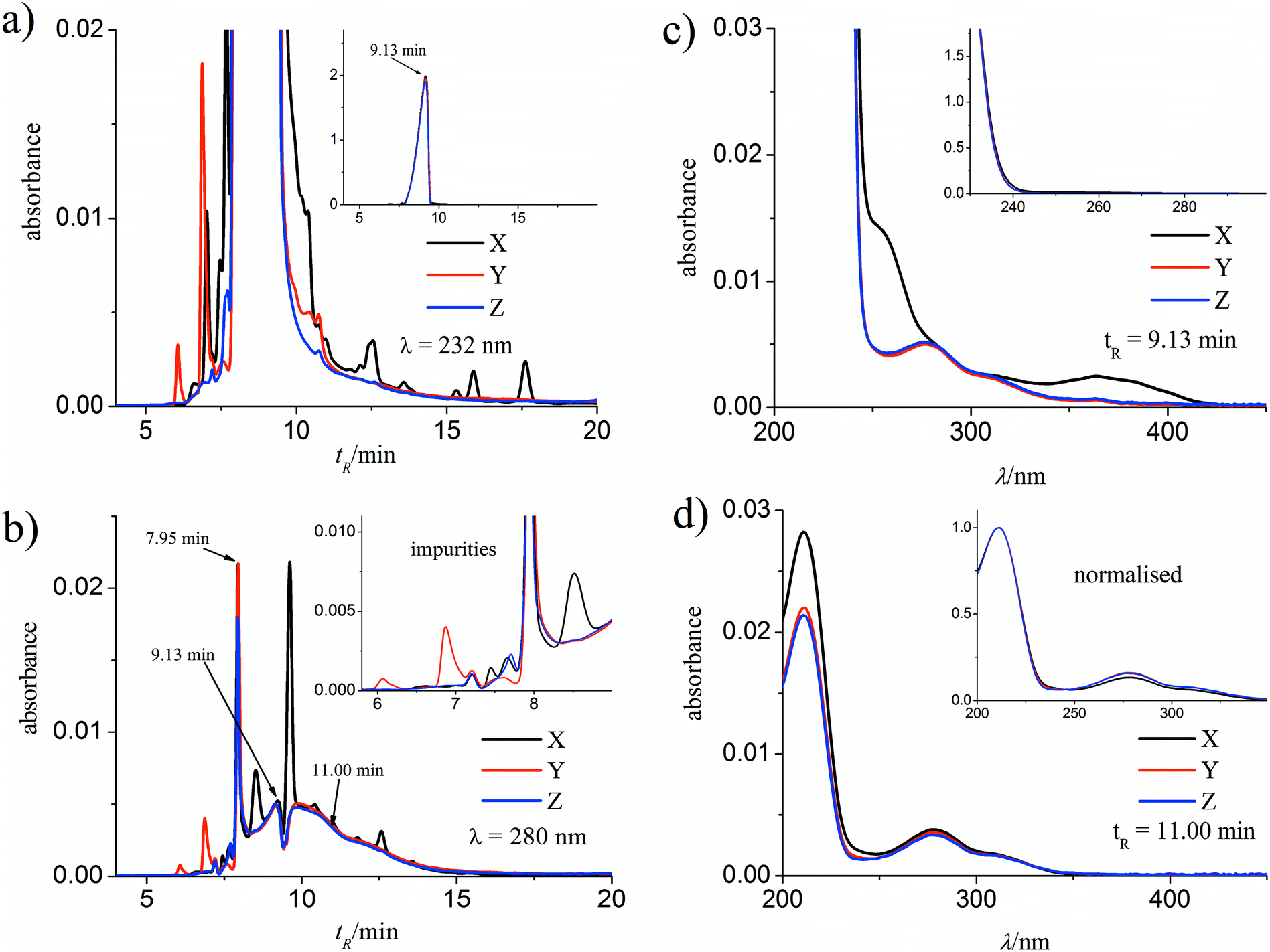 | ||
| Fig. 2 Absorption chromatograms and absorption spectra of three samples of bmimBF4 purchased from different producers and labelled X, Y and Z, recorded in an HPLC-abs system. Absorption chromatograms measured for (a) λ = 232 nm (inset: the whole range of absorbance); (b) λ = 278 nm (inset: short tR range, peaks coming from impurities). Absorption spectra measured for (c) tR = 9.13 min corresponding to the highest concentration of bmimBF4 (inset: short-wavelength range); (d) tR = 11.00 min corresponding to broad peak observed in (b), (inset: normalised spectra). | ||
The chromatograms presented in Fig. 2a and b for the two wavelengths of observation (λ = 232 and 278 nm) give an idea of the number of impurities occurring in a given IL. For the three samples, we obtained absorption chromatograms differing in the number and intensity of the peaks. The impurities present in samples X, Y and Z are most often different as follows from their different tR (Fig. 2b-inset) and their absorption spectra. A single peak does not have to correspond to only one compound, for instance three different absorption spectra were recorded for the retention times corresponding to the peak of tRmax = 7.95 min (ESI Fig. S4†). As follows from a comparison of absorption chromatograms, sample X contains the greatest number of absorbing impurities (not only for λ = 232 and 278 nm, but also for other wavelengths), while sample Z contains the smallest number of them.
It has been established by the MS method that bmimBF4 forms dimers, trimers and larger aggregates.22a,23a Independent fully ab initio large-scale calculations have shown that bmimBF4 occurs not only in monomers, but it also forms stable dimers, tetramers and octamers.25a Taking into account (a) the large concentration of bmimBF4, (b) the very similar shapes of the absorption chromatograms (λ = 232 nm) for samples X, Y and Z in the range tR = 7.9–9.4 min (for λ = 232 nm) and (c) the almost identical absorption spectra for samples Y and Z recorded for tR = 9.13 min, it can be assumed that, at the maximum concentration of bmimBF4 (Fig. 2c), the main peak in Fig. 2a (inset) originates from non-separated dimers, trimers and larger aggregates. Moreover, very similar absorption spectra were recorded for the range of tR ∼ 8.7–9.3 min of the same peak for samples Y and Z. The absorption spectra of these species show strong short-wavelength absorption (Fig. 2c), a minimum at a wavelength close to 257 nm and two long-wavelength bands: one with a maximum at λ = 278 nm, while the other with no clear maximum (samples Y and Z). The ratio of absorbance at 232 nm and at 278 nm in the absorption spectrum measured for tR = 9.13 min Aλ=232/Aλ=278 is ∼370, which directly corresponds to the ε ratio for these wavelengths. For sample X, a significant contribution of impurities is observed in the absorption spectrum measured for the same retention time.
As shown in Fig. 2b, the absorption chromatograms (λ = 278 nm) have a very broad peak in the range tR = 9.9–15 min of the same shape, position and intensity for all three samples X, Y, Z. Moreover the same shape of this broad peak is observed in the absorption chromatograms in the range λ = 260–295 nm, which means that this broad peak comes almost exclusively from bmimBF4. The large width of this peak, which is much greater than the widths of all the narrow peaks attributed to the impurities present in the IL, suggests that the wide peak comes from a few different species formed from bmimBF4, itself, which cannot be separated. The low concentration of bmimBF4 in the range of tR = 9.9–15 min means that there are many water molecules per one bmimBF4 molecule. It has been shown, that bmimBF4 in an aqueous environment forms complexes with water molecules, besides the aggregates made of different numbers of ion pairs.3,21a–d,23a,24a–e,25a,29 Thus, it is probable that the untypically broad chromatographic peak, observed over a very wide range of wavelength, comes from such complexes. As presented in ESI Fig. S5,† the shape of the absorption spectra for tR from the whole range tR = 10–12 min is very similar, the intensity of the long-wavelength band is high and increases with tR. The differences in absorbance intensity (and thus in the concentration) for aggregates (main peak in Fig. 2a inset) and for the complexes with water (broad peak, tR = 9.9–15 min in Fig. 2b), are very large (e.g. for λ = 232 nm, Aaggregates/Acomplexes = 880). Thus, it can be assumed that when bmimBF4 is used in a high concentration (e.g. c = 2.65 M), dimers and greater aggregates dominate, which is in agreement with the model proposed by Dupont et al.23
The absorption spectra of the aggregates and water complexes of bmimBF4 presented in Fig. 3 show a long-wavelength band of similar shape and position (λmax = 278 nm). The relative intensity of this band after normalisation at λ = 232 nm is much smaller (over a 600 times) for the aggregates than for the complexes (Fig. 3).
 | ||
| Fig. 3 Normalised (at the λ = 232 nm) absorption spectra of aggregates formed by bmimBF4 (tR = 9.13 min) and of complexes formed by bmimBF4 with water molecules (tR = 11.00 min). | ||
3. Conclusions
BmimBF4 forms different species, such as aggregates (dimers, trimers and larger aggregates) and complexes with water molecules. Thanks to the use of an HPLC-abs setup, the presence of these species and their absorption spectra could be determined. BmimBF4 was found to contain many impurities whose removal to such a degree that they would not influence the absorption spectrum measured by a spectrophotometer seems to be impossible, at least when the traditional methods of purification are used. It seems that the reason for the presence of so many impurities are the strong interactions of imidazolium ILs, both the cation and the anion, with many compounds both ionic and hydrogen-bond forming. That is why, as suggested by Nockemann et al., the synthesis of imidazolium ILs requires the use of the purest possible substrates.28The absorption spectra of the species formed by bmimBF4 show a long-wavelength absorption band with λmax = 278 nm, however, the shape, and, first of all, the relative intensity of the bands are different for the aggregates and the complexes. The long-wavelength absorption was also recorded in the absorption spectra of many impurities.
The HPLC-abs results obtained for the first time for the three purest commercially available bmimBF4 samples proved that the reason for the considerable differences between the absorption spectra of the same compound measured by a spectrophotometer was the presence of absorbing impurities. Even for sample Z containing the smallest amount of absorbing impurities, the contribution of their absorption in the absorption spectrum recorded on a spectrophotometer in the long-wavelength range λ ≥ 250 nm, was significant. It explains the differences between the absorption spectrum measured using spectrophotometer and the absorption spectra of species formed from bmimBF4, measured using HPLC-abs system. The results have shown that the fact that an IL is colourless is not evidence of their spectral purity. The samples studied, X, Y and Z, were colourless but they contained numerous absorbing impurities.
The use of the HPLC-abs method permits the elimination or at least the minimisation of the effect of impurities on the results obtained, in particular for the compounds whose ε(λ) is low and/or when different species are formed. We believe that only with the help of this method is it possible to confirm the formation of different species and to determine their content, concentration and absorption properties.
4. Experimental section
BmimBF4 was purchased from three well known companies which specialize in synthesis of ILs of high purity – bmimBF4 of ≥99% purity from Merck (labelled as X), bmimBF4 BASF quality of ≥98% purity from Aldrich (labelled as Y) and bmimBF4 of 99% purity from Ionic Liquids Technologies (labelled as Z). All were used as obtained, without further purification. A concentration of 2.65 M of bmimBF4 in acetonitrile–water (40/60 v/v) solution was used in this work. HPLC gradient grade acetonitrile (99.9% purity) was purchased from Sigma-Aldrich. Water used was deionised in a deionisation unit HLP5 (Hydrolab, Poland) to ultrapure state suitable for HPLC studies. The water used, similarly to ACN, did not contain impurities absorbing in the range λ > 230 nm.All chromatographic measurements were performed on the Waters' High Performance Liquid Chromatography (HPLC) system consisting of a pump (Waters; type: 1525), an autosampler (Waters; type: 2707) and spectrophotometer UV-VIS (flow cell with 1 cm path length) with photodiode array (PDA) (Waters; type: 2998), with linear working range for absorbance near A ≤ 2. An Empower 2 chromatographic interface was used for data collection. The Gemini C6-Phenyl 250 × 4.6 mm polar RP column (Phenomenex) packed with 3 μm particles with pore size of 110 Å was used. Isocratic elution was carried out with a mixture of acetonitrile (ACN) and water (40/60 v/v) at the flow rate of 0.4 mL min−1. Injections of 3 μL of concentration of 2.65 M were made. All measurements were performed at ambient temperature. It has been shown that imidazolium ILs can interact with silanol groups on the alkylsilica surface and thus, they found important application as silanol-screening agents in improving the chromatographic analysis.30–32 Therefore, for each sample, before proper measurements, several injections of the same concentration and injection volume were made to make sure that all silanol groups in the column are shielded so that the equilibrium was not disturbed and the results of a very high reproducibility were obtained. Isocratic elution mode was used and no buffer was added to the eluent so that the system peaks (also known as “ghost peaks”) were avoided.33 Such conditions ensured that all chromatographic peaks, irrespective of their shape and width, come only from the species formed by bmimBF4 or from impurities.
Absorption spectra of bmimBF4 were measured using double beam spectrophotometer type V-550 (Jasco) with a 1 nm spectral bandwidth.
Acknowledgements
The authors wish to thank Prof. Jacek Kubicki for helpful discussions and Dr Gordon L. Hug for help in manuscript preparation. This work was financially supported by the Ministry of Science and Higher Education (MNiSW) Poland, within the project no. N204 265 438.References
- H. Weingärtner, Angew. Chem., Int. Ed., 2008, 47, 654 CrossRef PubMed.
- J. F. Wishart and E. W. Castner, J. Phys. Chem. B, 2007, 111, 4639 CrossRef CAS.
- (a) Ionic Liquids in Synthesis, ed. P. Wasserscheid and T. Welton, VCH, Weinheim, 2008 Search PubMed; (b) Topics in Current Chemistry: Ionic Liquids, ed. B. Kirchner, Springer-Verlag, Berlin, 2009, vol. 290 Search PubMed.
- R. D. Rogers and G. A. Voth, Acc. Chem. Res., 2007, 40, 1077 CrossRef CAS PubMed.
- N. V. Plechkova and K. R. Seddon, Chem. Soc. Rev., 2008, 37, 123 RSC.
- (a) N. Siraj, G. Grampp, S. Landgraf and K. Punyain, Z. Phys. Chem., 2013, 227, 105 CrossRef CAS; (b) Y. Shen, Y. Zhang, D. Han, Z. Wang, D. Kuehner and L. Niu, Talanta, 2009, 78, 805 CrossRef CAS PubMed; (c) T. Singh and A. Kumar, J. Phys. Chem. B, 2008, 112, 4079 CrossRef CAS PubMed.
- A. Berthod and S. Carda-Broch, J. Liq. Chromatogr. Relat. Technol., 2003, 26, 1493 CrossRef CAS PubMed.
- (a) R. Katoh, Chem. Lett., 2007, 36, 1256 CrossRef CAS; (b) R. Katoh and K. Takahashi, Radiat. Phys. Chem., 2009, 78, 1126 CrossRef CAS PubMed.
- E. Binetti, A. Panniello, L. Triggiani, R. Tommasi, A. Agostiano, M. L. Curri and M. Striccoli, J. Phys. Chem. B, 2012, 116, 3512 CrossRef CAS PubMed.
- A. Paul, P. K. Mandal and A. Samanta, J. Phys. Chem. B, 2005, 109, 9148 CrossRef CAS PubMed.
- M. J. Earle, C. M. Gordon, N. V. Plechkova, K. R. Seddon and T. Welton, Anal. Chem., 2007, 79, 758 CrossRef CAS PubMed.
- A. Paul, P. K. Mandal and A. Samanta, Chem. Phys. Lett., 2005, 402, 375 CrossRef CAS PubMed.
- I. Billard, G. Moutiers, A. Labet, A. El Azzi, C. Gaillard, C. Mariet and K. Lützenkirchen, Inorg. Chem., 2003, 42, 1726 CrossRef CAS PubMed.
- P. Illner, A. Zahl, R. Puchta, N. van Eikema Hommes, P. Wasserscheid and R. van Eldik, J. Organomet. Chem., 2005, 690, 3567 CrossRef CAS PubMed.
- A. Paul and A. Samanta, J. Chem. Sci., 2006, 118, 335 CrossRef CAS.
- L. Berthon, S. I. Nikitenko, I. Bisel, C. Berthon, M. Faucon, B. Saucerotte, N. Zorz and P. Moisy, Dalton Trans., 2006, 2526 RSC.
- I. Billard, S. Mekki, C. Gaillard, P. Hesemann, G. Moutiers, C. Mariet, A. Labet and J. C. G. Bünzli, Eur. J. Inorg. Chem., 2004, 1190 CrossRef CAS.
- (a) M. J. Muldoon, A. J. McLean, C. M. Gordon and I. R. Dunkin, Chem. Commun., 2001, 2364 RSC; (b) N. L. Lancaster, P. A. Salter, T. Welton and G. B. Young, J. Org. Chem., 2002, 67, 8855 CrossRef CAS PubMed.
- A. K. Burrell, R. E. Del Sesto, S. N. Baker, T. M. McCleskey and G. A. Baker, Green Chem., 2007, 9, 449 RSC.
- P. Bonhôte, A. P. Dias, N. Papageorgiou, K. Kalyanasundaram and M. Grätzel, Inorg. Chem., 1996, 35, 1168 CrossRef PubMed.
- (a) H. Wang, J. Wang, S. Zhang, Y. Pei and K. Zhuo, ChemPhysChem, 2009, 10, 2516 CrossRef CAS PubMed; (b) Y. Jeon, J. Sung, C. Seo, H. Lim, H. Cheong, M. Kang, B. Moon, Y. Ouchi and D. Kim, J. Phys. Chem. B, 2008, 112, 4735 CrossRef CAS PubMed; (c) Y. Jeon, J. Sung, D. Kim, C. Seo, H. Cheong, Y. Ouchi, R. Ozawa and H. Hamaguchi, J. Phys. Chem. B, 2008, 112, 923 CrossRef CAS PubMed; (d) C. T. Martins, B. M. Sato and O. A. El Seoud, J. Phys. Chem. B, 2008, 112, 8330 CrossRef CAS PubMed; (e) H. Jin, X. Li and M. Maroncelli, J. Phys. Chem. B, 2007, 111, 13473 CrossRef CAS PubMed; (f) A. Triolo, O. Russina, H. Bleif and E. Di Cola, J. Phys. Chem. B, 2007, 111, 4641 CrossRef CAS PubMed; (g) Y. Wang and G. A. Voth, J. Am. Chem. Soc., 2005, 127, 12192 CrossRef CAS PubMed; (h) J. N. A. Canongia Lopes and A. A. H. Padua, J. Phys. Chem. B, 2006, 110, 3330 CrossRef CAS PubMed; (i) S. Chen, S. Zhang, X. Liu, J. Wang, J. Wang, K. Dong and B. Xu, Phys. Chem. Chem. Phys., 2014, 16, 5893 RSC; (j) K. Shimizu, C. E. S. Bernardes, A. Triolo and J. N. Canongia Lopes, Phys. Chem. Chem. Phys., 2013, 15, 16256 RSC.
- (a) S. Dorbritz, W. Ruth and U. Kragl, Adv. Synth. Catal., 2005, 347, 1273 CrossRef CAS; (b) G. P. Jackson and D. C. Duckworth, Chem. Commun., 2004, 522 RSC; (c) R. Bini, O. Bortolini, C. Chiappe, D. Pieraccini and T. Siciliano, J. Phys. Chem. B, 2007, 111, 598 CrossRef CAS PubMed; (d) B. K. Ku and J. F. de la Mora, J. Phys. Chem. B, 2004, 108, 14915 CrossRef CAS; (e) Y.-Z. Zheng, N.-N. Wang, J.-J. Luo, Y. Zhou and Z.-W. Yu, Phys. Chem. Chem. Phys., 2013, 15, 18055 RSC; (f) A. Stoppa, J. Hunger, G. Hefter and R. Buchner, J. Phys. Chem. B, 2012, 116, 7509 CrossRef CAS PubMed.
- (a) F. C. Gozzo, L. S. Santos, R. Augusti, C. S. Consorti, J. Dupont and M. N. Eberlin, Chem.–Eur. J., 2004, 10, 6187 CrossRef CAS PubMed; (b) B. A. DaSilveira Neto, L. S. Santos, F. M. Nachtigall, M. N. Eberlin and J. Dupont, Angew. Chem., Int. Ed., 2006, 45, 7251 CrossRef CAS PubMed.
- (a) J. Wang, H. Wang, S. Zhang, H. Zhang and Y. Zhao, J. Phys. Chem. B, 2007, 111, 6181 CrossRef CAS PubMed; (b) J. Bowers, C. P. Butts, P. J. Martin and M. C. Vergara-Gutierrez, Langmuir, 2004, 20, 2191 CrossRef CAS; (c) J. Wang, H. Wang, S. Zhang, H. Zhang and Y. Zhao, J. Phys. Chem. B, 2007, 111, 6181 CrossRef CAS PubMed; (d) I. B. Malham, P. Letellier and M. Turmine, J. Phys. Chem. B, 2006, 110, 14212 CrossRef CAS PubMed; (e) H. Katayanagi, K. Nishikawa, H. Shimozaki, K. Miki, P. Westh and Y. Koga, J. Phys. Chem. B, 2004, 108, 19451 CrossRef CAS; (f) Y. Wang and G. A. Voth, J. Phys. Chem. B, 2006, 110, 18601 CrossRef CAS PubMed; (g) K. Miki, P. Westh, K. Nishikawa and Y. Koga, J. Phys. Chem. B, 2005, 109, 9014 CrossRef CAS PubMed.
- (a) E. Izgorodina, J. Rigby and D. R. MacFarlane, Chem. Commun., 2012, 48, 1493 RSC; (b) E. I. Izgorodina, Phys. Chem. Chem. Phys., 2011, 13, 4189 RSC; (c) R. P. Matthews, T. Welton and P. A. Hunt, Phys. Chem. Chem. Phys., 2014, 16, 3238 RSC.
- B. Ciesielska, A. Łukaszewicz, L. Celewicz, A. Maciejewski and J. Kubicki, Appl. Spectrosc., 2007, 61, 102 CrossRef CAS PubMed.
- F. Tang, K. Wu, L. Ding, J. Yuan, Q. Liu, L. Nie and S. Yao, Sep. Purif. Technol., 2008, 60, 245 CrossRef CAS PubMed.
- P. Nockemann, K. Binnemans and K. Driesen, Chem. Phys. Lett., 2005, 415, 131 CrossRef CAS PubMed.
- A. Mele, C. D. Tran and S. H. De Paoli Lacerda, Angew. Chem., Int. Ed., 2003, 42, 4364 CrossRef CAS PubMed.
- (a) L. He, W. Zhang, L. Zhao, X. Liu and S. Jiang, J. Chromatogr. A, 2003, 1007, 39 CrossRef CAS; (b) X. Xiaohua, Z. Liang, L. Xia and J. Shengxiang, Anal. Chim. Acta, 2004, 519, 207 CrossRef PubMed.
- (a) M. P. Marszałł, T. Bączek and R. Kaliszan, Anal. Chim. Acta, 2005, 547, 172 CrossRef PubMed; (b) R. Kaliszan, M. P. Marszałł, M. J. Markuszewski, T. Bączek and J. Pernak, J. Chromatogr. A, 2004, 1030, 263 CrossRef CAS PubMed.
- A. Berthod, A. J. Ruiz-Angel and S. Carda-Broch, J. Chromatogr. A, 2008, 1184, 6 CrossRef CAS PubMed.
- (a) F. Gritti and G. Guiochon, J. Chromatogr. A, 2004, 1028, 197 CrossRef CAS PubMed; (b) D. V. McCalley, Anal. Chem., 2003, 75, 3404 CrossRef CAS; (c) J. Srbek, P. Coufal, Z. Bosakova and E. Tesarova, J. Sep. Sci., 2005, 28, 1263 CrossRef CAS; (d) S. Williams, J. Chromatogr. A, 2004, 1052, 1 CrossRef CAS PubMed.
Footnote |
| † Electronic supplementary information (ESI) available. See DOI: 10.1039/c4ra03868a |
| This journal is © The Royal Society of Chemistry 2014 |