Twin-tailed surfactant induced conformational changes in bovine serum albumin: a detailed spectroscopic and physicochemical study

Rajwinder Kaur and Rakesh Kumar Mahajan*
Department of Chemistry, Guru Nanak Dev University, Amritsar-143005, India. E-mail: rakesh_chem@yahoo.com

Received 22nd April 2014 , Accepted 9th June 2014

First published on 10th June 2014


Abstract

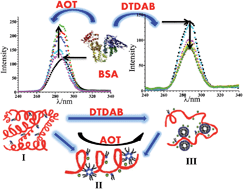
The interactions of a twin-tailed anionic surfactant sodium bis-2-ethylhexyl sulfosuccinate (AOT) and cationic surfactant ditetradecyldimethylammonium bromide (DTDAB) with bovine serum albumin (BSA) has been examined using various spectroscopic and physicochemical techniques such as tensiometry, steady-state fluorescence, potentiometry and isothermal titration calorimetry (ITC). The interactional behavior of the surfactants with BSA at the air–solution interface which depends upon the nature of the surfactant was examined and is discussed in detail. Steady-state fluorescence, and potentiometry combined with ITC measurements provide vital insights into the binding mechanism of the surfactants with BSA. An enhancement in the intrinsic fluorescence intensity and a strong exothermic enthalpy change at low concentrations of AOT demonstrated the crosslinking of AOT monomers between a group of non-polar residues and a positively charged residue located on different helical loops of BSA. The quenching of the intrinsic fluorescence intensity and endothermic enthalpy changes were observed over the whole of the concentration range of DTDAB that was studied indicating powerful interactions between them. The synchronous fluorescence spectra revealed the conformational changes in the peptide backbone of BSA and the altered environment of tryptophan and tyrosine residues. The binding isotherms obtained from intrinsic fluorescence spectroscopy as well as from potentiometry were analyzed using Scatchard plots to obtain insights into the binding mechanism and to evaluate the binding constants and the number of binding sites.

1. Introduction

Serum albumin, the most abundant protein in the circulatory system, has vital physiological functions such as maintaining the osmotic pressure and pH of the blood and transporting a wide variety of endogenous and exogenous compounds including fatty acids, metals, amino acids, steroids, and drugs, as well as participating in immunological responses.1–4 Because of the special features of proteins they are frequently used as functional ingredients in healthcare and pharmaceutical products.5,6 Bovine serum albumin (BSA), the most widely used globular protein for various technical applications, is a mammalian albumin made up of 583 amino acid residues with a molecular weight of 66 kDa in a single polypeptide chain and is negatively charged at a physiological pH.7,8

BSA, like other serum albumins, is a remarkable protein capable of binding numerous ligands and has multiple high-affinity binding sites for the same ligand.9 Because of the intricacy of the structure of the protein molecules in aqueous solution, a clear concept relating the physical principles of organization of these structures and the forces stabilizing them is lacking.10,11 However, the denaturation process of the native protein structure by diverse denaturating agents such as urea, guanidine hydrochloride, or ionic surfactant facilitates to probe their structure. The denaturation process of proteins by ionic surfactants involves the binding of the surfactant monomer ions to the specific or non-specific sites on the protein molecules through hydrophobic as well as hydrophilic interactions which occurs at a concentration of 1–3 mM of surfactant.12–14

Protein–surfactant interactions are not only important for determining the structure of the protein or to study the protein separations but also because of their vital role in drug delivery, cosmetics, foods, and many other industrial applications.15–17 The majority of published papers are about studies of the interactions of sodium dodecyl sulfate (SDS) and BSA among many other surfactant–BSA systems.18–24 In contrast, the present research focuses on the interactions of twin-tailed anionic surfactant sodium bis-2-ethylhexyl sulfosuccinate (Aerosol-OT or AOT) and ditetradecyldimethylammonium bromide (DTDAB) with BSA. AOT, an anionic twin-tailed surfactant with ethyl branches, is used in a variety of studies of colloidal assemblies in reverse and direct micelles.25–27 The reverse micelles of AOT provide a controlled water environment in an apolar medium, and this feature can be used to mimic the water–biomembrane interface and to probe membrane interaction with short biologically active peptides, proteins and enzymes.28–30 The interactions of AOT micelles with serum proteins in aqueous media have not been investigated yet. Although Oliveira, Jr, et al. have examined the interactions of AOT with BSA at the air–solution interface.31 Also Moriyama and Takeda have reported the protective effect of AOT, a unique function of twin-tailed surfactants, on the structures of human serum albumin (HSA) and BSA in aqueous solutions in their thermal denaturation.32

DTDAB is a twin-tailed cationic surfactant and is known to organize into vesicles or bilayers.33 The interactions of surfactants such as tetradecyltrimethyl ammonium bromide (DTAB), 1-tetradecyl-3-methylimidazolium bromide (C14mimBr) and gemini surfactant 14-2-14 having similar alkyl chain length (C14) with BSA have been extensively reported in the literature.34–37 But there is no information in the literature, to the best of our knowledge, that is of direct relevance to the interactions of DTDAB comprising twin-tails attached to single head group with BSA. In the present study, we have examined the interactions of AOT and DTDAB with BSA using various spectroscopic and physicochemical techniques such as tensiometry, steady-state fluorescence, potentiometry and isothermal titration calorimetry (ITC).

2. Experimental

2.1 Materials

Sodium bis-2-ethylhexyl sulfosuccinate (AOT) is product of Alfa-Aesar and was used without further purification. BSA (MW = 66 kDa) with a purity of >96% was purchased from Sigma. Ditetradecyldimethylammonium bromide (DTDAB) with a purity of >98% was obtained from Fluka and used as received.

All the stock solutions of surfactants were prepared in double distilled deionized water with a specific conductivity in the range of (1–2) × 10−6 Ω−1 cm−1 by keeping the concentration of each surfactant at 10 times their critical micelle value (cmc) values (concentrations of AOT and DTDAB were 26.0 mM and 0.25 mM, respectively). BSA solutions were freshly prepared just before the experiments by dissolving the protein in the double distilled deionized water, the pH of aqueous BSA solution is ∼6.4 under these conditions, and it is in a negative form.13,24

2.2 Methods

2.2.1 Fluorescence measurements. Steady-state fluorescence measurements were carried out using a Cary Eclipse fluorescence spectrophotometer (Varian Ltd.) using a quartz cuvette having an optical length of 10 mm at 25 ± 1 °C. The intrinsic fluorescence of BSA was monitored at an excitation wavelength of 280.0 nm and the emission spectra were recorded between 290–600 nm. The excitation and the emission band slits were kept at 5 nm.

Synchronous fluorescence spectra of BSA were recorded using the same spectrophotometer at a wavelength interval (Δλ) of 20 and 60 nm. All the spectra were recorded in three successive replicate measurements.

2.2.2 Surface tension measurements. The surface tension measurements were carried out with a Krüss EasyDyne tensiometer (Krüss GmbH, Hamburg, Germany) using a Wilhelmy plate method at 25 ± 1 °C. The surface tension of double distilled water, 71.6 ± 0.4 m Nm−1, was used for calibration purposes. The series of measurements were repeated at least three times. The reproducibility of surface tension measurements in determining various transition concentrations were estimated to be within ±0.1 × 10⁻⁶ M.
2.2.3 Potentiometric measurements. All the potentiometric measurements were carried out by using a digital potentiometer, Model EQ-602 (Equiptronics). The details are provided in theESI.
2.2.4 ITC measurements. The calorimetric measurements were performed with a MicroCal iTC200 (GE Healthcare Life Sciences) at 25 ± 1 °C. The sample cell was filled with 250 μL of a solution of 0, 10 or 20 μM BSA concentration, and the titrant syringe was filled with 40 μL of either AOT or DTDAB solution and 2 μL of the solution was injected into the sample cell. All the measurements were repeated at least three times.

3. Results and discussion

3.1 Interfacial interactions

Tensiometry, is a useful technique to follow the formation of adsorption layers at interfaces, and was used here to study the interactions of surfactants with BSA at the interfaces and also in bulk.

The surface tension (γ) of the pure twin-tail cationic surfactants (AOT and DTDAB) in the presence and absence of BSA at two concentrations of BSA (10 and 20 μM), was measured and the representative plots of γ versus log[surfactant] are shown in Fig. 1. The other plots are given in ESI as Fig. S1. The γ of 10 and 20 μM BSA solutions at the conditions studied were 53.2 and 53.7 mN m−1, respectively, indicating that there was feeble surface activity of BSA in solution.


image file: c4ra03653k-f1.tif
Fig. 1 Surface tension as a function of log[surfactant] in the absence and presence of BSA (a) AOT (inset shows the expanded plot at low concentrations of AOT at 0, 10 and 20 μM BSA) (b) DTDAB.
3.1.1 AOT–BSA interfacial interaction. The tensiometric profile (Fig. 1a) shows the bimodal interaction of AOT with BSA; γ decreases linearly with increase in AOT concentration up to point C1, and then afterwards it remains constant up to point C2, followed by a linear decrease to reach saturation at C3 (cmc) for both concentrations of BSA. The values of C1, C2 and C3 are given in Table 1. On addition of AOT, it starts binding with BSA to form a complex, the resulting AOT–BSA complex is slightly less surface active than the pure AOT as indicated by the higher γ values obtained for AOT in the presence of BSA compared to its absence. Furthermore, the surface activity of AOT–BSA decreases as it grows with increase in AOT concentration. In the AOT–BSA interaction, it is proposed that the hydrophobic twin-tails of AOT bind to the hydrophobic residues on BSA at the same time as the hydrophilic head groups bind to nearby cationic residues and this crosslinking stabilizes the BSA structure.32 The resulting AOT–BSA complex becomes more hydrophilic than either the AOT or the BSA alone and the more negative charge accumulated on the BSA upon its binding of AOT monomers avoids the formation of higher order aggregates because of inter-electronic repulsion. The results are further confirmed at a concentration of 20 μM BSA in which the more hydrophilic complex is formed than at a concentration of 10 μM BSA as shown in the inset to Fig. 1a. It has been extensively reported that the AOT monolayer is not stable at the air–solution interface, but the incorporation of a very small amount of BSA (10−9 M) at the interface increases the monolayer stability supporting the formation of AOT–BSA complexes at the interfaces.30
Table 1 The various transition concentrations: C1, C2 and critical micelle concentration (C3 – cmc), interfacial parameters: surface excess (Γmax) and minimum area per molecule (Amin) at 25 ± 1 °C
System C1 (10−3 M) C2 (10−3 M) C3 (cmc) (10−3 M) Γmax (106 mol m−2) Amin2)
AOT     2.63 1.33 124.8
AOT + BSA (10 μM) 1.15 1.44 3.55 1.32 126.1
AOT + BSA (20 μM) 1.23 1.55 3.89 1.28 130.0


The SDS–BSA complex resulting from the monomeric adsorption of SDS on to the peripheral sites of BSA involving the hydrophobic interactions modulated by electrostatic interactions, is more surface active than the SDS monomers.18,38,39 It can be inferred that the binding mechanism of AOT to BSA is different to that of SDS although both are anionic surfactants. This difference may arise because of the presence of the twin-tails in the AOT with ethyl branches as well as the bulkiness and polar nature of the hydrophilic head group when compared to SDS. Here we hypothesize that AOT binds to BSA as strongly as SDS but the presence of the twin-tails and ethyl branches modifies the structure of the resulting complex.

A small constant region from C1 to C2 (Fig. 1a) is observed, which may correspond to non-cooperative binding of AOT to BSA or the formation of AOT reverse micelles on BSA. The AOT–BSA complex being negatively charged, repels the BSA (BSA is negatively charged under the conditions studied) inducing it to expand and this may cause exposure of more hydrophobic binding sites buried in the core of the tertiary structure of BSA. Thus, it is proposed that AOT monomers self assemble as reverse micelles on the exposed binding sites of BSA.

Above the concentration of C2, a linear decrease in γ up to C3 (cmc) reflects cooperative binding of AOT to BSA. In this region, the γ is again found to be higher than the corresponding concentration of pure AOT reflecting the saturation of the air–solution monolayer by AOT–BSA complexes only. It is proposed that the AOT–BSA complexes or BSA preferentially form the interfacial mixed monolayer replacing the AOT monomers from the interface. The saturation of BSA with AOT on reaching C3, results in the formation of free micelles of AOT in the bulk along with the AOT–BSA complex. The cmc values (Table 1) observed in the presence of BSA are higher than those of pure AOT because the micellization process is hindered because of the binding of AOT monomers to BSA and AOT self-assembles to form free micelles at concentrations higher than that required for pure AOT.

3.1.2 DTDAB–BSA interfacial interaction. DTDAB shows a different surface tension profile of its binding to BSA at the air–solution interface when compared to AOT as shown in Fig. 1b and the values of C1, and C2 are given in Table 2. A competitive adsorption of the BSA, surfactant, and complex of BSA–surfactant at the air–solution interface depends not only on the concentration of surfactant but also on the nature of surfactant.40
Table 2 The transition concentrations: C1 and C2 (cmc), interfacial parameters: Γmax and Amin at 25 ± 1 °C
System C1 (10−6 M) C2 (cmc) (10−5 M) Γmax (106 mol m−2) Amin2)
DTDAB   2.45 2.69 61.5
DTDAB + BSA (10 μM) 5.01 2.63 0.73 227.2
DTDAB + BSA (20 μM) 5.25 5.01 0.56 295.1


At a low surfactant concentration up to point C1, the interaction starts because of the electrostatic interaction between the positively charged DTDAB monomers and the negatively charged BSA, which proceeds until the available charges on BSA are saturated by the DTDAB monomers. In this region, the γ decreases at a fast rate (steep slope) indicating that the surface activity of these complexes formed because of the electrostatic interaction increases rapidly with increasing DTDAB concentration but neutralization does not occur. Also it is inferred from turbidity measurements (Fig. S2 in ESI) that the coacervation process does not occur in this region. With a further increase in DTDAB concentration up to C2 (cmc), γ decreases at a slow rate indicating that the surface activity of the DTDAB–BSA complex decreases. The increasing amounts of DTDAB monomers interact with these complexes via hydrophobic interactions, making the complex step-by-step more hydrophilic and this hydrophobic interaction proceeds until the concentration C2 is reached. Because of the competition at the air–solution interface, more and more complexes are replaced by DTDAB monomers which are more hydrophobic (presence of long twin-tails) at the mixed interfacial monolayer so that finally, typically at the cmc of the DTDAB in presence of BSA, the interface is mainly formed by the DTDAB monomers.

3.1.3 Interfacial parameters. The slope obtained from the plots of γ versus log[surfactant] near cmc is a measure of the interfacial adsorption efficacy and is quantified by the maximum surface excess concentration (Γmax) and the minimum area per molecule Amin calculated with the following Gibbs adsorption equations41
 
Γmax = −1/nRT(dγ/d[thin space (1/6-em)]ln[thin space (1/6-em)]C) (1)
 
Amin = 1020/NAΓmax (2)

where dγ/d[thin space (1/6-em)]ln[thin space (1/6-em)]C is the maximum slope obtained in the plots of γ versus log[surfactant]. R, T, C and NA are the gas constant, temperature (K), and concentration of surfactant and Avogadro's number, respectively, and n is the number of solute species whose concentration at the interface changes with change of surfactant concentration and the value of n is taken as 2 for DTDAB as well as AOT.

The values of Γmax and Amin for AOT and DTDAB in the presence and absence of BSA are given in Tables 1 and 2, respectively. The Γmax for both DTDAB and AOT in the presence of both concentrations of BSA are found to be greater than their respective pure counterparts as a consequence of the reduced compactness of the air–solution interfacial monolayer in the presence of BSA. Consequently variations in the Amin values have been observed in the presence and absence of BSA. Thus, the increase in molecular areas observed can be ascribed to the adsorption of BSA and BSA–surfactant complexes that move from the bulk to the surface.

The larger decrease in Γmax for DTDAB than AOT in the presence of BSA suggests that there is a more relaxed monolayer at the air–solution interface because of the formation of a flexible DTDAB–BSA complex.

3.2 Steady-state fluorescence

3.2.1 Intrinsic fluorescence. It is well known that BSA consists of 583 amino acid residues and is made up of three homologous domains (I–III). It contains 17 disulfide bridges that divide the protein into nine loops (L1–L9).1,8 Each domain is divided into two subdomains; they share some common features such as hydrophobic face and a cluster of basic amino acid residues. Each subdomain is unique exhibiting a different specificity for ligands. It has two tryptophan (Trp) residues, Trp-134 in domain I (Subdomain IB) and Trp-212 in domain II (Subdomain IIA) are intrinsic fluorophores. The Trp-212 residue plays an important structural role in the formation of the binding site of the subdomain IIA and it also participates in additional hydrophobic interactions at the IIA–IIIA interface. It has been proposed that Trp-134, buried in a hydrophobic pocket, is located on the surface of the albumin molecule in the second helix of the first domain whereas Trp-212 is found within a hydrophobic binding pocket of the protein.1,8 The intrinsic fluorescence of these tryptophan moieties facilitates the investigation of binding affinities between chemical molecules and BSA. The other amino acid tyrosine (Tyr) fluorophores are found to be present in abundance in domain I (Subdomain IC) and domain II (Subdomain IIC). The phenylalanine residue also acts as an intrinsic fluorophore, however, it is not excited in many cases and its quantum yield in proteins is rather low.

The intrinsic fluorescence obtained by excitation at 280 nm is apparently susceptible to variations in the fluorescence intensity and maximal emission wavelength (λmax) for the changes to its microenvironment. This feature can be monitored to reveal information regarding the binding interactions of surfactants with the proteins. Fig. 2a shows the normalized area ratios A/A0 versus [AOT] in the presence of BSA (20 μM) where A0 and A are the normalized areas of the emission spectra of BSA.


image file: c4ra03653k-f2.tif
Fig. 2 Normalized area ratios (A/A0) for the emission spectra of BSA as a function of surfactant concentration (a) AOT (b) DTDAB (inset to Fig. 2b is the linear fits to obtain Stern–Volmer constant (KSV) values).

The interaction of AOT with BSA starts with an enhancement in the fluorescence intensity up to C1 and thereafter remains constant up to point C2 and then there is a continuous decrease in the intensity until it reaches point C3 (cmc) as shown in Fig. 2a. The values of various transition concentrations are given in Table 3. The addition of AOT causes a clear blue shift of the maximum emission wavelength (λmax) from 347 to 321 nm, which corroborates that the Trp residues are buried in a more hydrophobic environment and confirms the formation of an AOT–BSA complex. The fluorophore can acquire a more hydrophobic environment in two ways: (1) incorporation of the fluorophore towards the core of the protein when the protein gets stabilized or (2) hydrophobic interactions of the alkyl chains of AOT and exposed fluorophores, which is possible during the unfolding process.

Table 3 The various transition concentrations: C1, C2 and C3 (cmc) at 25 ± 1 °C
System C1 (10−3 M) C2 (10−3 M) C3 (cmc) (10−3 M)
Fluorescence
AOT + BSA (10 μM) 1.31 2.11 3.75
AOT + BSA (20 μM) 1.33 2.33 3.83
 
Potentiometry
AOT     2.13
AOT + BSA (10 μM) 0.88 1.23 2.75
AOT + BSA (20 μM) 0.91 1.26 3.09


It has been reported by Gelamo et al. that for Trp-134 and Trp-212 in BSA, some residues in close contact with the indole ring of the Trp are able to effectively quench the fluorescence intensity probably by a static quenching mechanism.19 The increase in fluorescence intensity for AOT could be explained on the basis of removal of this static quenching upon its binding with BSA. The removal of quenching may be associated with either the increase in the distance between the quenching groups and the indole ring of the Trp-134/Trp-212 or with a change in the relative orientation of these residues because of conformational changes upon binding.

Moriyama and Takeda have reported that the protein (HSA and BSA) structures are stabilized by a crosslinking function of the bound AOT ions between a group of nonpolar residues and a positively charged residue located on different loops of the protein.32 The same type of protective effect has been shown for SDS as shown by circular dichroism and ITC measurements.20,32 The protective function of the anionic surfactants is entirely because of their amphiphilic nature in which the hydrophilic group of the anionic surfactant electrostatically interacts with a positively charged residue such as lysine (Lys) and/or arginine (Arg) in the amphiphilic helical rods together with hydrophobic interactions with nonpolar residues which stabilize their helical structures as shown in Scheme 1.42 The concentration of AOT up to which the enhancement has been observed is too low not only to undergo micelle formation but also to form aggregates on the polypeptide chain of BSA.


image file: c4ra03653k-s1.tif
Scheme 1 The anionic AOT monomers electrostatically interact with a positively charged residue such as Lys (K) and/or Arg (R) in the amphiphilic helical rods together with hydrophobic interactions with non-polar residues on BSA which stabilize their helical structures.

For SDS, quenching of the fluorescence intensity even at low concentrations of SDS has been observed although it shows some protective effects, which demonstrate that the binding sites on BSA for AOT and SDS are different. The nature of the neighboring amino acid residues in the vicinity of Trp-134 and Trp-214 stipulates that their comparative polarity and charge will direct the mode and sites of interactions of these surfactants. Thus, AOT consisting of twin-tails with ethyl branches and a different head group will bind to sites other than those for SDS although having a similar amphiphilic nature as those of SDS. Within the scope of this study, it is hard to allocate exact binding sites on BSA for AOT, however, some binding sites and binding mechanisms can be predicted from the analysis of the results obtained from the techniques utilized.

The denaturation of BSA with guanidine hydrochloride involves a two-stage process: (i) the first low energy unfolding step involving the denaturation of area near binding site 2 (subdomain IIIA) and the interface with subdomain IIA and (ii) the high energy unfolding step involves domain II where the Trp-212 is located.43 This differential sensitivity of domains may also arise for surfactant induced unfolding, which could start in domain II. Thus up to C1, the enhancement in fluorescence intensity allied with blue shift on the addition of AOT indicates the movement of Trp-212 and Trp-134 to a more hydrophobic environment triggered by some conformational changes in the helical loops.

However, as the concentration of AOT is further increased, a constant region in Fig. 2a from C1 to C2 has been observed. This may be attributed to non-cooperative binding or because of loss of specificity of binding sites because of the initiation of denaturation of the native BSA results in different peripheral topology in which crosslinking is not possible. The increased stability of BSA in the presence of AOT is ascribed to the fact that the native form of BSA has a unique peripheral topology where the cationic amino acid residues are peripherally disseminated in such a manner that the hydrophobic interactions are reinforced by the ionic interactions. But as the unfolding process initiates this, the specific topology is disrupted. BSA was not believed to be completely denatured, but it became progressively denatured with increase in the AOT concentration.32 AOT monomers continued to co-operatively bind to the unfolded BSA and at this stage the formation of reverse micelles to the hydrophilic residues of BSA would also be expected.23

Thereafter the fluorescence intensity further goes on decreasing until the point C3 (cmc) is reached and the AOT monomers will self assemble to form micelles after cmc. The results at different concentrations of BSA shows that the C2 and C3 values are increased, with increase in BSA concentration demonstrating a powerful interaction between AOT monomers and BSA. AOT monomers continued binding to BSA to form a BSA–AOT complex so that the micellization process is hindered resulting in an increase in cmc values.

The interaction of DTDAB with BSA shows the opposite effect when compared to AOT, a linear decrease in the fluorescence intensity associated with an apparent blue shift of 6 nm (from 346 to 340 nm) at both concentrations of BSA was observed as shown in Fig. 2b. The quenching of the fluorescence intensity up to cmc with a constant value of λmax is observed because of the formation of a non-fluorescent DTDAB–BSA complex via physical contact or static quenching process. The complex formation is also confirmed by an increase in the turbidity of the solution with a fixed concentration of BSA with increase in DTDAB concentration (Fig. S2 in ESI). Above the cmc, the decrease in fluorescence intensity is less steep and accompanied by a gradual decrease in λmax of 6 nm. These results suggest that the formation and growth of the DTDAB–BSA complex up to the cmc does not alter the microenvironment of Trp and Tyr residues to large extent whereas after the cmc the blue shift observed is indicative of a change of microenvironment to a more hydrophobic region. At the pH studied, BSA has a negative charge, thus the hydrophobic interactions between DTDAB and BSA are accompanied by electrostatic interactions. To obtain more information about this change, the data of the fluorescence spectra were analyzed using the well known Stern–Volmer equation:

 
(A0/A) = 1 + KSV[Q] (3)
where [Q] is the molar concentration of the quencher (DTDAB) and KSV is the Stern–Volmer constant and the KSV values obtained for DTDAB (Stern–Volmer plots with linear fits are shown as an inset in Fig. 2b) are given in Table 4. The quenching occurs because of specific binding interactions, this quenching is apparently static as observed from the value of the bimolecular quenching constant (kq). The bimolecular quenching constant (kq) is given by the relationship: kq = KSV/τ, where τ ∼ 3 ns is the fluorescence lifetime in the absence of quencher.44 The values of kq (Table 4) are found to be in the order of 1012 which is about 100-fold larger than those required for dynamic quenching.

Table 4 Stern–Volmer constant (KSV), cmc and bimolecular quenching constant (kq) at 25 ± 1 °C
System cmc (10−5 M) KSV (103 M) kq (1012 M)
DTDAB + BSA (10 μM) 4.75 6.86 2.29
DTDAB + BSA (20 μM) 5.61 5.14 1.71


The binding of surfactants to proteins causes conformational changes in the native structure of their hydrophobic tails; the longer the tail is, or if two surfactants bind, the more powerful the conformational changes. DTDAB with twin-tails is expected to cause large conformational changes and this is quite clear from the KSV values obtained in this work. DTAB and C14mimBr although they possess the same alkyl chain length as DTDAB, their reported KSV values are 0.404 M−1 and 2.79 × 10³ M−1, respectively, indicating that DTDAB with twin-tails (Table 4) is more powerful in altering the BSA structure.36,13 The positively charged DTDAB monomers are proposed to interact electrostatically with the helical loops located at subdomain IIC because of the presence of the neighboring negatively charged amino acid residues.45 With further increase in DTDAB concentration, the DTDAB monomers continued binding to BSA and may trigger the initiation of unfolding of the polypeptide chain as indicated by the decrease in fluorescence intensity up to the cmc. Beyond the cmc a gradual decrease in λmax of 6 nm and a decrease in fluorescence intensity indicates the further continued binding of DTDAB monomers to the unfolded BSA in which the Trp residues are exposed to a more and more hydrophobic environment. As for AOT, DTDAB will also self assemble at a higher concentration to form micelles resulting in an increase in cmc values in the presence of BSA (Table 4).

3.2.2 Synchronous fluorescence. The alteration of the polarity in the vicinity of the fluorophore can be investigated by a simple and effective technique of synchronous fluorescence spectroscopy. Synchronous fluorescence spectra can be used to determine the protein–surfactant interactions by applying Δλ values of 20 nm and 60 nm, which provide characteristic information about Tyr and Trp residues respectively, thus, providing information about the interactions of surfactants in their vicinity. The intrinsic fluorescence of BSA is almost completely contributed by the Trp residue alone because the intensity at Δλ = 60 nm is much higher than the intensity at Δλ = 20 nm as indicated in Fig. 3. The shapes of the curves obtained in the plots of A/A0 versus [AOT] for 10 and 20 μM BSA at Δλ = 20 nm and Δλ = 60 nm (shown in Fig. S3 in ESI) are the same as that obtained in the emission spectra, in which there is initial enhancement in the fluorescence intensity followed by a constant region and then the intensity decreases. The values of various transition concentrations are provided in Table S1 in ESI. At Δλ = 60 nm, the initial enhancement in fluorescence intensity is accompanied by a blue shift of 5 nm and then a constant region followed by a linear decrease in intensity which occurs at the same blue shifted wavelength maxima at 10 and 20 μM BSA.
image file: c4ra03653k-f3.tif
Fig. 3 Synchronous fluorescence spectra of a 10 μM BSA concentration in the presence of varying concentrations of AOT at (a) Δλ = 60 nm (for Trp) (b) Δλ = 20 nm (for Tyr).

At Δλ = 20 nm, the fluorescence intensity showed a remarkable increase on addition of AOT at 10 μM BSA with a blue shift of 2 nm as shown in Fig. 3b. Above that the intensity remains constant followed by a decrease with another blue shift of 2 nm above the cmc (total blue shift of 4 nm) on further addition of AOT. In the native form of HSA, Tyr fluorescence is quenched because of the presence of nearby amino acids or the energy transfer from Tyr to Trp (Trp-214) residues.46 Because of the structural similarity of HSA and BSA, the same phenomena may also occur in BSA. Thus, remarkable enhancement in the fluorescence intensity (even above the native BSA) at low concentrations of AOT for Δλ = 20 nm suggest that interactions of AOT with BSA increases the distance between the Tyr and Trp residues reducing the energy transfer between them. As a result of the reduced energy transfer between Tyr and Trp residues a sharp increase in fluorescence intensity is observed. Thus, the observed enhancement in emission spectra of BSA is not because of direct interactions between AOT and Trp-214 or Trp-134 residues but instead is likely to occur because of conformational changes induced upon binding of the AOT monomers ensuing an altered environment around the Trp or Tyr residues. Furthermore, the extent of decrease in intensity at Δλ = 60 nm is more pronounced than at Δλ = 20 nm causing speculation that AOT interacts mainly with the Trp residues.

The results obtained for DTDAB interactions are quite different indicating the different binding mechanism and binding sites for DTDAB. The extent of decrease in intensity for Δλ = 60 nm and at Δλ = 20 nm is relatively the same revealing that the influence of DTDAB monomers around the microenvironment of Trp and Tyr residues is identical. The values of various transition concentrations are provided in Table S2 in ESI.

3.3 Potentiometric measurements

To further confirm the binding mechanism of AOT with BSA, potentiometric measurements were used. The changes in the electromotive force (EMF) versus log[AOT] in the presence and absence of BSA upon the addition of AOT solution are shown in Fig. 4. The linearity of the calibration curve clearly shows the excellent performance of the AOT-specific ion specific electrode. The deviation from the calibration curve in the presence of BSA enables the calculation of the amount of bound AOT to BSA.
image file: c4ra03653k-f4.tif
Fig. 4 EMF as a function of log[AOT] in the absence and presence of BSA (inset shows the linear fit to EMF data of pure AOT).

In the absence of BSA, EMF is directly proportional to log[AOT], however, in the presence of BSA, the curves show three distinct regions: a linear decrease up to C1 followed by a constant region from C1 to C2 and then a further linear decrease up to C3 (values are given in Table 3). In the first region, at very low concentrations of AOT, the EMF decreases linearly with an increase in AOT concentration but with a different slope to the one obtained in the absence of BSA. This confirms the binding of AOT monomers at very low concentrations of AOT supporting the results obtained from the other techniques mentioned. With further increase in AOT concentration, the EMF remains constant in the next region from C1 to C2, which is indicative of the fact that the denaturation process is just initiated and the specificity of the binding sites is lost and thus, crosslinking is not possible. Furthermore as stated previously, at this stage the formation of reverse micelles to the hydrophilic residues of BSA would also be expected. In the second region, again there is a linear decrease in the EMF until the cmc point (C3) has been reached confirming that there is further binding of the AOT monomers to the unfolded BSA and after cmc the EMF remains constant which is indicative of free micelle formation.

3.4 Binding isotherms and Scatchard analysis

By considering the fact that the EMF is increased in the presence of BSA as shown in Fig. 4 and deviation from the calibration curve allows calculation of the amount of AOT bound to BSA. The average number of AOT monomers bound per BSA molecule (ν) has been calculated using the following equation:47
 
image file: c4ra03653k-t1.tif(4)
where [AOT]t, [AOT]f and [BSA]t are the total concentration of AOT, the free concentration of AOT and the total concentration of BSA, respectively. The representative plot of ν versus log[AOT]f is shown in Fig. 5a. This binding isotherm provides evidence for the cooperative binding of AOT to BSA. It shows three characteristic regions with increasing AOT concentration.

image file: c4ra03653k-f5.tif
Fig. 5 (a) Binding isotherms of ν versus log[AOT]f in the presence of BSA (b) Scatchard plot of 10 μM BSA with AOT.

The average number of surfactant molecules bound to a BSA molecule (ν) by using fluorescence measurements were also estimated using eqn (5):

 
ν = α × Cs/Cp (5)
where α is the fraction of BSA bound to surfactant, Cs is total surfactant concentration, and Cp is the total protein concentration. α was evaluated by using eqn (6):
 
α = (A0A)/(A0Amin) (6)

The concentration (c) of free surfactant (unbound concentration) has been calculated from the relationship Cs(1 − α). Scatchard plots of ν/c versus ν were obtained as shown in Fig. 5b (other Scatchard plots are provided in the ESI) and each linear portion of the Scatchard plot was given a linear fit, from the fitting parameters (slope and intercept), the equilibrium binding constant (K) and number of binding sites (n) for this particular region (concentration range) have been evaluated.48 The values of K and n in different regions for AOT and DTDAB binding to BSA are summarized in Table 5.

Table 5 Scatchard analysis data for the binding of surfactants (AOT and DTDAB) with BSA
System 10 μM BSA 20 μM BSA
Concentration range (mM) K (M−1) n Concentration range (mM) K (M−1) n
AOT 0.207–1.378 1.94 × 10³ 139 0.207–1.378 2.54 × 10³ 128
1.563–2.778 7.10 × 10² 56 1.563–2.941 1.73 × 10³ 23
2.941–6.250 3.03 × 10³ 137 3.102–6.250 5.33 × 10³ 81
DTDAB 0.006–0.062 4.12 × 10⁴ 0.1 0.006–0.071 3.60 × 10⁴ 0.1
0.066–0.080 1.21 × 10⁵ 3 0.075–0.084 2.26 × 10⁵ 2
0.084–0.092 1.57 × 10⁶ 7 0.088–0.092 1.64 × 10⁶ 4


The binding isotherms obtained from EMF as well as fluorescence measurements (Fig. S5 in ESI) show three similar characteristic regions and their overlapping behavior indicates the reliability of the results obtained from both the techniques. A detailed examination of the Scatchard plots for the binding of DTDAB and AOT with BSA reveals that the binding mechanism of DTDAB to BSA is significantly different from AOT. Furthermore, the binding of each surfactant follows a separate mechanism in various concentration regions.

A linear downward curve in the Scatchard plot suggests positive cooperative binding with a large number of binding sites (n = 128) of AOT molecules to BSA in the region below a 1.378 mM concentration of AOT. Up to this concentration, as stated previously, BSA structures may be stabilized by a crosslinking function of the bound amphiphilic AOT ions. The amphiphilic helical rods possess a number of Lys and/or Arg residues, which can interact electrostatically with the anionic head group, a situation favorable for crosslinking, resulting in the observed number of binding sites as well as positive co-operation. With an increase in BSA concentration in this region, the value of K increases indicating the enhanced binding of AOT ions for crosslinking.

A concave upward curve in the Scatchard plots at higher concentrations of AOT has been observed indicating the negative cooperative binding of AOT to BSA. The values of K as well as those of n decrease in the regions 1.563 < AOT < 2.778 and 1.563 < AOT < 2.941 at 10 and 20 μM BSA concentrations, respectively. The native form of BSA has unique peripheral topology where the hydrophobic interactions are reinforced by the ionic interactions with the amphiphilic AOT monomers but as the unfolding process is initiated this specific topology is disrupted reflecting a decrease in the K and n values. Also at this stage the formation of reverse micelles to the hydrophilic residues of BSA is confirmed so that AOT monomers are more involved in forming these reverse micelles accompanied by continued binding to BSA. It has also been observed from Table 5 that in this region at 20 μM BSA, the values of K as well as of n decrease indicating substantial unfolding at 10 μM compared to that at a concentration of 20 μM BSA. The number of AOT ions crosslinked at a concentration of 20 μM BSA are less when compared to those at a concentration of 10 μM BSA so that unfolding of BSA at a concentration of 20 μM BSA does not occur to a great extent, resulting in a lesser number of exposed binding sites.

Above concentrations of 2.778 and 2.941 mM AOT at BSA concentrations of 10 and 20 μM, respectively, K and n values increase because of the beginning of the micellization process of AOT as well as a substantial increase in unfolding. Again because of the same reasons as at BSA concentrations of 10 μM, unfolding occurs to a great extent, resulting in more exposed binding sites.

A concave upward curve indicative of negative cooperative binding in the Scatchard plots have been observed for the binding of DTDAB to BSA. The values of the binding constant and n are found to be small in the regions below DTDAB concentrations of 0.062 and 0.071 mM of at BSA concentrations of 10 and 20 μM, respectively. The binding constants observed for DTDAB are found to be much higher than those of AOT as shown in Table 5, because the initial binding of the surfactants to protein is driven by ionic interactions between a charged binding site on BSA and the ionic head groups of the surfactant. The charges on the head group of the surfactant partially modulate the interactions but for their binding to BSA, hydrophobic interactions are mainly responsible.19 Thus, the large value of K for DTDAB consisting of long twin-tails is mainly because of the greater hydrophobicity of these twin-tails. On further increase in DTDAB concentration up to 0.080 and 0.084 at BSA concentrations of 10 and 20 μM, respectively, the value of K as well as n also increase because of the micellization of the DTDAB monomers. The sharp decrease in fluorescence intensity as observed from high KSV values suggests the substantial unfolding of BSA at the same time a very small number of n inferred that either the binding of DTDAB is very specific or it is because of steric factors (DTDAB consisting of long twin-tails) and the tendency of DTDAB to bind to BSA decreases. Above this concentration, an increase in K and n values is again observed because of more exposed binding sites upon unfolding.

3.5 Microcalorimetry

Microcalorimetry has been carried out to measure the enthalpy changes resulting from the injection of surfactant solutions into water as control experiments and in BSA solution to study the interactions. AOT and DTDAB dilution curves are found to have a sigmoidal shape. When the final surfactant concentration is below the cmc, i.e., in the sub-micellar region, the added micelles dissociate into monomers and the monomers are further diluted, and thus, the heat changes observed represent the total contributions of the dissociation as well as the dilution. When the final concentration is above the cmc, i.e., in the post-micellar region, the added micelles are only diluted without dissociation, and thus only dilution contributes to heat changes. At the cmc, the monomers start to aggregate and there are abrupt changes in the enthalpy curves corresponding to the micelle formation. Thus, the cmc can be determined from the intercept of the two linear extrapolations of each half of the plot, and the enthalpy of micellization (ΔHmic) can be obtained from the difference between the observed enthalpies of the two linear segments of the plots.49,50 The values of cmc and ΔHmic for both surfactants in the presence and absence of BSA are given in Table S3 of ESI. It shows that the cmc values for AOT coincides with the values measured by the other techniques used. The ΔHmic value of AOT is endothermic when compared to those of DTDAB. For AOT, a positive ΔHmic indicates that micellization is not favorable from an enthalpic point of view whereas the opposite is true for DTDAB. This may be explained by the fact that the interaction between the surfactant molecules is controlled by two contrary effects: the hydrophobic interaction of alkyl chains tends to make ΔHmic negative, while the electrostatic repulsion between the surfactant head groups is unfavorable to aggregation. Both of these opposite effects are present in DTDAB as well as in AOT, however, there also exists some steric hindrance between the ethyl branches so the AOT aggregates may be higher in energy, which may lead to an endothermic effect resulting in a positive ΔHmic.
3.5.1 Enthalpy changes for AOT–BSA interactions. The enthalpy changes versus [AOT] resulting from the injection of 25 mM AOT solution into 0 and 20 μM BSA solutions are shown in Fig. 6a. The curves obtained at two concentrations of BSA (10 and 20 μM) can be divided into three different regions:
image file: c4ra03653k-f6.tif
Fig. 6 Variation of the observed enthalpy (ΔHobs) with the surfactant concentration for the titration of (a) AOT into water and 20 μM BSA (b) DTDAB into 10 and 20 μM BSA (inset to Fig. 6a and b shows the determination of cmc and ΔHmic).

(i) In region I (>1.53 mM AOT), AOT monomers bind strongly to BSA increasing the thermal stability of the proteins as indicated by the strong exothermic enthalpy changes. The enthalpy change was initially highly exothermic up to 0.85 mM but its magnitude increases from 0.85 to 1.53 mM AOT concentration. Similar type of results have been reported for SDS binding to serum albumins.20 These binding interactions of SDS with BSA are exothermic at relatively low concentrations of SDS in which three SDS monomers bind to high affinity sites through electrostatic as well as hydrophobic interactions, whereas six SDS monomers bind to low-affinity sites through only hydrophobic sites.20 It has been already mentioned that AOT stabilized the native form of BSA by crosslinkage of hydrophobic as well as ionic interactions corresponding to the region where enhancement of the fluorescence intensity has been observed. The results obtained from the calorimetric profiles agree with the interpretation of the outcome of the fluorescence measurements indicating the presence of AOT–BSA complexes. The transparency of the turbidity profiles of AOT–BSA solution (plots not shown) for the whole concentration range studied provides evidence for the formation of relatively smaller AOT–BSA complexes compared to the DTDAB–BSA complexes.

(ii) In region II (1.53 mM < [AOT] > cmc), a microcalorimetry titration curve in the presence of BSA is found to retain its sigmoid shape as in the absence of BSA. In this region the enthalpy changes are slightly more exothermic than the changes obtained in the absence of BSA. This region corresponds to the second region obtained in the Scatchard plots. This confirms that AOT monomers continued to co-operatively bind to the unfolded BSA and at this stage the formation of reverse micelles to the hydrophilic residues of BSA is confirmed which was initially proposed by the results of the fluorescence measurements. The unfolding process of BSA is endothermic, whereas the reverse micelle formation is exothermic. Furthermore, the steric hindrance is somewhat decreased because of the binding of AOT monomers to BSA. The amount of heat required to unfold the BSA is compensated for by the heat evolved in the formation of reverse micelles at the unfolded BSA polypeptide chain.

(iii) In region III (cmc < [AOT] > 3.68 mM), the enthalpy changes are slightly more exothermic than in region II. The results have been reproduced with lesser injection volumes (1 μL) to magnify this region (plots not shown). The overall exothermic nature of the mixing enthalpy suggests that AOT continued to bind to BSA molecules where the micellization of AOT is also expected to occur and the number of binding sites are now increased because of substantial unfolding of BSA. This region corresponds to the III region of Scatchard plots where the number of binding sites as well as K increases.

After this region the enthalpy curve again overlaps with the dilution curve of AOT, indicating the saturation of BSA with AOT monomer and AOT will self assemble to form free micelles. The scenario described for the interaction mechanism of AOT–BSA system is shown in Scheme 2.


image file: c4ra03653k-s2.tif
Scheme 2 Proposed mechanism for the binding of AOT to BSA.
3.5.2 Enthalpy changes for DTDAB–BSA interactions. The microcalorimetry titration curves in BSA solution are found to be significantly different from the characteristic sigmoid shape, and the enthalpy changes occurring in the BSA solution are found to be more endothermic indicating the interactions between them. Thus, the enthalpy curves obtained at two concentrations of BSA (10 and 20 μM) can be divided into three different regions.

(i) In region I (>6.1 and >9.8 μM at 10 and 20 μM BSA, respectively), the enthalpy decreases because the monomers of DTDAB bind to specific sites on the BSA through electrostatic interactions since they act as an oppositely charged pair. When DTDAB is added to BSA solution, it will reduce the net negative charge on the BSA by binding through its cationic head to anionic sites on the BSA because of electrostatic interactions in combination with the hydrophobic interactions where the twin-tails of DTDAB will bind to nearby hydrophobic patches on the proteins. As the protein denaturation is an endothermic process, in this region, it may be inferred that BSA remains in the native state. Furthermore, this concentration coincides with the point C1 observed in the tensiometric profiles. The turbidity measurements employed to monitor the aggregation of BSA with increase in concentration of DTDAB (Fig. S2 of ESI) show that turbidity increases from zero to maximum at 0.055 and 0.135 mM for 10 and 20 μM BSA concentrations, respectively. This maximum increase in the turbidity indicates the formation of large aggregates because as the concentration of DTDAB increases, it will tend to decrease the net negative electrical charge on BSA forming DTDAB–BSA complexes. However, the very low turbidity values at the respective DTDAB concentrations (C1 at 10 and 20 μM BSA) observed in enthalpy curves imply that the net electrical charge on DTDAB–BSA complexes is large enough to prevent them from aggregating.

(ii) In region II (6.1 × 10⁻⁶ < [DTDAB] < 2.8 × 10⁻⁵ and 9.8 × 10⁻⁶ < DTDAB < 2.1 × 10⁻⁵ M at 10 and 20 μM BSA, respectively), a comparatively steep increase in enthalpy is observed until a maximum value is reached and then the enthalpy decreases, indicating the initiation of denaturation. In this region, with increase in the DTDAB concentration the net positive charge of these complexes will increase which will prevent them from aggregating because of electrostatic repulsion, however, charge neutralization does not occur up to this point as indicated by the turbidity measurements. All these factors show the strong binding of DTDAB monomers to BSA leading to saturation of all binding sites of BSA. After saturation of specific binding sites of BSA, the DTDAB monomers prefer to bind to weaker binding sites and the origin of these interactions are only hydrophobic interactions.

(iii) In region III (2.8 × 10⁻⁵ M < [DTDAB] > cmc and 2.1 × 10⁻⁵ M < [DTDAB] > cmc at BSA concentrations of 10 and 20 μM, respectively), the binding of DTDAB monomers to denatured BSA occurs. The charge neutralization of BSA–DTDAB complexes is completed at a BSA concentration of 10 μM, (as observed from the turbidity data, a maximum is obtained at 5.50 × 10⁻⁵ M) whereas at a BSA concentration of 20 μM, neutralization of these complexes does not occur in this region. At further increases in DTDAB concentration, the DTDAB monomer would continue binding to these neutralized complexes resulting in an increase in net positive charge on these aggregates. Above a certain DTDAB concentration, the net positive charge on these complexes will be large enough to dissociate them because of the electrostatic repulsion. However, this dissociation of complexes is absent at a BSA concentration of 20 μM. Thus, at 10 μM BSA, the enthalpy change involves the combination of charge neutralization, DTDAB monomer binding, and dissociation of complexes whereas the enthalpy change involves the DTDAB monomer binding at a BSA concentration of 20 μM. As a consequence, the BSA enthalpy curve at 10 μM is more endothermic than that of 20 μM in this region.

The enthalpy decreases and remains constant when the DTDAB concentration exceeds the cmc and DTDAB monomers prefer to self assemble to form micelles in contrast to continue binding to BSA although the binding process is still is going on. The enthalpy curve of formation of micelles in the presence of BSA does not meet the curve in its absence indicating that micelle formation in the presence of BSA is not identical to micelle formation in its absence.

4. Conclusions

Surfactants can act as both stabilizing as well as destabilizing moieties to protein structure, the latter effect being more common at high concentrations. Consequently, it is advisable to minimize the addition of surfactants when using them as excipients in a pharmaceutical formulation containing proteins. Devising directions for the development of these pharmaceuticals requires complete insight into the mechanism(s) by which a particular protein is protected from damage by surfactant addition. Keeping this in mind, we have investigated the interactions of twin-tailed surfactants such as AOT and DTDAB with BSA at 25 °C and proposed their binding mechanisms. The interactional behavior at the air–solution interface has been examined using tensiometry and the results have been discussed in detail depending upon the nature of the surfactants giving various transitional concentrations and evaluating Γmax and Amin values.

Binding mechanisms have been thoroughly studied using fluorescence, EMF and ITC measurements. AOT is proposed to interact at binding sites other than that at which SDS binds on BSA although both of them are anionic surfactants. This discrepancy results from the presence of twin-tails with ethyl branches as well as because of the different head group in AOT. An enhancement in the intrinsic fluorescence intensity and a strong exothermic enthalpy change at low concentrations of AOT confirmed the protective effects of AOT on the BSA structure. The analysis of Scatchard plots and enthalpy changes at concentrations of AOT less than cmc, reveal the formation of reverse micelles to the hydrophilic residues of BSA together with the continued binding of AOT monomer to unfolding BSA.

Negative cooperative binding was determined from the Scatchard plots, and was observed for the binding of DTDAB to BSA. The quenching of intrinsic fluorescence intensity and endothermic enthalpy changes observed throughout the whole concentration range of DTDAB indicates a somewhat different binding mechanism for DTDAB than AOT. This difference arises because of the opposite charge and the presence of more hydrophobic long twin-tails in DTDAB. The synchronous fluorescence spectra corroborate the conformational changes in the BSA structure and the altered environment of Trp and Tyr residues on addition of these surfactants.

Our findings provide an important insight into the protein–surfactant interactions, especially the effect of surfactant molecular structure which is essential for determining their future use as excipients in pharmaceutical formulations containing proteins.

Acknowledgements

Financial support from UGC-BSR fellowships in sciences is thankfully acknowledged.

References

  1. D. C. Carter and J. X. Ho, Adv. Protein Chem., 1994, 45, 153–203 CrossRef CAS.
  2. V. Sharma, A. Jaishankar, Y. Wang and G. H. McKinley, Soft Matter, 2011, 7, 5150–5160 RSC.
  3. J. K. Choi, S. Curry, D. Qin, R. Bittman and J. A. Hamilton, J. Lipid Res., 2002, 43, 1000–1010 CrossRef CAS PubMed.
  4. K. D. Prajapati, S. S. Sharma and N. Roy, Rev. Neurosci., 2011, 22, 355–363 CAS.
  5. I. Vaya, V. Lhiaubet-Vallet, M. C. Jimenez and M. A. Miranda, Chem. Soc. Rev., 2014, 43, 4102–4122 RSC.
  6. C. Bertucci and E. Domenici, Curr. Med. Chem., 2002, 9, 1463–1481 CrossRef CAS.
  7. C. Giancola, C. D. Sena, D. Fessas, G. Graziano and G. Barone, Int. J. Biol. Macromol., 1997, 20, 193–204 CrossRef CAS.
  8. T. Peters, Adv. Protein Chem., 1985, 37, 161–245 CrossRef CAS.
  9. J. R. Brown and P. Shockley, in Lipid Protein Interactions, ed. P. Jost and O. H. Griffith, John Wiley and Sons, New York, 1982 Search PubMed.
  10. B. X. Huang, H. Kim and C. Dass, J. Am. Soc. Mass Spectrom., 2004, 15, 1237–1247 CrossRef CAS PubMed.
  11. A. A. Bhattacharya, T. Grune and S. Curry, J. Mol. Biol., 2000, 303, 721–732 CrossRef CAS PubMed.
  12. D. Wu, G. Xu, Y. Sun, H. Zhang, H. Mao and Y. Feng, Biomacromolecules, 2007, 8, 708–712 CrossRef CAS PubMed.
  13. F. Geng, L. Zheng, L. Yu, G. Li and C. Tung, Process Biochem., 2010, 45, 306–311 CrossRef CAS PubMed.
  14. Y. Shu, M. Liu, S. Chen, X. Chen and J. Wang, J. Phys. Chem. B, 2011, 115, 12306–12314 CrossRef CAS PubMed.
  15. A. S. Antipova, M. G. Semenova, L. E. Belyakova and M. M. Il'in, Colloids Surf., B, 2001, 21, 217–230 CrossRef CAS.
  16. G. A. vanAken, T. B. Blijdenstein and N. E. Hotrum, Curr. Opin. Colloid Interface Sci., 2003, 8, 371–379 CrossRef CAS.
  17. L. Kong, J. K. Beattie and R. J. Hunter, Colloids Surf., B, 2003, 27, 11–21 CrossRef CAS.
  18. T. Chakraborty, I. Chakraborty, S. P. Moulik and S. Ghosh, Langmuir, 2009, 25, 3062–3074 CrossRef CAS PubMed.
  19. E. L. Gelamo, C. H. T. P. Silva, H. Imasato and M. Tabak, Biochim. Biophys. Acta, 2002, 1594, 84–99 CrossRef CAS.
  20. D. Kelley and D. McClements, Food Hydrocolloids, 2003, 17, 73–85 CrossRef CAS.
  21. Y. Shu, M. Liu, S. Chen, X. W. Chen and J. H. Wang, J. Phys. Chem. B, 2011, 115, 12306–12314 CrossRef CAS PubMed.
  22. X. Wang, J. Liu, L. Sun, L. Yu, J. Jiao and R. Wand, J. Phys. Chem. B, 2012, 116, 12479–12488 CrossRef CAS PubMed.
  23. H. K. Mandal, A. Kundu, S. Balti and A. Mahapatra, J. Colloid Interface Sci., 2012, 378, 110–117 CrossRef CAS PubMed.
  24. S. Tardioli, A. Bonincontro, C. L. Mesa and R. Muzzalupo, J. Colloid Interface Sci., 2010, 347, 96–101 CrossRef CAS PubMed.
  25. C. Lin, J. Zhao and R. Jiang, Chem. Phys. Lett., 2008, 464, 77–81 CrossRef CAS PubMed.
  26. E. P. Melo, P. Fojan, J. M. S. Cabral and S. B. Petersen, Chem. Phys. Lipids, 2000, 106, 181–189 CrossRef CAS.
  27. A. Bhattarai and H. Wilczura-Wachnik, Int. J. Pharm., 2014, 461, 14–21 CrossRef CAS PubMed.
  28. E. Luchter-Wasylewska and M. Iciek, J. Colloid Interface Sci., 2004, 273, 632–637 CrossRef CAS PubMed.
  29. K. M. Park, Y. N. Kim, S. J. Choi and P. Chang, Food Chem., 2013, 138, 733–738 CrossRef CAS PubMed.
  30. L. Xue, Y. Zhao, L. Yu, Y. Sun, K. Yan, Y. Li, X. Huang and Y. Qu, Colloids Surf., B, 2013, 105, 81–86 CrossRef CAS PubMed.
  31. W. Caetano, M. Ferreira, O. N. Oliveira Jr and R. Itri, Colloids Surf., B, 2004, 38, 21–27 CrossRef CAS PubMed.
  32. Y. Moriyama and K. Takeda, Langmuir, 2005, 21, 5524–5528 CrossRef CAS PubMed.
  33. R. Kaur, S. Kumar, V. K. Aswal and R. K. Mahajan, Colloid Polym. Sci., 2012, 290, 127–139 CAS.
  34. T. Zhou, M. Ao, G. Xu, T. Liu and J. Zhang, J. Colloid Interface Sci., 2013, 389, 175–181 CrossRef CAS PubMed.
  35. M. A. Mir, J. M. Khan, R. H. Khan, G. M. Rather and A. A. Dar, Colloids Surf., B, 2010, 77, 54–59 CrossRef CAS PubMed.
  36. S. S. Madaeni and E. Rostami, Chem. Eng. Technol., 2008, 31, 1265–1271 CrossRef CAS.
  37. N. Gull, S. Chodankar, V. K. Aswal, P. Sen, R. H. Khan and K. Uid-Din, Colloids Surf., B, 2009, 69, 122–128 CrossRef CAS PubMed.
  38. B. Shweitzer, D. Zanette and R. Itri, J. Colloid Interface Sci., 2004, 277, 285–291 CrossRef CAS PubMed.
  39. S. F. Santos, D. Zanette, H. Fischer and R. Itri, J. Colloid Interface Sci., 2003, 262, 400–408 CrossRef CAS.
  40. J. Maldonado-Valderrama and J. M. R. Patino, Curr. Opin. Colloid Interface Sci., 2010, 15, 271–282 CrossRef CAS PubMed.
  41. R. Kaur, S. Kumar, V. K. Aswal and R. K. Mahajan, Langmuir, 2013, 29, 11821–11833 CrossRef CAS PubMed.
  42. Y. Moriyama, Y. Kawasaka and K. Takeda, J. Colloid Interface Sci., 2003, 257, 41–46 CrossRef CAS.
  43. D. M. Togashi, A. G. Ryader and D. O'Shaughnessy, J. Fluoresc., 2010, 20, 441–452 CrossRef CAS PubMed.
  44. E. L. Gelamo and M. Tabak, Spectrochim. Acta, Part A, 2000, 56, 2255–2271 CrossRef.
  45. T. Singh, P. Bharmoria, M. Morikawa, N. Kimizuka and A. Kumar, J. Phys. Chem. B, 2012, 116, 11924–11935 CrossRef CAS PubMed.
  46. D. Patra, C. Barakat and R. M. Tafech, Colloids Surf., B, 2012, 94, 354–361 CrossRef CAS PubMed.
  47. A. K. Bordbar and A. Taheri-Kafrani, Colloids Surf., B, 2007, 55, 84–89 CrossRef CAS PubMed.
  48. S. Das, M. R. Sylvain, V. E. Fernand, J. N. Losso, B. El-Zahab and I. M. Warner, J. Colloid Interface Sci., 2011, 363, 585–594 CrossRef CAS PubMed.
  49. Y. Fan, Y. Li, G. Yuan, Y. Wang, J. Wang, C. C. Han and H. Yan, Langmuir, 2005, 21, 3814–3820 CrossRef CAS PubMed.
  50. P. Zheng, X. An, X. Peng and W. Shen, J. Phys. Chem. B, 2009, 113, 13566–13575 CrossRef CAS PubMed.

Footnote

Electronic supplementary information (ESI) available. See DOI: 10.1039/c4ra03653k

This journal is © The Royal Society of Chemistry 2014
Click here to see how this site uses Cookies. View our privacy policy here.