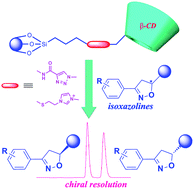
Chiral differentiation of novel isoxazoline derivatives on “clicked” thioether and triazole bridged cyclodextrin chiral stationary phases

Xiaobin Yao, Yan Gong, Rehangu Mamuti, Wenwen Xing, Hao Zheng, Xiangyang Tang* and Yong Wang*
Department of Chemistry, School of Science, Tianjin University, Tianjin 300072, China. E-mail: wangyongtju@tju.edu.cn; txy@tju.edu.cn; Tel: +86 22 2740 3475

Received 17th April 2014 , Accepted 20th June 2014

First published on 20th June 2014


Abstract

Isoxazoline derivatives have been disclosed in the art as having acaricidal and insecticidal activity and as potential precursors for the syntheses of natural products. This work first demonstrates the chiral resolution of isoxazoline derivatives that had not been studied before on native cyclodextrin (CD) chiral stationary phases (CSPs). Two structurally well-defined CSPs based on native CD were prepared via different click procedures and applied for the enantioseparation of isoxazolines. Most of the studied isoxazolines were found to be well resolved (Rs > 1.5) under reversed phase mode, especially 4NPh-OPr, which exhibits the best enantioselectivity and resolution (α = 2.22; Rs = 4.16). Optimal resolutions were achieved by evaluating the influences of mobile phase composition, substitution moieties and CSP linkages on the separation. This contribution verifies that excellent enantioseparation of isoxazolines can be accomplished on smartly designed native CD-CSP, which provides a facile and economic way to obtain enantiopure isoxazoline derivatives.

1. Introduction

Compounds incorporating heterocyclic rings continue to attract considerable interest owing to their wide range of interesting biological activities. Amongst them, five-membered heterocyclic compounds occupy a conspicuous place in the field of natural and synthetic organic chemistry. Isoxazolines, as a class of five-membered heterocyclic compounds, have found wide applications as agrochemical agents and pharmaceuticals. Such compounds possess various biological activities such as insecticidal, antibacterial, antibiotic, antitumour, antifungal, antimicrobial, in vitro anti-tuberculosis activity and anti-inflammatory activities.1–9 In addition, isoxazoline derivatives have been recognized as important intermediates for the synthesis of alkaloids and other natural products.10,11

Small pharmaceutical compounds with substituted isoxazoline rings such as some phenylisoxazolines exhibit high activity against gram-positive pathogens.12 A series of 3-substituted-5-pyridinyl-isoxazolines can be used as protein tyrosine phosphatase 1B inhibitors.13,14 Researchers keep dedicating great efforts to the development of novel isoxazoline derivatives. More and more products based on an isoxazole nucleus have been designed and synthesized. Our previous study described the synthesis of a variety of novel isoxazolines via a 1,3-dipolar cycloaddition reaction between mono-substituted alkenes and nitrile oxides.15

As is known, the bioactivity of chiral compounds is closely related to its stereochemistry. Isoxazoline enantiomers in agrochemicals can have diverse effects on plants and insects and could bring about negative effects to the environment and be toxic to human health. Hence, it is necessary to obtain optically pure isoxazolines to make best use of their performance and minimize potential harm.16–19 Since the catalytic asymmetric synthesis is tedious and difficult, most isoxazolines are generated in laboratories with equal amounts of enantiomers in achiral environments. As a result, it is highly desirable to build efficient and cost effective enantioseparation approaches for obtaining the enantiopure isomers from the abundant isoxazoline racemates.

On a separate note, cyclodextrins (CDs) are naturally occurring cyclic oligosaccharides that consist of several (6, 7, 8) glucose units and are one of the most commonly used economic chiral selectors for enantioseparation due to their ability to form ‘host–guest’ inclusion with a large variety of chiral compounds. Since Fujimura successfully synthesized CD-CSPs based on amino linkages for the first time in 1983, they have received great interest in the area of separation. Chemists are constantly searching for new synthetic methods for the preparation of stable CD-CSPs. Numbers of CD-CSPs with various linkages have been developed, such as ether linkages by Amstrong,20 urea linkages by Ng21,22 and triazole linkages by Liang and Ng.23–27

In recent years, “click chemistry” has attracted more and more interest owing to its advantages such as insensitivity to water and oxygen as well as the mild reaction conditions. Typical representations are the Cu(I) catalytic 1,3-dipolar cycloaddition reaction and radical-based thiol–ene reaction, which have been widely used in the preparation of various stationary phases.28–30 Great importance was placed on triazole-linked CD-CSPs that were prepared by 1,3-dipolar cycloaddition reaction owing to their simple synthesis, controllable structure, good stability and powerful resolving ability. Our group has employed a thiol–ene click reaction for constructing a novel cationic native CD-CSP for enhanced separation of acidic chiral compounds in HPLC.31 Both the click reactions provide facile and economic approaches to obtain structurally well-defined CD-CSPs.

In this work, we prepared two native CD-CSPs with triazole and thioether linkages via the above described click procedures and performed the enantioseparation of 26 novel isoxazoline enantiomer pairs such as 3-aryl-5-phenyl-isoxazolines (Ar-Ph), 3-aryl-5-(pyridin-4-yl)-isoxazolines (Ar-Py) and 3-aryl-5-(2-oxopyrrolidin-1-yl)-isoxazolines (Ar-POr) by reversed phase high performance liquid chromatography (HPLC). To the best of our knowledge, this is the first report on chiral resolution of isoxazoline enantiomers using native CD-CSPs, which is expected to provide a facile and economic way to obtain enantiopure isoxazoline derivatives at both the analytical and preparative levels.

2. Experimental

2.1 Chemicals and materials

For CSP preparation, azobisisobutyronitrile (AIBN) was purchased from Tianjin Chemical Reagents (Tianjin, China), 3-mercaptopropyltrimethoxysilane and 1-allylimidazole were purchased from Energy-Chemical (Shanghai, China), and mono-6A-deoxy-(p-tolylsulfonyl)-β-cyclodextrin (TsO-CD) was synthesized according to the reported procedure.32 Anhydrous N,N-dimethylformamide (DMF) and toluene were provided by Heowns (Tianjin, China). Kromasil spherical silica gel (5 μm, 100 Å) was obtained from Eka Chemicals (Bohus, Sweden).

For chromatographic experiments, HPLC-grade methanol (MeOH), acetonitrile (ACN), triethylamine (TEA) and acetic acid were provided by Guangfu chemical reagents (Tianjin, China). Ultra-pure water was prepared using a Milli-Q water purification system (Billerica, MA, USA). All the isoxazoline racemic pairs used were synthesized according to our previously reported procedure,15 and their structures are shown in Fig. 1.


image file: c4ra03476g-f1.tif
Fig. 1 Structures of isoxazoline derivatives.

2.2 Preparation of CSPs

Triazole-bridged CD-CSP (CSP1) and thiolether-bridged CD-CSP (CSP2) (Fig. 2) were synthesized according to the methods described in previous reports.31,32 The detailed synthetic procedures are included in the ESI. The linkage of CSP1 can provide hydrogen bonding sites via oxygen and nitrogen as well as dipole–dipole interactions; the linkage of CSP2 affords electrostatic force on account of cationic heterocyclic ring. The surface coverages of CD for CSP1 and CSP2 were calculated to be 0.85 μmol m−2 and 0.60 μmol m−2, respectively, according to the following equation:
image file: c4ra03476g-t1.tif
where S.A is the surface area of the silica; nc is the carbon number; Mr is the molecular weight, and C% is from the elemental analysis results (ESI).

image file: c4ra03476g-f2.tif
Fig. 2 Structures of triazole and thioether bridged CD-CSPs.

The particle size distributions of the prepared CSPs are displayed in Fig. S3 (ESI). The electron microscopy images of bare silica and the CSPs are illustrated in Fig. S4 (ESI). Most of the particle sizes fall in the range from 3 to 7 μm, and the morphology of silica particles does not change much before and after reaction.

2.3 Column packing

The prepared CSPs were dispersed in MeOH followed by packing into a stainless-steel column (150 mm × 4.6 mm I.D.) using typical slurry-packing technique with MeOH as the packing solvent. The packing session lasted for 30 minutes at a constant pressure of 5000 psi. The column efficiency for the studied analytes was calculated by the USP standard.

2.4 Instruments and chromatographic conditions

Chromatographic analyses were performed on a Laballiance HPLC system with a diode array detection (DAD) system (State College, PA, USA). ACN/MeOH and deionized water were used as mobile phases (MP). Samples were dissolved in MeOH/H2O (v/v = 1[thin space (1/6-em)]:[thin space (1/6-em)]1) at a concentration of 1 mg mL−1 and the injection volume was set as 1 μL. All MP and samples were filtered through a 0.22 μm membrane before usage. The detection was performed at 220–300 nm. Each solution was injected in triplicate, and the average value was used. Calculations for capacity factor k, selectivity α and resolution Rs were performed following USP standards: k was calculated using k = (tRt0)/t0, where tR is the retention time of the enantiomers and t0 is the dead time determined by measuring the first base-line perturbation. α was calculated using α = k2/k1. Rs was calculated using the equation: 1.18 × (t2t1)/(Wh1 + Wh2) where Wh is the half peak width.

3. Results and discussion

3.1 Enantioseparation of isoxazoline derivatives on triazole-bridged CD-CSP (CSP1)

Initially, ACN/H2O = 40/60 (v/v) or MeOH/H2O = 50/50 (v/v) was chosen as the MP, and a part of the analytes could be baseline separated. By optimizing the separation conditions, most of the analytes were baseline separated within 40 min. The optimal separation results are listed in Table 1, and several representative chromatograms are shown in Fig. 3. More chromatograms are included in Fig. S5 (ESI). The encouraging results demonstrate that CSP1 afforded powerful resolving ability towards the studied isoxazoline derivatives.
Table 1 Optimal separation results of isoxazolines on CSP1a
Analytes k1 k2 α Rs N1 Conditions
a Conditions: flow rate = 0.6 mL min−1, 25 °C.
Ar-Ph MDOPh-Ph 2.18 3.51 1.61 3.79 2163 ACN/H2O = 40/60
Ph-Ph 1.76 2.68 1.52 3.05 2122
4ClPh-Ph 1.95 2.84 1.46 2.78 2092
4MOPh-Ph 5.77 8.17 1.42 3.80 3822 ACN/H2O = 30/70
3ClPh-Ph 6.65 8.49 1.28 2.65 3668
4NPh-Ph 7.05 8.84 1.25 2.36 3642
3FPh-Ph 22.01 23.63 1.07 0.78 3479 ACN/H2O = 20/80
Ar-Py 4MOPh-Py 1.38 1.92 1.39 2.03 2594 ACN/H2O = 40/60
4ClPh-Py 1.54 1.93 1.25 1.56 3450
MDOPh-Py 3.83 5.11 1.34 2.41 2618 ACN/H2O = 30/70
4MetPh-Py 3.72 4.69 1.26 1.97 2706
Ph-Py 2.54 3.28 1.29 1.85 2348
3ClPh-Py 6.60 7.69 1.16 1.51 3056 ACN/H2O = 25/75
4NPh-Py 11.16 12.74 1.14 1.46 3564 ACN/H2O = 20/80
3NPh-Py 13.30 14.27 1.07 0.66 2720 ACN/H2O = 15/85
4MetPh-2Py 2.56 3.37 1.32 2.29 3176 ACN/H2O = 30/70
Ar-OPr 4MetPh-OPr 1.44 1.87 1.29 1.60 2523 ACN/H2O = 30/70
4ClPh-OPr 2.64 3.22 1.22 1.69 3266 ACN/H2O = 25/75
4MOPh-OPr 1.85 2.33 1.26 1.63 2822
MDOPh-OPr 2.82 3.38 1.20 1.59 3341
Ph-OPr 3.43 4.15 1.21 1.87 3764 ACN/H2O = 20/80
4NPh-OPr 3.75 4.43 1.18 1.63 3621
3ClPh-OPr 4.85 5.64 1.16 1.63 4008
3FPh-OPr 6.01 6.90 1.15 1.48 3707 ACN/H2O = 15/85
2ClPh-OPr 9.62 10.75 1.12 1.32 4107
3NPh-OPr 3.79 4.14 1.09 0.79 3263
Ar-OPr 4NPh-OPr 2.41 5.36 2.22 4.16 2157 MeOH/H2O = 50/50
4MetPh-OPr 2.72 3.92 1.44 2.95 2478
4ClPh-OPr 2.62 3.88 1.48 2.87 2391
MDOPh-OPr 4.03 5.78 1.43 2.86 3027
3ClPh-OPr 2.30 3.62 1.57 2.54 2246
4MOPh-OPr 2.22 3.11 1.40 2.37 2157
Ph-OPr 1.85 2.53 1.37 1.99 1967
3NPh-OPr 2.76 3.66 1.33 1.75 2159 MeOH/H2O = 40/60
2ClPh-OPr 10.02 11.74 1.17 1.64 2952 MeOH/H2O = 30/70
3FPh-OPr 8.37 9.63 1.15 1.40 3020


image file: c4ra03476g-f3.tif
Fig. 3 Representative chromatograms on CSP1. Conditions: ACN/H2O = 40/60 (a), ACN/H2O = 30/70 (b), MeOH/H2O = 50/50 (c and d); flow rate = 0.6 mL min−1; 25 °C.
3.1.1 Effect of MP compositions on enantioseparation for CSP1. Since organic modifier plays key roles in the enantioseparation on CD-CSPs, it is necessary to make clear which kind of organic modifiers is more favorable for the enantioseparation in this study. According to the substituents on the 5-position of the isoxazoline ring, the analytes can be classified into three categories: Ar-Ph (phenyl ring on the 5-position), Ar-Py (pyridine ring on the 5-position) and Ar-OPr (pyrrolidinone ring on the 5-position). To investigate the effect of the type of organic modifier, we chose several model analytes, Ph-Ph, 4MOPh-Ph, MDOPh-Ph, Ph-Py, 4MOPh-Py, 4MetPh-Py, Ph-OPr, 4ClPh-OPr, and 4ClPh-OPr (Fig. 1), to conduct the enantioseparation experiments, and the separation results are shown in Table 2.
Table 2 Effect of MP compositions on CSP1a
Analytes Conditions k1 k2 α Rs  
a Conditions: flow rate = 0.6 mL min−1, 25 °C; (I) ACN/H2O = 40/60, (II) MeOH/H2O = 50/50.
Ar-Ph Ph-Ph I 1.76 2.68 1.52 3.05
II 8.77 9.59 1.09 1.02
4MOPh-Ph I 0.90 1.09 1.20 0.73
II 8.29 8.95 1.08 0.79
MDOPh-Ph I 2.18 3.51 1.61 3.79
II 13.25 15.18 1.15 1.31
Ar-Py Ph-Py I 1.04 1.32 1.26 1.11
II 3.55 4.01 1.13 1.00
4MOPh-Py I 1.38 1.92 1.39 2.03
II 9.48 10.26 1.08 1.10
4MetPh-Py I 1.21 1.51 1.25 1.13
II 4.61 5.46 1.18 1.40
Ar-OPr Ph-OPr I 0.43 0.52 1.21 0.28
II 1.85 2.53 1.37 1.99
4ClPh-OPr I 0.46 0.57 1.23 0.41
II 2.62 3.88 1.48 2.87
4ClPh-OPr I 0.44 ≈— ≈—
II 2.30 3.62 1.57 2.54


As shown in Table 2, Ar-Ph and Ar-Py are more strongly retained than Ar-OPr under same conditions due to the existence of two aryl moieties, which can both form a fit inclusion with the CD hydrophobic cavity. ACN and MeOH afford much different effects towards the separation of the three categories. For Ph-Ph and Ph-Py, especially Ph-Ph, although the retention is greatly weakened by transfer of MP from MeOH/H2O to ACN/H2O (k1 from 8.31 to 2.24), the Rs experiences a dramatic increase from 1.02 to 3.05; while for Ph-OPr, methanol affords much better separation (Rs = 1.99) than ACN (Rs = 0.28). The reason could be attributed to the nature of ACN and MeOH. MeOH is a protic solvent that can form H-bonding with the analytes and CSP, hence favoring the separation of the more polar Ph-OPr, while ACN is aprotic and better in resolving the more hydrophobic Ph-Ph and Ph-Py.

In addition, the effect of the water content in the mobile phase was studied with some model analytes, and the results are plotted in Fig. S6 (ESI). With a decrease in the water content of MP, the retention time first shows a significant decline and so does the resolution, which is a typical characteristic of the reversed-phase mode (RPLC). A slight increase in the retention is found at an ACN content of 90%, indicating the separation mode starts a transition to hydrophilic chromatography (HILIC).

3.1.2 Enantioseparation of compounds in the Ar-Ph category. Based on the above-mentioned results, ACN/H2O was chosen as MP for the separation of compounds in the Ar-Ph category. The separation results under ACN/H2O = 40/60 (v/v) are depicted in Fig. 4.
image file: c4ra03476g-f4.tif
Fig. 4 Enantioseparation of Ar-Ph on CSP1. Conditions: flow rate = 0.6 mL min−1, temperature = 25 °C.

When Ar-Ph interacts with CD-CSP, both the aromatic groups on the 3- and 5-positions can enter the CD cavity first to form an inclusion complex, and together with the additional hydrogen bonding, π–π interaction as well as steric effects, a three-point interaction model can be well established. As seen from Fig. 4, MDOPh-Ph affords the strongest retention and best separation, benefiting from the tight inclusion between the CD cavity and the enlarged hydrophobic part on the 3-position. It is interesting to find that 4ClPh-Ph shows higher selectivity and resolution than 3ClPh-Ph, which indicates that p-position substitution by –Cl on the phenyl ring affords better inclusion formation ability than that at the m-position. The reduced retention and separation of 4NPh-Ph and 4MOPh-Ph suggests their loose inclusion with the CD cavity, which may be due to the steric hindrance effect. It was found that strong electron-withdrawing moieties like –CF3 significantly diminish the separation ascribed to the increased polarity of the phenyl ring, which is reflected by the very poor resolution of 3FPh-Ph. Further optimization was conducted by reducing the ACN proportion to enhance the inclusion complexation. By gradually decreasing the ACN proportion from 50% to 30%, most of the analytes can be baseline resolved except 3FPh-Ph, which was only partially separated even when 20% ACN was used (Table 1).

3.1.3 Enantioseparation of compounds in the Ar-Py category. Similar to the separation of compounds in the Ar-Ph category, substitute of –NO2 on the phenyl ring strongly weakens the separation of compounds in the Ar-Py category, such as 4NPh-Py and 3NPh-Py, as shown in Fig. 5, and the 3,4-methylenedioxy group on MDOPh-Py is helpful for enhancing the chiral differentiation. In addition, 4ClPh-Py also gains much better resolution than 3ClPh-Py. However, the –OMe on the p-position strongly enhances the chiral recognition of Ar-Py (4MOPh-Py), which is different from compounds in the Ar-Ph category. This suggests the slight difference in the inclusion formation mechanism between the two categories with CD cavity. The pyridine moiety of Ar-Py may form a H-bond with the –OH on CD rims, hindering its entry into the CD cavity to some extent. The different separation results of 4MetPh-Py and 4MetPh-2Py may support this speculation. Further optimization results have been listed in Table 1. Most of the Ph-Py racemates can be completely resolved (Rs > 1.5) except 3NPh-Py.
image file: c4ra03476g-f5.tif
Fig. 5 Enantioseparation of Ar-Py on CSP1. Conditions: flow rate = 0.6 mL min−1, temperature = 25 °C.
3.1.4 Enantioseparation of compounds in the Ar-OPr category. The enantioseparation of compounds in the Ar-OPr category was performed with MeOH/H2O as MP according to the results obtained previously. In order to illustrate the substituent effect of Ar-OPr, Fig. 6 depicts the separation results of Ar-OPr with MP of MeOH/H2O = 50/50 (v/v), and the optimized results have been included in Table 1.
image file: c4ra03476g-f6.tif
Fig. 6 Enantioseparation of Ar-OPr on CSP1. Conditions: flow rate = 0.6 mL min−1, temperature = 25 °C.

As it is found in Fig. 6, the strongest retention falls on MDOPh-OPr due to the tight inclusion similar to the separation of MDOPh-Ph and MDOPh-Py, while the α and Rs of MDOPh-OPr are moderate. This phenomenon indicates that stronger inclusion does not necessarily bring about better chiral separation. As the pyrrolidinone moiety affords H-bonding, dipole–dipole interaction sites and steric effects, the binding geometry would play an important role in the chiral differentiation process. The p-NO2 phenyl ring of 4NPh-OPr may form the most favorable binding geometry with the CSP, hence showing the best enantioselectivity (α = 2.22) and resolution (Rs = 4.16), while the –NO2 at the m-position decreases the separation remarkably. By a comparison of 4ClPh-OPr, 3ClPh-OPr, 2ClPh-OPr and Ph-OPr, it was found that the retention and resolution follows an order of 4ClPh > 3ClPh > Ph > 2ClPh, indicating that –Cl on the p- and m-positions favors the separation, while –Cl on the o-position attenuates the chiral differentiation.

Further study of enantioseparations with ACN/H2O as MP was conducted. It was found that all the Ar-OPr enantiomers are better separated with MeOH than ACN (Fig. S1). This indicates the different recognition mechanisms of Ar-OPr, Ar-Ph and Ar-Py on CD CSPs. Protic organic modifiers are more suitable for the enantioseparation of isoxazolines with pyrrolidinone moieties.

3.2 Enantioseparation of isoxazolines on thioether bridged CD-CSP (CSP2)

CSP2 presents similar recognition behaviors as CSP1. Compounds in the Ar-Ph and Ar-Py categories can be better separated in the presence of ACN than MeOH, while the reverse situation was found for the separation of compounds in the Ph-OPr category. By optimizing the separation conditions, most analytes of Ar-Ph category were baseline resolved (Table 3), and typical chromatograms are depicted in Fig. 7. As expected, MDOPh-Ph affords the best separation due to the fit inclusion. Greater enantioselectivity is achieved for 4ClPh-Ph than for 3ClPh-Ph, and 3FPh-Ph shows the poorest separation.
Table 3 Optimal separation results of isoxazolines on CSP2a
Analytes k1 k2 α Rs N1 Conditions
a Conditions: flow rate = 0.6 mL min−1, 25 °C. ACN/H2O = 10/90.
Ar-Ph MDOPh-Ph 1.54 2.01 1.30 1.99 2404 ACN/H2O = 40/60
4ClPh-Ph 1.44 1.84 1.27 1.72 2323
Ph-Ph 1.40 1.74 1.24 1.57 2327
4MOPh-Ph 4.32 5.07 1.17 2.19 4395 ACN/H2O = 30/70
4NPh-Ph 4.61 5.23 1.14 1.63 4770
3ClPh-Ph 5.41 5.91 1.09 1.29 5014
3FPh-Ph 15.13 15.94 1.05 1.00 ACN/H2O = 20/80
Ar-Py MDOPh-Py 8.59 9.52 1.11 1.50 4243 ACN/H2O = 20/80
4ClPh-Py 9.21 10.07 1.09 1.32 4352
Ph-Py 6.21 6.75 1.09 1.17 4435
4MetPh-Py 10.47 11.16 1.07 0.96 4494
4MOPh-Py 6.98 7.39 1.06 0.74 3648
3ClPh-Py 8.34 8.48 1.02 ≈0
3NPh-Py 5.99 0.00 1.00 0.00
4NPh-Py 7.07 0.00 1.00 0.00
4MetPh-2Py 9.05 9.92 1.10 1.48 5222
Ar-OPr 2ClPh-OPr 11.51 12.38 1.08 1.16 5159 ACN/H2O = 10/90
4ClPh-OPr 14.29 15.16 1.06 0.94 4934
4MOPh-OPr 11.12 11.76 1.06 0.85 4828
4MetPh-OPr 14.58 15.35 1.05 0.81 4891
4NPh-OPr 10.31 10.84 1.05 0.72 4158
Ph-OPr 8.49 8.82 1.04 0.49 3269
MDOPh-OPr 15.15 15.67 1.03 0.42 3106
3FPh-OPr 9.96 0.00 1.00 0.00
3ClPh-OPr 14.79 0.00 1.00 0.00
3NPh-OPr 6.37 0.00 1.00 0.00
Ar-OPr 4ClPh-OPr 7.92 8.56 1.08 1.17 MeOH/H2O = 30/70
2ClPh-OPr 7.31 7.94 1.09 1.14 4043
4NPh-OPr 6.09 6.58 1.08 0.99 3856
4MetPh-OPr 9.55 10.20 1.07 0.94 4279
4MOPh-OPr 6.79 7.23 1.07 0.83 3930
MDOPh-OPr 9.74 10.24 1.05 0.68 3827
Ph-OPr 5.10 5.26 1.03 0.20
3FPh-OPr 5.86 0.00 1.00 0.00
3ClPh-OPr 7.90 0.00 1.00 0.00
3NPh-OPr 4.14 0.00 1.00 0.00


image file: c4ra03476g-f7.tif
Fig. 7 Representative chromatograms on CSP2. Conditions: ACN/H2O (v/v) = 30/70; 25 °C; flow rate = 0.6 mL min−1.

For compounds in the Ar-Py and Ar-POr categories, only partial separation is achieved. Similar to MDOPh-Ph, MDOPh-Py affords the highest enantioselectivity amongst compounds in the Ar-Py category. 4ClPh-Py was separated with a selectivity of 1.09 while that of 3ClPh-Py was almost zero. It was also found that no separations were achieved with 3NPh-Py and 4NPh-Py, which indicates that the –NO2 could decrease the enantioseparation under the studied separation conditions. It is interesting to find that 2ClPh-OPr exhibits better separation than 3ClPh-OPr on CSP2, which is different from the separation results on CSP1. This suggests that CSP linkages may have a significant influence on the separation process.

3.3 Comparison of CSP1 and CSP2

Although CSP1 and CSP2 are both based on native CD, the minor difference in their structure may lead to remarkably distinct recognition abilities. The linkage of CSP1 can provide strong H-bonding sites, dipole–dipole and π–π interactions, and CSP2 affords an electrostatic force due to the cationic heterocyclic ring on the linkage. Assisted by the strong electrostatic attraction, CSP2 has been proven to provide superior separation efficiency than CSP1 towards some aryl acidic racemates in our previous study. In this work, the comparisons of the two CSPs for the enatioseparation of isoxazolines with same MP are plotted in Fig. 8.
image file: c4ra03476g-f8.tif
Fig. 8 Comparison of the two CSPs for enatioseparation. Conditions: (a) ACN/H2O (v/v) = 40/60, 25 °C; (b) ACN/H2O = 40/60 (CSP1), ACN/H2O = 20/80 (CSP2), 25 °C; (c) ACN/H2O = 30/70 (CSP1), ACN/H2O = 10/90 (CSP2), °C; (d) MeOH/H2O = 50/50 (CSP1), MeOH/H2O = 30/70 (CSP2), 25 °C.

It can be seen clearly that CSP1 affords higher enantioselectivity compared to most of the studied samples. On one hand, the higher surface CD loading of CSP1 may contribute to the better separation; on the other hand, the abundant interaction sites on the linkage of CSP1 must play important roles in the differentiation process after the formation of an inclusion complex. As shown in Fig. 8a, CSP1 and CSP2 afford close separation ability for compounds in the Ar-Ph category. The decreased enantioselectivity from MDOPh-Ph to 3FPh-Ph reveals a similar chiral differentiation mechanism for compounds in the Ar-Ph category on CSP1 and CSP2. However, for compounds in the Ar-Py category, CSP1 exhibits a much better separation capability than CSP2 (Fig. 8b). Hence, it is reasonable for us to believe that the triazole linkage on CSP1 is more favorable for the separation process via the supply of H-bonding and dipole–dipole interactions. This view is further confirmed by the poorer separation of compounds in the Ar-OPr category, which bear more polar pyrrolidinone moieties on CSP2 (Fig. 8c). In addition, the differences in the changing tendencies of the selectivity from 4MOPh-Py to 3NPh-Py (Fig. 8b) and from 4NPh-OPr to 3FPh-OPr (Fig. 8c and d) suggest different separation mechanisms for compounds in the Ar-Py and Ar-OPr categories on CSP1 and CSP2.

In addition, the column efficiency of CSP2 is higher than that of CSP1 under the same separation conditions (Fig. S7, ESI). The reason may be due to the lower CD loading and fewer interaction sites on the linkage.

3.4 Comparison with classic chiral column

In order to illustrate the good chiral differentiability of the current CSPs, a classic column, CYCLOBOND I 2000 (Purchased from Sigma Aldrich), was used for a comparison by the separation of a group of analytes (Ph-Ph, MDOPh-Ph, Ph-Py, 4ClPh-Py, Ph-OPr, 4ClPh-OPr) under the same conditions. It is interesting that CYCLOBOND I 2000 only afforded enantioseparation ability toward 4ClPh-OPr with a selectivity of 1.16 (1.48 for CSP1 and 1.08 for CSP2) under MeOH/H2O = 50/50, while most of the above analytes can be well enantioseperated on CSP1 and CSP2. This result suggests that the well-defined CSP structures can afford superior separation of the studied isoxazoline derivatives.

4. Conclusions

For the first time, “click”-derived thioether and triazole bridged native cyclodextrin chiral stationary phases were reported to provide good enantioseparation of isoxazoline derivatives. Aprotic acetonitrile is favorable for the enantioseparation of low polar Ar-Ph and Ar-Py, while protic methanol is a better organic modifier for highly polar Ar-OPr. Isoxazoles with electron-rich groups can be resolved easier than those possessing electron-deficient parts. For most isoxazoline analytes, the separation of the p-substitution on the 3-phenyl ring has advantages over that of o- and m-substitutions. In addition, CSP's resolution properties can be finely tuned by altering the linkages to introduce necessary effects such as H-bonding, π–π and dipole–dipole interactions. This work provides an effective and economic approach for the acquisition of optically pure substituted isoxazoline enantiomers.

Acknowledgements

Financial support from the National Natural Science Foundation of China (no. 21205086) and the Tianjin Research Program of Application Foundation and Advanced Technology (13JCQNJC05400) is gratefully acknowledged.

References

  1. C. Zhao and J. E. Casida, J. Agric. Food Chem., 2014, 62, 1019–1024 CrossRef CAS PubMed.
  2. C. J. A. Ribeiro, J. D. Amaral, C. M. P. Rodrigues, R. Moreira and M. M. M. Santos, Bioorg. Med. Chem., 2014, 22, 577–584 CrossRef CAS PubMed.
  3. A. Padmaja, C. Rajasekhar, S. Durgamma, B. Venkatesh and V. Padmavathi, Med. Chem. Res., 2014, 23, 1084–1098 CrossRef CAS.
  4. G. Lavanya, L. Mallikarjuna Reddy, V. Padmavathi and A. Padmaja, Eur. J. Med. Chem., 2014, 73, 187–194 CrossRef CAS PubMed.
  5. H. Juneja, D. Panchbhai, J. Sheikh, V. Ingle and T. Hadda, Med. Chem. Res., 2014, 23, 1537–1547 CrossRef CAS.
  6. C. Gan, Q. Lin, J. Cui, J. Feng, J. Guo, H. Liao and Y. Huang, Steroids, 2014, 79, 37–43 CrossRef CAS PubMed.
  7. P. Fagone, K. Muthumani, K. Mangano, G. Magro, P. L. Meroni, J. J. Kim, N. Y. Sardesai, D. B. Weiner and F. Nicoletti, Immunology, 2014 DOI:10.1111/imm.12267.
  8. L. L. Fershtat, I. V. Ovchinnikov and N. N. Makhova, Tetrahedron Lett., 2014, 55, 2398–2400 CrossRef CAS PubMed.
  9. R. S. Chavan and A. P. Khadke, Asian J. Chem., 2012, 24, 2711–2716 CAS.
  10. A. Kamimura, R. Takeuchi, K. Ikeda, T. Moriyama and M. Sumimoto, J. Org. Chem., 2012, 77, 2236–2245 CrossRef CAS PubMed.
  11. P. Sudhir, C. Rajashree and B. Ashok, E-J. Chem., 2012, 9, 1760–1772 CrossRef PubMed.
  12. M. R. Barbachyn, G. J. Cleek, L. A. Dolak, S. A. Garmon, J. Morris, E. P. Seest, R. C. Thomas, D. S. Toops, W. Watt, D. G. Wishka, C. W. Ford, G. E. Zurenko, J. C. Hamel, R. D. Schaadt, D. Stapert, B. H. Yagi, W. J. Adams, J. M. Friis, J. G. Slatter, J. P. Sams, N. L. Oien, M. J. Zaya, L. C. Wienkers and M. A. Wynalda, J. Med. Chem., 2002, 46, 284–302 CrossRef PubMed.
  13. A. Tamrakar, P. Tiwari, R. Ahmad, R. Kumar, V. Lakshmi, M. Srivastava and A. Srivastava, Med. Chem. Res., 2008, 17, 62–73 CrossRef CAS.
  14. G. Ahmad, P. K. Mishra, P. Gupta, P. P. Yadav, P. Tiwari, A. K. Tamrakar, A. K. Srivastava and R. Maurya, Bioorg. Med. Chem. Lett., 2006, 16, 2139–2143 CrossRef CAS PubMed.
  15. Y. Gong, Y. Wang, W. T. Zhao and X. Y. Tang, J. Chem. Res., 2013, 499–502 CrossRef CAS.
  16. P. Etayo and A. Vidal-Ferran, Chem. Soc. Rev., 2013, 42, 728–754 RSC.
  17. S. Maddi, S. K. Yamsani, A. Devandla, G. Scriba and M. R. Yamsani, Med. Chem. Res., 2013, 22, 2403–2410 CrossRef CAS.
  18. S. Mohr, J. A. Weiss, J. Spreitz and M. G. Schmid, J. Chromatogr. A, 2012, 1269, 352–359 CrossRef CAS PubMed.
  19. A. E. Schwaninger, M. R. Meyer and H. H. Maurer, J. Chromatogr. A, 2012, 1269, 122–135 CrossRef CAS PubMed.
  20. D. W. Armstrong, T. J. Ward, R. D. Armstrong and T. E. Beesley, Science, 1986, 232, 1132–1135 CAS.
  21. Y. F. Poon, I. W. Muderawan and S. C. Ng, J. Chromatogr. A, 2006, 1101, 185–197 CrossRef CAS PubMed.
  22. I. W. Muderawan, T.-T. Ong and S.-C. Ng, J. Sep. Sci., 2006, 29, 1849–1871 CrossRef CAS.
  23. Y. P. Zhang, Z. M. Guo, J. X. Ye, Q. Xu, X. M. Liang and A. W. Lei, J. Chromatogr. A, 2008, 1191, 188–192 CrossRef CAS PubMed.
  24. Z. M. Guo, Y. Jin, T. Liang, Y. F. Liu, Q. Xu, X. M. Liang and A. W. Lei, J. Chromatogr. A, 2009, 1216, 257–263 CrossRef CAS PubMed.
  25. Y. Wang, T. T. Ong, L. S. Li, T. T. Y. Tan and S. C. Ng, J. Chromatogr. A, 2009, 1216, 2388–2393 CrossRef CAS PubMed.
  26. Y. Wang, Y. Xiao, T. T. Y. Tan and S. C. Ng, Tetrahedron Lett., 2008, 49, 5190–5191 CrossRef CAS PubMed.
  27. F. Ai, Y. Wang, H. Chen, Y. Yang, T. T. Y. Tan and S.-C. Ng, Analyst, 2013, 138, 2289–2294 RSC.
  28. P. Thirumurugan, D. Matosiuk and K. Jozwiak, Chem. Rev., 2013, 113, 4905–4979 CrossRef CAS PubMed.
  29. Y. Lv, Z. Lin and F. Svec, Analyst, 2012, 137, 4114–4118 RSC.
  30. A. Dondoni and A. Marra, Chem. Soc. Rev., 2012, 41, 573–586 RSC.
  31. X. B. Yao, T. T. Y. Tan and Y. Wang, J. Chromatogr. A, 2014, 1326, 80–88 CrossRef CAS PubMed.
  32. Y. Wang, H. Chen, Y. Xiao, N. Cheong Hengq, T. S. Oh, T. T. Y. Tan and N. Siu Choon, Nat. Protoc., 2011, 6, 935–942 CrossRef CAS PubMed.

Footnote

Electronic supplementary information (ESI) available. See DOI: 10.1039/c4ra03476g

This journal is © The Royal Society of Chemistry 2014
Click here to see how this site uses Cookies. View our privacy policy here.