
Effect of CuMn2O4 spinel in Cu–Mn oxide catalysts on selective catalytic reduction of NOx with NH3 at low temperature

De Fangab, Junlin Xie*ac, Di Meiab, Yongming Zhangab, Feng He*ab, Xiaoqing Liuc and Yumei Lic
aState Key Laboratory of Silicate Materials for Architectures, Wuhan University of Technology, Wuhan 430070, PR China. E-mail: xjlclxy@126.com; he-feng2002@163.com; Fax: +86 27 87878641; Tel: +86 27 87651434
bSchool of Materials Science and Engineering, Wuhan University of Technology, Wuhan 430070, PR China
cResearch and Test Center of Materials, Wuhan University of Technology, Wuhan 430070, PR China

Received 31st March 2014 , Accepted 19th May 2014

First published on 19th May 2014


Abstract

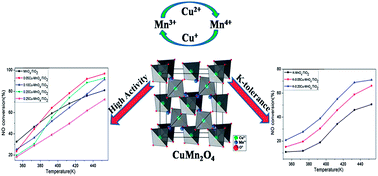
Using the impregnation method, a series of Cu–Mn oxide catalysts were prepared and investigated for the selective catalytic reduction (SCR) of NOx with NH3 at temperatures ranging from 353 K to 453 K. The 0.05Cu–MnOx/TiO2 catalyst shows the highest activity and yields nearly 100% NOx conversion at 453 K using GHSV = 40[thin space (1/6-em)]000 h−1, while the 0.20Cu–MnOx/TiO2 catalyst exhibits a certain level of potassium tolerance. In addition, the catalysts show favorable stability and water resistance. According to the XRD, EDS and SCR performance results, the existence of a new crystallized CuMn2O4 spinel phase is the dominant parameter for outstanding SCR activity between 413 K and 453 K. TPR, XPS and in situ DRIFT experiments indicate that CuMn2O4 is responsible for low reduction temperature, strong interaction between manganese oxides and copper oxides, high Mn3+ content and numerous acid sites on the surface. Compared with MnOx/TiO2 catalysts, Cu–Mn oxide catalysts could reduce the poisoning effect of potassium, illustrating that the CuMn2O4 phase may play a significant role in K-tolerance. Meanwhile, based on a certain level of potassium tolerance in CuMn2O4, an oxidation mechanism for NO is proposed due to the increase in Mn3+ and the special structure of a spinel oxide.

1. Introduction

Nitrogen oxides (NO and NO2) are known to be harmful to ecosystems and human beings.1–3 It is one of the major causes of air pollution, and numerous efforts are being devoted towards finding out adequate solutions for the removal of NOx. Selective catalytic reduction with NH3 (NH3-SCR) in excess oxygen is considered to be the most effective and prospective technology for the treatment of nitrogen oxides. During the NH3-SCR process, NOx from flue gases is reduced by the reducing agent (ammonia) to molecular nitrogen and water.4–6 In recent decades, in order to control NOx emissions from stationary coal-fired power plants, commercial V2O5–WO3(MoO3)/TiO2 catalysts have been widely used for NH3-SCR at 573–673 K.7–10 At present, cement industry is the third-largest emitter of NOx, followed by thermal power plants and automobile exhausts in China. Because the temperature of cement kiln flue gas is around 473 K or even lower, the commercial catalysts are inactive for this application. Therefore, the development of catalysts for NH3-SCR at low temperatures has attracted significant attention in the academic community. Abundant studies on transition metal oxide-based catalysts have been conducted for low temperature SCR of NO by NH3 such as Cu,11–13 Fe,14–16 Mn12,17–20 and Cr.12,13Furthermore, a number of catalysts on different supports have been studied to enhance the catalytic activity for low-temperature SCR such as carbon nanotubes,21–23 ZrO2–CeO2,24,25 TiO218,26,27 and Al2O3.5 Because of their excellent low-temperature activities in this reaction, MnOx/TiO2 catalysts have attracted considerable interest among the investigated catalysts. Meanwhile, their NH3-SCR activities are significantly determined by the oxidation states and dispersion of manganese oxides.28–31 During the cement production process, the raw materials for cement and coal generally contain alkali and alkaline earth metals, including K+, Na+ and Ca2+. Alkali and alkaline earth metal salts are known to exhibit inhibiting and deactivating effects on the NH3-SCR activity of the catalysts, especially at low temperature. Chen et al.32 proposed that doping with alkali and alkaline earth metals could reduce the surface chemisorbed oxygen, and the downward trend was nearly the same as the SCR activity, i.e. K > Na > Ca > Mg.

Cu–Mn oxides have been investigated extensively for enhancing the activity of various catalysts. Kang et al.33 reported that Cu–Mn oxide catalysts showed complete NOx conversion in a wide range of reaction temperatures from 348 to 473 K in the presence of excess oxygen. Meanwhile, this catalyst showed a reversible deactivation due to the presence of water vapor and SO2. Buciuman et al.34 claimed that Cu–Mn oxides were highly active for complete oxidation reactions at low temperatures. According to Koebel's35 study, this could help the facile formation of NO2 and promote NO reduction with ammonia at low temperatures. In addition, the spinel-type oxide (CuMn2O4), appearing in Cu–Mn oxide catalysts, has been investigated as a catalyst for low-temperature SCR.33,36 As heterogeneous catalysts, spinel-type oxides, with a chemical formula of AB2O4, have attracted considerable attention due to their special properties. In a typical structure of a spinel oxide, O2− is located in pseudo-cubic-close-packed spatial arrangement, while 8 of the 64 tetrahedral interstices are occupied by the A-site cations and half of the 32 octahedral interstices are occupied by the B-site cations.37,38 Meanwhile, the spinel oxide offers the possibility of replacing cations in both the tetrahedral and octahedral sites available in the spinel crystal lattice. In addition, there are abundant oxygen vacancies and the potential of cation transfer between A and B sites, resulting in a high performance of spinel oxides in various catalysis reactions.39 Therefore, these features contribute to variations in the surface acid-base sites and redox properties, which may consequently promote activity in the SCR reaction. These spinel oxides were studied previously by some researchers in the NH3-SCR of NOx.33,36,40,41 Chromium spinel oxides, studied by Zamudio et al.,40 are effective in the SCR reaction at low temperatures, confirming the correlation between the nature of the spinel sites and the SCR activity of spinel oxides. Meanwhile, Szoczynski et al.41 investigated a series of MCr2O4 (M = Mg, Zn, Fe, Co, Ni, or Cu)-type catalysts. Wang et al.42 studied the iron spinel oxides doped with Mn, Co, Ni and Zn for the SCR of NO with NH3.

In this work, various Cu–Mn oxide catalysts were prepared by a simple impregnation method, and were applied to the NH3-SCR of NOx at a temperature range of 353–453 K. A systematic investigation of physical and chemical characteristics, phase structures and surface properties of the Cu–Mn oxide catalysts was carried out by XRD, BET, FESEM, XPS, H2-TPR, NH3-TPD, DRIFTS, etc. The inclusion of a mixed-oxide phase, CuMn2O4, showed significant synergistic effects with MnOx for higher activity in the low-temperature NH3-SCR of NOx. Meanwhile, special attention was paid to the effect of molar ratios of Cu–Mn and potassium (1 wt%) deactivation. The obtained Cu–Mn oxide catalysts exhibited higher K-tolerance than MnOx/TiO2 catalysts. The measurements of the surface area and crystalline structure are helpful for the understanding of the different catalytic activities of Cu–MnOx/TiO2 catalysts. Furthermore, the electron transfer between copper and manganese ions in CuMn2O4 is related to the mechanism of low-temperature SCR and its resistance to potassium poisoning.

2. Experimental section

2.1. Preparation of catalysts

Various kinds of MnOx/TiO2 catalysts were prepared by the impregnation method with TiO2 powder (P25, Degussa, 80% anatase and 20% rutile) and manganese acetate (MA, Mn(CH3COO)2·4H2O). TiO2 was used as the support, and the mole ratio of TiO2 powder to manganese acetate was 0.4.15,18,30 Different mole ratios of Cu(NO3)2·3H2O were added during the preparation of MnOx/TiO2 catalysts to obtain Cu–Mn oxide catalysts. The catalysts are denoted as λCu–MnOx/TiO2 in this paper, where λ represents the mole ratio of CuO to TiO2. The K-doped catalysts (denoted as K–MnOx/TiO2 and K–λCu–MnOx/TiO2) were prepared by adding 1 wt% amount of KNO3 during the preparation of MnOx/TiO2 or λCu–MnOx/TiO2 catalysts. All the samples dried in air at 383 K for 18 h were crushed and sieved to collect 60–100 mesh simultaneously. Then, the samples were calcined in air at 773 K for 3 h. Afterwards, the catalysts were pressed into tablets (i.d. about 5 mm) for analyzing their NO removal efficiency on a self-designed testing device.

2.2. Catalyst characterization

The powder X-ray diffraction (XRD) patterns were obtained on a Bruker D8 Advance diffractometer (Bruker, Germany) at an angle of 2θ from 10° to 80°, using Cu Kα (λ = 0.15406 nm). The Brunauer–Emmett–Teller (BET) surface area calculated from N2 adsorption was performed using a TriStar II 3020 gas sorption analyzer (Mike, USA). The morphology and structure of the samples were examined by field emission scanning electron microscopy (FESEM, Ultra plus, Zeiss). To identify the nature and concentration of the active surface, X-ray photoelectron spectroscopy (XPS) was implemented on a surface analysis system (VG Multilab2000) with Al Kα radiation using the C 1s line at 284.6 eV as the standard. High-resolution transmission electron microscopy (HRTEM) was conducted on a JEM-2100F electron microscope (JEOL, Japan), operating at an accelerating voltage of 200 kV to investigate the microscopic structure of the catalysts. Before the TEM test, the catalyst powder was ultrasonically suspended in alcohol for 10 min, and the obtained suspension was deposited on nickel grid-supported amorphous carbon films. The dispersion of the elemental composition and semi-quantitative determination of the ratio of Cu, Mn, and O in the catalysts was verified by energy dispersive spectroscopy (EDS) analysis.

The hydrogen temperature-programmed reduction (H2-TPR) and ammonia temperature-programmed desorption (NH3-TPD) experiments were performed on the TPDRO1100 (Thermo, USA) with a thermal conductivity detector (TCD). Prior to the TPR experiments, about 50 mg sample was pretreated at 473 K for 1 h in nitrogen (20 mL min−1) and then cooled to 313 K. During H2-TPR, 5 vol% H2 in N2 was fed at a flow rate of 30 mL min−1. The temperature was increased from 373 K to 1073 K (10 K min−1) and then maintained constant at 1073 K for 30 min to match the signal intensities of hydrogen with the initial values. Prior to the TPD experiments, approximately 150 mg sample was pretreated by heating in 20 mL min−1 of pure He from ambient temperature to 773 K (20 K min−1) with a 60 min hold time, and then the sample temperature was lowered to 313 K. Next, the sample was fluxed with 10% NH3/He (40 mL min−1) for 30 min, after which the sample was blown out with He (30 mL min−1) for 30 min at 373 K. Subsequently, the temperature was increased up to 773 K (5 K min−1) to remove NH3, and then the temperature was held constant at 773 K for 30 min.

The in situ diffuse reflectance infrared transform spectroscopy (DRIFT) experiments were carried out on a Nicolet 6700 FTIR spectrometer with an in situ diffuse reflectance pool and high-sensitivity MCT detector cooled by liquid N2, using mass flow controllers and a sample temperature controller to simulate reaction conditions. The total flow rate of the feeding gas was maintained at 100 mL min−1 with a stream containing 1000 ppm NH3/N2 to adsorb NH3 at the desired reaction temperature. IR spectra were recorded by accumulating 64 scans at a spectrum resolution of 4 cm−1.

2.3. Catalytic activity test

About 2000 mg catalysts pressed into tablets (i.d. 5 mm) were prepared for activity measurements, which were carried out in a self-designed reactor. A special glass tube (i.d. 20 mm) equipped with a temperature-programming controller was present in the reactor. The concentration of NOx was continually monitored with an off-gas analysis spectrometer (Gasboard-3800P) and the conversion of NO was calculated as ([NO]in − [NO]out)/[NO]in in order to evaluate the activity of each catalyst. A typical reactant gas composition was 720 ppm NO, 800 ppm NH3, 3% O2, balance N2 and 8 vol.% H2O (when used), and the gas hourly space velocity (GHSV) was 40[thin space (1/6-em)]000 h−1. In addition, the reaction system was held for 30 min at each reaction temperature (in a range of reaction temperatures from 353 to 453 K) to reach a steady state with the on-line detection operating.

3. Results and discussion

The X-ray powder diffraction patterns of the Cu–Mn oxide catalysts prepared with different Cu–Mn molar ratios are shown in Fig. 1A. To understand the changes in physical and chemical properties due to potassium nitrate (1 wt%) addition, XRD analyses (Fig. 1B), were performed on various K-doped catalysts. All the samples exhibit sharp and strong diffraction peaks representing anatase (ICDD PDF no. 84-1286; 2θ = 25.3°, 37.8° and 48.1°) and rutile phases (ICDD PDF no. 88-1172; 2θ = 27.6°, 36.2° and 54.6°) since the TiO2 powder, used as a support for all catalysts, consists of 80% anatase and 20% rutile. In addition, weak diffraction peaks at 2θ = 18.0°, 28.9°, 32.3°, 36.1°, 44.4° and 59.9° are ascribed to Mn3O4 phases (ICDD PDF no. 18-803), which appear in 0.025Cu–MnOx/TiO2 and 0.05Cu–MnOx/TiO2 catalysts, as well as in all the catalysts shown in Fig. 1B. Furthermore, relatively low intensity peaks of Mn2O3 (ICDD PDF no. 65-1798) are also detected in the MnOx/TiO2 and all the catalysts shown in Fig. 1A, similar results have been reported in the literature.18,30 Surprisingly, the diffraction peaks of Mn3O4 weakened and disappeared with an increase in Cu doping, and new peaks appeared at 18.5°, 30.4°, 35.9°, 43.6° and 57.7°, indicating the existence of crystallized CuMn2O4 (ICDD PDF no. 74-2422) phase in catalysts doped with Cu.34 Meanwhile, weak peaks of CuO (ICDD PDF no. 80-1917) emerge in Cu–Mn oxide catalysts together with the dominant CuMn2O4 phase. It is worth noting that CuO combines with dispersed Mn3O4 on the surface to form a completely new and dominant phase CuMn2O4, presumably improving the active sites for the NH3-SCR reaction. Meanwhile, the 0.20Cu–MnOx/TiO2 and 0.25Cu–MnOx/TiO2 catalysts give sharp XRD peaks attributed to the CuMn2O4 phase, indicating that most of the manganese oxides have been transformed to CuMn2O4 after the reaction of an equal molar ratio of Cu and Mn. With the introduction of 1 wt% potassium nitrate into catalysts, CuMn2O4 appears in the 1%K–0.20Cu–MnOx/TiO2 catalyst together with Mn3O4, which occurs in the 1%K–0.05Cu–MnOx/TiO2 catalyst. However, XRD patterns of the poisoned samples are almost superimposable on those of the corresponding pure catalysts, suggesting that no substances comprising potassium are observed for catalysts poisoned with K.43 The long-time stability test of 0.05Cu–MnOx/TiO2 and 0.20Cu–MnOx/TiO2 was carried out at 453 K for 16 h to investigate the phase variations of the catalysts. According to the XRD patterns of the used catalysts, there is no clear change in the active ingredients as compared with the fresh catalysts. Thus, it can be concluded that the catalysts are stable during the NH3-SCR process.
image file: c4ra02824d-f1.tif
Fig. 1 XRD patterns of various titania-supported catalysts: (a) 0.025Cu–MnOx/TiO2; (b) 0.05Cu–MnOx/TiO2; (c) 0.10Cu–MnOx/TiO2; (d) 0.15Cu–MnOx/TiO2; (d) 0.20Cu–MnOx/TiO2 and (e) 0.25Cu–MnOx/TiO2. XRD patterns of various K-doped catalysts: (g) MnOx/TiO2; (h) 1%K–MnOx/TiO2; (i) 1%K–0.05Cu–MnOx/TiO2 and (j) 1%K–0.20Cu–MnOx/TiO2. XRD patterns of used catalysts: (k) 0.05Cu–MnOx/TiO2; (l) 0.20Cu–MnOx/TiO2.

HRTEM was employed to observe the morphologies and sizes of the catalysts. In Fig. 2a and b, the bright-field and high-resolution images of the MnOx/TiO2 catalyst are shown, respectively, while Fig. 2c and d shows the images of the 0.05Cu–MnOx/TiO2 catalyst. There is no significant pore agglomeration, whereas, in the HRTEM, no lattice fringes due to Cu-oxides or Mn-oxides are observed other than the anatase TiO2 (101) plane. The HRTEM images of the catalysts show that the typical nanoparticles are well dispersed with the particle size in the range of 10–20 nm. In addition, we cannot clearly identify whether the Cu–Mn oxide particles are located on the surface of TiO2 or are wrapped in the particles of TiO2 due to the two-dimensional character of TEM images.


image file: c4ra02824d-f2.tif
Fig. 2 HRTEM images (scale bar 50 nm) of (a) MnOx/TiO2 and (c) 0.05Cu–MnOx/TiO2. HRTEM images (scale bar 5 nm) of (b) MnOx/TiO2 and (d) 0.05Cu–MnOx/TiO2. AT: anatase TiO2.

Compared with the 0.05Cu–MnOx/TiO2 catalyst, the panel (a) in Fig. 3 shows that the 0.10Cu–MnOx/TiO2 catalyst has a larger particle size of around 10–30 nm, which might be due to the stronger interaction between copper and manganese oxide species (CuMn2O4), as shown by the XRD results. However, the blurry lattice fringes of the bigger particle indicate lower degree of crystallinity, while the smaller particles are attributed to anatase and rutile TiO2. Therefore, the EDS analysis was carried out to semi-quantitatively determine the ratios of Mn and Cu in the larger particle. The EDS study shows that the corresponding composition of the 0.10Cu–MnOx/TiO2 catalyst is atomic Mn = 68.96%, Cu = 31.04% (Fig. 3b). Thus, the EDS results of Mn and Cu contents in the prepared catalysts confirm the stoichiometries of the molecular formula of CuMn2O4 spinel oxides, which are located on the surface of TiO2 due to the character of HRTEM images. Therefore, we speculate that some CuMn2O4 particles on the surface of TiO2 might partly relate to the activity of catalysts and some peculiar properties.


image file: c4ra02824d-f3.tif
Fig. 3 (a) Bright field and (b) EDS of 0.10Cu–MnOx/TiO2.

The FESEM images of MnOx/TiO2 catalysts with different ratios of Cu to Mn and/or K doping are illustrated in Fig. 4, investigating the changes in morphology. It is clear that the ratio of Cu to Mn has a distinctive effect on the morphology. The surfaces of catalysts are amorphous and particles have a diameter of about 20 nm in Fig. 4a–c, which is in line with the HRTEM results (Fig. 2). With a further increase in the Cu content, more CuMn2O4 spinel oxides tend to form larger nanoparticles on the surfaces shown in Fig. 4d–f, depending on the crystal structure of the spinel oxide. The result is in good agreement with the stronger intensity of the XRD diffraction peaks. Meanwhile, with the addition of 1 wt% potassium nitrate, some striking particles with diameter of about 100 nm appear in the 1%K–MnOx/TiO2 catalyst (Fig. 4g). According to Kamata's44 study, the larger particles might be due to the formation of crystalline potassium manganese oxides. However, there are fewer large particles in MnOx/TiO2 catalysts doped with Cu (Fig. 4h and i) because manganese and copper oxides form CuMn2O4 with a diameter of about 30 nm (Fig. 3a), resulting in the combination of few manganese oxides with the potassium oxides. Hence, based on the competitive reactions between K–Mn and Cu–Mn oxides, it could be concluded that the results of the two reactions would influence the surface properties and morphologies, significantly contributing to the NH3-SCR activities of the catalysts.


image file: c4ra02824d-f4.tif
Fig. 4 FESEM images of catalysts: (a) 0.025Cu–MnOx/TiO2; (b) 0.05Cu–MnOx/TiO2; (c) 0.10Cu–MnOx/TiO2; (d) 0.15Cu–MnOx/TiO2; (e) 0.20Cu–MnOx/TiO2; (f) 0.25Cu–MnOx/TiO2; (g) 1%K–MnOx/TiO2; (h) 1%K–0.05Cu–MnOx/TiO2 and (i) 1%K–0.20Cu–MnOx/TiO2.

NH3-SCR activities for different catalysts promoted by Cu and poisoned by K are shown in Fig. 5. As expected,33,36 most of the Cu–Mn mixed oxide catalysts show high NOx conversions at temperature ranging from 353 K to 453 K, and the 0.05Cu–MnOx/TiO2 catalyst achieves nearly 100% NOx conversion at 453 K in Fig. 5A. When the ratio of Cu to Ti is over 0.05 (Cu/Mn = 1[thin space (1/6-em)]:[thin space (1/6-em)]8), catalysts doped with Cu exhibit an obvious decrease in the NOx conversion below 393 K, as compared to the MnOx/TiO2 catalyst. However, the NOx conversion of the 0.025Cu–MnOx/TiO2 catalyst is almost superimposable on that of the MnOx/TiO2 catalyst below 413 K, indicating that the low Cu doping slightly improves the catalyst. According to the earlier literature reports,13,18 MnOx causes the activity in the SCR reaction of NO with NH3 at low temperatures. Therefore, with a further increase in Cu doping, the emergence of a clear XRD pattern of the CuMn2O4 phase shows that some MnOx combines with CuO to form a new CuMn2O4 phase (Fig. 1 and 3), resulting in low NOx conversion below 393 K. When the mole ratio of Cu to Mn is not over 1[thin space (1/6-em)]:[thin space (1/6-em)]2 (the Cu/Mn in CuMn2O4 is 1[thin space (1/6-em)]:[thin space (1/6-em)]2), the new phase of CuMn2O4 and the residual MnOx play a synergistic role in the NH3-SCR process, and the doping with Cu could significantly promote catalytic properties by modulating the electronic structure of these catalysts. Hence, the 0.25Cu–MnOx/TiO2 catalyst shows very low activity because some MnOx remains. Meanwhile, in the 0.15Cu–MnOx/TiO2 catalyst, the residual MnOx is not sufficient to promote the NH3-SCR process below 413 K but the superior effect on NOx conversion above 413 K might be due to CuMn2O4. It can be concluded that the mole ratio of Cu to Mn strongly influences NOx conversion with the Cu–Mn oxide catalysts because of the critical formation of crystalline phases. Meanwhile, in comparison to CuO and MnOx, the CuMn2O4 phase might significantly promote the effect on NOx conversions in the temperature range between 413 K and 453 K,33 and the synergistic effect between the spinel and MnOx is important in the SCR process at low temperatures. Because of this interaction, 0.05Cu–MnOx/TiO2 and 0.20Cu–MnOx/TiO2 catalysts provide high activity in the low-temperature SCR of NO with NH3.


image file: c4ra02824d-f5.tif
Fig. 5 NH3-SCR performances of catalysts. (A) Catalysts promoted by different concentrations of Cu. (B) Catalysts deactivated by 1 wt% potassium nitrate. (C) Long-time stability tests over catalysts. (D) The effect of H2O on NH3-SCR.

It is observed that the 1%K–0.20Cu–MnOx/TiO2 catalyst shows the highest activity for the reduction of NO with NH3 in the temperature range of 353 K to 453 K (Fig. 5B). NO conversion reaches 71% with 1%K–0.20Cu–MnOx/TiO2, with the others following in the decreasing order of 1%K–0.20Cu–MnOx/TiO2 > 1%K–0.05Cu–MnOx/TiO2 > 1%K–MnOx/TiO2. The inferior performance of the K-doped catalysts can be mainly attributed to the formation of catalytically inactive mixed-oxide phases (potassium manganese oxides), which are observed in a FESEM study. The mixed-oxide phases are likely to be highly stable, and are difficult-to-reduce species that do not participate in the reaction. Thus, the number of active sites available for the reaction decreases, resulting in lower catalytic performance. However, the beneficial phase of CuMn2O4 in Cu-doped catalysts could prevent the potassium oxides from combining with the manganese oxides, reducing the poisoning effect of potassium. Hence, from the abovementioned results, it can be concluded that the presence of active ingredients (CuMn2O4) is the dominant parameter for higher SCR activity at low temperatures on Cu–Mn oxide catalysts doped with K. Therefore, the CuMn2O4 phase might play a significant role in K-tolerance.

As shown in Fig. 5C, the long-time stability tests of 0.05Cu–MnOx/TiO2 and 0.20Cu–MnOx/TiO2 were carried out at 453 K, and they show very good SCR activity at low temperature. According to the XRD results shown in Fig. 1C, there are no obvious changes in catalysts before and after use. Thus, we can conclude that the active ingredients are well-dispersed without sintering. Fig. 5D shows the effect of H2O on the SCR activity of different catalysts as a function of time at 453 K. When only 8 vol.% H2O is added to the reactants, NO conversions decrease quickly to about 86% for 0.20Cu–MnOx/TiO2 and 84% for 0.05Cu–MnOx/TiO2, and then they stabilize. Meanwhile, the activities are rapidly restored to their original levels when the water supply is removed. The abovementioned results indicate that the 0.05Cu–MnOx/TiO2 and 0.20Cu–MnOx/TiO2 catalysts are easy to recover from depression in activity due to water.

The BET surface area and pore volume of catalysts doped with Cu are listed in Table 1. With the addition of transition metals, numerous micropores could be preserved, and the surface area was larger than that of MnOx/TiO2.44 However, comparing the data of catalysts with different loadings, it is interesting to observe that the surface area and pore volume of catalysts become smaller and smaller with loading. This might be due to enrichment with larger nanoparticles of CuMn2O4 on the surface, which is confirmed in the XRD, FESEM and HRTEM results discussed above. On the other hand, CuMn2O4 deposited on the catalyst surfaces can block the micropores, leading to a reduction in the BET surface area and pore volume. This effect is stronger at higher Cu doping because more CuMn2O4 would appear with increasing Cu doping. According to previously reported studies,30,45 larger surface area and pore volume might be beneficial to catalytic activity. However, considering the abovementioned activity measurements, the contribution from the enhancement in surface areas to NOx conversion is considered to be rather limited in comparison with the chemical properties of the active ingredient CuMn2O4.46,47 Thus, it suggests that the CuMn2O4 might result directly from the enhancement of NH3-SCR activity.

Table 1 The BET surface area and pore volume of catalysts doped with Cu
Catalysts SBET/m2 g−1 VP/cm3 g−1
MnOx/TiO2 34.77 0.2241
0.025Cu–MnOx/TiO2 33.52 0.1982
0.05Cu–MnOx/TiO2 31.21 0.1746
0.10Cu–MnOx/TiO2 28.79 0.1774
0.15Cu–MnOx/TiO2 28.27 0.1703
0.20Cu–MnOx/TiO2 24.28 0.1127
0.25Cu–MnOx/TiO2 24.10 0.1185


To verify the dispersion of active metal species over the TiO2, TPR studies were carried out for the catalysts, as shown in Fig. 6. As observed from the figure, the shift in the peaks of Cu–Mn oxide catalysts toward lower temperatures is significant when compared to the MnOx/TiO2 catalyst. The higher-temperature peak at 702 K can be correlated to a reduction of Mn3O4 to MnO, whereas the less intense reduction peak observed near 554 K corresponds to the reduction of Mn2O3 to Mn3O4. These results are in good agreement with the XRD results and the previously reported studies.48,49 Further, on ignoring the peaks toward lower temperatures, the curve shape of the 0.025Cu–MnOx/TiO2 catalyst is the same as the MnOx/TiO2 catalyst, which illustrates that Cu doping causes a higher reducibility. At the same time, Buciuman et al.34 pointed out that the presence of manganese oxide appeared to facilitate the reduction of copper oxide as indicated by the lower reduction temperature of the latter. Furthermore, reduction peaks at lower temperatures in Fig. 6A are observed for catalysts with further Cu doping, and at higher temperatures peaks disappear. These results reveal that the strong interaction between manganese oxides and copper oxides results in easier reduction. At the same time, the reduction peak around 420–600 K is attributed to the reduction of copper oxides and manganese oxides together with the CuMn2O4 phase. Highly dispersed copper species weakly interacting with the support and manganese oxides could be attributed to the reduction reaction starting nearly at 420 K, while copper oxides strongly associated with manganese oxides (CuMn2O4) are related to the reduction reaction finishing at about 600 K. The differences in the reduction temperature and reduction peak area among various Cu–Mn oxide catalysts suggest that the Cu/Mn molar ratio changes the status of manganese oxides and copper oxides, resulting in the peak maxima being shifted to lower temperatures. In the case of Cu–Mn oxide catalysts with higher Cu content, broad reduction peaks at about 560 K are attributed to copper oxides.34


image file: c4ra02824d-f6.tif
Fig. 6 TPR profiles of catalysts. (A) Catalysts promoted by different concentrations of Cu. (B) Catalysts deactivated by 1 wt% potassium nitrate.

H2-TPR experiments of catalysts doped with potassium are performed to investigate the reduction profiles of the catalysts, as shown in Fig. 6B. All the K-doped catalysts show higher and broader reduction peaks compared to the corresponding catalysts without K addition. For example, compared to the MnOx/TiO2 catalyst, the 1%K–MnOx/TiO2 catalyst shows two higher peaks at 450–640 K and 660–780 K, which could be attributed to the reduction of MnO2 and Mn2O3 to Mn3O4 as well as the reduction of Mn3O4 to MnO. Furthermore, the reduction peaks of catalysts doped with K slightly shift to higher temperatures, which confirms that small amounts of K+ ions strongly interact with active MnOx to form potassium manganese oxides. Bulushev et al.50 reported a similar result that the introduction of an alkali metal suppressed the reducibility of the active ingredients on the surface of the catalysts and suppressed the redox character of the catalysts. Considering that the active MnOx plays a significant role in the activity of the catalyst, the strong interaction can be linked to the lower NH3-SCR activity (Fig. 5).

It can be observed that there is only one NH3 desorption peak for all the catalysts in Fig. 7. The desorption of ammonia bound to weak Bronsted acid sites always showed a peak at low temperature, while the NH3 desorption from Lewis acid sites caused the NH3 desorption at high temperature.51 The obvious NH3-TPD peak at low temperature observed for the catalysts indicates that there are no distinct Lewis acid sites on the surface of the catalysts. For low-temperature NH3-SCR, it is commonly agreed that the adsorption and activation of NH3 plays an important role in governing catalytic activities, while the adsorption and activation of NO appear to be less crucial for these reactions. The NH3-TPD results of MnOx/TiO2 catalysts doped with Cu reveal a slight reduction in the total amount of adsorbed NH3 due to the decrease in manganese oxides. Fig. 7B shows that potassium deactivation leads to a noticeable decrease in total acidity compared to the corresponding catalysts without K addition. According to the results of the NH3-TPD measurements, the potassium on the surface of the catalysts might occupy the most acidic sites and decrease the number of surface acidic sites, retarding the adsorption of NH3 for the reduction of NO. It is assumed that potassium oxides first occupy the strongest acidic sites, and electron donation weakens the remaining acidic sites because of the formation of crystalline potassium manganese oxides as well as the decrease and disappearance of manganese oxides. However, the amount of surface lattice oxygen of manganese oxides and the bond energies of Mn–O govern the catalytic activities in the low-temperature NH3-SCR reactions.52


image file: c4ra02824d-f7.tif
Fig. 7 NH3-TPD profiles of catalysts. (a) MnOx/TiO2; (b) 0.025Cu–MnOx/TiO2; (c) 0.05Cu–MnOx/TiO2; (d) 0.10Cu–MnOx/TiO2; (e) 0.15Cu–MnOx/TiO2; (f) 0.20Cu–MnOx/TiO2; (g) 0.25Cu–MnOx/TiO2; (l) 1%K–MnOx/TiO2; (m) 1%K–0.05Cu–MnOx/TiO2 and (n) 1%K–0.20Cu–MnOx/TiO2.

The valence states of MnOx on the MnOx/TiO2 and 0.05Cu–MnOx/TiO2 catalysts are determined by XPS analysis, as shown in Fig. 8. The surface atomic concentrations of all the elements in these catalysts are summarized in Table 2. With an obvious increase from 37.44% to 57.79%, the Mn/Ti atomic ratio in the 0.05Cu–MnOx/TiO2 catalyst is apparently higher than that of the MnOx/TiO2 catalyst, which is attributed to its more outstanding activity in the low-temperature NH3-SCR,19 which indicate that manganese oxides are highly dispersed over the surface of the former catalyst because of the introduction of Cu and the formation of the CuMn2O4 phase.


image file: c4ra02824d-f8.tif
Fig. 8 XPS spectra for (A) Ti 2p, (B) Mn 2p and (C) O 1s of catalysts. (a) MnOx/TiO2 catalyst and (b) 0.05Cu–MnOx/TiO2 catalyst.
Table 2 Atomic surface concentration (%) obtained by XPS spectra
Catalyst Surface atom concentration (%) Mn/Ti
O Mn Cu Ti
MnOx/TiO2 67.99 8.72 0 23.29 37.44
0.05Cu–MnOx/TiO2 72.83 9.20 2.05 15.92 57.79


The peak around 464.3 eV is associated with Ti 2p1/2, and the peak around 458.6 eV is attributed to Ti 2p3/2 in the different catalysts in Fig. 8A and Table 3. This indicates that Ti exists as Ti4+ and not as Ti3+ in the mixed oxides.53 Two main peaks of Mn 2p3/2 and Mn 2p1/2 are observed. By performing peak-fitting deconvolution, the Mn 2p3/2 spectra can be separated into three peaks, namely, 640.3–640.7, 641.8–642.0 and 643.2–644.5, corresponding to the Mn2+ peak, Mn3+ peak and Mn4+ peak, respectively.16 As compared with the MnOx/TiO2 catalyst, more Mn2+ ions included in the 0.05Cu–MnOx/TiO2 catalyst preferentially deposit on the surface, while fewer Mn4+ ions are observed by XPS tests. Meanwhile, the content of Mn3+ ions increases slightly and the Mn3+ peak becomes broader because some manganese oxides are strongly associated with copper oxides to form a small quantity of CuMn2O4. Xie's18 study showed that MnOx oxides in the lower valence state were beneficial in NH3-SCR, which agreed well with the abovementioned NO conversion results of the 0.05Cu–MnOx/TiO2 catalyst. Meanwhile, Stanciulescu et al.54 reported that the catalysts containing Mn(III) appeared to be more active for NOx reduction than those with Mn(IV). The O 1s XPS spectra is composed of crystal lattice oxygen species at low binding energy (529.6–530.0 eV) and surface chemisorbed oxygen species at high binding energy (531.3–532.7 eV).19,46 It can be seen from Fig. 8C and Table 3 that the peaks of O 1s for the two catalysts have the same binding energy (529.9 eV), corresponding to crystal lattice oxygen species. Furthermore, only one oxidation state of copper is detected on the surface of the catalysts because a Cu 2p3/2 binding energy of 933.9 eV with a shake-up or satellite peak at 938.5–946.5 eV is typical for copper in an oxidation state of +2. Based on their excellent SCR performance, it is considered that the Cu2+ species are able to adsorb and activate NO molecules, and a higher amount of Cu2+ species favors the NH3-SCR reaction.55

Table 3 Binding energy for different compositions by XPS analysisa
Catalyst B.E. (percent of valence state, %) B.E. (eV)
Mn2+ Mn3+ Mn4+ Ti 2p3/2 Ti 2p1/2 O 1s
a (a) MnOx/TiO2; (b) 0.05Cu–MnOx/TiO2.
(a) 640.4 (30.6) 641.9 (43.2) 643.5 (26.2) 458.6 464.3 529.9
(b) 640.4 (32.6) 641.9 (44.1) 643.4 (23.3) 458.7 464.3 529.9


The in situ DRIFT spectra of adsorbed ammonia species on various catalysts are shown in Fig. 9. Depending on the metal oxide surface, the adsorption of NH3 can occur through a hydrogen bond, coordination to an electron-deficient metal atom (Lewis acid site), dissociation of NH3 with formation of NH2 or NH groups, and formation of NH4+ at Bronsted acid sites.56 Several similar bands at 1581, 1426 and 1174 cm−1 are detected with the MnOx/TiO2 and 0.05Cu–MnOx/TiO2 catalysts, while the latter has the peaks with stronger intensity and a new peak at 1353 cm−1. Bands at 1174 and 1581 cm−1 being sharper and stronger grow swiftly but the other bands grow slowly with the exposure time. The strong bands at 1576–1581 cm−1 correspond to the asymmetric deformation of NH3 coordinated to Lewis acid sites and NH4+ bound to Bronsted acid sites.15,46 Furthermore, the band at 1426–1430 cm−1 is attributed to NH4+ species on Bronsted acid sites.15 The strong absorption peak at 1164–1174 cm−1 is attributed to NH3 bound to Lewis acid sites, which is suggested to play an important role in the low-temperature SCR.29 Interestingly, new Lewis acid sites (1353–1361 cm−1 and 1204 cm−1) are observed and become clearer as their exposure to NH3 is prolonged57 when copper is introduced into the catalysts such as the 0.05Cu–MnOx/TiO2 and 0.20Cu–MnOx/TiO2 catalysts. The peak at 1232 cm−1 that is assigned to weakly adsorbed NH3 or gas-phase NH3 becomes increasingly strong when the 0.20Cu–MnOx/TiO2 catalyst is exposed to NH3.15 Meanwhile, the weak band at 1382 cm−1 is correlated to NH4+ ions formed on the Bronsted acidic sites. Compared with the MnOx/TiO2 catalyst, the 0.20Cu–MnOx/TiO2 catalyst shows some novel peaks at 1382, 1361, 1232 and 1204 cm−1, which can be assigned to the coordinated NH3 on CuMn2O4. Therefore, the peak for acidic sites is quite prominent due to the incorporation of Cu into the MnOx/TiO2 catalyst,13 promoting high activity in the SCR reaction of NO with NH3. This suggests that some of the manganese ions are differently bonded after copper addition, creating new Lewis adsorption sites.56


image file: c4ra02824d-f9.tif
Fig. 9 In situ DRIFT spectra of adsorbed ammonia species on various catalysts promoted by different concentrations of Cu or deactivated by 1 wt% potassium nitrate at 433 K. (Reaction conditions: NH3 = 1000 ppm, and N2 as balance, total gas flow rate is 100 mL min−1.)

With the addition of K, the peak intensity of the MnOx/TiO2 catalyst decreases, which is in line with the NH3-TPD measurements (Fig. 7B). The obtained results imply that potassium disturbs the formation of the active ammonia intermediates, resulting in the deactivation of the catalyst, which is mainly due to the lack of surface manganese species on these catalysts. The new peaks at about 1327 and 1124–1118 cm−1 might be associated with Lewis acid sites because the Bronsted acid sites are captured by potassium oxide. Therefore, with the introduction of Cu it is observed that the acidic sites are greatly improved because of the broader peaks at about 1581 cm−1 as the new peaks, which might be the reason for reducing the poisoning effect of potassium.

Catalysts doped with Cu exhibit excellent NO conversion in the presence of excess oxygen, suggesting that the active sites present on Cu–Mn oxide catalysts are probably altered or covered by the presence of rich copper oxides41 when the mole ratio of Cu to Mn is over 1[thin space (1/6-em)]:[thin space (1/6-em)]8 (Cu/Ti > 0.05). However, when the mole ratio of Cu to Mn is 1[thin space (1/6-em)]:[thin space (1/6-em)]2 (the Cu/Mn in CuMn2O4 was 1[thin space (1/6-em)]:[thin space (1/6-em)]2), the abundant new phase of CuMn2O4 significantly promotes catalytic properties by modulating the electronic structure of these catalysts and plays a synergistic role in the NH3-SCR process with a new redox process. Furthermore, it has been reported that one important role for elemental Mn in Mn-based SCR catalysts is that the presence of Mn is helpful for the activation of the adsorbed NH3 because the direct catalytic reaction of NO and NH3 to N2 is considered to be difficult.16 A basic knowledge of the structure–activity relationship observed in the heterogeneous catalytic oxidation is of significant importance for the development of new catalytic materials and for improving the performance of existing catalysts. CuMn2O4 is known to be an active oxidation catalyst because of the easy electron transfer between copper and manganese ions without a change in lattice, improving the lattice oxygen mobility and redox quality.34,36,58 The electron transfer influences the oxidation of NO to NO2 on the surface of the catalysts, which has been considered to play a crucial role in the mechanism of SCR with NH3.35 Based on the previous studies,16,33,36,58 a redox cycle between Cun+ and Mnn+ with different oxidation states is proposed, considering the increase in Mn3+ and the formation of CuMn2O4 by XPS and XRD. Similar to the redox catalytic cycles of the NO oxidation reactions in the studies,33,58 an oxidation mechanism for NO oxidation can be described by the following reactions:

Cu2+ + Mn3+ → Cu+ + Mn4+

NO + Mn4+ → NOads+ + Mn3+

1/2O2 + Cu+ → Cu2+ + Oads

NOads+ + Oads → NO2

The anomalous promotion of Cu–Mn mixed oxides has been attributed to the formation of the copper manganese spinel CuMn2O4, precisely to an electronic transfer between copper and manganese cations within the spinel lattice.36,58 Therefore, when the formation of crystalline potassium manganese oxides decreases active Mnn+, an electron transfer between copper and manganese cations within the CuMn2O4 spinel lattice might be the reason for enhancing the activity in the NH3-SCR reaction and reducing the poisoning effect of potassium.

4. Conclusion

A series of Cu–Mn oxide catalysts prepared by the impregnation method exhibit excellent activity for the low temperature SCR of NOx with ammonia in the presence of oxygen. Nearly 100% NOx conversion is achieved with the 0.05Cu–MnOx/TiO2 catalyst, while the 0.20Cu–MnOx/TiO2 catalyst exhibits a certain level of potassium tolerance. According to the XRD patterns and the EDS results, a new phase of CuMn2O4 is observed, and is the dominant parameter for good SCR activity at low temperature. The addition of copper clearly decreases the reduction temperature of manganese oxides by the TPR profiles, revealing a strong interaction between manganese oxides and copper oxides and resulting in an easier reduction. With a further increase in the Cu content, there are more CuMn2O4 spinel oxides to form larger nanoparticles on the surfaces, as shown by the FESEM images. Based on the results of the NH3-TPD measurements, the potassium on the surface of the catalysts might occupy the most acidic sites and decrease the number of surface acidic sites, retarding the adsorption of NH3 for the reduction of NO. However, in situ DRIFT spectra results show that the peak for acidic sites is quite prominent due to the incorporation of Cu into the MnOx/TiO2 catalyst and the formation of CuMn2O4 spinel oxides. A redox cycle between Cun+ and Mnn+ with different oxidation states is also proposed. Better oxidation of NO can be ascribed to the formation of CuMn2O4, in which there is an easier electron transfer between copper and manganese cations, which reduces the poisoning effect of potassium in the NH3-SCR reaction.

Acknowledgements

This work was financially supported by the National “Twelfth Five-Year” Plan for Science & Technology Support of China (2011BAE29B02). XRD, HRTEM and FESEM tests were supported by Research and Test Center of Materials, Wuhan University of Technology. In situ DRIFT, TPD and TPR tests were supported by State Key Laboratory of Silicate Materials for Architectures, Wuhan University of Technology. BET tests were supported by Laboratory of Living Materials, Wuhan University of Technology. The authors would like to thank Mr D. G. Tang from South-Central University for Nationalities (Key Laboratory of Catalysis and Materials Science of the State Ethnic Affair Commission Ministry of Education) for help with the XPS measurements.

References

  1. Q. Yang, Y. H. Wang, C. Zhao, Z. Liu, W. I. Gustafson, Jr and M. Shao, Environ. Sci. Technol., 2011, 45, 6404–6410 CrossRef CAS PubMed.
  2. G. S. Qi and R. T. Yang, Appl. Catal., B, 2003, 44, 217–225 CrossRef CAS.
  3. Z. F. Lu and D. G. Streets, Environ. Sci. Technol., 2012, 46, 7463–7470 CrossRef CAS PubMed.
  4. R. Q. Long and R. T. Yang, Appl. Catal., B, 2000, 24, 13–21 CrossRef CAS.
  5. W. S. Kijlstra, D. S. Brands, E. K. Poels and A. Bliek, J. Catal., 1997, 171, 208–218 CrossRef CAS.
  6. H. J. Chae, I. S. Nam, S. W. Ham and S. B. Hong, Appl. Catal., B, 2004, 53, 117–126 CrossRef CAS PubMed.
  7. P. G. W. A. Kompio, A. Brückner, F. Hipler, G. Auer, E. Lunert and W. Grunert, J. Catal., 2012, 286, 237–247 CrossRef CAS PubMed.
  8. L. Lietti, I. Nova, G. Ramis, L. Dall'Acqua, G. Busca, E. Giamello, P. Forzatti and F. Bregani, J. Catal., 1999, 187, 419–435 CrossRef CAS.
  9. P. Forzatti, Appl. Catal., A, 2001, 222, 221–236 CrossRef CAS.
  10. W. Zhao, Q. Zhong, T. J. Zhang and Y. X. Pan, RSC Adv., 2012, 2, 7906–7914 RSC.
  11. M. F. Irfan, S. D. Kim and M. R. Usman, Ind. Eng. Chem. Res., 2009, 48, 7959–7964 CrossRef CAS.
  12. P. G. Simirniotis, D. A. Pena and B. S. Uphade, Angew. Chem., Int. Ed., 2001, 40, 2479–2482 CrossRef.
  13. P. M. Sreekanth, D. A. Pena and P. G. Simirniotis, Ind. Eng. Chem. Res., 2006, 45, 6444–6449 CrossRef CAS.
  14. D. A. Pena, B. S. Uphade and P. G. Simirniotis, J. Catal., 2004, 221, 421–431 CrossRef CAS PubMed.
  15. Z. B. Wu, B. Q. Jiang, Y. Liu, H. Q. Wang and R. B. Jin, Environ. Sci. Technol., 2007, 41, 5812–5817 CrossRef CAS.
  16. Z. H. Chen, F. R. Wang, H. Li, Q. Yang, L. F. Wang and X. H. Li, Ind. Eng. Chem. Res., 2012, 51, 202–212 CrossRef CAS.
  17. D. S. Zhang, L. Zhang, C. Fang, R. H. Gao, Y. L. Qian, L. Y. Shi and J. P. Zhang, RSC Adv., 2013, 3, 8811–8819 RSC.
  18. J. L. Xie, D. Fang, F. He, J. F. Chen, Z. B. Fu and X. L. Chen, Catal. Commun., 2012, 28, 77–81 CrossRef CAS PubMed.
  19. X. Wang, Y. Y. Zheng, Z. Xu, X. L. Wang and X. P. Chen, RSC Adv., 2013, 3, 11539–11542 RSC.
  20. D. Fang, F. He, D. Li and J. L. Xie, Appl. Surf. Sci., 2013, 285, 215–219 CrossRef CAS PubMed.
  21. C. Fang, D. S. Zhang, S. X. Cai, L. Zhang, L. Huang, H. R. Li, P. Maitarad, L. Y. Shi, R. H. Gao and J. P. Zhang, Nanoscale, 2013, 5, 9199–9207 RSC.
  22. D. S. Zhang, L. Zhang, L. Y. Shi, C. Fang, H. R. Li, R. H. Gao, L. Huang and J. P. Zhang, Nanoscale, 2013, 5, 1127–1136 RSC.
  23. L. Zhang, D. S. Zhang, J. P. Zhang, S. X. Cai, C. Fang, L. Huang, H. R. Li, R. H. Gao and L. Y. Shi, Nanoscale, 2013, 5, 9821–9829 RSC.
  24. R. H. Gao, D. S. Zhang, P. Maitarad, L. Y. Shi, T. Rungrotmongkol, H. R. Li, J. P. Zhang and W. G. Cao, J. Phys. Chem. C, 2013, 117, 10502–10511 CAS.
  25. P. Maitarad, D. S. Zhang, R. H. Gao, L. Y. Shi, H. R. Li, L. Huang, T. Rungrotmongkol and J. P. Zhang, J. Phys. Chem. C, 2013, 117, 9999–10006 CAS.
  26. S. L. Zhang, X. X. Liu, Q. Zhong and Y. Yao, Catal. Commun., 2012, 25, 7–11 CrossRef CAS PubMed.
  27. D. Fang, F. He, D. Mei, Z. Zhang, J. L. Xie and H. Hu, Catal. Commun., 2014, 52, 45–48 CrossRef CAS PubMed.
  28. N. Tang, Y. Liu, H. Q. Wang and Z. B. Wu, J. Phys. Chem. C, 2011, 115, 8214–8220 CAS.
  29. P. R. Ettireddy, N. Ettireddy, S. Mamedov, P. Boolchand and P. G. Smirniotis, Appl. Catal., B, 2007, 76, 123–134 CrossRef CAS PubMed.
  30. D. Fang, F. He, J. L. Xie, Z. B. Fu and J. F. Chen, J. Wuhan Univ. Technol., Mater. Sci. Ed., 2013, 28, 888–892 CrossRef CAS.
  31. P. G. Smirniotis, P. M. Sreekanth, D. A. Pena and R. G. Jenkins, Ind. Eng. Chem. Res., 2006, 45, 6436–6443 CrossRef CAS.
  32. L. Chen, J. H. Li and M. F. Ge, Chem. Eng. J., 2011, 170, 531–537 CrossRef CAS PubMed.
  33. M. Kang, E. D. Park, J. M. Kim and J. E. Yie, Catal. Today, 2006, 111, 236–241 CrossRef CAS PubMed.
  34. F. C. Buciuman, F. Patcas and T. Hahn, Chem. Eng. Process., 1999, 38, 563–569 CrossRef CAS.
  35. M. Koebel, G. Madia and M. Elsener, Catal. Today, 2002, 73, 239–247 CrossRef CAS.
  36. A. Wallner, F. Langem, H. Schmelz and H. Kniizinger, Appl. Catal., A, 1993, 94, 181–203 CrossRef.
  37. K. E. Sickafus, J. M. Wills and N. W. Grimes, J. Am. Ceram. Soc., 1999, 82, 3279–3292 CrossRef CAS PubMed.
  38. D. S. Mathew and R. S. Juang, Chem. Eng. J., 2007, 129, 51–65 CrossRef CAS PubMed.
  39. T. Mathew, N. R. Shiju, K. Sreekumar, B. S. Rao and C. S. Gopinath, J. Catal., 2002, 210, 405–417 CrossRef CAS.
  40. M. A. Zamudio, N. Russo and D. Fino, Ind. Eng. Chem. Res., 2011, 50, 6668–6672 CrossRef CAS.
  41. J. Szoczynski, J. Janas, T. Machej, J. Rynkowski and J. Stoch, Appl. Catal., B, 2000, 24, 45–60 CrossRef.
  42. C. Z. Wang, S. J. Yang, H. Z. Chang, Y. Peng and J. H. Li, J. Mol. Catal. A: Chem., 2013, 376, 13–21 CrossRef CAS PubMed.
  43. L. Lisi, G. Lasorella, S. Malloggi and G. Russo, Appl. Catal., B, 2004, 50, 251–258 CrossRef CAS PubMed.
  44. H. Kamata, K. Takahashi and C. U. I. Odenbrand, J. Mol. Catal. A: Chem., 1999, 139, 189–198 CrossRef CAS.
  45. X. Wang, Y. Y. Zheng and J. X. Lin, Catal. Commun., 2013, 37, 96–99 CrossRef CAS PubMed.
  46. Y. Shu, H. Sun, X. Quan and S. Chen, J. Phys. Chem. C, 2012, 116, 25319–25327 CAS.
  47. R. D. Zhang, N. Luo, W. Yang, N. Liu and B. H. Chen, J. Mol. Catal. A: Chem., 2013, 371, 86–93 CrossRef CAS PubMed.
  48. J. Trawczynski, B. Bielak and W. Mista, Appl. Catal., B, 2005, 55, 277–285 CrossRef CAS PubMed.
  49. A. Aboukais, E. Abi-Aad and B. Taouk, Mater. Chem. Phys., 2013, 142, 564–571 CrossRef CAS PubMed.
  50. D. A. Bulushev, F. Rainone, L. K. Minsker and A. Renken, Langmuir, 2001, 17, 5276–5282 CrossRef CAS.
  51. B. X. Shen, Y. Yao, J. H. Chen and X. P. Zhang, Microporous Mesoporous Mater., 2013, 180, 262–269 CrossRef CAS PubMed.
  52. A. L. Kustov, M. Y. Kustova, R. Fehrmann and P. Simonsen, Appl. Catal., B, 2005, 58, 97–104 CrossRef CAS PubMed.
  53. Z. B. Wu, R. B. Jin, H. Q. Wang and Y. Liu, Catal. Commun., 2008, 79, 347–355 CAS.
  54. M. Stanciulescu, G. Caravaggio, A. Dobri, J. Moir, R. Burich, J. P. Charland and P. Bulsink, Appl. Catal., B, 2012, 123–124, 229–240 CrossRef CAS PubMed.
  55. J. Liu, X. Y. Li, Q. D. Zhao, D. K. Zhang and P. Ndokoye, J. Mol. Catal. A: Chem., 2013, 378, 115–123 CrossRef CAS PubMed.
  56. M. Casapu, O. Krocher, M. Mehring, M. Nachtegaal, C. Borca, M. Harfouche and D. Grolimund, J. Phys. Chem. C, 2010, 114, 9791–9801 CAS.
  57. Y. P. Zhang, X. Y. Zhao, H. T. Xu, K. Shen, C. C. Zhou, B. S. Jin and K. Q. Sun, J. Colloid Interface Sci., 2011, 361, 212–218 CrossRef CAS PubMed.
  58. I. Spassova and D. Mehandjiev, React. Kinet. Catal. Lett., 2000, 69, 231–237 CrossRef CAS.

This journal is © The Royal Society of Chemistry 2014
Click here to see how this site uses Cookies. View our privacy policy here.