
Relation between temperature memory effect and multiple-shape memory behaviors based on polymer networks†
Yaru Wangab,
Jing Liab,
Xingjian Liab,
Yi Pana,
Zhaohui Zhenga,
Xiaobin Ding*a and
Yuxing Penga
aChengdu Institute of Organic Chemistry, Chinese Academy of Sciences, Chengdu, 610041, China. E-mail: xbding@cioc.ac.cn
bUniversity of Chinese Academy of Sciences, Beijing, 100049, China
First published on 16th April 2014
Abstract
The temperature memory effect (TME) refers to the capability of shape memory materials to memorize the deformation temperature (Td). In this article, the TME of multiple-shape memory polymer based on a PMMA/PEG semi-interpenetrating polymer network (PMMA/PEG semi-IPN) and a PMMA-PCL covalently crosslinked polymer co-network (PMMA-PCL CPN) are studied, and the relation between the TME and the multiple-shape memory effect (SME) is investigated. The results indicate that both the PMMA/PEG semi-IPN and PMMA-PCL CPN can show the TME in a specific range of response temperatures but not in its entire range of glass transition temperatures (Tg). This paper further confirms that broad transition temperature is the key to realizing the TME and the multiple-SME. Furthermore, we discover that the characteristic temperature of the TME corresponds to the multi-step transition temperature of the multiple-SME for the first time. Consequently, the characteristic temperature of the TME can be directly used as a multi-gradient Td to achieve the multiple-SME. Thus it facilitates the selection of a multi-gradient Td in the multiple-SME. The paper also reveals the internal relation of broad Tg, TME and multiple-SME of PMMA/PEG semi-IPN and PMMA-PCL CPN.
1. Introduction
In recent years, shape memory polymers (SMPs) have received more and more attention, due to their many potential applications such as in biomedicine, aerospace engineering, intelligent textiles, and switchable information carriers.1–4 SMPs are a promising class of stimuli-responsive materials that have the ability to memorize temporary shapes and recover their permanent shape upon exposure to an external stimulus such as heat, light, electricity, magnetic field and chemistry.5–14 The majority of the researches in the SMPs have been based on the traditional shape memory effect (SME) mentioned above, including novel structure designs of SMPs,15–17 alternative shape recovery triggering mechanisms,18–22 shape memory performance optimization23–25 and innovative SMP applications.26–29 In the last few years, significant progress has also been made beyond the traditional concept of polymer SME, which includes the discovery of multiple-shape memory effect (multiple-SME) that are able to memorize multiple temporary shapes in a single shape memory cycle,30–41 two-way reversible SME42–46 and temperature memory effect (TME).47–52With further advancement of the SMPs, however, many specific and complicated applications require more sophisticated SMPs with multi-transition temperature (Ttrans) to memorize more than one temporary shape in a shape memory cycle, so that they can achieve the controllable recovery to meet more requirements. To some extent, the ultimate potential for SMPs is limited by the number of temporary shapes it can memorize in each shape memory cycle and the ability to tune the shape memory transition temperature for the targeted applications. The recently introduced TME might be a promising approach to reach the above mentioned goal. In conventional SMPs systems, the switching temperature (Tsw) is correlated to a thermal transition of the switching domains, which is typically varied by adjusting the polymer's molecular structure (e.g., change of the switching segment length or chemical composition), and requires synthesis of a new material. Recent studies47–52 have shown that, the discovery of temperature-memory polymers (TMP) enables the realization of various response temperatures with the same polymer material, without requiring synthesis of a new material. TME was first discovered and proposed by Philippe Poulin in 2007.47 It refers to the capability of a SMP to memorize the temperature at which it has been deformed. That is, for SMPs with temperature-memory capacity, they are capable of memorizing not just the strain, but also the thermomechanical history. Therefore, TMP can meet some requirement of specific and complicated applications. Moreover, the TMP are of academic and technological significance, which is a novel expansion of the conventional SMPs.
The broad thermal transition range (ΔTtrans) key to the tunable multi-SME has also been found responsible for the so-called TMP, which refers to the capability of a SMP to memorize the deformation temperature (Td). Xie discovered that an amorphous polymer called Nafion displays both TME and multi-SME in its broad glass transition temperature range (ΔTg).48 Lendlein et al. reported the TME could be realized in a crystallizable polymer network with a broad melting temperature range (ΔTm).50 Currently, tunable multiple-SME has been reported,34 however, the relationship between multi-SME and TME, and its mechanism has been researched less. Huang proposed a theoretical mechanical framework, and explained the SME and TME based on the viscoelasticity theory, which links the broad ΔTtrans to both the tunable multi-SME and TME. Unfortunately, he did not research the relationship between multi-SME and TME.52
In our early work,53,54 we discovered that both poly(methyl methacrylate)/poly(ethylene glycol) semi-interpenetrating polymer network (PMMA/PEG semi-IPN) and poly(methyl methacrylate)-poly(ε-caprolactone) covalently crosslinked polymer co-network (PMMA-PCL CPN) containing broad ΔTg could display multiple-SME (including triple, quadruple and even quintuple). Specifically, they can be tailored on demand with much larger degree of adaptability by simply selecting suitable temperatures. Herein we will explore the TME of multiple-SMPs based on our early research about PMMA/PEG semi-IPN and PMMA-PCL CPN containing broad ΔTg, and research the relation between TME and multiple-SME, which is necessary to have a better understanding of both effect for further exploring the potential of the materials.
2. Experimental section
2.1. Materials
PMMA/PEG semi-IPN and PMMA-PCL CPN were prepared by the same methods as our previous studies.42,43 Based on our early research, the linear PEG content in PMMA/PEG semi-IPN was 35 wt%, PCLDMA content in PMMA-PCL CPN was 50 wt%.2.2. Characterization
![[thin space (1/6-em)]](https://www.rsc.org/images/entities/char_2009.gif) δ curves.
δ curves.
 | (1) |
 | (2) |
 | (3) |
 is the temperature derivative of strain directly obtained from the strain recovery data using the Universal Analyzer software (TA instruments).
3. Results and discussion
In our early work, we found that both PMMA/PEG semi-IPN and PMMA-PCL CPN exhibited considerably a broad ΔTg in their dynamic mechanical analysis (DMA) curves.53,54 As shown in Fig. 1, PMMA/PEG semi-IPN possessed a broad ΔTg from 45 to 125 °C, and PMMA-PCL CPN possessed a broad ΔTg from −10 to 90 °C. The broad glass transition region, which is called alpha transition, is believed to be the essential basis for its multi-SME.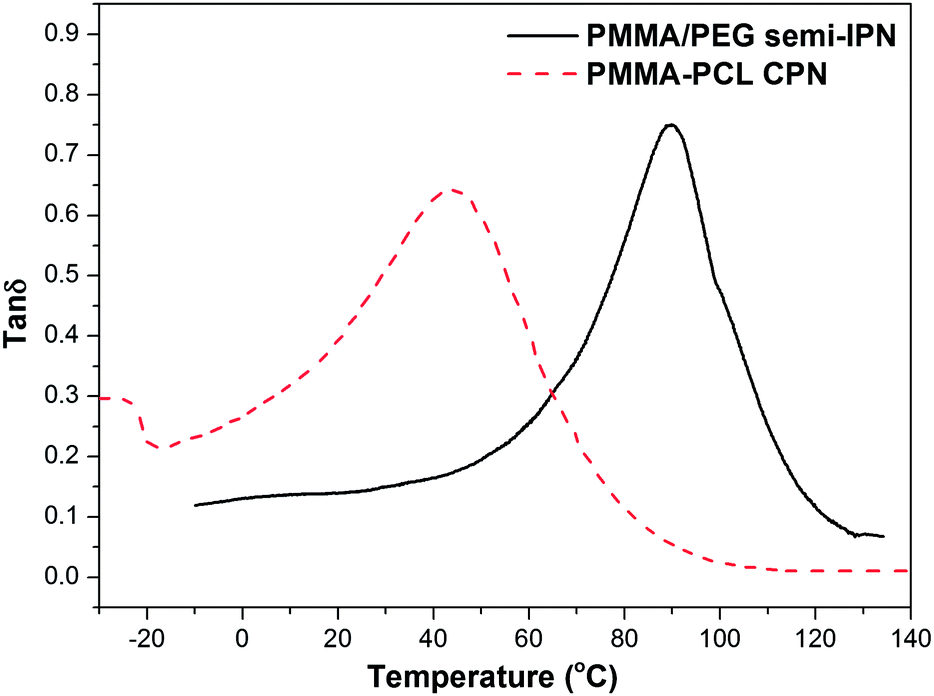 | ||
| Fig. 1 Tanδ-temperature curves of PMMA/PEG semi-IPN and PMMA-PCL CPN. | ||
The TME observed in the stress recovery experiments can be called the stress based TME, and the characteristic temperature is determined at the maximum of the recovery stress (σmax)Tσ,max under constant strain conditions. This effect can also be established in stress free strain recovery experiments, i.e., strain based TME.48 Here the TME is established under such a condition. The switching temperature (Tsw) can be determined as inflection point of the strain-temperature recovery curve, in general, Tsw represents the temperature of maximum recovery speed (Vr,max), which is obtained under stress free recovery conditions.
We have investigated the dual-SME of PMMA/PEG semi-IPN at the deformation temperature Td = 50 °C, 70 °C and 90 °C in the early research.53 The result showed that the curves for dual-Rr shifted to the right with increasing the Td, that is, stretching the sample at higher temperature led to shape recovering at correspondingly higher recovery temperature (Tr). This is a consequence of the TME. An inflexion region could be seen in the strain recovery curves of PMMA/PEG semi-IPN. The temperature of this inflexion point was close to Td. As a result, we found PMMA/PEG semi-IPN possessed the so-called TME within its broad ΔTg. It is suggested that the thermomechanical properties of material such as Tsw can be easily tailored by changing the applied Td instead of synthesizing a new material with alternative material composition and structure. Based on the TME, we could realize the adjustable multiple-SME.
In the experiment of our early research about multiple-SME of PMMA/PEG semi-IPN, we found that not all the temperature in the ΔTg could be used in the multiple-SME, as the shape could not be fixed at some temperature.53 Can the PMMA/PEG semi-IPN show TME in its entire range of Tg? Accordingly, we began by evaluating the dual-SME of PMMA/PEG semi-IPN under a stress controlled deformation and stress free recovery condition at different Td (Td = 50, 60, 70, 80, 90, 100 °C). The sample was elongated to a target strain at respective Td within the broad ΔTg, then it was cooled down to 20 °C while keeping the external load constant to retain the deformation. After releasing the load, the temporary shape was fixed. When reheating the sample in a continuous manner, it gradually restored their initial shapes.
A representative dual-shape memory cycle (Td = 80 °C) obtained under such conditions is presented in Fig. 2. Similar dual-shape memory cycles (see ESI Fig. S1†) can be constructed for other temperatures and used to calculate the shape fixity (Rf) and shape recovery (Rr). The result shows that the Rf and Rr for PMMA/PEG semi-IPN are above 85% when Td was above the onset of the glass transition, which indicates that the IPN is an effective architecture for high performance dual-SME.
 | ||
| Fig. 2 A representative dual-shape memory cycle of PMMA/PEG semi-IPN at Td = 80 °C. Rf = 97.0%, Rr = 97.7%. | ||
The fact that PMMA/PEG semi-IPN exhibits excellent dual-shape memory properties in a broad ΔTg (roughly 45–125 °C) makes it a suitable candidate to explore the strain based TME. To do so, all strain recovery experiments hereafter were conducted under a continuous linear temperature ramping mode. As such, the strain recovery curves of PMMA/PEG semi-IPN at different Td (Td = 50, 60, 70, 80, 90, 100 °C) are shown in Fig. 3a. In low temperature region, the temperature of inflexion point was close to the temperature where it was deformed. When the temperature exceeded 80 °C, the dual-Rr curves did not shift to the right with increasing the Td, that is, the TME no longer exists.
 | ||
| Fig. 3 Shape recovery behavior for PMMA/PEG semi-IPN deformed at different Td: 50, 60, 70, 80, 90, 100 °C. (a) Evolution of strain recovery rate (Rr). (b) Evolution of instantaneous strain recovery speed (Vr). | ||
Data in strain recovery process were further used to calculate the instantaneous Vr using the eqn (3) shown in the experimental section. Since Vr are based on the temperature derivatives of the strains, they are, in principle, more sensitive than strain to reflect changes occurred in the recovery process.48 We should note that the instantaneous Vr here represents the recovery speed at a certain temperature point, which is different from an average recovery speed that has been used to evaluate the recovery speed across a temperature range. As mentioned earlier, the temperature corresponding to the Vr,max is sometimes referred to as response or recovery temperatures (Tr).
To further improve the phenomena, we researched the Vr in the recovery process at different Td. Data in Fig. 3a were further used to calculate the instantaneous Vr using the eqn (3) shown in the experimental section. The instantaneous Vr thus obtained were shown in Fig. 3b. In the respective curves obtained at different Td, a peak (i.e., maximum Vr) can be observed at the corresponding Td. The data presented in Fig. 3b clearly demonstrate a strong correlation between the applied Td and the resulting Tr. As illustrated in Fig. 3b, in the low temperature region, when the deformation occurs at a certain Td within the ΔTg, the subsequent stress free strain recovery experiment shows that the peak of Vr appears at a temperature roughly the same as the corresponding Td.
Fig. 4 displays the relation between Tr and Td. As shown in Fig. 4, when the temperature was below 80 °C, the temperature corresponding to Vr,max were found to be in the range of the applied Td, Tr increased systematically with rising Td, that is, the corresponding Tr would depend on its initial Td. So the PMMA/PEG semi-IPN was able to memorize its thermomechanical conditions, which demonstrates the successful temperature memory functionalization of the PMMA/PEG semi-IPN. However, the corresponding Tr did not increase with the increasing of Td as the temperature exceeded 80 °C, that is, PMMA/PEG semi-IPN could not possess TME in the high temperature part of the transition temperature region.
 | ||
| Fig. 4 The relationship between response temperature (Tr) and deformation temperature (Td) of PMMA/PEG semi-IPN. | ||
The previous studies about multiple-SME of PMMA/PEG semi-IPN have shown that PMMA/PEG semi-IPN could only memory four shapes in the whole Tg range.53 The temporary shape could not be fixed once the temperature exceeded 80 °C. The above research indicates that semi-IPN no longer possessed TME at temperature higher than 80 °C, although the broad ΔTg was from 45 to 125 °C. As shown in Fig. 3 and 4, the strain recovery will occur at almost same temperature when Td exceeded 80 °C, which confirms that TME plays a crucial role in multiple-SME. The result shows that it was based on the TME that PMMA/PEG semi-IPN could realize the adjustable multiple-SME, which means that multiple-SME could not be realized in the temperature range where the TME could not be achieved. Moreover, the realization of multiple-SME of PMMA/PEG semi-IPN is actually based on the characteristic temperature (Tc) of TME. As shown in Table 1, Td used to realize quintuple-SME in our previous research was 110, 70, 50 °C, and the Tc for realizing TME was 90, 70, 50 °C. Although the first Td (110 °C and 90 °C) was different, the response temperature was almost same. The reason is that the strain recovery will occur at almost the same temperature when Td exceeded 80 °C.
| Tc (°C) | Td (°C) |
|---|---|
| 90 | 110 |
| 70 | 70 |
| 50 | 50 |
The realization of multiple-SME is actually based on multiple phase structure or broad ΔTtrans (ΔTg or ΔTm). The selection of Td for multiple-SME based on multiple phase structure is simple, as Ttrans of each phase can be used as Td directly. However, for multiple-SMPs based on broad ΔTtrans, the selection of Td is uncertain. It requires us to choose different temperature in the broad ΔTtrans to try. As a result, there are no rules to follow. Here we find the Td for realizing multiple-SME of PMMA/PEG semi-IPN is actually based on the Tc of TME. As a result, the Tc of TME can be directly used as multi-gradient Td to achieve multiple-SME, thereby simplifying the selection of Td in the multiple-SME.
In order to prove the above mentioned relation between TME and multiple-SME is not coincidental, that is, it is not belong to some special materials, we further investigated the PMMA-PCL CPN which possessed multiple-SME. In our previous research, we discovered the PMMA-PCL CPN containing broad ΔTg exhibited TME, that is, when Td was 0, 20, 40 °C, the curves for dual-Rr shifted to the right with increasing the Td.54 It is means stretching the sample at higher temperature led to shape recovering at correspondingly higher recovery temperature Tr. We also found the versatile multiple-SME from dual to quadruple can be adjusted simply by shifting the corresponding Td on demands.
Accordingly, we firstly evaluated the dual-shape memory performance of PMMA-PCL CPN under a stress controlled deformation and stress free recovery condition at different Td (Td = 0, 10, 20, 30,40, 50 °C) as mentioned above. It should be noted that, the shape fixing temperature (Tf) for all samples was −20 °C. Fig. 5 shows a representative dual-shape memory cycle (Td = 30 °C) obtained under such conditions. Other dual-shape memory cycles at different Td are shown in Fig. S2.† It can be concluded from the quantitative results that the IPN is an effective architecture for high performance dual-SME.
 | ||
| Fig. 5 A representative dual-shape memory cycle of PMMA-PCL CPN at Td = 30 °C. Rf = 97.9%, Rr = 97.3%. | ||
The strain–temperature recovery curves of PMMA-PCL CPN at different Td (Td = 0, 10, 20, 30, 40, 50 °C) are presented in Fig. 6a. In the low temperature region, increase of the Td resulted in the dual-Rr curves shifting to the right (the higher temperature region), that is, the corresponding Tr would depend on its initial Td. Therefore the PMMA-PCL CPN was able to memorize its thermomechanical conditions. Whereas, once the temperature exceeded 30 °C, the dual-Rr curves did not shift to the right with increasing the Td, that is, the TME no longer exists. To further improve the phenomena, we make further investigation on the strain recovery speed at different Td, as shown in Fig. 6b. Tr is referred as the temperature corresponding to the Vr,max. The relation between Tr and Td is shown in Fig. 7. When the temperature was below 30 °C, Tr corresponding to Vr,max was found to increase almost linearly with rising Td, which demonstrates the successful temperature memory capacity of the PMMA-PCL CPN. However, the corresponding Tr did not increase with the increasing of Td as the temperature exceeded 30 °C, that is, PMMA-PCL CPN could not possess TME in the high temperature region of the broad ΔTg.
 | ||
| Fig. 6 Shape recovery behavior for PMMA-PCL CPN deformed at different Td: 0, 10, 20, 30, 40, 50 °C. (a) Evolution of strain recovery rate (Rr). (b) Evolution of instantaneous strain recovery speed (Vr). | ||
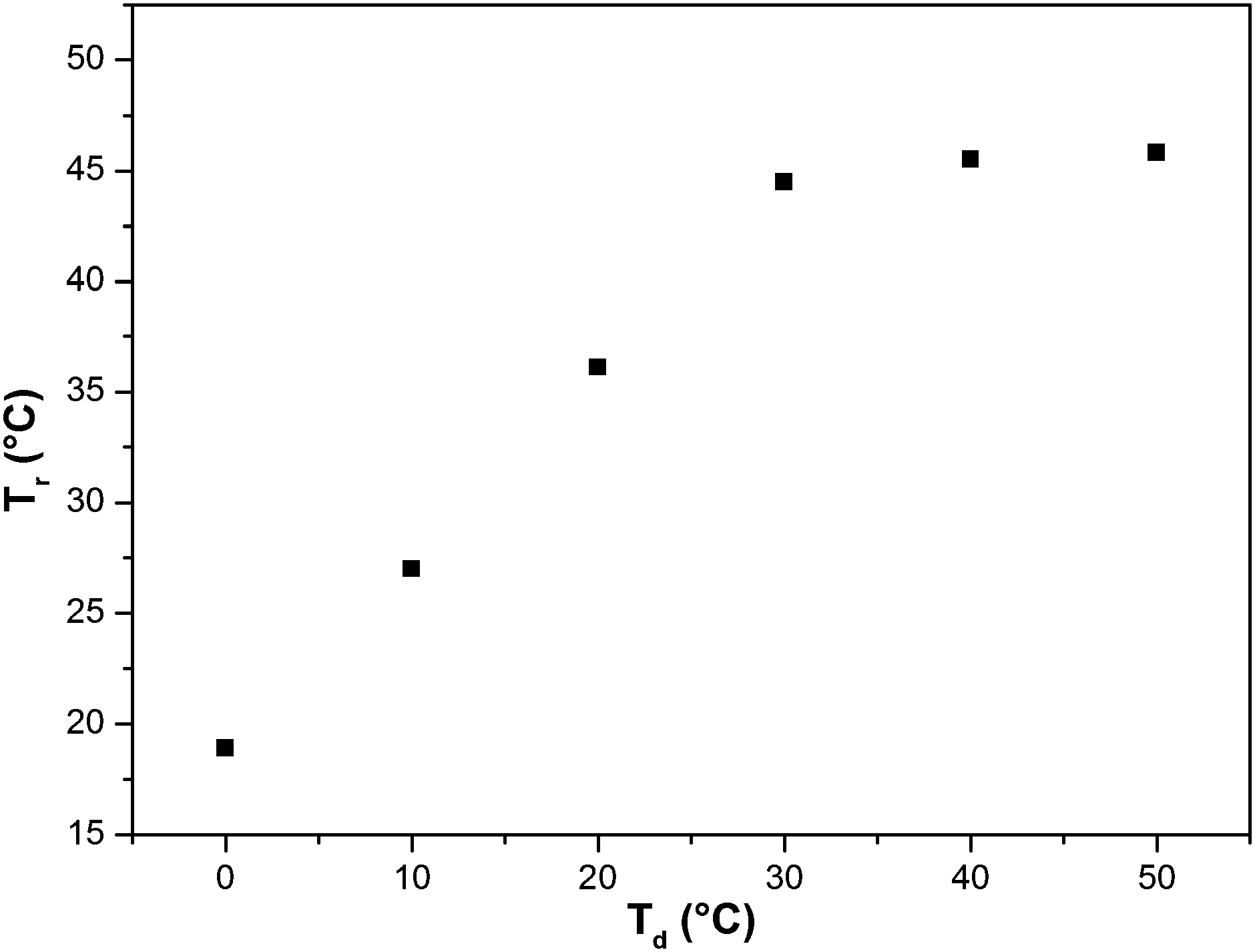 | ||
| Fig. 7 The relationship between response temperature (Tr) and deformation temperature (Td) of PMMA-PCL CPN. | ||
In the research about quadruple-SME of PMMA-PCL CPN, we found that the temporary shape could not be kept in the high temperature region of ΔTg, such as the shape could not be fixed once the temperature exceeded 30 °C.54 The above research indicates that the PMMA-PCL CPN no longer possessed TME at temperature higher than 30 °C, although the ΔTg was from −10 to 90 °C. The strain recovery will occur at almost same temperature when Td exceeded 30 °C, which confirms that TME plays a crucial role in multiple-SME. Furthermore, the realization of multiple-SME of PMMA-PCL CPN is based on the Tc of TME. For instance, as shown in Table 2, Td for realizing multiple-SME in our previous research was 80, 20, 0 °C, and the Tc for realizing TME was 40, 20, 0 °C. Although the Td (80 °C and 40 °C) was different, the Tr was almost same. The reason is that the CPN no longer possessed TME at high temperature region, and the strain recovery will occur at almost the same temperature when Td exceeded 30 °C.
| Tc (°C) | Td (°C) |
|---|---|
| 40 | 80 |
| 20 | 20 |
| 0 | 0 |
The above two examples show that the tunable multi-SME and TME rely both on the broad △Ttrans is not a coincidence. The temperature memory capability of such polymers is a result of the fact that the temporary shape is solely fixed by the polymer chains, which are in the rubbery state at Td. The so established temporary shape remains stable until the fixing domains start to get flexible, when the materials are heated to Td again and in this way allowing the recovery of the original shape. In fact, the concept of elemental memory unit (EMU) used to interpret the tunable multi-SME can be readily applied to explain the TME.34,56 According to the concept, only the EMUs with Ttrans below Td can be activated for the strain fixing function. In the corresponding recovery process, 100% of EMUs are re-activated for recovery only when the temperature reaches Td. Consequently, a peak of recovery speed is observed. Such a mechanistic interpretation is consistent with the theoretical mechanical framework proposed by Sun et al.,52 which also links the continuous broad thermal transition to both the tunable multi-SME and TME.
4. Conclusions
In summary, the above results indicate that both the PMMA/PEG semi-IPN and PMMA-PCL CPN can show the TME in a specific range of response temperature but not in its entire range of broad △Ttrans. Furthermore, the Tc of TME is corresponding to the multi-step Ttrans of multiple-SME. Consequently, the Tc of TME can be directly used as multi-gradient Td to achieve multiple-SME, thereby simplifying the selection of Td in the multiple-SME. This paper further confirms that broad ΔTtrans is the key of realizing TME and multiple-SME, and only in the broad ΔTtrans with TME can the tunable multiple-SME be realized. It also reveals the internal relation of broad Tg, TME and multiple-shape memory capability of PMMA/PEG semi-IPN and PMMA-PCL CPN. It is expected that the relation of TME and multiple-SME of PMMA/PEG semi-IPN and PMMA-PCL CPN will promote further understanding of multiple-SME and TME, and drive the development of multiple-SMPs for the broader potential applicability.Acknowledgements
The authors would like to thank the National Natural Science Foundation of China (Grant no. 51173185 and 51303179) for the financial support of this research.Notes and references
- M. C. Serrano and G. A. Ameer, Macromol. Biosci., 2012, 12, 1156 CrossRef CAS PubMed.
- R. Vaia and J. Baur, Science, 2008, 319, 420 CrossRef CAS PubMed.
- J. L. Hu, Y. Zhu, H. H. Huang and J. Lu, Prog. Polym. Sci., 2012, 37, 1720 CrossRef CAS PubMed.
- H. J. Yoo, Y. C. Jung, N. G. Sahoo and J. W. Cho, J. Macromol. Sci., Part B: Phys., 2006, 45, 441 CrossRef CAS.
- J. Li, J. A. Viveros, M. H. Wrue and M. Anthamatten, Adv. Mater., 2007, 19, 2851 CrossRef CAS.
- T. Liu, J. Li, Y. Pan, Z. H. Zheng, X. B. Ding and Y. X. Peng, Soft Matter, 2011, 7, 1641 RSC.
- A. Lendlein, H. Jiang, O. Junger and R. Langer, Nature, 2005, 434, 879 CrossRef CAS PubMed.
- H. Koerner, G. Price, N. A. Pearce, M. Alexander and R. A. Vaia, Nat. Mater., 2004, 3, 115 CrossRef CAS PubMed.
- X. F. Luo and P. T. Mather, Soft Matter, 2010, 6, 2146 RSC.
- H. B. Lu, Y. J. Liu and J. S. Leng, Macromol. Mater. Eng., 2012, 297, 1138 CrossRef CAS.
- R. Mohr, K. Kratz, T. Weigel, M. Lucka-Gabor, M. Moneke and A. Lendlein, Proc. Natl. Acad. Sci. U. S. A., 2006, 103, 3540 CrossRef CAS PubMed.
- M. Y. Razzaq, M. Behl and A. Lendlein, Adv. Funct. Mater., 2012, 22, 184 CrossRef CAS.
- J. R. Kumpfer and S. J. Rowan, J. Am. Chem. Soc., 2011, 133, 12866 CrossRef CAS PubMed.
- Z. Q. Dong, Y. Cao, Q. J. Yuan, Y. F. Wang, J. H. Li, B. J. Li and S. Zhang, Macromol. Rapid Commun., 2013, 34, 867 CrossRef CAS PubMed.
- R. A. Weiss, E. Izzo and S. Mandelbaum, Macromolecules, 2008, 41, 2978 CrossRef CAS.
- A. M. Kushner, J. D. Vossler, G. A. Williams and Z. B. Guan, J. Am. Chem. Soc., 2009, 131, 8766 CrossRef CAS PubMed.
- J. Li, J. A. Viveros, M. H. Wrue and M. Anthamatten, Adv. Mater., 2007, 19, 2851 CrossRef CAS.
- A. Lendlein, H. Y. Jiang, O. Junger and R. Langer, Nature, 2005, 434, 879 CrossRef CAS PubMed.
- R. Mohr, K. Kratz, T. Weigel, M. Lucka-Gabor, M. Moneke and A. Lendlein, Proc. Natl. Acad. Sci. U. S. A., 2006, 103, 3540 CrossRef CAS PubMed.
- Q. Ge, K. Yu, Y. F. Ding and H. J. Qi, Soft Matter, 2012, 8, 11098 RSC.
- Q. Ge, X. F. Luo, C. B. Iversen, P. T. Mather, M. L. Dunna and H. J. Qi, Soft Matter, 2013, 9, 2212 RSC.
- K. Yu, Q. Ge and H. J. Qi, Nat. Commun., 2014, 5, 3066 Search PubMed.
- C. M. Yakacki, R. Shandas, D. Safranski, A. M. Ortega, K. Sassaman and K. Gall, Adv. Funct. Mater., 2008, 18, 2428 CrossRef CAS PubMed.
- I. A. Rousseau and T. Xie, J. Mater. Chem., 2010, 20, 3431 RSC.
- C. M. Yakacki, S. Willis, C. Luders and K. Gall, Adv. Eng. Mater., 2008, 10, 112 CrossRef CAS.
- A. Lendlein and R. Langer, Science, 2002, 296, 1673 CrossRef PubMed.
- J. Kunzelman, T. Chung, P. T. Mather and C. Weder, J. Mater. Chem., 2008, 18, 1082 RSC.
- T. Xie and X. C. Xiao, Chem. Mater., 2008, 20, 2866 CrossRef CAS.
- T. Xie, X. C. Xiao, J. J. Li and R. M. Wang, Adv. Mater., 2010, 22, 4390 CrossRef CAS PubMed.
- I. Bellin, S. Kelch, R. Langer and A. Lendlein, Proc. Natl. Acad. Sci. U. S. A., 2006, 103, 18043 CrossRef CAS PubMed.
- M. Behl, I. Bellin, S. Kelch, W. Wagermaier and A. Lendlein, Adv. Funct. Mater., 2009, 19, 102 CrossRef CAS.
- J. Zotzmann, M. Behl, Y. K. Feng and A. Lendlein, Adv. Funct. Mater., 2010, 20, 3583 CrossRef CAS.
- M. Behl and A. Lendlein, J. Mater. Chem., 2010, 20, 3335 RSC.
- T. Xie, Nature, 2010, 464, 267 CrossRef CAS PubMed.
- Y. W. Luo, Y. L. Guo, X. Gao, B. G. Li and T. Xie, Adv. Mater., 2013, 25, 743 CrossRef CAS PubMed.
- Z. W. He, N. Satarkar, T. Xie, Y. T. Cheng and J. Z. Hilt, Adv. Mater., 2011, 23, 3192 CrossRef CAS PubMed.
- S. J. Chen, J. L. Hu, C.-W. Yuen, L. Chan and H. T. Zhuo, Polym. Adv. Technol., 2010, 21, 377 CAS.
- T. Pretsch, Smart Mater. Struct., 2010, 19, 015006 CrossRef.
- T. Ware, K. Hearon, A. Lonnecker, K. L. Wooley, D. J. Maitland and W. Voit, Macromolecules, 2012, 45, 1062 CrossRef CAS PubMed.
- M. Bothe, K. Y. Mya, E. M. J. Lin, C. C. Yeo, X. H. Lu, C. B. He and T. Pretsch, Soft Matter, 2012, 8, 965 RSC.
- Y. K. Bai, X. R. Zhang, Q. H. Wang and T. M. Wang, J. Mater. Chem. A, 2014, 2, 4771 CAS.
- T. Chung, A. Rorno-Uribe and P. T. Mather, Macromolecules, 2008, 41, 184 CrossRef CAS.
- J. Zotzmann, M. Behl, D. Hofmann and A. Lendlein, Adv. Mater., 2010, 22, 3424 CrossRef CAS PubMed.
- S. J. Hong, W.-R. Yu and J. H. Youk, Smart Mater. Struct., 2010, 19, 035022 CrossRef.
- M. Bothe and T. Pretsch, Macromol. Chem. Phys., 2012, 213, 2378 CrossRef CAS.
- S. Pandini, S. Passera, M. Messori, K. Paderni, M. Toselli, A. Gianoncelli, E. Bontempi and T. Riccò, Polymer, 2012, 53, 1915 CrossRef CAS PubMed.
- P. Miaudet, A. Derre, M. Maugey, C. Zakri, P. M. Piccione, R. Inoubli and P. Poulinet, Science, 2007, 318, 1294 CrossRef CAS PubMed.
- T. Xie, K. A. Page and S. A. Eastman, Adv. Funct. Mater., 2011, 21, 2057 CrossRef CAS.
- K. Kratz, U. Voigt and A. Lendlein, Adv. Funct. Mater., 2012, 22, 3057 CrossRef CAS.
- K. Kratz, S. A. Madbouly, W. Wagermaier and A. Lendlein, Adv. Mater., 2011, 23, 4058 CrossRef CAS PubMed.
- J. Cui, K. Kratz and A. Lendlein, Smart Mater Struct., 2010, 19, 065019 CrossRef.
- L. Sun and W. M. Huang, Soft Matter, 2010, 6, 4403 RSC.
- J. Li, T. Liu, S. Xia, Y. Pan, Z. H. Zheng, X. B. Ding and Y. X. Peng, J. Mater. Chem., 2011, 21, 12213 RSC.
- J. Li, T. Liu, S. Xia, Y. Pan, Z. H. Zheng, X. B. Ding and Y. X. Peng, Macromol. Chem. Phys., 2012, 213, 2246 CrossRef CAS.
- W. Wagermaier, K. Kratz, M. Heuchel and A. Lendlein, Adv. Polym. Sci., 2010, 226, 97 CrossRef CAS.
- T. Xie, Polymer, 2011, 52, 4985 CrossRef CAS PubMed.
Footnote |
| † Electronic supplementary information (ESI) available: Experimental section, Fig. S1 and S2. See DOI: 10.1039/c4ra02600d |
| This journal is © The Royal Society of Chemistry 2014 |