Davydov splitting in cadmium vacancy emission, ferromagnetism and photosensitivity in manganese incorporated CdS nanocrystals

Balaji Sambandama, Thangavelu Muthukumarb, Sonachalam Arumugamc, P. L. Paulosed and Periakaruppan T. Manoharan*a
aDepartment of Chemistry, Indian Institute of Technology/Madras, Chennai, 600 036, India. E-mail: ptm@iitm.ac.in
bDepartment of Bio Products, Central Leather Research Institute, Adyar, Chennai, 600 025, India
cCentre for High Pressure Research, School of Physics, Bharathidasan University, Tiruchirappalli, 620 024, India
dDepartment of Condensed Matter and Physics, Tata Institute of Fundamental Research, Homi Bhabha Road, Colaba, Mumbai, India

Received 5th March 2014 , Accepted 28th April 2014

First published on 29th April 2014


Abstract

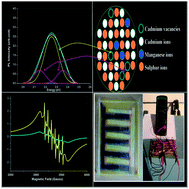
Nanocrystals of CdS/Mn2+ synthesized using sodium lauryl sulphate (SLS) surfactant and two ligands, i.e. butylenediamine (BD) and propylenediamine (PD), of differing lengths show a dominant presence of the hexagonal phase. The increasing [Mn2+] in the CdS/Mn2+ crystals from BD medium leads to a red shift in the band gap absorption with increasing intensity while the optical properties are reversed in CdS/PD crystals. Such changes can be explained by the switching of the randomly blinking nanocrystals into coherently emitting nanocrystals. The photoluminescence of CdS/Mn2+ materials with similarities and differences between SLS/BD and SLS/PD media exhibits two emissions: at 2.25 eV due to cadmium ion vacancies exhibiting Davydov-type splitting from neighbouring Cd2+–Cd2+ vacancies, and at 2.18 eV from manganese d–d emission. Thus, addition of Mn2+ leads to a decrease in the intensity of vacancy emission and increase in d–d emission due to occupation of cadmium vacant sites by manganese. Interestingly, SLS/PD medium creates more defects in CdS nanocrystals than SLS/BD medium. Note that the CdS/Mn2+ nanocrystals made from SLS/BD medium exhibit weak ferromagnetism in pre-annealed samples, becoming stronger after annealing, while the preannealed samples from SLS/PD origin have the simultaneous presence of both superparamagnetism and ferromagnetism, which turns to complete ferromagnetism on annealing. An attempt has also been made to compare the various properties of nanomaterials made as a function of two surfactants and three diamines of differing lengths. These nanoparticles are in the size range of 10 to 15 nm. A simple photo-resistance experiment on CdS and carbon nanoparticles-based heterostructure reveals its photosensitivity.

1. Introduction

It is now well known that the electronic properties of a semiconductor, having its dimensions reduced to a few nanometers, can undergo drastic changes. This progressive transition from bulk to molecular-like behavior has been a subject of extensive investigations and is now well understood in terms of quantum confinement.1 Most of these transitions were achieved in II–VI group compounds whose monodispersed nanoparticles can be well controlled by proper synthetic procedures.

Diluted Magnetic Semiconductors (DMS) are ternary alloys, in which cations of semiconductor matrix are randomly substituted by magnetic ions that exhibit unique physical and chemical properties due to quantum confinement effects.1,2 Especially, transition metal ions-doped compounds have been extensively investigated as typical DMS because of their wide band gaps and outstanding opto-magneto properties.3–5 Bulk II–VI semiconductors doped with transition metal ions may be of special interest since they are already well known as good luminophores, especially in systems of CdS/ZnS:Mn type.6 Such compounds as nanoparticles can be synthesized with the main purpose of studying the effect of quantum confinement on the luminescence properties.7,8 CdS is itself considered as a typically important phosphor both in basic and applied science; consequently, the changes in molecular and electronic structure, optical emission and absorption processes, caused by introducing manganese while creating Cd1−xMnxS make them highly attractive candidates for opto-magnetic investigations.9,10

Although there are a large numbers of publications involving Mn-based semiconductors, specifically Cd1−xMnxS, we have investigated the properties of such nanocrystals with various Mn compositions with our method of synthesis and attempted to understand their new or modified properties. Our own experience suggests5,11–13 that using different kinds of diamine ligands in the medium with differing surfactants can alter the structural morphology, which in turn allow us to tune their optical and magnetic properties.

This work is important since we have earlier reported11 the same anionic surfactant, sodium lauryl sulfate (SLS), which was used in this work, and a smaller ligand, ethylenediamine (ED), which was used to create ethylenediamine (ED)-based CdS/Mn2+ nanorods. These nanorods showed an interesting physical property of Davydov-type splitting11 in the photoluminescence spectra arising from surface doping by the guest Mn2+ ions. The physical properties, such as absorption, emission and magnetism, change dramatically by the increase of the diamine ligand chain length from ED to intermediate-sized propylenediamine (PD) and then to the large-sized butylenediamine (BD). Moreover, another important set of changes in property of these nanomaterials is caused by changing the surfactant but keeping the same ligand. In our earlier work we used CTAB (cetyltrimethylammoniumbromide) surfactant with BD, leading to the formation of 100% cubic morphology, which could be converted to pure hexagonal form by simple addition of manganous ions without any harsh treatment.12 In the present work, we have attempted to synthesize such nanoparticles with the use of SLS surfactant and the two ligands, i.e. BD and PD, which differ in chain length and are larger than the ED ligand, which was used earlier. Most importantly, we noted the large presence of cadmium ion vacancy, leading to photoluminescence with Davydov splitting, although this time such splitting originates from the host ion unlike the guest ion from our earlier work. The differential effect of addition of a magnetic ion like manganese on the SLS/PD and SLS/BD-assisted CdS/Mn2+ and the resultant changes in light absorption and emission, magnetic and photovoltaic properties is even more amazing. The latter property indicates that these heterostructures with carbon nanoparticles (CNP) could be used as thermistors. Finally, a comparative account of the properties as a function of surfactant and ligands has been made. It must be borne in mind that preparatory methods were identical and only the ligands and surfactants were changed to allow a critically valid comparison.

2. Experimental

2.1 Synthesis of CdS and CdS/Mn2+ nanocrystals

Sodium lauryl sulfate (SLS) (3 g) was dissolved in 5 ml of ultrapure distilled water. To this solution, 0.308 g of cadmium nitrate tetrahydrate and 10 ml 1,4-diaminobutane (BD) were added and the resultant solution was kept for refluxing with constant stirring. During the reflux, 0.228 g thiourea was (dissolved in minimum amount of distilled water) added and the refluxing was continued for 12 h at 120 °C. The appearance of pale yellow precipitate indicates the formation CdS nanocrystals. The precipitate was washed several times with distilled water and methanol. Finally, the product was thoroughly dried in the oven at 60 °C for 3 h. The same procedure has been adopted for 0.1, 0.5, 1.0, and 5.0 mol% Mn2+-loaded CdS nanocrystals with appropriate amounts of cadmium and manganese salts. Moreover, an exactly similar procedure was adopted while using the ligand 1,3-diaminopropane (PD) instead of BD.

2.2 Instruments

The XRD patterns were recorded in a Bruker Discover D8 powder X-ray diffractometer using Cu Kα as a radiation source. The optical properties were studied by UV-Vis (Varian CARY 5E) and fluorescence (JOBIN YUON Fluorolog-3-11) spectroscopy. Electron paramagnetic resonance (EPR) measurements were made using Bruker X-band CW EPR both at room temperature (300 K) and liquid–nitrogen temperature (77 K) and Bruker ELEXSYS 500 (Bruker BioSpin) for 10 K. High-resolution TEM studies were conducted using a JEOL JEM 3010 operated at 300 kV. Energy dispersive spectroscopy (EDS) pattern was recorded using a Philips CM12 TEM attached analyzer. Magnetic measurements on SLS/BD samples were made with the use of 9 T PPMS with VSM and helium reliquifier (Quantum Design, USA) down to 8 K. Inductively coupled plasma-optical emission spectrometry (ICP-OES) (Perkin Elmer Optima 5300 DV) measurements were made to calculate manganese concentration. The DC magnetic susceptibility measurements on SLS/PD samples were carried out in the temperature interval of 1.8–330 K using a commercial superconducting quantum interference device (SQUID) magnetometer from Quantum Design, USA. The samples were cooled to 1.8 K in a zero external magnetic field, and then the required magnetic field was turned on to record zero-field cooled data.

3. Results and discussion

3.1 Presence of both cubic and hexagonal morphologies, the latter being dominant and independent of [Mn2+]

Fig. 1 shows the powder XRD patterns for SLS/BD and SLS/PD assisted pure and manganese-doped CdS nanocrystals. It is well known that both pure and doped CdS nanocrystals exhibit either pure cubic or hexagonal phases or different combinations of both, although the latter may dominate over the former in many cases since the cubic structure is metastable. The average particle size from XRD measurement for these SLS/BD and SLS/PD samples was found to be in the range of 9–10.5 nm and 12–14 nm, respectively, and values of all samples are given in the ESI, Table S1. Though the XRD patterns look similar to the cubic phase (Fig. 1a and b), the presence of hexagonal phase is less dominant in SLS/BD as revealed by the presence of the peaks around 25–30° for the planes of (100), (002) and (101) and another peak around 48°, which is the characteristic (103) peak of the hexagonal phase. However, the SLS/PD-assisted samples exhibit clear resolution of the (100), (002) and (101), (103) hexagonal planes, making it more dominant; nevertheless, it is again suspected to have a small percentage of cubic phase present in the sample. The poorer resolution of the SLS/BD is expected to have a lesser percentage of the hexagonal phase, both needing a deeper analysis of the mixed phases. Thus, it is necessary to perform the deconvolution of the peaks to identify the quantum of each component in the mixed crystals. The percentage of both components has been calculated by the Short and Steward method.14 A proper deconvolution5,12,14 (explained in ESI) of the XRD pattern (given in ESI, Fig. S1) indicates a mixture of phases; however, it is surprising to note that increasing the [Mn2+] does not seem to influence the percentage composition of hexagonal and cubic morphologies, which remain constant during the addition of manganese ions up to 5%. The percentage composition of the two phases is listed in Table 1. While the smallest ligand, i.e., ethylenediamine, produces a 100% pure hexagonal material, both propylenediamine and butylenediamine create a mixture of species with 90% and 81% of the hexagonal species, respectively, and all three of them are formed in presence of the same SLS surfactant. Hence, the percentage composition seems to be dictated by the length of the ligands. Therefore, increase in the length of the ligand seems to facilitate the partial conversion from hexagonal to cubic; however, it is surprising to note that the CTAB/BD12 provides 100% cubic morphology for pure CdS nanoparticles, which can be completely converted to the hexagonal form by the addition of 5% Mn2+ without any harsh treatment like high temperature heating or high pressure. Despite the use of common ligands in both cases, the formations of micelles in the two different surfactants are different and this could have played a key role for the diverse properties of these materials. Similarly, a simple change of ligand from ED to PD and BD while using the same surfactant, i.e. SLS, converts the CdS/Mn2+ from 100% hexagonal to mixed phases. Here again, the length of the ligand plays an important role. It is also interesting to note that the largest of the three ligands drives the CdS nanocrystals towards the cubic morphology in SLS medium, though incomplete, while with the same ligand CTAB achieves 100% metastable cubic morphology. These subtle changes are a probable subject for future study.
image file: c4ra01899k-f1.tif
Fig. 1 Powder XRD pattern of SLS surfactant assisted (a) butylenediamine (b) propylenediamine-mediated pure and manganese-doped CdS nanocrystals.
Table 1 A comparative account of morphology compositions from powder XRD data using the Short and Steward method with SLS/BD, SLS/PD, SLS/ED and CTAB/BD
Surfactant/ligand % of cubic % of hexagonal
a Addition of 5% Mn2+ facilitates total conversion to hexagonal.
SLS/ED (0–5% Mn2+) Nil 100 (ref. 11)
SLS/PD (0–5% Mn2+) ∼10 90 (this work)
SLS/BD (0–5% Mn2+) 19 81 (this work)
CTAB/BD (0% Mn2+) 100a Nil (ref. 12)


3.2 Differential scanning calorimetry confirms the presence of cubic and hexagonal phases in CdS/Mn2+ from both SLD/BD and SLS/PD media

The percentage of cubic and hexagonal phases have been identified and quantified by a simple method that was proposed in a previous study.5 In order to calculate the exact percentage of cubic and hexagonal phases in a given mixture, we need a pure cubic sample, which has been taken from surfactant/amine (CTAB/BD)-assisted CdS nanocrystals that do not contain manganese and are denoted by CTAB/BD/0% Mn2+/CdS as per our earlier work.12 These nanocrystals have been considered as a reference or base material. The DSC depicts the nature of DSC curves for SLS/BD- and SLS/PD-assisted with and without manganese-doped CdS nanocrystals. It is important to compare these curves with a real cubic (100%) curve of CTAB/BD/0% Mn2+/CdS in order to calculate the exact percentages of cubic and hexagonal phases. The measurements are performed under the same condition as for CTAB/BD/0% Mn2+/CdS nanocrystals5 (such as N2 atmosphere, same quantity, same temperature step width). In the case of CTAB/BD-assisted 0% Mn2+/CdS, the cubic to hexagonal transition (phase conversion) is from 100% cubic component alone. On the other hand, all SLS/BD- and SLS/PD-assisted samples are naturally mixed with both cubic and hexagonal phases (see XRD discussion vide infra and Table 1). The exothermic peak arises only from the cubic component of the mixture, and not from the thermodynamically stable hexagonal component. Thus, by measuring the area under the curve in the DSC measurement, the percentage of cubic component has been calculated and the hexagonal component is obtained by subtracting the cubic percentage from 100. There is excellent agreement between the results from XRD and DSC. In a similar fashion the percentage of cubic and hexagonal components for SLS/PD-assisted samples has been calculated, and the calculated values and DSC profile for these materials as given in Fig. S2 and Table S2.

3.3 Red and blue shifted band gap absorptions in SLS/BD- and SLS/PD-assisted CdS/Mn2+ nanocrystals: increase of energy shift related to decrease of chain length

Solid-state optical absorption spectra of SLS/BD- and SLS/PD-assisted undoped and manganese-doped CdS nanocrystals are shown in Fig. 2. The absorption maximum (λmax) around 492–510 nm (2.52 to 2.43 eV) in these samples determines their band gap energy. It is evident that CdS shows red shifted absorption in SLS/BD-assisted samples as a function of increasing manganese concentration. However, the optical absorption of CdS/Mn2+ nanoparticles in SLS/PD medium suffers blue shift in its band gap absorption from 496 to 488 nm (2.50 to 2.54 eV), revealing a weak quantum confinement. Similarly, it is interesting that with the smallest ligand, i.e. ED, they have a much higher blue shift (2.59 to 2.70 eV). While in most CdS materials, including those of SLS/ED and SLS/PD origin, the band gap absorption takes place in the region of 460–480 nm (2.59–2.7 eV) during blue shift, our absorption peak in SLS/BD occurs at 480–510 nm, which is a case of red-shifted absorption. Therefore, both blue- and red-shifted absorptions are part of band gap absorption with 480 nm being the centre of the band gap. On the other hand, we observed a clear blue shift in the optical absorption as a function of Mn2+ input for the same ligand, including that from a different surfactant, i.e., CTAB/BD.12 However, this blue shift observation strongly depends on the particle size of the CdS nanocrystals. This kind of differing energy shift, both blue and red shift, from a higher value of 2.7 eV to a lower value of 2.43 eV or in reverse, can be explained by the switching of the randomly blinking nanocrystals into a coherently emitting NCs15 and possibly with differing compositions due to cubic and hexagonal morphologies. The blinking and non-blinking actually has a relation to the various band gap levels.
image file: c4ra01899k-f2.tif
Fig. 2 Solid-state optical absorption spectra of (a) SLS/BD- and (b) SLS/PD-assisted undoped and manganese-doped CdS nanocrystals.

The second important observation relates to the change in the intensity of band gap absorption during the increased intake of Mn2+; however, BD-assisted CdS/Mn2+ showed an increase in intensity than the PD-assisted CdS/Mn2+, which revealed a decrease intensity. Increase in the intensity of the band gap absorption with an accompanying decrease in band gap energy as a function of [Mn2+] in the case of the former and the reverse situation in the latter can be attributed to the magnitude of VB–CB separation. Note that more energy separation means less transition probability. In addition, an increase in energy shift and hence the band gap (ESI, Fig. S3) seems to be proportional to a decrease in chain length of the ligand as can be seen from BD to intermediate-sized PD to shorter-sized ED.

3.4 Davydov split photoluminescence (PL) from VCd and differing characteristics of d–d emission due to change of surfactant and ligand

In contrast to the use of the smallest ligand (ED) in SLS medium, showing a large number of emissions,11 the PL of CdS/Mn2+ nanocrystals made from the larger PD and BD ligands is a simple case of a two emission process (Fig. 3) when excited by 300 nm wavelength. The emission at 2.25 eV corresponds to cadmium vacancies emission5 denoted as VCd, whereas the other emission around 2.18 eV is the characteristic forbidden d–d emission of manganese due to 4T16A1 energy level.16–18
image file: c4ra01899k-f3.tif
Fig. 3 Deconvoluted PL emission for (a) 0.1, (b) 0.5, (c) 1 and (d) 5% Mn2+/CdS nanocrystals from SLS/BD medium; VCd emission (band 1); d–d emission (band 2).
3.4.1 Davydov splitting in SLS/BD-assisted CdS/Mn2+. The PL energy spectrum of pure BD-assisted CdS before manganese addition shows a pure Gaussian line shape only due to cadmium vacancies (VCd).5 However, on the addition of manganese a low energy shoulder shows up due to manganese d–d emission.16–18 The PL spectra of BD-assisted CdS/Mn, as shown in Fig. 3 have been deconvoluted to identify the parameters of the two emissions. The intensity as well as the line width (FWHM) of the VCd emission, centred at 551 nm (2.25 eV), gradually decrease during the addition of manganese as the loaded ions are placed in the position of cadmium vacancies. However, the peak position of this vacancy emission remains unaltered at 2.25 eV, although the measured FWHM continuously decreases along with a simultaneous reduction in its intensity on increasing [Mn2+]. The data on line width and peak intensity and on cadmium and manganese emissions are shown in Table 2. Note that the d–d emission intensity of manganese around ∼2.18 eV increases on increasing [Mn2+]. In addition, this emission peak position shows a small red shift in wavelength as a function of its concentration, i.e., towards lower energy from 2.18 eV for 0.1% Mn2+/CdS to 2.14 eV for 5% Mn2+/CdS nanocrystals, in conformity with a similar red shift in the band gap absorption in the UV-DRS. The low energy shift by Mn2+ indicates its occupation of the vacant Cd2+, thereby proving the shift in the band gap absorption and the corresponding effect on the d–d emission. The presence of manganese d–d emission has been corroborated by EPR measurements (vide infra), and all the measured PL parameters are given in Table 2. We observed similar line width/intensity change in our earlier reported work on CdS/Mn2+ nanocrystals made in the CTAB/PD medium.5
Table 2 PL intensity profile for VCd and Mn d–d emissions for 0.1% to 5% Mn2+/CdS nanocrystals from SLS/BD medium
System Peak position (eV) Peak width (cm−1) Peak amplitude (a.u.) Peak intensity (a.u.)
Pure CdS VCd 2.25 1992 3.57 3555
0.1% VCd 2.25 1978 3.42 3382
Mn2+ 2.178 1195 0.75 448
0.5% VCd 2.25 1927 3.22 3102
Mn2+ 2.168 1119 1.1 615
1% VCd 2.25 1820 2.76 2512
Mn2+ 2.159 1098 1.2 658
5% VCd 2.25 1351 2.50 1689
Mn2+ 2.140 758 1.82 690


3.4.2 Davydov splitting of VCd emission. First of all, the source of this single broad yellow-green emission (551 nm; 2.25 eV), independent of manganese concentration, is from cadmium-vacancy-related defect states (VCd). Hence, an explanation is needed not only for the sharp decrease in its line width but also for the increase in the d–d emission intensity as a function of [Mn2+], both of which seem to be related to each other. The EDAX profile (Fig. 9) on the atomic concentration of cadmium in CdS nanocrystals shows it to be much less than that of sulfur, suggesting the possibility of a large number of Cd2+ vacancies and thus the VCd mechanism for the first emission. Such vacancies will be statistically distributed either close to each other, as homometallic Cd2+–Cd2+ vacant pairs or as isolated single Cd2+ vacancies. Any vacancy emission from the former will lead to Davydov type of interaction,5,11 making the PL emission broader (see below for proof) while the emission from the isolated non-neighbor site will be sharper. The former will be more dominant in manganese-free CdS as seen from its large line width of 1992 cm−1.

Line width reduction in this 2.25 eV emission during the initial addition of Mn2+ can be attributed to the reduction in the number of cadmium vacancy intersite interactions because of the partial occupation of Cd2+ vacant sites by Mn2+, leading to the formation of heterometallic pairs, i.e. “vacant Cd2+-filled Mn2+.” This single occupation will lead to decreased line width due to a decrease in the number of such homometallic cadmium vacancy sites, resulting in the loss of Davydov splitting and thus the sharpening of the emission from Cd vacancy sites.

In the current deconvoluted emission profile of CdS/Mn2+ (Fig. 4) an orange d–d emission located at 580 nm (2.1 eV) is interpreted as already mentioned because of the well-known 4T16A1 transition of the isolated Mn2+ ions; moreover, we observed a minor red shift in λmax. Furthermore, more luminescent centers of this kind are formed on increasing [Mn2+] ion either from the Cd2+–Mn2+ or due to the occupation of isolated Cd2+ vacancy by Mn2+, which contributes to increase in the intensities of both d–d emission and EPR signal I with resolved manganese hyperfine lines (vide infra). This emission is distinctly observable in all concentration of Mn2+. In contrast to the 550 nm emission, the manganese d–d emission increases in intensity along with a decreasing line width on increasing [Mn2+]. The reduction in the line width and increase in amplitude on increasing [Mn2+] may be interpreted as follows. The initial filling of VCd present in the form of homometallic Cd–Cd vacant sites (causing possible Davydov interaction) will form Cd–Mn pairs, in which Mn2+ ion may oscillate between these two initially vacant but closer Cd sites. This leads to a motional or Doppler broadening, which will cease when both homometallic sites are occupied by the dopant ions, causing a reduction in the line width. However, further addition of Mn2+ will first occupy the already created Cd–Mn sites to form homometallic Mn2+–Mn2+ dimers, and then the sites of uncoupled isolated Cd2+ and the left over homometallic Cd–Cd vacant sites to produce some more heterometallic Cd2+–Mn2+ pairs. The first addition will give rise to Mn–Mn exchange coupled species, leading to spin–orbit quenching of the d–d emission, but the latter two additions will lead to increased intensity for the d–d emission. The first addition causes exchange-coupled dimers, leading to the broad EPR line (signal II), whereas the second addition causes Cd–Mn pairs or isolated Mn2+, leading to increased intensity of EPR signal I (vide infra).


image file: c4ra01899k-f4.tif
Fig. 4 Deconvolution of PL emission due to cadmium vacancies (VCd) in SLS/BD assisted CdS nanomaterials at different [Mn2+] (a) 0%; (b) 0.1%; (c) 0.5% and (d) 1%.
3.4.3 Verification of Davydov splitting. In order to prove the existence of Davydov type of interaction in the VCd emission at 2.25 eV we use our observation in Table 2 that the line width of this deconvoluted emission drastically decreases from 1992 cm−1 to 1351 cm−1 with increase in concentration of Mn2+ from 0% to 5%. We have interpreted that this emission is caused by (i) both homometallic Cd2+–Cd2+ vacant sites (ii) heterometallic sites of Cd2+–Mn2+ pairs and (iii) isolated Cd2+ where the former will lead to unresolved Davydov split spectra and the latter two a single sharp line. We have assumed that the 5% Mn2+/CdS contains only two species, i.e. isolated Cd2+ and possibly much less of Cd2+–Mn2+ pairs, giving rise to a sharp single emission at 2.25 eV with a line width of 1351 cm−1. Using this emission peak due to a non-Davydov interaction as a constant, a deconvolution of all the other VCd emission lines from CdS with 0%, 0.1%, 0.5% and 1.0% Mn2+ obtained from Fig. 3 were performed, the results of which are shown in Fig. 4. This figure and Table 3 clearly reveal that the Davydov splitting is constantly observed at 0.22 eV, i.e. 1773 cm−1, with reduction in intensity with increased [Mn2+]. Note that such a large splitting has been reported in earlier studies.19,20
Table 3 Deconvolution parameters for SLS/BD-assisted CdS nanomaterials at different [Mn2+]a
SLS/BD-assisted Mn/CdS Peak position (eV) Peak width (cm−1) Peak amplitude (a.u.) Peak intensity (a.u.)
a Dimer energy separation = 0.22 eV.
Pure CdS VCd 2.25      
Monomer 2.375 1350 3.4 2295
Dimer 2.154 1301 1.5 976
0.1% Mn/CdS VCd 2.25      
Monomer 2.379 1351 3.18 2147
Dimer 2.149 1301 1.25 813
0.5% Mn/CdS VCd 2.26      
Monomer 2.379 1351 3.1 2093
Dimer 2.149 1301 1.01 657
1% Mn/CdS VCd 2.26      
Monomer 2.379 1351 2.5 1689
Dimer 2.149 1301 0.7 455


3.4.4 Emission profile for SLS/PD assisted CdS/Mn2+. The photoluminescence data for the pre-annealed CdS/Mn2+ samples prepared from SLS/PD assistance are interesting but they have similarities and differences from those of SLS/BD. The similarity is in the energy of VCd emission (2.25 eV) and d–d emission (2.12 eV) of Mn2+ in cadmium vacant sites and also a reduction in the intensity and line width of the former, substantiating the fact (vide supra) that there numerous dimeric VCd sites are present before the addition of Mn2+ ions, entering the cadmium vacancy sites as shown in Fig. S4 (ESI). A difference is noted in the d–d emission in CdS/Mn2+ of SLS/PD medium by way of simultaneous reduction both in its intensity and line width, showing a quick and preferential formation of dimeric Mn2+–Mn2+ in the Cd2+–Cd2+, which leads to spin–orbit quenching as opposed to an increase in the intensity of the d–d emission in SLS/BD preferring a single occupation of Mn2+ ions in the vacant Cd2+ sites. This difference is also manifested in the EPR of SLS/PD and SLS/BD as a function of [Mn2+] (vide infra). The deconvolution indicating the presence of both these emissions are shown in Fig. S4 (ESI) and the parameters from such a deconvolution are shown in Table S3 (ESI). The VCd line width decreases from 2005 to 1734 cm−1 as a function of increasing [Mn2+] along with the corresponding decrease in intensity, much different from the case of SLS/BD-assisted CdS/Mn2+ crystals. It is interesting to note that the line width and intensity decrease in the PL of CdS/Mn2+ nanocrystals are 33% and 52% in SLS/BD medium, while they are only 15% and 20% in SLS/PD medium. This suggests the presence of more homometallic Cd2+–Cd2+ vacancy pairs in the latter than the former; thus, dimer formation Mn2+–Mn2+ is quicker, confirming the reduction in intensity of d–d emission both by way of spin–orbit quenching through dimer formation and lesser number of isolated vacant Cd2+ sites. Thus, we can conclude that SLS/PD medium creates more defects in CdS nanocrystals than SLS/BD medium. The presence of more homometallic Cd2+–Cd2+ vacancy pairs in SLS/PD than in SLS/BD-assisted nanocrystals of CdS is due to higher amount of hexagonal character in the former (90%) compared to the latter (81%) in the morphological distribution. This further proves that vacancies and the related optical and magnetic properties are due to hexagonal crystals.
3.4.5 Davydov splitting from VCd in SLS/PD medium. A deconvolution of the VCd part of the spectrum from the SLS/PD-assisted CdS/Mn2+ nanocrystals (ESI, Fig. S5) was attempted in a manner similar to that adopted for SLS/BD-assisted case to account for its decreasing line width as a function of increasing [Mn2+]. Similar results were obtained with a Davydov splitting of 0.23 eV, i.e.1854 cm−1 (ESI, Table S4).

3.5 Annealing leads to Mn2+ ionic migration

As anticipated, annealing of nanocrystals from both SLS/BD and SLS/PD media indicates that there is ionic migration of Mn2+ to form dimeric manganese, in addition to the already existing such pairs due to the occupation of Cd2+–Cd2+ vacant sites by the dopant ion as indicated by a study on 5% Mn2+/CdS crystals, leading to decreased VCd emission and d–d emission. The formation of more dimeric Mn2+–Mn2+ is more evident in EPR results and magnetism.

3.6 EPR Profile predicts low temperature ferromagnetism

The nature of the local lattice environment of the paramagnetic species in the nanocrystals can be deciphered by an analysis of the EPR spectra. Fig. 5 shows the EPR spectra of as-prepared SLS/BD and SLS/PD assisted samples of manganese-doped CdS nanocrystals measured at room temperature (RT). All the polycrystalline samples of CdS/Mn2+ show a set of six sharp nuclear hyperfine line patterns (allowed transition, ΔmI = 0), corresponding to the hyperfine splitting from 55Mn and a set of five doublets with very low intensity (forbidden transition, ΔmI = ±1) that are between the six allowed lines, which we call as signal I. The presence of forbidden lines and a hyperfine coupling constant of |A| ∼68 G (6.8 mT) indicates Mn2+ to be in a distorted tetrahedral crystal field environment.21,22 In addition, there is a very broad line but low in amplitude caused by dipolar interaction and/or exchange-coupling due to nearby Mn2+–Mn2+ dimers or clusters (signal II), overlapping the sharp hextet as can be observed clearly in high percentage manganese-doped CdS nanocrystals.
image file: c4ra01899k-f5.tif
Fig. 5 EPR spectra of as-synthesized CdS/Mn2+ nanocrystals made from (a) SLS/BD and (b) SLS/PD media measured at room temperature.

It is observed that the intensity of signal I due to isolated Mn2+ increases on increasing [Mn2+] in SLS/BD-assisted nanocrystals, and the opposite is true for those from SLS/PD medium. However, the signal II due to Mn2+–Mn2+ interaction increases on increasing Mn2+ concentrations in both cases, although the rapidity of increase in cluster formation is slower in the former and relatively faster in the latter. The agreement between the PL and EPR experimental findings confirms our interpretation of the origin and emergence of both isolated Mn2+ from isolated Cd2+ and from heterometallic Mn2+–Cd2+ sites and coupled Mn2+–Mn2+ from coupled homometallic Cd2+–Cd2+ sites. It is assumed that distantly separated Mn2+ ions may not give rise to any exchange and also the broadening contribution will be much less, as it is 1/r3 dependent.

We would also like to explain why EPR spectra (Fig. 5) of as-synthesized CdS/Mn2+ nanocrystals are so different when they are made from SLS/BD and SLS/PD. The nanocrystal formation and its size are influenced both by surfactant and ligand, rate of formation of CdS/MnS as a function of the length of ligand L, rate of departure of the ligand and rate of nucleation to form crystals. The commonality is the surfactant but the ligands are different with BD being longer than PD. Hence, (i) the stability of CdL2 complex is dependent on chelation ring size in CdL2 with the bidentate ligands L, i.e. Cd(ED)2 > Cd(PD)2 > Cd(BD)2 and consequently the reactivity with S2− will increase in the reverse order resulting in fastest formation of CdS in BD medium; however, (ii) the departure of the longer bidentate ligand from Cd2+ will take a longer time through the solvent/surfactant barrier to facilitate the approach of S2− to form CdS nanocrystals. In other words, the rate of departure of the ligand from Cd2+ plays a more dominant role than the chemical binding role in the CdL2. Between these two factors the latter understandably is more important leading to faster nucleation to form crystals of SLS/PD medium than SLS/BD. Faster nucleation means more defects formation, which is more true of SLS/PD and hence our above observation.

In the SLS/BD case, the intensity ratio of the broad line at RT and liquid nitrogen temperature (LNT), ILNT/IRT (image of LNT not shown here) was found to be 8.8 for 5% Mn2+-doped pre-annealed sample. This substantial increase of intensity at low temperatures, more and above of what is estimated on the basis of pure Boltzmann population differences, predict strong cluster formation possibly in the form of dimers resulting in ferromagnetic coupling as suggested by its origin from Davydov split dimers. This strong cluster formation is further confirmed by measuring their EPR at even lower temperature around 10 K (Fig. 6a and b) when the broad EPR line becomes even more intense at 10 K. There is only a slight change in the line width of ∼0.5 mT on cooling to 10 K for the pre-annealed sample with the actual line width being 41.7 mT (at RT).


image file: c4ra01899k-f6.tif
Fig. 6 EPR spectra measured at ∼300 K and ∼10 K for pre-annealed and post-annealed CdS/Mn2+ nanocrystals from SLS/BD (a and b) and for the same from SLS/PD medium (c and d).

However, for those same clusters, the post-annealed samples exhibit a higher line width of 56.9 mT measured at both 300 K and 10 K for signal II, in addition to increased intensity. This increase for post annealed samples suggests the formation of more number of clusters with greater closeness during the annealing process, resulting in both exchange plus dipolar interaction. However, the simultaneous presence of isolated Mn2+ in both pre-annealed and post-annealed nanocrystals also exhibit the same hyperfine value of ∼6.8 mT in signal I at low temperatures indicating no change in symmetry.

In contrast to CdS/Mn2+ nanocrystals of SLS/BD, the crystals of pre-annealed and post-annealed crystals of SLS/PD origin exhibit a line width of ∼52 mT (520 G) and ∼57 mT (570 G), respectively, with no temperature dependence as shown in Fig. 6c and d. Both systems show an increased line width during the annealing process, and the increase is more substantial in the case of SLS/BD than SLS/PD. This is in tune with the findings from PL studies, which reveal the presence of more Mn2+–Mn2+ dimer formation with SLS/PD assistance even during the initial addition of manganese as compared with SLS/BD assistance. Another interesting observation is the almost total suppression of signals due to isolated Mn2+ in post-annealed SLS/PD sample, indicating a stronger ionic migration process in crystals of SLS/PD as compared to SLS/BD origin. Substantial line width increase in both post-annealed samples as compared to pre-annealed could be attributed to possible lattice contraction during the annealing process and more dimer formation due to ionic migration. However, what is important to note is that, although the temperature dependent EPR suggests ferromagnetism due to exchange-coupled Mn2+–Mn2+ dimers in the nanocrystals of CdS/5% Mn2+ from both SLS/BD and SLS/PD, differences in the temperature dependent EPR suggests more through finer details of their differing magnetic properties (see next section).

3.7 Magnetism in manganese incorporated CdS nanocrystals

3.7.1 Magnetism for SLS/BD assisted CdS/Mn2+. The magnetic measurements for pre- and post-annealed CdS/5% Mn2+ nanocrystals are shown in Fig. 7. The exact percentages of manganese concentration have been calculated from ICP-OES, and they are found to be 4.77%, 0.96%, 0.46% and 0.093%, respectively, for 5%, 1%, 0.5% and 0.1% Mn/CdS of SLS/PD-assisted nanocrystals, whereas the corresponding values are 4.82%, 0.96%, 0.45% and 0.095% Mn/CdS of SLS/BD-assisted nanocrystals. The typical M versus T curve for pre-annealed sample shows a paramagnetic curve as the magnetic moment gradually increases on decreasing the temperature down to 5 K. This has been further confirmed by the magnetization measurement as a function of magnetic field, which exhibits typical paramagnetic behavior (linear curve) at higher temperatures; however, at very low temperature it exhibits weak ferromagnetism,23 i.e. around 8 K it shows a small hysteresis curve with measurable values of coercivity (HC) and remanence (HR). On the other hand, the post-annealed 5% CdS/Mn2+ shows a small cusp around 30 K in the M versus T curve, disclosing a transition point, i.e. Curie temperature (TC) and a much different M versus H with a very prominent hysteresis curve below 60 K. The measured coercive field (HC) in pre-annealed and post-annealed samples reveals maximum ferromagnetism at lower temperatures. For example, at 8 K, the measured coercivity (HC) and remanence (HR) for pre annealed and post annealed samples are 460 Oe, 2245 Oe and 0.06 × 10⁻⁴, 0.4 × 10⁻⁴ emu g−1, respectively, whereas at 20 K these values are much lower. The similarly measured HC and HR values for the corresponding materials, i.e. CdS/Mn2+ from CTAB/BD medium12 at 8 K and 20 K are higher than those for materials of the current studies, despite having almost similar particle size obtained through same synthetic route but with a different surfactant, i.e. cetyltrimethylammoniumbromide (CTAB). The measured value of coercivity and remanence (HR) at various temperatures are listed in Table 4. In addition, we observed no magnetic saturation (MS) in all the cases, even up to 3 T, and no saturation occurs even after applying a higher field. This reveals that the paramagnetic contribution is still present at all temperatures, in other words, while the coupled Mn2+ ions exhibit ferromagnetism, the uncoupled Mn2+ caters to paramagnetism as can also be testified by the presence of hyperfine lines in EPR in both pre- and post-annealed nanocrystals. Basically, we have a case of simultaneous presence of exhibition of “ferromagnetism and paramagnetism.” This may be due to the presence of a larger number of Cd2+ vacancies in the SLS/BD system.
image file: c4ra01899k-f7.tif
Fig. 7 Magnetic measurements of M versus T for (a) pre-annealed and (c) post annealed CdS/Mn2+ nanocrystals with the applied of 0.5 T and M versus H curves (hysteresis) for (b) pre-annealed (d) post-annealed 5% CdS/Mn2+ nanocrystals at different temperatures. The inset shown in (b) and (d) are the magnified region of pre- and post-annealed samples, respectively.
Table 4 The measured magnetic values for pre- and post-annealed 5% CdS/Mn2+ nanocrystals of SLS/BD and (CTAB/BDa) origin
5% CdS/Mn2+ Nanocrystals Magnetism
TC HC (Oe) HR (× 10−4 emu g−1)
8 K 20 K 8 K 20 K
a It refers to the corresponding parameters for CTAB/BD as in reference 12.
Pre-annealed ∼35 (35a) K 460 (2030a) 120 (1800a) 0.01 (7.6a) − (6.2a)
Post-annealed ∼35 (35a) K 2245 (2450a) 860 (2330a) 0.04 (13.8a) 0.03 (10.5a)


A five-fold increase in coercivity after annealing is due to coupling of uncoupled Mn2+ by the ionic migration process to create more of coupled states as revealed also by an increase in EPR line width from 41.7 mT to 56.9 mT, which itself could be due to lattice contraction.

3.7.2 Magnetism for SLS/PD assisted CdS/Mn2+ nanocrystals: low temperature ferromagnetism. The zero-field cooling (ZFC) and field-cooling (FC) magnetic profiles measured at 0.1 T for pre- and post-annealed samples are shown in Fig. 8a. They show reversibility in the ZFC and FC curves in both samples down to a temperature of 50 K, representing its paramagnetic behaviour. However, below this temperature, a magnetic transition is observed in both samples around 35 K, revealing the presence of ferromagnetism.12 This is further confirmed by measuring hysteresis as a function of temperature. The pre-annealed sample shows a very low measured hysteresis value of ∼410 Oe at 2 K. On the other hand, the post-annealed sample shows a clear loop with measured hysteresis value of 1750 Oe at 2 K and the value is very low at 50 K as shown in Fig. 8b. Note that coercivity has increased after annealing mostly due to ionic migration as seen in Fig. 8c.
image file: c4ra01899k-f8.tif
Fig. 8 (a) ZFC and FC measurements for SLS/PD assisted pre and post annealed samples of 5% CdS/Mn2+ nanocrystals with the applied magnetic field of 0.1 T; hysteresis curves for (b) post-annealed sample at 50 and 2 K; (c) comparison of pre- and post-annealed samples at 2 K.
3.7.3 Ferromagnetism-coupled SPM turns to ferromagnetism on annealing. If the size of the magnetic nanoclusters was smaller or in critical region, then they would have normally showed the superparamagnetic (SPM)5,24 behavior with a low blocking temperature (TB). The SPM behaviour can normally be identified by careful analysis of ZFC/FC curves. It is noteworthy that the ZFC/FC curves for both pre- and post-annealed samples exhibit reversibility down to the temperature at 50 K. Below this temperature, both materials show bifurcation in the ZFC and FC curves, followed by sudden increase in their magnetic moment with a cusp around 35 K. EPR spectra of pre-annealed SLS/PD at 10 K reveals the substantial presence of manganese hyperfine lines, in addition to slight increase linewidth (from 52 to 57 mT) along with an increase in intensity for the broadline probably, indicating the simultaneous presence of ferromagnetism and superparamgnetism.25 On the other hand, the post-annealed samples both at 300 K and 10 K show mainly a broad EPR line (with a small increase in linewidth on cooling) and with almost no presence of manganese hyperfine lines, revealing it to be ferromagnetic. Hence, the pre-annealed samples with smaller particle size with low coercivity may represent the simultaneous presence of both superparamagnetism and ferromagnetism, while ionic migration of Mn2+ on annealing provides for a transition from superparamagnetism to complete ferromagnetism.

3.8 Microscopy analysis

The high-resolution transmission electron microscopy (HRTEM) of undoped CdS, 5% manganese-doped CdS nanocrystals of SLS/BD and SLS/PD are shown in Fig. 9a, b and c, respectively. The measured particle sizes are in the range of 5 to 15 nm in both SLS/BD and SLS/PD with no significant changes as function of doping concentrations but with a clear observation of lattice fringes. The measured lattice fringes are 0.33 and 0.32 nm, respectively, with SLS/BD- and SLS/PD-assisted 5% CdS/Mn2+ revealing the (002) plane of hexagonal phase as shown Fig. 9b and c, and this is in accord with the dominant peak observed in XRD (Fig. 1). The EDS profile of SLS/BD assisted 5% CdS/Mn2+ as shown in Fig. 9d reveals serious cadmium deficiency, supporting the observation of the same by photoluminescence.
image file: c4ra01899k-f9.tif
Fig. 9 The HRTEM images of SLS/BD-assisted (a) pure (b) 5% manganese-doped and (c) magnified particle image of 5% manganese-doped SLS/PD assisted CdS nanocrystals, (d) EDS pattern for SLS/BD assisted 5% CdS/Mn2+ nanocrystals.

The magnified high-resolution image of CdS/5% Mn2+/PD nanocrystals is shown in Fig. 9c. A clear view of lattice fringes with measured d value of 0.32 nm confirms the (002) plane of hexagonal CdS. It is important to note that cadmium ion deficiency is quite high from the EDS, an inference well supported by photoluminescence spectroscopy and magnetism through EPR and magnetic measurements. It is interesting to note that the percentage of Cd in BD is higher than the PD reveals the Cd vacancies in SLS/PD-assisted samples are higher than the corresponding SLS/BD-assisted samples.

3.9 CdS- and carbon nanoparticles (CNP)-based photovoltaic measurement

CdS is one among the best materials for photosensitivity26 and its physicochemical properties will be affected by the size of the particles. The addition of CdS and other ions having unpaired electrons to CNP, thereby creating heterostructures,27 could be a major advantage for enhancing photocurrent. Hence, we have tested the effect of Mn2+ addition by comparing un-doped CdS (SLS/BD/0% Mn), 5% Mn/CdS of SLS/BD and SLS/PD origin, which is added to CNP. The synthesis of carbon nanoparticles (CNP),28 the details of experimental work and photocurrent set up (ESI, Fig. S6) are given in the supplementary file.

The photosensitivity measurements for pure CNP as well as that of the heterostructures with CdS/0% and 5% Mn2+ of SLS/BD and SLS/PD origin at 25 °C are shown in Fig. 10a. The voltage increases as a function of time of exposure to light in all cases. However, the latter samples show an enhancement in measured voltage over pure CNP. It is also interesting to note that the 5% Mn/CdS of SLS/BD sample exhibits a slightly higher voltage, followed by SLS/PD-assisted 5% Mn/CdS and SLS/BD-assisted pure CdS sample. In other words, the increase in voltage follows the order: pure CNP < CNP + CdS < CNP + CdS/5% Mn2+ (SLS/PD) < CNP + CdS/5% Mn2+ (SLS/BD). This trend can be explained on the basis of its high visible light absorption property. A look at the values of the band gap of these three materials along with that of CNP shows that they follow the same trend as explained for similar materials with CNT (carbon nanotubes). It should be noted that the heterostructures mentioned here are similar to that of CNT/TiO2 with metal ions like Pd(II) or Ni(II)29,30 with photon-to-electron conversion by promotion of valence band to the conduction band, i.e. the band gap energy.31 However, the increase in band gap energy follows the order CdS/5% Mn2+ (SLS/BD) with 510 nm (2.43 eV) < CdS/0% Mn2+ (SLS/BD or PD) with 494 nm (2.51 eV) < CdS/5% Mn2+ (SLS/PD) with 488 nm (2.54 eV) as suggested by Fig. 2. The reverse is true for transition probability. An illustration of electron hopping from CdS with CNT is given in Scheme 1 of Kim and Park.31 The same holds true for CNP.


image file: c4ra01899k-f10.tif
Fig. 10 Photovoltaic profile (voltage versus time) for (a) CNP and CdS/CNP heterostructures at 25 °C (b) CdS/CNP heterostructures at 32 °C.

Another important factor also comes from the vacancies of these materials, which happen to switch the order of the latter two. It may be remembered that there is a decrease in vacancies in CdS/0% Mn2+ (SLS/PD or BD) > CdS/5% Mn2+ (SLS/PD) > CdS/5% Mn2+ (SLS/BD). This order is in correspondence to experimental observation of increasing voltage. These two competing factors played important roles in determining our experimental observations. Pure CdS possesses a large number of cadmium vacancies, which can effectively trap the excited electrons from the conduction band; thus, it has fewer number of free electrons, which are responsible for the photosensitivity properties. It may be further pointed out that there is substantial increase in the voltage of three materials (CNP + CdS + Mn2+) as compared to pure CNP. Manganese ions partially block the traps (being substituted in the cadmium vacancies) and hence enhance the prevention of electron–hole charge recombination.

The temperature dependent photo-resistance for CdS- and CNP-based heterostructures show increased voltage as a result of increasing resistance. The temperature dependent voltage at 25 °C and 32 °C for the heterostructures of CdS/CNP samples is shown in Fig. 10b. When connected in series of four cells, voltage increases with time of exposure at 32 °C from 4.4 to 5.03 m, for SLS/BD-assisted pure CdS sample (Fig. 10b) over 3 minutes of exposure to light. The same increase at 25 °C is from 2.5 to 3 mV at the same time of exposure; however, its reaches 4.25 mV in 6 min. The measured voltage for 5% Mn/CdS of SLS/BD- and SLS/PD-assisted samples are 4.6 to 5.32 and 4.5 to 5.11 mV, respectively, for the same time of exposure. It is easily seen that an increase in the temperature of the sample at all times gives a higher voltage, although the rate of increase is a little lower at higher temperature. However, on increasing the exposure time to 30 min at a given temperature the voltage plateaus in all the samples (Fig. 10a). Note that the measured voltage of CdS/CNP thermistor is proportional to the visible light intensity and temperature.

4. Conclusion

CdS and manganese-doped CdS have been made by a simple wet chemical route with two different ligands using a single surfactant, SLS, in this work. The samples from SLS/BD- and SLS/PD-assisted preparations show that the hexagonal phase predominates over cubic phase. The UV-visible study shows red and blue shifts, respectively, in their band gap positions as a function of [Mn2+] of SLS/BD- and SLS/PD-assisted CdS/Mn2+ nanocrystals, accompanied by reversing intensity changes. The best part of the current work is the finding of Davydov split PL emissions originating from the nearby but interacting cadmium ion vacancies; however, when they are filled up subsequently by manganese ions a difference is noted in the magnetic properties of samples of BD and PD origin. However, the commonality is the observation of ferromagnetism, though of differing magnitude, after the samples are annealed indicating ionic migration. Another interesting aspect is that these nanoparticles when combined with CNP could act as good thermistors.

Acknowledgements

PTM acknowledges the SERB, DST, and Government of India for research scheme (SR/S1/IC-53/2012). He also thanks the INSA for the position of a Senior Scientist. SA acknowledges the DST and UGC, New Delhi, for the financial support. BS acknowledges CSIR for Senior Research Fellowship and IIT/Madras for an Institute Post-doctoral Fellowship. We also thank Prof. S. V. Bhat, IISc Bangalore, for some of the EPR measurements.

Notes and references

  1. E. L. Brus, Appl. Phys. A: Solids Surf., 1991, 53, 465–474 Search PubMed.
  2. H. Weller, Angew. Chem., Int. Ed. Engl., 1993, 32, 41–53 CrossRef.
  3. P. K. Sharma, R. K. Dutta, R. J. Choudhary and A. C. Pandey, CrystEngComm, 2013, 15, 4438–4447 RSC.
  4. D. J. Norris, N. Yao, F. T. Charnock and T. A. Kennedy, Nano Lett., 2001, 1, 3–7 CrossRef CAS.
  5. B. Sambandam, N. Rajendran, M. Kanagaraj, S. Arumugam and P. T. Manoharan, J. Phys. Chem. C, 2011, 115, 11413–11419 CAS.
  6. Y. Yang, O. Chen, A. Angerhofer and Y. C. Cao, Chemistry, 2009, 15, 3186–97 CrossRef CAS PubMed.
  7. X. Yuan, J. Zheng, R. Zeng, P. Jing, W. Ji, J. Zhao, W. Yang and H. Li, Nanoscale, 2014, 6, 300–307 RSC.
  8. X. Ji, H. Li, S. Cheng, Z. Wu, Y. Xie, X. Dong and P. Yan, Mater. Lett., 2011, 65, 2776–2778 CrossRef CAS PubMed.
  9. Y. Shan, J.-J. Xu and H.-Y. Chen, Chem. Commun., 2010, 46, 4187–4189 RSC.
  10. F. Acomia, I. Salaorua, N. Apetroaeia, A. Vasileb, C. M. Teodorescuc and D. J. Macovei, J. Optoelectron. Adv. Mater., 2006, 8, 26 Search PubMed.
  11. B. Sambandam and P. T. Manoharan, J. Phys. Chem. C, 2009, 113, 9486–9496 CAS.
  12. B. Sambandam, R. J. V. Michael, N. Rajendran, S. Arumugam and P. T. Manoharan, J. Nanopart. Res., 2012, 14, 1067 CrossRef.
  13. B. Sambandam, S. Esaki Muthu, S. Arumugam and P. T. Manoharan, RSC Adv., 2013, 3, 5184–5195 RSC.
  14. M. A. Short and E. G. Steward, Am. Mineral., 1959, 44, 189 CAS.
  15. A. D. Arulsamy, U. Cvelbar, M. Mozetic and K. Ostrikov, Nanoscale, 2010, 2, 728–733 RSC.
  16. A. Nag, R. Cherian, P. Mahadevan, A. Venu Gopal, A. Haz-arika, A. Mohan, A. S. Vengurlekar and D. D. Sarma, J. Phys. Chem. C, 2010, 114, 18323–18329 CAS.
  17. A. Hazarika, A. Layek, S. De, A. Nag, S. Debnath, P. Mahadevan, A. Chowdhury and D. D. Sarma, Phys. Rev. Lett., 2013, 110, 267401 CrossRef.
  18. O. Chen, D. E. Shelby, Y. Yang, J. Zhuang, T. Wang, C. Niu, N. Omenetto and Y. C. Cao, Angew. Chem., Int. Ed., 2010, 49, 10132–10135 CrossRef CAS PubMed.
  19. B. Birkan, D. Glen and S. Zelik, J. Phys. Chem. B, 2006, 110, 10805–10813 CrossRef CAS PubMed.
  20. J. Takeda, S. Shinohara, N. Eguchi, S. Ohishi, S. Kurita and T. Kodaira, Proceedings of the 3rd International Conference on Excitonic Processes in Condensed Matter, ed. R. T. Williams and W. M. Yen, The Electrochemical Society, Pennington, 1998, pp. 135–140 Search PubMed.
  21. M. Azad Malik, P. O'Brien and N. Revaprasadu, J. Mater. Chem., 2001, 11, 2382–2386 RSC.
  22. S. Liu and X. Su, Anal. Methods, 2013, 5, 4541–4548 RSC.
  23. S. Bhattacharyya, Y. Estrin, D. H. Rich, D. Zitoun, Y. Koltypin and A. Gedanken, J. Phys. Chem. C, 2010, 114, 22002–22011 CAS.
  24. F. Zhan and C. Y. Zhang, J. Mater. Chem., 2011, 21, 4765–4767 RSC.
  25. Q. Li, Y. Wang, L. Fan, J. Liu, W. Kong and B. Ye, Scr. Mater., 2013, 69, 694–697 CrossRef CAS PubMed.
  26. J. S. Jie, W. J. Zhang, Y. Jiang, X. M. Meng, Y. Q. Li and S. T. Lee, Nano Lett., 2006, 6, 1887–1892 CrossRef CAS PubMed.
  27. Y. K. Kima and H. Park, Energy Environ. Sci., 2011, 4, 685–694 Search PubMed.
  28. T. Muthukumar, S. Prabhavathi, M. Chamundeeswari and T. P. Sastry, Mater. Sci. Eng., C, 2014, 36, 14–19 CrossRef CAS PubMed.
  29. L. Sheeney-Haj-Khia, B. Basnar and I. Willner, Angew. Chem., Int. Ed., 2005, 44, 78 CrossRef PubMed.
  30. I. Robel, B. A. Bunker and P. V. Kamat, Adv. Mater., 2005, 17, 2458 CrossRef CAS.
  31. Y. K. Kim and H. Park, Energy Environ. Sci., 2011, 4, 685–694 CAS.

Footnote

Electronic supplementary information (ESI) available. See DOI: 10.1039/c4ra01899k

This journal is © The Royal Society of Chemistry 2014
Click here to see how this site uses Cookies. View our privacy policy here.