
Emergence of interstitial-atom-free HCP nickel phase during the thermal decomposition of Ni3C nanoparticles

Ray-Tung Chiangab, Ray-Kuang Chiang*a and Fuh-Sheng Shieu*b
aNanomaterials Laboratory, Department of Materials Science and Engineering, Far East University, Hsing-Shih, Tainan 74448, Taiwan. E-mail: rkc.chem@msa.hinet.net; Fax: +886 6 5977590; Fax: +886 6 5977767
bDepartment of Materials Science and Engineering, National Chung Hsing University, Taichung 402, Taiwan. E-mail: fsshieu@dragon.nchu.edu.tw; Fax: +886 4 22854563; Tel: +886 4 22840500

Received 4th March 2014 , Accepted 15th April 2014

First published on 16th April 2014


Abstract

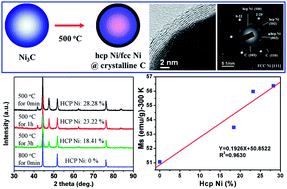
An experimental investigation is performed into the thermal decomposition of Ni3C nanoparticles (NPs) under an inert nitrogen atmosphere at temperatures ranging from 300 to 800 °C. It is shown that given a decomposition temperature of 500 °C, a hexagonal close-packed (HCP) Ni phase is formed with cell constants of a = 0.2496 nm and c = 0.4078 nm. These constants are similar to those predicted theoretically for interstitial-atom-free (IAF) HCP Ni. Thus, it is inferred that the HCP Ni phase is formed as an intermediate phase during the thermal decomposition of Ni3C into face-centered cubic (FCC) Ni and carbon. The transmission electron microscopy (TEM) results suggest that the formation of this IAF HCP Ni phase is due to the adhesion of a graphite-like shell on the Ni NPs, which constrains the slip of the close-packed layers and therefore hinders the HCP Ni to FCC Ni transformation process. The magnetization results show that the saturation magnetization (Ms) increases with increasing HCP Ni content. In addition, the extrapolation results suggest that the Ms value of the IAF HCP Ni phase is equal to 70.1 emu g−1 at a temperature of 300 K. In other words, the IAF HCP Ni phase is ferromagnetic with a magnetic moment slightly higher than that of FCC Ni. Overall, the results presented in this study provide a useful insight into the magnetization properties of the HCP Ni phase and are consistent with the theoretical predictions.

Introduction

It is well known that Ni retains a FCC structure up to its melting point under ambient pressure conditions. However, the detection of HCP Ni under ambient conditions is not easily achieved due to an inconsistency in the reported values of the corresponding crystal cell constants.1,2 Since the lattice constants of FCC Ni are similar to those of FCC Co, it seems reasonable to assume that the lattice constants of HCP Ni will also be similar to those of HCP Co. However, this is not the case. For example, given the assumption that Co and Ni atoms have a similar atomic radius (and hence a similar atomic volume), the cell constants for HCP Ni are predicted theoretically to be a = 0.2500 nm and c = 0.3980 nm.1 However, experimental studies have suggested that the two constants actually have values of a = 0.2648–0.2660 nm and c = 0.4328–0.4339 nm, respectively.3–8 In other words, the cell constants more closely resemble those of HCP Ni3N (a = 0.2667 nm and c = 0.4312 nm)9 or Ni3C (a = 0.2628 nm and c = 0.4306 nm, transformed from rhombohedral cell).10 Nickel is known to be easily contaminated with impurities such as N, C, B or H and to adopt a larger hexagonal cell structure as a result.11,12 However, HCP Ni with a small cell size has been reported in thin films stabilized through heteroepitaxial growth on particular substrates such as HCP Co,1 MgO (ref. 13) and Au;14 ligand-protected NPs with a size of less than 4 nm;15 thermally-decomposed products of Ni(II) glycinate in an alumina matrix;16 and FCC Ni powder products water-quenched from 1100 °C.11 It has been speculated that in all the recent reports of HCP Ni NPs with larger cell constants, the NPs are actually either Ni3C or Ni3C1−x (Ni3C with carbon vacancies) based on the fact that FCC Ni NPs are readily transformed to Ni3C in various hot organic solvents.17–20 Theoretical calculations based on smaller values of the lattice constants have predicted that IAF HCP Ni is ferromagnetic in the ground state and has a magnetic moment of around 0.59–0.76 μB.21–25 However, controversial results on magnetic properties of HCP Ni existed in recent literature. Experimental studies have shown that the magnetic properties of HCP Ni actually range from non-magnetic to weak ferromagnetic.26–30 A similar finding has also been reported for Ni3C NPs.17,18,31,32 The similarity between the magnetic properties of HCP Ni and Ni3C NPs have been ascribed to the incorrect identification of Ni3C as HCP Ni. Moreover, the variation in the magnetic properties of the Ni3C NPs has been attributed to differences in the residual FCC Ni content or the number of carbon vacancies. Ni3C has a space group of R[3 with combining macron]c and lattice constants of a = 0.455 nm and c = 1.292 nm, respectively.33 In HCP Ni, carbon atoms occupy one third of the octahedral sites of the lattice. Ignoring the carbon atoms in Ni3C, the remaining HCP Ni has a hexagonal lattice with constants of a = 0.268 nm and c = 0.431 nm. Thus, Ni3C and HCP Ni are not easily distinguished when evaluated using XRD alone.

The present study performs an experimental investigation into the thermal decomposition of Ni3C nanoparticles (NPs) in an ambient nitrogen atmosphere at temperatures ranging from 300 to 800 °C and decomposition times of 0–7 h. The results show that IAF-HCP Ni is formed as an intermediate phase given a decomposition temperature of around 500 °C. Moreover, it is shown that the IAF-HCP Ni phase is ferromagnetic with a magnetic moment slightly higher than that of FCC Ni.

Experimental section

Synthesis of Ni3C NPs

Nickel acetate anhydrous (2 mmol, 354 mg) and oleylamine (14.1 mL) were mixed in a 100 mL three-neck round-bottomed flask and stirred magnetically under a flow of nitrogen. The mixture was heated to 250 °C at a rate of 15 °C min−1 and maintained at that temperature for 2 h. During the reaction process, the color of the reaction mixture changed from green, to dark green to black. After cooling to room temperature, 30 mL of acetone was added to the mixture and the Ni3C NPs were precipitated by centrifugation (5000 rpm, 15 min). The NPs were then redispersed in hexane.

Decomposition of Ni3C NPs

The Ni3C NPs (∼100 mg) were decomposed at temperatures ranging from 300 to 800 °C in a furnace containing a nitrogen atmosphere. Note that the heating rate was 20 °C min−1. After reaching the designated temperature, the sample was allowed to cool naturally to room temperature within the furnace. To evaluate the effects of the decomposition time on the properties of the decomposed products, a second set of experiments was performed in which the Ni3C NPs were annealed under the nitrogen atmosphere at temperatures of 300 or 500 °C (heating rate: 20 °C min−1) for times ranging from 1 to 7 h. After the specified decomposition time, the sample was cooled naturally to room temperature under the nitrogen atmosphere.

Characterization

The phases of the decomposed products were characterized via powder X-Ray Diffraction (XRD, Shimadzu XRD-6000) using Cu Kα radiation (λ = 1.54056 Å) with a nickel filter and a scanning rate of 2° min−1. In addition, the products were observed using Transmission Electron Microscopy (TEM, JEOL JEM 1400) with an accelerating voltage of 120 kV and High-Resolution TEM (HR-TEM, JEOL JEM 2010) with an accelerating voltage of 200 kV. The TEM samples were prepared by dropping a hexane suspension containing the precipitated NPs onto a copper grid (200 mesh) coated with a carbon film. The size of the products was determined by averaging the lengths of the major and minor axes of a minimum of 300 different NPs. Differential scanning calorimetry (DSC, Perkin Elmer DSC7) measurements were performed by heating the Ni3C NPs (∼15 mg) in a sealed aluminium plate over a temperature range of 30–530 °C at a rate of 20 °C min−1 under a nitrogen atmosphere. Finally, the magnetic properties of the decomposed products were investigated at temperatures of 5 K and 300 K, respectively, using a commercial Superconducting Quantum Interference Device (SQUID, Quantum Design MPMS) with a magnetic field of up to 5 T.

Results and discussion

Characterization of Ni3C NPs

Colloidal Ni3C NPs were synthesized via the thermal decomposition of nickel acetate in oleylamine under a nitrogen atmosphere at a temperature of 250 °C for 2 h. Fig. S1(a) and S1(b) present a typical TEM micrograph and XRD pattern of the as-synthesized NPs. As shown, the NPs have an approximately spherical morphology with an average diameter of 54.06 ± 10.34 nm. The XRD pattern is consistent with that of Ni3C in a HCP lattice (JCPDS no. 04-0853 or JCPDS no. 72-1467). However, the pattern is also consistent with that of HCP Ni (JCPDS no. 45-1027). In other words, the XRD analysis results do not enable the Ni3C and HCP Ni phase to be reliably distinguished. In practice, this ambiguity arises due to the weak scattering ability of carbon. Accordingly, the as-synthesized Ni3C NPs were further characterized by Selected Area Electron Diffraction (SAED). Fig. S1(c) shows a typical SAED pattern, in which the diffraction rings correspond to the (012), (104) and (202) planes, respectively, i.e., the carbon-containing planes in the rhombohedral Ni3C structure. The HR-TEM image presented in Fig. S1(d) exhibits single-crystalline-like lattice fringes with a spacing of approximately 0.202 nm. These fringes correspond to the (113) plane of Ni3C. Thus, the SAED and HR-TEM results confirm that the as-synthesized products are rhombohedral Ni3C rather than HCP Ni.

Decomposition experiments

Many studies have shown that Ni3C readily decomposes into FCC nickel and carbon in an inert atmosphere at high temperatures.10,12,18,20,34 In general, the decomposition temperature varies with the heating rate, the particle size, and the degree of filling of the interstitial carbon atoms in the Ni lattice.12,35 Fig. 1 shows the DSC curve for the as-synthesized Ni3C NPs described above. It can be seen that the curve has an endothermic peak at 265 °C and an exothermal peak at 462 °C. The endothermic peak is attributed to the decomposition of the organic surfactants on the surface of the Ni3C NPs,35 while the exothermic peak is attributed to the decomposition of the Ni3C NPs.12,35 It is noted that the decomposition temperature (462 °C) is slightly higher than that of 450 °C reported in the literature,12 and is most likely due to the faster heating rate used in the present study (i.e., 20 °C min−1 vs. 10 °C min−1).
image file: c4ra01874e-f1.tif
Fig. 1 DSC curve of as-synthesized Ni3C NPs.

The decomposition of Ni3C thin films was investigated by Nagakura et al.10 in the 1950s. The results suggested that after the loss of the interstitial carbon atoms, the ABAB⋯HCP Ni structure undergoes a series of microscopic slips between the close-packed layers and transforms to an ABCABC⋯FCC structure as a result. However, the transformation mechanism of small-cell HCP Ni following the loss of interstitial carbon has yet to be identified. It has been suggested that carbon-deficient HCP Ni is an unstable phase.11,12 In addition, it has been reported that the carbon formed via the decomposition of Ni3C in an inert atmosphere tends to form a graphite-like shell on the original NPs at certain temperatures.20,34 In order to study the effect of the decomposition temperature on the properties of this shell, the Ni3C NCs synthesized in the present study were heated to temperatures ranging from 300 to 800 °C in a nitrogen atmosphere. Fig. 2 presents the powder XRD patterns of the products obtained after heating the Ni3C NPs to various temperatures within the specified range. For the samples heated to 300 °C and 420 °C, respectively, the XRD patterns contain only Ni3C peaks. In other words, no decomposition occurs. For the sample heated to 455 °C, the spectrum contains both Ni3C peaks and FCC Ni peaks, and thus it is inferred that while decomposition occurs, it is incomplete. The XRD pattern corresponding to a temperature of 460 °C indicates that the decomposed sample is dominated by FCC Ni phase. For the sample heated to 500 °C, the XRD spectrum contains both FCC Ni peaks and additional peaks corresponding to d = 0.2162, 0.2039, 0.1911, 0.1486 and 0.1247 nm. A database search reveals that these peaks are consistent with JCPDS file no. 89-7373 (HCP Co) but with a very small shift. An energy-dispersive X-ray spectroscopy (EDX) analysis of the product excludes the occurrence of cobalt contamination (see Fig. S2). However, the five peaks can be fitted to a hexagonal cell structure with a = 0.2496 nm and c = 0.4078 nm. Thus, it can be inferred that the phase is IAF HCP Ni with a small cell size due to the loss of the interstitial carbon atoms. Finally, the XRD spectrum for the sample heated to 800 °C contains only FCC Ni. In other words, a full decomposition of the Ni3C NPs to stable FCC Ni phase and carbon occurs. The XRD analysis results presented in Fig. 2 show that IAF HCP Ni phase is formed only in the sample decomposed at a temperature of 500 °C, i.e., not in those samples annealed at lower or higher temperatures. To investigate this phenomenon further, the samples decomposed at 300 °C, 500 °C and 800 °C were subjected to a detailed TEM examination. Fig. 3 presents the TEM and SAED images of the three samples. The TEM image of the 300 °C sample (Fig. 3(a)) shows that the morphology is unchanged from that of the original Ni3C NPs. However, the SAED image (Fig. 3(d)) shows that the diffraction rings (e.g. (012) and (104) diffraction) are weaker and slightly shifted with respect to those of the original NPs. This finding suggests that some of the carbon atoms diffuse out of the Ni3C lattice even at temperatures as low as 300 °C. The TEM images presented in Fig. 3(b) and (c) show that the 500 °C and 800 °C samples both have a core–shell structure. This is consistent with the published finding that the carbon formed via the decomposition of Ni3C in an inert atmosphere can form a shell on the original NPs.20,34 In general, the SAED results presented in Fig. 3(d)–(f) show that the compositions of the three samples are consistent with the XRD results other than a diffuse ring centered at 0.34 nm in the 500 °C and 800 °C samples. This ring is related to the (002) plane of the graphite-like structure.


image file: c4ra01874e-f2.tif
Fig. 2 XRD patterns of Ni3C NP products decomposed at temperatures ranging from 300–800 °C.

image file: c4ra01874e-f3.tif
Fig. 3 TEM (upper) and SAED (lower) images of Ni3C NP products decomposed at temperatures of: (a–d) 300 °C, (b–e) 500 °C, and (c–f) 800 °C.

However, the diffuse character of the ring indicates that the AB stacking is less ordered than that in graphite. An inspection of the C (002) ring in Fig. 3(e) and (f) suggests that the quality of the carbon shell formed in the 500 °C and 800 °C samples is very similar. To investigate the effect of the decomposition time on the diffusion of the carbon atoms out of the Ni3C lattice and the formation of IAF HCP Ni phase, Ni3C NPs were decomposed at temperatures of 300 °C and 500 °C, respectively, for times ranging from 1–7 h. Fig. 4 and S3 present the XRD spectra for the resulting products. Note that each XRD spectrum relates to an isolated sample to avoid contamination and save for the subsequent magnetic measurements. The XRD spectra presented in Fig. S3 show that for a decomposition temperature of 300 °C, FCC Ni phase appears after 2 h. In other words, decomposition occurs even at a relatively low temperature. Moreover, it is observed that a full conversion of the Ni3C NPs to stable FCC Ni phase and carbon occurs after 7 h. Finally, it is noted that HCP Ni phase is not found in any of the samples. The spectra presented in Fig. 4 for the samples decomposed at 500 °C show that the Ni3C phase disappears after just 1 h and is replaced by FCC Ni and HCP Ni. Table S1 shows the relative HCP Ni and FCC Ni contents of the samples decomposed at 500 °C and 800 °C. Note that the results are based on the ratio of the strongest peak area of the two phases. In general, the results presented in Fig. 4, S3 and Table S1 show that a higher decomposition temperature prompts a greater diffusion of carbon atoms from the Ni3C lattice, but results in a less efficient HCP to FCC transformation. This observation seems counterintuitive since, in accordance with basic thermodynamic principles, materials with a higher temperature should have a greater thermal energy and should therefore undergo transformation more readily. Thus, it appears that some form of stabilization mechanism exists in the sample annealed at 500 °C.


image file: c4ra01874e-f4.tif
Fig. 4 XRD spectra of Ni3C NP products decomposed at 500 °C for times ranging from 1–7 h.

To investigate this stabilization mechanism further, the samples decomposed at 300 °C and 500 °C for 3 h were selected for detailed HR-TEM investigation. The micrographs presented in Fig. S4 show that both samples have a core–shell structure. However, it is seen that the crystallinity of the two shells is quite different. Specifically, the carbon shell of the 300 °C sample is amorphous, while that of the 500 °C sample is close to crystalline.

The spacing between the lattice fringes of the carbon shell formed in the 500 °C sample is equal to approximately 0.34 nm (related to the (002) plane of graphite carbon). Meanwhile, the thickness of the carbon shell is close to 4 nm; corresponding to 11 close-packed carbon layers. Thus, while the HR-TEM micrographs do not directly explain the mechanism responsible for the formation of the carbon shell, they nevertheless indicate that a higher decomposition temperature (i.e., 500 °C) is beneficial in forming a graphite-like layer. Fig. 5 presents TEM micrographs of two single NPs taken from the samples annealed at temperatures of 300 °C and 500 °C, respectively, for 3 h, following exposure to the electron beam (200 kV) for 15 s. As shown in Fig. 5(a) and (b), the amorphous carbon shell of the 300 °C sample exhibits a clear expansion effect; with the thickness increasing from 4.1 nm to 14.1 nm. By contrast, the thickness of the crystalline shell of the 500 °C sample remains approximately unchanged (see Fig. 5(c) and (d)). In general, the results presented in Fig. S4 and 5 suggest that the presence of a graphite-like carbon shell is instrumental in some way in prompting the formation of IAF HCP Ni intermediate phase during the thermal decomposition of Ni3C. Specifically, in the absence of a carbon shell, the HCP to FCC transformation process proceeds efficiently, and thus no HCP Ni is formed as the Ni3C NPs decompose. However, when a carbon shell attaches firmly to the Ni NPs and the thermal energy is insufficient to overcome the restriction imposed by this shell, HCP Ni phase with a small cell size is observed. For the 300 °C sample, the carbon shell lacks rigidity, and thus the HCP to FCC transformation process is not impeded. By contrast, for the 800 °C sample, the thermal energy is sufficiently high to overcome the limitation imposed by the shell. Thus, in both samples, IAF HCP Ni intermediate phase is not observed. It has been reported that the HCP to FCC transformation process involves a series of microscopic slips.10 Furthermore, the slippage between the close-packed layers in single-crystalline NPs is believed to be the result of dislocation movements.10 It therefore seems reasonable to infer that for the Ni3C NPs considered in the present study, the existence of a tightly attached carbon shell on the NPs restricts dislocation movements, and therefore impedes the HCP to FCC transformation process.


image file: c4ra01874e-f5.tif
Fig. 5 TEM images of Ni3C NP products decomposed at temperatures of: (a–b) 300 °C and (c–d) 500 °C for 3 h and then exposed for 15 s.

The formation mechanism of the HCP Ni phase was investigated further by conducting a detailed HR-TEM study of the sample annealed at 500 °C for 3 h. The electron diffraction pattern shown in Fig. 6(a) for a single NP shows six sharp spots of hexagonal symmetry, which are in good agreement with the [111] zone axis of the FCC Ni structure. In other words, the NP is dominated by single-crystalline-like FCC Ni phase. However, it is seen that the NP also contains a random dispersion of IAF HCP Ni phase. The HR-TEM micrograph presented in Fig. 6(b) shows that most of the observed lattice fringes have a spacing of approximately 0.20 nm, and therefore relate to the {111} planes of FCC Ni. However, in some small areas of the micrograph, the fringes have a reduced spacing of around 0.19 nm, corresponding to the (101) plane of HCP Ni. In other words, the sample contains both FCC Ni and HCP Ni. It is seen that a clear interface exists between these small areas and the remainder of the FCC Ni matrix.


image file: c4ra01874e-f6.tif
Fig. 6 (a) Electron diffraction and (b) HR-TEM images of single Ni3C NPs decomposed at 500 °C for 3 h.

These interfaces contain mismatched lattice fringes, which are similar to those observed for dislocation locking.36,37 In other words, the HR-TEM results confirm the inference above that the graphite-like shell formed on the surface of the NPs decomposed at 500 °C constrains the slip movement of the close-packed layers and therefore prompts the formation of IAF HCP Ni intermediate phase.

Magnetic properties

Although the results presented in Fig. 6 show that pure HCP Ni phase is not produced during the decomposition process, it is nevertheless of interest to investigate the magnetic properties of the composite NPs in order to determine the magnetic properties of HCP Ni. According to theoretical calculations, HCP Ni in bulk form is ferromagnetic with a magnetic moment ranging from 0.59–0.76 μB per Ni atom (∼56.13–72.30 emu g−1).21–25 It is noted that this value is slightly higher than that of bulk FCC Ni, i.e., 0.60–0.626 μB per Ni atom (∼57.08–59.55 emu g−1).21,22 Previous studies have shown that the magnetic properties of HCP Ni NPs with larger cell constants are close to those of Ni3C and Ni3N.26–30 However, investigations into the magnetic properties of HCP Ni phase with smaller cell constants are rare. In fact, to the best of the current authors' knowledge, the literature contains just one investigation into the magnetic properties of composite samples of HCP Ni/FCC Ni NPs dispersed in alumina.16 However, due to the low content of NPs in the alumina matrix, it is difficult to quantify the magnetic measurements in terms of the HCP Ni content. By contrast, the samples obtained in the present study with a similar particle size but different HCP Ni phase contents provide a more suitable means of isolating the magnetic properties of HCP Ni.

In the present study, the magnetization properties of the carbon-coated composite NPs shown in Table S1 comprising different amounts of HCP Ni and FCC Ni phase were investigated at temperatures of 300 K and 5 K.

Fig. 7 presents the MH curves obtained at the two different temperatures for the samples containing 28.28% HCP Ni (500 °C–0 min), 23.22% HCP Ni (500 °C–1 h), 18.41% HCP Ni (500 °C–3 h), and 0% HCP Ni (800 °C–0 min). The results show that for all of the samples are saturated at a value of less than H = 50 KOe. In other words, all of the samples exhibit a typical ferromagnetic behavior. As shown in Table S2, the samples with HCP Ni contents of 28.28, 23.22, 18.41 and 0% have saturation magnetization (Ms) values of 56.37, 55.97, 53.47 and 51.06 emu g−1, respectively, at 300 K and 59.40, 58.55, 56.42 and 54.50 emu g−1, respectively, at 5 K. In other words, for both temperatures, the Ms value increases with an increasing HCP Ni content. According to the linear-fit results presented in Fig. S5, magnetization value of IAF HCP Ni is equal to 70.1 emu g−1 at 300 K. Table S2 shows that the coercivity (Hc) value also increases as the HCP Ni content increases (i.e., 74.53, 63.58, 62.46 and 39.83 Oe at 300 K; 123.33, 117.27, 102.52 and 89.90 Oe at 5 K). Finally, it is seen that the Ms value of the carbon-coated FCC Ni sample (0% HCP Ni) is less than that of the bulk value (i.e., 55 emu g−1)38,39 due to the non-magnetic carbon shell and the size effect.40–42 Overall, the results indicate that the HCP Ni phase is ferromagnetic and has a magnetic moment greater than that of FCC Ni. In other words, the experimental results are consistent with the theoretical predictions.22,23


image file: c4ra01874e-f7.tif
Fig. 7 Hysteresis loops of Ni3C NP products decomposed at 500 °C for 0 min, 1 h, and 3 h and 800 °C for 0 min: (a) 300 K and (b) 5 K. Note that the insets show enlarged views of the origin region.

Conclusions

This study has investigated the composition and magnetization properties of the products formed during the thermal decomposition of Ni3C NPs at temperatures ranging from 300 to 800 °C in a nitrogen environment. The results have shown that given a decomposition temperature of 500 °C, a carbon shell rigidly attaches to the NPs and prompts the formation of IAF-HCP Ni intermediate phase. In addition, it has been shown that the IAF HCP Ni phase is ferromagnetic and has a magnetic moment slightly higher than that of FCC Ni. Overall, the results presented in this study are first reported attempt to perform the quantified magnetization measurement of HCP Ni phase.

Acknowledgements

The authors wish to thank the National Science Council and the Ministry of Education of the Republic of China, Taiwan, for the financial support of this study.

Notes and references

  1. J. G. Wright and J. Goddard, Philos. Mag., 1965, 11, 485 CrossRef CAS .
  2. P. Hemenger and H. Weik, Acta Cryst., 1965, 19, 690 CrossRef CAS .
  3. J. Gong, L. L. Wang, Y. Liu, J. H. Yang and Z. G. Zong, J. Alloys Compd., 2008, 457, 6 CrossRef CAS PubMed .
  4. S. Mourdikoudis, K. Simeonidis, A. Vilalta-Clemente, F. Tuna, I. Tsiaoussis, M. Angelakeris, C. Dendrinou-Samara and O. Kalogirou, J. Magn. Magn. Mater., 2009, 321, 2723 CrossRef CAS PubMed .
  5. A. Kotoulas, M. Gjoka, K. Simeonidis, I. Tsiaoussis, M. Angelakeris, O. Kalogirou and C. Dendrinou-Samara, J. Nanopart. Res., 2011, 13, 1897 CrossRef CAS .
  6. Y. Guo, M. U. Azmat, X. H. Liu, J. W. Ren, Y. Q. Wang and G. Z. Lu, J. Mater. Sci., 2011, 46, 4606 CrossRef CAS .
  7. X. Luo, Y. Chen, G. H. Yue, D. L. Peng and X. Luo, J. Alloys Compd., 2009, 476, 864 CrossRef CAS PubMed .
  8. V. Tzitzios, G. Basina, M. Gjoka, V. Alexandrakis, V. Georgakilas, D. Niarchos, N. Boukos and D. Petridis, Nanotechnology, 2006, 17, 3750 CrossRef CAS .
  9. K. H. Jack, Acta Cryst., 1950, 3, 392 CrossRef CAS .
  10. S. Nagakura, J. Phys. Soc. Jpn., 1957, 12, 482 CrossRef CAS .
  11. A. S. Bolokang and M. J. Phasha, Mater. Lett., 2011, 65, 59 CrossRef CAS PubMed .
  12. Z. L. Schaefer, K. M. Weeber, R. Misra, P. Schiffer and R. E. Schaak, Chem. Mater., 2011, 23, 2475 CrossRef CAS .
  13. W. Tian, H. P. Sun, X. Q. Pan, J. H. Yu, M. Beadon, B. B. Boothroyd, Y. P. Feng, R. A. Lukaszew and R. Clarke, Appl. Phys. Lett., 2005, 86, 131915 CrossRef PubMed .
  14. M. Ohtake, T. Tanaka, F. Kirino and M. Futamoto, J. Appl. Phys., 2010, 107, 09E310 Search PubMed .
  15. S. Illy, O. Tillement, F. Machizaud, J. M. Dubois, F. Massicot, Y. Fort and J. Ghanbaja, Philos. Mag. A, 1999, 79, 1021 CAS .
  16. V. Rodriguez-Gonzalez, E. Marceau, P. Beaunier, M. Che and C. Train, J. Solid State Chem., 2007, 180, 22 CrossRef CAS PubMed .
  17. Y. Goto, K. Taniguchi, T. Omata, S. Otsuka-Yao-Matsuo, N. Ohashi, S. Ueda, H. Yoshikawa, Y. Yamashita, H. Oohashi and K. Kobayashi, Chem. Mater., 2008, 20, 4156 CrossRef CAS .
  18. Y. G. Leng, H. Y. Shao, Y. T. Wang, M. Suzuki and X. G. Li, J. Nanosci. Nanotechnol., 2006, 6, 221 CAS .
  19. Y. G. Leng, Y. Liu, X. B. Song and X. G. Li, J. Nanosci. Nanotechnol., 2008, 8, 4477 CrossRef CAS PubMed .
  20. R. T. Chiang, R. K. Chiang and F. S. Shieu, Solid State Sci., 2012, 14, 1221 CrossRef CAS PubMed .
  21. X. He, T. Kong and B. X. Liu, J. Appl. Phys., 2005, 97, 106107 CrossRef PubMed .
  22. C. M. Fang, M. H. F. Sluiter, M. A. van Huis and H. W. Zandbergen, Phys. Rev. B: Condens. Matter Mater. Phys., 2012, 86, 134114 CrossRef .
  23. D. A. Papaconstantopoulos, J. L. Fry and N. E. Brener, Phys. Rev. B: Condens. Matter Mater. Phys., 1989, 39, 2526 CrossRef CAS .
  24. G. D. Maksimovic and F. R. Vukajlovic, Physica B, 1992, 176, 227 CrossRef CAS .
  25. Z. Cheng, J. Zhu and Z. Tang, J. Appl. Phys., 2009, 105, 103906 CrossRef PubMed .
  26. M. Han, Q. Liu, J. H. He, Y. Song, Z. Xu and J. M. Zhu, Adv. Mater., 2007, 19, 1096 CrossRef CAS .
  27. C. N. Chinnasamy, B. Jeyadevan, K. Shinoda, K. Tohji, A. Narayanasamy, K. Sato and S. Hisano, J. Appl. Phys., 2005, 97, 10J309 CrossRef PubMed .
  28. Y. Mi, D. Yuan, Y. Liu, J. Zhang and Y. Xiao, Mater. Chem. Phys., 2005, 89, 359 CrossRef CAS PubMed .
  29. Y. Z. Chen, D. L. Peng, D. P. Lin and X. H. Luo, Nanotechnology, 2007, 18, 505703 CrossRef .
  30. Y. T. Jeon, J. Y. Moon, G. H. Lee, J. Park and Y. Chang, J. Phys. Chem. B, 2006, 110, 1187 CrossRef CAS PubMed .
  31. L. P. Yue, R. Sabiryanov, E. M. Kirkpatrick and D. L. Leslie-Pelecky, Phys. Rev. B: Condens. Matter Mater. Phys., 2000, 62, 8969 CrossRef CAS .
  32. C. P. Chen, L. He, Y. G. Leng and X. G. Li, J. Appl. Phys., 2009, 105, 123923 CrossRef PubMed .
  33. S. Nagakura, J. Phys. Soc. Jpn., 1958, 13, 1005 CrossRef CAS .
  34. Z. L. Schaefer, M. L. Gross, M. A. Hickner and R. E. Schaak, Angew. Chem., Int. Ed., 2010, 49, 7045 CrossRef CAS PubMed .
  35. Y. H. Leng, L. Xie, F. H. Liao, J. Zheng and X. G. Li, Thermochim. Acta, 2008, 473, 14 CrossRef CAS PubMed .
  36. L. C. Qin, D. X. Li and K. H. Kuo, Philos. Mag. A, 1986, 53, 543 CrossRef CAS .
  37. X. L. Wu, Y. T. Zhu, Y. G. Wei and Q. Wei, Phys. Rev. Lett., 2009, 103, 205504 CrossRef CAS .
  38. X. C. Sun and X. L. Dong, Mater. Res. Bull., 2002, 37, 991 CrossRef CAS .
  39. J. H. Hwang, V. P. Dravid, M. H. Teng, J. J. Host, B. R. Elliott, D. L. Johnson and T. O. Mason, J. Mater. Res., 1997, 12, 1076 CrossRef CAS .
  40. C. R. Lin, R. K. Chiang, J. S. Wang and T. W. Sung, J. Appl. Phys., 2006, 99, 08N710 Search PubMed .
  41. H. Z. Wang, J. J. Huang, L. Zhang and J. G. Li, Mater. Chem. Phys., 2013, 141, 101 CrossRef CAS PubMed .
  42. C. Liu and Z. J. Zhang, Chem. Mater., 2001, 13, 2092 CrossRef CAS .

Footnote

Electronic supplementary information (ESI) available: TEM images, XRD patterns, EDS spectrum, linear fit plot, composition data, and magnetic data. See DOI: 10.1039/c4ra01874e

This journal is © The Royal Society of Chemistry 2014
Click here to see how this site uses Cookies. View our privacy policy here.