DOI:
10.1039/C4RA01701C
(Paper)
RSC Adv., 2014,
4, 16743-16750
Synthesis of poly(2-hydroxyethyl methacrylate-co-acrylic acid)-grafted graphene oxide nanosheets via reversible addition–fragmentation chain transfer polymerization
Received
26th February 2014
, Accepted 26th March 2014
First published on 27th March 2014
Abstract
Natural graphite was oxidized via the Hummer's method and sonicated to obtain graphene oxide (GO). A three-step modification process was performed to attach a reversible addition–fragmentation chain transfer (RAFT)-agent onto the GO surface and obtain GO-RAFT nanosheets. RAFT polymerization of 2-hydroxyethyl methacrylate (HEMA) and acrylic acid (AA) was performed by using azobisisobutyronitrile (AIBN) as initiator. After separation of free chains, GO-P(HEMA) and GO-P(HEMA-co-AA) were obtained. Fourier transform infrared (FTIR), thermogravimetric analysis (TGA), X-ray diffraction (XRD) analysis, Raman spectroscopy, proton nuclear magnetic resonance (1H NMR), size exclusion chromatography (SEC), scanning electron microscopy (SEM) and transmission electron microscopy (TEM) were used to characterize the structure of modified nanosheets. These modified nanosheets showed dual pH- and thermo-sensitive properties as measured by UV-visible spectroscopy. Due to the dark nature of GO-P(HEMA) and GO-P(HEMA-co-AA) nanosheets, the UV-visible absorption of their solutions is an effective parameter to examine the stimuli responsive behavior as measured here at different pH (3–12) and temperature (25–55 °C) values. According to the results, UV-visible absorption of GO-P(HEMA) decreases slightly as pH decreases while the decrease is more significant for GO-P(HEMA-co-AA). Also, a lower critical solution temperature (LCST) of 30 and 34 °C is observed for GO-P(HEMA) and GO-P(HEMA-co-AA) nanosheets respectively.
1. Introduction
Graphene oxide (GO) is a two-dimensional nanomaterial prepared from natural graphite and can be exfoliated into monolayer sheets which could be stably dispersed in water, because of its hydrophilic oxygen-containing functional groups.1,2 The remarkable properties of GO provide essentially infinite possibilities for various applications such as biomedical,3 barrier polymers,4 drug delivery,5 preparation of nanocomposites6 etc. Surface modification of GO makes it possible to be used as a versatile precursor for a wide range of polymer grafting reactions. When thermoresponsive polymers are grafted to the surface of GO nanosheets, the solution stability can be reversibly controlled by stimuli such as pH and temperature.7,8 Nowadays, different grafting approaches are used to attach polymer chains onto surface of nanoparticles including “grafting to”,9 “grafting from”10 and “grafting through”11,12 methods. “Grafting to” method lies in the attachment of preformed chains which were usually functionalized to react with the functional groups of the surface. The strategy of “grafting from” involves the polymerization of monomers from the surface attached initiators, chain transfer agents, or catalysts which were covalently attached to the surface of nanoparticles. The grafting density in this approach is higher than “grafting to” technique. In “grafting through” method, surface is functionalized with a polymerizable group which can participate in polymerization as a monomer. Among these methods, combination of controlled/“living” radical polymerization (CRP)13 with “grafting from” technique gives a robust approach to attach different polymer chains onto surface with pre-determined and well-defined properties. This approach is widely applied for the synthesis of thermo-responsive polymers.14,15 Although atom transfer radical polymerization (ATRP) is the most investigated controlled radical polymerization technique,16,17 it is uncontrolled in polymerization of acid-functional monomers such as acrylic acid.18,19 In most cases, the block copolymers containing PAA block have been prepared via the ATRP of (tert)-butyl acrylate20 and the subsequent selective deprotection reaction by trifluoroacetic acid or trimethylsilyl iodide. However, these reagents could lead to the incomplete deprotection or the cleavage of other ester bonds.21 To overcome this problem, reversible addition–fragmentation chain-transfer (RAFT) polymerization22,23 seems to be applicable.
Herein, we present the preparation of materials that combine the unique features of graphene, thermoresponsive poly(2-hydroxyethyl methacrylate) (poly(HEMA)) and pH-responsive poly(acrylic acid) (PAA), resulting in a thermo- and pH-tunable dispersion of graphene sheets in aqueous solution. For this purpose, ATRP initiator was attached onto surface and converted to the RAFT agent as described previous.24,25 Then, poly(HEMA-co-AA)-grafted GO nanosheets were synthesized via “grafting from” RAFT polymerization. Fourier transform infrared spectroscopy (FTIR), thermogravimetric analysis (TGA), X-ray diffraction (XRD), Raman spectroscopy, scanning electron microscopy (SEM) and transmission electron microscopy (TEM) were used to characterize the structure of different modified GO nanosheets. Also, proton nuclear magnetic resonance (1H NMR) and size exclusion chromatography (SEC) were used to characterize the structure of attached chains. Furthermore, the solution stability of the nanosheets and their pH- and thermo-responsibility was measured by UV-visible spectroscopy.
2. Experimental methods
2.1. Materials
2-Hydroxyethyl methacrylate (Merck, >97%, HEMA) and acrylic acid (Merck, >99%, AA) was passed through a basic alumina-filled column to remove the anti-polymerization agent before use. Azobisisobutyronitrile (AIBN) as an initiator was recrystallized from methanol prior to use. Graphite fine powder (Merck, extra pure), sodium nitrate (Fluka, >99%, NaNO3), sulfuric acid (Merck, 98%), potassium permanganate (Merck, 99%), hydrogen peroxide (Mojallali, 35%, H2O2), hydrochloric acid (Mojallali, aqueous 37% solution, HCl), thionyl chloride (Sinchem, 99%), tetrahydrofuran (Scharlau, >99%, THF), n-hexane (Merck, >99%), dimethylformamide (Aldrich, 99%, DMF), dichloromethane (Chem-Lab, >99.8%, DCM), chloroform (Mojallali, >99%), acetone (Merck, 99.8%), ethanol (Merck, 99.9%), methanol (Merck, 99.9%), ethylenediamine (BASF), triethylamine (Merck, >99%), 2-bromoisobutyryl bromide (Alfa Aesar, 97%), N,N,N′,N′′,N′′-pentamethyldiethylenetriamine (Aldrich, 99%, PMDETA), copper(I) bromide (Fluka, >98%, CuBr), bis(thiobenzoyl)disulfide (Aldrich, >90%), copper powder (Aldrich, >99.5%, Cu(0)), and basic aluminum oxide (Fluka) were used as received without further purification.
2.2. Preparation of graphite oxide (GO) from graphite
GO was prepared using modified Hummers' method.26 3.000 g NaNO3 and 3.000 g graphite powder were poured into a 1000 mL three-necked flask which was placed in an ice bath. Then, 200 mL of H2SO4 was added into the reactor. The mixture was stirred for 15 min in the room temperature and then 9.0 g KMnO4 (0.057 mol) was slowly added into the mixture till the temperature remains under 10 °C. Subsequently, temperature was increased to 35 °C and stirring was continued for 18 h. The reactor content was diluted by 500 mL deionized water. 100 mL of H2O2 was poured into the diluted product to reduce the unreacted KMnO4.27 After centrifugation and washing the product with hydrochloric acid solution (5%), wet GO washed three times with deionized water till its pH reaches to about neutral pH. Then, graphite oxide dispersion (1 mg mL−1) was exfoliated by water bath ultrasonication for 1 h. Finally, dried GO powder (4.900 g) was obtained by filtration and vacuum at 50 °C.
2.3. Synthesis of GO-RAFT nanoplatelets
4.000 g of dried GO powder was reacted with 300 mL thionyl chloride at 65 °C for 24 h to give acyl chloride-functionalized GO (GO-COCl).28 Then, dried GO-COCl (3 g) was dispersed in 300 mL of DMF and ultrasonically agitated for 30 min to reach a homogeneous suspension. Subsequently, 12 mL ethylenediamine and 3 mL triethylamine were added and stirring continued at 50 °C for 72 h to obtain amine-functionalized GO (GO-NH2) nanosheets. To obtain GO–Br nanosheets, 2 g of dried GO-NH2 powder was dispersed in 300 mL THF using ultrasonication for 30 min. Then, 2-bromoisobutyryl bromide (3 mL) and triethylamine (10 mL) were added and stirring continued at room temperature for 48 h. Finally, the obtained ATRP initiator-grafted nanosheets were converted to RAFT agent-grafted nanosheets (GO-RAFT) by a method described previously.24,25 GO–Br (2.000 g) was dispersed in DMF (200 mL) by ultrasonication for 30 min. As prepared catalyst system (CuBr (1.050 g, 7.5 mmol) and PMDETA (2.615 g, 15 mmol)), Cu(0) powder (1.000 g) and bis(thiobenzoyl)disulfide (2.000 g) were added to reaction media and reaction was carried out at 85 °C for 72 h. The reaction media was centrifuged at 10
000 rpm. Then, purified product was dispersed in 100 mL dichloromethane and 100 mL methanol via ultrasonication and centrifuged (13
000 rpm) three times. Finally, the obtained nanosheets (GO-RAFT) were dried in oven at 50 °C for a night. Scheme 1 shows the synthesis route of GO-RAFT nanosheets.
 |
| | Scheme 1 Converting ATRP initiator to RAFT agent. | |
2.4. Preparation of poly(HEMA)-grafted GO (GO-P(HEMA)) nanosheets
GO-RAFT nanosheets (0.3 g) were dispersed in DMF (30 mL) via ultrasonication for 30 min at room temperature. Subsequently, HEMA (8 mL) as monomer and AIBN (0.018 g) as initiator were added to reaction media and polymerization was carried out at 70 °C for 24 h. The reaction media was centrifuged at 10
000 rpm. Then, purified product was dispersed in 100 mL DMF via ultrasonication and centrifuged (13
000 rpm) three times. Finally, the obtained nanosheets (GO-P(HEMA)) were dried in oven at 50 °C for a night.
2.5. Synthesis of poly(HEMA-co-AA)-grafted nanosheets
GO-P(HEMA) nanosheets (0.3 g) were dispersed in DMF (30 mL) via ultrasonication for 30 min at room temperature. Subsequently, AA (6 mL) as monomer and AIBN (0.014 g) as initiator were added to reaction media and polymerization was carried out at 70 °C for 48 h. The reaction media was centrifuged at 10
000 rpm. Then, purified product was dispersed in 100 mL DMF via ultrasonication and centrifuged (13
000 rpm) three times. Finally, the obtained nanosheets (GO-P(HEMA)) were dried in oven at 50 °C for a night. The synthesis route of polymer-grafted nanosheets is shown in Scheme 2.
 |
| | Scheme 2 RAFT polymerization of HEMA and AA. | |
2.6. Instrumentation
Fourier transform infrared (FTIR) spectra were recorded on a Bruker Tensor 27 FTIR-spectrophotometer, within a range of 400–4000 cm−1 using a resolution of 4 cm−1. An average of 24 scans has been carried out for each sample. The samples were prepared on a KBr pellet in vacuum desiccators under a pressure of 0.01 Torr. Thermal gravimetric analyses were carried out with a PL thermo-gravimetric analyzer (Polymer Laboratories, TGA 1000, UK). The thermograms were obtained from ambient temperature to 700 °C at a heating rate of 10 °C min−1. A sample weight of about 10 mg was used for all the measurements, and nitrogen was used as the purging gas at a flow rate of 50 mL min−1. X-ray diffraction (XRD) spectra were collected on an X-ray diffraction instrument (Siemens D5000) with a Cu target (λ = 0.1540 nm) at room temperature. The system consists of a rotating anode generator which operated at 35 kV and 20 mA. The samples were scanned from 2θ = 2° to 40° at the step scan mode; the diffraction pattern was recorded using a scintillation counter detector. Raman spectra were collected in the range from 700 to 3000 cm−1 using Bruker Dispersive Raman Spectrometer fitted with a 785 nm laser source, a CCD detector, and a confocal depth resolution of 2 μm. The laser beam was focused on the sample using an optical microscope. 1H NMR (300 MHz) spectra were recorded on a Bruker Avance 300 spectrometer using deuterated dimethyl sulfoxide (DMSO-d6) as solvent and tetramethylsilane (TMS) as an internal standard. Average molecular weights and molecular weight distributions were measured by size exclusion chromatography (SEC) technique. A Waters 2000 ALLIANCE with a RI detector and a set of three series columns of pore sizes of 3000, 100, and 50 Å was utilized to determine polymer average molecular weight and polydispersity index (PDI). DMF was used as the eluent at a flow rate of 1.0 mL min−1, and the calibration was carried out using low polydispersity PMMA standards. Surface morphology of powder samples was examined by scanning electron microscope (SEM, Philips XL30, Netherlands) with acceleration voltage of 15 kV. Ultraviolet-visible (UV-visible) spectra were recorded on a Perkin-Elmer Lambda 9 instrument. The concentration of nanosheets was 0.5 mg mL−1 of water. The measurement was done after the samples were dispersed in distilled water and allowed to be thermally stable for 1 h.
3. Results and discussion
The chemical oxidation of graphite was done according to the modified Hummers' method. The oxygen in GO results from the oxidation of graphite present in the form of C–O–C, C
O and C–OH groups.29 Fig. 1 shows the FTIR spectra for the graphite (G), GO, GO-RAFT, GO-P(HEMA), and GO-P(HEMA-co-AA). In graphite spectrum, the strong characteristic peak at 3430 cm−1 is related to the water molecules absorbed by sample or KBr powder.30 The characteristic peaks at 2930 and 2850 cm−1 are related to the stretching vibration of C–H bonds. Also, the stretching vibrations of aromatic C
C bonds are observed at 1640 and 1580 cm−1.31 The characteristic peaks at 1080 and 560 cm−1 are ascribed to the bending vibration of
C–H bonds and aromatic ring of graphite respectively.32 GO FTIR spectrum reveals several characteristic peaks of oxygen-containing groups. Peaks at 3430 and 1400 cm−1 correspond to the hydroxyl (–OH) group33,34 and the peaks at 1200 and 1030 cm−1 indicate the presence of C–O–C, and/or C–OH group in GO.35 Furthermore, vibration peak at 1710 cm−1 represents the carboxylic group of the oxidized graphitic domain in GO.36 The characteristic peak at around 1100 cm−1 is related to the C
S band in GO-RAFT spectrum. Also, some weak peaks are appeared at 700–800 cm−1 which are related to the aromatic ring of RAFT agent. After polymerization of HEMA, the characteristic peak at 3430 cm−1 which is related to the OH groups becomes broader and stronger due to the existence of hydroxyl groups in the structure of P(HEMA). Also, the stretching vibration of carbonyl groups of HEMA at 1710 cm−1 proves the attachment of P(HEMA) onto GO surface. However, there are no obvious characteristic peaks after AA polymerization except the stronger carbonyl peak at 1710 cm−1. This is attributed to the existence of all related characteristic peaks in early stages of synthesis processes.
 |
| | Fig. 1 FTIR spectra of raw graphite and different modified GO nanosheets. | |
Thermogravimetric analyses (TGA) were also performed on the graphite and surface-functionalized GO nanosheets to prove the success of grafting process as shown in Fig. 2. As shown, graphite is thermally stable up to 550 °C. Existence of water in GO structure37 results in some mass loss near 100 °C. However, a relatively large loss in mass (nearly 40 wt%) was observed around 200 °C related to oxygen-containing functional groups outgassing as carbon oxides, principally CO and CO2.38 A quite different decomposition pattern is observed for GO-RAFT nanosheets and no considerable mass loss related to the oxygen-containing functional groups is appeared. This phenomenon may be explained by the loss of oxygen-containing functional groups during the amidation reaction between the acyl chlorinated GO and ethylenediamine and modification with di-bromide agent.39 Such results were obtained previously by other researchers.40 So, it is concluded that more capped oxygen-containing groups with organic groups results in higher thermal stability of nanosheets. After RAFT polymerization of HEMA, the GO-P(HEMA) sample showed a relatively large mass loss of nearly 35% between 200–600 °C which could be related to the decomposition of P(HEMA) chains grafted onto surface. The mass loss increased to 50 wt% after copolymerization of AA which proves that the pH-sensitive block was added to the polymer chains successfully.
 |
| | Fig. 2 TGA thermograms of raw graphite and different modified GO nanosheets. | |
Fig. 3 displays XRD patterns for G, GO, GO-RAFT, GO-P(HEMA) and GO-P(HEMA-co-AA) nanosheets. Oxidation reactions and existence of oxygenated groups on the graphene nanosheets causes the increase of interlayer distance from 0.34 to 0.84 nm, which corresponds to the decrease of diffraction angle from 26.9° to 10.5°. GO-RAFT shows a diffraction angles of about 13.0° (0.68 nm) which is higher than 10.5° of GO. This may be resulted from the reducing property of ethylenediamine. Also, the existence of diffraction peak at about 25.0° (0.37 nm) may be attributed to this effect. After polymerization, there is no significant change in XRD patterns but the peak at 25.0° is disappeared. Also, the intensity of peak at 3.0° is decreased after polymerization and chain extension.
 |
| | Fig. 3 XRD patterns of raw graphite and different modified GO nanosheets. | |
Raman spectroscopy was used to characterize the structure and properties of nanosheets. The Raman spectra of G, GO, GO-RAFT, GO-P(HEMA) and GO-P(HEMA-co-AA) nanosheets are shown in Fig. 4. It is obvious that the shapes and positions of Raman peaks are similar. A typical graphite spectrum has three major peaks around 1313 cm−1 (disorder or D-mode), 1577 cm−1 (tangential G-mode) and 2641 cm−1 (2D or G′ band). D-mode (breathing mode of κ-point phonons of A1g symmetry) is related to the defects in graphene and the edge effect of graphene crystallites. Generally, a perfect graphite crystal does not exhibit the D band. However, for most commercial graphite products, high-temperature treatments during production introduce defects and reduce crystallite sizes which results in increasing edge effects.40 The G peak is related to the first order scattering of the E2g phonon of sp2 carbon atoms.9 The 2D band (G′ band) originates from the stacking order of the nanosheets.41 The intensity ratio between the D-mode and G-mode (ID/IG) was 0.61 in graphite. In GO sample, the G band shifted to a slightly higher value of 1582 cm−1 and the ID/IG value was increased to 1.52. After modification process and obtaining GO-RAFT, the G-mode peak shifted back to the value close to the graphite and the ID/IG value is decreased to the 1.40 which is smaller than that of GO sample. This phenomenon may be ascribed to the reduction process via modification by ethylenediamine. According to the structure of ethylenediamine, it is similar to the structure of hydrazine which is the one of the important reducing agent of oxygen-containing groups. It is a nucleophile molecule due to –NH2 moieties and can convert C
O bonds to C–H bonds However, the higher value of ID/IG value with respect to G sample shows that the most of oxygen-containing groups exist on the surface of nanosheets. Also, there is not significant change in ID/IG values after process proceeds. This value increases to 1.46 and 1.47 for GO-P(HEMA) and GO-P(HEMA-co-AA) respectively.
 |
| | Fig. 4 Raman spectra of raw graphite and different modified GO nanosheets. | |
As shown in Fig. 5, dispersibility of G, GO, GO-P(HEMA) and GO-P(HEMA-co-PAA) were examined in water, DMF, dichloromethane (DCM), THF, ethanol, and acetone after one month. It is obvious that due to strong van der Waals interaction between graphite nanosheets, it does not be dispersed in examined solvents. However, after modification via Hammers' method, GO has good solution stability in water and DMF so that after one month, the GO solutions in water and DMF are dark and DMF is the best solvent to disperse GO nanosheets. The GO-P(HEMA) nanosheets are well dispersed in water, DMF and ethanol due to good interaction between hydroxyl groups of HEMA and polar solvents, but badly dispersed in DCM and acetone. These results without significant changes is valid when chain extension is done i.e. GO-P(HEMA-co-AA) solutions in water, DMF and ethanol have good stability. However, it is clear that DMF is the best solvent to disperse it.
 |
| | Fig. 5 The solution stability of raw graphite and different modified GO nanosheets in different solvents. | |
Due to the insolubility of graphene and its derivatives, effective characterizations such as 1H NMR and 13C NMR cannot be carried out.42 However, according to the solution stability results, polymer-grafted GO nanosheets have good solution stability in different polar solvents. So, 1H NMR analysis was carried out in DMSO as reported by some researchers.43,44 Fig. 6 shows the 1H NMR spectra for the GO-P(HEMA) and GO-P(HEMA-co-AA) samples. For the GO-P(HEMA), the characteristic signals of P(HEMA) side chains are as follow: δ(C(CH3)), (a) = 2.27 ppm, δ(C(CH2)), (b) = 1.88–1.89 ppm, δ(COO(CH2)), (c) = 4.08–4.12 ppm, δ(CH2O), (d) = 3.59–3.62 ppm, δ(OH), (e) = 4.8–4.9 ppm. These signals are similar to ones reported by other researchers.45,46 Also, the signals at 2.49–2.52 ppm, 2.73–2.89 ppm and 3.44 ppm are related to the DMSO, DMF and water respectively and the RAFT agent aromatic cycle shows the signals at 5.85–6.34 ppm.47 After copolymerization process and obtaining GO-P(HEMA-co-AA), the different characteristic signals of AA are appeared as follow: δ(C(CH2)), (i) = 2.6–2.7 ppm, δ(COOH), (g) = 4.28–4.30 ppm.
 |
| | Fig. 6 The 1H NMR results of GO-P(HEMA) and GO-P(HEMA-co-AA). | |
To investigate the molecular weight of attached polymer chains onto GO nanosheets, the polymer chains were deattached using the method described previously.48 To do this, polymer-grafted GO samples were dispersed in 100 mL of DMF and stirred for 3 h. 30 mL of 1 M KOH–ethanol solution was added to the mixture, and the contents of the flask were refluxed for 72 h at 80 °C to hydrolyze the ester linkages between polymer chains and GO nanosheets. Then, SEC was used to analyze the molecular weight and molecular weight distribution of P(HEMA) and P(HEMA-co-AA) chains. The number-averaged molecular weight of attached P(HEMA) (Mn) was obtained about 5100 g mol−1 with the polydispersity value (PDI) of 1.18 with a monomodal SEC trace. The low PDI value (<1.2) shows that the polymerization was performed in living manner. After chain extension, the Mn and PDI values increased to 8800 g mol−1 and 1.32 respectively while a shoulder is observed in lower molecular weights. This may be occurred due to unwanted termination reactions via free radical polymerization which makes some chains dead ones (Fig. 7).
 |
| | Fig. 7 The SEC traces of P(HEMA) and P(HEMA-co-AA) chains cleaved from surface of GO nanosheets. | |
Fig. 8a–c show SEM images of graphene, GO and GO-P(HEMA-co-AA) nanosheets. Graphene nanosheets look like thin “petal” with a typical lamella structure. After oxidation, the lamella structure was crumpled and wrinkled due to the interactions between GO nanosheets. In GO-P(HEMA-co-AA) nanosheets, a continuously coated structure is observed clearly. Also, Fig. 8d shows the TEM image of GO-P(HEMA-co-AA). The sample was prepared by dispersion in ethanol (0.2 mg mL−1) and subsequent deposition on the lacey carbon mesh grids. It is obvious that that polymer chains form dark spots on the GO surface. This is ascribed this to the difference between the solubility parameters of polymers (P(HEMA): 26.93) and ethanol (12.92). However, at some areas, high graft density results in merging the spots and formation of continuous area.
 |
| | Fig. 8 SEM images of (a) graphene, (b) GO and (c) GO P(HEMA-co-AA) nanosheets, (d) TEM image of GO-P(HEMA-co-AA) nanosheets. | |
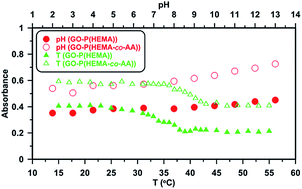
The thermoresponsive and pH-sensitive behaviors of the different samples were investigated by UV-visible absorptions. At first, GO-P(HEMA) sample were exposed to pH-sensitive (2–13) and thermoresponsive (15–55 °C) behavior tests (Fig. 9). It is obvious that the UV-visible absorption of GO-P(HEMA) increases slightly as pH increases from 2 to 4. Also, no pH-sensitive behavior is seen between pH = 5–8 and after that increasing pH value up to 13 results in increasing UV-visible absorption. Such behavior for P(HEMA) was reported by Ferreira et al.49 This slight dependence on pH may be ascribed to delocalization of the electron density on the single bond oxygen to the electron-at-tracting carbonyl group. As reported before,50 the solubility of P(HEMA) is strongly molecular weight dependent. Polymers with a molecular weight between 3000–6000 g mol−1 show LCST behavior, while longer polymers are water insoluble and shorter polymers are even fully water-soluble. In this work, synthesized PHEMA was obtained with an average molecular weight of 5100 g mol−1 which is expected to show thermoresponsive behavior. As shown in Fig. 9, by increasing temperature from 15 °C to 55 °C, a decrease in UV-visible absorption is seen while the change in hydrophilicity is not significant after 38 °C. The same works were done on GO-P(HEMA-co-AA) sample. It is noteworthy that the UV-visible absorption of GO-P(HEMA-co-AA) sample is higher than GO-P(HEMA) sample at any pH value. This is ascribed to the more hydrophilic properties of PAA. Also, the GO-P(HEMA-co-AA) shows a pH-sensitive behavior in which the UV-visible absorption increases as pH values increases. This is resulted from the electrostatic repulsion between the carboxyl anions of PAA.51 As the alkalinity of the solution increases, the carboxylic acid groups dissociate into carboxyl anions, and then the PAA chain will become more and more extended. When temperature raises, the GO-P(HEMA-co-AA) shows a thermoresponsive behavior like GO-P(HEMA) with an increased UV-visible absorption. Also, the LCST point increases to higher temperature when AA exists in structure. This is originated from the competition between the intermolecular and intramolecular hydrogen bonding interactions.52 However, more hydrophile groups in the structure helps to intermolecular hydrogen bonding which shifts LCST to higher temperatures.
 |
| | Fig. 9 Thermoresponsibility (15–55 °C) and pH-sensitivity (pH = 2–13) results of GO-P(HEMA) and GO-P(HEMA-co-AA). | |
4. Conclusions
Natural graphite was oxidized via Hummer's method to obtain GO. Then, a RAFT-agent was attached onto GO surface. RAFT polymerization of 2-hydroxyethyl methacrylate (HEMA) and acrylic acid (AA) was performed and After separation of free chains, GO-P(HEMA) and GO-P(HEMA-co-AA) were obtained. FTIR, TGA, XRD, Raman spectroscopy, 1H NMR, SEC and TEM confirmed the success of modification and polymerization processes. GO-P(HEMA) and GO-P(HEMA-co-AA) nanosheets' thermoresponsibility and pH-sensitivity were examined by means of UV-visible spectroscopy. Due to dark nature of GO-P(HEMA) and GO-P(HEMA-co-AA) nanosheets, the UV-visible absorption of their solutions is an effective parameter to examine the stimuli responsive behavior as measured here in different pH (3–12) and temperature (25–55 °C) values. According to results, UV-visible absorption of GO-P(HEMA) decreases slightly as pH decreases while the decrease is more significant for GO-P(HEMA-co-AA). Also, an LCST temperature of 30 and 34 °C is observed for GO-P(HEMA) and GO-P(HEMA-co-AA) nanosheets respectively.
Acknowledgements
We are grateful for support from the Iran National Science Foundation (INSF) (grant no. 91002479).
Notes and references
- K. P. Loh, Q. Bao, P. K. Ang and J. Yang, J. Mater. Chem., 2010, 20, 2277 RSC.
- M. Terrones, A. R. Botello-Méndez, J. Campos-Delgado, F. López-Urías, Y. I. Vega-Cantú, F. J. Rodríguez-Macías, A. L. Elías, E. Munoz-Sandoval, A. G. Cano-Márquez, J.-C. Charlier and H. Terrones, Nano Today, 2010, 5, 351 CrossRef PubMed.
- T. K. Das and S. Prusty, Polym.-Plast. Technol. Eng., 2013, 52, 319 CrossRef CAS.
- B. M. Yoo, H. J. Shin, H. W. Yoon and Ho B. Park, J. Appl. Polym. Sci., 2014, 131, 39628 CrossRef PubMed.
- J. Liu, L. Cui and D. Losic, Acta Biomater., 2013, 9, 9243 CrossRef CAS PubMed.
- H. Roghani-Mamaqani, V. Haddadi-Asl, K. Khezri and M. Salami-Kalajahi, Polym. Int., 2014 DOI:10.1002/pi.4730.
- J. M. Bak, T. Lee, E. Seo, Y. Lee, H. M. Jeong, B.-S. Kim and H.-i. Lee, Polymer, 2012, 53, 316 CrossRef CAS PubMed.
- J. M. Bak and H.-i. Lee, Polymer, 2012, 53, 4955 CrossRef CAS PubMed.
- D. Baskaran1, J. R. Dunlap, J. W. Mays and M. S. Bratcher, Macromol. Rapid Commun., 2005, 26, 481 CrossRef PubMed.
- M. Sarsabili, M. Parvini, M. Salami-Kalajahi and P. Ganjeh-Anzabi, Adv. Polym. Technol., 2013, 32, 21372 CrossRef PubMed.
- M. Salami-Kalajahi, V. Haddadi-Asl, S. Rahimi-Razin, F. Behboodi-Sadabad, H. Roghani-Mamaqani and M. Hemmati, Chem. Eng. J., 2011, 174, 368 CrossRef CAS PubMed.
- M. Salami-Kalajahi, V. Haddadi-Asl, F. Behboodi-Sadabad, S. Rahimi-Razin, H. Roghani-Mamaqani and M. Hemmati, Nano, 2012, 7, 1250003 CrossRef.
- H. Roghani-Mamaqani, V. Haddadi-Asl and M. Salami-Kalajahi, Polym. Rev., 2012, 52, 142 CrossRef CAS.
- H. Wang, W. Luo and J. Chen, J. Mater. Sci., 2012, 47, 5918 CrossRef CAS.
- N. Idota, A. Kikuchi, J. Kobayashi, K. Sakai and T. Okano, Colloids Surf., B, 2012, 99, 95 CrossRef CAS PubMed.
- K. Khezri, V. Haddadi-Asl, H. Roghani-Mamaqani and M. Salami-Kalajahi, Polym. Compos., 2012, 33, 990 CrossRef CAS PubMed.
- L. Hatami, V. Haddadi-Asl, L. Ahmadian-Alam, H. Roghani-Mamaqani and M. Salami-Kalajahi, Int. J. Chem. Kinet., 2013, 45, 221 CrossRef CAS PubMed.
- C. Ladaviére, N. Dörr and J. P. Claverie, Macromolecules, 2001, 34, 5370 CrossRef.
- T. E. Patten and K. Matyjaszewski, Adv. Mater., 1998, 10, 901 CrossRef CAS.
- Q. Ma and K. L. Wooley, J. Polym. Sci., Part A: Polym. Chem., 2000, 38, 4805 CrossRef CAS.
- I. Javakhishvili and S. Hvilsted, Biomacromolecules, 2009, 10, 74 CrossRef CAS PubMed.
- M. Sobani, V. Haddadi-Asl, M. Salami-Kalajahi, H. Roghani-Mamaqani, S.-A. Mirshafiei-Langari and K. Khezri, J. Sol-Gel Sci. Technol., 2013, 66, 337 CrossRef CAS PubMed.
- P. Ganjeh-Anzabi, V. Haddadi-Asl, M. Salami-Kalajahi and M. Abdollahi, J. Polym. Res., 2013, 20, 248 CrossRef.
- C. M. Wager, D. M. Haddleton and S. A. F. Bon, Eur. Polym. J., 2004, 40, 641 CrossRef CAS PubMed.
- M. D. Rowe, B. A. G. Hammer and S. G. Boyes, Macromolecules, 2008, 41, 4147 CrossRef CAS.
- W. S. Hummers Jr and R. E. Offeman, J. Am. Chem. Soc., 1958, 80, 1339 CrossRef.
- G. I. Titelman, V. Gelman, S. Bron, R. L. Khalfin, Y. Cohen and H. Bianco-Peled, Carbon, 2005, 43, 641 CrossRef CAS PubMed.
- S. Rahimi-Razin, V. Haddadi-Asl, M. Salami-Kalajahi, F. Behboodi-Sadabad and H. Roghani-Mamaqani, J. Iran. Chem. Soc., 2012, 9, 877 CrossRef CAS PubMed.
- H. Roghani-Mamaqani, V. Haddadi-Asl, K. Khezri, E. Zeinali and M. Salami-Kalajahi, J. Polym. Res., 2014, 21, 333 CrossRef.
- M. Salami-Kalajahi, V. Haddadi-Asl, F. Behboodi-Sadabad, S. Rahimi-Razin and H. Roghani-Mamaqani, Polym. Compos., 2012, 33, 215 CrossRef CAS PubMed.
- H. M. Etmimi and R. D. Sanderson, Macromolecules, 2011, 44, 8504 CrossRef CAS.
- C. Su and K. P. Loh, Acc. Chem. Res., 2013, 46, 2275 CrossRef CAS PubMed.
- J. Ou, J. Wang, S. Liu, B. Mu, J. Ren, H. Wang and S. Yang, Langmuir, 2010, 26, 15830 CrossRef CAS PubMed.
- K. P. Pramoda, H. Hussain, H. M. Koh, H. R. Tan and C. B. He, J. Polym. Sci., Part A: Polym. Chem., 2010, 48, 4262 CrossRef CAS PubMed.
- M. Veerapandian, M.-H. Lee, K. Krishnamoorthy and K. Yun, Carbon, 2012, 50, 4228 CrossRef CAS PubMed.
- A. Ambrosi, C. Kiang Chua, A. Bonanni and M. Pumera, Chem. Mater., 2012, 24, 2292 CrossRef CAS.
- S. Hwa Lee, D. R. Dreyer, J. An, A. Velamakanni, R. D. Piner, S. Park, Y. Zhu, S. O. Kim, C. W. Bielawski and R. S. Ruoff, Macromol. Rapid Commun., 2010, 31, 281 CrossRef PubMed.
- S. Zhu, J. Li, Y. Chen, Z. Chen, C. Chen, Y. Li, Z. Cui and D. Zhang, J. Nanopart. Res., 2012, 14, 1132 CrossRef.
- Y. Deng, Y. Li, J. Dai, M. Lang and X. Huang, J. Polym. Sci., Part A: Polym. Chem., 2011, 49, 1582 CrossRef CAS PubMed.
- M. Fang, K. Wang, H. Lu, Y. Yang and S. Nutt, J. Mater. Chem., 2010, 20, 1982 RSC.
- I.-Y. Jeon, H.-J. Choi, S.-M. Jung, J.-M. Seo, M.-J. Kim, L. Dai and J.-B. Baek, J. Am. Chem. Soc., 2013, 135, 1386 CrossRef CAS PubMed.
- S. Sun, Y. Cao, J. Feng and P. Wu, J. Mater. Chem., 2010, 20, 5605 RSC.
- L. Monica Veca, F. Lu, M. J. Meziani, L. Cao, P. Zhang, G. Qi, L. Qu, M. Shrestha and Y.-P. Sun, Chem. Commun., 2009, 2565 RSC.
- Y. Pan, H. Bao, N. G. Sahoo, T. Wu and L. Li, Adv. Funct. Mater., 2011, 21, 2754 CrossRef CAS PubMed.
- X. Xu and J. Huang, J. Polym. Sci., Part A: Polym. Chem., 2004, 42, 5523 CrossRef CAS PubMed.
- X. Zhao, W. Liu, D. Chen, X. Lin and W. W. Lu, Macromol. Chem. Phys., 2007, 208, 1773 CrossRef CAS PubMed.
- Y. Su, X. Xiao, S. Li, M. Dan, X. Wanga and W. Zhang, Polym. Chem., 2014, 5, 578 RSC.
- S. Rahimi-Razin, V. Haddadi-Asl, M. Salami-Kalajahi, F. Behboodi-Sadabad and H. Roghani-Mamaqani, Int. J. Chem. Kinet., 2012, 44, 555 CrossRef CAS PubMed.
- L. Ferreira, M. M. Vidal and M. H. Gil, Int. J. Pharm., 2000, 194, 169 CrossRef CAS.
- J. V. M. Weaver, I. Bannister, K. L. Robinson, X. Bories-Azeau and S. P. Armes, Macromolecules, 2004, 37, 2395 CrossRef CAS.
- N. Nassif, N. Gehrke, N. Pinna, N. Shirshova, K. Tauer, M. Antonietti and H. Cölfen, Angew. Chem., Int. Ed., 2005, 44, 6004 CrossRef CAS PubMed.
- X.-D. Xu, C.-S. Chen, Z.-C. Wang, G.-R. Wang, S.-X. Cheng, X.-Z. Zhang and R.-X. Zhuo, J. Polym. Sci., Part A: Polym. Chem., 2008, 46, 5263 CrossRef CAS PubMed.
|
| This journal is © The Royal Society of Chemistry 2014 |
Click here to see how this site uses Cookies. View our privacy policy here.