DOI:
10.1039/C4RA01104J
(Paper)
RSC Adv., 2014,
4, 13446-13452
Palladium nanoparticles supported in a polymeric membrane: an efficient phosphine-free “green” catalyst for Suzuki–Miyaura reactions in water†
Received
7th February 2014
, Accepted 27th February 2014
First published on 28th February 2014
Abstract
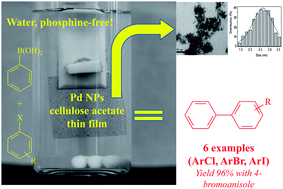
Palladium(0) nanoparticles supported on a polymeric membrane, CA/Pd(0), were found to be a highly efficient “dip catalyst” (heterogeneous catalyst) for Suzuki–Miyaura cross-coupling reactions. Iodo-, bromo- and electron-poor chloroarenes coupled with phenylboronic acid under eco-friendly conditions (i.e., phosphine-free and with water as the solvent) to give excellent yields. The CA/Pd(0) was prepared initially via the synthesis of Pd(0) by hydrogen decomposition of Pd(acac)2 dissolved in BMI·BF4 ionic liquid at 75 °C for 1.0 hour to yield a black suspension (nanoparticles with a diameter of 2.7 ± 0.4 nm). These nanoparticles were washed with acetone and dried under reduced pressure. The Pd(0) nanoparticles were subsequently added to a cellulose acetate solution with acetone to generate the CA/Pd(0) polymeric membrane. The CA/Pd(0) “dip catalyst” was characterised by X-ray diffraction (XRD), scanning electron microscopy (SEM), electron-dispersive spectroscopy (EDS) and transmission electron microscopy (TEM).
Introduction
Cellulose is among the most abundant renewable organic resources and is also easily biodegradable; it therefore represents a relatively low contamination risk to the environment. Cellulose acetate (CA) exhibits excellent biocompatibility, and these promising materials are thus suitable for the immobilisation of both biological compounds1 and nanoparticles of transition metals.2 The ideal support for a catalyst, for example, should be inert, stable and resistant to mechanical force. Other properties should also be considered, including the shape, distribution, pore size and expandability. Increased stability, selectivity and activity of a catalyst are often obtained through a combination of immobilisation techniques and the proper selection of the support. Numerous studies have been conducted on the use of cellulose matrices for adsorption and covalent-bond immobilisation.1,3–5
Palladium-nanoparticle-based catalysts are often used in organic syntheses.6–8 Suzuki–Miyaura and Heck–Mizoroki cross-couplings are versatile reactions in organic chemistry that are classically catalysed by palladium salts with auxiliary ligands (phosphines),9 palladacycles10 or others organometallics that contain palladium.11 However, the majority of catalytic systems operate under drastic conditions in an inert atmosphere with toxic phosphines and an absence of water, which makes these systems not environmentally friendly. More recently, researchers have developed new eco-friendly catalytic systems for Suzuki–Miyaura cross-coupling reactions using palladium nanoparticles (Pd NPs).7 Microwave,12 sonication (ultrasound)13 as well as less-toxic bases and solvents are used in “green” Suzuki–Miyaura catalytic systems;7 however, reports of systems in which water is used as solvent are still scarce.14 Our group has been investigating the use of ionic liquids to stabilise nanoparticles, with particular focus on optimising new catalytic systems for eco-friendly hydrogenation reactions.2,15 Recently, our efforts have been focused on the immobilisation of nanoparticles in biopolymers, particularly cellulose acetate.2,16 We believe that this approach has great potential in the development of heterogeneous catalysts for cross-coupling reactions.
Herein, we report the development of Pd NPs supported on polymeric membrane, CA/Pd(0), as “dip catalysts” and their use in a catalyst system for the Suzuki–Miyaura reaction in water.
Experimental
1. Synthesis and isolation of Pd(0) nanoparticles
Palladium nanoparticles were prepared by simple hydrogen decomposition (4 atm H2, constant pressure) of 30 mg (0.28 mmol) of Pd(acac)2 dissolved in 1-n-buthyl-3-methylimidazolium tetrafluoroborate (BMI·BF4) ionic liquid at 75 °C for 1.0 hour to yield a black suspension. Acetone (15 mL) was added, and centrifugation of this mixture yielded nanoparticles with a diameter of 2.7 ± 0.4 nm; these nanoparticles were washed with acetone and dried under reduced pressure.
2. Preparation of a polymeric membrane containing Pd(0) nanoparticles
Cellulose acetate (10.0 g) was added to a reaction flask containing 90 mL of acetone, and the mixture was allowed to stand for 24 h at room temperature under a dry nitrogen atmosphere. After a viscous syrup was formed, 10.0 mg (0.095 mmol) Pd(0) nanoparticles were added to 5.0 g of the syrup. The mixtures were magnetically stirred until a homogeneous phase was obtained. We prepared films of the polymeric membrane, designated here as CA/Pd(0) (cellulose acetate/Pd NPs), by spreading the homogeneous phase over a glass plate. The thickness was controlled to be 20 μm through the use of a spacer. The solvent was evaporated in an open atmosphere for 2 min. A similar method was used to prepare a blank CA polymeric membrane, in which no Pd(0) nanoparticles were used. The polymeric membrane containing Pd(0) nanoparticles (10 mg of Pd in 907 mg of thin film) were used in the Suzuki–Miyaura reactions.
3. X-ray powder diffraction analysis (XRD)
The phase structures of the Pd(0) nanoparticles prepared in BMI·BF4 were characterised by XRD. For the XRD analysis, the Pd NPs were isolated as a fine powder and placed in a sample holder. The XRD experiments were performed on a SIEMENS D500 diffractometer equipped with a curved graphite crystal monochromator and a Cu Kα radiation source (λ = 1.5406 Å). The diffraction data were collected at room temperature in Bragg–Brentano θ–2θ geometry. The X-ray source was operated at 40 kV and 20 mA, and the samples were scanned over the range between 20° and 90°. The diffractograms were obtained with a constant step of Δ2θ = 0.05°. The Bragg reflections were indexed via a pseudo-Voigt profile fitting using the FULLPROF program.17
4. Scanning electron microscopy (SEM) and EDS elemental analysis
The morphology of the membrane polymeric CA/Pd(0) was examined and the electron-dispersive spectroscopy (EDS) analysis was performed using a JEOL model JSM 5800 operated at 10 or 20 kV and with a magnification of 1000×.
5. Transmission electron microscopy analysis (TEM)
TEM analyses were performed using a JEOL JEM1200EXII operated at 120 kV. A 20 μm objective aperture and a slightly under focused (Δf ≈ −300 nm) objective lens were used to obtain the bright-field TEM images. The morphology and electron diffraction (ED) patterns of the isolated Pd NPs and supported in the polymeric membrane, were analysed by TEM. The samples were prepared by deposition of the Pd(0) NPs from an isopropanol suspension at room temperature onto a carbon-coated copper grid. The histograms of the nanoparticle size distribution were obtained from diameter measurements of approximately 300 particles and were reproduced in different regions of the Cu grid; a spherical nanoparticle shape was assumed. For the analyses of the Pd(0) NPs supported in the polymeric membrane, the material was immobilised in resin, sliced with an ultramicrotome and placed on a carbon-coated copper grid.
6. Suzuki–Miyaura cross-couplings
6.1 Experimental. All reactions were conducted under an air atmosphere in a Góes “dip catalyst” reactor (GDCR, Fig. 1). K2CO3, CsF, MgSO4, Et2O, 1,4-dioxane, ethanol, and DMF were purchased from Synth. Phenylboronic acid and aryl halides were purchased from Sigma-Aldrich. All chemicals were used without further purification. NMR spectra were recorded on a Varian XL300 spectrometer. Mass spectra were obtained on a Shimadzu QP-5050 GC/MS (EI, 70 eV). Gas chromatography was performed on a Perkin Elmer Clarus 400 GC equipped with a flame ionization detector (FID) and a 30 m capillary column with a dimethylpolysiloxane stationary phase.
 |
| | Fig. 1 Góes “dip catalyst” reactor (GDCR). | |
6.2 Typical experiment for the Suzuki–Miyaura cross-coupling reaction. A GDCR (Fig. 1) was charged with K2CO3 (279 mg, 2 mmol), phenylboronic acid (187 mg, 1.5 mmol), aryl halide (1 mmol), polymer thin film “dip catalyst” CA/Pd(0) (97 mg, 660 mm2 for [Pd] = 1 mol%; 907 mg of thin film contained 10 mg of Pd(0) nanoparticles), and distilled water (10 mL). The reaction mixture was stirred at 100 °C for 24 h. The solution was then allowed to cool to r.t. and was subsequently extracted with Et2O (2 × 5 mL). The organic layer was dried over MgSO4, filtered, and concentrated in vacuo; the crude material was subsequently purified by flash chromatography on silica gel. The corresponding biaryl products were characterised by 1H and 13C NMR and by GC-MS.
4-Methoxybiphenyl18. White solid, mp 81–83.5 °C (lit. 77–78.5 °C). 1H NMR (300 MHz, CDCl3) δ 7.58–7.53 (m, 3H), 7.45–7.40 (m, 2H), 7.34–7.26 (m, 2H), 7.01–6.98 (m, 2H), 3.86 (s, 3H). 13C NMR (75.4 MHz, CDCl3) δ 159.4, 141.1, 134.0, 129.0, 128.4, 127.0, 126.9, 114.5, 55.6. GC-MS (IE, 70 eV) m/z (%): 184 (100, M+), 169 (55), 141 (47), 115 (34), 185 (13), 63 (11), 139 (10), 76 (10).
Biphenyl19. White solid. 1H NMR (300 MHz, CDCl3) δ 7.83–7.30 (m, 10H). 13C NMR (75.4 MHz, CDCl3) δ 141.2, 128.7, 127.2, 127.1.
4-Methylbiphenyl19. White solid, mp 40–41 °C (lit. 42–45 °C). 1H NMR (300 MHz, CDCl3) δ 7.62–7.26 (m, 9H), 2.42 (s, 3H). 13C NMR (75.4 MHz, CDCl3) δ 141.7, 141.5, 138.6, 130.0, 129.1, 129.0, 128.9, 128.8, 128.3, 128.2, 127.5, 124.6, 21.8. GC-MS (IE, 70 eV) m/z (%): 168 (100, M+), 167 (58), 82(38), 165 (25), 152 (24), 153 (18), 169 (14), 166 (9).
4-Cyanobiphenyl20. White solid, mp 89–92 °C (lit. 86–87 °C). 1H NMR (300 MHz, acetone-d6) δ 7.77–7.74 (m, 4H), 7.57–7.47 (m, 5H). 13C NMR (75.4 MHz, acetone-d6) δ 145.8, 139.1, 132.9, 129.4, 128.9, 128.0, 127.4, 118.9, 111.1. GC-MS (IE, 70 eV) m/z (%): 179 (100, M+), 178 (25), 76 (21), 151 (16), 180 (15), 89 (14), 51 (10), 63 (9).
4-Nitrobiphenyl19. Brown solid, mp 109–111.5 °C (lit. 112–113 °C). 1H NMR (300 MHz, CDCl3) δ 8.32–8.29 (m, 2H), 7.76–7.73 (m, 2H), 7.65–7.62 (m, 2H), 7.54–7.27 (m, 3H). 13C NMR (75.4 MHz, CDCl3) δ 147.9, 147.3, 139.0, 129.5, 129.2, 128.0, 127.7, 124.4. GC-MS (IE, 70 eV) m/z (%): 152 (100), 199 (95, M+), 169 (37), 151 (30), 76 (28), 141 (27), 153 (26), 51 (26).
2-Methylbiphenyl20. Oil. 1H NMR (300 MHz, CDCl3) δ 7.41–7.20 (m, 9H), 2.24 (s, 3H). 13C NMR (75.4 MHz, CDCl3) δ 141.9, 135.3, 131.5, 130.3, 129.8, 129.2, 128.4, 128.0, 127.2, 126.7, 125.7, 20.4. GC-MS (IE, 70 eV) m/z (%): 168 (100, M+), 167 (91), 82(55), 153 (41), 165 (40), 152 (32), 51 (15), 63 (14).
7. Inductively coupled plasma optical emission spectrometry (ICP-OES)
Palladium present in the aqueous solution was measured using a Perkin Elmer Optima 4300 DV ICP-OES. Operating conditions: emission line Pd = 340, 458 nm; concentric nebuliser; cyclonic nebulisation chamber; gas nebulisation = 0.7 L min−1; auxiliary gas = 0.2 L min−1; plasma gas = 15 L min−1; pump flow = 1.2 mL min−1.
Results and discussion
Synthesis and characterisation of the polymeric membrane, CA/Pd(0)
The Pd(0) NPs were prepared by the decomposition of Pd(acac)2 dispersed in 1-n-buthyl-3-methylimidazolium tetrafluoroborate ionic liquid (BMI·BF4) at 75 °C under 4 atm of hydrogen. These NPs were isolated from the BMI·BF4 ionic liquid and were characterised by XRD, SEM-EDS and TEM analyses. The XRD pattern of the Pd(0) NPs (Fig. 2) confirmed that the product was crystalline and that the mean diameter was 3.2 ± 0.5 nm, as estimated by the Debye–Scherrer equation using the full-width at half-maximum (FWHM) of the (111), (200), (220), (311), and (222) planes.
 |
| | Fig. 2 XRD pattern of Pd(0) NPs synthesised in BMI·BF4 ionic liquid. | |
A SEM micrograph of a cross-section of the CA/Pd(0) polymeric membrane is shown in Fig. 3. The CA/Pd(0) film appears to have a compact structure, and the Pd(0) NPs, represented by the clear points (BSE method), are homogeneously distributed over the polymeric membrane. EDS analysis of the Pd(0) NPs (Fig. 3, right) indicated the presence of palladium metal.
 |
| | Fig. 3 SEM micrograph illustrating the distribution of Pd(0) NPs in the polymeric membrane (left) and an EDS pattern showing the detection of Pd metal (right). | |
TEM analysis was also performed on the prepared samples. The NPs were irregularly shaped, with a monomodal size distribution of 2.7 ± 0.4 nm (Fig. 4). They were dispersed in cellulose acetate (CA) solution. The homogeneous solution thus formed was spread over a glass plate, and films of 20 μm thickness were obtained using a spacer. The films of the polymeric membrane, CA/Pd(0), were characterised, and their catalytic properties were investigated in Suzuki–Miyaura reactions.
 |
| | Fig. 4 TEM micrograph of the Pd(0) NPs (left) and a histogram (right) illustrating the particle size distribution. | |
A TEM micrograph of the polymeric membrane containing the Pd(0) NPs (Fig. 5A) shows that the metal particles are homogeneously distributed over the entire membrane. This result clearly indicates that the use of the support for immobilisation the NPs does not substantially change the aggregation and size distribution of the NPs.
 |
| | Fig. 5 TEM micrograph of a CA/Pd(0) polymeric membrane (20 μm) (A) and TEM micrograph after repeated runs of the Suzuki–Miyaura (B). | |
However, after using the film CA/Pd(0) (Fig. 5B) is possible to observe that occurs metal agglomeration (black points in TEM image), which can cause loss in catalytic activity after some recycling reactions.
The surface area of the polymeric membrane (CA) was 38 m2 g−1 (±10%). In the case of the polymeric membrane containing Pd(0) NPs, the surface areas was 113 m2 g−1 (±10%). This increased surface area indicates that the presence of small and stable Pd(0) NPs induces an augmentation in the polymeric film surface area, possibly due to the occupation of the free pores of the membrane structure (compare entries 1 and 2, Table 1). The N2 adsorption–desorption isotherms at very low relative pressures (Pie/Po < 0.2) exhibited high adsorption, thereby confirming the presence of microporous structures.
Table 1 Surface areas and pore volumes a 20 μm membrane of pure cellulose acetate (CA) and a polymeric membrane containing nanoparticles, CA/Pd(0)
| Entry |
Sample |
M(0) (mg) |
aSbet (m2 g−1) |
| 1 |
CA |
— |
38 |
| 2 |
CA/Pd(0) |
10 |
113 |
Catalytic properties of the polymer thin film “dip catalyst” CA/Pd(0)
The catalytic properties of CA/Pd(0) were evaluated for the Suzuki–Miyaura cross-coupling of 4-bromoanisole with phenylboronic acid (Scheme 1). The reaction conditions, such the solvent (1,4-dioxane, DMF, ethanol, or water), base (CsF or K2CO3) and temperature, was optimised using 1 mol% of Pd in the polymer thin film (Table 2). The bases and solvents were chosen from previous work that supported our investigation.7,10a–d
 |
| | Scheme 1 The Suzuki–Miyaura cross-coupling reaction investigated in this work. | |
Table 2 Optimisation of reaction conditions for Suzuki–Miyaura cross-coupling of CA/Pd(0) with phenylboronic acid and 4-bromoanisolea
| Entry |
Base |
Solvent |
Yield (%) |
Remarks |
| Reaction conditions: 4-bromoanisole (1 mmol), phenylboronic acid (1.5 mmol), CA/Pd(0) (97 mg, 1 mol%), base (2 mmol), solvent (10 mL), 24 h (time not optimised), 50 °C, yields determined by GC (average of two runs). 100 °C. 0.5 mol% of CA/Pd(0). The isolated yield is stated in parentheses. |
| 1 |
CsF |
1,4-Dioxane |
10 |
Highly hygroscopic base. Film dissolved. |
| 2 |
K2CO3 |
1,4-Dioxane |
17 |
Film dissolved. |
| 3 |
K2CO3 |
DMF |
22 |
Film dissolved. |
| 4 |
K2CO3 |
Ethanol |
49 |
Film preserved. |
| 5 |
K2CO3 |
H2O |
70 |
Film preserved. |
| 6 |
K2CO3 |
H2O |
96b (90) |
Film preserved. |
| 7 |
K2CO3 |
H2O |
68b,c |
Film preserved. |
The results outlined in Table 2 indicate that the best result (entry 5) is obtained with the use of K2CO3 as the base and water as the solvent. This result is surprising and represents a Suzuki–Miyaura cross-coupling reaction that is free of phosphine ligands and quaternary ammonium salts. When the same reaction was repeated at 100 °C (entry 6), the reaction yield increased to 96%. When the amount of CA/Pd(0) catalyst was reduced to 0.5 mol%, the yield decreased to 68% (entry 7).
After optimising the catalytic system for the Suzuki–Miyaura reaction, we performed the cross-coupling reactions using different aryl halides (Table 3).
Table 3 Suzuki–Miyaura cross-coupling of CA/Pd(0) with phenylboronic acid and different aryl halidesa
| Entry |
ArX |
[Pd] (mol%) |
Product |
Time (h) |
Yield (%) |
TOF (h−1) |
TOFd (h−1) |
| Reaction conditions: ArX (1 mmol), phenylboronic acid (1.5 mmol), CA/Pd(0) (0.5–2.0 mol%), K2CO3 (2 mmol), water (10 mL), 100 °C, isolated yields (average of two runs). GC yields (average of two runs). With 0.2 mmol of tetrabutylammonium bromide. Corrected TOF (h−1), considering only the amount of exposed surface metal atoms (45%). |
| 1 |
 |
0.5 |
 |
2 |
94 |
94 |
209 |
| 2 |
 |
0.5 |
 |
3 |
95 |
63 |
141 |
| 3 |
 |
0.5 |
 |
3 |
97 |
65 |
144 |
| 4 |
 |
0.5 |
 |
12 |
51 |
9 |
19 |
| 24 |
89 |
7 |
17 |
| 5 |
 |
1.0 |
 |
12 |
67 |
6 |
12 |
| 24 |
99 |
4 |
9 |
| 6 |
 |
1.0 |
 |
24 |
92 |
4 |
9 |
| 7 |
 |
1.0 |
 |
24 |
95 |
4 |
9 |
| 8 |
 |
1.0 |
 |
24 |
45b, 37b,c |
4 |
9 |
| 9 |
 |
1.0 |
 |
24 |
38b, 23b,c |
2 |
4 |
| 2.0 |
48 |
31b, 19b,c |
0 |
1 |
| 10 |
 |
1.0 |
 |
24 |
36b, 10b,c |
2 |
1 |
When smaller quantities of CA/Pd(0) were used than that required with the chloro- and bromoarenes, we obtained excellent yields for the coupling of the more reactive aryl iodides and a wide variety of functional groups were tolerated on the aromatic ring (Table 3). The coupling reaction of iodobenzene (entry 1) occurred in only 2 h; however, a long reaction time was needed to couple deactivated aryl bromides and chlorides. Table 3 also shows that both electron-rich and electron-poor aryl bromides were efficiently coupled in the presence of CA/Pd(0) (entries 4–6), furnishing the cross-coupled products in excellent yields. As the main goal of our efforts with the Suzuki–Miyaura catalytic system was to work with aryl chlorides because they are the cheapest aryl halides, we performed reactions using different chloroarenes and obtained very good yields with electron-poor aryl chlorides (entry 7) using 1 mol% of CA/Pd(0). Electron-rich compounds, however, were found to be unsuitable partners in this context, even with the addition of tetrabutylammonium bromide (entries 9 and 10). Paradoxically, the addition of tetrabutylammonium bromide caused a decrease in cross-coupling product yield compared with those reported by other authors.7 Increases in both the catalyst load (2×) and reaction time were ineffective in facilitating product formation (entry 9). For the same reaction (Table 3, entry 1), Radhakrishnan found high TOF (∼104 h−1), however, used very small piece of the catalyst film (14 ppb of Pd).7 The smaller size of the film is likely to enhance the accessibility of Pd(0) NPs contributing to the enhanced TON and TOF.
To conduct a preliminary investigation on the recycling capability of CA/Pd(0), we chose the reaction of 4-iodoanisole with phenylboronic acid (Table 3, entry 3). Approximately 100% yield was obtained in the first run in 3 h. The catalyst polymeric membrane was removed, washed, dried, and reinserted for the next run (see Experimental section). After six recycles, the yields varied nonlinearly (Fig. 6). This result may indicate that the polymeric membrane suffered deformation during the prolonged reaction time. Additionally, after the last run (number 6), only 17% of the cross-coupling product was found, which was somewhat lower than that reported for other systems.7 Fig. 6 shows a loss of catalytic activity (cf. entry 1 and entries 2–3); after the fourth recycle, activity again increased. This fact may be related to the leaching of the superficial Pd NPs, resulting in the release of the catalytically active Pd(0) atoms.
 |
| | Fig. 6 Yield obtained after 3 h of reaction time in repeated runs of the Suzuki–Miyaura cross-coupling of phenylboronic acid with 4-iodoanisole in water using K2CO3 as the base and the same piece of thin-film catalyst. | |
Thus, we investigated the possibility that Pd(II) was present in the solution by ICP-OES because the solution exhibited a yellow colour after the first recycle (i.e., the same colour as Pd salts). Pd(II) was not detected by ICP-OES; however, the limit of detection was high (0.51 mg L−1). To further investigate the presence of Pd(II) in aqueous solution, we added a fresh charge of reagents in the absence of a catalyst in the solution that resulted from the first recycle. After 3 h of reaction, biphenyl was recovered in 39% yield, which clearly indicates the presence of Pd(II) in the aqueous solution. This result explains the poor recyclability of the CA/Pd(0) thin polymeric membrane.
Fig. 7 shows the morphological structure of the polymeric membrane. The temperature applied during the Suzuki–Miyaura reactions apparently causes a thermal deformation with consequent reduction of the porosity of the polymeric membrane. This deformation affects the reaction yield because it makes the polymeric membrane more compact. The deformation in the structure of the polymeric membrane, possibly renders the nanoparticles of Pd(0) (supported inside the pores of the membrane) inaccessible (Fig. 7B), this fact combined with the metal aglomeration (Fig. 5B), thus, can be associate with loss of catalytic activity.
 |
| | Fig. 7 SEM micrographs show that morphological structure of the polymeric membrane changes: (left) before recycling and (right) after recycling in the Suzuki–Miyaura experiments. | |
Conclusions
In conclusion, we have developed a simple method for the preparation of palladium nanoparticles dispersed in cellulose acetate, CA/Pd(0), as an eco-friendly “dip catalyst” for Suzuki–Miyaura reactions in water. Excellent yields were obtained for the coupling of phenylboronic acid with a wide variety of functional groups on the aromatic ring of iodo- and bromoarenes. Electron-rich aryl chlorides, in contrast, were found to be unsuitable reagents in this context, giving modest results. The recyclability of CA/Pd(0) is limited because Pd(0) nanoparticles undergo leaching and because the temperature used in the Suzuki–Miyaura reactions induces a thermal deformation of the polymeric membrane.
Acknowledgements
This work was supported by grants from CNPq, FAPERGS and CAPES (Brazil). Thanks are also due to Prof. Fábio Andrei Duarte (IQ/UFSM) for assistance with the ICP-OES analyses.
Notes and references
- X. Wu, F. Zhao, J. R. Varcoe, A. E. Thumser, C. Avignone-Rossa and R. C. T. Slade, Bioelectrochemistry, 2009, 77, 64 CrossRef CAS PubMed.
- M. A. Gelesky, C. W. Scheeren, L. Foppa, F. A. Pavan, S. L. P. Dias and J. Dupont, Biomacromolecules, 2009, 10, 1888 CrossRef CAS PubMed.
- Y. Ikeda, Y. Kurokawa, K. Nakane and N. Ogata, Cellulose, 2009, 9, 369 CrossRef.
- R. Dalla-Vecchia, M. G. Nascimento and V. Soldi, Quim. Nova, 2004, 27, 623 CrossRef CAS PubMed.
- J. Wan, X. Yan, J. Ding and R. Ren, Sens. Actuators, B, 2010, 146, 221 CrossRef CAS PubMed.
- C. C. Cassol, A. P. Umpierre, G. Machado, S. I. Wolke and J. Dupont, J. Am. Chem. Soc., 2005, 127, 3298 CrossRef CAS PubMed.
- E. Hariprasad and T. P. Radhakrishnan, ACS Catal., 2012, 2, 1179 CrossRef CAS.
- R. U. Islam, M. J. Witcomb, M. S. Scurrell, W. V. Otterlo and K. Mallick, Catal. Commun., 2010, 12, 116 CrossRef CAS PubMed.
-
(a) E. Negishi, Handbook of Organopalladium Chemistry for Organic Synthesis, John Wiley & Sons, New York, USA, 1st edn, 2002 Search PubMed;
(b) F. Diederich and A. Meijere, Metal-Catalyzed Cross-Coupling Reactions, Wiley-VCHVerlag GmbH&Co, Weinheim, Germany, 2nd edn, 2004 Search PubMed;
(c) T. Mizoroki, K. Mori and A. Ozaki, Bull. Chem. Soc. Jpn., 1971, 44, 581 CrossRef CAS;
(d) R. F. Heck and J. P. Nolley, J. Org. Chem., 1972, 37, 2320 CrossRef CAS;
(e) M. Oestreich, The Mizoroki–Heck Reaction, John Wiley & Sons, Chichester, UK, 1st edn, 2009 Search PubMed;
(f) N. Miyaura and A. Suzuki, Chem. Rev., 1995, 7, 2457 CrossRef.
-
(a) G. R. Rosa, G. Ebeling, J. Dupont and A. L. Monteiro, Synthesis, 2003, 2894 CAS;
(b) G. R. Rosa, C. H. Rosa, F. Rominger, A. L. Monteiro and J. Dupont, Inorg. Chim. Acta, 2006, 359, 1947 CrossRef CAS PubMed;
(c) G. R. Rosa, Quim. Nova, 2012, 35, 1052 CAS;
(d) G. R. Rosa and D. S. Rosa, RSC Adv., 2012, 2, 5080 RSC;
(e) J. Dupont and M. Pfeffer, Palladacycles – Synthesis, Characterization and Applications, Wiley-VCH Verlag GmbH & Co., Weinheim, Germany, 1st edn, 2008 Search PubMed;
(f) B. A. D. Neto, A. S. Lopes, G. Ebeling, R. S. Gonçalves, V. E. U. Costa, F. H. Quina and J. Dupont, Tetrahedron, 2005, 61, 10975 CrossRef PubMed;
(g) L. Botella and C. Nájera, J. Org. Chem., 2005, 70, 4360 CrossRef CAS PubMed;
(h) D. A. Alonso, J. F. Cívicos and C. Nájera, Synlett, 2009, 3011 CrossRef CAS PubMed;
(i) D. A. Alonso and C. Nájera, Chem. Soc. Rev., 2010, 39, 2891 RSC.
-
(a) Y. Li, G. Liu, C. Cao, S. Wang, Y. Li, G. Pang and Y. Shi, Tetrahedron, 2013, 69, 6241 CrossRef CAS PubMed;
(b) X. Tang, Y. T. Huang, H. Liu, R. Z. Liu, D. S. Shen, N. Liu and F. S. Liu, J. Org. Chem., 2013, 729, 95 CrossRef CAS PubMed.
- Ü. Yılmaz, H. Küçükbay, S. Deniz and N. Şireci, Molecules, 2013, 18, 2501 CrossRef PubMed.
- A. Azua, J. A. Mata, P. Heymes, E. Peris, F. Lamaty, J. Martinez and E. Colacino, Adv. Synth. Catal., 2013, 355, 1107 CrossRef CAS.
-
(a) C. Liu, Y. Zhang, N. Liu and J. Qiu, Green Chem., 2012, 14, 2999 RSC;
(b) M. Mondal and U. Bora, Green Chem., 2012, 14, 1873 RSC.
- P. Migowski, D. Zanchet, G. Machado, M. A. Gelesky, S. R. Teixeira and J. Dupont, Phys. Chem. Chem. Phys., 2010, 12, 6826 RSC.
-
(a) C. W. Scheeren, V. Hermes, O. Bianchi, P. F. Hertz, S. L. P. Dias and J. Dupont, J. Nanosci. Nanotechnol., 2011, 11, 5114 CrossRef CAS PubMed;
(b) M. P. Kleina, C. W. Scheeren, A. S. G. Lorenzoni, J. Dupont, J. Frazzon and P. F. Hertz, Process Biochem., 2011, 46, 1375 CrossRef PubMed;
(c) S. K. Moccelini, A. C. Franzoi, I. C. Vieira, J. Dupont and C. W. Scheeren, Biosens. Bioelectron., 2011, 26, 3549 CrossRef CAS PubMed.
- J. R. Carbajal, Short Reference Guide of The Program Fullprof, version 3.5, Ftp://charybde.saclay.cea.fr Search PubMed.
- S. Protti, M. Fagnoni, M. Mella and A. Albini, J. Org. Chem., 2004, 69, 3465 CrossRef CAS PubMed.
- S. Riggleman and P. DeShong, J. Org. Chem., 2003, 68, 8106 CrossRef CAS PubMed.
- J. P. Wolfe, R. A. Singer, B. H. Yang and S. L. Buchwald, J. Am. Chem. Soc., 1999, 121, 9550 CrossRef CAS.
Footnote |
| † Dedicated to Prof. Roberto Fernando de Souza for his outstanding contribution in the development of Brazilian Catalysis: a great master who left us too soon. |
|
| This journal is © The Royal Society of Chemistry 2014 |
Click here to see how this site uses Cookies. View our privacy policy here.