Solvent extraction of europium(III) to a fluorine-free ionic liquid phase with a diglycolamic acid extractant

Alok Rout, Ernesto Rezende Souza and Koen Binnemans*
KU Leuven, Department of Chemistry, Celestijnenlaan 200F, P.O. Box 2404, B-3001 Heverlee, Belgium. E-mail: Koen.Binnemans@chem.kuleuven.be; Fax: +32 16 32 7992; Tel: +32 16 32 7446

Received 29th December 2013 , Accepted 11th February 2014

First published on 14th February 2014


Abstract

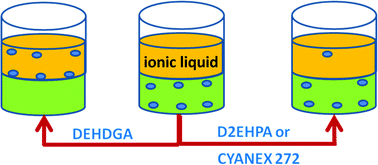
Europium(III) was extracted by bis(2-ethylhexyl)diglycolamic acid (DEHDGA) dissolved in the non-fluorinated ionic liquid tetraoctylammonium dodecyl sulphate, [N8888][DS]. The extraction behaviour of europium(III) was investigated as a function of various parameters: pH, extractant concentration, concentration of the europium(III) ion in the aqueous feed and concentration of the salting-out agent. A comparison was made with extraction of europium(III) by the acidic extractants bis(2-ethylhexyl)phosphoric acid (D2EHPA) and bis(2,4,4-trimethylpentyl)phosphinic acid (Cyanex 272) in tetraoctylammonium dodecyl sulphate. DEHDGA was found to be the best extractant in these experimental conditions. The ionic liquid diluent has been compared with tetraoctylammonium dodecylbenzene sulphonate and trihexyl(tetradecyl)phosphonium dodecyl sulphate. The extraction efficiency increased with increasing pH of the aqueous feed solution up to a maximum at pH 5, followed by a decrease in efficiency at higher pH values. Europium(III) was found to be extracted by a proton exchange mechanism. Europium(III) could be stripped from the ionic liquid phase by 1 M nitric acid.

Introduction

Ionic liquids (ILs) can be more sustainable alternatives for conventional molecular diluents in solvent extraction processes.1–4 Ionic liquids consist entirely of ions. As a consequence, they have a negligible vapor pressure and they are non-volatile.5,6 Replacement of volatile organic solvents in solvent extractions could lead to inherently safer processes.7 However, most of the studies in the literature on the extraction of metal ions with molecular extractants dissolved in ionic liquid diluents are making use of hydrophobic ionic liquids with fluorinated anions, such as the 1-alkyl-3-methylimidazolium hexafluorophosphates or bis(trifluoromethylsulfonyl)imides.8–17 From an environmental and economical point of view (persistence and high costs), ionic liquids with fluorinated anions are not ideal for use in solvent extraction processes. Replacement of the imidazolium cation by quaternary ammonium or phosphonium cations with long alkyl chains allows obtaining hydrophobic ionic liquids with non-fluorinated anions.18–34 It was thought for some time that these ionic liquids are too viscous to be used in undiluted form, so that they have to be diluted with molecular diluents.35 However, many of the potential advantages of ionic liquids are lost by applying them in diluted form. Tsukatani et al. described the use of new fluorine-free quaternary ammonium ionic liquids with dodecyl sulphate or dodecylbenzene sulphonate anions as diluents for the extraction of transition metal ions with the extractant 2-thenoyltrifluoroacetone.36 Diglycolamic acids are promising extractants for the separation of lanthanides and actinides from an acidic medium, due to their easy synthesis and high loading capacities.37–40 The extractant bis(2-ethylhexyl)diglycolamic acid (DEHDGA) has been exploited in fluorinated ionic liquid diluents for the separation of trivalent metal ions.37–39 Rout et al. used DEHDGA in the fluorinated ionic liquid 1-methyl-3-octylimidazolium bis(trifluoromethylsulfonyl)imide [C8mim][NTf2] for the mutual separation of Eu(III) and Am(III).37 Similarly, Kubota et al. explored the extraction of europium and other rare earths by DODGAA (dioctyldiglycolamic acid) in [C4mim][NTf2].38,39

In this paper, we show that europium(III) can be efficiently extracted by bis(2-ethylhexyl)diglycolamic acid dissolved in the fluorine-free ionic liquid diluent tetraoctylammonium dodecyl sulphate, [N8888][DS] (Fig. 1). The performance of the DEHDGA/[N8888][DS] extraction system was investigated as a function of different extraction parameters: pH, extractant concentration, concentration of the salting-out agent and concentration of europium(III) in the aqueous feed. Different extractant–diluent combinations have been tested. The stripping of europium(III) from the ionic liquid phase and re-use of the ionic liquid in a next extraction step were also investigated. The Eu(III) ion was selected as a model system, since Eu(III) is spectroscopically active so that the extracted species could be investigated by luminescence spectroscopy.


image file: c3ra48045c-f1.tif
Fig. 1 Chemical structure of the extractant bis(2-ethylhexyl)diglycolamic acid (DEHDGA) and the ionic liquid tetraoctylammonium dodecyl sulphate, [N8888][DS].

Experimental

Materials and reagents

All the chemicals and reagents used in this study were of analytical grade and they were used as received without further purification. Nitric acid, acetone, tetraoctylammonium bromide (98%), sodium dodecyl sulphate (>98%), dodecylbenzene sulphonate (>98%), diglycolic anhydride (99%), bis(2-ethylhexyl)amine (99%) and sodium nitrate (99%) were purchased from Sigma-Aldrich (Diegem, Belgium). Sodium hydroxide was obtained from Alfa Aesar. Europium(III) nitrate hexahydrate (99.9%) was purchased from Acros Organics (Geel, Belgium). A 1000 ppm gallium standard was purchased from Merck (Overijse, Belgium). The synthesis and characterization of bis(2-ethylhexyl)diglycolamic acid (DEHDGA) is described elsewhere.37 Tetraoctylammonium dodecyl sulphate ([N8888][DS]) was synthesized according to a literature procedure.36 The process involved the mixture of equimolar quantities of tetraoctylammonium bromide ([N8888]Br) and sodium dodecyl sulphate (NaDS) in a water–acetone mixture (1[thin space (1/6-em)]:[thin space (1/6-em)]1 v/v). After evaporation of acetone, the mixture was then transferred to a separating funnel to remove the aqueous layer. The oily phase was then washed thoroughly with water followed by drying in vacuo. A similar procedure was used for the synthesis of the ionic liquids tetraoctylammonium dodecylbenzene sulphonate, [N8888][DBS], and trihexyl(tetradecyl)phosphonium dodecyl sulphate, [P66614][DS] (the starting ionic liquid was [P66614][Br]). Analytical data: [N8888][DS]: 1H NMR (300 MHz, CDCl3, Me4Si, δ/ppm): 4.01 (t, 2H), 3.27 (t, 8H, –CH2–N–), 1.66–1.24 (m, 68H), 0.88 (t, 15H). 13C NMR (75 MHz, CDCl3, δ/ppm): 67.31 (–SO3–CH2–), 58.92 (–CH2–N), 31.94, 31.67, 29.68, 29.56, 29.05, 26.35, 22.59, 22.13 (various CH2 groups), 14.15, 14.06 (various –CH3 groups). [N8888][DBS]: 1H NMR (300 MHz, CDCl3, Me4Si, δ/ppm): 7.86 (d, 2H), 7.07 (d, 2H), 3.28 (t, 2H), 1.67–1.26 (m, 70H), 0.88 (t, 15H). 13C NMR (75 MHz, CDCl3, δ/ppm): 127.05, 126.06 (aromatic –CH–), 59.04 (–CH2–N), 31.89, 31.66, 29.11, 29.03, 29.05, 26.36, 22.59, 22.18 (various CH2 groups), 14.15, 14.07 (various –CH3 groups). [P66614][DS]: 1H NMR (300 MHz, CDCl3, Me4Si, δ/ppm): 4.02 (t, 2H), 2.39–2.23 (m, 8H), 1.68–1.25 (m, 68H), 0.91–0.86 (m, 15H). 13C NMR (75 MHz, CDCl3, δ/ppm): 67.46 (–SO3–CH2–), 31.92, 31.11, 30.56, 30.37, 29.66, 29.37, 25.94, 22.7, 22.36, 21.91, 19.27, 18.65 (various CH2 groups), 14.13, 13.95 (various –CH3 groups). 31P NMR (161.92 MHz, CDCl3): δ = 33.5 ppm (85% H3PO4 as external standard).

Instrumentation and analysis

The concentrations of europium in the aqueous phase were determined with a benchtop total reflection X-ray fluorescence (TXRF) spectrometer (Picofox S2, Bruker). The extraction experiments were performed in small vials in a temperature-controllable compact benchtop turbo thermo-shaker (model: TMS-200, Hangzhou Allsheng Instrument Co. LTD, China). After 1 hour of equilibration, the aqueous phase was sampled, a gallium internal standard was added and the sample was diluted with MilliQ water until a total volume of 1 mL was obtained. The quartz glass sample carriers were first treated with 20 μL of silicone solution in isopropanol (silicone solution SERVA for siliconizing glass and metal, SERVA Electrophoresis GmbH, Heidelberg, Germany) in order to bind the sample droplet by its polar sites. Then the sample carriers were dried for 5 minutes in a hot air oven at 60 °C, followed by the addition of 5 μL of the sample and a next drying step of 20 minutes at 60 °C. The samples were measured for 200 seconds in the TXRF spectrometer.

The extraction experiments were performed in small vials in a temperature-controllable compact benchtop turbo thermo-shaker (model: TMS-200, Hangzhou Allsheng Instrument Co. LTD, China). A Heraeus Megafuge 1.0 centrifuge was used for centrifugation of the samples after extraction. The viscosities of the ionic liquid phase were measured using an automatic Brookfield plate cone viscometer, model LVDV-II+P CP (Brookfield Engineering Laboratories, USA) and pH measurements were performed with an S220 SevenCompact™ pH/Ion meter (Mettler-Toledo) and a Slimtrode (Hamilton) electrode. Absorption spectra were measured on a Varian Cary 5000 spectrophotometer. Luminescence spectra were recorded on an Edinburgh Instruments FS-920P spectrofluorimeter. 1H NMR and 13C NMR spectra of ionic liquids were recorded on a Bruker Avance 300 spectrometer, operating at 300 MHz for 1H. 31P NMR spectra were recorded using a Bruker Avance 400 spectrometer, operating at 121.49 MHz for 31P. A H3PO4 (85%) external standard was used as a reference for 31P NMR measurements. CDCl3 was used as the solvent for recording the NMR spectra and the data were analyzed with the SPINWORKS software package.

Equilibration procedure

The extraction experiments with solutions of DEHDGA in [N8888][DS] were performed at 40 °C with a temperature-controllable shaking device. A 0.1 M NaNO3 was used as salting-out agent in the aqueous phase throughout this study to decrease the phase disengagement time. The ionic liquid phase was pre-equilibrated with the desired concentration of nitric acid to fix the equilibrium acidity. Extractions were performed by intensive shaking of the extraction mixture, typically for 1 hour. After the extraction step, separation of the phases was assisted by centrifugation for 5 minutes at 3000 rpm. The concentrations of europium distributed between the ionic liquid and the aqueous phases were measured by TXRF. For all extraction experiments, the volumes of the aqueous phase Vaq and of the ionic liquid phase VIL were equal (Vaq = VIL), i.e. a phase ratio of 1[thin space (1/6-em)]:[thin space (1/6-em)]1 was used. The distribution ratio (D) is the ratio of the concentration of the metal ion (europium in this paper) in the organic phase (ionic liquid phase) to the concentration of the metal ion in the aqueous phase, at equilibrium:
 
image file: c3ra48045c-t1.tif(1)

In practice, the distribution ratio is measured most conveniently by measuring the concentration of the metal ion in the aqueous phase after extraction and by comparing it to the initial concentration:

 
image file: c3ra48045c-t2.tif(2)
Ci and Cf are the concentration of the metal ions in the aqueous phase before (i = initial) and after extraction (f = final), respectively. The extraction efficiency (%E) was determined by using the following equation, by taking into account that Vaq = VIL:
 
image file: c3ra48045c-t3.tif(3)

Results and discussions

Influence of the pH

The extraction of europium(III) as a function of the nitric acid concentration was studied by equilibrating the ionic liquid phase with the aqueous phase (1[thin space (1/6-em)]:[thin space (1/6-em)]1 phase ratio, Vaq = VIL) containing the europium(III) solution (concentration: 0.7 mM) at the targeted pH value. The pH of the aqueous solution was varied between 2 and 6 by addition of 1 M HNO3 or 1 M NaOH. It was observed that the distribution ratios for the extraction of Eu(III) by DEHDGA diluted in [N8888][DS] increased with increase in pH to a maximum at pH = 5, but decreased at pH > 5 (Fig. 2). The initial increase in D values with decreasing acid concentrations is due to the reduced competition of HNO3 extraction with Eu(III) extraction at these higher pH values and strong coordinating ability of diglycolamate anion which coordinates through tridentate mode due to the presence of extra ether linkage. The decrease of the D values at high pH values could be due to the hydrolysis of Eu(III) at higher pH values, resulting in the formation of oligomeric hydrolysis products.41 Extraction of Eu(III) by the ionic liquid [N8888][DS], without added DEHDGA, is negligible at all pH values (D < 0.35). This can be explained by the lack of strongly coordinating groups in [N8888][DS].
image file: c3ra48045c-f2.tif
Fig. 2 Variation of the distribution ratio of Eu(III) as a function of the pH of the aqueous phase. Organic phase: 10 mM DEHDGA/[N8888][DS] or [N8888][DS] alone; aqueous phase: pH between 2 and 6, [Eu(III)] = 0.7 mM. Temperature = 313 K.

Extraction rates

The extraction rates depend on physical parameters such as the viscosity, the density and the hydrophobicity of the extracting phase. According to Tsukatani et al., the viscosity of [N8888][DS] is 1010 cP at 25 °C and for a water content of 2.8 wt%.36 This high viscosity can be attributed to the presence of long alkyl chains in both the ionic liquid cation and anion. In our extraction system, the viscosity of the ionic liquid phase after pre-equilibration with acidified water was 280 cP at 40 °C. The water content of this ionic pre-equilibrated liquid phase was 4.9 wt%. Although a viscosity of 280 cP is still quite high, the ionic liquid could conveniently be used for solvent extraction experiments. It was observed that it took about 40 minutes for the extraction process to reach the equilibrium state. To ensure that the equilibrium condition would be established, a shaking time of 1 hour was used for most extraction experiments.

Extraction mechanism

The distribution ratio increased with an increase in the concentration of DEHDGA in the ionic liquid (Fig. 3). A linear regression analysis of a plot of log[thin space (1/6-em)]D as a function of log[DEHDGA] resulted in a straight line with a slope of 1.05, suggesting the involvement of one molecule of DEHDGA during the extraction process. However, in the case of fluorinated ionic liquid systems such as the 1-alkyl-3-methylimidazolium bis(trifluoromethylsulfonyl)imides [Cnmim][NTf2], the extraction with DEHDGA gives a slope of 3, indicating the involvement of three DEHDGA molecules for the extraction of europium(III) and other trivalent lanthanide ions.37,38 Furthermore, in molecular diluents such as n-dodecane, DEHDGA is found to give a straight line with a slope of 2, indicating the involvement of two molecules of DEHDGA during the extraction of Eu(III).40 Several papers on ionic-liquid-based extraction systems describe that the stoichiometry of extracted metal complexes can be different in ionic liquid diluents and in molecular diluents like n-dodecane.14,42–44 The variation of log[thin space (1/6-em)]D as a function of pH of the aqueous phase was plotted and it resulted in a straight line with the slope of 0.95 (Fig. 4). This indicates that one Eu(III) ion exchanges with the H+ ion of one DEHDGA molecule to form an ion-associated complex. This supports the hypothesis that one molecule of DEHDGA is involved in the extraction of one Eu(III) ion. The proposed mechanism for the extraction of Eu(III) is given by eqn (4) and (5):
 
image file: c3ra48045c-t4.tif(4)
 
image file: c3ra48045c-t5.tif(5)

image file: c3ra48045c-f3.tif
Fig. 3 Variation in the plot of log[thin space (1/6-em)]DEu as a function of log[DEHDGA]. Organic phase: 5 mM to 60 mM DEHDGA/[N8888][DS]; aqueous phase: pH 4 and [Eu(III)] = 0.7 mM. Temperature: 313 K.

image file: c3ra48045c-f4.tif
Fig. 4 Plot of log[thin space (1/6-em)]DEu as a function of the pH of the aqueous phase. Organic phase: 10 mM DEHDGA/[N8888][DS]; aqueous phase: pH = 1–4 and [Eu(III)] = 0.7 mM. Temperature: 313 K.

The bars indicate the molecules in the ionic liquid phase and Kex is the extraction constant. DEHG presents a deprotonated DEHDGA molecule. It is likely that two nitrate ions are involved, to guarantee electric neutrality After rearrangement of eqn (5), a relation is obtained that correlates DEu with extractant concentration and feed acidity:

 
image file: c3ra48045c-t6.tif(6)

It can noticed from eqn (6) that extraction of Eu(III) involves coordination with one molecule of DEHDGA at the expense of one H+ ion. The effect of the concentration of DEHDGA in the ionic liquid phase was studied by varying the DEHDGA concentration between 5 mM and 60 mM. It was observed that the extraction efficiency remained almost constant to concentrations of more than 10 mM DEHDGA. About 96% of Eu(III) was extracted using only 10 mM DEHDGA in [N8888][DS] (Fig. 5). Therefore, all the subsequent studies were carried out with 10 mM DEHDGA in [N8888][DS].


image file: c3ra48045c-f5.tif
Fig. 5 Variation in the extraction efficiency of Eu(III) as a function of the concentration of DEHDGA in the ionic liquid phase. Organic phase: 5–60 mM DEHDGA/[N8888][DS]; aqueous phase: pH 4 and [Eu(III)] = 0.7 mM. Temperature: 313 K.

To support the proposed extraction mechanism, the emission spectra of europium(III) were measured in the aqueous phase and the ionic liquid phase (Fig. 6). The splitting pattern, shape and relative intensities of the 5D07FJ emission bands can provide information about the chemical environment surrounding the Eu(III) ion. The transitions in the luminescence spectrum originate from the 5D0 level and terminate at the various 7FJ levels (J from 0 to 6). The hypersensitive transition 5D07F2 is the most intense transition in the spectrum of the ionic liquid phase, whereas the magnetic dipole transition 5D07F1 is the most intense transition in the luminescence spectrum of the aqueous phase. These results show that the local environment of the Eu(III) ion is different in the ionic liquid phase compared to the aqueous phase. The number of water molecules present in the inner sphere (first coordination sphere) of the extracted Eu(III)–DEHG complex in the ionic liquid phase was determined by measuring the decay time of the 5D0 emitting level (via monitoring the emission intensity of the hypersensitive transition 5D07F2 at 614 nm under excitation at 395 nm) by saturating the ionic liquid phase with H2O and by D2O, respectively, followed by applying the Horrocks–Sudnick equation:45

 
image file: c3ra48045c-t7.tif(7)
Here q is the number of water molecules in the first coordination sphere (inner-sphere) of the Eu3+ ion. τH2O and τD2O are the luminescence decay times of the 5D0 excited state, measured in the ionic liquid phase hydrated with water and deuterated water, respectively. It was observed that the average lifetime was almost the same in both media (1.89 ms in D2O-saturated ionic liquid phase versus 1.70 ms in H2O-saturated ionic liquid phase). After inserting these values in eqn (7), a q value of 0.06 was found. This suggests that there is no water molecule present in the inner-sphere of the Eu–DEHG complex dissolved in the ionic liquid phase. Notice that we have used the Horrocks–Sudnick formula and not the modified Supkowski–Horrocks formula because the latter gave negative q values.46 This is due to the fact that the Supkowski–Horrocks formula should be used only in aqueous solutions and not in hydrated ionic liquids, since the modified formula takes in account water molecules in the second coordination sphere of the Eu(III) ion and the water concentration is lower in hydrated ionic liquids than in bulk water. Other experiments have indicated that the Eu(III) ion is extracted together with two nitrate ions and one deprotonated DEHDGA molecule (DEHG): Eu(NO3)2(DEHG) (vide supra). This implies a coordination number of only 7 (if DEHG binds as a tridentate ligand), which is low for rare-earth complexes. Therefore, the hypothesis is that the coordination sphere of the Eu(III) ion in the Eu(NO3)2(DEHG) dissolved in the [N8888][DS] ionic liquid phase is saturated by coordination of [DS] anions to the Eu(III) ion.


image file: c3ra48045c-f6.tif
Fig. 6 Emission spectrum of europium(III) in the aqueous feed phase (lower spectrum) and the ionic liquid phase [N8888][DS] (upper spectrum). The excitation wavelength λexc was 395 nm and the spectra were recorded at room temperature.

Loading test

It is possible to load high amounts of europium in the ionic liquid system [N8888][DS] with respect to the concentration of the extractant DEHDGA. With a DEHDGA concentration as low as 10 mM, it is possible to load up to about 7.5 mM (∼1 g L−1) of Eu(III) upon equilibrating with a an aqueous solution containing 35 mM (∼5 g L−1) of Eu(III). Fig. 7 shows the trend of loading in the ionic liquid phase as a function of the initial Eu(III) loading. At the initial stage, the loading of the ionic liquid phase increases slowly with an increase in the aqueous feed concentration. After a reaching a threshold concentration of 1 g L−1 of Eu(III) in the initial aqueous phase, a plateau corresponding to the maximum loading of the organic phase is obtained. This behaviour indicates saturation of the extracting phase after a certain loading. In the ionic liquid phase, the concentration of DEHDGA is 10 mM and the plateau is reached at about 7.5 mM of loaded Eu(III) in the ionic liquid phase. These data show that nearly all the extractant molecules are used to form with Eu(III) a complex with a 1[thin space (1/6-em)]:[thin space (1/6-em)]1 metal-to-ligand ratio. Also in the trace level studies (0.7 mM), it was found that one free DEHDGA molecule is involved in the complex formation with Eu(III).
image file: c3ra48045c-f7.tif
Fig. 7 Variation in the Eu(III) loading in the ionic liquid phase as a function of the initial Eu(III) loading in the aqueous feed. Organic phase: 10 mM DEHDGA/[N8888][DS]; aqueous phase: pH 4 and varied Eu(III) concentration (0.7 to 35 mM). Temperature: 313 K.

Effect of nitrate concentration

The concentration of NaNO3 in the aqueous feed solution (pH 4) was varied to investigate the influence of the salting-out agent on the distribution ratio of Eu(III), (Fig. 8). It was observed that for extraction of Eu(III) with a solution of 10 mM of DEHDGA in [N8888][DS], the distribution ratio increased gradually by increasing the nitrate concentration in the aqueous phase. This observation is in agreement with eqn (4), which proposes that nitrate ions are involved in the extraction process. The increase in DEu at high nitrate concentrations in the aqueous feed solution (e.g. 1.0 M NaNO3) could be due to the involvement of nitrate ion in the extraction process. To check this hypothesis, the extraction of Eu(III) with [N8888][DS], without added DEHDGA was investigated as a function of the nitrate concentration (Fig. 8). The distribution ratio remained almost constant irrespective of the initial concentration of the nitrate ion present in the aqueous phase (0.01 < D < 0.34). This shows that the ionic liquid [N8888][DS] cannot extract Eu(III) from a nitrate aqueous solution by an anion exchange mechanism and that no [DS] anions are transferred to the aqueous phase. Therefore, the increase in distribution ratio in the presence of the extractant DEHDGA at high nitrate concentrations in the aqueous feed solution suggests that Eu(III) gets extracted as a nitrato-complex to the ionic liquid phase.
image file: c3ra48045c-f8.tif
Fig. 8 Variation in the distribution ratios of Eu(III) as a function of the nitrate ion concentration in the aqueous phase. Organic phase: 10 mM DEHDGA/[N8888][DS] or [N8888][DS] alone; aqueous phase: pH 4, [Eu(III)] = 0.7 mM and varied nitrate concentration (in form of NaNO3). Temperature: 313 K.

Other extractants and diluents

The extracting power of DEHDGA was compared with that of the acidic extractants bis(2-ethylhexyl)phosphoric acid (D2EHPA) or bis(2,4,4-trimethylpentyl)phosphinic acid (Cyanex 272), since DEHDGA is a relatively new type of extractant and only a few comparative studies exist.37–39 D2EHPA and Cyanex 272 are well known classical acidic extractants for the separation of rare earths and they have shown their potential both in molecular and ionic liquid diluents.47–51 Fig. 9 compares extraction of Eu(III) by 10 mM of DEHDGA, Cyanex 272 or D2EHPA dissolved in [N8888][DS]. Surprisingly, the D value are very small for Cyanex 272 or D2EHPA in [N8888][DS], compared to the D value for DEHDGA in [N8888][DS]. The higher extraction efficiency of DEHDGA could be due to the extra coordinating ether site which can participate together with the carboxylate anion in the complex formation.
image file: c3ra48045c-f9.tif
Fig. 9 Variation of the distribution ratio of Eu(III) as a function of the pH of the aqueous phase for different acidic molecular extractants diluted in [N8888][DS]. Organic phase: 10 mM DEHDGA (or Cyanex 272 or D2EHPA)/[N8888][DS] or [N8888][DS] alone; aqueous phase: pH between 2 and 5, and [Eu(III)] = 0.7 mM. Temperature: 313 K.

The extraction performance of DEHDGA in the ionic liquid [N8888][DS] was compared with that of other ionic liquid diluents with a similar structure. Fig. 10 shows the extraction behaviour of Eu(III) by DEHDGA in tetraoctylammonium dodecylbenzene sulphonate, [N8888][DBS], and trihexyl(tetradecyl)phosphonium dodecyl sulphate, [P66614][DS], respectively, together with the results from DEHDGA in [N8888][DS]. The cation has a stronger influence on the extraction efficiency than the anion. A change of the anion from [DS] to [DBS] did not result in any remarkable change in the extraction efficiency. The distribution ratio for the extraction system DEHDGA/[P66614][DS] is very small and is close to the values observed for [N8888][DS] without added DEHDGA. The strong effect of the ionic liquid cation on the extraction behaviour of Eu(III) is in line with the results recently observed by our group for the extraction of Nd(III) by different dialkylphosphate ionic liquids.52


image file: c3ra48045c-f10.tif
Fig. 10 Variation of the distribution ratio of Eu(III) as a function of the pH of the aqueous phase for the ionic liquids [N8888][DS], [N8888][DBS] and [P66614][DS]. Organic phase: 10 mM DEHDGA/[N8888][DS] (or [N8888][DBS] or [P66614][DS]). Aqueous phase: pH between 2 and 4, [Eu(III)] = 0.7 mM. Temperature: 313 K.

Stripping and reusability studies

Since DEHDGA is an acidic extractant, a concentrated acid is the best choice for a stripping agent. After extraction, the stripping study was carried out by using 1.0 M nitric acid. After four successive stages, all Eu(III) ions were back-extracted from the pregnant ionic liquid phase. After stripping all Eu(III) ions, the recycled ionic liquid phase was scrubbed thoroughly with MilliQ water, followed by equilibration with an aqueous solution at the desired pH, before its use in the next extraction step. No differences in extraction efficiency was observed for the recycled DEHDGA/[N8888][DS] in the second extraction stage compared to the first extraction stage. This shows that the extraction system is recyclable.

Conclusions

The fluorine-free ammonium based ionic liquid tetraoctylammonium dodecyl sulphate [N8888][DS] was evaluated as diluent in combination with the extractant bis(2-ethylhexyl)diglycolamic acid (DEHDGA) for the extraction of europium(III) from an aqueous nitric acid solution. Advantages of the ionic liquid [N8888][DS] are its simple synthesis and stability towards ion-exchange to the aqueous phase. Extraction of Eu(III) was efficient at pH > 3 and there was a slight decrease in the extraction efficiency at pH > 5. Under the experimental conditions investigated, >95% extraction of Eu(III) was possible. The extraction mechanism suggests that one molecule of DEHDGA is involved in the complex formation with Eu(III). It is possible to load a high concentration of Eu(III) in the ionic liquid system DEHDGA/[N8888][DS], without the need of using salting-out agents or increasing the DEHDGA concentration. There was only a slight increase in extraction efficiency at very high nitrate concentrations in the aqueous phase. For the experimental conditions used in this study, DEHDGA was found to be a better extractant than other acidic extractants (D2EHPA or Cyanex 272). Similarly, changing the ionic liquid cation led to a drastic decrease in the distribution ratio. A change of the ionic liquid anion has a negligible influence on the extraction efficiency. It was possible to strip back the metal content from the ionic liquid by an aqueous 1.0 M nitric acid.

Acknowledgements

This project has been supported by KU Leuven (projects GOA/13/008 and IOF-KP RARE3), the FWO-Flanders (Pegasus Marie Curie Fellowship to AR) and the Brazilian Science without Border program from CNPq (postdoctoral fellowship to ERS). Support by IoLiTec (Heilbronn, Germany) is also gratefully acknowledged.

References

  1. S. Dai, Y. H. Ju and C. E. Barnes, J. Chem. Soc., Dalton Trans., 1999, 1201–1202 RSC.
  2. X. Q. Sun, H. M. Luo and S. Dai, Chem. Rev., 2012, 112, 2100–2128 CrossRef CAS PubMed.
  3. P. R. Vasudeva Rao, K. A. Venkatesan, A. Rout, T. G. Srinivasan and K. Nagarajan, Sep. Sci. Technol., 2012, 47, 204–222 CrossRef CAS.
  4. I. Billard, Chapter 256-Ionic Liquids: New Hopes for Efficient Lanthanide/Actinide Extraction and Separation? in Handbook on the Physics and Chemistry of Rare Earths, ed. J.-C. G. Bünzli and V. K. Pecharsky, Elsevier, 2013, pp. 213–273 Search PubMed.
  5. N. V. Plechkova and K. R. Seddon, Chem. Soc. Rev., 2008, 37, 123–150 RSC.
  6. T. Welton, Chem. Rev., 1999, 99, 2071–2083 CrossRef CAS PubMed.
  7. J. G. Huddleston, H. D. Willauer, R. P. Swatloski, A. E. Visser and R. D. Rogers, Chem. Commun., 1998, 1765–1766 RSC.
  8. A. E. Visser, R. P. Swatloski, W. M. Reichert, S. T. Griffin and R. D. Rogers, Ind. Eng. Chem. Res., 2000, 39, 3596–3604 CrossRef CAS.
  9. I. Billard, A. Ouadi, E. Jobin, J. Champion, C. Gaillard and S. Georg, Solvent Extr. Ion Exch., 2011, 29, 577–601 CrossRef CAS.
  10. N. Papaiconomou, G. Vite, N. Goujon, J. M. Leveque and I. Billard, Green Chem., 2012, 14, 2050–2056 RSC.
  11. Y. Zuo, Y. Liu, J. Chen and D. Q. Li, Ind. Eng. Chem. Res., 2008, 47, 2349–2355 CrossRef CAS.
  12. K. Nakashima, F. Kubota, T. Maruyama and M. Goto, Anal. Sci., 2003, 19, 1097–1098 CrossRef CAS.
  13. T. Vander Hoogerstraete, B. Onghena and K. Binnemans, J. Phys. Chem. Lett., 2013, 4, 1659–1663 CrossRef.
  14. M. P. Jensen, J. Neuefeind, J. V. Beitz, S. Skanthakumar and L. Soderholm, J. Am. Chem. Soc., 2003, 125, 15466–15473 CrossRef CAS PubMed.
  15. I. Billard, A. Ouadi and C. Gaillard, Dalton Trans., 2013, 42, 6203–6212 RSC.
  16. A. E. Visser, R. P. Swatloski, W. M. Reichert, R. Mayton, S. Sheff, A. Wierzbicki, J. H. Davis and R. D. Rogers, Chem. Commun., 2001, 135–136 RSC.
  17. A. Rout, K. A. Venkatesan, T. G. Srinivasan and P. R. Vasudeva Rao, J. Hazard. Mater., 2012, 221, 62–67 CrossRef PubMed.
  18. S. Wellens, B. Thijs and K. Binnemans, Green Chem., 2012, 14, 1657–1665 RSC.
  19. T. Vander Hoogerstraete, S. Wellens, K. Verachtert and K. Binnemans, Green Chem., 2013, 15, 919–927 RSC.
  20. D. Parmentier, S. J. Metz and M. C. Kroon, Green Chem., 2013, 15, 205–209 RSC.
  21. A. Rout, K. A. Venkatesan, T. G. Srinivasan and P. R. Vasudeva Rao, Sep. Purif. Technol., 2012, 95, 26–31 CrossRef CAS PubMed.
  22. A. Rout, K. A. Venkatesan, T. G. Srinivasan and P. R. Vasudeva Rao, Sep. Sci. Technol., 2013, 48, 2576 CrossRef CAS.
  23. V. M. Egorov, D. I. Djigailo, D. S. Momotenko, D. V. Chernyshov, I. I. Torocheshnikova, S. V. Smirnova and I. V. Pletnev, Talanta, 2010, 80, 1177–1182 CrossRef CAS PubMed.
  24. A. Fortuny, M. T. Coll and A. M. Sastre, Sep. Purif. Technol., 2012, 97, 137–141 CrossRef CAS PubMed.
  25. A. Stojanovic, D. Kogelnig, L. Fischer, S. Hann, M. Galanski, M. Groessl, R. Krachler and B. K. Keppler, Aust. J. Chem., 2010, 63, 511–524 CrossRef CAS.
  26. X. Q. Sun, Y. Ji, Y. Liu, J. Chen and D. Q. Li, AIChE J., 2010, 56, 989–996 CAS.
  27. W. Wang, H. L. Yang, H. M. Cui, D. L. Zhang, Y. Liu and J. Chen, Ind. Eng. Chem. Res., 2011, 50, 7534–7541 CrossRef CAS.
  28. D. Kogelnig, A. Stojanovic, M. Galanski, M. Groessl, F. Iirsa, R. Krachler and B. K. Keppler, Tetrahedron Lett., 2008, 49, 2782–2785 CrossRef CAS PubMed.
  29. M. Regel-Rosocka, Sep. Purif. Technol., 2009, 66, 19–24 CrossRef CAS PubMed.
  30. A. Cieszynska and M. Wisniewski, Hydrometallurgy, 2012, 113, 79–85 CrossRef PubMed.
  31. C. J. Bradaric, A. Downard, C. Kennedy, A. J. Robertson and Y. H. Zhou, Green Chem., 2003, 5, 143–152 RSC.
  32. J. P. Mikkola, P. Virtanen and R. Sojholm, Green Chem., 2006, 8, 250–255 RSC.
  33. X. Q. Sun, Y. Ji, L. Guo, J. Chen and D. Q. Li, Sep. Purif. Technol., 2011, 81, 25–30 CAS.
  34. S. Wellens, R. Goovaerts, C. Möller, J. Luyten, B. Thijs and K. Binnemans, Green Chem., 2013, 15, 3160–3164 RSC.
  35. A. Stojanovic and B. K. Keppler, Sep. Sci. Technol., 2012, 47, 189–203 CrossRef CAS.
  36. T. Tsukatani, H. Katano, H. Tatsumi, M. Deguchi and N. Hirayama, Anal. Sci., 2006, 22, 199–200 CrossRef CAS.
  37. A. Rout, S. Karmakar, K. A. Venkatesan, T. G. Srinivasan and P. R. Vasudeva Rao, Sep. Purif. Technol., 2011, 81, 109–115 CrossRef CAS PubMed.
  38. F. Kubota, Y. Shimobori, Y. Baba, Y. Koyanagi, K. Shimojo, N. Kamiya and M. Goto, J. Chem. Eng. Jpn., 2011, 44, 307–312 CrossRef CAS.
  39. Y. Baba, F. Kubota, N. Kamiya and M. Goto, J. Chem. Eng. Jpn., 2011, 44, 679–685 CrossRef CAS.
  40. A. S. Suneesh, K. A. Venkatesan, K. V. Syamala, M. P. Antony and P. R. Vasudeva Rao, Radiochim. Acta, 2012, 100, 425–430 CrossRef CAS.
  41. C. F. Baes and R. E. Mesmer, The Hydrolysis of Cations, Wiley, New York, 1976 Search PubMed.
  42. P. K. Mohapatra, A. Sengupta, M. Iqbal, J. Huskens and W. Verboom, Chem.–Eur. J., 2013, 19, 3230–3238 CrossRef CAS PubMed.
  43. Y. L. Shen, S. F. Wang, L. Zhu, J. J. Wang and W. S. Wu, Ind. Eng. Chem. Res., 2011, 50, 13990–13996 CrossRef CAS.
  44. K. V. Lohithakshan and S. K. Aggarwal, Radiochim. Acta, 2011, 99, 201–205 CrossRef CAS.
  45. W. D. Horrocks and D. R. Sudnick, J. Am. Chem. Soc., 1979, 101, 334–340 CrossRef CAS.
  46. R. M. Supkowski and W. D. Horrocks, Inorg. Chim. Acta, 2002, 340, 44–48 CrossRef CAS.
  47. Z. Kolarik and H. Pankova, J. Inorg. Nucl. Chem., 1966, 28, 2325–2333 CrossRef CAS.
  48. Z. H. Wang, G. X. Ma and D. Q. Li, Solvent Extr. Ion Exch., 1998, 16, 813–828 CrossRef CAS.
  49. V. A. Cocalia, M. P. Jensen, J. D. Holbrey, S. K. Spear, D. C. Stepinski and R. D. Rogers, Dalton Trans., 2005, 1966–1971 RSC.
  50. X. L. Wang, W. Li, S. L. Meng and D. Q. Li, J. Chem. Technol. Biotechnol., 2006, 81, 761–766 CrossRef CAS.
  51. X. Q. Sun, J. R. Bell, H. M. Luo and S. Dai, Dalton Trans., 2011, 40, 8019–8023 RSC.
  52. A. Rout, J. Kotlarska, W. Dehaen and K. Binnemans, Phys. Chem. Chem. Phys., 2013, 15, 16533–16541 RSC.

This journal is © The Royal Society of Chemistry 2014
Click here to see how this site uses Cookies. View our privacy policy here.