
DOI:
10.1039/C3RA47772J
(Paper)
RSC Adv., 2014,
4, 8308-8316
High-efficiency water oxidation and energy storage utilizing various reversible redox mediators under visible light over surface-modified WO3†
Received
19th December 2013
, Accepted 13th January 2014
First published on 14th January 2014
Abstract
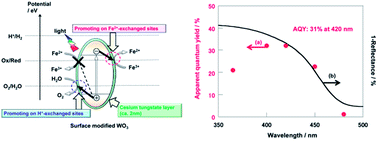
Tungsten trioxide (WO3) powder, treated with various metal salt solutions, was used for the photocatalytic oxidation of water into O2; the reaction was accompanied by the reduction of various redox oxidants. The photocatalytic activity of WO3 was remarkably improved by thermal treatment with alkali metal and silver salt aqueous solutions. Cs-treated WO3 showed the highest activity. The WO3 particles were covered with a very thin layer of a cesium tungstate species, and the ion-exchangeable sites on the WO3 surface were formed by Cs-treatment. The activity of Cs-treated WO3 was further improved by ion exchange of H+ and Fe2+ ions and was 24 times higher than the activity of WO3 without treatment. All methods of O2 evolution using IO3− and VO2+ on WO3 were also significantly improved with Cs-treatment, which suppressed the reverse reaction of the oxidation of the various redox reductants. The optimized WO3 in Fe(ClO4)3 aqueous solution had a high quantum yield (31% at 420 nm) and solar-to-chemical energy conversion efficiency (0.38%).
Introduction
Water splitting by photocatalysis has been studied as an ideal candidate for solar energy conversion and storage.1–7 Water reduction and oxidation must be separately induced on a semiconductor particle in conventional one-electron excitation systems. Therefore, a photocatalyst material should have a band structure that can thermodynamically induce water-oxidation and water-reduction reactions (conduction band potential < 0 V vs. RHE, valence band potential > +1.23 V vs. RHE).4 Moreover, it should be stable against photo-generated holes because some semiconductor materials can oxidize themselves by such holes in the absence of a reducing agent. Therefore, there are very few reports on direct water splitting by visible light, even though visible-light photocatalysts are necessary for developing highly efficient solar-light-driven water splitting.8,9 We first reported the stoichiometric decomposition of water into H2 and O2 using only visible light (λ > 420 nm) via a two-photon excitation system (Z-scheme system) that mimicked natural photosynthesis, which is a similar two-photon energy conversion system.10
| nOx + 2H2O → nRed + 4H+ + O2 |
| | |
ΔG (eV) = +1.23 − Eox/red (−0.059 pH)
| (1) |
| | |
ΔG (eV) = + Eox/red (+0.059 pH)
| (2) |
In these equations, Ox is the redox oxidant, red is the redox reductant, Eox/red is the redox potential of the redox reagent, ΔG is the Gibbs free energy change, and 0.059 pH is the term added when the redox potential is pH independent. In this system, water is decomposed via the combination of two photocatalytic reactions (eqn (1) and (2)), which proceed more easily thermodynamically compared to direct water splitting. Therefore, this system can potentially use a semiconductor for water-reduction or water-oxidation potential of one side of the reaction, suggesting that the potentials of the conduction and valence bands are not restricted compared to the conventional one-photon excitation system. Moreover, separation of the evolved H2 and O2 is possible. Visible-light-responsive systems combined with various photocatalysts and redox reagents for water splitting have been widely reported recently (Fig. 1).11–20 However, the efficiency of these systems remains low. Therefore, techniques that can improve the quantum efficiency (QE) of the photocatalytic reactions for eqn (1) and (2) are important for high-efficiency water splitting. I3−/I− (+0.55 V vs. RHE),17,19 Fe3+/Fe2+ (+0.77 V vs. RHE),21,22 VO2+/VO2+ (+1.00 V vs. RHE),23 and IO3−/I− (+1.09 V vs. RHE)10,12–15,18,24 have been reported as reversible redox ions that utilize eqn (1) and (2). With respect to stability, cost, and redox potential, Fe3+/Fe2+ is an excellent redox mediator. It was reported that the Fe2+ ion was produced in relatively high QE over a WO3 photocatalyst under visible light using organic compounds as sacrificial electron donors.25 However, the photocatalytic activity of Fe2+ production without sacrificial electron donors for eqn (2) was very low (QE < 0.4% at 405 nm).20,21,26,27 We reported in a short communication that the oxidation of water into O2 over WO3 in a FeCl3 aqueous solution was improved by Cs-treatment;20 however, the efficiency was low (quantum yield (QE) = 19% at 420 nm) and the mechanism was unclear. One of the reasons for low efficiency is that the reverse reactions easily proceed in semiconductor photocatalysts, as shown in Fig. 2.7 Ideally, only the redox oxidant (Ox) reduction (shown in Fig. 2 as a solid line) and water oxidation selectively proceed in an O2-evolution photocatalyst. However, a redox reductant (Red) is accumulated in the reactant solution as the reaction proceeds. As a result, Red oxidation (shown in Fig. 2 as a broken line) preferentially proceeds instead of water oxidation because of the thermodynamic advantage. Consequently, the apparent reaction efficiency decreases significantly. Therefore, it is important to develop techniques that suppress this undesirable back reaction. In this study, we investigated the oxidation and reduction properties of a WO3 photocatalyst systematically treated with various ions using various redox mediators. We discovered that the undesirable back reactions of the Reds and holes were significantly suppressed by the presence of a thin cesium tungstate layer on the WO3 surface. Optimized WO3 in an aqueous Fe(ClO4)3 solution showed a very high QE (31% at 420 nm) and solar-to-chemical energy conversion efficiency (0.38%).
 |
| | Fig. 1 Two-photon excitation (Z-scheme) system combined with various types of photocatalysts and redox reagents. | |
 |
| | Fig. 2 Forward and back reactions that proceed in water oxidation and redox oxidant reduction. | |
Experimental
Preparation
WO3 (Kojundo Chemical Laboratory Co., Ltd.) powder was used as the starting material. The WO3 powder was first thermally treated in air at 973 K to improve its crystallinity. Some metal salts such as alkali, alkaline earth, and transition-metal salts were used for surface modification of the WO3 photocatalyst surface modifications were conducted by an impregnation method. 0.5 g of WO3 powder was dispersed in 0.5 mL of 4.3–215 mM metal salt solution, and then the slurry was evaporated to dryness followed by thermal treatment at 373–973 K for 10–600 min. Then, these catalysts were stirred in H2SO4 or FeSO4 aqueous solutions for 30 min for ion exchange, if necessary. TiO2 powder (rutile, Toho Titanium Co., Ltd.) was used as the photocatalyst based on literature.28 BiVO4 was prepared from Bi2O3 and V2O5 in a 0.75 M HNO3 aqueous solution at room temperature according to literature.29
Characterization
Diffuse reflection spectra were obtained using a UV-vis-NIR spectrometer (JASCO Corporation, UbestV-570). Phase purity of the obtained modified WO3 powder was confirmed by X-ray diffraction (PANalytical, EMPYREAN) and Raman spectroscopy (JASCO Corporation, NRS-1000, excitation at 532 nm). X-ray photoelectron spectra were obtained using an X-ray photoelectron spectrometer (Ulvac-Phi, XPS-1800). WO3 particles were observed using scanning electron microscopy (SEM, Hitachi, Ltd., S-4800) and transmission electron microscopy (TEM, Hitachi High-Technologies Corporation, H-9000NAR). The particles for TEM samples were sliced into thin sections by focused ion beam method. The adsorption amounts of Fe2+ and Fe3+ on various WO3 catalysts were determined by color reactions using phenanthroline and chloride ions, respectively.
Photocatalytic reactions
Photocatalytic reactions were performed in a side-window cell made of Pyrex connected to a gas-closed circulation system. A 300 W Xe illuminator (ILC Technology, Inc., CERMAX-LX300) attached to a cut-off filter (HOYA Corporation, L42) was employed for visible-light irradiation. The photocatalyst powder (0.4 g) was dispersed in the Fe3+ aqueous solution (300 mL) using a magnetic stirrer. The initial pH in the Fe3+ solution was adjusted to 2.3 for all photocatalytic reactions. An aqueous VO2+ solution (pH 0.7) was prepared by dissolving V2O5 in a 1 M H2SO4 aqueous solution. An aqueous IO3− solution (pH 6.5) was prepared by dissolving NaIO3 in pure water. For the reaction where the IO3− ion was used as the redox mediator, the Pt cocatalyst was loaded on the WO3 photocatalyst according to a literature method.10 NaI, VOSO4, and FeSO4 were dissolved in the reactant solutions as Red sources, if necessary. The amount of the evolved O2 was determined using on-line gas chromatography (Shimadzu Corporation, MS-5A column, TCD, Ar carrier). The apparent QE was measured using monochromatic light through a bandpass filter. The number of incident photons was determined using a Si photodiode proofread by NMIJ (National Metrology Institute of Japan). The solar-to-chemical energy-conversion efficiency (ηsun) was measured using a solar simulator (Sanei Denki Co., adjusted to AM 1.5 and 1 SUN by a spectroradiometer). Solar-energy-conversion efficiency was defined by the following eqn (4).| | |
Solar-energy conversion (%) = [output energy as Fe(II) ions]/[energy of incident solar light] × 100 = [Gibbs free energy change, ΔG2980] × [rate of O2 evolution × 2]/[energy of incident solar light] × 100
| (4) |
Preparation and photoelectrochemical measurement of WO3 photoelectrodes
A WO3 electrode (sputtering film on conducting glass purchased from NSG Techno-Research Co. Ltd., thickness: ∼1 μm, aggregation of the particles: ∼50 nm) was calcined at 923 K for 30 min. A Cs2CO3 aqueous solution was dropped onto the WO3 electrode, which was then calcined at 773 K for 10 min. In addition, the WO3 electrode was soaked in H2SO4 or FeSO4 aqueous solution for 30 min. The photoelectrochemical measurements were performed using a potentiostat (BAS Co.) and a Pyrex glass cell. A Pt wire and Ag/AgCl electrode were used as the counter and reference electrodes, respectively.
Results and discussion
Effect of thermal treatment using various metal aqueous solutions for WO3 photocatalyst on photocatalytic water oxidation accompanied by Fe3+ reduction
Fig. 3 shows the reaction rates for water oxidation into O2 using WO3 photocatalysts treated with various metal aqueous solutions. Native WO3 showed little activity for water oxidation, as reported previously.20,21,26,27 The activity of WO3 was remarkably improved by thermal treatment at 773 K using MCl (M = Na, K, Rb, and Cs) and AgNO3 aqueous solution. WO3 treated with cesium aqueous solution (Cs–WO3) showed the best activity. The X-ray diffraction patterns, Raman spectra, and diffuse reflection spectra (DRS) of the WO3 photocatalysts barely changed with the Cs–WO3 (Fig. S1(I)–(III)),† suggesting that the bulk of WO3 was unchanged. On the other hand, Cs+ was detected on Cs–WO3 by XPS measurement even after washing thoroughly with pure water (Table 1). Cs2CO3 (or CsOH) is usually readily soluble in water. Therefore, it was determined that a water-insoluble Cs+ species formed on the WO3 surface. The elemental ratio of Cs/W estimated by X-ray photoelectron spectroscopy (XPS) on the Cs–WO3 surface after calcination at 773 K (0.22–0.25) had almost the same value as that found on Cs–WO3 without calcination (0.19–0.21). The radius of Cs+ is too large for it to penetrate the bulk. Thus, most of the Cs+ is likely present on the WO3 surface, which is within the detection depth of XPS (ca. 2 nm). Fig. 4 shows the SEM images of WO3, with and without Cs-modification. A nanostep structure with plane terraces formed on the WO3 particles with Cs-modification; however, the native WO3 particles without any treatment had characterless and roundish surfaces, suggesting that the surface of WO3 was reconstructed by the Cs-modification. It has been reported that a similar surface nanostep structure forms on NaTaO3 particles by doping with La or alkaline earth metals, and this surface structure promotes the charge separation of photo-generated electrons and holes, resulting in increased activity for water splitting compared to the activity on nondoped NaTaO3.30,31 Therefore, there is a possibility that the high activity of Cs–WO3 might result because of this surface morphology change. Fig. 5 shows the TEM images of WO3 and Cs–WO3. The entire Cs–WO3 particle was covered by thin compound layers (ca. 2 nm) with different lattice spacing compared to the WO3 bulk; however such a thin film was not observed on the WO3 surface. The lattice spacing of the thin surface layers is smaller than that of the WO3 bulk, despite the fact that the ion radius of Cs+ (1.67 Å) is much large than that of W6+ (0.60 Å). Therefore, it was determined that the crystal structure of the surface layers became different from the ReO3 structure (WO3 bulk) by incorporating Cs+. From the above results, it was surmised that the high activation of the WO3 photocatalyst treated with Cs+ was derived from the reconstructed surface structure and/or the presence of a water-insoluble thin film of cesium tungstate on the WO3 surface.
 |
| | Fig. 3 Water-oxidation reaction rates of WO3 photocatalysts treated with various metal aqueous solutions. Impregnation reagent amount: 1 mol% for WO3. Impregnation condition: 773 K for 30 min. Catalyst: 0.4 g, reactant solution: 300 mL of 2 mM Fe2(SO4)3, light source: 300 W Xe-arc lamp (λ > 420 nm), reaction cell: side-irradiation cell. Initial pH of reactant solution was always adjusted to be 2.3 using sulfuric acid. WO3 was calcined at 973 K for 2 h in air as a pretreatment. | |
Table 1 Effect of ion-exchange treatment of Cs–WO3 and WO3 on photocatalytic activities for water oxidation accompanied with Fe3+ reductiond
| Catalyst |
Ion-exchange treatment solutionb |
Surface atom ratio (W : Cs: Fe) |
O2-evolution rate/μmol h−1 |
| Cs amount: 2.2 mol% for WO3. Ion exchange was conducted for 30 min. Activity of calcined catalyst at 673 K for 30 min after H+ exchange. Catalyst: 0.4 g, reactant solution: 300 mL of 2 mM Fe2(SO4)3, light source: 300 W Xe-lamp (L42). |
| Cs–WO3a |
Pure water |
1 : 0.25 : 0 |
118 |
| Cs–WO3a |
H2SO4 |
1 : 0.16 : 0 |
156 (27)c |
| Cs–WO3a |
Fe2(SO4)3 |
1 : 0.12 : 0.14 |
116 |
| Cs–WO3a |
FeSO4 |
1 : 0.14 : 0.02 |
200 |
| WO3 |
Pure water |
1 : 0 : 0 |
8.1 |
| WO3 |
H2SO4 |
1 : 0 : 0 |
7.5 |
| WO3 |
Fe2(SO4)3 |
1 : 0 : 0.10 |
8.7 |
| WO3 |
FeSO4 |
1 : 0 : 0.02 |
8.4 |
 |
| | Fig. 4 Scanning electron microscopy images of (a) WO3 and (b) Cs–WO3 photocatalysts. Cs amount: 1 mol% for WO3. | |
 |
| | Fig. 5 Transmission electron microscopy images of (a and b) WO3 and (c–e) Cs–WO3 photocatalysts. Cs amount: 1 mol% for WO3. | |
Fig. 6 shows the time course of O2 evolution over WO3 photocatalysts, with and without Cs-treatment. Cs–WO3 showed the highest activity when an aqueous CsCl solution (2.2 mol% for WO3) was impregnated at 773 K for 30 min. The total amount of O2 gas reached ca. 300 μmol over Cs–WO3, thus agreeing with the stoichiometric amount expected from Fe3+ (1200 μmol) in the solution. The stoichiometric amount of Fe2+ was detected in the solution after the photoreaction; Fe3+ was not detected after the photoreaction. The activity of the second run over Cs–WO3 (c) was much higher than that of the first run (b), though an improvement in the second run was not observed for WO3 with no Cs-treatment. Therefore, it was determined that the further improvement was derived from the changing surface condition of the Cs–WO3 photocatalyst during the photoreaction.
 |
| | Fig. 6 Photocatalytic O2 evolution over (a) WO3 without Cs-treatment, (b) Cs–WO3 (1st run), and (c) Cs–WO3 (2nd run) under visible-light irradiation. Cs amount: 2.2 mol% for WO3. Broken line shows upper limit of O2 evolution expected from the amount of Fe3+ (1200 μmol) added to solutions. Second run reaction was performed by exchanging reactant solution of 1st run with fresh Fe2(SO4)3 aqueous solution. Catalyst: 0.4 g, reactant solution: 300 mL of 2 mM Fe2(SO4)3, light source: 300 W Xe-arc lamp (λ > 420 nm), reaction cell: side-irradiation cell. Initial pH of reactant solution was always adjusted to 2.3 using sulfuric acid. | |
Analyses of detail surface conditions of Cs–WO3 using XPS and DRS measurements
Some alkali complex oxides possessing layered or tunnel structures have ion-exchange abilities. The ratio of Cs/W based on the XPS decreased when the stirring treatment with 1 M H2SO4 solution was performed for Cs–WO3. Moreover, the Na 1s signal was detected on the Cs–WO3 surface after performing stirring treatment with 1 M NaCl solution; however, there was no signal derived from Na+ for native WO3 (Fig. S2†). These results suggest that the cesium tungstate species of the thin WO3 surface layers have an ion-exchange ability and can be exchanged for H+ and Na+. As for the ion-exchange candidates, H+, Fe2+, and Fe3+ ions are present in the reactant solution. Table 1 shows the effects of ion-exchange treatments for Cs–WO3 and WO3 on photocatalytic activities. The photocatalytic activities of native WO3 had no practical impact on the ion-exchange treatments using various aqueous solutions because it has no ion-exchange ability. On the other hand, ion-exchanged Cs–WO3 with 1 M H2SO4 solution (H–Cs–WO3) has a higher activity compared to Cs–WO3 washed with pure water. Here, the activity of H–Cs–WO3 drastically decreased (from 156 to 27 μmol h−1) when H–Cs–WO3 underwent thermal treatment at 673 K for 30 min. It is likely that this inactivation was related to the extinction of H+-exchanged sites via a dehydration reaction. It was noted that the surface structure with nanostep and plane terrace on H–Cs–WO3, as shown in Fig. 4, remained after this thermal treatment (Fig. S3†). Therefore, the high activation of WO3 by Cs-modification is mainly caused by the introduction of ion-exchange sites on the WO3 surface, and the contribution of the surface structure with nanostep and plane terrace is not very large. We also found that the photocatalytic activity of H–Cs–WO3 was further improved from 156 to 200 μmol h−1 by ion exchange for the Fe2+ ion (Fe–H–Cs–WO3); however, the activity of H–Cs–WO3 was unchanged after stirring in a Fe3+ solution, as shown in Table 1. The color of the Cs–WO3 powder also changed only after stirring in the Fe2+ solution. Fig. 7 shows the DRS spectra of ion-exchanged Cs–WO3 with Fe2+ and Fe3+ aqueous solutions. The specific absorption band developed in the wavelength range 450–600 nm on the Cs–WO3 photocatalyst after the stirring treatment with the Fe2+ solution, but not with the Fe3+ solution. Therefore, it was determined that this specific absorption was derived from the Fe2+ ion incorporated on the WO3 surface by an ion-exchange reaction. Cs+- and H+-ion-exchanged sites on the WO3 surface may not directly replace the Fe3+ ion because of the difference in the atomic value. Consequently, experiments indicated that the ion-exchange sites formed on the cesium tungstate species on the thin WO3 surface layers, and Cs+ ions were exchanged for H+ and Fe2+, improving the photocatalytic activity. It was noted that the Fe/W ratios on WO3 and Cs–WO3 treated with Fe3+ solution were higher than those treated with Fe2+ solution (Table 1). This result also indicates that the characteristic changes in the powder color and photocatalytic ability were caused by a small amount of Fe2+ incorporating in the ion-exchange sites, and not by Fe3+ adsorption on the WO3 surface. Fe–H–Cs–WO3 showed no activity when the irradiation wavelength was longer than 500 nm. Therefore, the absorption band derived from the Fe2+ ion is not available for the water-oxidation reaction in the presence of the Fe3+ ion. Here, we examined the ion-exchange effects for H+ and Fe2+ over M–WO3 (M = Na, K, Rb, and Ag) on photocatalytic activities. The activities of all WO3 photocatalysts improved with ion-exchange treatments (Fig. S4†). Therefore, it was concluded that the high activation of M–WO3 (M = Na, K, Rb, and Ag) photocatalysts is derived from a mechanism similar to Cs–WO3 and is based on the ion-exchange ability.
 |
| | Fig. 7 (i) Reflection spectra of Cs–WO3. (a) Powder dispersion in 10 mM H2SO4 aq. sol., (b) 4 mM Fe3+ sol., and (c) 4 mM Fe2+ aq. sol., (ii) magnification of (i). Cs amount: 1 mol% for WO3. | |
Effects of condition of reactant solution over Cs–WO3 photocatalyst on photocatalytic water oxidation in the presence of Fe3+ ions
In the case of Fe3+ reduction, Fe3+ ions must preferentially arrive at the photocatalyst surface and easily receive the photo-generated electrons from the photocatalyst.28 Fe3+ ions form various types of complex ions, depending on the coexisting anion species.32–34 The adsorption and reaction behaviors of the Fe3+ ion are changed by the state of the Fe3+ complex ion. Therefore, it is likely that the state of a Fe3+ complex ion affects the photocatalytic activity for Fe3+ reduction. Table 2 shows the photocatalytic O2-evolution activity over Fe–H–Cs–WO3 under various reactant solution conditions. The activities strongly depended on the type of iron source. Fe–H–Cs–WO3 showed the highest activity in an aqueous Fe(ClO4)3 solution. There was a poor correlation between the reaction rate and the adsorption amount of Fe3+ ions. Therefore, it is likely that there are other factors affecting the photocatalytic activities. This tendency of the coexisting anion species was also observed in the case of other photocatalysts, native WO3, BiVO4, and TiO2 (Table 3). The photocatalytic activities of WO3, BiVO4, and TiO2 using the Fe(ClO4)3 solution were 4.4, 4.7, and 12 times higher than those using the Fe2(SO4)3 solution. The cyclic voltammetry (CV) profiles of various Fe3+ solutions changed depending on the type of iron solution (Fig. 8). The order of redox potentials estimated by the CVs was: SO42− (+0.72 vs. RHE) < Cl− (+0.77 vs. RHE) < NO3− = ClO4− (+0.79 vs. RHE). There was a good correlation between the redox potential and reaction rate. The negative shift of the redox potential shows that it is thermodynamically difficult to reduce the Fe3+ ion. On the other hand, the difference between the conduction band potentials of these photocatalysts (WO3,35 BiVO4,35 and TiO236 and the Fe3+/2+ redox potential are estimated to be ca. 0.3, 0.7, and 0.8 V, respectively. There was no correlation between the improvement in the photocatalytic activity and the value of the potential difference. Therefore, we could not explain the photocatalytic behaviors using only the potential differences. Fe3+ ions in aqueous Fe2(SO4)3 or FeCl3 solutions mainly form Fe(SO42−)x(H2O)6−x or Fe(Cl−)x(H2O)6−x and Fe(H2O)6 in aqueous Fe(NO3)3 and Fe(ClO4)3.32–34 The difference of coordinate species for Fe3+ ions may affect the reducibility of Fe complex ions; it may be difficult to reduce the Fe3+ ion if SO42− or Cl− ions are introduced in the Fe3+ complex ions compared to only H2O coordination. Therefore, it was concluded that the photocatalytic reaction rates were strongly affected by the coordination of the Fe3+ complex ion and thermodynamic reducibility of the Fe complex ions.
Table 2 Photocatalytic O2 evolution over Fe–H–Cs–WO3 in various reactant solution conditionsb
| Catalyst |
Fe3+ source |
Adsorption amount/μmol g−1 |
O2-evolution rate/μmol h−1 |
| Fe3+ |
Fe2+ |
| Cs amount: 2.2 mol% for WO3. Catalyst: 0.4 g, reactant solution: 300 mL of 2 mM Fe(III), light source: 300 W Xe-lamp (L42). Nd, not detected. |
| Cs–WO3a |
Fe2(SO4)3 |
16 |
nd. |
200 |
| Cs–WO3a |
FeCl3 |
14 |
nd. |
241 |
| Cs–WO3a |
Fe(NO3)3 |
— |
— |
290 |
| Cs–WO3a |
Fe(ClO4)3 |
18 |
nd. |
297 |
Table 3 Effect of types of Fe3+ solution over TiO2, WO3, and BiVO4 photocatalyst on reaction rates for water oxidationb
| Catalyst |
Fe3+ source |
pH adjustera |
Irradiation wavelength |
O2-evolution rate/μmol h−1 |
| Initial pH was always adjusted to 2.3. Catalyst: 0.4 g, reactant solution: 300 mL of 2 mM Fe(III), light source: 300 W Xe-lamp. |
| TiO2 |
Fe2(SO4)3 |
H2SO4 |
λ > 300 nm |
30 |
| WO3 |
Fe2(SO4)3 |
H2SO4 |
λ > 420 nm |
8.1 |
| BiVO4 |
Fe2(SO4)3 |
H2SO4 |
λ > 420 nm |
47 |
| TiO2 |
Fe(ClO4)3 |
HClO4 |
λ > 300 nm |
370 |
| WO3 |
Fe(ClO4)3 |
HClO4 |
λ > 420 nm |
35 |
| BiVO4 |
Fe(ClO4)3 |
HClO4 |
λ > 420 nm |
221 |
 |
| | Fig. 8 Cyclic voltammetry at Pt-electrode (SA: 0.01 cm2) in (a) 2.0 mM Fe2(SO4)3 in 0.1 M Na2SO4, (b) 4.0 mM FeCl3 in 0.1 M NaCl, (c) 4.0 mM Fe(NO3)3 in 0.1 M NaNO3, and (d) 4.0 mM Fe(ClO4)3 in 0.1 M NaClO4. pH value of iron solutions was adjusted to 2.3 using (a) H2SO4, (b) HCl, (c) HNO3, and (d) HClO4. Scan rate: 5 mV s−1. | |
Fig. 9 shows the action spectrum of water oxidation over a Fe–H–Cs–WO3 photocatalyst in Fe(ClO4)3. The apparent QE at 420 nm was 31%. This is the highest value among all the photocatalysts using reversible redox mediators under visible light. It was confirmed that the QE estimated by the Fe2+-production rate had the same value as that of the efficiency estimated by the O2-production rate. The QE at 365 nm was 21%. The Fe3+ solution shows a strong absorption in the UV light region (Fig. 9(c)). Therefore, it is likely that the QE was low because of the light-shield effects of the Fe3+ reactant solution. Fig. 10 shows the time course of O2 evolution over a Fe–H–Cs–WO3 photocatalyst in Fe(ClO4)3 when a solar simulator (AM 1.5) is used as the light source. O2-evolution rate at Fe3+/Fe2+ = 1 was 94 μmol h−1 (irradiation area: 9 cm2). The water oxidation reaction accompanied by Fe3+ reduction is the energy-storage reaction shown in eqn (5). The solar-to-chemical energy-conversion efficiency (ηsun) was estimated to be 0.38%. This is also the best value among all the photocatalysts using reversible redox mediators.
| | |
2Fe3+ + H2O → 2Fe2+ + 2H+ + 1/2O2 (pH = 2), ΔG = 66.1 kJ
| (5) |
 |
| | Fig. 9 (a) Action spectrum of water oxidation in the presence of Fe3+ ions. Absorbance spectra of (b) Cs–WO3 photocatalyst and (c) Fe(ClO4)3 solution. | |
 |
| | Fig. 10 Time course of photocatalytic water oxidation accompanied with Fe3+ reduction using solar simulator (AM 1.5). Broken line shows upper limit of O2 evolution expected from the amount of Fe3+ (600 μmol) added to solution. Cs–WO3: 0.4 g, reactant solution: 300 mL of 2 mM Fe(ClO4)3, reaction cell: side-irradiation cell. Initial pH of reactant solution was always adjusted to 2.3 using perchloric acid. | |
Mechanism of activation by Cs treatment
We investigated the photoelectrochemical performance of WO3 electrodes to elucidate the role of surface treatment on WO3 photocatalysts because reductive and oxidative reactions can be individually evaluated by photoelectrochemical methods. Table 4 shows the O2-production photocurrent at 0.8 V vs. RHE and Fe-reduction current at 0.45 V vs. RHE for WO3 electrodes with and without surface treatment, respectively. The O2-production photocurrent of the H–Cs–WO3 electrode was much higher than that of the WO3 electrode without treatment, indicating that water oxidation is promoted on the H–Cs–WO3 surface; further improvement by the partial ion exchange for Fe2+ was very small. On the other hand, the Fe3+-reduction current of the Fe–H–Cs–WO3 electrode was higher than that of the other electrodes, suggesting that Fe3+ reduction is promoted on the Fe–H–Cs–WO3 surface. The H+-exchanged site would be strongly adsorbed with water as H3O+, which is suitable for the H2O oxidation. On the other hands, the Fe2+-exchange site may act as the effective reduction site of Fe3+ adsorbed on the outer surface of the photocatalyst, because the electron transfer between the same element ions (Fe2+ and Fe3+) is ideal. Consequently, both reduction and oxidation abilities of WO3 improved at different sites formed by Cs-modification and followed by ion exchange for Fe2+ and H+ ions, resulting in the surface-modified WO3 photocatalyst showing remarkably high activity. The suppression of the reverse reaction between the photo-generated holes and Fe2+ ions as shown in Fig. 2 is important for realizing highly efficient water oxidation. Fig. 11(a and b) shows the influence of the concentration of coexisting Fe2+ ions with 2 mM of Fe3+ ions over the WO3 photocatalyst, with and without surface modification, on the photocatalytic activity for water oxidation into O2. The activity of native WO3 decreased when 0.5 mM of Fe2+ ions coexisted in the reactant solution. This indicates that the Fe2+ ion is easily oxidized compared to water on a normal WO3 surface. On the other hand, the activity of the Fe–H–Cs–WO3 photocatalyst was unaffected by the concentration of the Fe2+ ion. This suggested that surface modification improves the oxidation and reduction abilities of WO3; it also improves the suppression effect on the undesirable reaction between the photo-generated holes and Fe2+ ions. Fig. 11(c–f) shows the suppression effect for WO3 photocatalysts with and without surface modification on the undesirable reaction when other reversible redox mediators are used (VO2+/VO2+: +1.00 vs. RHE and IO3−/I−: +1.09 vs. RHE). The photocatalytic activities of Pt/WO3 and WO3 in the presence of IO3− and VO2+ ions for O2 evolution remarkably improved (3.5 and 7.3 times, respectively) with surface modification. Among the reactions using different redox mediators, water oxidation to O2 gas was the common reaction, suggesting that an excellent water-oxidation site is probably formed on the surface-modified WO3 photocatalyst. Interestingly, the undesirable reactions were also effectively suppressed over the Fe–H–Cs–WO3 photocatalyst, while the activity of native WO3 drastically decreased when 0.5 mM of I− or VO2+ ions were also present in the reactant solution. Therefore, an excellent suppression effect for the undesirable reaction between the photo-generated holes and Red was obtained, regardless of the type of redox reagent. Thus, this ideal reaction selectivity arose because of the suppression of the undesirable reaction between the photo-generated holes and various Reds and the construction of an effective site that can induce only water oxidation. According to the results mentioned above, a few layers of cesium tungsten species initially formed on the WO3 surface by thermal treatment using a cesium aqueous solution. Cs+ sites in cesium tungsten species have ion-exchange ability, and Cs+ easily exchanged for H+ and Fe2+ in acidic Fe2+ solutions. Electrochemical technique showed that the H+-exchange site promotes water oxidation, and the Fe2+-exchange site promotes Fe3+ reduction. Moreover, the photo-generated hole can selectively oxidize water to O2 even when various Reds were present. Consequently, the surface-modified WO3 photocatalyst showed remarkably high activity for water oxidation (Fig. 12). A redox potential is usually more negative than the water oxidation potential (+1.23 vs. RHE) in the case of water oxidation with a positive Gibbs free energy change. Therefore, the red is easily oxidized compared to water, even though this reaction is undesirable. In this study, the undesirable reaction was effectively suppressed on a Fe–H–Cs–WO3 photocatalyst. These results provide a promising route for improving various photocatalytic water-splitting techniques such as the Z-scheme system, photocatalysis-electrolysis system,20 and Fe2+ ion fuel cells.37,38
Table 4 O2-production photocurrent and Fe3+-reduction current over various surface-treated WO3 photoelectrodes
| Photoelectrodes |
O2-production photocurrent at 1.0 V mA−1 |
Fe3+-reduction current at 0.4 V mA−1 |
| WO3 |
0.11 |
0.45 |
| Fe–WO3 |
0.12 |
0.47 |
| H–Cs–WO3 |
0.20 |
0.49 |
| Fe–H–Cs–WO3 |
0.20 |
0.55 |
 |
| | Fig. 11 Effect of concentration of (I) Fe2+, (II) VO2+, and (III) I− ions over WO3 photocatalyst (a), (c), and (e) with and (b), (d), and (f) without surface ion-exchange sites on photocatalytic reaction rates for water oxidation in the presence of (I) Fe3+, (II) VO2+, and (III) IO3− ions. In case of reaction using IO3− ion as redox mediator, Pt cocatalyst was loaded on WO3 photocatalyst. | |
 |
| | Fig. 12 Description of highly activated WO3 surface. | |
Conclusions
WO3 powders modified with various metal salt solutions were studied as photocatalysts for the oxidation of water to O2 gas in an aqueous Fe3+ solution under visible light (λ > 420 nm). The activity of WO3 was remarkably improved by thermal treatment at 773 K using MCl (M = Na, K, Rb, and Cs) and a AgNO3 aqueous solution. WO3 treated using a cesium aqueous solution had the highest activity. WO3 particles were covered with a very thin layer of cesium tungstate species, which had a different structure from the WO3 bulk. It was observed that the Cs+ site of the cesium tungstate species on WO3 had an ion-exchange ability, and the photocatalytic performances of the WO3 photocatalyst were further improved by the ion-exchange treatment with H+ and Fe2+ ions. The photocatalytic activity for water oxidation in the presence of Fe3+ ions was strongly dependent on the types of Fe3+ solutions. The best activities were obtained in a Fe(ClO4)3 aqueous solution over Cs-treated WO3 and various other photocatalysts. The apparent QE at 420 nm and solar-to-chemical energy-conversion efficiency over Cs-treated WO3 were 31% and 0.38%, respectively. These values are the best among the photocatalysts using various reversible redox mediators under visible light. Electrochemical analyses suggested that Fe2+- and H+-incorporated sites on the WO3 surface promoted Fe3+ reduction and water oxidation, respectively. Moreover, the surface of the Fe–H–Cs–WO3 photocatalyst had the ability to suppress undesirable reverse reactions between the photo-generated holes and Fe2+ ions. The improvement of the water oxidation and suppression of the reverse reaction were still obtained by Cs-treatment, even when other redox ions (IO3−/I− and VO2+/VO2+) were used. Therefore, the Cs-treated WO3 has an excellent activity and a broad utility for the photocatalytic oxidation reaction of water to O2 using various reversible redox mediators.
Acknowledgements
This research was supported by The Funding Program for Next Generation World-Leading Researchers (NEXT Program).
Notes and references
- J. S. Lee, Catal. Surv. Asia, 2005, 9, 217–227 CrossRef CAS PubMed.
- A. J. Esswein and D. G. Nocera, Chem. Rev., 2007, 107, 4022–4047 CrossRef CAS PubMed.
- F. E. Osterloh, Chem. Mater., 2008, 20, 35–54 CrossRef CAS.
- A. Kudo and Y. Miseki, Chem. Soc. Rev., 2009, 38, 253–278 RSC.
- Y. Inoue, Energy Environ. Sci., 2009, 2, 364–386 CAS.
- K. Maeda and K. Domen, J. Phys. Chem. Lett., 2010, 1, 2655–2661 CrossRef CAS.
- R. Abe, Bull. Chem. Soc. Jpn., 2011, 84, 1000–1030 CrossRef CAS.
- K. Maeda, K. Teramura, D. Lu, T. Takata, N. Saito, Y. Inoue and K. Domen, Nature, 2006, 440, 295 CrossRef CAS PubMed; K. Maeda, K. Teramura and K. Domen, J. Catal., 2008, 254, 198–204 CrossRef PubMed.
- Y. Lee, H. Terashita, Y. Shimodaira, K. Teramura, M. Hara, H. Kobayashi, K. Domen and M. Yashima, J. Phys. Chem. C, 2007, 111, 1042–1048 CAS.
- K. Sayama, K. Mukasa, R. Abe, Y. Abe and H. Arakawa, Chem. Commun., 2001, 2416–2417 RSC; K. Sayama, K. Mukasa, R. Abe, Y. Abe and H. Arakawa, J. Photochem. Photobiol., A, 2002, 148, 71–77 CrossRef CAS.
- H. Kato, M. Hori, R. Konta, Y. Shimodaira and A. Kudo, Chem. Lett., 2004, 33, 1348–1349 CrossRef CAS; Y. Sasaki, A. Iwase, H. Kato and A. Kudo, J. Catal., 2008, 259, 133–137 CrossRef PubMed.
- R. Abe, T. Takata, H. Sugihara and K. Domen, Chem. Commun., 2005, 3829–3831 RSC; R. Abe, M. Higashi and K. Domen, ChemSusChem, 2011, 4, 228–237 CrossRef CAS.
- M. Higashi, R. Abe, K. Teramura, T. Takata, B. Ohtani and K. Domen, Chem. Phys. Lett., 2008, 452, 120–123 CrossRef CAS PubMed; M. Higashi, R. Abe, T. Takata and K. Domen, Chem. Mater., 2009, 21, 1543–1549 CrossRef.
- M. Higashi, R. Abe, A. Ishikawa, T. Takata, B. Ohtani and K. Domen, Chem. Lett., 2008, 37, 138–139 CrossRef CAS.
- K. Maeda, H. Terashima, K. Kase, M. Higashi, M. Tabata and K. Domen, Bull. Chem. Soc. Jpn., 2008, 81, 927–937 CrossRef CAS; K. Maeda, M. Higashi, D. Lu, R. Abe and K. Domen, J. Am. Chem. Soc., 2010, 132, 5858–5868 CrossRef PubMed.
- Y. Sasaki, H. Nemoto, K. Saito and A. Kudo, J. Phys. Chem. C, 2009, 113, 17536–17542 CAS.
- R. Abe, K. Shinmei, K. Hara and B. Ohtani, Chem. Commun., 2009, 3577–3579 RSC.
- M. Tabata, K. Maeda, M. Higashi, D. Lu, T. Takata, R. Abe and K. Domen, Langmuir, 2010, 26, 9161–9165 CrossRef CAS PubMed.
- Y. Miseki, S. Fujiyoshi, T. Gunji and K. Sayama, Catal. Sci. Technol., 2013, 3, 1750–1756 CAS.
- Y. Miseki, H. Kusama, H. Sugihara and K. Sayama, J. Phys. Chem. Lett., 2010, 1, 1196–1200 CrossRef CAS.
- J. R. Darwent and A. Mills, J. Chem. Soc., Faraday Trans. 2, 1982, 78, 359–367 RSC.
- W. Erbs, J. Desilvestro, E. Borgarello and M. Grätzel, J. Phys. Chem., 1984, 88, 4001–4006 CrossRef CAS.
- Y. Miseki, H. Kusama and K. Sayama, Chem. Lett., 2012, 41, 1489–1491 CrossRef CAS.
- S. S. K. Ma, K. Maeda, R. Abe and K. Domen, Energy Environ. Sci., 2012, 5, 8390–8397 CAS.
- T. Arai, M. Yanagida, Y. Konishi, H. Sugihara and K. Sayama, Electrochemistry, 2008, 76, 128–131 CrossRef CAS PubMed.
- G. R. Bamwenda, K. Sayama and H. Arakawa, J. Photochem. Photobiol., A, 1999, 122, 175–183 CrossRef CAS.
- G. R. Bamwenda, T. Uesigi, Y. Abe, K. Sayama and H. Arakawa, Appl. Catal., A, 2001, 205, 117–128 CrossRef CAS.
- T. Ohno, D. Haga, K. Fujihara, K. Kaizaki and M. Matsumura, J. Phys. Chem. B, 1997, 101, 6415–6419 CrossRef CAS.
- A. Iwase, H. Kato and A. Kudo, J. Sol. Energy Eng., 2010, 132, 021106 CrossRef.
- H. Kato, K. Asakura and A. Kudo, J. Am. Chem. Soc., 2003, 125, 3082–3089 CrossRef CAS PubMed.
- A. Iwase, H. Kato and A. Kudo, ChemSusChem, 2009, 2, 873–877 CrossRef CAS PubMed.
- H. Kato, Y. Sasaki, A. Iwase and A. Kudo, Bull. Chem. Soc. Jpn., 2007, 80, 2457–2464 CrossRef CAS.
- S. P. Moulik and K. K. S. Gupta, J. Indian Chem. Soc., 1972, 49, 447 CAS.
- R. A. Whiteker and N. Davidson, J. Am. Chem. Soc., 1953, 75, 3081–3085 CrossRef CAS.
- S. J. Hong, S. Lee, J. S. Jang and J. S. Lee, Energy Environ. Sci., 2011, 4, 1781–1787 CAS.
- L. Kavan, M. Gratzel, S. E. Gilbert, C. Klemenz and H. J. Scheel, J. Am. Chem. Soc., 1996, 118, 6716–6723 CrossRef CAS.
- S. Cheng, B. A. Dempsey and B. E. Logan, Environ. Sci. Technol., 2007, 41, 8149–8153 CrossRef CAS.
- H. Eom, K. Chung, I. Kimand and J. Han, Chemosphere, 2011, 85, 672–676 CrossRef CAS PubMed.
Footnote |
| † Electronic supplementary information (ESI) available: XRD patterns, Raman spectra, and reflectance spectra of (a) WO3 and (b) Cs–WO3 (S1), XPS spectra of (a) WO3 and (b) Cs–WO3 after stirring treatment in 1 M NaCl solution (S2), SEM images of H–Cs–WO3 (a) with and (b) without thermal treatment at 673 K for 30 min (S3), and reaction rates for water oxidation over WO3 photocatalysts treated with various metal salt solutions. Stirring treatment was conducted with (a) water and (b) FeSO4 solution (S4). See DOI: 10.1039/c3ra47772j |
|
| This journal is © The Royal Society of Chemistry 2014 |
Click here to see how this site uses Cookies. View our privacy policy here.