
Jiaren Zhong,
Fan Xu,
Jianfeng Wang,
Yanyan Li,
Xianfu Lin and
Qi Wu*
Department of Chemistry, Zhejiang University, Hangzhou 310027, Zhejiang, PR China. E-mail: llc123@zju.edu.cn; Fax: +86 571 87952618; Tel: +86 571 87953001
First published on 16th January 2014
A novel enzymatic tandem procedure for the synthesis of substituted polyesters starting from ketones has been developed. Candida antarctica lipase B (CAL-B) was used as a catalyst for the whole procedure consisting of the Baeyer–Villiger oxidation (BVO) of substituted ketones and the subsequent ring-opening polymerization (ROP) of corresponding substituted lactones. The products of oxidation and polymerization were characterized by 1H-NMR, IR and GPC. The substituents of the ketones greatly influenced the molecular weights of the obtained polyesters, ranging from 1000 to 12
800.
Polyester is one of the most important synthetic polymers. The properties of polyester, such as good biodegradability, well biocompatibility, low toxicity, and excellent miscibility with other polymers,8,9 have inspired a lot of scientists to join the research field. The most powerful tool for obtaining polyesters is ring-opening polymerization (ROP), which is highly efficient and free from undesired by-products, with cyclic lactones as the starting material. As it would be much more fascinating that by combing the enzymatic methods and ROP to construct a green, efficient, and straight forward method for polyesters, in 1993, the first enzyme-catalyzed ROP (eROP) was reported by two independent groups, Kobayashi et al.10,11 and Knani et al.12 Since then, a lot of polyesters have been synthesized through this method with small-size (4-membered) lactones,13 medium-size (6- and 7-membered) lactones,14–21 and large-size (11-, 14-, 15-membered) lactones22–24 as the monomer.
As we know, the substrates of ROP, lactones, are usually obtained through Baeyer–Villiger oxidation (BVO) which involves the oxidative cleavage of a carbon–carbon bond adjacent to a carbonyl group in a ketone or an aldehyde molecule by organic peroxyacids or alkyl hydroperoxides, and the insertion of an oxygen atom between these two carbons. Several methodologies have been developed to achieve this highly synthetic valuable transformation.25–28 This oxidation can also be carried out with hydrogen peroxide in the presence of a Lewis acid and also enzymatically using Baeyer–Villiger monooxygenases.29–37 Recently there is also a green chemo-enzymatic strategy using Candida antarctica lipase B (CAL-B) as the catalyst to generate peracetic acid in situ, which then immediately oxidizes the substrate, cyclopentanone and substituted ones to produce the corresponding lactones.38–40
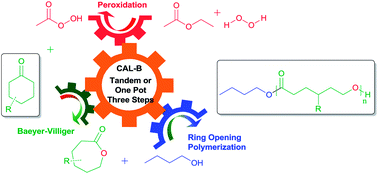
CAL-B, especially the form immobilized on macroporous acrylic resin, has been proven to be an effective catalyst both in the ring-opening polymerization of ε-CL14–20 and in the chemo-enzymatic oxidation,38–40 so it would be much convenient and straightforward to construct a tandem or one-pot process composed of single CAL-B-catalyzed BVO and ROP reactions to obtain the desired polyesters. Enzymatic cascade process shows additional advantages like atom economy, without isolation of intermediates, and eco-friendliness.41,42 Our group has investigated enzymatic polymerization as well as enzymatic cascade reactions for years and achieved a lot of favorable results.43–46 In continuance of our former efforts, we have developed this novel single CAL-B-catalyzed BVO-ROP tandem process for preparation of substituted polyesters starting from easily obtained ketones (Scheme 1). Through the whole procedure, CAL-B served as the catalyst in each individual reaction, which maximizes the utilization efficiency of the catalyst and significantly facilitates the purification step (with only simple evaporation involved). The polyester obtained from this tandem BVO/ROP process was a linear, aliphatic polyester containing one side chain residues with up to 12
800 molecular weight. To the best of our knowledge, this is also the first time that the enzymatic tandem BVO-ROP was introduced to synthesize substituted polyester starting from ketones. It was also possible to obtain different substituted polyesters with variable molecular weight by varying the substituent group of the starting ketones.
000 U g−1) was purchased from Sigma Aldrich (Shanghai, China). Lipase from porcine pancreas (PPL) was purchased from Fluka. Lipase AK (≥20
000 U g−1, pH 7.0) was purchased from Amano Enzyme Inc (Japan). The lipase catalyst was dried at 25 °C under 2.0 mmHg for 24 h before use. All other reagents were of analytical grade and used without further purification.
:
50 molar ratio) and it was left with magnetic stirring at 80 °C and allowed to react for 120 h under reduced pressure (0.01 MPa). At the end of the reaction, the formed polymer was dissolved in chloroform and filtered to remove the enzyme catalyst.Because polyester shows good solubility in some polar organic solvents, such as THF, chloroform, and EA, while almost be insoluble in non-polar solvents like hexane. Thus, 1 mL EA was added to dissolve the viscous product mixture first, then 10 mL hexane was added dropwise to precipitate the desired polyester from their corresponding product mixtures so that the oligomers and monomers could be removed. Finally, purified substituted polyester was obtained by drying at 50 °C in vacuum. The products were characterized by IR spectroscopy, GPC, and 1H-NMR.
:
50 molar ratio). The reaction was left with magnetic stirring at 80 °C and allowed to react for 120 h under reduced pressure (0.01 MPa). At the end of the reaction, the formed polymer was separated, purified and characterized as the final product from the direct enzymatic polymerization of lactones.1H-NMR (400 MHz, CDCl3, δ, ppm) for poly(4-methylcaprolactone) (4a): 4.028 (m, 2H), 2.294–2.186 (m, 2H), 1.625–1.578 (m, 2H), 1.509 (m, 1H), 1.477–1.363 (m, 2H), 0.845 (d, 3H). IR (cm−1): 2959, 2928, 2874, 1732, 1462, 1383, 1257, 1172, 1053, 970.
1H-NMR (400 MHz, CDCl3, δ, ppm) for poly(4-ethylcaprolactone) (4b): 4.038 (m, 2H), 2.237 (m, 2H), 1.622–1.526 (m, 4H), 1.337 (m, 1H), 1.280–1.247 (m, 2H), 0.823 (m, 3H). IR (cm−1): 2961, 2931, 2875, 1734, 1460, 1382, 1249, 1171, 1102.
1H-NMR (400 MHz, CDCl3, δ, ppm) for poly(4-phenylcaprolactone) (4c): 7.260–7.060 (m, 5H), 3.800 (m, 2H), 2.578 (m, 1H), 2.058–1.826 (m, 6H). IR (cm−1): 3027, 2930, 1730, 1602, 1493, 1453, 1392, 1371, 1247, 1160, 1027, 762, 702.
1H-NMR (400 MHz, CDCl3, δ, ppm) for poly(4-tert-butylcaprolactone) (4d): 4.012 (m, 2H), 2.360–2.202 (m, 2H), 1.770 (m, 2H), 1.302–1.186 (m, 3H), 0.822 (m, 3H). IR (cm−1): 2960, 2925, 2871, 1733, 1467, 1399, 1367, 1260, 1161, 1092, 1021, 799.
1H-NMR (400 MHz, CDCl3, δ, ppm) for poly(6-methylcaprolactone) (4e): 4.826 (m, 1H), 2.198 (m, 2H), 1.548 (m, 2H), 1.185 (m, 2H), 1.132 (m, 2H), 0.823 (m, 3H). IR (cm−1): 2956, 2924, 2855, 1728, 1459, 1376, 1260, 1164, 1089, 1022, 800.
1H-NMR (400 MHz, CDCl3, δ, ppm) for poly(3-methylcaprolactone-co-5-methylcaprolactone) (4f): 3.981 (m, 2H), 3.903–3.770 (m, 2H), 2.235 (m, 4H), 2.081 (m, 1H), 1.929–1.700 (m, 2H), 1.589–1.345 (m, 4H), 1.322 (m, 2H), 1.187–1.102 (m, 2H), 0.877 (m, 6H). IR (cm−1): 2957, 2934, 2869, 1732, 1461, 1380, 1357, 1280, 1248, 1203, 1171, 1099, 995.
Before performing single lipase-catalyzed tandem BVO/ROP process, we only optimized simply the enzymatic BVO reaction and ROP reaction, respectively, because both two reactions have been elaborately described in previous publications.14–20,38–40
In the model oxidation of 4-methylcyclohexanone (1a) (entry 1, Table 1), it is noteworthy that ethyl 6-hydroxy-4-methylhexanoate (3a) was the main by-product, which resulted from the nucleophilic attack of ethanol to the produced lactones, and appeared after 24 h by consuming 2a, the amount increased slowly with prolonged reaction time (as shown in Fig. S1 in ESI†). Some reaction parameters for BVO reactions such as reaction temperature (Fig. S2 in ESI†), reaction time (Fig. S1 in ESI†), solvents (Table S1, in ESI†), molar ratio of H2O2–substrate (Table S2, in ESI†) and enzyme loading amount have been optimized respectively, and those results were described in the ESI.† Finally, BVO reactions under the catalysis of CALB (10% weight of substrates) in pure ethyl acetate with the molar ratio of H2O2–substrate (2
:
1) at 50 °C for 24 h were selected as the optimal reaction conditions. For other substituted cyclohexanones, the optimizations for these substrates were carried individually (Table S3, ESI†), and their synthesis results were listed in Table 1. As expected, 4-ethylcyclohexanone (1b), 4-tert-butylcyclohexanone (1d) and 2-methylcyclohexanone (1e) showed similar activity as 4-methylcyclohexanone (1a), while 4-phenylcyclohexanone (1c) displayed decreased BVO activity. The oxidation of 3-methylcyclohexanone (1f) could obtain two isomers, 3-methylcaprolactone (3-MeCL, 2f(i)) and 5-methyl-caprolactone (5-MeCL, 2f(ii)), which were difficult to be separated by silicon gel chromatography and could only be determined by GC (Fig. S3†). Unfortunately, the Baeyer–Villiger oxidation of substituted cyclohexanones did not provide any enantioselectivity.
| Entry | Ketones | 1b (%) | Yield of 2b (%) | Yield of 3b (%) |
|---|---|---|---|---|
| a These reactions were carried out at 50 °C for 24 h with 10 wt% CAL-B in 3 mL ethyl acetate.b The amounts of substrate (1), lactones (2), and by-products (3) in the final mixture of product were determined by GC.c Reaction was performed at 70 °C.d The product was a mixture of 2f(i) 3-MeCL, and 2f(ii) 5-MeCL. | ||||
| 1 | 1a: R1 = Me, R2 = R3 = H | 27.7 | 72.3 | 0 |
| 2 | 1b: R1 = Et, R2 = R3 = H | 23.2 | 76.8 | 0 |
| 3 | 1c: R1 = Ph, R2 = R3 = H | 57.6 | 42.4 | 0 |
| 4c | 1d: R1 = t-Bu, R2 = R3 = H | 16 | 82.6 | 1.4 |
| 5 | 1e: R3 = Me, R1 = R2 = H | 10 | 80.7 | 9.3 |
| 6c,d | 1f: R2 = Me, R1 = R3 = H | 28.8 | 35.5; 35.7 | 0 |
Next we used the substituted lactones which were prepared from the above CALB-catalyzed BVO reactions and purified carefully by column chromatography, as the monomers for direct synthesis of substituted polyesters by lipase-catalyzed ROP reactions, and representative results were shown in Table 2. Among the tested lipases, CAL-B was the best and provided both the highest molecular weight and the best yield for the ROP of lactones, while other commonly used lipase PPL and AK displayed limited activities. As CAL-B is also the catalyst of the monomer synthesis step, namely Baeyer–Villiger oxidation, using CAL-B as the single catalyst to catalyze both of the reactions in a tandem or one-pot system could have a great chance to give promising results. Thus, the tandem enzymatic BVO/ROP under the catalysis of CAL-B was investigated in detail in the next section.
| Entry | Lactones | Enzyme | DPIb | Mnb/g mol−1 | Mwb/g mol−1 | Yieldc/% |
|---|---|---|---|---|---|---|
| a These reactions were carried out at 80 °C for 120 h with 10 wt% lipase in bulk.b Determined by GPC (conventional calibration in THF against polystyrene standard).c Isolated yields, all actual conversions of monomers are >95%.d Mixture of 3-MeCL and 5-MeCL, this reaction time is 72 h. | ||||||
| 1 | 2a: R1 = Me, R2 = H | CAL-B | 1.5 | 4000 | 6100 | 53.4 |
| 2 | 2a: R1 = Me, R2 = H | PPL | 1.3 | 1400 | 1800 | 40.5 |
| 3 | 2a: R1 = Me, R2 = H | AK | 1.3 | 2500 | 3100 | 45.6 |
| 4 | 2b: R1 = Et, R2 = H | CAL-B | 1.2 | 2300 | 2700 | 72.3 |
| 5 | 2b: R1 = Et, R2 = H | PPL | 1.1 | 1300 | 1500 | 50.2 |
| 6 | 2c: R1 = Ph, R2 = H | CAL-B | 1.3 | 2400 | 3100 | 61.1 |
| 7 | 2f: R1 = H, R2′ or R2 = Med | CAL-B | 1.4 | 4800 | 6900 | 44.7 |
Basing on the respective investigation of enzymatic BVO reaction and ROP reaction, CALB-catalyzed one-pot or tandem reactions of BVO/ROP without complicated purification of intermediates were attempted using 4-methyl cyclohexanone as the model substrate and hydrogen peroxide as the oxidant in the first step. The initial goal of this work was to achieve the indeed one-pot synthesis of polyester from ketones, while both conditions of two reactions are completely different, thus it is almost impossible, especially because the existence of H2O and ethanol lead to the failure of polyester synthesis. Then we designed the tandem BVO/ROP process, the only difference between this process and the indeed one-pot process is that a simple evaporation was used to remove H2O, ethanol and ethyl acetate after finishing BVO reactions. The detailed operation was described at the Experimental section. In the step of oxidation, the temperature was controlled under 50 °C to restrain the lipase-mediated trans-esterification of the substituted caprolactones. When the oxidation step was completed, all solvent and the substrate were able to be removed simply through evaporation under reduced pressure, and the residual by-products did not affect the polymerization step. After the evaporation, butanol was added as the initiator to start the next polymerization, which was performed in bulk at 80 °C with vigorous magnetic stirring in order to facilitate homogeneity of the system and maintain good diffusion of reactants. Reduced pressure (0.01 MPa) was employed during the whole reaction procedure to remove the low-boiling-point substance and facilitate the generation of polymers. To our delight, the whole tandem procedure could be accomplished successfully. The progress of the polymerization was monitored by GPC and the result was displayed in Fig. 1, which suggested that the molecular weight and the yield of the polyester P(4-MeCL) increased continuously with the prolonged reaction time, while the distribution became narrower. After 120 h, the yield of polyester reached a plateau at about 45%, and the target product P(4-MeCL) was obtained with high molecular weight (Mn = 7600) and narrow distribution (DPI = 1.5).
![]() | ||
| Fig. 1 Time-molecular weight distribution curve of P(4-MECL) determined by GPC in crude reaction mixture (A); time–DPI and time–yield curve of P(4-MECL) in crude reaction mixture (B). | ||
We also tried to use urea hydrogen peroxide (UHP) instead of hydrogen peroxide as the oxidant of the BVO reaction according to the report of Olivo.39 UHP performed even better than hydrogen peroxide in the first step as almost no by-products were detected. However, no polyester could be synthesized through this tandem approach, and only lactones were obtained as the final product. Removing UHP from the reaction system after the completion of the oxidation step by washing with water was not helpful, either. It seems that the UHP might devitalize the enzyme and suppress its polymerization activity. So we still insist on using hydrogen peroxide.
Temperature always shows great influence on the polymerization results as well as the activity of enzymes. Therefore, we selected different temperatures ranging from 60 °C to 90 °C to investigate its effects on the tandem polymerization of 4-MeCL catalyzed by CAL-B in bulk. The results were shown in Fig. 2. The molecular weight increased fast when temperature was increased from 60 °C to 80 °C, and reached maximum value at 80 °C. Further increasing the temperature may cause the decrease of molecular weight. The yields of reactions under different temperature had the same tendency. In a certain range higher temperature can naturally enhance the polymerization rate of monomers remarkably, thus polymers with higher molecular weight can be obtained efficiently. In another hand, although the immobilized CAL-B could endure high temperature for reaction, the unlimited increase of temperature would cause the loss of enzymatic activity. In this case, the temperature above 80 °C, had obvious negative effect on the polymerization, thus 80 °C was selected as the optimized polymerization temperature.
![]() | ||
| Fig. 2 Effect of reaction temperature of ROP step on tandem enzymatic BVO/ROP of 4-methylcyclohexanone. | ||
The influence of enzyme loading amount was also investigated. Fig. 3 summarizes the Mn values, Mw values and yield of P(4-MeCL) formed under different catalyst amounts ranging from 0.5 to 25%. The polymerization yields were improved when the catalyst amount increased from 0.5% to 5%, and almost reached a plateau when >5%. The molecular weight of the polyester also increased from 2000 Da to about 7000 Da with increasing amount of enzymes. This molecular weight improvement was possibly ascribed to the increase of reaction rate when more catalysts were added, thus monomers could be fully polymerized during the limited reaction time. Taking into account the economical usage of enzyme catalyst, and the former optimization result obtained in oxidation, the optimum amount of enzyme for one-pot synthesis of substituted polyesters was 10 wt%.
The molar ratio of initiator to substrate was also further optimized. We investigated molar ratios from 1/10 to 1/50 of butanol to 4-MeCL and compared the polymerization results. As shown in Fig. 4, the molecular weight of the polyester was improved with the increase of the molar ratio of 4-MeCL to butanol. And at 1
:
50 molar ratio, the molecular weight reached the maximum, thus this ratio was chosen for the following reaction.
![]() | ||
| Fig. 4 Effect of molar ratio of initiator–substrate on tandem enzymatic BVO/ROP of 4-methylcyclohexanone. | ||
With the optimized reaction conditions in hands, we examined the versatility of this tandem procedure by using different substituted ketones. The results are listed in Table 3. All products were purified and then characterized by IR spectroscopy, 1H-NMR and GPC. The structural analysis confirmed the successful synthesis of polyesters with different substituents, and also the consistency of structure between polyesters prepared from direct ROP reaction of lactones and from tandem enzymatic BVO/ROP reaction of ketones. For example, in Fig. 5 showing the 1H-NMR spectra of 4-MeCL monomer and poly(4-MeCL) from ROP and tandem BVO/ROP reaction, the shift of the CH2C
O peak from 2.60 ppm (in 4-MeCL) to 2.35 ppm (in poly(4-MeCL) from ROP and BVO/ROP) implied the ring opening of lactone monomers. And the absence of 2.65 ppm signal in the prepared polyesters meant the complete remove of unreacted monomers. Mn of polyester products also can be measured by 1H NMR using end group analysis. The end CH2OH signal (about 3.55 ppm) of ring-opening unit was useful for this measurement (Fig. 5B).47 Mn measurements by lH NMR were slightly different from the values obtained by GPC (see Table 3).
| Entry | Ketones | DPIb | Mnb/g mol−1 | Mwb/g mol−1 | Mnc/g mol−1 | Yieldd/% |
|---|---|---|---|---|---|---|
| a These reactions were carried out at 50 °C for 24 h (BVO step) and then 80 °C for 120 h (ROP) with 10 wt% CAL-B in bulk.b Determined by GPC (conventional calibration in THF against polystyrene standard).c Determined with 1H NMR.d Isolated yields, all actual conversions of monomers are >95%. | ||||||
| 1 | 1a: R1 = Me; R2 = R3 = H | 1.5 | 7600 | 11 600 |
8000 | 44.5 |
| 2 | 1b: R1 = Et; R2 = R3 = H | 1.4 | 2010 | 2700 | 3200 | 52.8 |
| 3 | 1c: R1 = Ph; R2 = R3 = H | 1.5 | 1730 | 2500 | 1800 | 61.1 |
| 4 | 1d: R1 = t-Bu; R2 = R3 = H | 1.9 | 700 | 1400 | 900 | 33.9 |
| 5 | 1e: R3 = Me; R1 = R2 = H | 1.1 | 370 | 410 | 180 | 30.8 |
| 6 | 1f: R2 = Me; R1 = R3 = H | 1.7 | 12 800 |
21 600 |
10 700 |
20.0 |
![]() | ||
| Fig. 5 1H-NMR of 4-MeCL (A), P(4-MeCL) prepared via tandem BVO/ROP process (B), and P(4-MeCL) prepared via direct ROP (C). | ||
In Table 3, various ketones with different substituents showed different polymerization rates or activities, thus PCL with different molecular weight were obtained. From the comparison of molecular weight, 3-methylcyclohexanone (1f) showed the fastest polymerization rate, and high molecular weight up to 12
800 g mol−1 was obtained. 4-Methylcyclohexanone (1a) showed slightly slower polymerization rate than 3-methylcyclohexanone (1f). 4-Ethylcyclohexanone (1b) and 4-phenylcyclohexanone (1c) showed moderate results, while 4-tert-butylcyclohexanone (1d) only provided oligomers. 2-Methylcyclohexanone (1e) could be oxidized into 6-methylcaprolactone (6-MeCL, 2e), but the polymerization did not work, because the formation of an (S)-alcohol end group after ring-opening hampers propagation as a result of the stereospecificity of CALB for (R)-secondary alcohols.48 The tandem process involved two steps, namely BVO and ROP reactions. Actually, these ketones with different substituents had comparable BVO reaction activities as shown in Table 1, except 4-phenylcyclohexanone (1c). Thus the difference of their polymerization results were mainly attributed to the different ROP polymerization activities of these lactones formed from ketones. As Meijer and coworkers pointed out, the rate of polymerization of substituted caprolactone was dependent on the position of the substituent on the lactone ring.14 The correlation of polymerization activities and the position of the substituents found in our one-pot process was consistent with their reports. Considering the low molecular weights of polyesters from cyclohexanone with 4-phenyl or tert-butyl substituents (1c,d), further optimization of BVO/ROP process are needed in the future, because the used reactions conditions for these substituted cyclohexanone were optimized basing on 4-methylcyclohexanone (1a). For example, the amount of alcohol initiator added will have important influence on the molecular weight of products. Further reduction of the amount of alcohol initiator should be able to raise the molecular weight. It was also important to note that 3-methylcyclohexanone (1f) would be oxidized into two isomers, 3-MeCL (2f(i)) and 5-MeCL (2f(ii)), the final product would be the co-polymer of these two monomers, and the molar ratio of 3-MeCL to 5-MeCL in their polyester is nearly 1
:
1 according to the NMR data (Fig. S4 in ESI†), which was also in accordance with the GC data (Fig. S3 in ESI†).
Regarding to the stereoselectivity of the tandem BVO/ROP process, because the stereoselectivity control was not the aim of this work, we adopted reaction conditions with high temperature (80 °C) and long reaction time (120 h) which was favorable not for the stereoselectivity control but for the formation of polyester with high molecular weight and high conversion.49 As a result, unfortunately, no or low stereoselectivity was observed in the tandem BVO/ROP process.
Enzymatic ROP synthesis of chiral polyesters have attracted increasing attentions,50 while there are still some big challenges to be overcome, for example the limitation of 50% conversion of racemic lactones, the conflicting selectivities of enzymatic ring-opening step and polymerization step, or the usage of toxic metal catalysts for racemization of the formed terminal secondary alcohols.48 Combinatorial strategy of mono-oxygenases-catalyzed BVO and eROP may be an improved approach for the synthesis of chiral polyesters, and possibly overcome those challenges. Future efforts will focus on the highly selective BVO/ROP tandem synthesis for chiral polyesters with emphasis on the directed evolution of CALB.51
Footnote |
| † Electronic supplementary information (ESI) available: The detailed data of the optimization of Baeyer–Villiger oxidation, NMR spectra of 3-MeCL/5-MeCL and the corresponding polyester, gas chromatographic data of various lactones, the GPC chromatograms of reactions listed in Tables 2 and 3 and Fig. 2–4. See DOI: 10.1039/c3ra47493c |
| This journal is © The Royal Society of Chemistry 2014 |