Reducing disaccharides and their 1,2-dicarbonyl intermediates as building blocks for nitrogen heterocycles

Andreas Brust*ab and Eckehard Cunyb
aInstitute of Molecular Bioscience, University of Queensland, Brisbane, Australia. E-mail: a.brust@imb.uq.edu.au; Tel: +61 7 3346 2985
bClemens-Schöpf Institut für Organische Chemie und Biochemie, Technische Universität Darmstadt, Darmstadt, Germany 97321

Received 8th November 2013 , Accepted 16th December 2013

First published on 18th December 2013


Abstract

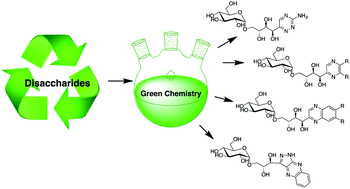
The existential importance of a sustainable economy necessitates the utilisation of plant based renewable resources such as lignin and carbohydrates. Carbohydrate utilization as industrial raw materials requires low environmental impact conversions from sugars to high value products. Here we present the conversion of reducing disaccharides into industrially relevant heterocycles of the quinoxaline-, 1,2,4-triazine-, pyrazine- and pyrazolo[3,4-b]quinoxaline-type. Heterocycle formation was facilitated by chemical conversion of reducing sugars into 1,2-dicarbonyl intermediates and their subsequent cyclization with nitrogen bis-nucleophiles. A range of disaccharides was converted into quinoxalines carrying a diverse glycosylation pattern on the polyhydroxy alkyl side chain. All transformations were performed without the need of protecting group chemistry.

Introduction

Peak oil production has been reached,1 but the chemical industry is still reliant on non renewable oil based hydrocarbons. This creates the urgent necessity for a progressive changeover towards renewable and hence, sustainable feedstocks to fulfil the industries' raw material needs.2 Carbohydrates are by far the most abundant organic compounds and represent the major portion of the renewable biomass. Carbohydrate utilization for the production of low cost, sustainable and eco-friendly chemicals or polymers of versatile industrial applicability is herewith of central importance for relieving the reliance of industry on petrochemical raw materials.2–7

The bulk scale sustainable carbohydrate conversion into building blocks for fine chemical production requires entry reactions with broad applicability and reaction pathways using benign reagents and solvents. Aromatic N-heterocycles are key building blocks of the chemical industry and their refinement leads to solvents, drugs, pesticides, polymers, pigments, ionic liquids and other high value materials.

The key to the utilization of carbohydrates is the ability to transform the poly-hydroxylated sugar framework and to introduce reactive moiety's like e.g. carbonyl functions or amino groups suitable for subsequent chemical modifications. The utilization of sugar derived furfurales8,9 as raw materials was shown, leading to reactive 1,4-diketo compounds10 or γ-keto-carboxylic acid analogues.11 Their subsequent conversion into N-heterocycles of the pyrrol-, thiophen-, pyridazine-, diazepinone- and pyridazinone-type was achieved.10,12,13 Other work has expanded on the utilization of sugar phenylosazones as building blocks for the synthesis of prrazoles.13–15 Rare examples of direct single step conversions of natural reducing sugars into aromatic N-heterocycles, lead to quinoxalines,16,17 pyrazines,18 imidazoles,19–21 fused ring pyrazolo[3,4-b]quinoxalines16,22,23 and benzimidazoles.24–26

Here we exploit reducing carbohydrates as a source of 1,2-dicarbonyl-building blocks (diuloses) and their conversion into N-heterocycles.

Enzymatic oxidative processes have been developed to produce monosaccharide dicarbonyl sugars27–29 like 3-ketoglucose,30 5-ketofructose,31 2,5-diketo-D-gluconate32 as well as 2-keto-D-glucose (D-glucoson) 1.33,34 These biotechnological produced dicarbonyl sugars show potential as building blocks for heterocycle synthesis.35–38 In particular, the 1,2-dicarbonyl sugar, D-glucoson 1 was used to access heterocycles (Scheme 1) of the quinoxaline type16,173 the pyrazolo[3,4-b]quinoxaline type16,22,232 and 1,2,4 triazine → 4 type.35 The selective bio-conversion of disaccharides into the related 1,2-dicarbonyl analogues is only limited realized for the (1 → 6) linked disaccharides gentiobiose, isomaltose, melibiose and the (1 → 4) linked lactose.27,39,40 To address the difficult access to 1,2-dicarbony disaccharide analogues, chemical methods have been investigated to allow for the general conversion of all reducing sugars into these important building blocks for heterocycles.


image file: c3ra47349j-s1.tif
Scheme 1 The key 1,2-dicarbony building block 1 (2-keto-D-glucose)33,34,42,43 enables access to N-heterocycles of the pyrazolo[3,4b]quinoxaline- (2),16,21,22 quinoxaline- (3)16,17 and 1,2,4-triazine-type (4).35

In the pioneering work of Emil Fischer, the oxidation of reducing sugars during formation of phenyl osazones (1,2-bishydrazones) has had a groundbreaking impact towards the elucidation of the configuration of carbohydrates.41 Phenyl osazone formation follows a reaction cascade of initial phenyl hydrazon formation, tautomeric rearrangement (Amadori rearrangement) and dehydration by excess phenyl hydrazin, thereby yielding a β-keto hydrazine derivative and finally the formation of the bis-phenyl hydrazon product. This process is a prototype entry reaction as D-fructose or D-glucose bis-phenyl hydrazone can chemically be transformed into the reactive 1,2-diketo sugar 1 (ref. 42 and 43) enabling access to a range of sugar-based heterocycles (Scheme 1). The oson 1 converts with o-phenylen diamine to the quinoxalines 3 and with amino guanidine to the 1,2,4 triazole 4.35 In the presence of phenyl hydrazine and o-phenylen diamine, a direct conversion of D-fructose into a pyrazolo[3,4-b]quinoxaline 2 has been achieved.22,23,44 In this reaction the intermediate 1 forms a quinoxaline 3 and the excess phenyl hydrazine performs the dehydration of the secondary alcohol adjacent to the aromatic ring under phenyl-hydrazon formation and cyclization to the pyrazolo-annulation product 2 (R = Ph). Quinoxaline 3 can also be obtained directly from the sugars, employing hydrazine for dehydration and direct cyclization with o-phenylen diamine (glucose/fructose → 3).23 Starting from 3 a pyrazolo annulation to 2 (R = H) has been performed employing hydrazine in acetic acid in the presence of catalytic copper.45 These examples show the potential of 1,2-dicarbonyl sugars as building block for high value products. In particular this concept is emphasized, as N-heterocyclic scaffolds of the quinoxaline-, pyrazolo[3,4-b]quinoxaline- as well as triazine- and pyrazine-type are found in a range of bioactive molecules with a variety of pharmaceutical activitvities (for reviews see e.g. quinoxalines and pyrazolo-quinoxalines,46–50 pyrazines,51 1,2,4-triazines52). Of notable interest are the optical properties of quinoxalines and pyrazolo[3,4-b]quinoxalines as they can be used for targeted cancer treatment when irradiated with light.53 Additionally, by addressing bioactive molecules to a particular site of action, employing carbohydrate recognition motives54 suggests potential medicinal chemistry application for carbohydrate-derived heterocycles.

Outside of the medicinal chemistry area, quinoxalines and pyrazolo[3,4b]quinoxalines have found applications in organic optoelectronic applications55 and have been considered as candidates for the design of dye-sensitized solar cells (DSSCs).56

The application potential and the existing straightforward synthetic procedures (Scheme 1) provide an interesting gateway to 1,2-dicarbonyl sugar based N-heterocycles that will still contain parts of the carbohydrate skeleton. Application to disaccharides results in products with a tunable glycosylation pattern on the hydroxylated side chain.

Here we present straightforward procedures allowing the conversion of generally all reducing disaccharides and monosaccharide's into side chain poly-hydroxylated quinoxalines, pyrazolo[3,4-b]quinoxalines, pyrazines and 1,2,4-triazines with a diverse glycosylation pattern.

Results

Isomaltulose (palatinose®) is a naturally occurring disaccharide and is also an industrial bulk sugar enzymatically produced from sucrose as an intermediate for the production of low caloric sweetener Isomalt®.57,58 Therefore, Isomaltulose is an ideal cheap raw material as industrial feedstock.57,58

The focus of initial experiments was on utilizing isomaltulose (α-D-Glcp-(1 → 6)-D-Fruf) for the conversion of reducing disaccharides into N-heterocycles.

Isomaltulose was transformed into the osazone 5 with a yield of 92%.14 Removal of the phenyl hydrazone protection of the underlying 1,2-diketo-sugar 7 was achieved by treatment with an excess of benzaldehyde (Scheme 2; method A) according to a procedure reported by Byne.42 Due to required chromatographic purification on silica gel was the isomaltosone 7 only obtained in a yield of 40%. In an alternative process (Scheme 2; method B) the removal of the hydrazone59 was achieved, via diazotation, with sodium nitrite in acidic solution delivering a 50% yield of isomaltosone 7 after chromatographic purification.


image file: c3ra47349j-s2.tif
Scheme 2 Reactive 1,2-dicarbonyl intermediate synthesis (method A and B employing phenyl osazone intermediate 57. Method C is employing a “one pot” hydrazine treatment with in situ formed 7) allows for the conversion of isomaltulose into N-heterocycles of the quinoxaline- (8) pyrazolo[3,4b]quinoxaline- (10), 1,2,3-triazine- (9) and pyrazine-type (11).

With the 1,2-dicarbonyl building block 7 obtained, cyclization reactions were investigated towards the production of N-hetreocycles (Scheme 2).

The pure isomaltosone 7 reacts readily with 1,2-diamino benzene derivates under formation of quinoxalines 8a (85% yield) and 8b (80% yield). Also the conversion into a 4-amino-1,2,3-triazines 9 was achieved with amino guanidine (76% yield). While the same reaction with glucosone 1 delivered only a single product35 was no regio-chemical preference observed, resulting in a mixture of isomeric products (9a and b). Diaminomaleonitrile was cyclized with isomaltosone 7, to the bis-nitrile substituted pyrazine product 11 (43% yield). Reduction of the nitrile with hydrogen was possible over Pd/C resulting in a bis-aminomethyl substituted pyrazine, obtained as the bis-acetyl product 12 (31% yield).

The difficult purification of glucosone 7 was avoided by alternative procedures, the 1,2-dicarbonyl sugar 7 was generated in situ and reacted directly with o-phenylen diamine to the respective quinoxaline product 8. Starting from osazone 5, diazotation was performed (Scheme 2, see method B) in acidic sodium nitrite solution, removing the phenyl hydrazine groups. The formed phenyl azide byproduct was removed by extraction and the residual crude 7 was directly cyclized. This pathway (isomaltulose578) resulted in some yield improvement but more importantly required only a single chromatographic purification step for the conversion of 5 to 8a (overall yield from isomaltulose via 5 to 8a was 60%).

A further improvement (Scheme 2; method C) was achieved by employing a procedure developed by Ohle and Hilcher.23 Instead of using an isolated phenyl osazone 5, with hydrazine an unsubstituted bis-hydrazone 6 was formed in situ as the dicarbonyl intermediate. The labile bis-hydrazon 6 hydrolyzes in situ to the dicarbonyl sugar 7. This process (isomaltulose → [67] → 8) is achieved in “one pot” by treatment of the carbohydrate with 3 equivalents of hydrazine in water at pH 7–8; avoiding the cleavage of the glycosidic linkage, while refluxing with 1 equivalents of o-phenylene diamine for 18 h. The quinoxaline products 8a–c was obtained after decoloring with activated charcoal and chromatographic workup in surprisingly good 65, 50 and 30% yield (method C, see Table 1).

Table 1 Product yields obtained from “one pot” transformation of sugars into quinoxalines. Matrix shows obtained variable glycosylation pattern and quinoxaline ring substitution
Sugar DABa X = # R4 R3 R2 R1 Yield [%]
a DAB = 1,2-diamino benzene analogue.b Condensation with 2,3-diamino naphthalene resulting in a benzo-annulated quinoxaline 8c.
D-Fructose H 3 H H H H 75
D-Fructose Cl 3b H H H H 65
D-Fructose 4-COOH 3c H H H H 50
Isomaltulose H 8a α-D-Glc H H H 65
Isomaltulose Cl 8b α-D-Glc H H H 50
Isomaltulose b 8c α-D-Glc H H H 30
Melibiose H 13 α-D-Gal H H H 55
Leucrose H 14   α-D-Glc H H 42
Maltose H 15 H H α-D-Glc H 42
Cellobiose H 16 H H β-D-Glc H 40
Lactose/lactulose H 17 H H β-D-Gal H 45/40
Turanose H 18 H H H α-D-Glc 5


The transformation of the quinoxaline 3 into the pyrazole-fused 2 (see Scheme 1) is possible in aqueous acetic acid using hydrazine as dehydrating/cyclization reagent by employing copper catalysis.45 When using these conditions for the conversion of 8a the desired product 10 was not formed due to instability of the glycosidic bond resulting in product 2. Only when transferring the reaction into water free conditions by using glacial acetic acid was the transformation (8a10) in 38% yield possible.

The “one pot” reaction cascade (method C; sugar → [67] → heterocycle) of hydrazone formation; tautomerisation reaction followed by bis-hydrazone formation and final hydrolysis to the osone 7 was considered as potentially useful to access heterocyclic compounds of the type 8–12 directly from any reducing sugar.

Firstly we evaluated the scope of this “one pot” procedure towards quinoxalines of type 3 and 8 by investigating different nitrogen donor molecules to give access to ring substitution. Alternative to o-diaminobenzene, 3,4-dichloro-o-diaminobenzene as well as 2,3-diaminonaphtaline and unsymmetrical 3,4-diamino benzoic acid as cyclization partner was investigated to introduce ring substituents into the obtained products. In all cases the envisaged quinoxaline conversions (fructose3a–c, isomaltulose8a–c) were obtained in good to moderate yield (see Table 1). When using, the non-symmetric 3,4-diamino benzoic acid with fructose a mixture of the two regio-isomeric products (3c) was obtained.

After establishing the scope of the in situ hydrazine-dehydration/quinoxaline “one pot” cyclization with fructose and isomaltulose, this protecting group free entry reaction (performed in water) was expanded towards other bulk scale available disaccharides.60

Our aim was to obtain diverse glycosylation along the hydrophilic tetrahydroxybutyl side chain of obtained quinoxaline products (see Scheme 3). This glycosylation diversity was effectively introduced, based on the disaccharides used. Other than the industrial produced disaccharide, isomaltulose (α-D-Glcp-(1 → 6)-D-Fruf), we investigated the sustainable, in mass scale produced, low cost carbohydrates60 such as the reducing dissacharide-pyranoses; melibiose (α-D-Galp-(1 → 6)-D-Glcp), maltose (α-D-Glcp-(1 → 4)-D-Glcp), cellobiose (β-D-Glcp-(1 → 4)-D-Glcp) and lactose (β-D-Galp-(1 → 4)-D-Glcp) as well as leucrose (α-D-Glcp-(1 → 5)-D-Frup). Furthermore, the rare disaccharide turanose (α-D-Glcp-(1 → 3)-D-Fruf) was used as a model sugar to also obtain a glycosylation adjacent to the heterocyclic quinoxaline ring system.


image file: c3ra47349j-s3.tif
Scheme 3 One pot condensation of carbohydrates with diamino benzene (DAB) analogues into tetrahydroxybutyl substituted quinoxalines with a variable α/β-D-Glc/Gal-glycosylation sphere depending on used starting disaccharide.

All reducing disaccharides were transformed into quinoxalines (8 and 13–18) resulting in products with a diverse glycosylation patterns on the tetrahydroxybutyl side chain.

While the yields of mono-saccharide derived quinoxalines were good, disaccharides delivered the products 13–18 in moderate yield, most likely due to chromatographic losses of the highly hydrophilic products on silica gel (see Table 1).

A particular low yield was obtained for the turanose-derived quinoxaline 18. Even though the reaction was performed at pH 8, partial cleavage of the glycosidic linkage (182) was observed. In summary, these results show that the “one pot” procedure is generally suitable for the conversion of reducing disaccharides into quinoxalines allowing for the introduction of heterocyclic ring substituents by selection of suitable 1,2-diamino building blocks.

Conclusion

Carbohydrates provide a sustainable source of carbon, which can potentially replace petrochemical raw materials.2,7 Carbohydrate transformation into heterocyclic molecules may alleviate some of the resource pressure of the chemical industry, while delivering novel unique molecular entities. Carbohydrates can provide molecular features such as their hydrophilic, poly-hydroxylated backbone with resulting enzymatic instability (biodegradability) to sugar derived heterocyclic products.

Elaboration of facile chemical pathways to 1,2-dicarbonyl intermediates of carbohydrates was presented. The conversion of 1,2-dicarbonyl disaccharide building blocks allowed access to quinoxalines (8), triazines (9), pyrazol[3,4b] quinoxalines (10) as well as pyrazines (11 and 12). These products were obtained from the cheap bulk carbohydrate isomaltulose as a representative disaccharide example. However, the methods presented are transferable to all reducing disaccharides, as was shown in detail for the quinoxaline heterocycle class (→ 13–18).

In situ conversion of reducing sugars into 1,2-dicarbonyl intermediates, employing hydrazine in a “one pot” process was used to show that a matrix of quinoxalines (see Table 1) can be produced. Based on the disaccharide starting material, products were obtained that are distinguished by diverse glycosylation patterns on the tetrahydroxybutyl side chain (see Scheme 3 and Table 1). The developed synthesis procedures can be easily transferred into large scale production and the produced N-heterocycles of the quinoxaline- (3, 8, 13–18), pyrazolo[3,4b]quinoxaline- (10), triazine- (9) and pyrazine- (11 and 12) type can provide suitable raw materials for novel high value products with unique properties based on their carbohydrate origin.

Experimental

Analytical instrumentation used: melting points (uncorrected values) recorded on a Bock monoskop instrument. Spectral measurements were performed on: Perkin Elmer 241 (rotations), Varian MAT 311 A (MS), Bruker WM 300 instruments (1H at 300 or 500, 13C NMR at 75.5 or 125 MHz, respectively). Perkin-Elmer 240 elemental analyzer was used for compound microanalysis and purity confirmation. TLC on Kieselgel 60 F254 plastic sheets (Merck) was used to monitor the reactions and to ascertain the purity of the products (single point on TLC plate); eluents employed and Rf values observed are given in the appropriate experiment; detection of TLC plates was performed with UV-light or by charring with sulfuric acid. Column chromatography: Kieselgel 60 (63–200 mesh, Macherey-Nagel).

D-Glucopyranosyl-α(1 → 6)-D-arabino-hexos-2-ulose (7) [isomaltoson (7)]

Method A: from isomaltulose phenylosazon 5 (ref. 14) via hydrazone transfer to benzaldehyde. To a suspension of 12.0 g (23.1 mmol) isomaltulose-phenylosazone 5 (ref. 14) in 240 mL of EtOH, 400 mL of water and 6 mL of concentrated acetic acid was added 16 mL of freshly distilled benzaldehyde. After 6 h on reflux a further 4 mL glacial acetic acid was added and refluxed for an additional 2 h. Solvent was removed in vacuum and the residual solution was stored over night at 4 °C resulting in the crystallisation of benzaldehyde phenylhydrazone, which was removed by vaccum filtration. The residual solution was treated for 30 min. with activated charcoal at 60 °C, filtered and concentrated in vacuo. The crude product, 7.44 g of a brown foam, was purified on silica gel (12 × 25 cm) by elution with MeCN–H2O (4[thin space (1/6-em)]:[thin space (1/6-em)]1). Evaporation of fractions with Rf 0.24 yield 3.05 g (40%) 7 in form of a yellow hard foam.
Method B: from isomaltulose phenylosazone 5 (ref. 14) via diazotation with NaNO2. To as suspension of isomaltulose phenylosazone 5 (2.6 g, 5 mmol) in ethanol–water (2[thin space (1/6-em)]:[thin space (1/6-em)]1, 30 mL) 1.2 mL conc. HCl is added adjusting pH to 3. At 30 °C and strong agitation a solution of NaNO2 (0.7 g, 10 mmol) in water (5 mL) was added within 15 min. The resulting red solution is buffered by addition of 0.75 g of NaOAc. Ethanol was removed in vacuo and the formed red phenyl azide was removed by extraction with CHCl3 (5 × 50 mL). The residual aqueous solution was evaporated in vacuo resulting in a slightly yellow hard foam. The crude product was purified on silica gel (4 × 20 cm) with MeCN–H2O (4[thin space (1/6-em)]:[thin space (1/6-em)]1) as eluent. Evaporation of fractions with Rf 0.24 yield 0.85 g (50%) 7 in form of a yellow hard foam—[α]20D + 90° (c 0.99, DMSO).

1H NMR (300 MHz, [D6]DMSO): δ 3.08 (dd, 1H, 4′-H), 3.20 (dd, 1H, 2′-H), 3.37–3.50 (m, 4H, 4-H, 3′-H, 5′-H, 6′-Ha), 3.55–3.65 (m, 2H, 6-Ha, 6′-Hb), 3.78 (dd, 1H, 6-Hb), 4.13 (m, 1H, 5-H), 4.32 (m, 1H, 3-H), 4.68 (d, 1H, 1′-H), 4.60–4.70 (m, 3H, 2′-OH, 3′-OH, 4′-OH), 4.90 (s, 1H, 1-H)—J5,6b = 5.5, J6,6 = 10.8, J1′,2′ = 3.4, J2′,3′ = 9.6, J3′,4′ = 8.9, J4′,5′ = 8.9 Hz. 13C NMR (75.5 MHz, [D6]DMSO): δ 61.1 (C-6′), 66.5 (C-6), 70.4 (C-4′), 71.2 (C-5), 72.2 (C-2′), 72.8 (C-3′), 73.4 (C-5′), 74.5 (C-4), 76.5 (C-3), 93.9 (C-1), 98.9 (C-1′), 201.9 (C-2). MS (FD): m/z = 363 [M+ + Na].

3-Amino-5-[(1′R,2′S,3′R)-4′-(α-D-glucopyranosyloxy)-1′,2′,3′-trihydroxy-butyl]-1,2,4-triazine (9a) and 3-amino-6-[(1′R,2′S,3′R)-4′-(α-D-glucopyranosyloxy)-1′,2′,3′-trihydroxy-butyl]-1,2,4-triazine (9b)

To a solution of 200 mg (0.59 mmol) of isomaltosone 7 in 10 mL of water was added 100 mg (0.73 mmol) of aminoguanidine-hydrogencarbonat and it was steered for 3 h at 30 °C. Concentration in vacuo results in a light brown amorphous residue which was purified on silica gel (3 × 15 cm) using ethanol–25% NH3-sol (3[thin space (1/6-em)]:[thin space (1/6-em)]1) as eluent. Evaporation of product containing fractions delivered 170 mg (76%) of a 1[thin space (1/6-em)]:[thin space (1/6-em)]1 mixture of triazine 9a and 9b as a light brown amorphous solid. A second chromatographic purification on silica gel (2 × 30 cm) employing the same eluent allowed for the separation oft the individual regio-isomeric triazines 9a and b allowing their NMR spectroscopic characterisation. (Found: C, 41.15; H, 5.90; N, 14.95% C13H22N4O9 requires C, 41.27; H, 5.86; N, 14.81%).
9a: Rf 0.20 [ethanol–25% NH3-sol (3[thin space (1/6-em)]:[thin space (1/6-em)]1)]. 1H NMR (300 MHz, D2O): δ 3.35–3.48 (m, 1H, 4′′-H), 3.58–3.61 (m, 1H, 2′′-H), 3.71–3.81 (m, 6H, 3′′-H, 5′′-H, 6′′-Ha, 6′′-Hb, 3′-H, 4′′-H), 3.96–4.03 (m, 3H, 2′-H, 4′-H2), 4.96 (m, 1H, 1′′-H), 5.01 (d, 1H, 1′-H), 8.78 (s, 1H, 5-H)—J1′,2′ = 2.5 Hz. 13C NMR (75.5 MHz, D2O): δ 62.9 (C-6′′), 70.9 (C-4′), 71.5 (C-3′), 71.7 (C-4′′), 72.1 (C-1′), 73.4 (C-2′′), 74.2 (C-5′′), 75.5 (C-2′), 100.6 (C-1′′), 141.5 (C-6), 165.0 (C-5), 168.3 (C-3). MS (FD): m/z = 362 [M − NH2+].
9b: Rf 0.14 [ethanol–25% NH3-sol (3[thin space (1/6-em)]:[thin space (1/6-em)]1)]. 1H NMR (300 MHz, D2O): δ 3.35–3.48 (m, 1H, 4′′-H), 3.58–3.61 (m, 1H, 2′′-H), 3.71–3.81 (m, 6H, 3′′-H, 5′′-H, 6′′-Ha, 6′′-Hb, 3′-H, 4′′-H), 3.96–4.03 (m, 3H, 2′-H, 4′-H2), 4.96 (m, 1H, 1′′-H), 5.20 (d, 1H, 1′-H), 8.54 (s, 1H, 6-H)—J1′,2′ = 2.5 Hz. 13C NMR (75.5 MHz, D2O): δ 62.9 (C-6′′), 70.9 (C-4′), 71.5 (C-3′), 71.7 (C-4′′), 72.1, 72.6 (C-1′), 73.4 (C-2′′), 74.2 (C-5′′), 75.5 (C-2′), 100.6 (C-1′′), 141.5 (C-6), 154.1, (C-5), 168.3 (C-3). MS (FD): m/z = 362 [M − NH2+].

5,6-Dicyano-2-[(D-arabino)-4′-(α-D-glucopyranosyloxy)-1′,2′,3′-trihydroxybutyl]-pyrazine (11)

To a solution of isomaltosone 7 (1.12 mmol, 380.8 mg) in 8 mL of dry methanol was added 122 mg (1.12 mmol) of diamino maleodinitril. After addition of molecular sieve (3 Å) and 500 mg of Amberlite IR120 acidic ion exchange resin the mixture was steered in an argon atmosphere for 18 h at room temp. After filtration over diatomite, the solution was concentrated and purified on silica gel (2.5 × 25 cm) using CHCl3–MeOH 2[thin space (1/6-em)]:[thin space (1/6-em)]1 as eluent. Combined fractions with Rf 0.46 were evaporated delivered 198.4 mg (43%) oft the pyrazine 11 as a light brown amorphous residue. (Found: C, 46.66; H, 4.93; N, 13.55% C16H20N4O9 requires C, 46.60; H, 4.89; N, 13.59%); 1H NMR (300 MHz, [D6]DMSO): δ 3.30 (dd, 1H, 4′′-H), 3.41 (dd, 1H, 2′′-H), 3.61–3.66 (m, 4H, 4′-Ha, 3′′-H, 4′′-H, 6′′-Ha), 3.76 (m, 1H, 6′′-Hb), 3.90 (dd, 1H, 2′-H), 3.95 (m, 1H, 3′-H), 4.01 (dd, 1H, 4′-Hb), 4.84 (d, 1H, 1′′-H), 5.52 (d, 1H, 1′-H), 9.16 (s, 1H, 3-H)—J1′′,2′′ = 3.7, J2′′,3′′ = 9.6, J3′′,4′′ = 9.1, J4′′,5′′ = 9.1 Hz, J1′,2′ = 1.5, J2′,3′ = 9.2, J3′,4b′ = 6.3, J4′,4′ = 10.3 Hz. 13C NMR (75.5 MHz, [D6]DMSO): δ 62.6 (C-6′′), 70.3 (C-4′), 71.0 (C-5′′), 71.7 (C-1′), 73.3–75.0 (C-3′, C-2′′, C-3′′, C-4′′), 75.3 (C-2′), 100.4 (C-1′′), 114.7, 114.8 (2 CN), 132.8, 133.6 (C-5, C-6), 148.7 (C-3), 164.9 (C-2).

5,6-Bis-(N-acetylaminomethyl)-2-[(D-arabino)-4′-(α-D-glucopyranosyloxy)-1′,2′,3′-trihydroxybutyl]-pyrazine (12)

To a solution of dicyano pyrazine 11 (0.8 mmol, 330 mg) in 8 mL of dry methanol and 0.3 mL of acetic anhydride was added 100 mg of Palladium on activated charcoal. After steering in a hydrogen atmosphere over night, the solution was filtered over diatomite. The filtrate was concentrated and purified on silica gel (2 × 20 cm) using CHCl3–MeOH (1[thin space (1/6-em)]:[thin space (1/6-em)]1) as eluent. Combined fractions with Rf 0.37 were evaporated and delivered 125 mg (31%) of bis-acetylamino pyrazine 12 as a light yellow syrup. 1H NMR (300 MHz, [D6]DMSO): δ 1.87, 1.88 (2s, 6H 2 COCH3), 3.07 (m, 1H, 2′′-H), 3.20 (m, 2H, 3′′-H, 4′′-H), 3.44–3.46 (m, 4H, 2′-H, 3′-H, 5′′-H, 6′′-Ha), 3.56 (m, 2H, 4′-Ha, 6′′-Hb), 3.72–3.75 (m, 1H, 4′-Hb), 4.41–4.48 (m, 4H, 5-CH2, 6-CH2), 4.67 (d, 1H, 1′′-H), 4.98 (s, 1H, 1′-H), 8.27–8.32 (m, 2H, 2 NH), 8.59 (s, 1H, 3-H)—J1′′,2′′ = 3.7, J2′′,3′′ = 9.6, J3′′,4′′ = 9.1, J4′′,5′′ = 9.1 Hz, J1′,2′ = 1.5, J2′,3′ = 9.2, J3′,4b′ = 6.3, J4′,4′ = 10.3 Hz. 13C NMR (75.5 MHz, [D6]DMSO): δ 62.6 (C-6′′), 70.3 (C-4′), 71.0 (C-5′′), 71.7 (C-1′), 73.3–75.0 (C-3′, C-2′′, C-3′′, C-4′′), 75.3 (C-2′), 100.4 (C-1′′), 114.7, 114.8 (2 CN), 132.8, 133.6 (C-5, C-6), 148.7 (C-3), 164.9 (C-2).

(2-[(1′R,2′S,3′R)-4′-(α-D-glucopyranosyloxy)-1′,2′,3′-trihydroxybutyl])-quinoxaline (8a)

Method A: via cyclisation of pure isomaltosone 7 with o-phenylen diamin: (78a). To a solution of 340 mg (1.0 mmol) isomaltosone 7 in water (10 mL), 120 mg (1.1 mmol) of o-phenylendiamine was added and 1.5 h steered at 60 °C. Evaporation in vacuo resulted in a dark brown residue which was purified on silica gel (3 × 18 cm) with CHCl3–MeOH (3[thin space (1/6-em)]:[thin space (1/6-em)]1) as eluent. Evaporation of fractions with Rf 0.35 [CHCl3–MeOH (1[thin space (1/6-em)]:[thin space (1/6-em)]1)] yielded 350 mg (85%) of quinoxaline 8a as a light brown amorphous solid.
Method B: from isomaltulose phenylosazone 5 via in situ generated isomaltosone 7 employing diazotation (58a). To as suspension of phenylosazone 5 (ref. 14) (2.6 g, 5 mmol) in ethanol–water (2[thin space (1/6-em)]:[thin space (1/6-em)]1, 30 mL) 1.2 mL of conc. HCl is added to adjust the pH to 3. At 30 °C and strong agitation a solution of NaNO2 (0.7 g, 10 mmol) in water (5 mL) is added within 15 min. The resulting red solution was buffered with 0.75 g of NaOAc. Ethanol was removed in vacuo and the red phenyl azide was removed by extraction with CHCl3 (5 × 50 mL). To the remaining aqueous solution o-phenylendiamine (0.54 g, 5 mmol) was added and 1 h heated to 80 °C. After decolouring with activated charcoal (1.0 g), filtration and concentration in vacuo, the residual was purified on silica gel (5 × 20 cm) with CHCl3–MeOH (3[thin space (1/6-em)]:[thin space (1/6-em)]1) as eluent. Quinoxaline 8a (1.2 g, 60%) was obtained as yellowish hard foam.
Method C: general “one pot” method for the conversion of reducing sugars into quinoxalines (3, 3b, 3c, 8a, 8b, 8c, 1318) employing hydrazine hydrate and o-phenylendiamine analogues. Reducing sugars (10 mmol) were dissolved in 50 mL of water and 1.5 mL (30 mmol) of hydrazine hydrate was added. Using acetic acid the pH was adjusted to 7–8 and the solution was heated to 100 °C for 18 h. After treatment with activated charcoal (1 g), filtration and evaporation a amorphous residue was obtained and was purified on silica gel.

(isomaltulose8a) The obtained brown residue was eluted from silica gel (5 × 25 cm) with CHCl3–MeOH 3[thin space (1/6-em)]:[thin space (1/6-em)]1. Quinoxaline 8a (2.65 g, 65%) was obtained as a brown yellow amorphous foam—[α]20D + 13.7 (c 0.98, DMSO). (Found: C, 52.44; H, 5.80; N, 6.75% C18H24N2O9 requires C, 52.42; H, 5.87; N, 6.79%); 1H NMR (300 MHz, [D6]DMSO): δ 3.07 (dd, 1H, 4′′-H), 3.18 (dd, 1H, 2′′-H), 3.41–3.47 (m, 3H, 3′′-H, 5′′-H, 6′′-Ha), 3.54 (m, 2H, 4′-Ha, 6′′-Hb), 3.72 (m, 1H, 2′-H), 3.76–3.82 (m, 2H, 3′-H, 4′-Hb), 4.40 (bs, 1H, 6′′-OH), 4.69 (d, 1H, 1′′-H), 4.81 (m, 5H, 2′-OH, 3′-OH, 2′′-OH, 3′′-OH, 4′′-OH), 5.19 (s, 1H, 1′-H), 7.79–7.84 (m, 2H, 6-H, 7-H), 8.04–8.10 (m, 2H, 5-H, 8-H), 9.12 (s, 1H, 3-H)—J1′′,2′′ = 3.3, J2′′,3′′ = 9.4, J3′′,4′′ = 9.1, J4′′,5′′ = 9.1 Hz.

13C NMR (75.5 MHz, [D6]DMSO): δ 61.1 (C-6′′), 69.3 (C-3′), 69.8 (C-4′), 70.4 (C-4′′), 72.6–72.8 (C-1′, C-2′′, C-3′′), 73.9 (C-5′′), 74.7 (C-2′), 99.2 (C-1′′), 128.9, 129.2 (C-5, C-8), 129.6, 130.3 (C-6, C-7), 140.7, 140.9 (C-4a, C-8a), 145.7 (C-3), 159.4 (C-2). 1H NMR (300 MHz, CD3OD): δ 3.34 (dd, 1H, 4′′-H), 3.43 (dd, 1H, 2′′-H), 3.60–3.73 (m, 5H, 3′′-H, 5′′-H, 6′′-Ha, 6′′-Hb, 3′-H), 4.03–4.07 (m, 3H, 2′-H, 4′-H2), 4.85 (d, 1H, 1′′-H), 5.35 (s, 1H, 1′-H), 7.76–7.82 (m, 2H, 6-H, 7-H), 8.04–8.09 (m, 2H, 5-H, 8-H), 9.14 (s, 1H, 3-H)—J1′′,2′′ = 3.5, J2′′,3′′ = 9.6 Hz. 13C NMR (75.5 MHz, CD3OD): δ 62.5 (C-6′′), 70.1 (C-4′), 71.1 (C-3′), 71.6 (C-4′′), 73.6 (C-1′), 73.7 (C-2′′), 75.0 (C-5′′), 75.2 (C-2′), 100.2 (C-1′′), 129.5, 129.8 (C-5, C-8), 130.8, 131.3 (C-6, C-7), 142.5, 142.7 (C-4a, C-8a), 145.9 (C-3), 159.7 (C-2). MS (FD): m/z = 435 [M+ + Na].

3-[(1′S,2′R)-3′-(α-D-Glucopyranosyloxy)-1′,2′, dihydroxy-propyl]-1-H-pyrazolo-[3,4-b]-quinoxaline (10)

To a solution of 300 mg (0.73 mmol) of quinoxaline 8a in 10 mL of glacial acetic acid was added 0.25 mL (5 mmol) of hydrazine hydrate and 0.5 g of copper powder. After refluxing for 4 h it was filtered and the solvent removed in vacuum. The residual was purified on silica gel (CHCl3–MeOH, 3[thin space (1/6-em)]:[thin space (1/6-em)]1) and product fractions with Rf 0.41 were combined and evaporated to yield 10 (150 mg, 48%) as a yellow amorphous hard foam. (Found: C, 51.22; H, 5.33; N, 13.25% C18H22N4O8 requires C, 51.18; H, 5.25; N, 13.26%); 1H NMR (500 MHz, [D6]DMSO): δ 3.14 (m, 1H, 5′′-H), 3.24 (dd, 1H, 2′′-H), 3.54 (t, 1H, 4′′-H), 3.65 (dd, 1H, 3′-Ha), 3.81 (m, 1H, 3′′-H), 4.01 (dd, 1H, 3′-Hb), 4.07 (dd, 1H, 6′′-Ha), 4.28 (dd, 1H, 6′′-Hb), 4.69 (m, 1H, 2′-H), 4.77 (d, 1H, 1′′-H), 5.03 (d, 1H, 1′-H), 7.82 (m, 1H, 7-H), 7.91 (m, 1H, 6-H), 8.14 (d, 1H, 5-H), 8.28 (d, 1H, 8-H), 13.77 (bs, 1H, NH)—J5,6 = 8.5, J6,7 = 7.1, J7,8 = 8.5, J1′,2′ = 9.1, J2′,3′a = 2.0, J2′,3′b = 4.5, J3′a,3′b = 9.7, J1′′,2′′ = 3.6, J2′′,3′′ = 9.5, J4′′,5′′ = 9.2, J5′′,6′′ = 5.7 J6′′a,6′′b = 11.7 Hz. 13C NMR (125.75 MHz, [D6]DMSO): δ = 63.8 (C-6′′), 68.3 (C-1′), 69.1 (C-3′), 69.9 (C-3′′), 70.5 (C-5′′), 71.3 (C-2′), 72.6 (C-2′′), 73.9 (C-4′′), 99.0 (C-1′′), 128.1 (C-7), 128.7 (C-5), 130.4 (C-8), 131.1 (C-6), 135.5, 140.4 (C-10, C-11), 141.3, 144.3 (C-12, C-13), 147.2 (C-3).

6,7-Dichlor-2-[(1′R,2′S,3′R)-4′-(α-D-glucopyranosyloxy)-1′,2′,3′-trihydroxy-butyl]-quinoxaline (8b)

Method A: via cyclisation of pure isomaltosone 7 with 3,4-dichloro-o-phenylen diamine: (78b). Similar to conversion (78a), isomaltosone 7 (340 mg, 1.0 mmol) in water (50 mL) was converted with 3,4-dichlor-phenylendiamin (180 mg, 1.1 mmol). Workup as for 8a and chromatographic purification on silica gel (3 × 18 cm) with CHCl3–MeOH (3[thin space (1/6-em)]:[thin space (1/6-em)]1) as eluent delivered 380 mg (80%) quinoxaline 8b as a light brown amorphous solid—Rf 0.62 [CHCl3–MeOH (1[thin space (1/6-em)]:[thin space (1/6-em)]1)].
Method B: from isomaltulose via “one pot” conversion employing hydrazine hydrate and 3,4-dichlor-o-phenylendiamine. Similar to (isomaltulose8a), was isomaltulose (3.6 g, 10 mmol) cyclized with 3,4-dichloro-o-phenylendiamine (1.8 g, 10 mmol) and hydrazine hydrate (1.5 mL, 30 mmol) at pH 7–8 (CH3COOH). Workup and chromatographic purification as for 8a delivered 2.4 g (50%) of 8b as light brown solid. (Found: C, 45.01; H, 4.64; N, 5.90% C18H22Cl2N2O9 requires C, 44.92; H, 4.61; N, 5.82%); 1H NMR (300 MHz, CD3OD): δ 3.32 (dd, 1H, 4′′-H), 3.45 (dd, 1H, 2′′-H), 3.59–3.64 (m, 5H, 3′′-H, 4′′-H, 5′′-H, 6′′-Ha, 3′-H), 3.67–3.70 (m, 1H, 6′′-Hb), 4.06–4.07 (m, 3H, 2′-H, 4′-H2), 4.85 (s, 1H, 1′′-H), 5.32 (s, 1H, 1′-H), 8.20, 8.21 (2 s, je 1H, 5-H, 8-H), 9.14 (s, 1H, 3-H)—J1′′,2′′ = 3.5, J2′′,3′′ = 9.6 Hz. 13C NMR (75.5 MHz, CD3OD): δ 63.0 (C-6′′), 70.6 (C-4′), 71.5 (C-3′), 72.0 (C-4′′), 74.0 (C-2′′), 74.2 (C-1′, C-5′′),75.5 (C-3′′), 75.7 (C-2′), 100.7 (C-1′′), 131.0, 131.1 (C-5, C-8), 135.1, 135.6 (C-6, C-7), 141.9 (C-4a, C-8a), 147.8 (C-3), 161.8 (C-2).

2-[(1′R,2′S,3′R)-4′-(α-D-Glucopyranosyloxy)-1′,2′,3′-trihydroxybutyl]-benzo[1,2-g]quinoxaline (8c)

From isomaltulose via “one pot” cyclization with hydrazine hydrate and 2,3-diamino-naphtaline. Similar to (isomaltulose8a), isomaltulose (3.6 g, 10 mmol) was cyclized with 2,3-diamino-naphtalene (0.85 g, 5.4 mmol) and hydrazine hydrate (1.5 mL, 30 mmol) at pH 7–8 (CH3COOH). The reaction was performed in 30 mL of water–DMF (1[thin space (1/6-em)]:[thin space (1/6-em)]2) for 18 h under reflux. After dilution with water (50 mL) and extraction with chloroform (3 × 50 mL), the aqueous phase was evaporated and chromatographic purified on silica gel (5 × 25 cm) with CHCl3–MeOH 2[thin space (1/6-em)]:[thin space (1/6-em)]1 as eluent. After evaporation of product containing fractions with Rf 0.32 (CHCl3–MeOH 1[thin space (1/6-em)]:[thin space (1/6-em)]1) the benzo[1,2-g]quinoxalin 8c (693 mg, 30%) was obtained as a orange syrup. (Found: C, 57.12; H, 5.25; N, 6.13% C22H26N2O9 requires C, 57.14; H, 5.67; N, 6.06%); 1H NMR (300 MHz, CD3OD): δ 3.33 (m, 1H, 4′′-H), 3.44 (m, 1H, 2′′-H), 3.57–3.72 (m, 6H, 3′′-H, 4′′-H, 5′′-H, 6′′-H2, 3′-H), 4.02–4.09 (m, 3H, 2′-H, 4′-H2), 4.82 (d, 1H, 1′′-H), 5.37 (m, 1H, 1′-H), 7.60 (m, 2H, 7-H, 8-H), 8.15 (m, 2H, 6-H, 9-H), 8.61 (2 s, je 1H, 5-H, 10-H), 9.15 (s, 1H, 3-H)—J1′′,2′′ = 3.8 Hz. 13C NMR (75.5 MHz, CD3OD): δ 62.5 (C-6′′), 70.1 (C-4′), 71.3 (C-3′), 72.1 (C-4′′), 74.0 (C-2′′), 73.8 (C-1′), 74.0 (C-5′′), 75.0 (C-3′′), 75.2 (C-2′), 100.3 (C-1′′), 124.7–129.3 (C-5, C-6, C-7, C-8, C-9, C-10), 135.0, 135.3 (C-5a, C-9a), 139.0, 139.2 (C-4a, C-10a), 147 (C-3), 161.0 (C-2). MS (FD): m/z = 485 [M+ + Na].

2-[(1′R,2′S,3′R)-1′,2′,3′,4′-Tetrahydroxybutyl]-Quinoxaline (3)

From fructose via “one pot” conversion employing hydrazine hydrate/o-phenylendiamine. Similar to (isomaltulose8a) was D-fructose (3.6 g, 20 mmol) cyclized with o-phenylendiamine (2.7 g, 20 mmol) and hydrazine hydrate (3 mL, 60 mmol) at pH 7–8 (CH3COOH). Workup and crystallisation in the cold delivered quinoxaline 3 in form of light brown crystal needles; 3.7 g (75%)—Mp 190–192 °C—Rf 0.45 (CHCl3–MeOH 1[thin space (1/6-em)]:[thin space (1/6-em)]1)—Lit.61: Mp 192 °C, 62% Synthesis at pH 6 under addition of boronic acid. 1H NMR (300 MHz, [D6]DMSO): δ 3.52 (m, 1H, 4′-Ha), 3.68–3.73 (m, 3H, 2′-H, 3′-H, 4′-Hb), 4.20–4.50 (m, 4H, 1′-OH, 2′-OH, 3′-OH, 4′-OH), 5.19 (s, 1H, 1′-H), 7.82–7.86 (m, 2H, 6-H, 7-H), 8.04–8.11 (m, 2H, 5-H, 8-H), 9.13 (s, 1H, 3-H). 13C NMR (75.5 MHz, [D6]DMSO): δ 63.4 (C-4′), 71.2 (C-3′), 72.4 (C-1′), 72.3 (C-2′), 128.5, 128.2 (C-5, C-8), 129.2, 129.9 (C-6, C-7), 140.8, 140.9 (C-4a, C-8a), 145.1 (C-3), 159.4 (C-2). MS (FD): m/z = 250 [M+], 251 [M+ + H], 252 [M+ + 2H], 273 [M+ + Na].

6,7-Dichloro-2-[(1′R,2′S,3′R)-1′,2′,3′,4′-tetrahydroxy-butyl]-quinoxaline (3b)

From D-fructose via “one pot” conversion, employing hydrazine hydrate and 4,5-dichloro-o-phenylendiamine: D-fructose (3.6 g, 20 mmol) was cyclized with 4,5-dichloro-o-phenylendiamine (3.6 g, 20 mmol), hydrazine hydrate (3 mL, 60 mmol) at pH 7–8 (CH3COOH). Workup as for 8a and elution from silica gel (6 × 25 cm) with CHCl3–MeOH 3[thin space (1/6-em)]:[thin space (1/6-em)]1 delivered after evaporation of fractions Rf 0.64 (CHCl3–MeOH, 1[thin space (1/6-em)]:[thin space (1/6-em)]1) quinoxaline 3b (4.7 g, 65%) as a light brown amorphous solid. —Ref. 22, 43% yield. 1H NMR (300 MHz, [D6]DMSO): δ 3.59 (m, 1H, 4′-Ha), 3.86–4.07 (m, 7H, 4 OH, 2′-H, 3′-H, 4′-Hb), 5.25 (s, 1H, 1′-H), 8.19, 8.21 (2 s, je 1H, 5-H, 8-H), 9.16 (s, 1H, 3-H). 13C NMR (75.5 MHz, [D6]DMSO): δ 64.6 (C-4′), 71.5 (C-3′), 73.2 (C-1′), 73.7 (C-2′), 131.3, 131.5 (C-5, C-8), 135.5, 135.9 (C-6, C-7), 141.9 (C-4a, C-8a), 147.8 (C-3), 162.8 (C-2).

2-[(1′R,2′S,3′R)-1′,2′,3′,4′-tetrahydroxybutyl]-quinoxaline-6-carboxylic acid (3c) and 2-[(1′R,2′S,3′R)-1′,2′,3′,4′-tetrahydroxybutyl]-quinoxaline-7-carboxylic acid (3c)

From D-fructose via “one pot” conversion, employing hydrazine hydrate and 3,4-diamino benzoic acid: D-fructose (1.8 g, 10 mmol) was cyclized with 3,4-diamino benzoic acid (1.5 g, 10 mmol), hydrazine hydrate (1.5 mL, 30 mmol) at pH 7–8 under reflux for 18 h. Workup as for 8a and elution from silica gel (4 × 30 cm) with CHCl3–MeOH (1[thin space (1/6-em)]:[thin space (1/6-em)]1) delivered after evaporation of fractions with Rf 0.15 (CHCl3–MeOH, 1[thin space (1/6-em)]:[thin space (1/6-em)]1), quinoxaline 3c (1.6 g, 50%) as a light brown amorphous solid as a mixture oft the 7- and 6-quinoxaline carboxylic acid making the signal identification in the NMR ambiguous.

1H NMR (300 MHz, [D6]DMSO): δ 3.35 (m, 1H, OH), 3.70 (m, 1H, 4′-Ha), 3.85–4.00 (m, 6H, 2′-H, 3′-H, 4′-Hb, 3 OH), 5.33 and 5.35 (2 s, combined 1H, 1′-H of 6- and 7-carboxylic acid 3c), 7.98 and 8.01 (2 s, 1H, 5-H in 7-carboxylate, 8-H in 6-carboxylate), 8.30 and 8.33 (2 d, 1H, 6-H in 7-carboxylate, 7-H in 6-carboxylate), 8.61 (s, 1H, 5-H in 6-isomer, 8-H in 7-isomer), 9.10 and 9.13 (2 s, 1H, 3-H in 6- and 7-isomer). 13C NMR (75.5 MHz, [D6]DMSO): δ 64.9 (C-4′), 72.9 (C-3′), 73.8 (C-2′), 75.5 (C-1′), 129.2, 129.4 (C-5 in 7-isomer, C-8 in 6-isomer), 131.1 (C-5 in 6-isomer, C-8 in 7-isomer), 131.8, 132.3 (C-6 in 7-isomer, C-7 in 6-isomer), 139.8, 142.0, 142.2, 143.6 (C-4a, C-8a), 146.6 (C-3), 160.3 (C-2), 173.3 (COOH). MS (FD): m/z = 317 [M+ + Na].

2-[(1′R,2′S,3′R)-4′-(a-D-Galactopyranosyloxy)-1′,2′,3′-trihydroxybutyl]-quinoxaline (13)

From melibiose monohydrate via “one pot” conversion employing hydrazine hydrate/o-phenylendiamine. Similar to (isomaltulose8a) was melibiose (3.6 g, 10 mmol) converted with o-phenylendiamine (1.1 g, 10 mmol) and hydrazine hydrate (1.5 mL, 30 mmol) at pH 7–8, and reflux for 18 h. Workup and chromatographic purification as for 8a delivered 2.3 g (55%) of 13 as light brown solid—Rf 0.39 (CHCl3–MeOH, 1[thin space (1/6-em)]:[thin space (1/6-em)]1)—[α]D20 + 15.3° (c 1.05, MeOH). (Found: C, 52.47; H, 5.89; N, 6.83% C18H24N2O9 requires C, 52.42; H, 5.87; N, 6.79%); 1H NMR (300 MHz, CD3OD): δ 3.31–3.86 (m, 7H, 3′-H, 2′′-H, 3′′-H, 4′′-H, 5′′-H, 6′′-H2), 4.01–4.06 (m, 3H, 2′-H, 4′-H2), 4.88 (d, 1H, 1′′-H), 5.35 (s, 1H, 1′-H), 7.76–7.83 (m, 2H, 6-H, 7-H), 8.04–8.08 (m, 2H, 5-H, 8-H), 9.14 (s, 1H, 3-H)—J1′′,2′′ = 3.5 Hz. 13C NMR (75.5 MHz, CD3OD): δ 62.7 (C-6′′), 70.2 (C-4′), 70.5 (C-3′), 71.0 (C-4′′), 71.6 (C-1′), 72.2 (C-3′′), 73.7 (C-5′′), 75.2 (C-2′),100.5 (C-1′′), 129.6, 129.8 (C-5, C-8), 130.8, 131.4 (C-6, C-7), 142.5, 142.7 (C-4a, C-8a), 145.9 (C-3), 159.7 (C-2). MS (FD): m/z = 435 [M+ + Na].

2-[(1′R,2′S,3′R)-3′-(α-D-Glucopyranosyloxy)-1',2',4'-trihydroxy-butyl]-quinoxaline (14)

From leucrose via “one pot” conversion employing hydrazine hydrate/o-phenylendiamine. Similar to (isomaltulose8a) was leucrose (3.4 g, 10 mmol) cyclized with o-phenylendiamine (1.1 g, 10 mmol) and hydrazine hydrate (1.5 mL, 30 mmol) at pH 7–8, and reflux for 18 h. Workup and chromatographic purification as for 8a (CHCl3–MeOH, 2[thin space (1/6-em)]:[thin space (1/6-em)]1) delivered quinoxaline 14 (1.72 g, 42%) as a light brown hard foam—Rf 0.42 (CHCl3–MeOH 1[thin space (1/6-em)]:[thin space (1/6-em)]1)—[α]20D + 35.7 (c 1.00, MeOH). 1H NMR (300 MHz, CD3OD): δ 3.32 (t, 1H, 4′′-H), 3.51 (dd, 1H, 2′′-H), 3.70–3.90 (m, 7H, 3′-H, 4′-H2, 3′′-H, 5′′-H, 6′′-H2), 4.20 (dd, 1H, 2′-H), 5.18 (d, 1H, 1′′-H), 5.45 (d, 1H, 1′-H), 7.76–7.82 (m, 2H, 6-H, 7-H), 8.03–8.08 (m, 2H, 5-H, 8-H), 9.14 (s, 1H, 3-H)—J1′,2′ = 1.9, J2′,3′ = 7.9, J1′′,2′′ = 3.8, J2′′,3′′ = 9.8, J3′′,4′′ = J4′′,5′′ = 9.8 Hz. 13C NMR (75.5 MHz, CD3OD): δ 62.0 (C-6′′), 62.5 (C-4′), 71.2 (C-4′′), 72.7 (C-1′), 73.1 (C-2′), 73.6 (C-2′′), 74.1 (C-3′′), 74.4 (C-5′′), 82.1 (C-3′),101.0 (C-1′′), 128.9 (C-5, C-8), 130.1, 131.7 (C-6, C-7), 141.8 (C-4a, C-8a), 145.2 (C-3), 158.7 (C-2). MS (FD): m/z = 435 [M+ + Na].

2-[(1′R,2′S,3′R)-2′-(α-D-Glucopyranosyloxy)-1′,3′,4′-trihydroxybutyl]-quinoxaline (15)

From maltose monohydrate via “one pot” conversion employing hydrazine hydrate/o-phenylendiamine. Similar to (isomaltulose8a) was maltose (3.6 g, 10 mmol) cyclized with o-phenylendiamine (1.1 g, 10 mmol) and hydrazine hydrate (1.5 mL, 30 mmol) at pH 7–8, and reflux for 18 h. Workup and chromatographic purification as for 8a (silica gel; 5 × 30 cm; CHCl3–MeOH, 2[thin space (1/6-em)]:[thin space (1/6-em)]1) delivered quinoxaline 15 (1.73 g, 42%) as a yellow hard foam—Rf 0.39 (CHCl3–MeOH 1[thin space (1/6-em)]:[thin space (1/6-em)]1). 1H NMR (300 MHz, CD3OD): δ 3.27–3.35 (m, 2H, 2′′-H, 4′′-H), 3.61–3.79 (m, 7H, 3′-H, 3′′-H, 4′-H2, 5′′-H, 6′′-H2), 4.39 (t, 1H, 2′-H), 4.93 (d, 1H, 1′′-H), 5.29 (d, 1H, 1′-H), 7.78–7.84 (m, 2H, 6-H, 7-H), 8.06–8.11 (m, 2H, 5-H, 8-H), 9.17 (s, 1H, 3-H)—J1′,2′ = 4.8, J2′,3′ = 5.0, J1′′,2′′ = 3.5, J2′′,3′′ = 9.6 Hz. 13C NMR (75.5 MHz, CD3OD): δ 62.6 (C-6′′), 64.0 (C-4′), 71.5 (C-4′′), 73.4 (C-2′′), 73.8 (C-5′′), 74.6 (C-1′), 74.8 (C-3′′), 83.5 (C-2′), 101.9 (C-1′′), 129.3, 129.7 (C-6, C-7), 131.4, 131.6 (C-5, C-8), 142.4, 142.7 (C-4a, C-8a), 146.0 (C-3), 157.9 (C-2). MS (FD): m/z = 435 [M+ + Na].

2-[(1′R,2′S,3′R)-2′-(β-D-Glucopyranosyloxy)-1′,3′,4′-trihydroxybutyl]-quinoxaline (16)

From cellobiose via “one pot” conversion employing hydrazine hydrate/o-phenylendiamine. Similar to (isomaltulose8a) was cellobiose (3.4 g, 10 mmol) cyclized with o-phenylendiamine (1.1 g, 10 mmol) and hydrazine hydrate (1.5 mL, 30 mmol) at pH 7–8, and reflux for 18 h. Workup and chromatographic purification as for 8a (silica gel; 5 × 30 cm; CHCl3–MeOH, 2[thin space (1/6-em)]:[thin space (1/6-em)]1) delivered quinoxaline 16 (1.64 g, 40%) as a yellowish hard foam—Rf 0.30 (CHCl3–MeOH, 1[thin space (1/6-em)]:[thin space (1/6-em)]1)—[α]20D − 65.4 (c 1.20, MeOH). (Found: C, 52.51; H, 5.89; N, 6.78% C18H24N2O9 requires C, 52.42; H, 5.87; N, 6.79%); 1H NMR (300 MHz, CD3OD): δ 2.70–2.75 (m, 2H, 5′′-H, 6′′-Ha), 2.93–2.96 (m, 2H, 4′′-H, 6′′-Hb), 3.07 (dd, 1H, 2′′-H), 3.19 (dd, 1H, 3′′-H), 3.85 (d, 2H, 4′-H2), 4.23 (d, 1H, 1′′-H), 4.28 (dd, 1H, 2′-H), 5.35 (d, 1H, 1′-H), 7.78–7.85 (m, 2H, 6-H, 7-H), 8.05–8.09 (m, 2H, 5-H, 8-H), 9.11 (s, 1H, 3-H)—J1′,2′ = 2.6, J2′,3′ = 7.7, J3′,4′ = 4.2, J1′′,2′′ = 7.6, J2′′,3′′ = 9.3 Hz. 13C NMR (75.5 MHz, CD3OD): δ 62.2 (C-6′′), 63.9 (C-4′), 71.4 (C-4′′), 72.5 (C-3′′), 74.2 (C-1′), 77.1 (C-5′′), 77.6 (C-3′′), 82.5 (C-2′), 104.2 (C-1′′), 129.5, 129.8 (C-6, C-7), 130.9, 131.3 (C-5, C-8), 142.4 (C-4a, C-8a), 146.7 (C-3), 159.0 (C-2). MS (FD): m/z = 435 [M+ + Na].

2-[(1′R,2′S,3′R)-2′-(β-D-Galactopyranosyloxy)-1′,3′,4′-trihydroxybutyl]-quinoxaline (17)

From lactose or lactulose via “one pot” conversion employing hydrazine hydrate/o-phenylendiamine. Similar to (isomaltulose8a) was lactose or lactulose (3.4 g, 10 mmol) cyclized with o-phenylendiamine (1.1 g, 10 mmol) and hydrazine hydrate (1.5 mL, 30 mmol) at pH 7–8, and refluxed for 18 h. Workup and chromatographic purification as for 8a (silica gel; 5 × 30 cm; CHCl3–MeOH 2[thin space (1/6-em)]:[thin space (1/6-em)]1) delivered quinoxaline 17 (from lactose 1.86 g, 45%, from lactulose 1.64 g, 45%) as a yellowish hard foam—Rf 0.29 (CHCl3–MeOH 1[thin space (1/6-em)]:[thin space (1/6-em)]1)—[α]20D − 70.5° (c 1.10, MeOH). Lit.59 21% yield from lactose. 1H NMR (300 MHz, CD3OD): δ 2.44 (dd, 1H, 6′′-Ha), 2.84 (dd, 1H, 6′′-Hb), 3.00 (t, 1H, 5′′-H), 3.32 (dd, 1H, 3′′-H), 3.43 (dd, 1H, 2′′-H), 3.61 (d, 1H, 4′′-H), 3.86 (d, 2H, 4′-H2), 3.97 (m, 1H, 3′-H), 4.19 (d, 1H, 1′′-H), 4.23 (dd, 1H, 2′-H), 5.34 (d, 1H, 1′-H), 7.77–7.84 (m, 2H, 6-H, 7-H), 8.04–8.09 (m, 2H, 5-H, 8-H), 9.09 (s, 1H, 3-H)—J1′,2′ = 2.6, J2′,3′ = 7.7, J3′,4′ = 4.0, J1′′,2′′ = 7.7, J2′′,3′′ = 9.6, J3′′,4′′ = 3.0, J5′′,6′′Hb = 7.5, J5′′,6′′Ha = 5.7, Jgem,6′′-H2 = 10.8 Hz. 13C NMR (75.5 MHz, CD3OD): δ 58.7 (C-6′′), 61.9 (C-4′), 67.3 (C-4′′), 70.7 (C-3′), 70.8 (C-2′′), 70.9 (C-1′), 72.8 (C-3′′), 73.7 (C-5′′), 81.2 (C-2′), 103.1 (C-1′′), 127.6, 127.8 (C-6, C-7), 128.9, 129.4 (C-5, C-8), 140.5, 140.6 (C-4a, C-8a), 144.6 (C-3), 157.1 (C-2). MS (FD): m/z = 413 [M+ + H]; 435 [M+ + Na].

2-[(1′R,2′S,3′R)-1′-(α-D-Glucopyranosyloxy)-2′,3′,4′-trihydroxybutyl]-quinoxaline (18)

From turanose via “one pot” conversion employing hydrazine hydrate/o-phenylendiamine. Similar to (isomaltulose8a) was turanose (1.7 g, 5 mmol) cyclized with o-phenylendiamine (0.55 g, 5 mmol) and hydrazine hydrate (0.75 mL, 15 mmol) at pH 7–8, and reflux for 18 h. Workup and chromatographic purification as for 8a (silica gel; 3 × 25 cm; CHCl3–MeOH, 2[thin space (1/6-em)]:[thin space (1/6-em)]1) delivered quinoxaline 18 (0.1 g, 5%) as a light brown hard foam—Rf 0.53 (CHCl3–MeOH 1[thin space (1/6-em)]:[thin space (1/6-em)]1). 1H NMR (300 MHz, CD3OD): δ 3.20 (d, 1H, 6′′-Ha), 3.29–3.32 (m, 2H, 5′′-H, 4′′-H), 3.40 (dd, 1H, 6′′-Hb), 3.50 (dd, 1H, 2′′-H), 3.66–3.70 (m, 2H, 3′-H, 4′-Ha), 3.82–3.87 (m, 3H, 3′′-H, 2′-H, 4′-Hb), 5.23 (d, 1H, 1′′-H), 5.35 (d, 1H, 1′-H), 7.80–7.83 (m, 2H, 6-H, 7-H), 8.04–8.09 (m, 2H, 5-H, 8-H), 9.12 (s, 1H, 3-H)—J1′,2′ = 2.4, J1′′,2′′ = 3.9, J2′′,3′′ = 9.8, J5′′,6′′-Hb = 3.0, Jgem,6′′-H2 = 12.6 Hz. 13C NMR (75.5 MHz, CD3OD): δ 61.7 (C-6′′), 64.7 (C-4′), 71.1 (C-4′′), 72.6 (C-3′′), 73.9 (C-2′′), 74.7 (C-5′′), 75.0 (C-2′), 75.7 (C-3′), 82.3 (C-1′), 102.5 (C-1′′), 129.7, 129.9 (C-6, C-7), 131.1, 131.5 (C-5, C-8), 142.6 (C-4a, C-8a), 146.6 (C-3), 157.5 (C-2). MS (FD): m/z = 435 [M+ + Na].

Acknowledgements

This work was financially supported by Grant 94 NR 078-F and 99 NR 063 from the Ministry of Nutrition, Agriculture and Forestry, Bonn, administered by the Fachagentur Nachwachsende Rohstoffe, Gülzow.

Notes and references

  1. D. J. Murphy and C. A. S. Hall, Ann. N. Y. Acad. Sci., 2011, 1219, 52–72 CrossRef PubMed.
  2. P. N. R. Vennestrom, C. M. Osmundsen, C. H. Christensen and E. Taarning, Angew. Chem., Int. Ed., 2011, 50, 10502–10509 CrossRef CAS PubMed.
  3. F. W. Lichtenthaler and S. Peters, C. R. Chim., 2004, 7, 65–90 CrossRef CAS.
  4. H. P. Ramesh and R. N. Tharanathan, Crit. Rev. Biotechnol., 2003, 23, 149–173 CrossRef CAS PubMed.
  5. F. W. Lichtenthaler and S. Mondel, Pure Appl. Chem., 1997, 69, 1853–1866 CrossRef CAS.
  6. N. C. Datta, Chem. Ind. Dig., 2011, 24, 75–84 CAS.
  7. F. W. Lichtenthaler, in Ullmann's Encyclopedia of Industrial Chemistry, Wiley-VCH, 2010, pp. 583–616 Search PubMed.
  8. J. N. Chheda, Y. Roman-Leshkov and J. A. Dumesic, Green Chem., 2007, 9, 342–350 RSC.
  9. D. Martin and F. W. Lichtenthaler, Tetrahedron: Asymmetry, 2006, 17, 756–762 CrossRef CAS.
  10. F. W. Lichtenthaler, A. Brust and E. Cuny, Green Chem., 2001, 3, 201–209 RSC.
  11. A. Brust and F. W. Lichtenthaler, Green Chem., 2013, 15, 1368–1372 RSC.
  12. C. Müller, V. Diehl and F. W. Lichtenthaler, Tetrahedron, 1998, 54, 10703–10712 CrossRef.
  13. F. W. Lichtenthaler, Acc. Chem. Res., 2002, 35, 728–737 CrossRef CAS PubMed.
  14. N. Oikawa, C. Müller, M. Kunz and F. W. Lichtenthaler, Carbohydr. Res, 1998, 309, 269–279 CrossRef CAS.
  15. V. Diehl, E. Cuny and F. W. Lichtenthaler, Heterocycles, 1998, 48, 1193–1201 CrossRef CAS.
  16. G. Henseke, Z. Chem., 1966, 6, 329–336 CrossRef CAS.
  17. K. Maurer and B. Schiedt, Ber. Dtsch. Chem. Ges. B, 1934, 67, 1980–1985 CrossRef.
  18. J. Rohovec, J. Kotek, J. A. Peters and T. Maschmeyer, Eur. J. Org. Chem., 2001, 3899–3901 CrossRef CAS.
  19. J. Streith, A. Boiron, A. Frankowski, N. D. Le, H. Rudyk and T. Tschamber, Synthesis, 1995, 944–946 CrossRef CAS.
  20. W. J. Darby, H. B. Lewis and J. R. Totter, J. Am. Chem. Soc., 1942, 64, 463–464 CrossRef CAS.
  21. A. Brust and E. Cuny, Green Chem., 2013, 15, 2993–2998 RSC.
  22. M. A. Mostafa, S. L. Aboulela, M. A. E. Sallam, F. F. Louis and T. Anthonsen, Green Sustainable Chem., 2012, 2, 71–75 CrossRef CAS.
  23. H. Ohle and G. A. Melkonian, Ber. Dtsch. Chem. Ges. B, 1941, 74, 279–291 CrossRef.
  24. C. Lin, P.-T. Lai, S. K.-S. Liao, W.-T. Hung, W.-B. Yang and J.-M. Fang, J. Org. Chem., 2008, 73, 3848–3853 CrossRef CAS PubMed.
  25. A. J. Cleaver, A. B. Foster and W. G. Overend, J. Chem. Soc., 1957, 3961–3964 RSC.
  26. R. J. Dimler and K. P. Link, J. Biol. Chem., 1943, 150, 345–349 CAS.
  27. C. K. Peterbauer and J. Volc, Appl. Microbiol. Biotechnol., 2010, 85, 837–848 CrossRef CAS PubMed.
  28. F. Giffhorn, Appl. Microbiol. Biotechnol., 2000, 54, 727–740 CrossRef CAS PubMed.
  29. O. Adachi, D. Moonmangmee, H. Toyama, M. Yamada, E. Shinagawa and K. Matsushita, Appl. Microbiol. Biotechnol., 2003, 60, 643–653 CrossRef CAS PubMed.
  30. S. Fukui, Biochem. Biophys. Res. Commun., 1965, 18, 186–191 CrossRef CAS PubMed.
  31. K. Schneider, S. Dorscheid, K. Witte, F. Giffhorn and E. Heinzle, Biotechnol. Bioeng., 2012, 109, 2941–2945 CrossRef CAS PubMed.
  32. T. Sonoyama, H. Tani, K. Matsuda, B. Kageyama, M. Tanimoto, K. Kobayashi, S. Yagi, H. Kyotani and K. Mitsushima, Appl. Environ. Microbiol., 1982, 43, 1064–1069 CAS.
  33. P. Sukyai, T. Rezić, C. Lorenz, K. Mueangtoom, W. Lorenz, D. Haltrich and R. Ludwig, J. Biotechnol., 2008, 135, 281–290 CrossRef CAS PubMed.
  34. J. Volc, E. Kubátová, D. A. Wood and G. Daniel, Arch. Microbiol., 1997, 167, 119–125 CrossRef CAS PubMed.
  35. J. Hirsch, E. Petrakova and M. S. Feather, Carbohydr. Res., 1992, 232, 125–130 CrossRef CAS PubMed.
  36. A. M. Griffin, N. J. Newcombe, D. Alker, M. V. J. Ramsay and T. Gallagher, Heterocycles, 1993, 35, 1247–1258 CrossRef CAS.
  37. K. Imada, Kagaku To Yakugaku No Kyoshitsu, 1975, 46, 12–20 CAS.
  38. K. Imada and K. Asano, Chem. Pharm. Bull., 1974, 22, 1691–1698 CrossRef CAS.
  39. S. Freimund, A. Huwig, F. Giffhorn and S. Köpper, Chem. – Eur. J., 1998, 4, 2442–2455 CrossRef CAS.
  40. J. Volc, C. Leitner, P. Sedmera, P. Halada and D. Haltrich, J. Carbohydr. Chem., 1999, 18, 999–1007 CrossRef CAS.
  41. F. W. Lichtenthaler, Angew. Chem., Int. Ed., 1992, 31, 1541–1556 CrossRef.
  42. S. Bayne, Methods Carbohydr. Chem., 1963, 421–423 CAS.
  43. E. Fischer and E. F. Armstrong, Ber. Dtsch. Chem. Ges., 1902, 35, 3141–3144 CrossRef CAS.
  44. H. Ohle and J. J. Kruyff, Ber. Dtsch. Chem. Ges. B, 1944, 77, 507–512 CrossRef.
  45. M. A. E. Sallam, F. F. Louis, T. Anthonsen and E. G. K. Quartey, Carbohydr. Res., 2000, 324, 1–9 CrossRef CAS PubMed.
  46. A. Husain and D. Madhesia, J. Pharma Res., 2011, 4, 924–929 CAS.
  47. S. Sharma, P. K. Sharma, N. Kumar and R. Dudhe, Biomed. Pharmacother., 2011, 65, 244–251 CrossRef CAS PubMed.
  48. E. Vicente, R. Villar, S. Perez-Silanes, I. Aldana, R. C. Goldman and A. Monge, Infect. Disord.: Drug Targets, 2011, 11, 196–204 CrossRef CAS.
  49. I. Balderas-Renteria, P. Gonzalez-Barranco, A. Garcia, B. K. Banik and G. Rivera, Curr. Med. Chem., 2012, 19, 4377–4398 CrossRef CAS PubMed.
  50. M. Gonzalez and H. Cerecetto, Expert Opin. Ther. Pat., 2012, 22, 1289–1302 CrossRef CAS PubMed.
  51. S. B. Ferreira and C. R. Kaiser, Expert Opin. Ther. Pat., 2012, 22, 1033–1051 CrossRef CAS PubMed.
  52. R. M. Abdel-Rahman, Pharmazie, 2001, 56, 275–286 CAS.
  53. K. Toshima, Synlett, 2012, 23, 2025–2052 CrossRef CAS.
  54. K. Jain, P. Kesharwani, U. Gupta and N. K. Jain, Biomaterials, 2012, 33, 4166–4186 CrossRef CAS PubMed.
  55. A. Danel, E. Gondek and I. Kityk, Opt. Mater., 2009, 32, 267–273 CrossRef CAS.
  56. Y. Wu and W. Zhu, Chem. Soc. Rev., 2013, 42, 2039–2058 RSC.
  57. D. Daude, M. Remaud-Simeon and I. Andre, Nat. Prod. Rep., 2012, 29, 945–960 RSC.
  58. S. Peters, T. Rose and M. Moser, Top. Curr. Chem., 2010, 294, 1–23 CrossRef CAS PubMed.
  59. G. Henseke and E. Brose, Chem. Ber., 1958, 91, 2273–2281 CrossRef CAS.
  60. F. W. Lichtenthaler and S. Mondel, Pure Appl. Chem., 1997, 69, 1853–1866 CrossRef CAS.
  61. N. Morita, K. Inoue and M. Takagi, Agric. Biol. Chem., 1981, 45, 2665–2668 CrossRef CAS.

This journal is © The Royal Society of Chemistry 2014
Click here to see how this site uses Cookies. View our privacy policy here.