The structural changes of lignin and lignin–carbohydrate complexes in corn stover induced by mild sodium hydroxide treatment

D. Y. Min*ab, H. Jameelb, H. M. Changb, L. Luciabc, Z. G. Wanga and Y. C. Jina
aWood Chemistry Group, Department of Paper Science and Technology, Nanjing Forestry University, Nanjing, Jiangsu 210037, China. E-mail: min.douyong@gmail.com
bDepartment of Forest Biomaterials, North Carolina State University, Raleigh, NC 27695, USA
cDepartment of Chemistry, North Carolina State University, Raleigh, NC 27695, USA

Received 26th November 2013 , Accepted 6th February 2014

First published on 7th February 2014


Abstract

Non-woody biomass such as corn stover is a very abundant and sustainable biofuel feedstock in the US whose technical hurdles for enzymatic hydrolysis have not been adequately addressed. There is very little useful data on the lignin and the lignin–carbohydrate complexes of corn stover and the impacts of them on bioconversion to fermentable sugars. The following principal tasks were addressed, which will help to develop the roadmap of effective saccharification of corn stover: (1) corn stover was separated into stem, cob, and leaf; (2) lignin (cellulolytic enzyme lignin, CEL) and lignin–carbohydrate complexes (milled wood lignin, MWLc) were isolated from the extractive-free and the alkaline-treated samples, respectively; and (3) the structural changes of lignin and lignin–carbohydrate complexes (LCCs) were characterized by alkaline nitrobenzene oxidation, 13C, and 1H–13C HSQC NMR. The results indicated: (1) a significant amount of p-coumarate and ferulate esters was identified and quantified; (2) lignin of the alkaline-treated sample was more condensed; (3) an unanticipated amount of LCCs was quantified in the extractive-free sample, however, the amount of LCCs decreased significantly with the alkaline treatment. Therefore, lignin and LCCs of the treated sample should be characterized to elucidate their effects on the enzymatic saccharification.

Introduction

Lignocelluloses are a general class of renewable materials composed of cellulose, hemicelluloses, lignin, extractives (fatty acids, resins, and other chemicals), and a trace amount of inorganics. They comprise the most abundant renewable resource on the planet, with an estimated annual worldwide production in the hundreds of billions of tons, of which only 3% is used by humans.1 Among the many pathways for the transformation of lignocelluloses to fuels and chemicals, biological-based platforms are among the most promising because of promising economics and high efficiency. However, the development of the conversion process of biofuels from lignocellulosic biomass (such as agricultural residues, forestry wastes and thinning, waste paper, and energy crops) is still in the early stages of research and advancement.2 One of the most important considerations that has been universally recognized to address efficient enzymatic hydrolysis is “opening up” the ultrastructure of the lignocelluloses and thus increase its accessibility to enzymatic penetration and activity. This can be done by pretreatment or pre-enzymatic treatment.3,4 From the perspective of the properties of the sample, the rate and extent of its enzymatic saccharification is strongly influenced by lignin, cellulose crystallinity, the degree of cellulose polymerization, particle size, pore volume etc.5,6 Hence, an improved understanding of biomass characteristics, especially lignin and lignin–carbohydrate complexes before and after pretreatment, will enable the development of a more efficient pretreatment or pre-enzymatic treatment process.

Recently, a comprehensive approach using a combination of quantitative 13C-NMR and 1H–13C Heteronuclear Single Quantum Coherence (HSQC) NMR techniques has been developed and widely used to characterize lignin and lignin–carbohydrate complexes (LCCs). In this research, the crude milled wood lignin (MWLc) and the cellulolytic enzyme lignin (CEL) were isolated from the extractive-free and the alkaline-treated sample, respectively. The structural variations of lignin and LCCs of the extractive-free samples were characterized by wet chemistry, 13C and 1H–13C HSQC NMR. Then, the structural changes of lignin and LCCs induced by the alkaline treatment were also characterized by wet chemistry and the combination of 13C and 1H–13C HSQC NMR. In addition, p-coumarate ester and ferulate ester of the samples were quantified.

Experimental

Raw materials and composition analysis

Corn stover was collected from Iowa state and separated into three fragments: stem, cob, and leaf. All were air-dried and ground to pass 40-mesh sieves using a Wiley mill (General Electric, USA). The fraction between 40 and 60 meshes was collected, and all adventitious contaminants were extracted by a mixture of benzene and ethanol (2[thin space (1/6-em)]:[thin space (1/6-em)]1 v/v) for 8 h. The chemical compositions of all samples was characterized.

Quantification of p-coumarate ester and ferulate ester

In order to hydrolyze p-coumarate ester and ferulate ester, 30 g sample was treated with 1 N NaOH (300 ml) at room temperature for 24 h. Then, 30 ml of the alkaline-treated liquor was acidified to pH 2 with 12 M HCl and then extracted with 10 ml ethyl ester, three times. 5 ml of cinnamic acid (10 mg ml−1) was added as an internal standard. Finally, 2 μl of solution was injected into HPLC detect the released p-coumaric and ferulic acids. The quantitative HPLC analysis was carried out on a Shimadzu LC-20AT equipped with SPD-20A UV/Vis detector (280 nm) and Agilent Zorbax SB-C8 column (5 μM, 4.6 mm × 150 mm). Solvent A: 10 mM formic acid–H2O. Solvent B: 10 mM formic acid–ACN. The gradient solvent flow rate was 1.0 ml min−1.

Determination of S/V and H/V

Alkaline nitrobenzene oxidation (NBO) was performed according to Chen's method.7 100 mg of OD samples were reacted with 7 ml 2 N NaOH (aq.) and 0.4 ml nitrobenzene in a stainless bomb at 170 °C for 2.5 h. The hot stainless bomb was cooled down immediately by cold water, and 1 ml of 5-iodovanillin (80 mg dissolved in 5 ml acetone) was added as internal standard. The mixture was extracted with CH2Cl2 (20 ml) three times and organic phase (CH2Cl2) was discarded. The remaining water phase (alkali solution) was the acidified with 2 N HCl to pH 3–4. The acidified solution was further extracted again with CH2Cl2 three times, and collected the organic phase (CH2Cl2). The organic phase was dried by Na2SO4(s) and the volume was adjusted to 100 ml. 1 ml of this solution was dried by rotavapor at 30 °C. The dried product was dissolved in 50 μl of pyridine, and added 50 μl of N-methyl-N-(trimethylsilyl) trifluoraacetamide (MSTFA). The derivatized mixture was then directly injected (2 μl) into the GC. Quantitative GC analysis was carried out on a HP6890 GC equipped with a flame ionization detector and HP-1 column (30 m × 0.32 mm × 0.25 μm). The injection temperature was 200 °C, the detector temperature was 270 °C, and the column flow rate was 2 ml helium per min. the column was held for 3 min at 120 °C, raised at 5 °C per min to 200 °C, followed by 10 °C per min to 260 °C, and kept isothermal at 260 °C for 5 min.

Isolation of milled wood lignin and cellulolytic enzyme lignin

Several methods have already been discussed and applied to isolate lignin from woody samples.8,9 Although ball-milling is known to induce bond cleavage (mainly β-O-4′), methods involving ball-milling are the basis of several cell wall characterization procedures that are well established and accepted by the scientific community. The bond cleavage was not sufficiently intense to significantly change the native structure of the lignin. In terms of the technique, the intensity of milling had a larger influence on the particle size than the time of milling. The cell corners and middle lamella were the most resistant layers to milling while the S1 and S2 layers were clearly fibrillated early in the milling process. Some studies suggest that most if not all extractable cell wall components were obtained from these secondary cell wall layers, and not from the whole cell wall. In this study, the milled wood lignin (MWL)10 and the cellulolytic enzyme lignin (CEL)11 were achieved with the following procedure. The sample was subjected to 4 to 12 h of milling at 600 rpm using ZrO2 bowls and 17 ZrO2 balls in a planetary ball milling apparatus (Pulverisette 7, Fritsch, Germany). Then, the crude milled wood lignin (MWLc) was extracted out by 1,4-dioxane (96% v/v) for 24 h at 25 °C. And the extraction were duplicated three times.8 The residue after isolation of MWLc was washed and treated with cellulase (from Trichoderma viride, 4.7 U mg−1 solid, Sigma; loading: 500 U g−1 sample) in an acetate buffer solution (pH 4.5) at 50 °C for 24 h, two times. Then, the same procedure of MWLc was applied on the enzyme-treated residue to obtain CEL. As for the alkaline-treated samples, the enzyme treatment was carried out. But, the enzyme treated residue was used as CEL directly. Lignin in the alkaline treatment liquor was precipitated out under pH 2 by 2 N HCl. Then, the precipitation was washed by H2O and vacuum dried. The precipitated lignin was applied as MWLc, eventually.

Acetylation of crude milled wood lignin (MWLc)

Acetylation of MWLc was carried out according to a published procedure.11,12 The acetylated lignin was recovered by evaporation of the acetylation mixture (pyridine–Ac2O) with ethanol, in contrast to typical precipitation in ice water which can result in the loss of material and therefore lignin fractionation. To further avoid material loss, no purification of the acetylated preparation was performed.

13C and 1H–13C HSQC NMR acquisition

MWLc (around 60 mg) was dissolved in 200 μl DMSO-d6, then transferred to the Shigemi micro-tube and characterized at 25 °C. A quantitative 13C spectrum was recorded on a Bruker AVANCE 500 MHz spectrometer equipped with a 5 mm BBO probe.9 A chromium(III) acetylacetonate solution (0.01 M) was applied to provide complete relaxation of all nuclei. The acquisition parameters were of a 90° pulse width, a relaxation delay of 1.7 s, and an acquisition time of 1.2 s. A total of 20[thin space (1/6-em)]000 scans were collected. For the acquisition of 1H–13C HSQC NMR, MWLc and CEL (about 60 mg) were dissolved in 200 μL DMSO-d6 and then scanned on a Bruker AVANCE 500 MHz spectrometer equipped with a 5 mm BBI probe.12 The acquisition parameters were of 160 transients (scans per block) acquired using 1000 data points in the F2 (1H) dimension with an acquisition time of 151 ms and 256 data points in the F1 (13C) dimension with an acquisition time of 7.68 ms. A coupling constant 1J C–H of 147 Hz was used. The 1H–13C HSQC data set was processed with 1000 and 91[thin space (1/6-em)]000 data points using Cosine function in both dimensions.

Results and discussions

Chemical composition of samples

The chemical compositions of the extractive-free and the alkaline-treated samples were summarized in Tables 1 and 2, respectively. As for the extractive-free samples, the content of carbohydrate of stem, cob and leaf was 59.7%, 65.2% and 66.2%, respectively. And, the content of lignin of stem, cob and leaf was 22.3%, 17.4% and 21%, respectively. However, a significant amount of lignin and xylan removed by the alkaline treatment was demonstrated in Table 2. For example, the content of xylan of stem decreased from 20.8% to 6.3%, meanwhile the content of lignin decreased from 22.3% to 5.3%. Generally, an unanticipated delignification of the samples (76% to 82%) indicated lignin of corn stover was different from the counterpart of woody sample.
Table 1 Composition of the extractive-free sample
Sample Glucan Xylan TSa TLa Ash
a Composition (mean ± SD) was expressed as % (w/w) of the extractive-free sample. TS: total sugars. TL: total lignin including acid insoluble lignin and acid soluble lignin.
Stem 36.1 ± 0.36 20.8 ± 0.12 59.7 ± 0.60 22.3 ± 0.24 7.8 ± 0.05
Cob 32.4 ± 0.66 28.9 ± 0.51 65.2 ± 1.24 17.4 ± 1.86 2.0 ± 0.01
Leaf 36.4 ± 0.46 23.9 ± 1.18 66.2 ± 1.68 20.6 ± 0.16 5.4 ± 0.02


Table 2 Composition of the alkaline treated sample
Sample Glucan Xylan TSa TLa
a Composition (mean ± SD) was expressed as % (w/w) of original extractive-free sample. TS: total sugars. TL: total lignin including acid insoluble lignin and acid soluble lignin.
Stem 34.6 ± 0.02 6.3 ± 0.01 42.1 ± 0.02 5.3 ± 0.01
Cob 30.2 ± 0.39 9.8 ± 0.23 41.6 ± 0.09 3.4 ± 0.01
Leaf 33.0 ± 0.24 6.4 ± 0.01 41.1 ± 0.25 4.6 ± 0.12


Quantitation of p-coumarate ester and ferulate ester

A significant amount of p-coumarate and ferulate esters was observed in herbaceous samples in previous studies.13,14 For instance, 8% p-coumarate ester based on lignin was reported in maize stem.15 A comparable amount of p-coumarate and ferulate esters was detected in the samples (Table 3). Technically, p-coumarate and ferulate esters could be oxidized into p-hydroxybenzaldehyde and vanillin, respectively, by nitrobenzene oxidation, therefore the yield of aldehydes, S/V and H/V could be interfered.16–19
Table 3 p-Coumaric and ferulic acids quantification
Sample % Based on lignin
p-Coumaric acid Ferulic acid Total
Stem 7.12 1.15 8.27
Cob 6.33 2.60 8.93
Leaf 2.06 0.86 2.92


Determination of S/V & H/V

Nitrobenzene oxidation of lignin was not only important in terms of the characterization of lignin, by providing information on the relative amounts of the uncondensed p-hydroxyphenyl-(H), guaiacyl-(G), and syringyl-propane (S) units of lignin, but also in terms of the taxonomy of vascular plants.7 The variation of the yield of aldehydes, S/V and H/V (Table 4) indicated the structural variations of lignin of the samples. Lignin of leaf was the most condensed, while lignin of stem was the least condensed based on the yield of aldehydes. Meanwhile, nitrobenzene oxidation also demonstrated a significant change of lignin induced by the alkaline treatment (Table 4). For example, a significant decrease of the yield of aldehydes and S/V indicated lignin became more condensed after the alkaline treatment. Technically, the removal of p-coumarate ester, ferulate ester, and parts of non-condensed lignin mainly composed by S unit induced the decrease of the yield of aldehydes and S/V. Therefore, if p-coumarate and ferulate esters were defined as the composing units of lignin, the nitrobenzene oxidation could be carried out directly. Otherwise, it is essential to remove p-coumarate and ferulate esters to acquire structural information for lignin.
Table 4 Yields of aldehydes, S/V and H/Va
Sample % Yield S/V H/V
a Yield of aldehydes was based on lignin; S/V & H/V were molar ratios.
Extractive-free Stem 35.6 1.35 0.80
Cob 27.0 1.71 0.72
Leaf 19.4 0.98 0.41
Alkaline-treated Stem 25.5 1.29 0.15
Cob 17.3 1.27 0.23
Leaf 13.1 0.78 0.43


Identification and quantification of lignin–carbohydrate complexes in MWLc

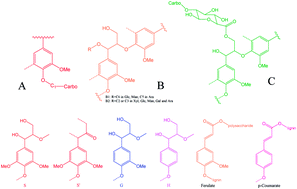
Lignin–carbohydrate complexes were quantitatively characterized by the combination of 13C and 1H–13C HSQC NMR. The representative linkages of LCCs and major lignin composing units were demonstrated in Fig. 1.
image file: c3ra47032f-f1.tif
Fig. 1 Lignin–carbohydrate complexes and typical lignin composing units: A: phenyl glycoside, B: benzyl ether, C: γ-ester; S: syringyl unit, G: guaiacyl unit, H: p-hydroxyphenyl unit, ferulate ester, and p-coumarate ester.

The proposed formulae was applied to calculate the amount of identified LCCs of the sample.20 Briefly, the integration of the cluster at δC 160–103 ppm in 13C NMR (Fig. 2b) was set as 612 as the base of all calculations, assigned to the resonance of the aromatic carbons including the α-carbonyl. Then, the integrations of three clusters at δC 103–96 ppm, δC 90–78 ppm and δC 65–58 ppm (Fig. 2b) were used as the internal references, assigned as phenyl glycoside, benzyl ether and γ-ester, respectively. Eventually, the value of the specific representative linkage of LCCs per 100C9 could be calculated. The contours at δC/δH 90–78/5.7–3.0 ppm, δC/δH 103–96/5.5–3.8 ppm and δC/δH 65–58/5.0–2.5 ppm in 1H–13C HSQC NMR (Fig. 2a) were the total resonances of the corresponding clusters used as internal references in 13C NMR. The chemical contours of benzyl ether, phenyl glycoside and γ-ester of LCCs were also shown in Fig. 2a. The amount of benzyl ether in LCCs was acquired from the signal of CH-α in the structure (B). Benzyl ether structures were subdivided into two parts: (a) the signal at δC/δH 80–81/4.4–4.6 ppm was assigned to the B1-linkage between the α-position of lignin and primary OH groups of carbohydrates (at C-6 of glucose, galactose, and mannose, and C-5 of arabinose) (b) another signal at δC/δH80–81/5.0–5.2 ppm was assigned to B2-linkages between the α-position of lignin and secondary OH groups of carbohydrates, mainly of lignin–xylan type.21–23 The signal of B1 overlapped with the signal of spirodienone (D) at δC/δH 81.2/5.10 ppm. However, the amount of spirodienone was quantified with the signal of CH-β at δC/δH 79–80/4.0–4.1 ppm.24,25 The amount of γ-ester was quantified by two parts: δC/δH 62–63/4.05–4.2 ppm and δC/δH 63–63.8/4.0–4.25 ppm.20 The signals of γ-ester (C) overlapped with the signals of lignin that was γ-acylated (e.g. p-coumarate ester).26–28 Phenyl glycoside (A) gave signals at δC/δH 100–103/4.0–4.8 ppm. A variety of signals indicated the involvement of different types of carbohydrates.


image file: c3ra47032f-f2.tif
Fig. 2 The extractive-free samples (a) 1H–13C HSQC NMR of stem; (b) 13C NMR of stem, cob and leaf.

The amount of LCCs of the sample was summarized in Table 5. Typically, only 3–5 LCCs/100C9 was quantified in woody samples.20,29 However, an unanticipated amount of LCCs (Table 5) was quantified in the extractive-free samples. For example, 17.6/100C9, 19.9/100C9 and 7.4/100C9 of LCCs were quantified in stem, cob and leaf, respectively. However, the amount of LCCs dramatically decreased after the alkaline treatment (Table 5). For example, the amount of LCCs of cob decreased from 22/100C9 to 2.5/100C9. This observation could be explained by the significant amount of p-coumarate and ferulate esters in the sample. p-Coumarate and ferulate esters were technically detected as γ-ester by 1H–13C HSQC. Therefore, the amount of LCCs of the sample was overestimated. However, these alkali-labile esters were easily removed by the alkaline treatment. Consequently, a significant decrease of LCCs was observed in the alkaline-treated sample (Table 5).

Table 5 Quantification of linkages of LCCs in MWLca
Linkages Extractive-free Acid precipitated
Stem Cob Leaf Stem Cob Leaf
a Values were based on 100C9, LCCs was the sum of linkages.
Benzyl ethers 1.5 2.1 1.3 1.5 0.7 0.9
Phenyl glycoside 1.6 1.5 1.3 0.3 0.4 0.3
γ-Esters 14.5 16.3 4.8 0.9 1.4 0.7
LCCs 17.6 19.9 7.4 2.7 2.5 1.9


Identification and quantification of lignin in CEL

Compared to the woody sample, the composing units of lignin of corn stover were more complicated involving of p-coumarate ester, ferulate ester, and p-hydrobenzaldehyde.14 Technically, four inter-unit linkages of lignin (Fig. 3) could be identified and quantified by 1H–13C HSQC NMR. However, the characterization of lignin could be interfered by p-coumarate and ferulate ester (Fig. 4). Meanwhile, the interference of carbohydrates on the characterization of lignin was also reported.20,28 Therefore, CEL was applied for lignin characterization because of a low carbohydrate content in this study (Fig. 5).
image file: c3ra47032f-f3.tif
Fig. 3 Main inter-unit linkages in lignin; (A): β-O-4′; (B): β-5′; (C): β-β′ and (D): β-1′ (spirodienone).

image file: c3ra47032f-f4.tif
Fig. 4 1H–13C HSQC spectrum of CEL (the extractive-free stem): (a) aliphatic oxygenated region; (b) aromatic region.

image file: c3ra47032f-f5.tif
Fig. 5 1H–13C HSQC spectrum of CEL (the alkaline treated stem): (a) aliphatic oxygenated region; (b) aromatic region.

Firstly, the intensive contours of the acylation of γ-OH of the samples were demonstrated in the aliphatic oxygenated region (Fig. 4a). Meanwhile, the intensive contours of p-coumarate and ferulate of samples were also identified in the aromatic region (Fig. 4b). The acylation degrees of γ-OH of the sample was summarized in Table 6. Generally, the significant acylation degree of γ-OH of the sample was comparable to the results of the previous study.13 For example, the acylation degree of γ-OH of stem, cob and leaf were quantified as 43, 47 and 25/100C9, respectively. However, the acylation degree of γ-OH of the sample dramatically decreased after the alkaline treatment. For example, the acylation of γ-OH of stem decreased from 43% to 2%.

Table 6 Main composing units and inter-unit linkages of lignina
Unit Extractive-free Alkaline-treated
Stem Cob Leaf Stem Cob Leaf
a Assuming β-O-4′, β-1′, β-β′ and β-5′ standing for 100% linkages in lignin; γ-acyl: γ-acylation.
β-O-4′/100C9 60 56 53 44 42 40
β-5′/100C9 27 28 29 43 40 43
β-β′/100C9 10 11 11 9 11 9
β-1′/100C9 3 5 7 4 7 8
γ-Acyl/100C9 43 47 25 2 2 3
S/G 1.3 1.5 0.7 1.1 1.3 0.6
H/G 0.2 0.5 0.3 0.2 0.4 0.3


Secondly, the inter-unit linkages of lignin were characterized with 1H–13C HSQC NMR (Table 6). Four identified inter-unit linkages were classified into C–O bond (non-condensed lignin) and C–C bond (condensed lignin). Generally, β-O-4′ the most abundant linkages ranged from 40% to 60% according to the samples. However, such ether bond could be cleaved by the alkaline treatment. For example, β-O-4′ of stem decreased from 60% to 44%. And, the linkages referring to condensed lignin (e.g. β-5′) increased in the alkaline-treated samples, correspondingly. For example, β-5′ in stem increased from 27% to 43%.

Finally, the lignin composing units and their changes induced by the alkaline treatment were characterized by 1H–13C HSQC NMR. It was demonstrated that the contours of aromatic parts of composing units (G and H units) were overlapped with the contours of aromatic parts of p-coumarate and ferulate esters (Fig. 4b). However, the values of syringyl to guaiacyl ratio (S/G) and p-hydroxyphenyl to guaiacyl ratio (H/G) were still calculated by using the reported assignments of the aromatic contour of each composing unit.30 The removal of p-coumarate esters and ferulate esters by the mild alkaline treatment could minimize their interferences on the characterizations of lignin. However, the alkaline treatment also resulted in the loss of a part of lignin. In contrast to the significant change of S/V and H/V induced by the alkaline treatment, little decrease of S/G and H/G of samples was quantified by 1H–13C HSQC NMR. It was demonstrated that S/G of stem only decreased from 1.3 to 1.1, but H/G changed little (Table 6). It had been convinced that NMR-based S/G values are accurate.31–33 In fact, there are simply no methods to independently acquire even the most basic structural information of lignin. For example, nitrobenzene oxidation only measures the S/V and H/V of releasable syringaldehyde and vanillin monomers from oxidative cleavage of the side chain. In contrast, NMR does profile the “entire” lignin (the isolated lignin) in principle including the condensed and the non-condensed parts of lignin. However, the isolation process induced in some level of degradation and errors associated the yield recovery, both of which could bias the information derived from the NMR spectra.

Conclusions

Generally, a significant amount of p-coumarate and ferulate esters was quantified by HPLC. The structural changes of lignin induced by the mild alkaline treatment were elucidated by alkaline nitrobenzene oxidation. Because of the removal of parts of non-condensed lignin, p-coumarate ester and ferulate ester, a decreasing yield of aldehydes, S/V, and H/V was quantified from the alkaline-treated samples. Lignin of the alkaline-treated samples was more condensed.

The occurrence of p-coumarate ester and ferulate ester in corn stover was confirmed by 1H–13C HSQC NMR. The structural changes of lignin induced by alkaline treatment were characterized. The ether bond (β-O-4′) was the most abundant linkage of the sample. The decrease of β-O-4′ and the increase of β-5′ indicated lignin became more condensed after the alkaline treatment. The acylation degree of the γ-OH of lignin also dramatically decreased due to the saponification of p-coumarate ester.

The structural variations and changes of LCCs of the samples were also characterized by 1H–13C HSQC NMR. An unanticipated amount of LCCs was quantified from the extractive-free sample because of the overestimation of γ-ester. The interference of p-coumarate and ferulate esters on the quantification of LCCs could be minimized by the alkaline treatment.

Acknowledgements

The authors appreciate the support of the NCBC (North Carolina Biotechnology Center) Collaborative Funding Grant (NC State and Novozymes North America Inc.) and the National Natural Science Foundation of China (31070512, 31370571). A project also was funded by the Priority Academic Program Development of Jiangsu Higher Education Institutions, PAPD.

Notes and references

  1. L. Lucia, Bioresearch, 2008, 3, 981 Search PubMed.
  2. M. Stocker, Angew. Chem., Int. Ed., 2008, 47, 2 CrossRef PubMed.
  3. R. P. Chandra, A. R. Esteghlalian and J. Saddler, Characterization of Lignocellulosic Materials, ed. T. Q. Hu, 2008, Blackwell, Oxford, UK, Ames, Iowa, USA, p. 61 Search PubMed.
  4. S. D. Mansfield, C. Mooney and J. N. Saddler, Biotechnol. Prog., 1999, 15, 804 CrossRef CAS PubMed.
  5. M. Hall, P. Bansal, J. H. Lee, M. J. Realff and A. S. Bommarius, FEBS J., 2010, 277, 1571 CrossRef CAS PubMed.
  6. C. A. Mooney, S. D. Mansfield, M. G. Touhy and J. N. Saddler, Bioresour. Technol., 1998, 64, 113 CrossRef CAS.
  7. C. L. Chen, Method of Lignin Chemistry, ed. S. Y. Lin and C. W. Dence, 1992, Spring-Verlag, Berlin, p. 301 Search PubMed.
  8. D.-Y. Min, S. W. Smith, H.-M. Chang and H. Jameel, Bioresearch, 2013, 8(2), 1790 Search PubMed.
  9. E. A. Capanema, M. Y. Balakshin and J. F. Kadla, J. Agric. Food Chem., 2004, 52, 1850 CrossRef CAS PubMed.
  10. A. Bjorkman, Sven. Papperstidn., 1956, 59, 477 CAS.
  11. H.-M. Chang, E. B. Cowling, W. Brown, E. Adler and G. Miksche, Holzforschung, 1975, 29(5), 153 CrossRef CAS.
  12. E. Adler, G. Brunow and K. Lundquist, Holzforschung, 1987, 41, 199 CrossRef CAS.
  13. A. U. Buranov and G. Mazza, Lignin in straw of herbaceous crops, Ind. Crops Prod., 2008, 28, 237 CrossRef CAS PubMed.
  14. J. Ralph, R. D. Hatfield, S. Quideau, R. F. Helm, J. H. Grabber and H.-J. G. Jung, J. Am. Chem. Soc., 1994, 116, 9448 CrossRef CAS.
  15. R. C. Sun, X. F. Sun, S. Q. Wang, W. Zhu and X. Y. Wang, Ind. Crops Prod., 2002, 15, 179 CrossRef CAS.
  16. A. V. Wacek and K. Kratzl, Cellul.-Chem., 1942, 20, 108 Search PubMed.
  17. A. V. Wacek and K. Kratzl, Chem. Ber., 1943, 76, 891 CrossRef.
  18. A. V. Wacek and K. Kratzl, Chem. Ber., 1944, 77, 516 CrossRef.
  19. A. V. Wacek and K. Kratzl, Oesterr. Chem.-Ztg., 1947, 48, 36 CAS.
  20. M. Y. Balakshin, E. A. Capanema, H. Gracz, H.-M. Chang and H. Jameel, Planta, 2011, 233(6), 1097 CrossRef CAS PubMed.
  21. T. Koshijima and T. Watanabe, Association between lignin and carbohydrates in wood and other plant tissues, Springer, Berlin, 2003 Search PubMed.
  22. T. Tokimatsu, T. Umezawa and M. Shimada, Holzforschung, 1996, 50, 156 CrossRef CAS.
  23. M. Toikka and G. Brunow, J. Chem. Soc., Perkin Trans. 1, 1999, 1, 1877 RSC.
  24. E. A. Capanema, M. Y. Balakshin and J. F. Kadla, J. Agric. Food Chem., 2005, 53, 9639 CrossRef CAS PubMed.
  25. L. M. Zhang, G. Gellerstedt, F. C. Lu and J. Ralph, J. Wood Chem. Technol., 2006, 26, 65 CrossRef CAS.
  26. A. T. Martínez, J. Rencoret, G. Marques, A. Gutiérrez, D. Ibarra, J. Jiménez-Barbero and J. C. del Río, Phytochemicals, 2008, 69, 2831 Search PubMed.
  27. J. Ralph, K. Lundquist, G. Brunow, F. Lu, H. Kim and P. F. Schatz, et al., Phytochem. Rev., 2004, 3, 29 CrossRef CAS.
  28. D. J. Yelle, J. Ralph and C. R. Frihart, Magn. Reson. Chem., 2008, 46, 508 CrossRef CAS PubMed.
  29. D. Y. Min, C. M. Yang, V. Chiang, H. Jameel and H.-M. Chang, Fuel, 2014, 116, 56 CrossRef CAS PubMed.
  30. H. Kim, J. Ralph and T. Akiyama, BioEnergy Res., 2008, 1, 56 CrossRef.
  31. J. M. Marita, W. Vermerris, J. Ralph and R. D. Hatfield, J. Agric. Food Chem., 2003, 51, 1313 CrossRef CAS PubMed.
  32. R. Vanholme, J. Ralph and T. Akiyama, et al., Plant J., 2010, 64, 885 CrossRef CAS PubMed.
  33. J. Ralph, T. Akiyama, H. D. Coleman and S. D. Mansfield, BioEnergy Res., 2012, 5, 1009 CrossRef CAS.

This journal is © The Royal Society of Chemistry 2014
Click here to see how this site uses Cookies. View our privacy policy here.