
D-amino acid doping peptide hydrogel for the production of a cell colony

Caiwen Ou a, Jianwu Zhanga, Yang Shib, Zhongyan Wangc, Ling Wangc, Zhimou Yang*b and Minsheng Chen*a
aDepartment of Cardiology, Zhujiang Hospital of Southern Medical University, Guangzhou 510280, P. R. China. E-mail: gzminsheng@vip.163.com
bState Key Laboratory of Medicinal Chemical Biology and College of Life Sciences, Nankai University, Collaborative Innovation Center of Chemical Science and Engineering (Tianjin), Tianjin 300071, P. R. China. E-mail: yangzm@nankai.edu.cn
cCollege of Pharmacy and Tianjin Key Laboratory of Molecular Drug Design, Nankai University, Tianjin 300071, P. R. China

Received 19th November 2013 , Accepted 23rd January 2014

First published on 23rd January 2014


Abstract

We report on a rationally designed D-amino acid doping peptide that can form hydrogels under neutral conditions and can be applied to form a cell colony of HeLa cells.

Peptide-based hydrogels1 have been demonstrated to be promising biomaterials for controlled release of bioactive molecules,2,3 cell culture,4 and regenerative medicine.5,6 In order to homogeneously encapsulate cells or proteins in hydrogels, biocompatible methodologies to trigger the formation of hydrogels hold advantages. Several biocompatible methods to form peptide-based hydrogels have been reported so far, including ionic strength change,7 enzyme triggeration,8 light irradiation,9 disulfide bond reduction,10 and ligand–receptor interaction.11 Among these methods, the one of ionic strength change is probably the most frequently used. It has been applied to form many hydrogels of peptides such as peptide amphiphiles,3 β-hairpin peptides,12 RADA16 peptide and its analogs,13 Q11 peptide and its analogs,6,14 and EFK8 peptide and its analogs.15 Based on the reported literature, most of these peptides can form clear solutions in pure water solution at neutral or near neutral condition. The hydrogels can then form upon mixing these pure water solutions of peptides with other higher ionic strength buffer solutions, such as phosphate buffer saline (PBS) and cell culture medium. However, EFK8 can only form pure water solution at acidic condition and then form homogeneous gels upon mixing with buffer solution also at acidic condition (usually pH around 3).16

Among the reported pure peptide-based (not those capped with aromatic capping groups) hydrogelators, EFK8 is one of the simplest and mostly investigated ones. However, it can only form hydrogels at acidic condition, which hinders its applications for such as cell culture. As shown in Fig. 1A, the EFK8 peptide exhibits the property of one side aromatic (phenylalanine (F) side chain) and the other side of alternative positive (lysine (K) side chain) and negative (glutamic acid (E) side chain) charges. The aromatic interaction between phenyl rings on Fs and positive–negative charge interaction between Es and Ks help to extend the supramolecular chain to form networks of nanofibers for hydrogelation. Due to the strong aggregation property in pure water solutions at neutral pH, it can only form clear solutions in acidic condition. Many efforts have been paid to develop EFK8 peptide derivatives that can form hydrogels at neutral condition. For example, Zhang and co-workers rationally altered the hydrophobic side-chains, the charged side-chains, and the number of repeats to create a self-assembling oligopeptide sequence that at pH of 7 remained viscous in the absence of salt but gelled in the presence of physiological salt concentrations.17 Nilsson et al. changed the amino acid of E on EFK8 to glutamine (Q) to reduce the charge interaction. They also replaced F with less aromatic and non-polar amino acids such as alanine (A) and valine (V) to reduce the aromatic interaction.18 These rational designs can reduce the aggregation property of the peptides in pure water solutions at neutral condition. Ulijn and co-workers recently used the enzyme of thermolysin to trigger the reverse-hydrolysis of the tetrapeptide of FEFK and subsequent gelation of ionic-complementary peptides at neutral condition.19 These efforts had led to the formation of hydrogels of peptides at neutral condition.


image file: c3ra46847j-f1.tif
Fig. 1 Chemical structures of (A) FEFKFEFK and (B) DFEFKDFEFK, molecular models of peptides at minimized energy condition by running MM2 in Chem3D (stop condition: minimum RMS = 0.05, (C) and (E): FEFKFEFK, (D) and (F): DFEFKDFEFK) (FEFKFEFK: the orientation of aromatic rings on F is similar and peptide side chains are on the same planar. DFEFKDFEFK: two aromatic rings on DF are not on the same planar with other peptide side chains and the orientation of aromatic rings on DF is different to that on F).

In this study, we reported on our strategy to form hydrogels of EFK8 peptide derivatives at neutral condition by replacement of F with DF and the introduction of a hydrophilic RGD tripeptide. We realized that the orientation of aromatic rings on F was similar and peptide side chains were on the same planar for EFK8 peptide (Fig. 1C and E). If replacing F with DF, it might decrease the strong aggregation potency of the peptide in pure water solution at neutral condition (in this study, at pH 7.4) because this strategy would change the original orientation of aromatic rings (Fig. 1D and F: two aromatic rings on DF were not on the same planar with other peptide side chains and the orientation of aromatic rings on DF was different to that on F). We firstly designed and synthesized a peptide of DFEFKDFEFK. However, it could not form clear solution in pure water at pH of 7.4 but dissolved only at acidic condition. We therefore synthesized the peptide of DFEFKDFEFKYRGD. The hydrophilic and bioactive peptide of RGD could further increase the solubility of the resulting peptide, and the Y could be labelled with radioactive 125I that would facilitate testing the in vivo stability of resulting hydrogels.

We found that DFEFKDFEFKYRGD peptide could form clear solutions in pure water at pH of 7.4. Hydrogels were then formed upon mixing the viscous solution with equal volume of 2× PBS (Fig. 2A, insrt). The minimum concentration needed for gelation for the peptide was about 0.15 wt%. As we reported before, the peptide FEFKFEFKGRGD could only form suspension in PBS at neutral conditions.20 These observations indicated that the aggregation potency of peptides in pure water at neutral condition could be decreased by both D-amino acid replacement and the attachment of a hydrophilic peptide. Peptides by replacing other F with DF (DFEFKFEDFKYRGD and FEFKDFEDFKYRGD) could not form clear solutions in pure water solution at pH 7.4 (Fig. S7). The mechanisms for these observations were needed to be studied in near future by us.


image file: c3ra46847j-f2.tif
Fig. 2 (A) TEM and the optical image of the gel (1.0 wt%), (B) the confocal image of the gel stained with Nile blue, (C) the dynamic frequency sweep of the gel at the strain value of 1%, and (D) recovery property of the gel (the gel was measured under dynamic time sweep for 3600 seconds (strain = 1% and frequency = 1 rad s−1). It was then subjected to a large strain of 100% for 300 seconds, following by measuring the recovery property at the strain value of 1% and frequency value of 1 rad s−1).

Transmission electron microscopy (TEM) image revealed filamentous structures with the size of about 40 nm in the hydrogel (Fig. 2A). Confocal image of the gel indicated a non-continuous network of small aggregates with size of about 10 μm (Fig. 2B). Rheological measurement with the mode of dynamic frequency sweep in Fig. 2C showed that the elasticity (G′) of the gel was about 100 Pa at the frequency range from 0.1 to 100 rad s−1. The gel formed after 1 h was subjected to a large amplified of strain (100%) for 300 seconds. The recovery property was then recorded at the strain of 1%. The results in Fig. 2D exhibited a fast recovery property of the hydrogel and the G′ value re-gained 90% of its original G′ value within 1 h. The good recovery property of the gel correlated well with its confocal image in Fig. 2B because it was reported that gels with non-continuous networks in confocal images would possess better recovery property than those with continuous networks.21

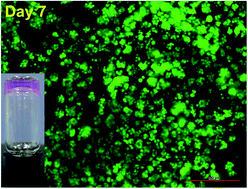
Since hydrogels of the peptide could form at pH of 7.4 in PBS and complete cell culture medium (Dulbecco's Modified Eagle's Medium (DMEM) with 10% of FBS, Fig. S10), we tested the possibility of the hydrogel for 3D cell culture. We mixed pure water solutions containing 2 wt% of the peptide with equal volume of complete cell culture medium containing 3 × 10⁶ per mL of HeLa cells, and the cell-gel constructs could form within 5 minutes (final peptide concentration = 1.0 wt% and cell density was 1.5 × 10⁶ per mL). As shown in Fig. 3A, the live–dead assay of cell-gel construct at day 1 indicated that most of cells were alive, which was showed in green dots. The results in Fig. 3A–D showed that the HeLa cells kept dividing but did not spread and remained as round shape during the 7 days culture period. It was very interesting that the cell number kept increasing during the 7 days culture period and HeLa cells grew into cell colonies. Many reports had demonstrated that cancer cell colony cultured on 3D scaffolds retained significantly more oncological character than those cultured on conventional 2D substrates.22 Therefore, HeLa cell colony in our peptide hydrogel might be used as in vitro tumor model for the evaluation of activity of anti-cancer drugs or drug candidates.


image file: c3ra46847j-f3.tif
Fig. 3 Live–dead assay (live cells are in green and dead ones are in red) and fluorescence microscopy images of HeLa cells cultured in gel (1.0 wt%) at different time points (10×).

The cell proliferation rate of HeLa cells in hydrogels with different concentrations of peptide was also determined (Fig. S11). The results indicated that cell-gel constructs with three concentrations of the peptide (0.3, 0.5, and 1 wt%) behaved similar in the cell proliferation rate. For cell-gel constructs at peptide concentration of 1.0 wt%, the OD value was 144%, 363%, 620% higher at day 3, day 5, and day 7 than that at day 1, respectively. These results suggested that our peptide hydrogels could assist the efficient division of HeLa cells, which was consistent with the results shown in Fig. 3A–D.

We also evaluated the in vivo stability of peptide hydrogels with different peptide concentrations. The peptide with radio-active iodination (DFEFKDFEFKI*YRGD) was incorporated into the gels and the resulting gels were then injected into the subcutaneous space of mice. The in vivo stability of the hydrogels was determined by measuring the radioactive signals from the injection sites. The results indicated that less than 10% of peptides remained in the injection sites after 24 h (Fig. S13 and S14) even for the hydrogel containing 1.0 wt% of the peptide. For hydrogels at lower concentrations of peptides, less than 2% of radioactive signals were detected at 24 h time point (Fig. S13 and S14). These results suggested a fast clearance and rapid degradability of the hydrogels in vivo. The fast clearance of hydrogels were probably due the injection-caused fragmentation of peptide hydrogels and the existence of digestion enzymes.

In summary, we reported on a rationally designed peptide that could form hydrogels at neutral condition. The hydrogels could be applied for the production of cell colony of HeLa cells. Many literature have indicated that in vitro cultured cancer cells with colony morphology behaved more similar to cancer cells in vivo (in tumors) than individual cancer cells obtained by conventional 2D culture method. Materials that can be used to produce cancer cell colonies are also important for the evaluation of anti-cancer drugs. Though our hydrogel showed a fast clearance in vivo, the hydrogel might be very promising for the production of colonies of different cells in vitro. The production of cell colony of different cells will be promising for regenerative medicine and cell therapy. This possibility will be testified by us in near future.

Acknowledgements

This work is supported by NSFC (51003049 and 31271053) and Tianjin MSTC (12JCYBJC11300).

Notes and references

  1. J. W. Steed, Chem. Commun., 2011, 47, 1379 RSC; L. A. Estroff and A. D. Hamilton, Chem. Rev., 2004, 104, 1201 CrossRef CAS PubMed; J. H. Collier, J. S. Rudra, J. Z. Gasiorowski and J. P. Jung, Chem. Soc. Rev., 2010, 39, 3413 RSC; Y. Gao, F. Zhao, Q. Wang, Y. Zhang and B. Xu, Chem. Soc. Rev., 2010, 39, 3425 RSC; R. V. Ulijn and A. M. Smith, Chem. Soc. Rev., 2008, 37, 664 RSC; H. Wang, Z. Yang and D. J. Adams, Mater. Today, 2012, 15, 500 CrossRef; H. Wang and Z. Yang, Nanoscale, 2012, 4, 5259 RSC; Y. Li, Y. Ding, M. Qin, Y. Cao and W. Wang, Chem. Commun., 2013, 49, 8653 RSC.
  2. X. D. Xu, L. A. Liang, C. S. Chen, B. Lu, N. L. Wang, F. G. Jiang, X. Z. Zhang and R. X. Zhuo, ACS Appl. Mater. Interfaces, 2010, 2, 2663 Search PubMed; A. G. Cheetham, P. Zhang, Y.-A. Lin, L. L. Lock and H. Cui, J. Am. Chem. Soc., 2013, 135, 2907 CrossRef CAS PubMed; J. Li, Y. Kuang, Y. Gao, X. Du, J. Shi and B. Xu, J. Am. Chem. Soc., 2012, 135, 542 CrossRef PubMed; X. Li, J. Li, Y. Gao, Y. Kuang, J. Shi and B. Xu, J. Am. Chem. Soc., 2010, 132, 17707 CrossRef PubMed.
  3. S. Soukasene, D. J. Toft, T. J. Moyer, H. Lu, H.-K. Lee, S. M. Standley, V. L. Cryns and S. I. Stupp, ACS Nano, 2011, 5, 9113 CrossRef CAS PubMed.
  4. V. Jayawarna, M. Ali, T. A. Jowitt, A. E. Miller, A. Saiani, J. E. Gough and R. V. Ulijn, Adv. Mater., 2006, 18, 611 CrossRef CAS; J. P. Jung, A. K. Nagaraj, E. K. Fox, J. S. Rudra, J. M. Devgun and J. H. Collier, Biomaterials, 2009, 30, 2400 CrossRef PubMed.
  5. J. S. Rudra, T. Sun, K. C. Bird, M. D. Daniels, J. Z. Gasiorowski, A. S. Chong and J. H. Collier, ACS Nano, 2012, 6, 1557 CrossRef CAS PubMed; R. N. Shah, N. A. Shah, M. M. Del Rosario Lim, C. Hsieh, G. Nuber and S. I. Stupp, Proc. Natl. Acad. Sci. U. S. A., 2010 Search PubMed; H. Yokoi, T. Kinoshita and S. G. Zhang, Proc. Natl. Acad. Sci. U. S. A., 2005, 102, 8414 CrossRef PubMed; J. B. Matson and S. I. Stupp, Chem. Commun., 2012, 48, 26 RSC.
  6. J. S. Rudra, Y. F. Tian, J. P. Jung and J. H. Collier, Proc. Natl. Acad. Sci. U. S. A., 2010, 107, 622 CrossRef CAS PubMed.
  7. I. M. Geisler and J. P. Schneider, Adv. Funct. Mater., 2012, 22, 529 CrossRef CAS.
  8. A. R. Hirst, S. Roy, M. Arora, A. K. Das, N. Hodson, P. Murray, S. Marshall, N. Javid, J. Sefcik, J. Boekhoven, J. H. van Esch, S. Santabarbara, N. T. Hunt and R. V. Ulijn, Nat. Chem., 2010, 2, 1089 CrossRef CAS PubMed.
  9. Z. J. Qiu, H. T. Yu, J. B. Li, Y. Wang and Y. Zhang, Chem. Commun., 2009, 3342 RSC.
  10. C. Ren, Z. Song, W. Zheng, X. Chen, L. Wang, D. Kong and Z. Yang, Chem. Commun., 2011, 47, 1619 RSC; C. J. Bowerman and B. L. Nilsson, J. Am. Chem. Soc., 2010, 132, 9526 CrossRef CAS PubMed.
  11. X. L. Zhang, X. L. Chu, L. Wang, H. M. Wang, G. L. Liang, J. X. Zhang, J. F. Long and Z. M. Yang, Angew. Chem., Int. Ed., 2012, 51, 4388 CrossRef CAS PubMed.
  12. C. Sinthuvanich, A. S. Veiga, K. Gupta, D. Gaspar, R. Blumenthal and J. P. Schneider, J. Am. Chem. Soc., 2012, 134, 6210 CrossRef CAS PubMed.
  13. H. Yokoi, T. Kinoshita and S. G. Zhang, Proc. Natl. Acad. Sci. U. S. A., 2005, 102, 8414 CrossRef CAS PubMed.
  14. J. S. Rudra, S. Mishra, A. S. Chong, R. A. Mitchell, E. H. Nardin, V. Nussenzweig and J. H. Collier, Biomaterials, 2012, 33, 6476 CrossRef CAS PubMed.
  15. Y. Wang, L. M. Zhao and B. M. Hantash, Biomaterials, 2010, 31, 5122 CrossRef CAS PubMed; A. Mujeeb, A. F. Miller, A. Saiani and J. E. Gough, Biomaterials, 2013, 9, 4609 CrossRef PubMed.
  16. E. J. Leon, N. Verma, S. Zhang, D. A. Lauffenburger and R. D. Kamm, J. Biomater. Sci., Polym. Ed., 1998, 9, 297 CrossRef CAS PubMed; D. M. Marini, W. Hwang, D. A. Lauffenburger, S. Zhang and R. D. Kamm, Nano Lett., 2002, 2, 295 CrossRef; W. Hwang, D. M. Marini, R. D. Kamm and S. Zhang, J. Chem. Phys., 2003, 118, 389 CrossRef PubMed.
  17. M. R. Caplan, E. M. Schwartzfarb, S. Zhang, R. D. Kamm and D. A. Lauffenburger, Biomaterials, 2002, 23, 219 CrossRef CAS.
  18. C. J. Bowerman and B. L. Nilsson, Biopolymers, 2012, 98, 169 CrossRef CAS PubMed; C. J. Bowerman, W. Liyanage, A. J. Federation and B. L. Nilsson, Biomacromolecules, 2011, 12, 2735 CrossRef PubMed; R. J. Swanekamp, J. T. M. DiMaio, C. J. Bowerman and B. L. Nilsson, J. Am. Chem. Soc., 2012, 134, 5556 CrossRef PubMed; C. J. Bowerman, D. M. Ryan, D. A. Nissan and B. L. Nilsson, Mol. BioSyst., 2009, 5, 1058 RSC.
  19. J.-B. Guilbaud, E. Vey, S. Boothroyd, A. M. Smith, R. V. Ulijn, A. Saiani and A. F. Miller, Langmuir, 2010, 26, 11297 CrossRef CAS PubMed.
  20. X. Du, Z. D. Wu, J. F. Long and L. Wang, RSC Adv., 2013, 3, 18259 RSC.
  21. J. Raeburn, G. Pont, L. Chen, Y. Cesbron, R. Levy and D. J. Adams, Soft Matter, 2012, 8, 1168 RSC.
  22. S. I. Shin, V. H. Freedman, R. Risser and R. Pollack, Proc. Natl. Acad. Sci. U. S. A., 1975, 72, 4435 CrossRef CAS; M. A. Cifone and I. J. Fidler, Proc. Natl. Acad. Sci. U. S. A., 1980, 77, 1039 CrossRef; S. Mori, J. T. Chang, E. R. Andrechek, N. Matsumura, T. Baba, G. Yao, J. W. Kim, M. Gatza, S. Murphy and J. R. Nevins, Oncogene, 2009, 28, 2796 CrossRef PubMed.

Footnotes

Electronic supplementary information (ESI) available: Hydrogel preparation, rheology, CD spectra, FTIR spectra, in vivo stability study, and detail experimental procedure. See DOI: 10.1039/c3ra46847j
The authors pay equal contributions to this work.

This journal is © The Royal Society of Chemistry 2014
Click here to see how this site uses Cookies. View our privacy policy here.