Indirect-to-direct band gap transition of the ZrS2 monolayer by strain: first-principles calculations

Yan Li, Jun Kang and Jingbo Li*
State Key Laboratory of Superlattice and Microstructures, Institute of Semiconductors, Chinese Academy of Sciences, Beijing 100083, China. E-mail: jbli@semi.ac.cn

Received 24th October 2013 , Accepted 22nd November 2013

First published on 22nd November 2013


Abstract

The elastic, electronic and optical properties of the ZrS2 monolayer and the effects of different kinds of in-plane strains on its electronic structure are investigated using first-principles method. By analyzing the strain–energy relationship we show that the ZrS2 monolayer has a Poisson's ratio of 0.22 and an in-plane stiffness of 75.74 N m−1. The band structures of the ZrS2 monolayer calculated using both generalized gradient approximation and hybrid functional present an indirect band gap feature. The optical properties of the ZrS2 monolayer exhibit strong anisotropy. In the low-energy region, the perpendicular dielectric function dominates while in the high-energy range both perpendicular and parallel polarizations contribute. Moreover, strain has significant influence on the band structure. It is found that the band gap of the ZrS2 monolayer can be continuously modified from zero to 2.47 eV always with an indirect band gap under symmetrical strain in the elastic regime. Remarkably, an indirect-to-direct band gap transition has been observed when the uniaxial strain is applied to the monolayer along either the zigzag or armchair directions.

1 Introduction

The discovery of graphene in 2004 (ref. 1) has set off a new wave of research on two-dimensional (2D) materials, such as graphyne,2,3 silicene,4,5 boron nitride (BN),6,7 and transition metal dichalcogenide (TMD) monolayers.8–10,13 These 2D materials not only open up new physics, but also provide many appealing opportunities for industrial applications including a new generation of transistors, photoemitting devices, hydrogen storage, and spintronics.10–15 Graphene, due to the 2D honeycomb network and sp2 hybridized orbitals, is one of the strongest materials ever tested.16 The unique electronic properties, for instance, the half-integer quantum Hall effect, mass-less carriers, high migration rate and saturation velocity,1,17 suggest that graphene has great potential for ultrahigh-speed electronics.18–21 However, graphene has zero band gap, which means it is not feasible for use in a field-effect transistor (FET). Subsequently, various kinds of methods haven been proposed in order to open the band gap of graphene, such as by applying in-plane strain22,23 or external electric field combined with chemical modification.24–27 On the other hand, 2D semiconductor materials formed by layered TMDs have a natural band gap, and recent progress on a TMD-monolayer-based FET12 have stimulated great research interests. Each TMD layer consists of three atomic layers: a transition metal (M) layer sandwiched between two chalcogen (X) layers, forming the hexagon with M and X atoms alternately situated at the corners. In bulk MX2, these molecular layers are held together by weak van der Waals (vdW) interactions with the Bernal stacking similar to graphite. Interesting, MoX2 and WX2 undergo an indirect-to-direct band gap transition when the dimensionality decreases from 3D to 2D, with the band gaps ranging from 1.5 to 2.0 eV,28,29 which are suitable for optoelectronic applications and in devices for energy harvesting.12,14,30,31 Recently, a new 2D TMD, the ZrS2 monolayer, has been synthesized experimentally.32 ZrS2-based FET devices with ultrafast response times and ultrahigh responsivity have been fabricated to study its electrical transport properties.33 Subsequently, the same authors have also demonstrated that ZrS2 nanostructures can be promising candidates for large-area solar cell applications with high short-circuit currents.34 However, further developments and applications of 2D ZrS2 are hampered by the absence of a systematic research work on 2D ZrS2. Many properties of ZrS2, such as in-plane stiffness and Poisson's ratio, optical reflection and adsorption coefficients, and strain effects on the band structure, which are important for material design, remains unclear. Therefore, a theoretical study on these properties is urgently needed. Moreover, the complicated and versatile electronic structures of 2D TMD monolayers inspire us to believe that the ZrS2 monolayer deserves specific attention.

In this work, we systematically investigate the elastic, electronic and optical properties of the ZrS2 monolayer and the intercoupling between strain and its electronic properties by means of density functional theory calculations. The Poisson's ratio and in-plane stiffness of the pristine ZrS2 monolayer are calculated. The band structure of the ZrS2 monolayer is studied using both GGA and HSE06. The frequency-dependent dielectric function ε, reflectivity R and adsorption coefficient I are computed to study the optical properties of the ZrS2 monolayer. Furthermore, interesting variations of the band structures under different kinds of in-plane strains are observed. The mechanisms for these changes are discussed in detail.

2 Computational method

The calculations were performed using the projector augmented wave (PAW) method35 with the generalized gradient approximation of Perdew–Burke–Ernzerhof (GGA-PBE)36 exchange-correlation functional and the Heyd–Scuseria–Ernzerhof (HSE06) hybrid functional,37 as implemented in the Vienna ab initio simulation package (VASP).38 The energy cutoff for plane-wave expansion was set to 400 eV. A large vacuum layer of 12 Å was adopted to prevent the interaction between adjacent images. Brillouin zone (BZ) sampling was performed with Monkhorst Pack (MP) special k points meshes.39 A k-points grid of 12 × 12 × 1 was chosen for the calculations. All the structures were fully relaxed using the conjugated gradient method until the Hellmann–Feynman force on each atom was less than 0.01 eV Å−1.

3 Results and discussion

3.1 Structural and elastic properties

ZrS2 crystallizes in the simplest 1T-CdI2 type structure in which octahedrally-coordinated sandwich layers are stacked with a periodicity of one layer and a globally D3d point-group symmetry. We calculate the properties of the bulk ZrS2 first to test the reliability and accuracy of our method. Table 1 lists our test results along with other calculations and experimental values. Our results for bulk ZrS2 are in agreement with earlier calculations40–42 in the matter of band structure and band gap. The slight difference of the band gap between ref. 40 and ours may be due to different computational accuracy and the calculation packages adopted in the calculations. The ZrS2 monolayer is a hexagonal lattice with two S atoms and one Zr atom per unit cell and a lattice basis defined by the vectors ([a with combining right harpoon above (vector)]1, [a with combining right harpoon above (vector)]2), as shown in Fig. 1(a). Two inequivalent crystallographic directions can be defined: the so-called armchair and zigzag directions, corresponding to x and y axes, respectively, also shown in Fig. 1(a).
Table 1 The test results of bulk ZrS2 (the hexagonal lattice constants a and c (Å), the Zr–S bond length d (Å), the locations of VBM and CBM, and the indirect band gap Eg (eV)) as compared to previous results
  a c d VBM CBM Eg
a Ref. 41.b Ref. 42.
Test 3.690 6.494 2.58 Γ L 1.04
Ref. 40 3.687 6.659 2.58 Γ L 0.79
Experimental 3.661a 5.815a 1.68a, 1.7b


image file: c3ra46090h-f1.tif
Fig. 1 (a) Schematic representation of the ZrS2 monolayer. The rectangular and rhombic shadows present the unit cells used to calculate the elastic and electronic properties, respectively. The green and yellow balls denote Zr and S, respectively. (b) The grid of data points (εa, εz) and the contours of total energy. (c) The three-dimensional plot of (εa, εz) and corresponding total energy.

The elastic property of ZrS2 monolayer is described by two parameters: in-plane stiffness C and Poisson's ratio ν, which can be calculated by fitting the strain–energy relationship of the TMD monolayer, as described in ref. 43. The in-plane stiffness C can be defined as the second derivative of the total energy with respect to the strain at the equilibrium area, as specifically for two-dimensional systems, that is C = (1/S0)(∂2E/∂ε2), where S0 is the equilibrium area, E is the total energy, and ε is uniaxial strain (ε = Δa/a). The other parameter, Poisson's ratio ν, is the ratio of transverse strain and axial strain, namely, ν = −εtrans/εaxial. In order to calculate the elastic constants, we construct a rectangular unit cell of ZrS2, which contains two ZrS2 molecules, as seen in Fig. 1(a). az and aa are the lattice constants along the zigzag and armchair directions, respectively. The two lattice constants are changed under the strain values between −0.02 and +0.02 with an increment of 0.01, as shown in Fig. 1(b). For each grid point, the structure is fully optimized and the total energy is calculated, as presented in Fig. 1(c). Following ref. 43, the data is fitted to the formula E = a1εa2 + a2εz2 + a3εaεz + E0, where εa and εz are the strain along the armchair and zigzag directions, respectively, and E0 is the total energy of the equilibrium configuration. Due to the isotropy in the honeycomb symmetry, a1 is equal to a2. By fitting the data, we get the specific formula E = 54.78εa2 + 54.78εz2 + 21.35εaεz − 42.70. Assuming that the monolayer is under an uniaxial strain along the zigzag direction, the plane will spontaneously present a strain along the armchair direction due to the intrinsic properties of the material. The strain εa satisfies the expression ∂E/∂εa = 0, from which one obtains the Poisson's ratio ν = −εa/εz = a3/2a1 and the in-plane stiffness C = (1/S0)(2a1a32/2a1). Hence the Poisson's ratio of the ZrS2 monolayer is 0.22 and its in-plane stiffness is 75.74 N m−1.

3.2 Electronic and optical properties

The band structure and partial density of states (PDOS) of the ZrS2 monolayer are shown in Fig. 2. The general features of the band structures calculated by PBE and HSE06 are similar, except that the band gap calculated by HSE06 is much larger. The valence band maximum (VBM) and the conduction band minimum (CBM) are located at Γ and M, respectively, resulting in an indirect band gap of 1.12 eV for PBE and 1.93 eV for HSE06. The direct band gap of ΓΓ is 1.63 eV for PBE (2.53 eV for HSE06). As the band gap of bulk ZrS2 is around 1.7 eV,41,42 the indirect band gap of ZrS2 monolayer would be between 1.7 and 1.93 eV considering the quantum confinement effect for 2D systems. The band structure of the ZrS2 monolayer can be divided into three main groups according to the angular momentum character identified from the PDOS of ZrS2 (Fig. 2(b)). The first group between −6 and −2 eV mainly stems from S p states, Zr p and d states. A strong hybridization between Zr d and S p states is found here. The second group between −2 eV and the Fermi level (Ef) is composed of S p states and a small part of Zr d states. The third group from 1 eV and above has contributions mostly from Zr d states and a little from S p states.
image file: c3ra46090h-f2.tif
Fig. 2 (a) The band structure of the ZrS2 monolayer. The black lines and red dots present the band distributions calculated by PBE and HSE06, respectively. Ef is set at the VBM. (b) The PDOS of the ZrS2 monolayer calculated by PBE only.

Due to the hexagonal symmetry, the dielectric tensor only has two independent components, namely, ε and ε, corresponding to the electric vectors [E with combining right harpoon above (vector)] parallel and perpendicular to the c-axis, respectively. The real and imaginary parts of the frequency-dependent dielectric functions are calculated by HSE06 following the method in ref. 44, then the frequency-dependent reflectivity R and adsorption coefficient I are computed following the expressions in ref. 45. Strong anisotropy is observed between the imaginary parts of dielectric functions ε2 and ε2 (Fig. 3(a)). While ε2 dominates in the low-energy region (0 to 6 eV), both polarizations contribute in the higher energy region (above 6 eV). The variations of reflectivity and adsorption coefficients as the function of frequency also exhibit similar trends, as illustrated in Fig. 3(b) and (c). The spectra from 2 to 8 eV in Fig. 3(a) originate from the interband transitions between S p states (the second energy group) and Zr d states (the third energy group), and the spectra in the higher energy region (above 8 eV) are from the interband transitions from S p and Zr d states (the first energy group) to Zr d states (the third energy group).


image file: c3ra46090h-f3.tif
Fig. 3 Calculated optical properties of the ZrS2 monolayer: (a) Imaginary part of the dielectric function ε2. (b) Reflectivity R. (c) Adsorption coefficient I.

3.3 Electronic properties of the ZrS2 monolayer under strain

Direct band gap materials are usually preferred as photovoltaic materials due to the high efficiency of direct transition. However, the pristine ZrS2 monolayer is an indirect band gap material. Nevertheless, it is well established that strain can efficiently modify the band structures of low dimensional materials. Hence, we investigate the influence of in-plane strain on the band structure modulation of ZrS2. Three kinds of in-plane strains are applied to the ZrS2 monolayer: (i) uniform strain, εu; (ii) uniaxial strain along the zigzag direction, εz; (iii) uniaxial strain along the armchair direction, εa. As the lattice vectors are changed upon straining a ZrS2 monolayer, the associated reciprocal vectors ([g with combining right harpoon above (vector)]1, [g with combining right harpoon above (vector)]2) are affected accordingly. Fig. 4 presents the Brillouin zone (BZ) of the ZrS2 monolayer under strain. The irreducible BZ of ZrS2 under uniform strain remains unchanged, as the hexagonal symmetry is saved. For the ZrS2 monolayer under uniaxial strain along either the zigzag or armchair directions, the structure of the BZ is deformed as the hexagonal symmetry is degenerated to rhombic symmetry, and the irreducible BZ evolves into a right angle trapezoid from the original triangular shape. Moreover, the high-symmetry k-points increase from three (Γ, K, M) to five (Γ, K, M, R, S).
image file: c3ra46090h-f4.tif
Fig. 4 BZ of the ZrS2 monolayer under (a) uniform strain (b) uniaxial strain along the zigzag direction (c) uniaxial strain along the armchair direction. The shaded areas are the corresponding irreducible BZ.

The electronic structure of the ZrS2 monolayer is computed for each deformed configuration by means of PBE and HSE06. For uniform strain, the strain ranges from −10% to 15% with an increment of 1%, namely, both compressive strain and tensile strain are applied. Fig. 5(a) presents the variations of band gap (Eg) and the energy difference (ΔE) between deformed and undeformed ZrS2 monolayers as functions of uniform strain. ΔE increases monotonously for both tensile and compressive strains, suggesting that the system is in the range of elastic deformation. Eg decreases almost linearly with the increasing compressive strain for both PBE and HSE06. When the strain reaches −10%, the band gap closes up. The VBM and CBM of the ZrS2 monolayer overlap and it becomes semi-metal. For compressive strain from −1% to −10%, the VBM and the CBM are located at Γ and M, respectively, without changing. In the case of tensile strain, Eg increases almost linearly when the applied strain ranges from 1% to 7%, then decreases monotonously from 8% to 15%. While the VBM gradually moves from Γ to the middle between Γ and K, denoted as X in Fig. 5(b), the CBM moves from M to Γ. When the strain gradually changes from the maximum compressive strain (εu = −10%) to the maximum tensile strain (εu = 15%), the band structures of the ZrS2 monolayer exhibit some notable features. It can be noted that the eigenstates of the conduction bands decrease with decreasing compressive strain or increasing tensile strain, i.e., all conduction bands move downwards, while the valence bands present the opposite variation trend. In addition, the width of each band decreases due to the decreasing orbital overlap resulting from the increasing Zr–S bond length, which means that the electrons become more localized during the tensile process. The variations of energy eigenvalues of the highest valence band (HVB) and the lowest conduction band (LCB) at some specific k-points under different uniform strains are investigated, as illustrated in Fig. 5(c). We note that the two bands at different high symmetry points shift with different rates of change. More specifically, the descent rate of the HVB at Γ point is much faster than that at X point with decreasing compressive strain, and when εu = 5%, the X point becomes higher than the Γ point, which accounts for the shift of the VBM. While the eigenvalue of the LCB at Γ point decreases with decreasing compressive strain and increasing tensile strain, that of the LCB at M point increases, and when εu = 6%, the Γ point becomes lower than the M point, which accounts for the shift of the CBM. In the pristine ZrS2 monolayer, while the VBM (at Γ point) is composed of S px and py orbitals, the HVB at the X point is composed of S pz and py orbitals. While the CBM (at M point) is composed mostly of Zr dz2, dxy orbitals and S pz orbitals, as well as a small part of Zr dxy and dxz orbitals, the LCB at Γ point is composed mainly of Zr dxy, dyz, dxz and dx2y2 orbitals. Therefore, the HVB at Γ point has much more x and y orbitals of p electrons than at the X point, and the HVB at X point has much more z orbitals of p electrons than at the Γ point. The LCB at Γ point has much more x and y orbitals of d electrons than at the M point, and the LCB at M point has much more z orbitals of p and d electrons than at the Γ point. As the strain is applied along the xy-plane, it is reasonable to deduce that the x and y orbitals are more sensitive to the in-plane strain than the z orbitals. Therefore, the states composed of more x and y orbitals will experience a faster change rate than the k-points composed of more z orbitals under in-plane strain. In other words, the different rates of change of the bands at different high-symmetry k-points can be explained by the different strain response rates corresponding to diverse orbital components.


image file: c3ra46090h-f5.tif
Fig. 5 (a) Variations of Eg and ΔE between the deformed and undeformed ZrS2 monolayer as functions of uniform strain. (b) Band structures of the ZrS2 monolayer under uniform strain. (c) Variations of energy eigenvalues of the HVB and LCB at some specific k-points as functions of uniform strain. The VBM of a pristine ZrS2 monolayer is set to zero as the reference energy point after the vacuum level has been aligned for all calculations.

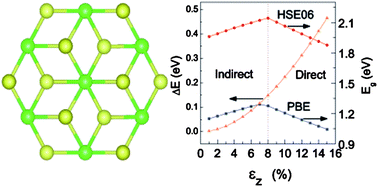
In the case of uniaxial strain, the band structure changes remarkably. The strain ranging from 1% to 15% with an increment of 1% is taken into consideration for both zigzag and armchair directions. The variations of Eg and ΔE between deformed and undeformed ZrS2 monolayers as functions of zigzag strain are shown in Fig. 6(a), and the band alignments are presented in Fig. 6(b). When εz < 8%, Eg increases with the applied strain, and the VBM and CBM are located at Γ and M points, respectively. When εz ≥ 8%, the CBM moves to Γ point, and the monolayer becomes a direct band gap material. But Eg decreases with the increasing strain in this case. When armchair strain is applied, the band structure also undergoes an indirect-to-direct band gap transition at εa = 8% and Eg also increases with the strain when εa < 8%, then decreases when εa ≥ 8%. Since zigzag and armchair strains have similar effects, in the following we'll mainly focus on the former. Fig. 6(c) illustrates the variations of energy eigenvalues of the HVB and LCB at different k-points as functions of zigzag strain. The states at the X point have lower energy than that of Γ for strain εz < 15%, thus the VBM remains unchanged. The LCB at the Γ point demonstrates a fast descent trend, while the LCB at M point exhibits a rising trend, which results in the change of the CBM. The lost hexagonal symmetry induced by the uniaxial strain causes the change of orbital components at the high-symmetry k-points, thus bringing about the different strain response rates, which accounts for the indirect-to-direct band gap transitions. The feature that the band gap of monolayer ZrS2 can be modified within a wide range (0 to 2.47 eV for HSE06) by in-plane strain makes it a promising material for the solar cells because the band gaps match well with the range of visible light. In addition the monolayer can have a direct band gap under uniaxial strain.


image file: c3ra46090h-f6.tif
Fig. 6 (a) Variations of Eg and ΔE between deformed and undeformed ZrS2 monolayers as functions of zigzag strain. (b) Band structures of the ZrS2 monolayer under zigzag tensile strain. (c) Variations of the energy eigenvalues of the HVB and LCB at some specific k-points as functions of zigzag strain. The VBM of a pristine ZrS2 monolayer is set to zero as the reference energy point after the vacuum level has been aligned for all calculations.

4 Conclusion

In summary, we have studied the elastic, electronic and optical properties of the ZrS2 monolayer and the influence of different kinds of in-plane strains on the band structure by first-principles calculations. The Poisson's ratio and the in-plane stiffness of the ZrS2 monolayer computed by fitting the strain–energy relationship of the ZrS2 monolayer are 0.22 and 75.74 N m−1, respectively. The optical properties of the ZrS2 monolayer are found to be strongly anisotropic. The perpendicular dielectric function has much larger values than the parallel one in the low-energy region, while they are similar in the high-energy region. The pristine ZrS2 monolayer has an indirect band gap with the CBM and VBM located at M and Γ, respectively. When a symmetrical uniform strain is applied to the monolayer, the band structure of the ZrS2 monolayer is remarkably modified and the band gap can be tuned from 0 to 2.47 eV for −10% < εu < 15%. When the uniaxial strain is applied along the zigzag or armchair direction, an indirect-to-direct band gap transition is observed for εz(a) > 8%. The direct band gaps range from 1.8 to 2.2 eV, which offers great opportunities for industrial applications.

Acknowledgements

J. Li gratefully acknowledges financial support from the Natural Science Foundation for Distinguished Young Scholar (Grant no. 60925016 and 91233120). This work was supported by the National Basic Research Program of China (Grant no. 2011CB921901) and the External Cooperation Program of Chinese Academy of Sciences.

References

  1. K. S. Novoselov, A. K. Geim, S. V. Morozov, D. Jiang, Y. Zhang, S. V. Dubonos, I. V. Grigorieva and A. A. Firsov, Science, 2004, 306, 666 CrossRef CAS PubMed .
  2. D. Malko, C. Neiss, F. Viñes and A. Görling, Phys. Rev. Lett., 2012, 108, 086804 CrossRef .
  3. B. G. Kim and H. Joon, Phys. Rev. B: Condens. Matter Mater. Phys., 2012, 86, 115435 CrossRef .
  4. C. C. Liu, W. X. Feng and Y. Yao, Phys. Rev. Lett., 2011, 107, 076802 CrossRef .
  5. P. Vogt, P. D. Padova, C. Quaresima, J. Avila, E. Frantzeskakis, M. C. Asensio, A. Resta, B. Ealet and G. L. Lay, Phys. Rev. Lett., 2012, 108, 155501 CrossRef .
  6. K. Watanabe, T. Taniguchi and H. Kanda, Nat. Mater., 2004, 3, 404 CrossRef CAS PubMed .
  7. G. Giovannetti, P. A. Khomyakov, G. Brocks, P. J. Kelly and J. van den Brink, Phys. Rev. B: Condens. Matter Mater. Phys., 2007, 76, 073103 CrossRef .
  8. K. S. Novoselov, D. Jiang, F. Schedin, T. J. Booth, V. V. Khotkevich, S. V. Morozov and A. K. Geim, Proc. Natl. Acad. Sci. U. S. A., 2005, 102, 10451 CrossRef CAS PubMed .
  9. A. R. Botello-Méndez, F. López-Urías, M. Terrones and H. Terrones, Nanotechnology, 2009, 20, 325703 CrossRef PubMed .
  10. Q. H. Wang, K. K. Zadeh, A. Kis, J. N. Coleman and M. S. Strano, Nat. Nanotechnol., 2012, 7, 699 CrossRef CAS PubMed .
  11. Q. Peng, C. Liang, W. Ji and S. De, Phys.Chem. Chem. Phys., 2013, 15, 2003 RSC .
  12. B. Radisavljevic, A. Radenovic, J. Brivio, V. Giacometti and A. Kis, Nat. Nanotechnol., 2011, 6, 147 CrossRef CAS PubMed .
  13. S. Tongay, J. Zhou, C. Ataca, J. Liu, J. S. Kang, T. S. Matthews, L. You, J. Li, J. C. Grossman and J. Wu, Nano Lett., 2013, 13, 2831 CrossRef CAS PubMed .
  14. O. Ochedowski, K. Marinov, G. Wilbs, G. Keller, N. Scheuschner, D. Severin, M. Bender, J. Maultzsch, F. J. Tegude and M. Schleberger, J. Appl. Phys., 2013, 113, 214306 CrossRef PubMed .
  15. Y. Zhou, Z. Wang, P. Yang, X. Zu, L. Yang, X. Sun and F. Gao, ACS Nano, 2012, 6, 9727 CrossRef CAS PubMed .
  16. C. Lee, X. Wei, J. W. Kysar and J. Hone, Science, 2008, 321, 385 CrossRef CAS PubMed .
  17. A. K. Geim, Science, 2009, 324, 1530 CrossRef CAS PubMed .
  18. Y. M. Lin, K. A. Jenkins, A. Valdes-Garcia, J. P. Small, D. B. Farmer and P. Avouris, Nano Lett., 2009, 9, 422 CrossRef CAS PubMed .
  19. Y. M. Lin, C. Dimitrakopoulos, K. A. Jenkins, D. B. Farmer, H. Y. Chiu, A. Grill and P. Avouris, Science, 2010, 327, 662 CrossRef CAS PubMed .
  20. L. Liao, Y. C. Lin, M. Bao, R. Cheng, J. Bai, Y. Liu, Y. Qu, K. L. Wang, Y. Huang and X. Duan, Nature, 2010, 467, 305 CrossRef CAS PubMed .
  21. K. S. Novoselov, V. I. Fal'ko, L. Colombo, P. R. Gellert, M. G. Schwab and K. Kim, Nature, 2012, 490, 192 CrossRef CAS PubMed .
  22. G. Cocco, E. Cadelano and L. Colombo, Phys. Rev. B: Condens. Matter Mater. Phys., 2010, 81, 241412 CrossRef .
  23. V. Pereira, A. C. Neto and N. Peres, Phys. Rev. B: Condens. Matter Mater. Phys., 2009, 80, 045401 CrossRef .
  24. Y. Zhang, T. T. Tang, C. Girit, Z. Hao, M. C. Martin, A. Zettl, M. F. Crommie, Y. R. Shen and F. Wang, Nature, 2009, 459, 820 CrossRef CAS PubMed .
  25. E. Yu, D. Stewart and S. Tiwari, Phys. Rev. B: Condens. Matter Mater. Phys., 2008, 77, 195406 CrossRef .
  26. B. M. Wong, S. H. Ye and G. O'Bryan, Nanoscale, 2012, 4, 1321 RSC .
  27. M. Kim, N. S. Safron, C. Huang, M. S. Arnold and P. Gopalan, Nano Lett., 2012, 12, 182 CrossRef CAS PubMed .
  28. A. Splendiani, L. Sun, Y. Zhang, T. Li, J. Kim, C. Y. Chim, G. Galli and F. Wang, Nano Lett., 2010, 10, 1271 CrossRef CAS PubMed .
  29. H. S. Matte, A. Gomathi, A. K. Manna, D. J. Late, R. Datta, S. K. Pati and C. N. Rao, Angew. Chem., Int. Ed., 2010, 49, 4059 CrossRef CAS PubMed .
  30. J. Kang, S. Tongay, J. Zhou, J. Li and J. Wu, Appl. Phys. Lett., 2013, 102, 012111 CrossRef PubMed .
  31. J. Kang, S. Tongay, J. Li and J. Wu, J. Appl. Phys., 2013, 113, 143703 CrossRef PubMed .
  32. Z. Zeng, Z. Yin, X. Huang, H. Li, Q. He, G. Lu, F. Boey and H. Zhang, Angew. Chem., Int. Ed., 2011, 50, 11093 CrossRef CAS PubMed .
  33. L. Li, X. S. Fang, T. Y. Zhai, M. Y. Liao, U. K. Gautam, X. C. Wu, Y. Koide, Y. Bando and D. Golberg, Adv. Mater., 2010, 22, 4151 CrossRef CAS PubMed .
  34. L. Li, H. Wang, X. S. Fang, T. Y. Zhai, Y. Bandoa and D. Golberga, Energy Environ. Sci., 2011, 4, 2586 CAS .
  35. P. E. Blöchl, Phys. Rev. B: Condens. Matter Mater. Phys., 1994, 50, 17953 CrossRef .
  36. J. P. Perdew, K. Burke and M. Ernzerhof, Phys. Rev. Lett., 1996, 77, 3865 CrossRef CAS .
  37. J. Heyd, G. E. Scuseria and M. Ernzerhof, J. Chem. Phys., 2003, 118, 8207 CrossRef CAS PubMed .
  38. G. Kresse and J. Furthmuller, Phys. Rev. B: Condens. Matter Mater. Phys., 1993, 54, 11169 CrossRef .
  39. H. J. Monkhorst and J. D. Pack, Phys. Rev. B: Condens. Matter Mater. Phys., 1976, 13, 5188 CrossRef .
  40. H. Jiang, J. Chem. Phys., 2011, 134, 204705 CrossRef PubMed .
  41. D. L. Greenaway and R. Nitsche, J. Phys. Chem. Solids, 1965, 26, 1445 CrossRef CAS .
  42. M. Moustafa, T. Zandt, C. Janowitz and R. Manzke, Phys. Rev. B: Condens. Matter Mater. Phys., 2009, 80, 035206 CrossRef .
  43. M. Topsakal, S. Cahangirov and S. Ciraci, Appl. Phys. Lett., 2010, 96, 091912 CrossRef PubMed .
  44. M. Gajdo[s with combining breve], K. Hummer, G. Kresse, J. Furthmüller and F. Bechstedt, Phys. Rev. B: Condens. Matter Mater. Phys., 2006, 73, 045112 CrossRef .
  45. H. Shi, M. Chu and P. Zhang, J. Nucl. Mater., 2010, 400, 151 CrossRef CAS PubMed .

This journal is © The Royal Society of Chemistry 2014
Click here to see how this site uses Cookies. View our privacy policy here.