Binding of alkaloids berberine, palmatine and coralyne to lysozyme: a combined structural and thermodynamic study

Chandrima Jash and Gopinatha Suresh Kumar*
Biophysical Chemistry Laboratory, Chemistry Division, CSIR – Indian Institute of Chemical Biology, 4, Raja S. C. Mullick Road, Jadavpur, Kolkata 700 032, India. E-mail: gskumar@iicb.res.in/gskumar@csiriicb.in; Fax: +91 33 2473 0284; Fax: +91 33 2473 5197; Tel: +91 33 2472 4049 Tel: +91 33 2499 5723

Received 23rd October 2013 , Accepted 13th January 2014

First published on 14th January 2014


Abstract

The interaction between three isoquinoline alkaloids, berberine, palmatine and coralyne, and the protein lysozyme was studied using fluorescence, absorption, circular dichroism and isothermal titration calorimetry under physiological conditions. The three alkaloids caused strong quenching of the fluorescence of lysozyme by a static quenching mechanism, but with differing quenching efficiencies. The binding constants (K) at 25 °C are 5.37 × 10⁴, 4.22 × 10⁴, and 1.15 × 10⁵ M−1, respectively, for berberine, palmatine and coralyne with binding sites (n) of approximately 1. We have demonstrated strong conformational changes in the secondary structure of the lysozyme molecule on alkaloid binding using synchronous fluorescence spectra, 3D fluorescence results and circular dichroism spectroscopic measurements. Interestingly, binding of the positively charged lysozyme to the positively charged alkaloid was endothermic and entropy driven. The negative standard molar Gibbs energy change (ΔGo) in all the cases revealed that the binding process was spontaneous. The corresponding ΔHo and TΔSo values were 0.58 ± 0.03, 7.09 and 2.37 ± 0.03, 8.67 and 4.31 ± 0.03, 11.23 kcal mol−1, respectively, for berberine, palmatine and coralyne. The thermodynamic parameters (ΔHo and TΔSo) of the reaction further indicated that both van der Waals forces and hydrogen bonds play a key role in the interaction. Spectroscopic evidence suggests that Trp62 and Trp63 in the β-domain of the protein are closer to the binding site of the alkaloids. Based on the Forster's theory of non-radiation energy transfer, the binding distances (r) between donor (protein) and acceptor (berberine, palmatine and coralyne) are 3.30, 3.09 and 3.06 nm, respectively. The results provide some valuable information on the interaction of these ligands with the protein.

Introduction

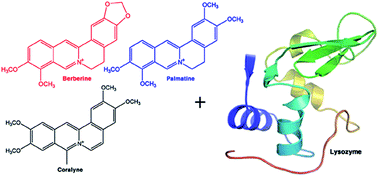
Natural products of plant origin, an excellent source of human medicine for centuries, are gaining increasing importance for their high potency and low toxicity.1,2 They have historically played a leading role in providing drugs of modern medicine, or templates for drugs, and more than 50% of the current therapeutics are based either on natural products or their derivatives. Isoquinoline alkaloids are one such group useful for their potential anticancer, antimalarial, antitumor, antiviral, antileukemic, anticholesterol and anti-inflammatory effects.3–12 The natural berberine (BER) and palmatine (PAL), and the synthetic coralyne (COR) (Fig. 1), have been the extensively studied alkaloids of this group. These alkaloids possess antiproliferative activity in vitro and induced apoptosis/necrosis in several cell lines tested.6,13–15 A number of investigations on the anticancer properties of these alkaloids against a variety of different cell lines operating through various mechanisms are reported.16–21 These results and the emerging new information continues to build up data that is exploitable for potential drug development. The anticancer activity of these alkaloids may derive from their ability to form strong complexes with nucleic acids, effect telomerase inhibition, induce topoisomerase poisoning and suppress DNA transcription process. A number of studies on these aspects have been reported by various groups, including ours.22–31 More recently studies on their binding to serum proteins have also been reported that may explain their distribution in the blood stream.32–36
image file: c3ra46053c-f1.tif
Fig. 1 Chemical structures of (A) berberine, (B) palmatine and (C) coralyne.

Lysozyme (Lyz) (N-acetylmuramide glyconohydrolase) is an antimicrobial protein present in abundance in various protective fluids like saliva, tears, mucus, blood, and the lymphatic tissues of most animals. It is an enzyme known for its unique ability to damage bacterial cell wall, thereby protecting against bacterial infections. Its other pharmacological functions involve anti-inflammatory, antiviral, antiseptic, antihistamine and antineoplastic activities. Due to its natural abundance, high stability and small size, lysozyme has been the choice as a model protein for studying the principles of protein structure, function, dynamics and ligand interactions. This monomeric globular protein contains 129 amino acid residues with six Trp, three Tyr and four cross linked disulphide bonds with structural elements like α-helices, β-sheets, turns and loops, usually found in many globular proteins.37,38 The active site of lysozyme consists of a deep crevice, which divides the protein into two domains linked by an α-helix. The domain (residues 40 to 85(β)) consists almost entirely of β-sheet structures, while the other domain (residues 89–99 (α)) is more helical.39 The crystal structure of Lyz reveals that three Trp residues (Trp62, 63 and 108) are located close to the substrate binding active site of the protein, which has the ability to reversibly bind a number of endogenous and exogeneous molecules.40 Thus, knowledge of the binding characteristics of therapeutically useful alkaloids with Lyz is critical for understanding their possible delivery and consequent availability at the required tissues. Furthermore, understanding the binding of small molecules may also provide a basis for the development of new small molecule inhibitors effective in therapy of amyloid-related diseases.41 Recently the binding of natural products caffeine, theophylline and theobromine of plant origin to Hen egg white lysozyme have been reported.42

Here we studied the interaction of two natural and one synthetic isoquinoline alkaloid with chicken egg white lysozyme using spectroscopic and calorimetric techniques. The binding of these alkaloids to the protein was evident from spectroscopic data and the structural information has been complemented by the energetic data.

Results and discussion

Alkaloid induced fluorescence quenching of lysozyme

Fluorescence studies have been widely used to understand the interaction of small molecules to proteins.43–47 A number of experiments like steady state quenching, synchronous fluorescence, anisotropy etc. could be performed to understand the various aspects of the binding of small molecules to proteins. Changes in the intrinsic fluorescence of Lyz in the presence of the alkaloids may provide information about the nature and mode of their interaction. Lyz contains six Trp residues at the 28, 62, 63, 108, 111 and 123 positions that may emit at 340 nm when excited at 295 nm, which selectively excites the Trp residues. Of these Trp residues 28, 108, 111, and 123 are located in the α-domain, and Trp62, Trp63, and Trp108 are located in the substrate-binding cleft; Trp62 and 63 lie at the active site hinge region between the α and β-domains. Trp62 is the tryptophan most exposed to solvent and is very susceptible to chemical reagents.48 The contribution of individual Trp residues of Lyz to the fluorescence emission spectrum has been studied in detail by chemical modification and fluorescent lifetime measurements.49,50 It was found that Trp62 and Trp108 contribute most of the fluorescence emission of native lysozyme while the other four Trp residues make small contributions. Trp63, lying at the active site hinge region of the alpha and beta domains, is not buried in the hydrophobic core. Trp62 is exposed more or less fully to the aqueous solvent while Trp108 is mostly inaccessible to the hydrophilic environment.51 It has also been revealed that a sequential inter tryptophanyl energy transfer is involved in Trp108–Trp63–Trp62 residues at the time of emission.49 Therefore, Trp62 could be considered as a key residue to be affected and quenched by a ligand. Hence, a study of the change in intrinsic fluorescence of Lyz in presence of the alkaloids may give information about the local environment of the Trp62 moiety on interaction. The fluorescence spectral changes of Lyz in the presence of BER, PAL and COR are illustrated in Fig. 2. In the presence of increasing concentrations of the alkaloids, quenching of the fluorescence of the Lyz was observed, reaching saturation in each case. In the case of BER and PAL the strong quenching was accompanied by the concomitant formation of a new peak around 370 and 367 nm, respectively. In the case of coralyne the extent of quenching was less and there was no red shift of the maximum. The result suggests that the alkaloids interact with Lyz and the fluorescence quenching was due to specific complex formation.
image file: c3ra46053c-f2.tif
Fig. 2 Steady state fluorescence emission spectra of Lyz (2.5 μM) treated with various concentrations of (A) BER, (B) PAL and (C) COR in 10 mM Na-phosphate buffer, pH = 7.2. In panel (A) curves (1–11) denote 0, 6.25, 11.25, 16.25, 22.5, 27.5, 30, 35, 40, 45 and 55 μM of BER, (B) curves (1–11) denote 0, 2.5, 5.0, 8.75, 12.5, 17.5, 22.5, 27.5, 32.5, 35, 40 μM of PAL and (C) curves (1–9) denote 0, 0.13, 0.26, 0.39, 0.52, 0.65, 0.78, 0.91, 1.04 μM of COR, respectively.

The quenching mechanism is generally classified as either dynamic or static.52 The nature of the quenching can be differentiated by temperature dependent studies. At higher temperatures larger diffusion coefficients result and the dynamic quenching constants will increase with increasing temperature. On the other hand, increasing the temperature will lead to decreased stability of the complexes and consequently lead to lowering of the static quenching constants. Thus, to confirm the quenching mechanism of the interaction of BER, PAL and COR with Lyz, temperature dependent fluorescence spectra were measured at three different temperatures viz., 15, 25 and 35 °C and the data were analyzed by the classical Stern–Volmer equation52

 
image file: c3ra46053c-t1.tif(1)
where F0 and F are the fluorescence intensities at the wavelength maxima in the absence and in the presence of the quencher, kq is the quenching rate constant, Ksv is the dynamic quenching constant, τ0 is the average life time of the protein in the absence of quencher, which is generally taken to be 10−8 s, and [Q] is the concentration of the free quencher, respectively.52 Fig. S1 (ESI) shows the linear Stern–Volmer plots of F0/F versus [Q] at the three temperatures and the calculated Ksv and kq values are summarized in Table 1. The results revealed that the values of Ksv and kq decreased with increasing temperature, and the kq values are greater than 2.0 × 10¹⁰ M−1 s−1 suggesting that the quenching mechanism was due static quenching in each case.49 In other words, the quenching of the Lyz fluorescence by the three alkaloids was due to specific complex formation, and dynamic collision effects, if any, may be negligible.

Table 1 Binding data derived for alkaloids binding to Lyz from spectrofluorimetric studies at different temperaturesa
Alkaloids Temp. /°C KSV/M−1 kq/M−1 s−1 Apparent binding constant, KA/M−1 N KLB/M−1
a (τ0 = ∼108 s−1). The data presented are averages of four determinations. Ksv is the Stern–Volmer quenching constant, KA is the binding constant, and KLB is the static quenching constant from Lineweaver–Burk equation.
BER 15 6.41 × 10⁴ 6.41 × 10¹² 6.31 × 10⁴ 0.98 5.86 × 10⁴
25 5.84 × 10⁴ 5.84 × 10¹² 5.37 × 10⁴ 1.00 5.37 × 10⁴
35 5.12 × 10⁴ 5.12 × 10¹² 5.03 × 10⁴ 1.08 4.89 × 10⁴
PAL 15 4.56 × 10⁴ 4.56 × 10¹² 4.60 × 10⁴ 0.98 4.53 × 10⁴
25 4.27 × 10⁴ 4.27 × 10¹² 4.22 × 10⁴ 0.99 4.18 × 10⁴
35 4.08 × 10⁴ 4.08 × 10¹² 3.94 × 10⁴ 1.05 4.03 × 10⁴
COR 15 1.26 × 10⁵ 1.26 × 10¹³ 1.31 × 10⁵ 0.85 1.28 × 10⁵
25 1.16 × 10⁵ 1.16 × 10¹³ 1.15 × 10⁵ 1.00 1.14 × 10⁵
35 1.10 × 10⁵ 1.10 × 10¹³ 1.11 × 10⁵ 1.12 1.10 × 10⁵


Binding constants and number of binding sites

For static quenching mechanism involving small molecules binding independently to a set of equivalent sites on a macromolecule the apparent binding constant and the number of binding sites can be determined from the following equation53,54
 
image file: c3ra46053c-t2.tif(2)
where KA is the binding constant to a site and n is the number of binding sites per protein. From the linear plots of log(F0F/F) versus log[Q] (not shown) for BER, PAL and COR, binding affinity values to Lyz obtained at the three temperatures are presented in Table 1. A higher binding affinity (KA) of COR (1.15 × 10⁵ M−1) compared to BER (5.37 × 10⁴ M−1) and PAL (4.22 × 10⁴ M−1) was apparent from this data. The magnitude of the values of KA suggests that moderate interaction of the alkaloids with Lyz occurs and COR has a higher affinity to the protein. The number of binding sites obtained from the magnitude of ‘n’ were found to be around unity suggesting that there is only one binding site for these alkaloids around the Trp residue of the protein. The 1[thin space (1/6-em)]:[thin space (1/6-em)]1 binding of these alkaloids on Lyz was further confirmed from Job's plot analysis by varying the alkaloid[thin space (1/6-em)]:[thin space (1/6-em)]protein molar ratio while keeping the total molar concentration constant. The difference in fluorescence at 339 nm versus mole fraction of alkaloids (X) (Fig. S2, ESI) crossed at 0.41, 0.42 and 0.42, respectively, for BER, PAL and COR, yielding the number of each of these molecules binding on the protein to be around 1.

The quenching data was also analyzed by the Lineweaver–Burk equation55,56

 
image file: c3ra46053c-t3.tif(3)
where the quenching constants (KLB) were obtained from the ratio of the intercept to slope of the Lineweaver–Burk plot, describing the efficiency of quenching at the ground state. The plots of Lyz-alkaloids interactions at three temperatures are presented in Fig. S3 ESI. The data depicted in Table 1 revealed that COR has the highest affinity to Lyz followed by BER and then PAL. The decreasing trend in KLB with increasing temperature for the binding was in accordance with the temperature dependence of Ksv values and is consistent with the static quenching mechanism.

Energy transfer to the alkaloids and the binding distance measurement

The Förster theory of dipole–dipole resonance energy transfer (FRET) was used to determine the distance of separation between the protein residue (donor) and the bound alkaloid (acceptor) and hence useful for realizing structural and conformational distribution of donor–acceptor complexes.57 In a proteinous environment, the proximity of the bound ligand molecule to the Trp residue is often determined through this FRET study. By Förster theory the efficiency depends on the extent of overlap of the donor emission and acceptor absorption, orientation of the transition dipole of the donor and the distance between the donor and acceptor which must be within the distance of 2–8 nm.58 The efficiency (E) of the FRET process depends on the inverse sixth power of the distance between donor and acceptor (r) and of the critical energy transfer distance or Förster radius (R0). When the efficiency of transfer is 50%, a 1[thin space (1/6-em)]:[thin space (1/6-em)]1 situation of donor to acceptor concentration prevails and E is expressed by the equation
 
image file: c3ra46053c-t4.tif(4)

R0 can be calculated using the relation

 
image file: c3ra46053c-t5.tif(5)
where k2 is the spatial factor of orientation, n is the refractive index of the medium, and φ is the fluorescence quantum yield of the donor. F(λ) represents the fluorescence intensity of the donor and ε(λ) the molar absorption coefficient of the acceptor, respectively, at the wavelength λ. Using the values of k2 = 2/3, n = 1.336 and φ = 0.14 for Lyz,59 the values of E, J, R0 and r have been calculated to be 0.21, 1.74 × 10⁻¹⁴ cm3 L mol−1, 2.66 nm and 3.30 nm for BER–Lyz; 0.28, 1.71 × 10⁻¹⁴ cm3 L mol−1, 2.65 nm and 3.09 nm for PAL–Lyz and 0.30, 1.74 × 10⁻¹⁴ cm3 L mol−1, 2.66 nm and 3.06 nm for COR–Lyz interaction from the overlap of the absorbance spectra of the alkaloids with the emission spectrum of Lyz (Fig. S4 ESI). The distance between ligands and the amino acid residue Trp in Lyz is far lower than the 7 nm value indicating a high probability of energy transfer from the Trp residues of the protein to the alkaloids.60 Furthermore, the values of r were higher than R0 implying that the alkaloids could accept energy from the Trp residues effectively61 and COR was closer to Trp62 than PAL and BER. These results indicated that the conditions of Förster energy transfer for the binding are well obeyed and this is also in accordance with the static quenching mechanism.

Effect of lysozyme on the fluorescence of the alkaloids

BER and PAL are weak fluorophores with maxima around 445 nm when excited at 345 nm.24,31 COR, on the other hand, is a strong fluorophore with a maximum at 470 nm when excited at 420 nm.25 In the presence of increasing concentrations of Lyz, only marginal change of the weak fluorescence of BER and PAL was observed. But the fluorescence intensity of coralyne was quenched significantly (Fig. S5 ESI) suggesting the formation of a stronger Lyz–COR complex compared to BER and PAL–Lyz complexes.

Conformational studies from synchronous fluorescence

Conformational changes occurring in the protein on binding were evaluated using synchronous fluorescence.62 The synchronous fluorescence spectroscopy technique is successfully applied to explore the microenvironment of amino acid residues by measuring the emission spectra. The shape and intensity of synchronous fluorescence spectra depend on Δλ, the difference between excitation and emission wavelength. When Δλ is 15 and 60 nm, the synchronous fluorescence spectra of Lyz will give the environment in the vicinity of Tyr and Trp residues, respectively. The effect of alkaloids on the synchronous fluorescence of Lyz with Δλ = 60 nm revealed that the fluorescence intensity diminished systematically with a large red shift of the emission maxima by 12 and 10 nm, respectively, for BER and PAL but without any red shift for COR binding to Lyz (Fig. 3A–C). A large red shift is indicative of change from a polar environment to a more hydrophilic environment for the Trp residues. This also indicates that in the presence of BER and PAL, Trp residues were more exposed to solvent (polar environment) compared to those on the binding of COR. Comparatively, there is almost no shift in the maximum emission wavelength (not shown) using Δλ = 15 nm in the presence of any of the alkaloids, revealing that little transformation takes place in the microenvironment around tyrosines. Therefore the binding of the alkaloids changed the polarity around the Trps and mostly around Trp62, while those around Tyr were not changed, in agreement with the results from quenching and FRET experiments implicating unequivocally the involvement of Trp residue in the binding process.
image file: c3ra46053c-f3.tif
Fig. 3 Synchronous fluorescence (Δλ = 60 nm) spectra of Lyz in the presence of different concentrations of (A) BER, (B) PAL and (C) COR. [Lyz] = 2.5 μM. In panel (A) curves (1–12) denote 0, 2.58, 5.16, 7.74, 12.9, 18.06, 23.22, 30.96, 41.28, 46.44, 56.76, and 67.08 μM of BER, panel (B) curves (1–12) denote 0, 2.5, 5, 7.5, 10, 12.5, 15, 17.5, 20, 22.5, 25 and 27.5 μM of PAL and panel (C) curves (1–12) denote 0, 1, 3, 5, 8, 12, 16, 20, 24, 28, 32 and 34 μM of COR.

UV-Vis absorption spectral studies

Absorption spectral changes can be used to explore the structural changes in the protein on interaction with the alkaloids. The absorption spectral changes of Lyz in the presence of BER are presented in Fig. 4. The protein spectrum is characterized by two absorption maxima, one strong peak at 203 nm and a weak peak around 281 nm. This is in conformity with that reported in the literature.63 The characteristic absorption peak at 203 nm arises due to the peptide bonds of the protein while the 281 nm peak is due to the aromatic amino acids. In the presence of increasing concentration of the alkaloids, there was a decrease of the intensity of the peaks, with a slight red shift of the 203 nm peak. But the changes were more pronounced in BER than PAL. In the case of COR, no such change was observed. Similar results have been reported63 for Lyz on binding with other small molecules. This indicates that the binding of the alkaloids induce an unfolding of the protein backbone leading to an increase in the hydrophobicity of the microenvironment of the aromatic amino acids and this is in agreement with the fluorescence results. Dynamic quenching essentially affects the excitation state of the quenching molecule and thus has no effect on the absorption spectrum of quenching substances. So, the absorption spectral change seen here also confirms that the quenching mechanism induced by the alkaloids on Lyz is due to static quenching.
image file: c3ra46053c-f4.tif
Fig. 4 Representative absorption spectra of Lyz (1.07 μM) treated with 0, 0.98, 1.96, 2.94, 3.92, 4.9, 5.88 and 6.86 μM (curves 1–8) of BER. Inset: 250 to 320 nm region is highlighted for better understanding.

Circular dichroism spectroscopy

To understand the effect of the binding of the alkaloids, CD analysis of lysozyme solution was carried out in the far- and near-UV region. The former reflects the secondary structure, whereas the latter arises from the tertiary structure of the protein. Chicken egg white lysozyme is an α + β protein with a large α-domain containing four α-helices and a 310-helix and a smaller β-domain consisting of a triple-stranded anti-parallel β-sheet, an irregular loop containing two disulphide bridges and a 310-helix. The deep active cleft of the protein divides the enzyme into two domains, one of them is mostly β sheet structure and the other contains N and C-terminal segments that is mostly alpha helical. CD results provide an excellent spectroscopic tool for understanding ligand–protein interactions.64 The far ultraviolet CD spectrum of native Lyz contained two minima at 208 nm and 222 nm, characteristic of a predominantly α-helical structure and is in agreement with previous observations.65 The 208 nm band corresponds to π–π* transition of the α-helix and the 222 nm band due to n–π* transition for both the α-helix and random coil. Upon titration with increasing concentrations of alkaloids, the CD spectrum of Lyz decreased in intensity without any shifts in the peaks, indicating a decrease in the helical structure (Fig. 5) suggesting that the binding of the alkaloids induced secondary structural changes in the conformation of Lyz. The alkaloids are optically inactive and hence do not have any CD spectra in the region of the study. The helical content of the free and bound Lyz molecules were calculated in terms of mean residue ellipticity (MRE) (deg cm2 dmol−1) as reported66,67
 
image file: c3ra46053c-t6.tif(6)
where C is the molar protein concentration, n is the number of amino acid residues and l is the path length of the cuvette.

image file: c3ra46053c-f5.tif
Fig. 5 Intrinsic circular dichroism (far UV CD) spectra of Lyz (5 μM) treated with various concentrations of (A) BER, (B) PAL and (C) COR. In panel (A) curves (1–7) denote 0, 1.5 2.5, 3.5, 6, 8 and 10 μM of BER, (B) curves (1–7) denote 0, 1, 2, 3, 4, 5 and 6 μM of PAL and (C) curves (1–7) denote 0, 1, 2, 3, 4, 5 and 10 μM of COR, respectively.

The alpha helical content of the free and alkaloid bound Lyz was calculated from the ellipticity value at 222 nm using the relation

 
image file: c3ra46053c-t7.tif(7)

The secondary structure of Lyz was found to contain ∼25.0% α-helix. This is very close to the value reported in the literature at pH 7.0.68 At saturation, corresponding to 10, 6 and 10 μM, respectively, of BER, PAL and COR, the α-helical content was reduced to 9, 13 and 14%, respectively. Thus, the unfolding and loss of large part of the helical stability has been observed on binding, inducing strong secondary structural changes in the protein. It appears that interaction with the alkaloids leads to an unfolded conformation of Lyz with extended polypeptide chains exposing the hydrophobic cavities with concomitant exposure of the aromatic amino acid residues.

In order to understand any changes in the tertiary structure of Lyz induced by the binding of these alkaloids, we carried our near-UV CD spectral experiments. The CD spectra in the region of 250–300 nm is represented by the presence of disulphide bonds and the aromatic chromophores (Trp, Tyr, Phe), responsible for dichroic signals in the near-UV region.69 The CD signals at 283, 289 and 295 nm of Lyz are assignable to transitions of the tryptophan residues.70 In the presence of the alkaloids there were changes in the spectral pattern (Fig. 6) in this region indicating that changes in the environment of the aromatic amino acid side chains are induced leading to a small unfolding of the tertiary structure of the protein and/or enhanced flexibility. It appears that the alkaloid binding does not induce drastic tertiary structural changes, which is understandable as no break in the disulphide bonds occurs. Although the interpretation of the changes is not conclusive, in conjunction with the far UV spectral changes and other spectroscopic results it gives some indication of the strong interaction of the alkaloids with the protein. It is worth mentioning here that the alkaloids did not acquire any induced optical activity on binding to Lyz molecules.


image file: c3ra46053c-f6.tif
Fig. 6 Intrinsic circular dichroism (near UV CD) spectra of Lyz (20 μM) treated with various concentrations of (A) BER, (B) PAL and (C) COR. In panel (A) curves (1–3) denote 0, 10 and 20 μM of BER, (B) curves (1–3) denote 0, 10 and 20 μM of PAL and (C) curves (1–3) denote 0, 5 and 10 μM of COR, respectively.

Three-dimensional fluorescence spectroscopic studies

Three dimensional fluorescence studies have been gaining prominence in recent times to understand protein conformational changes on ligand binding.71,72 Comparative 3D spectral data can provide conformational and micro environmental changes in the protein. The 3D spectra and the contour map of Lyz in the absence and presence of BER and PAL are presented in Fig. 7. The corresponding parameters for the three alkaloids are listed in Table 2. In Fig. 7A, peak ‘a’ and peak ‘b’ represent first order Rayleigh scattering (λex = λem) and second order Rayleigh scattering peak (λex = 2λem), respectively. Peak 1 (λex = 280 nm, λem = 350 nm) is the characteristic intrinsic fluorescence spectral behavior of Trp and Try residues.73 On binding of the alkaloids to Lyz it was observed that the fluorescence intensity decreased and the Stokes shift (Δλ) increased. The increase of the Stokes shift proved that the conformation of Lyz was changed, polarity around the Trp residues increased and the hydrophobicity decreased, which is consistent with the synchronous fluorescence data. Moreover, the Stokes shift value of the Lyz–PAL complex was higher than that of the Lyz–BER and Lyz–COR suggesting that the energy transfer from Trp to alkaloids is higher in case of PAL. Peak 2 (λex = 220 nm, λem = 350 nm) in Lyz is mainly caused by the characteristic transition of n → π* of the polypeptide backbone. In the Lyz–alkaloid complex, the fluorescence intensity of both the peaks decreased but to different extents. So the interaction of these alkaloids with Lyz induced unfolding of the polypeptide chain resulting in conformational change that increased the exposure of some hydrophobic regions from non polar to polar environment.
image file: c3ra46053c-f7.tif
Fig. 7 Three-dimensional fluorescence and contour spectra of Lyz (A and B), Lyz–BER (C and D) and Lyz–PAL (E and F) complexes.
Table 2 Data derived from 3D fluorescence of lysozyme and lysozyme–alkaloid complexes
System Fluorescence peak 1 Fluorescence peak 2
Peak position (λex/λem/intensity) (nm/nm/F) Stokes shift Δλ/nm Peak position (λex/λem/intensity) (nm/nm/F) Stokes shift Δλ/nm
Lyz 280/351/224.87 71 220/353/371.08 133
Lyz–BER 280/359/107.00 79 220/360/178.89 140
Lyz–PAL 280/361/133.93 81 220/361/213.26 141
Lyz–COR 280/351/143.14 71 220/352/222.61 132


Thermodynamics of alkaloids–lysozyme interaction

Elucidation of the thermodynamics of the interaction enables us to gather key insights into the molecular forces that drive the complex formation. Therefore, we investigated the interaction from isothermal titration calorimetry (ITC) studies. Thermodynamic parameters like the Gibbs energy change (ΔGo), enthalpy of binding (ΔHo), the entropy contribution (TΔSo) and also the affinity (Kb) and stoichiometry (N) can be obtained, that may be correlated to the results of spectroscopic experiments. In Fig. 8 the representative calorimetric profiles of the titration of BER, PAL and COR with Lyz are presented. The binding is endothermic process and has a single binding event in all the cases and produces a reproducible isotherm which fits best to a single-site binding model. The heat absorbed in each injection was corrected for the heat of dilution that was determined in a separate but identical experiment injecting protein into buffer alone. The resulting values were plotted against the molar ratio of protein/alkaloid and fitted to a one-site model by nonlinear least square method (curves in the lower panel). The equilibrium constant, binding stoichiometry, standard molar enthalpy change, entropy contribution, and standard molar Gibbs energy change obtained from the calorimetric data are summarized in Table 3. The binding constants of BER, PAL and COR to Lyz at 25 °C were evaluated to be (5.95 ± 0.24) × 104 M−1, (4.30 ± 0.40) × 104 M−1 and (1.21 ± 0.08) × 105 M−1, respectively. These values are nearly one order higher compared to those reported for the natural products caffeine, theophylline and theobromine.42 The stronger binding of COR to Lyz and the variation of the affinity as COR > BER > PAL is thus also evident from the calorimetric data and confirms the spectroscopic results.
image file: c3ra46053c-f8.tif
Fig. 8 ITC profiles for the binding of alkaloids to Lyz. The top panels present raw results for the sequential injection of alkaloids (1.5 mM) into solutions of 0.2 mM Lyz for BER (A), 0.1 mM Lyz for PAL (B) and 0.1 mM Lyz for COR (C) at 25 °C and dilution of respective alkaloids into buffer (not in scale). The bottom panels show the integrated heat results after correction of heat of dilution against the mole ratio of alkaloids/Lyz. The data points were fitted to the one site model and the solid lines represent the best-fit data.
Table 3 Thermodynamic parameters for the binding of alkaloids with Lyz from ITC at different temperaturesa
Alkaloids Temp./°C Binding constant/Kb N ΔHo/kcal mol−1 TΔSo/kcal mol−1 ΔGo/kcal mol−1 ΔCop/calmol−1 K−1
a All the data in this table are derived from ITC experiments conducted in a Na-phosphate buffer of 10 mM [Na+], pH 7.2, and are averages of four determinations. Kb and ΔHo values were determined from ITC profiles fitting to Origin 7 software as described in the text. N is the stoichiometry. The values of ΔGo and TΔSo were determined using eqn (8) and (9) described in the text.
BER 15 (6.51 ± 0.28) × 104 0.99 0.61 ± 0.04 6.94 −6.33 ± 0.02  
25 (5.95 ± 0.24) × 104 0.96 0.58 ± 0.03 7.09 −6.51 ± 0.03 −8
35 (5.18 ± 0.19) × 104 1.08 0.48 ± 0.02 7.11 −6.63 ± 0.03  
PAL 15 (4.60 ± 0.19) × 104 1.20 2.74 ± 0.03 8.87 −6.13 ± 0.02  
25 (4.30 ± 0.40) × 104 1.25 2.37 ± 0.03 8.67 −6.30 ± 0.02 −25
35 (4.06 ± 0.40) × 104 1.16 2.24 ± 0.02 8.72 −6.48 ± 0.04  
COR 15 (1.31 ± 0.17) × 105 1.10 4.42 ± 0.04 11.15 −6.73 ± 0.02  
25 (1.21 ± 0.08) × 105 0.83 4.31 ± 0.03 11.23 −6.92 ± 0.03 −95
35 (1.07 ± 0.01) × 105 0.89 4.23 ± 0.04 11.30 −7.07 ± 0.03  


The number of binding sites for BER, PAL and COR to Lyz were around 1.0, leading to 1[thin space (1/6-em)]:[thin space (1/6-em)]1 binding supporting the results from Job's plot analysis and Lineweaver–Burk analysis. The Gibbs energy change for COR was higher by about 0.60 kcal mol−1 than PAL and larger than 0.40 kcal mol−1 compared to BER. The significant feature of the energetics of the interaction, is that the binding of all the three alkaloids was driven by large entropic changes implying that the association is entropically driven with small unfavorable the enthalpy to the Gibbs energy and substantial opposing enthalpy for COR. Record et al. reported74 that the binding Gibbs energy of protein–nucleic acid complexes involving electrostatic interactions is mainly contributed by the net increase in entropy of the system due to the release of counter ions. For the Lyz–alkaloid system, therefore, we posit that the Gibbs energy of the association could be contributed by entropic change due to the release of counter ions upon alkaloid interaction with the protein. This is consistent with the observed correlation of binding affinity with salt concentration which suggested that liberation of counter ions, liberation of water of hydration and possible increase in conformational flexibility accompanied the complex formation.

The forces driving the interaction between the alkaloids and the protein were then examined as a function of temperature in the range 15–35 °C. Overall, with temperature, the affinity values decreased, and the binding enthalpies increased in magnitude. The positive entropy of binding at all the temperatures indicated favorable endothermic binding of the alkaloids with Lyz. In BER and PAL the entropic contributions increased with temperature but for COR, they decreased slightly. This suggests that the binding is driven by dominant entropic contributions at all the temperatures. Based on the variation of the enthalpy with temperature, ITC can provide information on the heat capacity changes (ΔCop) accompanying the binding.75 The observed enthalpy values varied linearly with the experimental temperature in the range 15–35 °C (Fig. 9) for the binding of the three alkaloids, proving that there is no measurable shift in the pre-existing equilibrium between the conformational states of the proteins in the temperature range studied. Strong enthalpy–entropy compensation was, however, observed making Gibbs energy of the binding nearly independent of the temperature. To determine the change in heat capacity, the first derivative of the temperature dependence of enthalpy change, the data were plotted as ΔHo versus temperature to yield ΔCop values of −8, −25 and −95 cal mol−1 K−1, respectively, for the binding of BER, PAL and COR to Lyz. The negative values of ΔCop clearly suggest that the binding is specific and leads to the burial of non polar surface area.76,77 In addition, the negative heat capacity also causes the shift from an entropy dominated binding to an enthalpy dominated one as the temperature rises. The difference in the values between BER and PAL, and COR, however, indicate the different extent of hydrophobic interaction in these systems.


image file: c3ra46053c-f9.tif
Fig. 9 Plot of variation of the thermodynamic parameter ΔHo for alkaloids–Lyz complex formation. ΔHo versus temperature (Kelvin) for the binding of BER (filled square), PAL (filled circle) and COR (filled triangle) with Lyz.

Conclusions

In this study we investigated the structural aspects and thermodynamics of the binding of three alkaloids, berberine, palmatine and coralyne with lysozyme probed using a variety of biophysical techniques. The results revealed that the natural isoquinoline alkaloids berberine and palmatine and their synthetic analogue coralyne bind to lysozyme. Interaction with Lyz has been confirmed from absorbance spectra and fluorescence quenching studies. The interaction involves close contact of the alkaloids with the β-Trp62 which is at the αβ interface of the protein molecule. The binding involves static quenching due to ground state complexation with an affinity of the order of 104 M−1 for BER and PAL and one order higher at 105 M−1 for COR. Fluorescence techniques have been utilized effectively here to understand the proximity of these alkaloids to the protein residues. FRET studies have confirmed that the alkaloids are bound close to β-Trp62 of Lyz; COR is more close to this residue than BER and PAL. Thus the binding of alkaloids is in the vicinity of β-Trp62. The thermodynamics of the interaction revealed that the binding involved strong hydrophobic interactions along with electrostatic interactions from the charged alkaloids. The binding of the alkaloids induced strong secondary structural changes in the protein structure, and this was confirmed from synchronous fluorescence and 3D fluorescence. Again, the results suggested a significant difference between the behaviour of BER and PAL, and COR suggesting COR is bound at a site slightly different from BER and PAL. Although the precise location of the binding sites of these alkaloids on Lyz could not be revealed, these results suggest the differential binding ability of the alkaloids on the protein and conclude Trp62 and 63 in the beta-domain to be the likely binding site.

Experimental

Materials

Berberine, palmatine and coralyne as chloride salts, and chicken egg lysozyme were obtained from Sigma-Aldrich Corporation (St. Louis, MO, USA). The concentration of lysozyme was determined by the molar extinction coefficient (ε) value of 37[thin space (1/6-em)]750 M−1 cm−1 at 280 nm.78 The alkaloids were used as received. They were fairly soluble in aqueous buffers, and hence their solutions were freshly prepared each day and kept protected in the dark until use. The concentrations were determined by ε value of 22[thin space (1/6-em)]500 M−1 cm−1 at 345 nm for BER, 25[thin space (1/6-em)]000 M−1 cm−1 at 344.5 nm for PAL and 14[thin space (1/6-em)]500 M−1 cm−1 at 420 nm for COR. No deviation from Beer's law was observed in the concentration range used in this study. All experiments were conducted using Na-phosphate buffer (10 mM Na+) of pH 7.2, containing 5 mM Na2HPO4. pH measurements were made with a Sartorius PB-11 high precision bench pH meter (Sartorius GmBH, Germany) with an accuracy of >±0.01. All other chemicals used were of analytical grade and obtained from Sigma-Aldrich. Deionized and glass distilled water was used for the preparation of buffer. All buffer solutions were filtered through Millipore filters (Millipore India Pvt. Ltd, Bangalore, India) of 0.22 μm.

Apparatus and measurements

Absorption spectroscopy. Absorbance spectral studies were performed on a Jasco V660 double beam double monochromator spectrophotometer (Japan International Co., Hachioji, Japan) at 25 ± 0.5 °C. For titration, matched quartz cuvettes (Hellma, Germany) of 1 cm path-length were used. Briefly, a known concentration of the protein solution was kept in the sample cuvette and small aliquots of a known concentration of the alkaloid solution were titrated into the sample and reference cuvettes. After each addition, the solution was thoroughly mixed and allowed to re-equilibrate for at least 10 min before noting the absorbance at the desired wavelengths.
Fluorescence measurements. Steady state fluorescence were performed on either a Shimadzu RF-5301 PC (Shimadzu Corporation, Kyoto, Japan) or a Hitachi F4010 (Hitachi Ltd., Tokyo, Japan) fluorescence spectrometer in fluorescence-free quartz cells of 1 cm path-length. All measurements were performed keeping excitation and emission band passes of 10 nm and 5 nm, respectively. The sample temperature was maintained at 25 ± 1.0 °C using Eyela UniCool U55 water bath (Tokyo Rikakikai Co. Ltd., Tokyo, Japan).

Intrinsic fluorescence of the protein was measured by exciting at 295 nm while BER and PAL were excited at 345 nm, and COR was excited at 420 nm. Temperature dependent fluorescence spectral studies were performed on the Hitachi unit equipped with a circulating water bath. For measurement of synchronous fluorescence, the excitation range was 220–340 nm and Δλ was set at 15 and 60 nm, respectively.

Three-dimensional (3D) fluorescence spectroscopy experiments were performed at 25 °C on a PerkinElmer LS55 fluorescence spectrometer (PerkinElmer, Inc., USA). The fluorescence emission spectrum of Lyz was measured in the range of 270–500 nm. With an increment of 10 nm, initial excitation wavelength was set at 200 nm and continued up to 340 nm, i.e. the number of scans was 15. The concentration of Lyz was 2.5 μM and Lyz-alkaloid complex ratio was 1[thin space (1/6-em)]:[thin space (1/6-em)]5.

Isothermal titration calorimetry. Isothermal titration calorimetry (ITC) experiments were performed with a VP ITC unit (MicroCal, Inc., Northampton, MA, USA). Lyz and alkaloid solutions were degassed on a MicroCal Thermovac unit before loading to avoid the formation of bubbles during titration. The instrument control, titration and data analysis were performed through the dedicated Origin 7.0 software of the unit. The experiments were carried out as follows. The calorimeter syringe was filled with a solution of the alkaloid (1.5 mM). Successive injections of 10 μL of this solution were titrated into 0.2 mM Lyz for BER, and 0.1 mM Lyz solution for PAL and COR contained in the calorimeter cell (volume = 1.4235 mL). Stirring was effected by the rotating syringe (351 rpm). The data were corrected for the heats of dilution of the alkaloid, which were determined in separate set of experiments under identical buffer conditions and temperature. The resulting corrected injection heats were plotted as a function of molar ratio (alkaloid/Lyz) and fit with a model of one set of binding sites and analyzed to provide the binding affinity (Kb), the binding stoichiometry (N), and the standard molar enthalpy of complex formation (ΔHo). The binding Gibbs energy (ΔGo) values and the entropy contribution to the binding (TΔSo) were calculated according to the standard relations
 
ΔGo = −RT[thin space (1/6-em)]ln[thin space (1/6-em)]Kb (8)
and
 
ΔGo = ΔHoTΔSo (9)
where T is the absolute temperature in Kelvin and R is the gas constant (1.987 cal mol−1 K−1). The calorimeter was periodically calibrated electrically and verified with water–water dilution experiments as per the criteria of the manufacturer that the mean energy per injection was <1.30 μcal and standard deviation was <0.015 μcal. In temperature dependent ITC experiments no variation in the buffer pH was observed in the temperature range studied here.
Circular dichroism (CD) spectroscopy. The conformational changes in the secondary and tertiary structure of Lyz on binding of the alkaloids were measured in the wavelength region 500 to 190 nm on a Jasco J815 spectropolarimeter at 25 °C equipped with a Peltier cell holder and temperature controller PFD 425 L/15. The protein concentration and path length of the cell used were 5.0 μM and 0.1 cm for far UV CD and 20.0 μM and 1 cm for near UV CD measurements. The instrument parameters for CD measurements were a scan speed of 100 nm min−1, a band width of 1.0 nm and a sensitivity of 100 milli-degrees. Five scans were performed, averaged to improve the signal-to-noise ratio, and smoothed within permissible limits. The molar ellipticity values in were expressed in terms of mean residue molar ellipticity [θ], in units of deg cm2 dmol−1.

Acknowledgements

This work was supported by grants from the Council of Scientific and Industrial Research (CSIR) network project GenCODE (BSC0123). C. Jash is a Senior Research Fellow of the DST-INSPIRE awarded by the Department of Science and Technology, Govt. of India. The authors thank all the colleagues of the Biophysical Chemistry Laboratory for their help and cooperation throughout the course of this work.

References

  1. A. Rahman, Studies in Natural Products Chemistry, Bioactive natural products (part B), Elsevier Science BV, Amsterdam, The Netherlands, 2000, vol. 21 Search PubMed.
  2. A. E. Osbourn and V. Lanzotti, Plant Derived Natural Products Synthesis, Function, and Applications, Springer, 2009 Search PubMed.
  3. W. D. Wilson, A. N. Gough, J. J. Doyle and M. W. Davidson, J. Med. Chem., 1976, 19, 1261–1263 CrossRef CAS.
  4. K. Iwasa, M. Kamigauchi, M. Ueki and M. Taniguchi, Eur. J. Med. Chem., 1996, 31, 469–478 CrossRef CAS.
  5. T. Schmeler, B. Latz-Brüning and M. Wink, Phytochemistry, 1997, 44, 257–266 CrossRef.
  6. C. L. Kuo, C. W. Chi and T. Y. Liu, Cancer Lett., 2004, 203, 127–137 CrossRef CAS PubMed.
  7. W. Kong, J. Wei, P. Abidi, M. Lin, S. Inaba, C. Li, Y. Wang, Z. Wang, S. Si, H. Pan, S. Wang, J. Wu, Y. Wang, Z. Li, J. Liu and J.-D. Jiang, Nat. Med., 2004, 10, 1344–1351 CrossRef CAS PubMed.
  8. M. Imanshahidi and H. Hosseinzadeh, Phytother. Res., 2008, 22, 999–1012 CrossRef CAS PubMed.
  9. Y. Sun, K. Xun, Y. Wang and X. Chen, Anti-Cancer Drugs, 2009, 20, 757–769 CrossRef CAS PubMed.
  10. A. Singh, S. Duggal, N. Kaur and J. Singh, J. Nat. Prod., 2010, 3, 64–75 CAS.
  11. H.-F. Ji and L. Shen, Molecules, 2011, 16, 6732–6740 CrossRef CAS PubMed.
  12. M. Maiti and G. Suresh Kumar, J. Nucleic Acids, 2010, 23 Search PubMed.
  13. I. W. Yang, C. C. Chou and B. Y. M. Yung, Naunyn-Schmiedebergs Arch. Pharmacol., 1996, 354, 102–108 CrossRef CAS.
  14. S. Letasiova, S. Jantova, L. Cipak and M. Muckova, Cancer Lett., 2006, 239, 254–262 CrossRef CAS PubMed.
  15. M. S. Choi, J. H. Oh, S. M. Kim, H. Y. Jung, H. S. Yoo, Y. M. Lee, D. C. Moon, S. B. Han and J. T. Hong, Internet J. Oncol., 2009, 34, 1221–1230 CAS.
  16. S. K. Mantena, S. D. Sharma and S. K. Katyar, Mol. Cancer Ther., 2006, 5, 296–308 CrossRef CAS PubMed.
  17. J.-P. Lin, J.-S. Yang, J.-H. Lee, W.-T. Hsieh and J.-G. Chung, World J. Gastroenterol., 2006, 12, 21–28 CAS.
  18. P. L. Peng, Y. S. Hsiesh, C. J. Wang, J. L. Hsu and F. P. Chou, Toxicol. Appl. Pharmacol., 2006, 214, 8–15 CrossRef CAS PubMed.
  19. J. B. Kim, K. M. Lee, E. Ko, W. Han, J. E. Lee, I. Shin, J. Y. Bae, S. Kim and D. Y. Noh, Planta Med., 2008, 74, 39–42 CrossRef CAS PubMed.
  20. Y. T. Ho, J. S. Yang, C. C. Lu, J. H. Chiang, T. C. Li, J. J. Lin, K. C. Lai, C. L. Liao, J. G. Lin and J. G. Chung, Phytomedicine, 2009, 16, 887–890 CrossRef CAS PubMed.
  21. S. Mahata, A. C. Bharti, S. Shukla, A. Tyagi, S. A. Husain and B. C. Das, Mol. Cancer, 2011, 10, 39–52 CrossRef CAS PubMed.
  22. D. S. Pilch, C. Yu, D. Makhey, E. J. LaVoie, A. R. Srinivasan, W. K. Olson, R. R. Sauers, K. J. Breslauer, N. E. Geacintov and L. F. Liu, Biochemistry, 1997, 36, 12542–12553 CrossRef CAS PubMed.
  23. T.-K. Li, E. Bathory, E. J. LaVoie, A. R. Srinivasan, W. K. Olson, R. R. Sauers, L. F. Liu and D. S. Pilch, Biochemistry, 2000, 39, 7107–7116 CrossRef CAS PubMed.
  24. M. Maiti and G. Suresh Kumar, Med. Res. Rev., 2007, 27, 649–695 CrossRef CAS PubMed.
  25. P. Giri and G. Suresh Kumar, Mol. BioSyst., 2008, 4, 341–348 RSC.
  26. R. Sinha and G. Suresh Kumar, J. Phys. Chem. B, 2009, 113, 13410–13420 CrossRef CAS PubMed.
  27. M. M. Islam, S. R. Chowdhury and G. Suresh Kumar, J. Phys. Chem. B, 2009, 113, 1210–1224 CrossRef CAS PubMed.
  28. P. Giri and G. Suresh Kumar, Mol. BioSyst., 2010, 6, 81–88 RSC.
  29. B. S. Patro, B. Maity and S. Chattopadhyay, Antioxid. Redox Signaling, 2010, 12, 945–960 CrossRef CAS PubMed.
  30. K. Bhadra and G. Suresh Kumar, Biochim. Biophys. Acta, Gen. Subj., 2011, 1810, 485–496 CrossRef CAS PubMed.
  31. K. Bhadra and G. Suresh Kumar, Med. Res. Rev., 2011, 31, 821–862 CrossRef CAS PubMed.
  32. Y. Wang, M. M. Kheir, Y. Chai, J. Hu, D. Xing, F. Lei and L. Du, PLoS One, 2011, 6, e23495 CAS.
  33. Y.-J. Hu, Y. Liu and X.-H. Xiao, Biomacromolecules, 2009, 10, 517–521 CrossRef CAS PubMed.
  34. Y.-J. Hu, Y. O. Yang, C. M. Dai, Y. Liu and X.-H. Xiao, Biomacromolecules, 2010, 11, 106–112 CrossRef CAS PubMed.
  35. A. Y. Khan, M. Hossain and G. Suresh Kumar, Chemosphere, 2012, 87, 775–781 CrossRef CAS PubMed.
  36. A. Y. Khan, M. Hossain and G. Suresh Kumar, Mol. Biol. Rep., 2013, 40, 553–566 CrossRef CAS PubMed.
  37. Z. Gu, X. Zhu, S. Ni, Z. Su and H. M. Zhou, Int. J. Biochem. Cell Biol., 2004, 36, 795–805 CrossRef CAS PubMed.
  38. Y. Fang, L. Yi and Y. Fang, Acta Chim. Sin., 2003, 61, 803–807 Search PubMed.
  39. N. C. J. Strynadka and M. N. G. James, J. Mol. Biol., 1991, 220, 401–424 CrossRef CAS.
  40. S. Li and D. Li, Spectrochim. Acta, Part A, 2011, 82, 396–405 CrossRef CAS PubMed.
  41. Q. V. Vuong, K. Siposova, T. T. Nguyen, A. Antosova, L. Balogova, L. rajna, J. Imrich, M. S. Li and Z. Gazova, Biomacromolecules, 2013, 14, 1035–1043 CrossRef CAS PubMed.
  42. H.-M. Zhang, B.-P. Tang and Y.-Q. Wang, Mol. Biol. Rep., 2009, 37, 3127–3136 CrossRef PubMed.
  43. S. De and A. Girigoswami, J. Colloid Interface Sci., 2006, 296, 324–331 CrossRef CAS PubMed.
  44. F. Ding, G. Zhao, S. Chen, F. Liu, Y. Suna and L. Zhang, J. Mol. Struct., 2009, 929, 159–166 CrossRef CAS PubMed.
  45. I. Saha, J. Bhattacharyya and G. Suresh Kumar, J. Chem. Thermodyn., 2013, 56, 114–122 CrossRef CAS PubMed.
  46. P. Qin, B. Su and R. Liu, Mol. BioSyst., 2012, 8, 1222–1229 RSC.
  47. S. Tabassum, W. M. Al-Asbahy, M. Afzal, F. Arjmand and R. H. Khan, Mol. BioSyst., 2012, 8, 2424–2433 RSC.
  48. K. Hayashi, T. Imoto, G. Funatsu and M. Funatsu, J. Biochem., 1965, 58, 227–235 CAS.
  49. T. Imoto, L. S. Forster, J. A. Rupley and F. Tanaka, Proc. Natl. Acad. Sci. U. S. A., 1972, 69, 1151–1155 CrossRef CAS.
  50. C. Formoso and L. S. Forster, J. Biol. Chem., 1975, 250, 3738–3745 CAS.
  51. E. Nishimoto, S. Yamashita, N. Yamasaki and T. Imoto, Biosci., Biotechnol., Biochem., 1999, 63, 329–336 CrossRef CAS.
  52. J. R. Lakowicz, Principles of Fluorescence Spectroscopy, Plenum Press, New York, 1999 Search PubMed.
  53. O. K. Abou-Zied and O. L. K. Al-Shihi, J. Am. Chem. Soc., 2008, 130, 10793–10801 CrossRef CAS PubMed.
  54. G. W. Zhang, Q. M. Que, J. H. Pan and J. B. Guo, J. Mol. Struct., 2008, 881, 132–138 CrossRef CAS PubMed.
  55. F.-L. Cui, J. Fan, J.-P. Li and Z. Hu, Bioorg. Med. Chem., 2004, 12, 151–157 CrossRef CAS PubMed.
  56. H.-X. Zhang, X. Huang, P. Mei, K.-H. Li and C.-N. Yan, J. Fluoresc., 2006, 16, 287–294 CrossRef CAS PubMed.
  57. A. Mallick, B. Haldar and N. Chattopadhyay, J. Phys. Chem. B, 2005, 109, 14683–14690 CrossRef CAS PubMed.
  58. B. Valeur and J. C. Brochon, New Trends in Fluorescence Spectroscopy, Springer-Verlag, Berlin, 1999 Search PubMed.
  59. K. S. Ghosh, B. K. Sahoo and S. Dasgupta, Chem. Phys. Lett., 2008, 452, 193–197 CrossRef CAS PubMed.
  60. B. Valeur, Molecular Fluorescence: Principles and Applications, Wiley-VCH Verlag GmbH, 2001 Search PubMed.
  61. Y. Q. Yang, H. M. Zhang, G. C. Zhang, S. X. Lui, Q. H. Zhou, Z. H. Fei and Z. T. Liu, Int. J. Biol. Macromol., 2007, 41, 243–250 CrossRef PubMed.
  62. J. B. F. Lloyd, Nat. Phys. Sci., 1971, 231, 64–65 CrossRef CAS.
  63. Z. Chi and R. Liu, Chemosphere, 2012, 86, 92–97 CrossRef CAS PubMed.
  64. S. M. Kelly and N. C. Price, Curr. Protein Pept. Sci., 2000, 1, 349–384 CrossRef CAS.
  65. T. Knubovets, J. J. Osterhout, P. J. Connolly and A. M. Klibanov, Proc. Natl. Acad. Sci. U. S. A., 1999, 96, 1262–1267 CrossRef CAS.
  66. Y. H. Chen, J. T. Yang and H. M. Martinez, Biochemistry, 1972, 11, 4120–4131 CrossRef CAS.
  67. Z. X. Lu, T. Cui and Q. L. Shi, Molecular Biology: Applications of Circular Dichroism and Optical Rotatory Dispersion, Science Press, Beijing, 1st edn, 1987 Search PubMed.
  68. P. Qin, B. Su and R. Liu, Mol. BioSyst., 2012, 8, 1222–1229 RSC.
  69. E. H. Strickland, Crit. Rev. Biochem. Mol. Biol., 1974, 2, 113–175 CrossRef CAS.
  70. S. Bhattacharjya and P. Balaram, Proteins: Struct., Funct., Genet., 1997, 29, 492–507 CrossRef CAS.
  71. G. Weber, Nature, 1961, 190, 27–29 CrossRef CAS.
  72. F. C. Wu, R. B. Mills, R. D. Evans and P. J. Dillon, Anal. Chem., 2004, 76, 110–113 CrossRef CAS.
  73. J. Kang, Y. Liu, M.-X. Xie, S. Li, M. Jiang and Y.-D. Wang, Biochim. Biophys. Acta, Gen. Subj., 2004, 1674, 205–214 CrossRef CAS PubMed.
  74. M. T. Record Jr, C. F. Anderson and T. M. Lohman, Q. Rev. Biophys., 1978, 11, 103–178 CrossRef CAS.
  75. J. B. Chaires, Annu. Rev. Biophys., 2008, 37, 135–151 CrossRef CAS PubMed.
  76. R. S. Spolar and M. T. Record Jr, Science, 1994, 263, 777–784 CAS.
  77. R. O'Brien, B. DeDecker, K. G. Fleming, P. B. Sigler and J. E. Ladbury, J. Mol. Biol., 1998, 279, 117–125 CrossRef CAS PubMed.
  78. Y. Desfougères, A. Saint-Jalmes, A. Salonen, V. Vié, S. Beaufils, S. Pezennec, B. Desbat, V. Lechevalier and F. Nau, Langmuir, 2011, 27, 14947–14957 CrossRef PubMed.

Footnote

Electronic supplementary information (ESI) available: Fig. S1–S5. See DOI: 10.1039/c3ra46053c

This journal is © The Royal Society of Chemistry 2014
Click here to see how this site uses Cookies. View our privacy policy here.