DOI:
10.1039/C3RA45747H
(Paper)
RSC Adv., 2014,
4, 8283-8288
Fast synthesis of an inorganic–organic block copolymer in a droplet-based microreactor
Received
11th October 2013
, Accepted 3rd December 2013
First published on 5th December 2013
Abstract
In this report, we used a non-lithographic embedded template method to fabricate a polyvinyl silane (Kion) microfluidic device. The device possesses a good solvent resistance, thermal stability and air-impermeability. The device was used for the synthesis of an inorganic–organic block copolymer through the generation and merging of reactant droplets. The SP-b-PMMA block copolymer was synthesized successfully by the atom transfer free radical polymerization (ATRP) process with a high conversion and narrow polydispersity in a very short reaction time, about ten minutes. The results obtained using the droplet-based microreactor were much better than those obtained with a macroscale batch reactor. Moreover, the as-synthesized SP-b-PMMA block copolymer was used to generate a highly ordered self-assembled ceramic pattern hence demonstrating the high quality of the block copolymer with superior molecular weight distribution control.
Introduction
The advantages of controlled radical polymerization techniques result from the combination of living polymerization techniques, such as anionic or cationic polymerizations, with the robust reaction conditions employed in free-radical polymerizations.1,2 Atom transfer radical polymerization (ATRP) is one of the controlled radical polymerization techniques based on reversible deactivation.3–5 The process can be applied to a wide range of monomers, and numerous well-defined complex polymer architectures have been prepared using ATRP.6–8 It is important to note that precise temperature control is essential for carrying out a free radical copolymerization in a highly controlled manner, because free radical polymerization reactions are usually highly exothermic. Therefore, copolymerization reactions in conventional macroscale bath reactors often suffer from inefficient heat removal and a lack of homogeneity of the reactor temperature, which eventually give rise to a low level of molecular weight distribution control.9 In addition, polymerization rates in ATRP are typically not high, thus requiring long residence times to reach a practical yield. Another contributing factor is the long lifetime of the polymer chains in ATRP that, when combined with the residence time distribution, significantly broaden the molecular weight distribution of the resulting polymer.1,10
Recently, microfluidic syntheses compartmentalized within droplets11–13 have received significant interest because they are expected to make an innovative and revolutionary change to chemical syntheses by virtue of their advantages over conventional macroscale batch reactors. These advantages include effective mass transfer and heat transfer, fast mixing and precise residence time control.14–18 Among these inherent advantages of microreactors, the efficient heat transfer seems to be one of the most important features for free radical copolymerization reactions. In copolymerization reactions in macroscale batch reactors, the heat removal capacity often becomes a limiting factor. Therefore, the advantage of a copolymerization reaction in a microfluidic reactor is obvious.9,16 It is hypothesized that the droplet synthesis may further facilitate the heat transfer and mixing between the reactants for radical polymerization reactions, leading to a very fast reaction with a low molecular weight distribution.
Moreover, fabricating well-defined nanostructures for nanopatterning using the self-assembly of block copolymers is of great interest because of the tunable dimensions and the precise tunability of the shape, size and chemical properties with a flexible, simple, and low-cost process.19–21 However, the block copolymers used in self-assembly studies and lithography applications have focused on organic–organic diblock copolymers. The general properties of organic polymers are not sufficient for use in applications that subject them to harsh environments; they are required to show tolerance to high temperatures, resistance to corrosion, and have tribological properties.22 Therefore, there is clearly a continuous demand for the development of a fabrication process for ceramic structures on the micro- or nanoscale.
To date there have been no reports using a droplet-based microfluidic reactor for the synthesis of inorganic–organic block copolymers from monomers. Thus, here we report the first demonstration of a droplet-based microfluidic method for the copolymerization of a solution phase through the ATRP process to produce a well defined inorganic–organic polyhydrido vinylsilazane-b-polymethylmethacrylate (SP-b-PMMA) block copolymer with a narrow polydispersity. The SP-b-PMMA block copolymer was successfully synthesized with a high conversion and low polydispersity (PDI) in a short reaction time. Furthermore, the as-synthesized diblock copolymer has been shown to be a suitable candidate for the simple and direct generation of a highly ordered self-assembled ceramic microstructure thus demonstrating the high quality of the block copolymer with superior molecular weight distribution control.
Experimental
Fabrication of the microfluidic device
A solvent-resistant and thermally stable polyvinyl silane (Kion) microfluidic device with varying channel sizes was fabricated using a pre-ceramic polymer (polyvinyl silane, HTT-1800, Kion Corporation, Charlotte, NC). The device was made using a modified scaffold method without the use of a photolithography master, as developed by our own group (Fig. 1).16,23 The template frameworks were assembled using commercially available tubes of different sizes. All the tubes were purchased from Upchurch Scientific. For this case, the main microchannel had a diameter of about 500 μm (equal to the outer diameter of the tube). HTT-1800 was mixed with 0.5% dicumyl peroxide (thermal initiator, Sigma Chemicals, St. Louis, MO) and this was initially cured at 100 °C for 3 hours followed by subsequent curing at 180 °C for 2 hours with a temperature ramp of 1 °C min−1.
 |
| | Fig. 1 Schematic illustration of the fabrication process for the solvent resistant microfluidic droplet generator with different channel widths. (A) The PDMS mold, (B) the PFA and PEEK assembly were set into the PDMS mold, and the polyvinyl silane (Kion) precursor was poured over and cured to make the Kion channel. (C) Kion microfluidic device after removing the templates. | |
Synthesis of the SP-b-PMMA block-copolymer
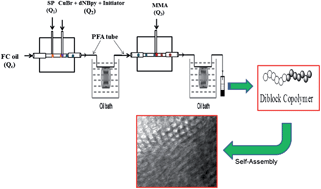
For the synthesis of the inorganic–organic block copolymer SP-b-PMMA, polyhydrido vinylsilazane (SP) was modified and used as a macroinitiator. The first block of the copolymer, SP, was modified to attach a Br group at the end of the polymer chain. A solution of SP in diphenyl ether (1 g/4 ml, flow rate 1.75–17.5 μL min−1) and a solution of CuBr + 4,4′-di-5-nonyl-2,2′-bipyridine (dNBpy) + initiator (0.1 mmol and 0.05 mmol, respectively) in diphenyl ether (flow rate 1.75–17.5 μL min−1) were introduced separately into a double T-junction microfluidic device. The SP solution and the solution of (CuBr + dNBpy + initiator) in diphenyl ether formed the dispersed phase. The continuous phase, fluorocarbon oil (FC oil, 3 M) was injected from the horizontal inlet at a flow rate of Qc μL min−1 (flow rate 10.5–105 μL min−1). The SP solution was forced into the continuous phase at the first T-junction of the channel at a flow rate of Q1 μL min−1 using a syringe pump (PHD 2000, Harvard Instruments) to initially form the first droplet. The solution of (CuBr + dNBpy + initiator) in diphenyl ether was forced into the continuous phase at the second T-junction of the channel at a flow rate of Q2 μL min−1 to form the second droplet. This merged immediately with the first droplet in the main horizontal channel to produce a larger droplet. Each resulting droplet contained the reaction mixture of SP, CuBr, dNBpy and the initiator, and this is called a droplet microreactor. Each droplet reactor then flowed in the PFA tube (ID 508 μm), which was immersed in a silicon oil bath at 90 °C, with different delay loop lengths (45–180 cm) of the PFA tube. At the outlet of the first PFA tube, the modified SP was continuously used as a macroinitiator to synthesize the SP-b-PMMA block copolymer through a reaction with the methylmethacrylate monomer in the second step of a consecutive step-wise process. Similarly, the droplet of the modified SP merged with the droplet of methylmethacrylate monomer (neat, 0.02 mol) forced at a flow rate of Q3 μL min−1 (1.75–17.5 μL min−1) in the microfluidic device and the resulting droplet flow in the PFA tube was maintained at 90 °C. The experiments were carried out at different flow rates of dispersed and continuous phases but the ratio of the flow rates between the dispersed and continuous phases was maintained at Q1:Q2:Q3:Qc = 1
:
1
:
1
:
6, which allowed easy control of the generation and merging of droplets. At the outlet of the PFA tube, the product was isolated by diluting in THF and adding excess n-hexane to cause precipitation. The process is shown in Fig. 2. Finally, the as-synthesized SP-b-PMMA block copolymer was characterized by 1H-NMR spectroscopy and GPC.
 |
| | Fig. 2 Generation and merging of the reactant droplets for SP-b-PMMA copolymerization: (A) schematic diagram of the microfluidic droplet generator for the inorganic–organic SP-b-PMMA block copolymer synthesis, (B) optical image of the reactant droplets in a Kion microfluidic device for the modification of SP to get the modified SP macroinitiator, (C) optical image of the reactant droplets in a Kion microfluidic device for the SP-b-PMMA synthesis step. The scale bar is 500 μm. | |
To compare with the droplet-based microreactor, a bulk phase copolymerization was carried out in a flask at 90 °C for 20 h with magnetic stirring at 700–1000 rpm for the mixing of the reactant mixture.
Self-assembly of the SP-b-PMMA block-copolymer
To investigate the microphase segregation of the bulk phase of the mesoporous ceramic material, a thin film of the mesoporous SP-b-PMMA pattern was fabricated by a thermal annealing method. For the self-assembly, 1 wt% of the diblock copolymer was dissolved in THF (anhydrous 99.9%) to make a solution. After stirring, for uniform coating of the layers, any dust or particles and/or bubbles were removed using 0.2 μm filters. SP-b-PMMA films of approximately 0.5 mm thickness were cast over 3–4 days in a 100 mm-diameter Teflon disk. The thick cast films were self-assembled by a thermal annealing method without a thermal initiator under an Ar atmosphere at 180 °C for 20 h and then pyrolyzed at temperatures up to 1200 °C at a heating rate of 1 °C min−1 in an air atmosphere to convert them into a ceramic bulk powder type of product.
Characterization
1H-Nuclear magnetic resonance (NMR) spectroscopy was performed in CDCl3 on a Bruker DMX600 instrument with a 7788 Hz spectral width, a relaxation delay of 1.0 s, and a pulse width of 30°. The molecular weight distribution of the synthesized polymers was examined by gel permeation chromatography (GPC) using a Waters 515 HPLC isocratic pump equipped with a Waters 2414 Refractive Index detector and Waters styragel columns (HR 1, 2, 3, 4, 5 E). THF (flow rate of 1.0 mL min−1) was used as the solvent and polystyrene (Shodex standard) was used as a standard for universal calibration. High-resolution transmission electron microscopy (HRTEM) images were obtained using a JEM 2100F, JEOL, Japan, operating at 200 kV. The scanning electron microscopy (SEM) was performed using a JSM-7000F, JEOL, Japan. The degree of polymerization was calculated from the NMR spectra using the signals from the vinyl groups of the polymer and monomer. The particle size of the self-assembled nanoparticles in an aqueous medium was measured by dynamic light scattering (DLS) using a Part III laser particles analyzer (Photal Otsuka Electronic, Japan) at a concentration of 1 mg mL−1. The small angle X-ray diffraction (SA-XRD) patterns were recorded on a MX Labo powder diffractometer using Cu-Ka radiation (40 kV, 20 mA) at a scan rate of 1.0 min−1 over the range 0.5–7.0 (2q). The pyrolyzed samples were crushed into fine powders and dispersed onto a thin holey-carbon support film. The surface area and N2 adsorption–desorption isotherms were measured at 77 K on a Micromeritics (ASAP 2010, USA) using the Brunauer–Emmett–Teller (BET) method.
Results and discussion
Fabrication of the polyvinyl silane (Kion) microfluidic device
Fig. 1 shows the fabrication process. Fig. 1(A) shows the PDMS mold used for making the framework that was assembled using commercially available tubes of different sizes. Viscous polyvinyl silane was poured into the framework (Fig. 1(B)), followed by initial thermal curing at 100 °C for 3 hours and then subsequent curing at 180 °C for 2 hours with a temperature ramp of 1 °C min−1.20 After curing, the template was simply removed from the polymer matrix to make the channel (Fig. 1(C)), so called the Kion microchannel. The advantage of this method is the simple and cost-effective approach for the fabrication of a monolithic, microfluidic device with various channel dimensions through a single step using low surface energy templates that can be removed easily from the matrix.13 This embedded template method enables the fabrication of a monolithic Kion microfluidic device within a short timespan with minimal or no fabrication facilities.
Moreover, a Kion microfluidic channel possesses solvent resistance, thermal stability and air-impermeable properties. It is known that the ATRP process requires robust reaction conditions with trace impurities such as air and water.1 Thus the Kion channel, which can resist most organic solvents and air, was used due to the easy swelling of PDMS in most organic solvents and the air-permeability of PDMS.
Synthesis of the inorganic–organic block-copolymer SP-b-PMMA in the droplet microreactor
We used the “T-junction” geometry of the microfluidic device to design an assembly type of microfluidic system for our experiments as previous reported.16 We assembled two microfluidic devices for the continuous two step copolymerization reaction in the droplet-based microreactor. In addition, the microfluidic system was assembled using a combination of lab-on-a-chip parts (microfluidic devices) for generating and merging the droplet and a PFA capillary tube (45–180 cm, ID 508 μm) for controlling the resident time at elevated temperatures. Both the dispersed and continuous phases were injected into the microfluidic device using syringe pumps (PHD 2000, Harvard Instruments, Holliston, MA). The continuous phase, fluorocarbon oil, was injected from the horizontal inlet with a flow rate of Qc μL min−1. The reactants solution was forced into the continuous phase at the “T-junction” of the channels with a flow rate of Q1 μL min−1, Q2 μL min−1 and Q3 μL min−1 to form the droplets, respectively. The first two kinds of droplet merged together immediately in the main horizontal channel of the first device and moved along the PFA loop to reach the desired temperature in the desired resident time. Then it came to the second device and merged with the third droplet to form an “n-reactor” droplet of nanoliter scale that contained the mixture of reactants flowing in the channel of the second microfluidic device. Subsequently, this “n-reactor” droplet flowed into the PFA tube kept in the 90 °C oil bath, where the block copolymer reaction took place. The copolymerization in the droplet-based microreactor was compared with the copolymerization in the bulk phase.
The experiments were carried out with different flow rates of the dispersed and continuous phases but at the same flow rate ratio between the dispersed and continuous phases Q1
:
Q2
:
Q3
:
Qc = 1
:
1
:
1
:
6, which allowed easy control of the generation and merging of the droplets.16,17 It has been reported that a change of flow rate affects not only the residence time but also other factors such as the degree of mixing, the nature of the flow, and changes in the size and shape of the droplet.24 Herein, we summarize the results of the copolymerization reaction in terms of different residence times and the same residence time but at different flow rates.
The mixture of reactants in the droplet was confined to the one nanoliter-scale and the droplet kept moving in the tube according to the residence time. This may generate significant heat transfer during the exothermic living radical polymerization reaction and efficient mixing between the monomer, the ATRP agent and the initiator.16–18,24 It is most likely that the droplet-based microreactor performed rapid consumption of the initial ATRP agent and fast equilibration of the dormant and active species, presumably to promote polymerization of the vinyl group.9,16 This induced the copolymerization reaction, which occurred very fast and was almost finished within the residence time of several minutes (Table 1) and also led to a higher molecular weight. In particular, Table 1 shows that the copolymerization reaction in the droplet-based microreactor with different delay loop lengths of PFA tube was achieved with a very high conversion and a high molecular weight. These values were higher than those in the macroscale batch reactor (bulk reaction). Surprisingly, after a total reaction time of 20 minutes (entry 1), the conversion to SP-b-PMMA was almost complete (∼98%), which was much faster than the bulk reaction.
Table 1 Conversions for the block copolymerization reactions with different reaction times
| Entry |
Total reaction time (min)c |
Droplet-based microreactor |
Bulk reaction for 20 h |
| Flow rate, Qc, μL m−1 |
ηa (%) |
MW |
PDI |
| Conversion to SP-b-PMMA, measured by 1H-NMR spectroscopy. This sample is named sample N1. () reaction time taken for synthesis of SP macroinitiator (modification of SP). |
| 1b |
20 (10) |
10.5 |
97.65 |
25 075 |
1.11 |
ηa: 72.6% MW: 13 975 PDI: 1.19 |
| 2 |
15 (10) |
21 |
93.88 |
18 659 |
1.14 |
|
| 3 |
12.5 (10) |
42 |
90.66 |
15 683 |
1.17 |
|
| 4 |
11 (10) |
105 |
88.58 |
11 940 |
1.18 |
|
| 5 |
15 (5) |
10.5 |
94.16 |
22 750 |
1.13 |
|
| 6 |
10 (5) |
21 |
91.07 |
16 348 |
1.16 |
|
| 7 |
6 (5) |
105 |
84.73 |
10 784 |
1.19 |
|
Interestingly, the polydispersity index (PDI) for the copolymerization reaction in the droplet-based microreactor was much smaller than that obtained from the polymerization in the bulk reaction. A smaller local deviation of the temperature in the microreactor also seems to be responsible for a narrower molecular weight distribution. In the case of the copolymerization reaction in the microfluidic reactor, a significant heat transfer to the reactant mixture, efficient chaotic advection mixing and a good contact between the reactants inside the nanoliter-scale droplet induces the homogeneous temperature and a better homogenization of methylmethacrylate and the SP macroinitiator in each droplet and also in all of the droplets.16 Consequently this uniformity in the chemical composition and the temperature allowed for a higher incorporation of the MMA monomer to form a PMMA chain and higher incorporation of PMMA chain with SP unit. Thus longer copolymer chains were formed in a short reaction time and yielded the copolymer with a very narrow molecular weight distribution (i.e. a very small PDI).
Moreover, the modification of SP also influenced the block copolymerization reaction of SP-b-PMMA. As seen in Table 1, using the SP macroinitiator obtained over a longer reaction time (10 min) for the diblock copolymer synthesis led to a higher quality of copolymer with a higher molecular weight and a lower PDI compared to using the SP macroinitiator obtained over 5 min. This feature can be attributed to the higher concentration of SP macroinitiator obtained over a longer reaction time. This would induce a good contact between the SP macroinitiator and the MMA monomer under the chaotic advection inside the nanoliter-scale droplet, and lead to a fast reaction to form the diblock copolymer SP-b-PMMA with a higher molecular weight and narrower molecular weight distribution. The use of the SP macroinitiator obtained from a 10 min reaction followed by a 10 min block copolymerization in the droplet microreactor produced the highest quality SP-b-PMMA diblock copolymer with a MW of 25
075 and a PDI of 1.11. This is presumably due to the enhanced homogeneous temperature distribution without hot spots and a better homogenization of the reactants in the nanoliter-scale droplet. Therefore, it can be concluded that the droplet-based microreactor is a reliable, efficient method for the synthesis of a well-defined block copolymer.
Formation of self-assembled well-defined ceramic nanostructures from the SP-b-PMMA block copolymer
As a demonstration of the high quality of the SP-b-PMMA block copolymer, the as-synthesized copolymer (sample N1, MW: 25
075, PDI: 1.11) was used to generate self-assembled well-defined nanostructures. It is well-known that the self-assembly of block copolymers is driven by microphase separation behavior. The chemically distinct macromolecular blocks covalently linked within block copolymer chains undergo spontaneous segregation into dense, periodic nanoscale domains.25 The self-assembly of well-defined block copolymers can be used to construct a range of ordered nanostructures in a wide range of morphologies, including spheres, cylinders, bicontinuous structures, lamellae, vesicles, and many other complex or hierarchical assemblies, depending on the block lengths and the ratios as well as the chemical composition.26,27 Furthermore, the self-assembly process can be further controlled by selecting a non-solvent and/or using solvent mixtures.28,29
The functionalized SP-b-PMMA diblock copolymer could self-assemble to form ceramic nanostructures at a high temperature. The organic PMMA block was pyrolyzed to form pores while the inorganic SP block was transformed to form a ceramic wall. A well-ordered mesoporous ceramic structure was obtained with a pore diameter of ∼8 nm (Fig. 3) after pyrolysis at 1200 °C in air. It has been noted that the relative volume fraction of the macromolecular blocks determines the shape of the nanodomains (nanospheres or nanocylinders or nanolamellae), and the overall molecular weight of the block copolymer chain determines the characteristic size of the nanopatterns.25 We proposed that the functionalized SP-b-PMMA block copolymer with a suitable volume fraction of the SP block acts as a precursor for the mesoporous ceramic, in addition to the intrinsic self-assembly. In particular, the large area of highly ordered hexagonal structures is shown in the TEM image in Fig. 3A. The results indicate that the well-ordered hexagonal arrays of mesoporous structures were formed using the diblock copolymer SP-b-PMMA. This is in excellent agreement with the results from the small-angle X-ray diffraction (SA-XRD) patterns (Fig. 3B) of the self-assembled polymeric film with sharp peaks at 2θ = 0.8° (after annealing at 180 °C) and 1.16° (after pyrolysis at 1200 °C), which indicates that a hexagonally packed cylindrical morphology was formed.
 |
| | Fig. 3 Characterization of the mesoporous ceramic structure obtained from the SP-b-PMMA (MW: 25 075, PDI: 1.11) template, after pyrolysis at 1200 °C in air: (A) TEM images with scale bar 20 nm, (B) small angle X-ray diffraction patterns, and (C) N2 adsorption–desorption isotherms and the pore size distribution (inset). | |
The porosity characteristics of the sample calcined at 1200 °C in an air atmosphere were investigated by measuring the N2 adsorption–desorption isotherm (Fig. 3C). The Brunauer–Emmertt–Teller (BET) analysis of this isotherm confirmed the presence of a highly mesoporous structure with a pore volume close to 0.68 cm3 g−1, a high specific surface area of 628 m2 g−1, and a narrow pore size distribution of 8.4 nm (as determined by the BJH desorption pore distribution method). This is in good agreement with the TEM and SA-XRD results. The observed results clearly demonstrate that using a droplet microfluidic reactor is a reliable route for preparing high quality block copolymers that can meet the requirements for the self-assembly of uniform nanostructures.
Conclusions
A droplet-based microreactor was used to synthesize an inorganic–organic block copolymer, where the reagents for the ATRP process were dispensed in monodisperse nanoliter droplets within a microchannel. The SP-b-PMMA block copolymer was synthesized successfully with a higher conversion and narrower polydispersity in a very short reaction time, approximately 20 minutes, compared to the block copolymer produced using the macroscale batch reactor. It can be concluded that droplet-based microreactors are quite effective for copolymerization reactions. The heat transfer ability and the extremely effective mixing in the droplet-based microreactor are the most outstanding factors compared to conventional macroscale batch reactors. Self-assembled well-defined ceramic nanostructures were examined as an application of the as-synthesized SP-b-PMMA that was obtained from the block copolymerization reaction in the droplet-based microfluidic reactor. Ordered mesoporous ceramic nanostructures with a regular framework, a high BET surface area of 628 m2 g−1 and an average mesopore size of 8.4 nm were prepared from the as-synthesized inorganic–organic block copolymer.
Moreover, this work also shows the usefulness of an embedded template method to fabricate a monolithic solvent-resistant, thermally stable and air-impermeable polyvinyl silane (Kion) microfluidic device within a short time span with few or no fabrication facilities. Further, the assembled droplet microfluidic system composed of a lab-on-a-chip part for the droplet generator and an external capillary tube was used for the first time to synthesize an inorganic–organic block copolymer using a living radical copolymerization technique.
Notes and references
- N. Chan, J. Meuldijk, M. F. Cunningham and R. A. Hutchinson, Ind. Eng. Chem. Res., 2013, 52, 11931–11942 CrossRef CAS.
- K. Matyjaszewski and J. Xia, Chem. Rev., 2001, 101, 2921 CrossRef CAS PubMed.
- M. Kato, M. Kamigaito, M. Sawamoto and T. Higashimura, Macromolecules, 1995, 28, 1721 CrossRef CAS.
- J. S. Wang and K. Matyjaszewski, Macromolecules, 1995, 28, 7901 CrossRef CAS.
- K. Matyjaszewski, T. E. Patten and J. Xia, J. Am. Chem. Soc., 1997, 119, 674 CrossRef CAS.
- T. E. Patten and K. Matyjaszewski, Adv. Mater., 1998, 10, 901 CrossRef CAS.
- S. G. Gaynor and K. Matyjaszewski, in Controlled Radical Polymerization, ed. K. Matyjaszewski, Washington DC, 1997, ACS Symposium Series no. 685, p. 396 Search PubMed.
- F. Costantini, E. M. Benetti, R. M. Tiggelaar, H. J. G. E. Gardeniers, D. N. Reinhoudt, J. Vancso, G. J. Huskens and W. Verboom, Chem.–Eur. J., 2010, 16, 12406–12411 CrossRef CAS PubMed.
- T. Iwasaki and J. Yoshida, Macromolecules, 2005, 38, 1159–1163 CrossRef CAS.
- F. J. Schork and W. Smulders, J. Appl. Polym. Sci., 2004, 92, 539 CrossRef CAS.
- J. Kobayashi, Y. Mori, K. Okamoto, R. Akiyama, M. Ueno, T. Kitamori and S. Kobayashi, Science, 2004, 304, 1305–1308 CrossRef CAS PubMed.
- C. Wiles, P. Watts, S. J. Haswell and E. Pombo-Villar, Chem. Commun., 2002, 1034–1035 RSC.
- C. Serra, N. Sary, G. Schlatter, G. Hadziioannou and V. Hessel, Lab Chip, 2005, 5, 966–973 RSC.
- T. E. Enright, M. F. Cunningham and B. Keoshkerian, Macromol. Rapid Commun., 2005, 26, 221–225 CrossRef CAS.
- S. Suga, A. Nagaki, Y. Tsutsui and J. Yoshida, Org. Lett., 2003, 5, 945–947 CrossRef CAS PubMed.
- P. H. Hoang, C. T. Nguyen, J. Perumal and D. P. Kim, Lab Chip, 2011, 11, 329 RSC.
- P. H. Hoang, H. S. Park and D. P. Kim, J. Am. Chem. Soc., 2011, 133, 17654 Search PubMed.
- P. H. Hoang, K. B. Yoon and D. P. Kim, RSC Adv., 2012, 2, 5323–5328 RSC.
- S.-J. Jeong, H.-S. Moon, J. Y. Kim, Y. Yu, S. Lee, M. G. Lee, H. Y. Choi and S. O. Kim, ACS Nano, 2010, 4, 5181 CrossRef CAS PubMed.
- S.-J. Jeong, H.-S. Moon, J. Shin, B. H. Kim, D. O. Shin, J. Y. Kim, Y.-H. Lee, J. U. Kim and S. O. Kim, Nano Lett., 2010, 10, 3500 CrossRef CAS PubMed.
- B. H. Kim, J. Y. Kim, S. J. Jeong, J. O. Hwang, D. H. Lee, D. O. Shin, S.-Y. Choi and S. O. Kim, ACS Nano, 2010, 4, 5464 CrossRef CAS PubMed.
- C. T. Nguyen, P. H. Hoang, J. Perumal and D. P. Kim, Chem. Commun., 2011, 47(12), 3484–3486 RSC.
- A. Asthana, K. O. Kim, J. Perumal, D. M. Kim and D. P. Kim, Lab Chip, 2009, 9, 1138–1142 RSC.
- H. Song, D. L. Chen and R. F. Ismagilov, Angew. Chem., Int. Ed., 2006, 45, 7336–7356 CrossRef CAS PubMed.
- B. H. Kim, J. Y. Kim and S. O. Kim, Soft Matter, 2013, 9, 2780–2786 RSC.
- Y. Mai and A. Eisenberg, Chem. Soc. Rev., 2012, 41, 5969–5985 RSC.
- J.-F. Gohy, Adv. Polym. Sci., 2005, 190, 65–136 CrossRef CAS.
- R. Hoogenboom, H. M. L. Thijs, D. Wouters, S. Hoeppener and U. S. Schubert, Macromolecules, 2008, 41, 1581–1583 CrossRef CAS.
- Y. He, Z. Li, P. Simone and T. P. Lodge, J. Am. Chem. Soc., 2006, 128, 2745–2750 CrossRef CAS PubMed.
|
| This journal is © The Royal Society of Chemistry 2014 |
Click here to see how this site uses Cookies. View our privacy policy here.