
Meiling Sun,
Wuyou Fu,
Qian Li,
Guangchao Yin,
Kailin Chi,
Jinwen Ma,
Lihua Yang,
Yannan Mu,
Yanli Chen,
Shi Su,
Wenjiao Zhang and
Haibin Yang*
State Key Laboratory of Superhard Materials, Jilin University, Changchun, 130012, China. E-mail: yanghb@jlu.edu.cn; Fax: +86 431 85168763; Tel: +86 431 85168763
First published on 7th January 2014
Oriented and high-density n-type CdS nanorod arrays were successfully embedded in p-type PbS absorber layers by a facile and low-cost hydrothermal method and a chemical bath deposition method. The structural, optical and electrical properties of these samples were examined, and the results demonstrated that the high quality three-dimensional heterostructure was obtained. Further investigation revealed that the three-dimensional heterostructure possessed superior optical absorption property due to the optical scattering from the nanorod array. In addition, photovoltaic property measurements demonstrated that the energy conversion efficiency of the novel three-dimensional heterojunction solar cell was increasing by 35% in comparison with the standard planar heterojunction solar cell. The observed improvement is mostly attributed to the three-dimensional heterostructure enabling increased heterojunction area, improved charge carrier collection and enhanced optical absorption ability. This study demonstrates that the three-dimensional heterostructure has potential application in thin film solar cells, and the solution process represents a promising technique for large-scale fabrication of these novel solar cells.
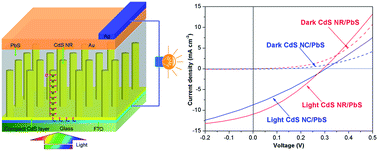
In the past decade, several approaches have been demonstrated to boost light-to-electricity efficiency of PbS solar cells, including use of colloidal nanocrystal quantum dots,10 inhibition of the Schottky junction between PbS photoactive layer and anode11 and precisely compositional control of PbS with different bandgaps.12 An alternative to further improve performance will highly rely on creation of different nanostructures for solar cell devices. Compared with nanoparticle (NP) thin films, one-dimensional (1D) semiconductor arrays (nanorods, nanowires, nanotubes and nanopillars) with well-defined crystal shapes, larger surface area and excellent charge transportation property have gained considerable attention owing to their potential application in photovoltaic devices.13–16 Use of 1D inorganic nanostructures as charge collectors and organic materials as absorbers has been widely studied in dye-sensitized solar cells.17–19 However, there are very few reports on embedded 1D inorganic semiconductor arrays in inorganic materials for bulk heterojunction solar cells likely due to the complicated fabrication process, while conventional thin film solar cells are constructed from planar junctions of p- and n-type semiconductors. Recently, Fan and colleagues reported on a template-assisted approach to fabricate CdS nanopillars, and investigated the exposed length comparable to the distance between nanopillars, making it possible to deposit CdTe into the spaces by vapor deposition. Finally, an overall efficiency of 6% had been achieved.20 Therefore, these novel device structures with larger surface area and improved carrier diffusion distance are potentially useful for advanced solar cell applications. However, the high-density nanowire arrays with small separations are difficult to fabricate three-dimensional (3D) thin film solar cells because the absorber layers are hard to deposit into the spaces among the nanowires and only in contact with the top of the nanowires, even though the nanowire arrays possess desirable larger surface area.
To solve these issues, in this study, we describe a low-cost and template-free approach for large-scale synthesis of oriented and high-density CdS nanorod (NR) arrays on fluorine-doped tin dioxide (FTO) glass substrates by hydrothermal method. Chemical bath deposition (CBD) offers an attractive route to embed the n-CdS NR arrays in the p-PbS optical absorber layers to form 3D heterojunction solar cells with the reduction in the cost of technology and the energy consumption in the fabrication process. In addition, planar junctions comprised of CdS and PbS thin films are also prepared under similar conditions for comparison. The 3D heterojunction solar cells demonstrate improved energy conversion efficiency, which is ascribed to the increased heterojunction area, improved charge carrier collection and enhanced optical absorption ability. These results demonstrate that 3D structure has a potential application in heterojunction solar cells and the solution process represents a promising technique for fabricating these novel solar cells.
The PbS thin films were also prepared by CBD method. Typically, 25 mL of 0.05 M lead acetate and 25 mL of 0.08 M triethanolamine were added to 25 mL of 0.2 M NaOH to form a mixture. Then, the mixture was continuously stirred for about 1 h to give a clear solution. Afterwards, 25 mL of 0.12 M thiourea were added to the clear solution to form the deposition solution. Finally, the CdS/FTO substrates were vertically immersed into the deposition solution at 70 °C for 2 h. After completion of each deposition, the coated substrates were cleaned with ethanol in an ultrasound bath for 60 seconds, and then dried under high-purity nitrogen flow. To evaluate the photovoltaic performance, a layer of Au of 3 × 3 mm2 was sputtered over the PbS films.
A model JEOL JSM-6700F field emission scanning electron microscopy (FESEM) was used to characterize the morphologies of the samples. The transmission electron microscopy (TEM), high-resolution transmission electron microscopy (HRTEM) images and selected area electron diffraction (SAED) pattern were taken on a JEOL JEM-2200FS with an accelerating voltage of 200 kV. The crystal structures were identified by X-ray diffractometer (XRD, Rigaku D/max-2500) with CuKα radiation (λ = 1.5418 Å). Energy dispersive X-ray analysis (EDX) of the CdS/PbS photoelectrodes were performed with an EDAX Genesis 2000 system (FEI Inc) installed on the XL 30 ESEM imaging instrument. A UV-3150 double-beam spectrophotometer was used to characterize transmission spectra. The photocurrent density–voltage (J–V) characteristics of the solar cells were recorded with a Keithley 2400 source-measuring unit under ambient at room temperature. A 500 W xenon lamp was used as a light source and its light intensity was adjusted to 100 mW cm−2 through a knob switch with the help of a laser power meter (BG26M92C, Midwest Group). The active area was strictly kept within 0.09 cm2 for all samples.
To shed light on crystalline quality of the CdS NRs, TEM observation is imperative. Fig. 2(a) displays the TEM image of a single CdS NR. The length of the CdS NR is approximately 390 nm, and the diameter is about 140 nm. The detailed microstructure of this NR is further investigated by HRTEM (Fig. 2(b)). Clearly, the as-prepared sample possesses high crystallinity. The observed 3.36 spacing fringe is consistent with the (002) lattice plane of hexangular wurtzite CdS, which indicates that the NRs grow along the [001] direction. Furthermore, the corresponding SAED pattern which is shown in the inset reveals that the NR is single crystalline in nature, which is beneficial for charge transport.23
![]() | ||
| Fig. 2 (a) TEM and (b) HRTEM images of a single CdS NR, and the inset is the corresponding SAED pattern. | ||
In a typical synthesis of photoelectrodes, the p-PbS thin films to serve as the absorber layers were prepared on the n-CdS/FTO substrates by facile CBD method. Fig. 3 illustrates the typical CdS NR/PbS 3D heterojunction thin film and CdS NC/PbS planar heterojunction thin film. The top-surface morphology of as deposited CdS NR/PbS thin film is shown in Fig. 3(a), indicating that a continuous film of PbS is obtained. The film has a compact surface with a smooth granular structure and well defined grain boundaries. Noticeably, the CdS NC/PbS sample possesses the same top-surface morphology, as seen in Fig. 3(c). To determine whether the spaces among the CdS NRs are completely filled with PbS beneath the top layer, a cross-sectional image of the sample is taken, as shown in Fig. 3(b). It can be seen that CdS NRs are completely encased by PbS NC, and then the nanorods top surface is covered uniformly with a layer of PbS thin film. The as-deposited PbS thin film with a thickness of about 350 nm exhibits strongly preferred oriented epitaxial growth, which is conducive to electron transport. These observations indicate unambiguously that the PbS fills the narrow spaces among the CdS NRs to form CdS NR/PbS 3D radial nanorod heterojunctions. This is an advantage of CBD over proposed vapor-phase techniques which are typically incapable of filling the narrow inter nanorod spaces. For comparative study, the CdS NC/PbS planar heterojunction thin film was also prepared by the two-step CBD process. Individual layers of PbS, CdS, and FTO on the glass substrate are visible in Fig. 3(d). Note that the PbS thin film (∼350 nm thick) shows excellent adhesion to the CdS NC layer. It is clear from Fig. 3(b) and (d), by taking the side area of the NRs into account, the heterojunction area of the 3D photoelectrodes is larger than that of the planar photoelectrodes, which helps to improve the performance of the solar cells.
The phase structure and chemistry composition of the samples were also investigated by XRD and EDX measurements. Fig. 4 displays the XRD patterns for both bare CdS thin films (curve b and c) and CdS/PbS heterojunction thin films (curve d and e). For CdS thin films, after being annealed at 400 °C for 20 min in a high-purity nitrogen atmosphere, the XRD data show an excellent agreement with the standard hexagonal wurtzite structure (JCPDS 41-1049). A clear difference in the relative intensities of peaks corresponding to various crystallographic planes is visible in the two kinds of CdS thin films. Compared to the CdS NC XRD pattern (curve b), a sharp increase in the (002) peak intensity than other directions (curve c) indicates that the CdS NRs grow preferentially oriented along the [001] direction. After composited with PbS thin film (curve d and e), various fresh evident diffraction peaks are observed for the cubic structure of PbS (JCPDS 78-1897). The strong and sharp diffraction peaks suggest that the as-prepared samples are well crystallized. The ratios between the intensity of the (200) and (111) peaks in curve d and e are 2.08 and 1.45 respectively, which are higher than the standard value 1.06. And the ratios of the (200) peak to the other peaks are also higher than the standard value. Therefore, the XRD pattern shows that the PbS thin film is single phase with a preferential orientation along the (200) plane, which is consistent with the SEM image (Fig. 3(b) and (d)). Furthermore, the diffraction peaks from impurities such as other lead compounds or cadmium compounds have not been detected, suggesting the high purity of the as-obtained products. The EDX spectrum of the pure CdS NR thin film and CdS NR/PbS heterojunction thin film are observed in Fig. 5. For the CdS NR thin film (Fig. 5(a)), the presence of S and Cd elements with atomic ratio of 1.12
:
1 is consistent with the stoichiometric composition of CdS. As shown in Fig. 5(b), the total atomic concentration of Cd and Pb is 44.04%, which is similar to that of S 45.48%, in agreement with the desired stoichiometric composition of CdS NR/PbS thin film. In addition, the observed signal of Si and Sn elements are from the FTO glass substrates.
![]() | ||
| Fig. 5 EDX spectrums of (a) the pure CdS NR array thin film and (b) the CdS NR/PbS 3D heterojunction thin film. | ||
The optical properties of the CdS thin films and CdS/PbS thin film were characterized by the transmission spectra measurements, as shown in Fig. 6. In order to remove the influence of FTO substrates and only measure the transmittance of the pure CdS and CdS/PbS thin film, we use the FTO for base, assuming its transmittance is 100%. It is obvious that a sharp increase of transmission starts at around 500 nm (Fig. 6(a)) indicating that the CdS thin films can absorb visible light with wavelength range from 300 nm to 500 nm. Clearly, the transmittance of the CdS NR thin film is lower than that of the CdS NC thin film with wavelength range from 300 nm to 650 nm, maybe due to the enhanced optical scattering from the oriented NR arrays.20,24 After composited with PbS thin films as the optical absorber layers, the photoelectrodes based on the CdS NR/PbS thin film and CdS NC/PbS thin film were prepared. Fig. 6(b) shows the transmission spectras of the two kinds of photoelectrodes. Obviously, the transmittance of both CdS/PbS photoelectrodes is very low, indicating the high photoabsorption coefficient throughout the visible and near-infrared region of the incident light, which can be ascribe to the effective photoabsorption property of the PbS thin film. The ability to absorb incident light makes this type of CdS/PbS photoelectrodes promising applications in photovoltaic devices. However, the transmittance of the CdS NR/PbS 3D photoelectrode is a little lower than that of CdS NC/PbS planar photoelectrode, because the light can be scattered by the highly ordered CdS NR arrays in the 3D photoelectrode. This leads to an increase of the optical path length in the CdS film, thus allowing more light to be recycled by the PbS film, which helps to improve the conversion efficiency.20,25 All these results further proved that the PbS not only wrapped over the top of CdS nanorods, but also filled into internal spaces among the CdS NR array.
The effective photoabsorption plays a salient role in enhancing the performance of photovoltaic devices,26,27 which provides us an opportunity to study the photon-to-charge conversion of the CdS/PbS thin film solar cells. The CdS NR/PbS heterojunction solar cell with a stacked structure of FTO/compact CdS layer/CdS NRs/PbS/Au/Ag (Fig. 7) was fabricated and investigated. For comparative study, the heterojunction solar cell based on the CdS NC/PbS planar photoelectrode was also prepared. Fig. 8 shows the photocurrent density–voltage (J–V) characteristics of the solar cells, and the relevant photovoltaic parameters are summarized in Table 1. The observed dark current density curves with rectifying behavior indicate that the p–n junctions are formed at the interfaces of n-type CdS and p-type PbS, because CdS grown without intentional doping generally show n-type semiconducting properties while PbS grows as a p-type semiconductor. Photovoltaic effects of the heterostructures were measured during illumination through the FTO glass substrate. The CdS NR/PbS 3D heterojunction solar cell shows a short-circuit current density (Jsc) of 10.87 mA cm−2 and an open-circuit voltage (Voc) of 0.29 V, yielding an overall energy-conversion efficiency (η) of 1.01% with a fill factor (FF) of 0.32. For the CdS NC/PbS planar heterojunction solar cell, the Jsc and Voc were measured to be 8.65 mA cm−2 and 0.30 V with the FF and η of 0.29 and 0.75%, respectively. As can be seen clearly from Table 1, the Jsc, FF and η of the CdS NR/PbS 3D heterojunction solar cell were increasing by 26%, 10% and 35%, respectively, in comparison with the planar heterojunction solar cell. This can be attributed to the fact that the heterojunction area of the 3D solar cells is larger than that of the planar solar cells as observed in Fig. 3. In general, large junction area is indispensable to a high-performance photoelectrode,27,28 because more optical generation electron–hole pairs would separate in the space charge region which generated in the interface between the CdS NR and the PbS thin film. Moreover, compared to the CdS NC thin film, vertically aligned CdS NRs have fewer interfaces for easier electron transport with a reduced chance of charge recombination due to the high single-crystal quality of the NRs (see Fig. 2), which could enhance the charge carrier collection ability and further improve the cell performance.23,25,28 In addition, the 3D photoelectrodes promote enhanced optical absorption efficiency when compared with planar photoelectrodes (see Fig. 6), which is conducive to generate more electrons. It should be noted that the Voc of the 3D heterojunction solar cell is slightly lower than that of planar heterojunction solar cell might arising from the poor contact between CdS NRs and PbS, which would lower heterojunction interface quality. The Voc maybe enhanced by surface treatment of CdS NR arrays prior to PbS growth and annealing treatment of the photoelectrodes in the future. In this paper, for the CdS NC/PbS and CdS NR/PbS heterojunction solar cells, another five cells of each type were also tested, and the datas are shown in Fig. S1.† It is clear that all the Jsc, FF and η of the CdS NR/PbS 3D heterojunction solar cells are higher than those of CdS NC/PbS planar heterojunction solar cells, and Voc of the 3D heterojunction solar cells is a little lower than that of planar heterojunction solar cells. All the results are similar to that in Fig. 8, which means that the reproducibility of these solar cells is very well and the performance of the 3D heterojunction solar cells is really higher than that of the planar heterojunction solar cells.
![]() | ||
| Fig. 7 The structure and the electronic transport mechanism of the novel heterojunction solar cell based on the CdS NR/PbS 3D photoelectrode. | ||
![]() | ||
| Fig. 8 Photocurrent density–voltage (J–V) characteristics of the heterojunction solar cells based on the CdS NR/PbS 3D photoelectrode and CdS NC/PbS planar photoelectrode. | ||
| Photoelectrodes | Jsc (mA cm−2) | Voc (V) | FF | η (%) |
|---|---|---|---|---|
| CdS NC/PbS | 8.65 | 0.30 | 0.29 | 0.75 |
| CdS NR/PbS | 10.87 | 0.29 | 0.32 | 1.01 |
Footnote |
| † Electronic supplementary information (ESI) available: Photovoltaic parameters of another ten solar cells. See DOI: 10.1039/c3ra45446k |
| This journal is © The Royal Society of Chemistry 2014 |