Synthesis of mesoporous silica oxide/C-dot complex (meso-SiO2/C-dots) using pyrolysed rice husk and its application in bioimaging

Sunil Pandey *, Ashmi Mewada , Mukeshchand Thakur , Sreenath Pillai , Roopa Dharmatti , Chinmay Phadke and Madhuri Sharon *
N.S.N. Research Center for Nanotechnology and Bio-Nanotechnology, Ambernath, MS, India. E-mail: gurus.spandey@gmail.com; sharonmadhuri@gmail.com; Tel: +91 9004024937

Received 19th September 2013 , Accepted 11th October 2013

First published on 14th October 2013


Abstract

Due to the abundance of silica and carbon in rice (Oryza sativa) husk (RH), we exploited it for the synthesis of a mesoporous silica oxide micro-particles (meso-SiO2)/C-dot complex for biological imaging using a novel hot injection method commonly used for semiconductor quantum dots. Carbon dots (C-dots) with a high degree of green fluorescence were observed under UV-light they were found to be embedded to a significant extent in meso-SiO2 as confirmed by transmission electron microscopy (TEM) and energy dispersive spectroscopy (EDS). The mesoporous nature of the complex was confirmed using N2 adsorption–desorption measurements. Surface functionalization was studied using Fourier transform infrared spectroscopy (FTIR). The synthesized meso-SiO2/C-dots complex was used for labeling yeast cells since the fungi closely represents eukaryotic organisms. Furthermore, the meso-SiO2/C-dot complex was found to be highly bio-compatible for Vero cells. This study might help in the further utilization of the complex for the theranostic application of simultaneous cellular imaging and drug delivery.

1. Introduction

Carbon dots (C-dots), due to their excellent photochemical properties as well as exceptional biocompatibility, have become one of the most celebrated carbon based materials for biological applications.1,2 The major component of the C-dots is carbon, which makes them a favored ingredient for in vivo administration in the body along with therapeutic payloads such as drugs and genes.3 These important attributes of C-dots have made them potential alternatives to semiconductor quantum dots, which contain noxious metals such as arsenic and cadmium.1,4–6 There is a certain level of controversy, but the inception of fluorescence in C-dots is considered to be a result of the surface chemistry as well as deep energy traps.1 Inspite of many efforts to tune the size and shape of C-dots, it remains a daunting task to control the uniformity as well as emission properties of C-dots, unlike metal nano-clusters, which exhibit narrow full width at half maxima (FWHM). There are plethora of protocols optimized for the synthesis of C-dots using microwave assisted carbonization of carbohydrates,7 laser activated ablation of graphene sheets,5,8 electrochemical synthesis,9 refluxing suitable precursors for varying time intervals10 and plant based materials.11,12

One of the most interesting outcomes of the work is the one pot synthesis of C-dots protected with meso-SiO2 micro-particles. In an earlier attempt to synthesize C-dots entrapped in meso-SiO2 in order to enhance the homogeneous size distribution, silica oxide nanoparticles were prepared separately followed by their attachment to synthesized C-dots and surface protection using polyethylene glycol.13 In order to prepare meso-SiO2 capped C-dots, we selected rice husk as an ideal precursor because of the very high content of silica present in it (>67%). We also developed a hot injection method for the preparation of the above complex at 200 °C using a three neck flask. This method was found to be extremely reproducible and yielded high quality C-dots.

2. Experimental

2.1. Materials and methods

Rice husk (RH) was purchased form a local shop and washed with distilled water to remove impurities. All the other chemicals were of analytical grade and used as received.

2.2. Synthesis of meso-SiO2/C-dot complex

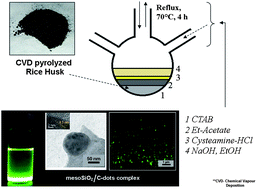
20 g of washed rice husk (RH) was pyrolyzed using chemical vapor deposition (CVD) under constant flow of oxygen for 3 h at 250 °C. Pyrolyzed RH was crushed to make a fine powder and used as the precursor for the synthesis of C-dots. 2 g of the above RH powder was mixed with 2 g of cetyl trimethyl ammonium bromide (CTAB) and was refluxed with 50 ml of ethyl acetate for 20 min in a three neck flask. At ∼70 °C, a mixture containing 1 ml of cysteamine hydrochloride (Cys-HCl) (3000 ppm), 3 ml 5 N NaOH and 3 ml EtOH was injected with the help of a syringe. The reaction was allowed to continue for 4 h and after that the yellowish solution was filtered and dialyzed against nanopure water for 12 h under mild stirring. After dialysis, the resultant light yellow colored solution exhibited very intense green fluorescence under UV light (λ = 365 nm), which is preliminary confirmation of the formation of C-dots. Before performing any biological studies, the meso-SiO2/C-dot solution was centrifuged at 6000 rpm for 20 min and resuspended in nanopure water (18 MΩ).

2.3. Characterization

High resolution transmission electron microscopy (HRTEM, Jeol, Japan) was used to elucidate the morphological details of the meso-SiO2/C-dot complex. Samples were dried on carbon coated formvar for HRTEM. Spectral properties were studied by UV-Vis spectroscopy (Lambda-25, Perkin Elmer) and fluorescence spectroscopy (Perkin Elmer, USA) using a standard quartz cuvette with a path length of 1 cm. Crystallinity was studied using X-ray diffraction (XRD) (Phillips, The Netherlands), the samples were coated on glass coverslip and dried under ambient conditions. Raman spectra were recorded using a Jobin–Yvon Labram spectrometer.

2.4. Bioimaging and cytotoxicity assay

Saccharomyces cerevisiae fungal cultures were obtained from the microbiology department of N.S.N. Research Center, India. The cultures were 18 h old and were stored at 4 °C. 2 ml of the culture was suspended in a 10 ml saline suspension and incubated at 37 °C for 18 h. 500 μl of the purified meso-SiO2/C-dot complex was added to 5 ml of this yeast suspension and incubated at 37 °C for 8 h. 100 μl of the incubated sample was then loaded onto a sterile glass slide and was viewed under a fluorescence microscope. The inimical effect of the meso-SiO2/C-dot complex was assessed using a standard protocol based on a MTT assay. Briefly, Vero cells were suspended (5 × 10⁵ per ml) in 96 well plates and incubated at 37 °C and 5% CO2 for 24 h. After that, the required amount of meso-SiO2/C-dots was added in to the wells and incubated for 48 h. Later, these solutions were replaced with MTT (200 μg ml−1). Cells were incubated for 2.5 h at 28 ± 2 °C to initiate formation of formazan, due to the involvement of the mitochondrial enzymes, which was measured spectrophotometrically using a standard microplate reader (Thermo, USA) at 570 nm.

3. Results and discussion

Rice husk ash (RHA), owing to its high content of silica can be an ideal precursor for the synthesis of mesoporous silica oxide micro-particles along with highly fluorescent C-dots. Being rich in carbon and silica, rice husk can act as an ideal precursor for synthesis of C-dots as well as mesoporous silica oxide. The advantages of a one pot synthesis of meso-SiO2/C-dots are the following:

i. Rice husk, being a natural material act as a highly biocompatible precursor for a C-dot synthesis.

ii. Involvement of toxic chemical constituents such as tetraethyl orthosilicate (TEOS) is avoided.

iii. The process is rapid hence ideal for the commercial synthesis of C-dots.

iv. Mesoporous silica oxide along with C-dots can act as a versatile drug delivery vehicle with a high drug loading capacity.

Pyrolysis of RH before the synthesis of C-dots was done to solubilize the major carbon content in ethyl acetate, and particularly, the high amount of silica present in the RHA (Table 1). During carbonization of RH the carbonaceous materials get oxygenated, which is an important prerequisite for C-dot synthesis.14 A major part of the silica gets separated during the reflux due to its high solubility in ethyl acetate. After injection of 5 M NaOH along with EtOH, there was a transformation in the color from black to pale yellow, a common color marker for C-dot synthesis.7,11,12 In the reaction vessel, due to a slightly alkaline environment (pH 6.4) and the presence of surface passivation agents such as ethanol, the synthesis of highly fluorescent C-dots was catalysed. An alkaline environment is found to be highly favorable for the synthesis of C-dots.15 Simultaneously, the formation of mesoporous silica oxide is helped by the cationic surfactant CTAB. Simultaneous formation of C-dots can take place, which can attach to meso-SiO2 by adsorption, or covalent bond formation (Fig. 4b) alternatively cysteamine hydrochloride in a lower concentration could act as a bridge between mesoporous silica and the as synthesized C-dots. Due to the above chemical reactions a C-dots@meso-SiO2 conjugate is formed (Fig. 1). Another important observation was the presence of a silvery white suspension along with C-dots indicating the formation of meso-SiO2.13 This silvery yellow solution was first purified by dialysis against distilled water for 12 h. A clear water soluble suspension was obtained after dialysis, which exhibited a strong green color under UV light (λ = 260 nm) as depicted in Fig. 2. Aqueous solubility and bright fluorescence are two important attributes of C-dots, which are not present in other forms of carbon.15 With a certain level of disagreement, the inception of fluorescence in C-dots is believed to be due to the presence of energy traps.1 Quantum confinement is another mechanism considered to be responsible for the above phenomenon. Moreover, the association of SP3 hybridized carbons and oxygen plays a very critical role in the inception of fluorescence in carbon nanoparticles such as C-dots.16

Table 1 Average percentage chemical composition of rice husk obtained by taking two independent RHA samples
Sr. No. Constituents Percentage (%)
1. Silicon dioxide (SiO2) 81.33
2. Calcium oxide (CaO) 0.32
3. Ferric oxide (Fe2O3) 0.98
4. Aluminium oxide (Al2O3) 0.18
5. Magnesium oxide (MgO) 0.11
6. Titanium oxide (TiO2) 0.07
7. Carbon (C) 8.62
8. Loss of Ignition (L.O.I) 10.11


image file: c3ra45227a-f1.tif
Fig. 1 Schematic showing CTAB assisted synthesis of meso-SiO2 and attachment of C-dots to form the meso-SiO2/C-dot complex.

Fig. 2 depicts UV-Vis spectroscopy of as prepared C-dots along with meso-SiO2. A sharp peak at 260 nm and a broad hump at 972 nm indicate the formation of C-dots in the solution. The peak at 260 nm arises due to the π → π* electron transition of C[double bond, length as m-dash]C associated with C-dots17 and another peak at 972 nm is due to the presence of silica oxide or the meso-SiO2/C-dot complex. Due to significant absorption in the near infrared (NIR) region, this complex can also be used for photothermal therapy of solid tumors and/or NIR induced drug release, thus establishing a fundamental platform for chemo-photothermal therapy. Absence of background absorbance in the visible region indicates the absence of other carbonaceous materials, which usually absorb at higher wavelengths.18,19 The inset of the Fig. 2 presents photoluminescence spectra of the meso-SiO2/C-dot complex at 464, 535 and 552 nm after excitations at 250, 350 and 450 nm respectively. There is a continuous red shift and enhancement in intensity of the peak with an increasing excitation wavelength. Excitation dependent emission is a signature marker of C-dots.


image file: c3ra45227a-f2.tif
Fig. 2 UV-Vis spectroscopy of meso-SiO2/C-dots synthesised using rice husk. Inset shows photoluminescence spectra excited at (a) 250 (b) 350 and (c) 450 nm.

The most revealing feature of the present research is the synthesis of meso-SiO2 capped on the surface by C-dots and/or that the C-dots were found to be trapped inside the meso-SiO2. The TEM image displayed in Fig. 3a shows meso-SiO2/C-dots along with free C-dots and meso-SiO2 in the background. Fig. 3b shows mesoporous silica micro-particles along with an enlarged view showing the presence of tiny C-dots ∼10 nm in size on the surface. The inset shows an enlarged image of the entrapped C-dots with a lattice fringe width of 0.3 nm and the porous nature of the complex is seen in a HRTEM image (Fig. 3c). X-Ray diffraction (XRD) (Fig. 3d) reveals a characteristic peak at 2θ = 26.29° and a weak peak at 2θ = 43.67°, which are assigned to the (002) and (101) diffraction patterns of graphitic carbon respectively. The peak at 26.29° corresponds to an interlayer spacing of ∼3.77 Å, which is higher than that between the (002) planes in bulk graphite i.e. 3.44 Å.20 The Raman spectrum of RH derived C-dots is shown in Fig. 3e. The G-band observed at 1594.89 cm−1 with respect to the more intense peak of the D-band at 1331.52 cm−1 indicates the presence of messy carbon nanomaterials in the form of C-dots.21 Energy dispersive spectrometry (EDS) (Fig. 3f) shows that the major components are silicon (Si) and carbon (C) in the elemental composition of the meso-SiO2/C-dot complex. The prominence of silicon and carbon explains the association of C-dots and silicon oxide. Another peak corresponding to elemental oxygen (O) is present, which is particularly important for the fluorescent properties of C-dots. Sodium (Na) and bromide (Br) come from CTAB and traces of Cl come from Cys-HCl, which are used during the synthesis procedure. Fig. 3g shows a fluorescent image of the meso-SiO2/C-dot complex under UV excitation when viewed under a fluorescent microscope. Bright green complexes were seen because of the florescence emerging from the C-dots embedded in the meso-SiO2/C-dot complex.


image file: c3ra45227a-f3.tif
Fig. 3 (a) TEM image of the as prepared meso-SiO2/C-dot complex, (b) enlarged TEM image of selective C-dots embedded in meso-SiO2 particles where the highlighted spots being carbon-dots adhered onto meso-SiO2 particles and the inset shows a HRTEM snapshot of a representative meso-SiO2/C-dot particle with a fringe width of 0.3 nm, (c) HRTEM of meso-SiO2/C-dots having porous structure with C-dots adsorbed onto them. (d) XRD, (e) typical Raman spectra of the meso-SiO2/C-dot complex. EDAX of the complex depicting the major elemental composition is shown in (f) and (g) shows the fluorescent image of the complex.

In order to confirm the mesoporous nature of SiO2, a N2 adsorption–desorption measurement was performed. It showed type IV behavior (Fig. 4a). The pore size of the meso-SiO2 was found to be ∼30–40 nm as confirmed by the Brunauer–Emmett–Teller (BET) method. Surface functionalization studies were performed using FTIR. Fig. 4b shows FTIR spectra of the meso-SiO2/C-dot complex. Typical IR bands were obtained around 916–1094 cm−1, indicating symmetric stretching vibrations of Si–O–Si at 916 cm−1 and asymmetric stretching vibrations at 1094 cm−1. The weak band at 594 cm−1 was attributed to –CH2 alkane bending. The band at 1411 cm−1 is possibly due to aromatic –NO2 groups on surface passivized C-dots. Other surface passivation was observed at 1652 cm−1 arising from the C[double bond, length as m-dash]O stretching vibrations. A relatively intense IR band of a typical –CH stretching vibration from the C-dots was observed around 2952 cm−1. An intense wide band was observed at 3355 cm−1, which indicates typical surface passivation by –OH stretching onto C-dots and that typical silanol (Si-OH) groups were formed during the formation of the meso-SiO2/C-dot complex.


image file: c3ra45227a-f4.tif
Fig. 4 N2 adsorption–desorption measurement (a) and FTIR spectra (b) of meso-SiO2/C-dot complex.

An important use for blended meso-SiO2/C-dots was found to be yeast cell imaging as shown in Fig. 5. C-dots are more advantageous over conventional imaging materials such as gold nanoparticles due to high background scattering from biological cells.21 Semiconductor quantum dots (QDs), due to presence of highly toxic metals such as arsenic, lead and cadmium have limited applications in biological imaging.22


image file: c3ra45227a-f5.tif
Fig. 5 In vitro bioimaging of Yeast cells using the meso-SiO2/C-dot complex (a) white light microscopy of cells incubated with the complex and (b) fluorescence microscopy showing the presence of the complex inside the cells.

The cytotoxicity results (Fig. 6) demonstrate that C-dots blended with meso-SiO2 were non-toxic to Vero cells, thus providing an indication of the potential advantages of C-dots in imaging over conventional semiconductor QDs. These C-dots after administration into the body undergo rapid renal clearance and are quickly metabolised, unlike other fluorescent probes including QDs.23 At all of the concentrations of the complex (0.1–0.5 mg ml−1), the percentage viability of the cells were found to be >95% indicating exceptional bio-compatibility of the synthesised complex. In drug delivery applications, both mesoporous silica and C-dots individually can act as drug delivery vehicles.24,25 However, with the meso-SiO2/C-dot complex, a high drug loading efficiency can be achieved and simultaneous bio-imaging could be performed. Hence, the meso-SiO2/C-dot complex has a potential nano-theranostic application. A stronger photoluminescence property could be obtained with meso-SiO2/C-dots compared to C-dots alone.26


image file: c3ra45227a-f6.tif
Fig. 6 Percentage cell viability plot showing effect of the meso-SiO2/C-dot complex on Vero cell lines.

4. Conclusion

Rice husk is found to be an ideal precursor for the synthesis of meso-SiO2/C-dots using a hot injection method. The nature of the nano-complex was found to be highly porous, which can be used for efficient drug loading and other biological applications. As prepared meso-SiO2/C-dots were found to have an excellent bioimaging potential due to the fluorescent nature of the C-dots. The conjugate was found to be exceptionally biocompatible using Vero cells. In the future such smart engineered materials can help in theranostic applications in biology.

Acknowledgements

Authors wish to acknowledge financial support provided by SICES Society, Ambernath, India. Authors are also thankful towards IIT-Bombay, India for TEM and FTIR analysis.

Notes and references

  1. S. N. Baker and G. A. Baker, Angew. Chem., Int. Ed., 2010, 49, 6726 CrossRef CAS PubMed .
  2. J. H. Shen, Y. H. Zhu, X. L. Yang and C. Z. Li, Chem. Commun., 2012, 48, 3686 RSC .
  3. Q. Wang, X. Huang, Y. Long, X. Wang, H. Zhang, R. Zhu, L. Liang, P. Teng and H. Zheng, Carbon, 2012, 59, 192 CrossRef PubMed .
  4. X. Y. Xu, R. Ray, Y. L. Gu, H. J. Ploehn, L. Gearheart, K. Raker and W. A. Scrivens, J. Am. Chem. Soc., 2004, 126, 12736 CrossRef CAS PubMed .
  5. L. Cao, X. Wang, M. J. Meziani, F. S. Lu, H. F. Wang, P. J. G. Luo, Y. Lin, B. A. Harruff, L. M. Veca, D. Murray, S. Y. Xie and Y. P. Sun, J. Am. Chem. Soc., 2007, 129, 11318 CrossRef CAS PubMed .
  6. J. G. Zhou, C. Booker, R. Y. Li, X. T. Zhou, T. K. Sham, X. L. Sun and Z. F. Ding, J. Am. Chem. Soc., 2007, 129, 744 CrossRef CAS PubMed .
  7. S. K. Palashuddin, A. Jaiswal, A. Paul, S. Ghosh and A. Chattopadhyay, Sci. Rep., 2012, 2, 1 Search PubMed .
  8. Y. P. Sun, B. Zhou, Y. Lin, W. Wang, K. A. S. Fernando, P. Pathak, M. Meziani, B. A. Harruff, X. Wang, H. Wang, P. G. Luo, H. Yang, M. E. Kose, B. Chen, L. M. Veca and S. Y. Xie, J. Am. Chem. Soc., 2006, 128, 7756 CrossRef CAS PubMed .
  9. D. B. Shinde and V. K. Pillai, Chem.–Eur. J., 2012, 18, 12522 CrossRef CAS PubMed .
  10. H. Liu, T. Ye and C. Mao, Angew. Chem., Int. Ed., 2007, 46, 6473 CrossRef CAS PubMed .
  11. A. Mewada, S. Pandey, S. Shinde, N. Mishra, G. Oza, M. Thakur and M. Sharon, Mater. Sci. Eng., C, 2013, 33, 2914 CrossRef CAS PubMed .
  12. S. Pandey, A. Mewada, G. Oza, M. Thakur, N. Mishra, M. Sharon and M. Sharon, Nanosci. Nanotechnol. Lett., 2013, 5, 775 CrossRef CAS PubMed .
  13. C. W. Lai, Y. H. Hsiao, Y. K. Peng and P. T. Chou, J. Mater. Chem., 2012, 22, 14403 RSC .
  14. K. P. Loh, Q. Bao, G. Eda and M. Chhowalla, Nat. Chem., 2010, 12, 1015 CrossRef PubMed .
  15. H. Li, Z. Kang, Y. Liu and S. T. Lee, J. Mater. Chem., 2012, 22, 24230 RSC .
  16. L. Cao, M. J. Meziani, S. Sahu and Y. P. Sun, Acc. Chem. Res., 2013, 41, 171 CrossRef PubMed .
  17. Z. Luo, Y. Lu, L. A. Somers and A. T. Charlie Johnson, J. Am. Chem. Soc., 2009, 131, 898 CrossRef CAS PubMed .
  18. Y. Dong, J. Shao, C. Chen, H. Li, R. Wang, Y. Chi, X. Lin and G. Chen, Carbon, 2012, 50, 4738 CrossRef CAS PubMed .
  19. D. Y. Pan, J. C. Zhang, W. Q. Shen, Z. W. Zhang, Y. G. Fang and M. H. Wu, New J. Chem., 2010, 34, 591 RSC .
  20. M. S. Dresselhaus, A. Jorio, M. Hofmann, G. Dresselhaus and R. Saito, Nano Lett., 2010, 10, 751 CrossRef CAS PubMed .
  21. A. M. Alkilani, S. E. Lohse and C. J. Murphy, Acc. Chem. Res., 2013, 46, 650 CrossRef PubMed .
  22. I. L. Medintz, H. T. Uyeda, E. R. Goldman and H. Mattoussi, Nat. Mater., 2005, 4, 435 CrossRef CAS PubMed .
  23. H. S. Choi, et al. , Nat. Nanotechnol., 2010, 5, 42 CrossRef CAS PubMed .
  24. Q. He and J. Shi, J. Mater. Chem., 2011, 21, 5845 RSC .
  25. Q. Wang, X. Huang, Y. Long, X. Wang, H. Zhang, R. Zhu, L. Liang, P. Teng and H. Zheng, Carbon, 2013, 59, 192 CrossRef CAS PubMed .
  26. L. Zhou, Z. Li, Z. Liu, J. Ren and X. Qu, Langmuir, 2013, 29, 6396 CrossRef CAS PubMed .

Footnote

Authors have equal contribution in this work.

This journal is © The Royal Society of Chemistry 2014
Click here to see how this site uses Cookies. View our privacy policy here.