Fast synthesis of mesoporous γ-alumina assisted by a room temperature ionic liquid and its use as a support for the promotional catalytic performance of dibenzothiophene hydrodesulfurization

Zhi Liu* and Cong Lv
Institute of Chemistry for Functionalized Materials, Faculty of Chemistry and Chemical Engineering, Liaoning Normal University, Dalian 116029, P.R. China. E-mail: zhiliu@lnnu.edu.cn; Fax: +86 411 82156858; Tel: +86 411 82156989

Received 17th September 2013 , Accepted 17th December 2013

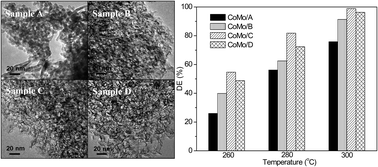
First published on 17th December 2013


Abstract

In the present work, mesoporous γ-aluminas have been successfully synthesized by calcining self-synthesized alumina sols in the presence of a room temperature ionic liquid, 1-butyl-3-methylimidazolium tetrafluoroborate. N2-adsorption measurements revealed that the ionic liquid had a significant influence on the textural structure of the final product. Aluminas prepared in this way displayed very rich porosities with narrow mesopores. As the ionic liquid content (IL/Al mol ratio) increased successively from 0 to 0.15, the products showed much larger pore volumes (0.32–1.44 cm3 g−1) and higher specific surface areas (253–352 m2 g−1). X-ray diffraction patterns and 27Al MAS NMR spectra revealed that the self-synthesized alumina sol firstly transformed into a boehmite phase and then became well-crystallized γ-alumina particles by calcining at 600 °C. As such, γ-alumina with improved textural properties and crystalline framework, could not only increase the dispersion of the active catalytic species, but could also enhance the diffusion efficiency and mass transfer of reactant molecules when employed as catalyst supports. The γ-alumina in this work demonstrated a remarkable enhancement in the catalytic performance of CoMo catalysts in dibenzothiophene hydrodesulfurization.

Introduction

Transition aluminas are widely used as adsorbents, catalysts and catalyst supports in many chemical processes such as the purification of gas oil fractions, hydrodesulfurization of petroleum, steam reforming of hydrocarbon feedstock and so on.1–5 Among these aluminas, mesoporous alumina displays unique textural properties and intrinsic acid–base characteristics. In particular, mesoporous γ-alumina can be used as an important catalyst support in the automotive and petroleum industries.6 The catalytic performances of γ-alumina-supported catalysts are largely dependent on the textural properties of the γ-alumina supports, whose large surface areas, large pore volumes and narrow pore size distributions within the mesoporous range, as well as suitable surface acidic–basic properties, can often result in favorable enhancements in catalytic performances.7 Therefore, synthesis of mesoporous γ-aluminas with enhanced textural properties has attracted much attention in the past years.8–12

Room temperature ionic liquids (RTILs), have been very attractive in both academia and industry because of their special characteristics, such as a negligible vapor pressure, wide liquid temperature range, thermal stability, high conductivity, etc., and they are usually regarded as environmentally benign solvents or catalysts for organic chemical reactions, separations, and electrochemical applications.13–17 On the other hand, RTILs have also received much attention for their applications in inorganic materials synthesis in recent years. For example, various metallic nanoparticles, such as In,18 Ir, Rh,19 Au20,21 and core–shell tin–tin oxide22 nanoparticles, have been prepared in RTILs by different approaches. Luan et al. successfully synthesized hollow and porous silica particles by an acid gelation route using sodium silicate as the reactant in a 1-butyl-3-methylimidazolium tetrafluoroborate solution.23 Zhou et al. applied the same RTIL to synthesize mesostructured anatase TiO2 nanoparticles and monodisperse spheres with high surface areas.24 They also prepared highly ordered monolithic super-microporous lamellar silica and monolithic mesoporous silica with wormlike pores by using different types of RTILs as templates.25,26 With the assistance of a RTIL (1-hexadecyl-3-methylimidazolium chloride, C16MimCl), Hong et al. prepared large mesoporous γ-aluminas through a thermal process, without the post-addition of molecular or organic solvents, at an ambient pressure in an open container.27 Farag et al. fabricated alumina, titania and mixed alumina–titania in a RTIL, [1-butyl-1-methylpyrrolidinium bis(trifluoromethylsulphonyl) amide], via sol–gel methods using aluminium isopropoxide and titanium isopropoxide as precursors.28 In addition, microwave heating in an ionic liquid method has been used in the synthesis of inorganic materials with various morphologies, such as Te nanorods and nanowires,29 ZnO nanobelts,30 CdS and ZnS nanoparticles,31 Bi2S3, Sb2S3 and PbCrO4 nanorods32,33 and so on. Thus, great endeavors are being made in the synthesis of inorganic materials assisted by various RTILs.

In this work, to further explore the versatility of the synthesis of inorganic materials assisted by RTILs, we developed a facile approach to prepare mesoporous γ-aluminas with large pore volumes and high specific surface areas by directly calcining self-synthesized alumina sols as the precursor in the presence of 1-butyl-3-methylimidazolium tetrafluoroborate (BmimBF4). Preliminary catalytic tests showed that the γ-Al2O3 samples synthesized in such a way exhibited superior performance in dibenzothiophene (DBT) catalytic hydrodesulfurization (HDS) when used as the supports for CoMo catalysts.

Experimental

Materials

Methyl imidazole (99% in purity) was used as received from Acros Organics. 1-Chlorobutane and ethanol were supplied by Beijing Chemical Reagent Factory and were all A.R. grade. BmimBF4 was synthesized according to a procedure in the literature.34 The BmimBF4 was dried under vacuum at 40 °C until the weight remained constant with drying time. They were characterized with IR and 1H NMR spectroscopy.

Preparation of mesoporous γ-alumina

The self-synthesized alumina sol (AS) was prepared as follows. 4.5 mL of 37 wt% HCl was dissolved in 36 g of ethanol. After homogenization of the mixture, 6.12 g of aluminum iso-propoxide was added dropwise, resulting in a sol–gel reaction of the Al(OiPr)3. The molar ratio of Al(OiPr)3/HCl/H2O/EtOH was fixed at 1/1.8/6.2/26. The resulting solution was stirred for 5 h to obtain a transparent alumina sol.

For a typical synthesis of mesoporous γ-alumina, a desired amount of BmimBF4 was dissolved in the AS at room temperature and stirred for 2 h. The complete gelation process was accomplished by standing the resultant mixture solution in an open flask at 60 °C, to remove the propanol formed during the hydrolysis of the AS, until a monolith was formed. Finally, the monolith was dried overnight at 110 °C to form the as-synthesized sample. The aluminas prepared with BmimBF4 (A-ILs) were finally obtained by calcining the as-synthesized samples at 600 °C for 3 h in air at a heating rate of 1 °C min−1. A blank sample was also prepared under the same conditions as those for the A-ILs, but without the addition of the BmimBF4. The final products were denoted as A, B, C, and D respectively. The detailed preparation conditions and the corresponding sample IDs are listed in Table 1.

Table 1 The synthesis conditions and textural properties of the aluminas
Sample ID BmimBF4/Al mol ratio SBET (m2 g−1) Vp (cm3 g−1) Dp (nm)
A 0 253 0.32 2.8
B 0.04 328 1.15 4.9
C 0.08 378 1.37 7.4
D 0.15 352 1.44 11.1


Preparation of CoMo catalysts

The γ-alumina samples synthesized with BmimBF4 (B, C, and D) were used as the supports for the CoMo catalysts. The CoMo/Al2O3 catalysts with a mass ratio of 4/15/81 were synthesized via co-impregnation of aqueous solutions of (NH4)6Mo7O24·24H2O and Co(NO3)2·6H2O. Afterwards, the samples were dried at 100 °C for 12 h and further calcinated at 550 °C for 2 h. The final catalysts were denoted as CoMo/B, CoMo/C and CoMo/D. For comparison, sample A, which was synthesized without BmimBF4, was used as a blank alumina to prepare the CoMo/A catalyst with the same composition.

Catalytic activity evaluation

The HDS performance of the catalysts was evaluated in a fixed-bed microreactor using DBT as a model compound. Briefly, 2 mL of the catalyst was introduced to the reactor. Prior to the reaction, the fresh catalyst was sulfurized with 3 wt% CS2 in a cyclohexane solution at 300 °C for 6 h under 2 MPa of hydrogen pressure. Then the DBT, with a concentration of 0.5 wt% in toluene solution, was introduced under a H2/oil ratio of 300/1 (v/v) and a LHSV (liquid hourly space velocity) of 2 h−1. As the reaction system was heated to the target temperature, liquid samples were collected at 30 min intervals and analyzed by gas chromatography (GC) (Agilent 6890) coupled to a GC-mass spectrometer (Agilent 5973N/6890). The activities of the catalysts were compared on the basis of an equal volume and presented as the desulfurization efficiency (DE) of DBT.

Sample characterization

Textural characterizations were carried out by the adsorption of N2 at −196 °C on a Micromeritics ASAP 2010 apparatus. Before measurement, the samples were degassed firstly at 110 °C for 2 h and then at 300 °C for 3 h under vacuum. Powder X-ray diffraction (XRD) patterns were collected with a D/Max-βb diffractometer using a CuKα radiation source (λ = 0.15432 nm). Low-angle diffractions (2θ = 0.1–5°) and wide-angle diffractions (2θ = 20–80°) were recorded at a scanning speed of 2° min−1 and 5° min−1, respectively. Scanning electron microscopy (SEM) images were obtained with a JSM6360-LV microscope. Transmission electron microscopy (TEM) images were obtained on a JEOL 2000EX electron microscope. Solid state 27Al MAS NMR spectra were recorded on a Varian InfinityPlus spectrometer at a frequency of 104.17 MHz using a 4 mm zirconia rotor. The reducibility of the metal species was analyzed using temperature-programmed reduction (TPR) on a Micromeritics AutoChem 2910 apparatus with a ramping rate of 10 °C min−1 under flowing 10% H2 in Ar. Temperature-programmed sulfiding (TPS) of catalysts was performed on a self-assembly catalyst characterization system. For each measurement, the sample (200 mg) was firstly pre-treated with pure N2 at 400 °C for 1 h, and then cooled to room temperature. After that, a mixture gas of 5% H2S–95% H2 (v/v) was allowed to pass through the sample at a flow rate of 20 mL min−1. H2S adsorption was assumed to be completed when the detector signal became constant. Finally, the sample was heated to 650 °C with a ramping rate of 10 °C min−1 to attain a TPS curve.

Results and discussion

Alumina characterization

Fig. 1 illustrates the nitrogen adsorption–desorption isotherms and pore size distributions of the calcined samples. All the samples displayed classical type IV isotherms with hysteresis loops, which is typical for mesoporous materials.35 Moreover, the hysteresis loops had a significant shift to the higher relative pressure with the increase in the BmimBF4/Al molar ratio (samples A–D), reflecting the increase in the average pore diameter of the mesoporous Al2O3 products as the increasing BmimBF4 content in the AS–BmimBF4 mixture solution.36 Table 1 summarizes the corresponding textural parameters of the samples prepared with various molar ratios (BmimBF4/Al). It could be seen that sample A showed a specific surface area of 253 m2 g−1 and a pore volume of 0.32 cm3 g−1, which were comparable to the commercial γ-alumina.37,38 For samples B–D, one trend could be found: with an increase in the amount of the BmimBF4, both the pore volumes (Vp) and the mean pore sizes (Dp) increased. The A-ILs exhibited much larger pore volumes (1.15–1.44 cm3 g−1) and higher specific surface areas (328–378 m2 g−1) than sample A. The corresponding Dp was improved from 2.8 nm to 11.1 nm as well. Evidently, the addition of BmimBF4 to the AS could significantly enhance the textural properties of the alumina.
image file: c3ra45185b-f1.tif
Fig. 1 N2 adsorption–desorption isotherms and pore size distribution patterns for the blank sample and A-ILs.

Fig. 2 presents the powder XRD patterns of the as-synthesized and calcined samples. All of the as-synthesized samples (Fig. 2a) displayed diffraction lines of the boehmite phase (JCPDs no. 21-1307), which were formed by the sol–gel process with the hydrolysis of aluminum iso-propoxide. After calcining at 500 °C, the A-ILs showed only one broad peak in the low-angle range of the XRD patterns (Fig. 2b), suggesting the existence of disordered mesostructures.39 On the other hand, the wide-angle XRD patterns of the A-ILs (Fig. 2c) revealed that after calcining at 500 °C, the as-synthesized samples, namely in the boehmite phase, were transformed into well-crystallized γ-alumina particles (JCPDs no. 10-0425), implying that the amount of BmimBF4 had no marked impact on the structural transformation from boehmite to γ-alumina. The γ-alumina crystallite sizes, calculated by the Scherrer equation, increased from 16 nm to 28 nm, suggesting that the increasing amount of the BmimBF4 not only accelerated the mesoporous development of the γ-alumina, but it also accelerated the crystallite aggregation of the γ-alumina. In addition, it has been reported that the decomposition temperature of BmimBF4 is about 400 °C.40 It was therefore reasonable to believe that there would be no BmimBF4 left after the as-synthesized samples were calcined at 500 °C.


image file: c3ra45185b-f2.tif
Fig. 2 Powder XRD patterns for the as-synthesized (a) and calcined (b and c) samples.

Fig. 3 shows typical SEM images of the calcined samples. Sample A, which was prepared without BmimBF4, consisted chiefly of incompact stacks of rod-like particles (Fig. 3a). After introducing BmimBF4 into the boehmite sol, the morphology of the resulting samples B, C and D changed greatly. The rod-like particles were gradually transformed into tightly arranged spherical particles with the increasing amount of the BmimBF4 (Fig. 3b–d).


image file: c3ra45185b-f3.tif
Fig. 3 Representative SEM images of sample A (a), sample B (b), sample C (c) and sample D (d).

Fig. 4 depicts the TEM images of samples A to D. It was well observed that sample A consisted mainly of large rod-like nanoparticles. In contrast, after introducing the BmimBF4 into the precursor, pronounced changes occurred in the morphology of samples B, C and D. The three samples were composed of flocculence-like mesostructures with discernible long-range disorder (Fig. 4b–c). It has been widely reported that the template-assisted synthesized mesoporous alumina was comprised mainly of disordered worm-like, sponge-like or flocculence-like pore channels with narrow pore distributions.6,39–41 Obviously, the BmimBF4 in this work could actually act as a template that could lead to the formation of mesopores.42


image file: c3ra45185b-f4.tif
Fig. 4 Representative TEM images of sample A (a), sample B (b), sample C (c) and sample D (d).

To get an insight into the assignment of crystal peaks in the A-ILs, we performed 27Al MAS NMR spectra characterization on samples A and C. As can be seen from the 27Al MAS NMR spectra exhibited in Fig. 5, two independent peaks located at the chemical shift of 6 ppm and 62 ppm were detected for sample A, which were attributed to octahedral aluminium Alocta sites (AlO6) and tetrahedral aluminium Altetra sites (AlO4), respectively. The intensity ratio of AlO4 to AlO6 is about 1[thin space (1/6-em)]:[thin space (1/6-em)]3, which corresponds to the two coordination states of aluminium in the γ-Al2O3 crystal structure.43 Similar characteristic peaks were also observed for sample C. Meanwhile, it should be mentioned that calcining the boehmite precursor at temperatures higher than 500 °C would lead directly to the formation of γ-alumina.44 Obviously, the addition of BmimBF4 into the AS did not affect the crystalline phase of the resulting alumina, manifesting the weak interaction between the RTIL and the boehmite. Zhou et al. reported BmimBF4 as a template for the preparation of mesoporous silica via a nanocasting technique. They suggested that a hydrogen bond-co-π–π stacking mechanism was responsible for the formation of the mesopore, in which both the hydrogen bonds formed between the (BF4) and the silica gel and the π–π stacking interactions of the neighboring imidazolium rings played crucial roles in the formation of the framework of mesporous silica.26 In Hong et al.'s work on the synthesis of large mesoporous γ-alumina with the assistance of C16MimCl, they ascribed the formation of mesopores to the dual templating and cosolvent functions of C16MimCl.27 Similarly, as reported by Zhou et al., they also proposed that the hydrogen bond-co-π–π stacking mechanism induced the formation nanostructures of the final products. Although the formation mechanism is not explained completely, they speculated that there were some intermolecular interactions between C16MimCl and the alumina species, which could trigger the hydrolytic transformation process, simultaneously stabilizing the reorganized structure of the building blocks as a result of reducing the free energy of the crystallites. Based on these results, it was reasonable to conclude that the organized structure of the BmimBF4 would have a template effect for the formation of mesoporous alumina. During the gelation process of the AS with BmimBF4, BmimBF4 worked as a template in which (BF4) might combine with OH in the boehmite phase, while accompanying the interaction of the neighboring imidazolium rings, resulting in the final formation of the mesoporous structure. Further investigations on the function of the BmimBF4 in the formation of γ-Al2O3 are still underway.


image file: c3ra45185b-f5.tif
Fig. 5 27Al MAS NMR spectra of samples A and C.

Catalytic performance of the catalysts

In the past years, cobalt or nickel promoted molybdenum sulfides have been successfully developed as the active species for commercial HDS of DBT.45–48 As commonly used alumina supported HDS catalysts, it was well known that increases in anion vacancies or dispersion and alteration of metal–support interactions were often favorable to an increase in activity.49 Nevertheless, the influence of the textural properties of the support on catalytic performance was scarcely reported. It is expected that an alumina support possessing a high surface area and a large pore volume can naturally lead to an enhancement in catalytic activity. In this work, we used the γ-alumina prepared with BmimBF4 (samples B–D) as the support and prepared CoMo/γ-alumina catalysts (CoMo/B, CoMo/C, CoMo/D) to make an attempt for HDS of DBT. For comparison, the same catalytic measurements were also performed on the CoMo catalyst supported by sample A (CoMo/A).

Fig. 6 shows the DE of DBT over the four CoMo/γ-Al2O3 catalysts under different reaction temperatures. It was clearly seen that the DEs of the CoMo/A, CoMo/B, CoMo/C, CoMo/D catalysts increased gradually when the reaction temperature was increased from 260 to 300 °C, suggesting that the reaction proceeded within a kinetically controlled region. Under each temperature, the CoMo/C catalyst exhibited the highest DE, and the corresponding DEs were all found to follow the sequence of CoMo/A < CoMo/B < CoMo/D < CoMo/C. To reveal the underlying reason for this, we characterized the four catalysts by TPR. As shown in Fig. 7, there were four peaks for the CoMo/A catalyst. The peaks at 335 and 600 °C were characteristic of the reduction of cobalt oxides (Co3O4 and CoO).50 The peak at 540 °C was attributed to the partial reduction of Mo6+ to Mo4+ of amorphous, highly defective, multilayered oxides (octahedral Mo species).51–53 The peak at 925 °C was ascribed to the deep reduction of all Mo species, including the highly dispersed tetrahedral (monomer) Mo4+ oxo-species.51,52 Differently from the CoMo/A catalyst, the CoMo/B, CoMo/C and CoMo/D catalysts presented similar TPR traces with only two peaks appearing at about 540 and 925 °C. The absence of additional reduction peaks at 335 and 600–650 °C meant that there were interactions between the Co and Mo species, which were so strong that the single-component cobalt oxides and MoO3 supported crystallites were not formed on the supports’ surface.54 Apparently, CoMo-based bimetals were more easily obtained over samples B, C and D than over sample A, indicating that the textural properties of γ-Al2O3 played an important role in the reaction. In addition, Table 2 summarizes the product distribution for HDS of DBT over the four catalysts. It was noted that biphenyl (BP) was the major product, which was beyond 65% in the total product molar ratio, whereas the corresponding molar ratio of cyclohexylbenzene (CHB) was less than 15%. Such product distribution indicated that a hydrogenolysis route was the dominant pathway of HDS for the four catalysts.55


image file: c3ra45185b-f6.tif
Fig. 6 The DE of DBT over the CoMo/γ-Al2O3 catalysts under different reaction temperatures.

image file: c3ra45185b-f7.tif
Fig. 7 TPR spectra of the CoMo/γ-Al2O3 catalysts.
Table 2 Product distribution for HDS of DBT over the CoMo/γ-Al2O3 catalysts at 300 °C
Catalysts Products molar ratio (%)
BP CHB DBT
CoMo/A 67.4 8.5 24.1
CoMo/B 76.8 14.5 8.7
CoMo/C 86.7 12.2 1.1
CoMo/D 84.8 11.5 3.7


TPS is an ideal tool for examining the sulfiding abilities, interaction degree between the metal species and support, and the metal species dispersion of a HDS catalyst.56,57 In light of the results of the activity measurements, CoMo/C catalyst, the best active catalyst, was selected to investigate the improved effect of the textural properties on the HDS of DBT. Fig. 8 displays the TPS profiles of the CoMo/A and CoMo/C catalysts. For the CoMo/A catalyst, there were two distinct reduction peaks (α and β) centered at 64 °C and 218 °C, which were located at the low temperature sulfiding region (<300 °C). The α peak was the desorption of physically adsorbed H2S on the catalyst, while the β peak was attributed to the as-generated H2S via the reaction of H2 with sulfur, which originated from the decomposition of intermediate MoO2S, formed at the stage of low temperature sulfiding (MoO2S → MoO2 + S).58 As the temperature was elevated to the high temperature sulfiding region (>300 °C), MoO2 and/or Mo (generated by MoO2 reduction with H2) could be further sulfided to MoS2 accompanied by the emergence of Co9S8 and Co4S3 phases, which resulted in a wide range of H2S consumption (>400 °C).59 For the CoMo/C catalyst, the temperature of the α peak was at 57 °C, similar to that of the CoMo/A catalyst, whereas the temperature of the β peak shifted to a higher temperature at 249 °C. No H2S consumption corresponding to the sulfiding of MoO2 and/or Mo was found over the CoMo/C catalyst in the high temperature sulfiding region.


image file: c3ra45185b-f8.tif
Fig. 8 TPS curves of the CoMo/A and CoMo/C catalysts.

Fig. 9 shows the powder XRD patterns of the CoMo/A and CoMo/C catalysts after TPS. For the CoMo/A catalyst, four pronounced diffraction peaks at 2θ = 14.3°, 33.2°, 39.4°, and 58.3° corresponding to (002), (100), (103) and (110) were observed respectively, which were readily indexed to the hexagonal phase of MoS2 and consistent with the standard powder diffraction file of MoS2 (JCPDs no. 37-1492). In addition, two relatively weak peaks at 2θ = 29.6° and 52.24° appeared, which were characteristic of Co9S8 (JCPDs no. 03-0631) and Co4S3 (JCPDs no. 02-1338) respectively. For the CoMo/C catalyst, however, the above mentioned diffraction peaks were not detected, indicating that the active Mo and Co were highly dispersed in the support. Considering these results, as well as the TPS analysis, it was therefore concluded that there would be stronger metal–support interaction and better metal dispersion over the CoMo/C catalyst than over the CoMo/A catalyst. This was apparently related to the structure of the support. With the same preparation procedure and metal content, it is widely accepted that the metal–support interaction and active phase dispersion are important factors in the determination of catalytic performances for metal-loaded catalysts. Usually, a larger specific surface area of the support permits higher dispersion of the active phase.60 As the catalyst supports for HDS, commercial or conventional aluminas generally have a pore size distribution in the range of mesopores, which unavoidably poses a problem related with mass transfer limitations of large sulfur-containing molecules inside the catalyst's pores. In our case, the γ-Al2O3 prepared with BmimBF4 addresses this issue. Acting as a template, BmimBF4 with a stable and regular space occupation can work as the applied liquid crystal long-chain surfactant template with a self-assembly function to form effective mesopores. The size, shape, and connectivity of the mesopores formed are mainly determined by the size and shape of BmimBF4. By varying the type of RTIL, it is envisaged that γ-Al2O3 with different pore structures can be fabricated. Such a simple synthetic procedure may be a versatile approach that is adaptable for the various RTILs with different structures and can be extended to the fabrication of some other metal oxides of different textural properties for many applications.


image file: c3ra45185b-f9.tif
Fig. 9 Powder XRD patterns of the CoMo/A and CoMo/C catalysts after TPS.

Conclusion

In this work, we have demonstrated a sol–gel synthesis route to prepare mesoporous γ-Al2O3 using self-synthesized alumina sols with the aid of the RTIL, BmimBF4, which acted as a template for the formation of mesoporous alumina. The resulting mesoporous γ-alumina, with a flocculence-like morphology, possessed significantly enhanced textural properties, and therefore demonstrated a great advantage as a catalyst support for CoMo catalysts in the HDS of DBT. The present approach and findings not only contribute to the development of functional mesoporous alumina, but also offer opportunities for further understanding the fundamental mechanism of RTILs in the synthesis of inorganic materials.

Acknowledgements

Financial supports by the National Natural Science Foundation of China (no. 21071072) and Liaoning Province Educational Committee Foundation (no. 2008368) are gratefully acknowledged.

Notes and references

  1. J. F. Li, R. Yan, B. Xiao, D. T. Liang and L. J. Du, Environ. Sci. Technol., 2008, 42, 6224–6229 CrossRef CAS.
  2. Y. S. Al-Zeghayer, P. Sunderland, W. Al-Masry, F. Al-Mubaddel, A. A. Ibrahim, B. K. Bhartiya and B. Y. Jibril, Appl. Catal., A, 2005, 282, 163–171 CrossRef CAS PubMed.
  3. P. A. Nikulshin, A. V. Mozhaev, A. A. Pimerzin, V. V. Konovalov and A. A. Pimerzin, Fuel, 2012, 100, 24–33 CrossRef CAS PubMed.
  4. Y. Bang, J. G. Seo, M. H. Youn and I. K. Song, Int. J. Hydrogen Energy, 2012, 37, 1436–1443 CrossRef CAS PubMed.
  5. C. K. Cheng, S. Y. Foo and A. A. Adesina, Catal. Commun., 2010, 12, 292–298 CrossRef CAS PubMed.
  6. J. Čejka, Appl. Catal., A, 2003, 254, 327–338 CrossRef.
  7. F. Schüth, K. Unger, H. Knözinger and J. Weitkamp, Preparation of Solid Catalysts, Weinheim, Wiley-VCH, 1999, pp. 77–80 Search PubMed.
  8. B. Z. Tian, X. Y. Liu, B. Tu, C. Z. Yu, J. Fan, L. M. Wang, S. H. Xie, G. D. Stucky and D. Y. Zhao, Nat. Mater., 2003, 2, 159–163 CrossRef CAS PubMed.
  9. K. Niesz, P. Yang and G. A. Somorjai, Chem. Commun., 2005, 1986–1987 RSC.
  10. F. Huang, Y. Zheng, Y. H. Xiao, Y. Zheng, G. H. Cai and K. M. Wei, Mater. Lett., 2011, 65, 244–246 CrossRef CAS PubMed.
  11. Q. Liu, A. Q. Wang, J. M. Xu, Y. H. Zhang, X. D. Wang and T. Zhang, Microporous Mesoporous Mater., 2008, 116, 461–468 CrossRef CAS PubMed.
  12. Q. L. Wu, F. Zhang, J. P. Yang, Q. Li, B. Tu and D. Y. Zhao, Microporous Mesoporous Mater., 2011, 143, 406–412 CrossRef CAS PubMed.
  13. J. G. Huddleston and R. D. Rogers, Chem. Commun., 1998, 1765–1766 RSC.
  14. E. V. Dickinson, M. E. Williams, S. M. Hendrickson, H. Masui and R. W. Murray, J. Am. Chem. Soc., 1999, 121, 613–616 CrossRef CAS.
  15. A. Sengupta, P. K. Mohapatra, M. Iqbal, W. Verboom, J. Huskens and S. V. Godbole, RSC Adv., 2012, 2, 7492–7500 RSC.
  16. H. Li, P. S. Bhadury, B. A. Song and S. Yang, RSC Adv., 2012, 2, 12525–12551 RSC.
  17. M. D. Joshi and J. L. Anderson, RSC Adv., 2012, 2, 5470–5484 RSC.
  18. P. Singh, S. Kumar, A. Katyal, R. Kalra and R. Chandra, Mater. Lett., 2008, 62, 4164–4166 CrossRef CAS PubMed.
  19. G. S. Fonseca, A. P. Umpierre, P. F. P. Fichtner, S. R. Teixeira and J. Dupon, Chem.–Eur. J., 2003, 9, 3263–3269 CrossRef CAS PubMed.
  20. Z. H. Wei and C. J. Liu, Mater. Lett., 2011, 65, 353–355 CrossRef CAS PubMed.
  21. T. Tsuda, T. Sakamoto, Y. Nishimura, S. Seino, A. Imanishi, K. Matsumoto, R. Hagiwara, T. Uematsu and S. Kuwabata, RSC Adv., 2012, 2, 11801–11807 RSC.
  22. F. Lu, X. B. Ji, Y. C. Yang, W. T. Deng and C. E. Banks, RSC Adv., 2013, 3, 18791–18793 RSC.
  23. J. M. Pang, Y. X. Luan, F. F. Li, X. Q. Cai and Z. H. Li, Mater. Lett., 2010, 64, 2509–2512 CrossRef CAS PubMed.
  24. Y. Zhou and M. Antonietti, J. Am. Chem. Soc., 2003, 125, 14960–14961 CrossRef CAS PubMed.
  25. Y. Zhou and M. Antonietti, Chem. Mater., 2004, 16, 544–550 CrossRef CAS.
  26. Y. Zhou, J. H. Schattka and M. Antonietti, Nano Lett., 2004, 4, 477–481 CrossRef CAS.
  27. H. S. Park, S. H. Yang, Y. S. Jun, W. H. Hong and J. K. Kang, Chem. Mater., 2007, 19, 535–542 CrossRef CAS.
  28. H. K. Farag, M. A. Zoubi and F. Endres, J. Mater. Sci., 2009, 44, 122–128 CrossRef CAS.
  29. Y. J. Zhu, W. W. Wang, R. J. Qi and X. L. Hu, Angew. Chem., Int. Ed., 2004, 43, 1410–1414 CrossRef CAS PubMed.
  30. L. J. Zhu, Y. T. Zheng, T. Y. Hao, X. X. Shi, Y. T. Chen and J. O. Yang, Mater. Lett., 2009, 63, 2405–2408 CrossRef CAS PubMed.
  31. Y. Jiang and Y. J. Zhu, Chem. Lett., 2004, 33, 1390–1391 CrossRef CAS.
  32. Y. Jiang and Y. J. Zhu, J. Phys. Chem. B, 2005, 109, 4361–4364 CrossRef CAS PubMed.
  33. W. W. Wang and Y. J. Zhu, Cryst. Growth Des., 2005, 5, 505–507 CAS.
  34. J. G. Huddleston, A. E. Visser, W. M. Reichert, H. D. Willauer, G. A. Broker and R. D. Rogers, Green Chem., 2001, 3, 156–164 RSC.
  35. S. Storck, H. Bretinger and W. F. Maier, Appl. Catal., A, 1998, 174, 137–146 CrossRef CAS.
  36. S. J. Gregg and K. S. W. Sing, Adsorption, Surface Area and Porosity, Academic Press, London, 1982 Search PubMed.
  37. G. Paglia, C. E. Buckley, A. L. Rohl, R. D. Hart, K. Winter, A. J. Studer, B. A. Hunter and J. V. Hanna, Chem. Mater., 2004, 16, 220–236 CrossRef CAS.
  38. G. Paglia, C. E. Buckley, T. J. Udovic, A. L. Rohl, F. Jones, C. F. Maitland and J. Connolly, Chem. Mater., 2004, 16, 1914–1923 CrossRef CAS.
  39. J. Aguado, J. M. Escola, M. C. Castro and B. Paredes, Microporous Mesoporous Mater., 2005, 83, 181–192 CrossRef CAS PubMed.
  40. Q. Liu, A. Q. Wang, X. D. Wang and T. Zhang, Microporous Mesoporous Mater., 2006, 92, 10–21 CrossRef CAS PubMed.
  41. B. Naik, V. S. Prasad and N. N. Ghosh, J. Porous Mater., 2010, 17, 115–121 CrossRef CAS.
  42. Y. Wei, D. Jin, T. Ding, W. H. Shih, X. Liu, S. Z. D. Cheng and Q. Fu, Adv. Mater., 1998, 10, 313–316 CrossRef CAS.
  43. C. S. John, N. C. M. Alma and G. R. Hays, Appl. Catal., 1983, 6, 341–346 CrossRef CAS.
  44. M. Digne, P. Sautet, P. Raybaud, H. Toulhoat and E. Artacho, J. Phys. Chem. B, 2002, 106, 5155–5162 CrossRef CAS.
  45. M. Egorova and R. Prins, J. Catal., 2004, 225, 417–427 CrossRef CAS PubMed.
  46. P. Schacht, S. Ramírez and J. Ancheyta, Energy Fuels, 2009, 23, 4860–4865 CrossRef CAS.
  47. A. K. Tuxen, H. G. Füchtbauer, B. Temel, B. Hinnemann, H. Topsøe, K. G. Knudsen, F. Besenbacher and J. V. Lauritsen, J. Catal., 2012, 295, 146–154 CrossRef CAS PubMed.
  48. V. C. Srivastava, RSC Adv., 2012, 2, 759–783 RSC.
  49. G. M. Dhar, B. N. Srinivas and M. S. Rana, Catal. Today, 2003, 86, 45–60 CrossRef CAS.
  50. X. M. Liu, H. X. Xue, X. Li and Z. F. Yan, Catal. Today, 2010, 158, 446–451 CrossRef CAS PubMed.
  51. P. Arnoldy, M. C. Franken, B. Scheffer and J. A. Moulijn, J. Catal., 1985, 96, 381–395 CrossRef CAS.
  52. S. Rajagopal, H. J. Marini, J. A. Marzari and R. Miranda, J. Catal., 1994, 147, 417–428 CrossRef CAS.
  53. L. L. Qu, W. P. Zhang, P. J. Kooyman and R. Prins, J. Catal., 2003, 215, 7–13 CrossRef CAS.
  54. J. Vakrosa, A. Lycourghiotis, G. A. Voyiatzis, A. Siokou and C. Kordulis, Appl. Catal., B, 2010, 96, 496–507 CrossRef PubMed.
  55. Y. Q. Liu, C. G. Liu and G. H. Que, Energy Fuels, 2002, 16, 531–535 CrossRef CAS.
  56. Y. Okamoto, A. Kato, Usman, N. Rinaldi, T. Fujikawa, H. Koshika, I. Hiromitsu and T. Kubota, J. Catal., 2009, 265, 216–228 CrossRef CAS PubMed.
  57. R. Iwamoto, K. Inamura, T. Nozaki and A. Iino, Appl. Catal., A, 1997, 163, 217–225 CrossRef CAS.
  58. P. Arnoldy, J. A. M. van den Heijkant, G. D. de Bok and J. A. Moulijn, J. Catal., 1985, 92, 35–55 CrossRef CAS.
  59. P. Arnoldy, J. A. M. V. D. Heijkant, G. D. de Bok and J. A. Moulijn, J. Catal., 1985, 92, 35–55 CrossRef CAS.
  60. C. He, J. R. Li, X. Y. Zhang, L. Q. Yin, J. S. Chen and S. K. Gao, Chem. Eng. J., 2012, 180, 46–56 CrossRef CAS PubMed.

This journal is © The Royal Society of Chemistry 2014
Click here to see how this site uses Cookies. View our privacy policy here.