
Characterization of the reaction products, kinetics and mechanism of oxidation of the drug captopril by platinum(IV) complexes

Shuying Huo, Jingran Dong, Changying Song, Jianzhong Xu, Shigang Shen*, Yanli Ren and Tiesheng Shi*
College of Chemistry and Environmental Science, and the MOE Key Laboratory of Medicinal Chemistry and Molecular Diagnostics, Hebei University, Baoding 071002, Hebei Province, P. R. China. E-mail: rock@hbu.edu.cn; shensg@hbu.edu.cn; Fax: +86 312 5079525

Received 11th September 2013 , Accepted 21st November 2013

First published on 25th November 2013


Abstract

Captopril, the first pharmaceutical drug designed, synthesized, and used primarily for the treatment of hypertension and congestive heart failure, is an angiotensin-converting-enzyme inhibitor and is also an antioxidant. On the other hand, the kinetic and mechanistic aspects for the oxidation of captopril are not well understood. The oxidation of captopril by cisplatin prodrug and a model compound, cis-[Pt(NH3)2Cl4] and trans-[PtCl2(CN)4]2−, was thus investigated in this work. A stopped-flow spectrometer was employed to follow the oxidation kinetics over a wide pH-range under the pseudo first-order conditions of [captopril] ≫ [Pt(IV)]. The oxidation by the Pt(IV) complexes displayed a second-order character, first-order each in [Pt(IV)] and in [captopril], whereas the metal-ion-catalyzed autooxidation made a very minor contribution to the overall kinetics in acidic media and was negligible in neutral media. Captopril was oxidized to form the captopril-disulfide as identified by ESI mass spectrometry under the conditions of the kinetic measurements. In the proposed reaction mechanism, the Pt(IV) complexes are reduced by the three protolytic captopril species in parallel as rate-determining steps, generating reactive species of chlorothiol and/or sulfenylchloride. The reactive species will be rapidly trapped, either directly or indirectly, by another molecule of captopril to form captopril-disulfide. The rate constants for the rate-determining steps have been derived, demonstrating that the fully deprotonated captopril is about 105 to 106 times more reactive than its corresponding thiol form toward the Pt(IV) complexes.

Introduction

High blood pressure is one of the major risk factors causing strokes and other cardiovascular diseases such as coronary heart disease and peripheral artery disease, while about 33% of deaths caused by strokes are attributed to untreated high blood pressure.1 Angiotensin II, the peptide-based blood pressure regulating hormone, is a primary hypertensive compound, which is produced in vivo from Angiotensin I, catalyzed by angiotensin-converting enzyme (ACE), a metalloprotease possessing a zinc(II) ion at its active site.1,2 Captopril, 1-(2S)-3-mercapto-2-methylpropionyl-L-proline, is an ACE inhibitor and is also the first pharmaceutical drug designed, synthesized, and used primarily for the treatment of hypertension and congestive heart failure.1,2 Moreover, captopril has a low incidence of adverse side effects and is employed worldwide.1–3 In addition, captopril is also an antioxidant and can reduce oxidative stress, which is often involved in the pathogenesis of arterial hypertension.4–7 On the other hand, it has been shown that captopril has some properties to inhibit the growth of some types of tumors.8–10

Thus, it is not surprising that many different analytical methods were proposed and developed for the determination of captopril in various samples due to the importance of this drug in the pharmaceutical industry; some of those methods were based on its redox chemistry, involving oxidants like Mn(VII), Fe(III), Ce(IV), bromine and iodate.11–16 Although these redox reactions were successful in the establishment of analytical methods, the reaction rates, mechanisms and products were not studied.11–16 As a matter of fact, few kinetic and mechanistic investigations on the oxidation of captopril have appeared, including the oxidants of oxygen, [Mo(CN)8]3− and [Mo(CN)8]3−, nitrous acid/nitrite, bromate and bromine;17–20 among them, only the nitrite reaction is related to oxidative stress.19 Furthermore, the proposed reaction mechanisms differentiate each other, relying on the oxidants.17–20 Clearly, there is lack of a general trend to anticipate/predict some general kinetic and mechanistic characters on captopril oxidations.17–20

We have undertaken an investigation on the oxidation of captopril by trans-dichloro-platinum(IV) complexes, namely trans-[PtCl2(CN)4]2− and cis-[Pt(NH3)2Cl4], which are platinum(IV) anticancer model compounds, and the cisplatin prodrug, respectively.21 In fact, the design and synthesis of new generation of platinum-based anticancer agents, including some Pt(IV) complexes, are still of current interest with the goal of overcoming the side effects of cisplatin and carboplatin.22–26 In addition, trans-dichloro-platinum(IV) complexes have been found to be highly selective and efficient reagents for formation of intramolecular disulfide bonds in peptides and proteins.27–32 In view of the biomedical- and biochemical-importance of the platinum(IV) compounds and the industrial importance of captopril, we have fully characterized the reaction products, kinetics and mechanism of the oxidation of captopril by these two Pt(IV) complexes. The structures of the Pt(IV) complexes and captopril are illustrated in Scheme 1. We herein report our results.


image file: c3ra45020a-s1.tif
Scheme 1 Structures of the Pt(IV) complexes, captopril and captopril-disulfide.

Materials and methods

Materials

Platinum complexes cis-[Pt(NH3)2Cl4] and K2[Pt(CN)4]·3H2O, and captopril were purchased from Sigma-Aldrich (St. Louis, MO). K2[PtCl2(CN)4] was synthesized by oxidation of K2[Pt(CN)4]·3H2O with chlorine, as described previously.33 The UV-vis spectrum of the aqueous solution of K2[PtCl2(CN)4] agreed well with that reported earlier for trans-[PtCl2(CN)4]2−.34 Sodium acetate, acetic acid, sodium dihydrogen phosphate, disodium hydrogen phosphate, sodium carbonate, sodium bicarbonate, sodium perchlorate, perchloric acid, sodium chloride and Na2EDTA were all of analytical grade and obtained from either Fisher Scientific (in Beijing, China) or Alfa Aesar (in Tianjin, China), which were used to prepare buffer solutions. All the solutions were prepared by use of doubly distilled water.

Instruments

An Accumet Basic AB15 Plus pH meter, equipped with an Accumet AccutupH® combination pH electrode (Fisher Scientific, Pittsburgh, PA), was used to measure the pH values of buffer solutions. Standard buffers of pH 4.00, 7.00 and 10.00, also from Fisher Scientific, were used for calibration of the electrode just before pH measurements. UV-visible (UV-vis) spectra and time-resolved spectra were recorded on a TU-1900 spectrophotometer (Beijing Puxi, Inc., Beijing, China) using 1.00 cm quartz cells. Kinetic measurements were performed on an Applied Photophysics SX-20 stopped-flow spectrometer (Applied Photophysics Ltd., Leatherhead, U.K.). Both of the spectrometers were equipped with a thermostat (BG-chiller E10, Beijing Biotech Inc., Beijing). Mass spectra were run on an Agilent 1200/6310 ion trap mass spectrometer with electrospray ionization (ESI).

Solutions

Combinations of acetic acid–sodium acetate, NaH2PO4–Na2HPO4, and NaHCO3–Na2CO3 were used to prepare buffer solutions. All the buffer solutions contained 0.10 M of NaCl and 2.0 mM of EDTA; sodium perchlorate was used to adjust the ion strength (μ) of buffers to 1.0 M. The addition of NaCl was to suppress the hydrolysis of the platinum(IV) complexes. EDTA in the buffers was to eliminate the catalytic effects in the autooxidation of captopril caused by trace amounts of metal ions such as Cu(II) and Fe(III).35–37 Stock solutions of 1.0 mM cis-[Pt(NH3)2Cl4] and of trans-[PtCl2(CN)4]2− were prepared by dissolving weighed solid samples, respectively, in solutions containing 0.90 M of NaClO4, 0.09 M of NaCl and 10 mM of HCl. Stock solutions of 20.0 mM captopril were prepared with buffer solutions and used only for a few hours.

Kinetic measurements

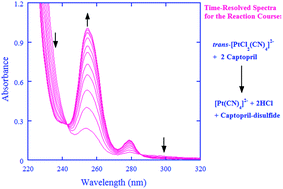
Time-resolved spectra were recorded for the reaction of trans-[PtCl2(CN)4]2− with captopril in 10 mM HClO4 and of cis-[Pt(NH3)2Cl4] with captopril in a buffer solution of pH 4.41, cf. Fig. 1 and 2. For kinetic measurements, solutions of cis-[Pt(NH3)2Cl4] or trans-[PtCl2(CN)4]2−, and captopril were prepared by adding an appropriate amount of each stock solution to 10 mL of specific buffer solution, respectively. These solutions were flushed with nitrogen for at least 10 min, followed by loading these solutions into the stopped-flow machine; moreover, those solutions were used only for a couple of hours. Reactions were followed under pseudo-first-order conditions with captopril in at least 10-fold excess over the Pt(IV) complexes. Kinetic traces were followed at 255 nm in the case of trans-[PtCl2(CN)4]2− and at 240 nm (pH < 7.4) and 280 nm (pH > 7.4) in the case of cis-[Pt(NH3)2Cl4].
image file: c3ra45020a-f1.tif
Fig. 1 Time-resolved spectra for reaction between trans-[PtCl2(CN)4]2− and captopril under the reaction conditions: [Pt(IV)] = 0.08 mM, [captopril] = 1.00 mM, [H+] = 0.010 M, [Cl] = 0.10 M, μ = 1.0 M and 25.0 °C. The first spectrum was obtained ca. 10 s after reaction; the time between scans was 35 s.

image file: c3ra45020a-f2.tif
Fig. 2 Time-resolved spectra for reaction between cis-[Pt(NH3)2Cl4] and captopril under the reaction conditions: [Pt(IV)] = 0.08 mM, [captopril] = 1.00 mM, [Cl] = 0.10 M, pH = 4.41, μ = 1.0 M and 25.0 °C. Spectra corresponding to the reaction times were: 30, 79, 128, 226, 324, 422, 520, 618, 716, 814, and 912 s. Inset: enlarged scale between 240 nm and 320 nm. The arrows in the figure indicate the direction of absorbance changes.

Products analysis

ESI-mass spectra were run for product analysis. The reaction mixtures of 1.0 mM trans-[PtCl2(CN)4]2−/cis-[Pt(NH3)2Cl4] with 8.0 mM captopril in 20.0 mM HCl solution were used for recording the ESI-mass spectra. In addition, mass spectra were also recorded for 1.0 mM captopril in dilute HCl, which were utilized as a reference for mass analysis.

Results and discussion

Time-resolved spectra

Time-resolved spectra are displayed in Fig. 1 for the reaction between trans-[PtCl2(CN)4]2− and captopril in a 10 mM HCl solution. The absorption around 255 nm band increased drastically, which can be assigned to the formation of [Pt(CN)4]2−.34 Two isosbestic points, observed in the time-resolved spectra at 242.6 nm and 285.8 nm, are a good indication that reduction of trans-[PtCl2(CN)4]2− to [Pt(CN)4]2− is a simple process while the absorption change caused from the captopril oxidation makes a trivial contribution to the overall spectra.

For the reaction between cis-[Pt(NH3)2Cl4] and captopril, the time-resolved spectra are shown in Fig. 2. The absorbances at two bands, one band around 228 nm and the other around 266 nm (a weak band, see the insert of Fig. 2), all decreased as the reaction proceeded. Absorbance readings from Fig. 2 at 228 nm and 266 nm as a function of time are illustrated in Fig. 3 (data points). The absorbance–time curves appeared to be exponential and were thus fitted by eqn (1), where At, A0, and A stands for absorbance at time t, zero and infinity, respectively. The resulted fittings are good and also shown in Fig. 3.

 
At = (A0A)exp(−kobsdt) + A (1)
Moreover, the value of kobsd obtained at 228 nm is in good agreement with that acquired at 266 nm within experimental error. The single exponential fittings, together with the good agreement of the kobsd values suggest that the absorbance decrease in Fig. 2 corresponds to a single process, most likely the reduction of cis-[Pt(NH3)2Cl4] (see more discussions below).


image file: c3ra45020a-f3.tif
Fig. 3 Kinetic traces at 228 nm and 266 nm for the reaction of cis-[Pt(NH3)2Cl4] with captopril; the data points were from the absorbance readings in Fig. 2. The solid curves were obtained by fitting eqn (1) to the experimental data by use of a nonlinear least-squares method.

Kinetic data and rate law

Under the pseudo first-order conditions ([captopril] ≥ 10 [Pt(IV)]), kinetic traces in all the reaction media used in the present work could be simulated very well by single exponentials for both Pt(IV) complexes, indicating that the reduction is first-order in [Pt(IV)] and is described in eqn (2):
 
d[Pt(CN)42−]/dt = kobsd[PtCl2(CN)42−] (2a)
or
 
−d[Pt(NH3)2Cl4]/dt = kobsd[Pt(NH3)2Cl4] (2b)

Pseudo first-order rate constants, kobsd, derived from the simulations, are reported as the average values from 5–7 runs. Standard deviations are usually much less than 5%. Values of kobsd as functions of [captopril] and pH at 25.0 °C and μ = 1.0 M are summarized in Tables S1 and S2 in the ESI. By use of the data in Tables S1 and S2, plots of kobsd versus [captopril] according to eqn (3) are linear and shown in Fig. 4 for the reaction of trans-[PtCl2(CN)4]2− and in Fig. 5 for the reaction of cis-[Pt(NH3)2Cl4], respectively.

 
kobsd = kc + k′[captopril] (3)


image file: c3ra45020a-f4.tif
Fig. 4 Pseudo first-order rate constants, kobsd, as a function of [captopril] for oxidation of captopril by trans-[PtCl2(CN)4]2− at 25.0 °C and μ = 1.0 M using the data of Table S1 in the ESI.

image file: c3ra45020a-f5.tif
Fig. 5 kobsd as a function of [captopril] for oxidation of captopril by cis-[Pt(NH3)2Cl4] at 25.0 °C and μ = 1.0 M using the data of Table S2 in the ESI.

From the linear plots, values of k′ from the slopes (summarized in Table 1) and of kc from intercepts (listed in Tables S1 and S2) were derived, where k′ denotes the pH-dependent observed second-order rate constants.

Table 1 Observed second-order rate constants k′ for the oxidation of captopril as a function of pH at 25.0 °C and μ = 1.0 M
Pt(IV) complex pH k′/M−1 s−1
trans-[PtCl2(CN)4]2− 3.22 57.3 ± 0.6
3.69 207 ± 2
4.28 737 ± 7
4.82 (2.65 ± 0.04) × 103
5.32 (6.39 ± 0.09) × 103
5.35 (8.19 ± 0.10) × 103
5.97 (3.78 ± 0.08) × 104
6.85 (1.88 ± 0.03) × 105
7.25 (4.42 ± 0.09) × 105
7.35 (3.34 ± 0.09) × 105
7.85 (1.26 ± 0.03) × 106
cis-[Pt(NH3)2Cl4] 3.69 1.4 ± 0.1
4.21 5.7 ± 0.2
4.82 19.9 ± 0.2
5.35 64 ± 2
6.09 277 ± 5
6.85 (1.23 ± 0.02) × 103
7.22 (2.76 ± 0.06) × 103
7.35 (2.99 ± 0.06) × 103
7.85 (6.25 ± 0.15) × 103
8.47 (6.40 ± 0.20) × 104
8.96 (1.05 ± 0.04) × 105
9.46 (2.26 ± 0.08) × 105


By examining the values of the intercepts kc, they are negligible in the neutral buffer solutions such as pH 6.85 and 7.25 for trans-[PtCl2(CN)4]2− and pH 7.22 and 7.35 for cis-[Pt(NH3)2Cl4]. Meanwhile in acidic media, the intercepts are generally very small and could not be obtained with certainty (see the large errors associated with the values). The very small intercepts kc in acidic media may stem from the autooxidation of the thiol group catalyzed by metal ions (especially by Cu2+),35–38 although 2 mM EDTA was used to suppress the catalytic effects in our experiments; the suppression seemed incomplete.38 However, in the neutral pH buffers as mentioned above, the oxidation rates by the Pt(IV) complexes are so rapid and dominant that the catalytic reaction is not observable. Nevertheless, the contribution from the autooxidation to the overall reaction is small even in the acidic media and the small intercepts kc, derived with large errors, cannot be rationalized. We will thus focus on the observed second-order rate constants k′.

Product analysis

ESI mass spectra (both positive and negative modes of ionization) recorded for the reaction mixtures of 8 mM captopril with 1.0 mM trans-[PtCl2(CN)4]2− and of 8 mM captopril with 1.0 mM cis-[Pt(NH3)2Cl4] are displayed in Fig. S1 and S2, respectively, in the ESI. The peak assignments, given also in the Figures, clearly indicated that the major peaks orginated only from the excess captopril and from the oxidized product captopril-disulfide (comparatively, platinum complexes displayed much lower sensitivities, see Fig. S3 in the ESI). Moreover, no further oxidation products of captopril such as captopril-sulfenic acid, captopril-sulfinic acid, and/or captopril-sulfonic acid were found on the mass spectra.3,20 Thus, it can be concluded that under the conditions used, which were similar to those employed in our kinetic measurements, captopril was oxidized to form captopril-disulfide predominantly by both Pt(IV) complexes (see the structure of captopril-disulfide in Scheme 1).

Previously, it was found that trans-dichloro-platinum(IV) were the selective and efficient reagents for formation of intramolecular disulfide bonds in peptides, as well as in dithiol-containing molecules.21,27–31 Our present work demonstrates that formation of intermolecular disulfide bond for thiol-containing molecules by trans-dichloro-platinum(IV) is also favored under the conditions used.

Mechanistic elucidation

From eqn (3) and the related discussions on the small contributions from the autooxidation of captopril in acidic media, we know that the oxidation of captopril by the Pt(IV) complexes is of an overall second-order kinetic nature, with a first-order in [captopril]. This implies that one captopril molecule is involved in the rate-determining step(s). The observed second-order rate constants k′ increase drastically (cf. Table 1) with the increase of pH, rendering the thiolate species of captopril much more reactive than its thiol forms. On other hand, the formation of captopril-disulfide as the oxidation product requires another captopril molecule participating in the overall reaction process; the participation of the second captopril molecule is thus anticipated to be after the rate-determining step(s). The present reactions are generally fast, which is in contrast with the previous observations that substitution reactions on Pt(IV) complexes are rather slow (substitution inertia).39 Hence, the possibility of substitution reactions on the Pt(IV) complexes (such as substitution of coordinated chloride) prior to the electron transfer step can be ruled out. The time-resolved spectra in Fig. 1 with two clear isosbestic points strongly substantiate this reasoning.

By taking all the above considerations into account, a reaction mechanism is proposed and delineated in Scheme 2, encompassing parallel reactions between the Pt(IV) complexes and the three protolytic species of captopril as rate-determining steps depending on the solution pH. Reduction of trans-dihalido-Pt(IV) complexes by thiol-compounds taking place via a halide-bridged activated complex has been well-described previously.40–42 This can be briefly described by the attack of the sulfur atom of captopril on one of the axially-coordinated chlorides in the Pt(IV) complexes, resulting in the partial formation of a Cl–S bond and partial breaking of Cl–Pt–Cl bonds:

image file: c3ra45020a-u1.tif


image file: c3ra45020a-s2.tif
Scheme 2 The suggested reaction mechanism.

By the end of the attack, the Cl–Pt–Cl bonds will be totally broken and the Cl–S bond formation is complete, giving rise to reactive species of chlorothiol and/or sulfenylchloride (1–3) in Reactions (4)–(6) in Scheme 2. This is equivalent to a Cl+ transfer from the Pt(IV) center to the attacking sulfur, and concurrently, the Pt(IV) center is reduced to its Pt(II) counterpart by the loss of the two axially-coordinated chlorides. Subsequently, reactive species (1–3) will be rapidly trapped by the excess captopril to generate captopril-disulfide, see Reaction (7) in Scheme 2. On the other hand, a small portion of the reaction species will probably be hydrolyzed to captopril-sulfenic acid (Reaction (8) in Scheme 2), which also will be trapped rapidly by the excess of captopril to form captopril-disulfide,43 cf. Reaction (9) in Scheme 2 with the reactive species 3 as an example.

Evaluation of rate constants

According to Scheme 2, a theoretic rate law expressed in eqn (10) can be derived for the oxidation of captopril by trans-[PtCl2(CN)4]2− and cis-[Pt(NH3)2Cl4], where aH denotes to the proton activity, corresponding to the pH measurements.
 
image file: c3ra45020a-t1.tif(10)

It is obvious that eqn (10) corresponds to the second-order term of eqn (3). Therefore:

 
image file: c3ra45020a-t2.tif(11)

Protolysis constants pKa1 = 3.52 and pKa2 = 10.0 at 25.0 °C for captopril were reported earlier.19 Eqn (11) was employed to fit the k′ – pH data listed in Table 1, using weighted nonlinear least-squares routine with k1, k2 and k3 as adjustable parameters and with Ka1 and Ka2 values fixed. Briefly, the values of k′ and their associated errors in Table 1 were used. In the beginning, some initial values were given to k1k3 to try the simulations in order to find a reasonable convergence. When a convergence was obtained, the initial values were then varied to see if the same convergence could be achieved. In such a way, a common and robust convergence was finally found, of course offering a unique set of values for k1, k2 and k3.

The fittings gave negative k1 values for both Pt(IV) complexes; thus k1 was indeterminate in the pH range studied. If the k1 term in eqn (11) was assumed to make a negligible contribution to the overall reaction rate, eqn (11) could be simplified to eqn (12).

 
image file: c3ra45020a-t3.tif(12)

The simulations of eqn (12) to the experimental data in Table 1 afforded nice fittings as shown in Fig. 6 and 7, respectively, for trans-[PtCl2(CN)4]2− and cis-[Pt(NH3)2Cl4]. Moreover, the values of k2 and k3 were evaluated from the fittings, which are summarized in Table 2. The ratios of k3/k2 (1.8 × 10⁶ for trans-[PtCl2(CN)4]2− and 3.8 × 10⁵ for cis-[Pt(NH3)2Cl4]) are huge, highlighting that the thiolate form of captopril is much more reactive than its thiol forms. These ratios can also account for the observation that k′ increases several orders of magnitude when the solution pH is increased from 3 to about 10 in Table 1. The reaction mechanism delineated in Scheme 2 can explain all the experimental observations and is thus convincing. On the other hand, it is totally different from those derived for the captopril oxidations so far by other oxidants.17–20


image file: c3ra45020a-f6.tif
Fig. 6 Second-order rate constants k′ as a function of pH at 25.0 °C and μ = 1.0 M for oxidation of captopril by trans-[PtCl2(CN)4]2− (data points). The solid curve was obtained by fitting eqn (12) the experimental data by use of a weighted nonlinear least-squares method.

image file: c3ra45020a-f7.tif
Fig. 7 Second-order rate constants k′ as a function of pH at 25.0 °C and μ = 1.0 M for oxidation of captopril by cis-[Pt(NH3)2Cl4] (data points). The solid curve was obtained by fitting eqn (12) the experimental data by use of a weighted nonlinear least-squares method.
Table 2 Values of rate constants of the rate-determining steps derived from curve-fittings at 25.0 °C and μ = 1.0 M
Pt(IV) complex km Value/M−1 s−1
a Could not be derived from the kinetic data collected.
trans-[PtCl2(CN)4]2− k1 a
k2 152 ± 8
k3 (2.8 ± 0.1) × 108
cis-[Pt(NH3)2Cl4] k1 a
k2 5.3 ± 0.3
k3 (1.5 ± 0.1) × 106


Captopril was shown to have the property of scavenging reactive oxygen species (ROS) including superoxide anion, hydroxyl radical, hypochlorous acid/hypochlorite, which can cause oxidative stress.4,44,45 Of those ROS, hypochlorous acid/hypochlorite showed some common mechanistic characters as trans-dichloro-platinum(IV) complexes toward thiol-containing compounds.21 In other words, platinum(IV) anticancer prodrugs can also cause oxidative stress presumably similar to hypochlorous acid/hypochlorite. In this regard, captopril might be used to relieve the oxidative stress induced by Pt(IV) anticancer prodrugs.

Conclusions

The oxidation of captopril by trans-[PtCl2(CN)4]2− and cis-[Pt(NH3)2Cl4] was carefully studied over a wide pH range, enabling us to establish the rate law. The oxidation product was characterized as captopril-disulfide by ESI mass spectrometry. An overall mechanistic picture was delineated for the oxidation process, accounting convincingly for all the experimental observations. The thiolate species of captopril is 105–106 times more reactive than its thiol forms toward the platinum(IV) complexes. Captopril might be used to relieve the oxidative stress caused by Pt(IV) anticancer prodrugs.

Acknowledgements

We thank the financial support to this work by grants from the Natural Science Foundation of Hebei University (2012ZD01) and from the Youth Foundation of Hebei Educational Committee (Q2012058, Z2012041).

References

  1. W. C. Hou, H. J. Chen and Y. H. Lin, J. Agric. Food Chem., 2003, 51, 1706–1709 CrossRef CAS PubMed.
  2. B. J. Bhuyan and G. Mugesh, Org. Biomol. Chem., 2011, 9, 1356–1365 CAS.
  3. W. M. M. Mahmoud and K. Kummerer, Chemosphere, 2012, 88, 1170–1177 CrossRef CAS PubMed.
  4. O. I. Aruoma, D. Akanmu, R. Cecchin and B. Halliwell, Chem.-Biol. Interact., 1991, 77, 303–314 CrossRef CAS.
  5. G. X. Li and Z. Q. Liu, Eur. J. Med. Chem., 2009, 44, 4841–4847 CrossRef CAS PubMed.
  6. J. Miguel-Carrasco, S. Zambrano, A. J. Blanca, A. Mate and C. M. Vazquez, J. Inflammation, 2010, 7, 21–30 CrossRef PubMed.
  7. J. Miguel-Carrasco, M. T. Monserrat, A. Mate and C. M. Vazquez, Cardiovasc. Pharmacol., 2010, 632, 65–72 CAS.
  8. S. l. Hii, D. L. Nicol, D. C. Gotley, L. C. Thompson, M. K. Green and J. R. Jonsson, Br. J. Cancer, 1998, 77, 880–883 CrossRef CAS.
  9. T. Sjoberg, L. A. G. Rodriguez and M. Lindblad, Clin. Gastroenterol. Hepatol., 2007, 5, 1160–1166 CrossRef PubMed.
  10. S. Attoub, A. M. Gaben, S. Al-Salam, M. A. H. Soltan, A. John, M. G. Nicholls, J. Mester and G. Petroianu, Ann. N. Y. Acad. Sci., 2008, 1138, 65–72 CrossRef CAS PubMed.
  11. J. A. M. Pulgerin, L. F. G. Bermejo and P. F. Lopez, Anal. Chim. Acta, 2005, 546, 60–67 CrossRef.
  12. N. Rahman, N. Anwar, M. Kashif and N. Hoda, Acta Pharm., 2006, 56, 347–357 CAS.
  13. W. T. Suarez, A. A. Madi, L. C. S. de Figueiredo-Filho and O. Fatibello-Filho, J. Braz. Chem. Soc., 2007, 18, 1215–1219 CrossRef CAS PubMed.
  14. J. A. V. Prior, J. L. M. Santos and J. L. F. C. Lima, Anal. Chim. Acta, 2007, 600, 183–187 CrossRef CAS PubMed.
  15. A. M. El-Didamony, J. Chin. Chem. Soc., 2009, 56, 755–762 Search PubMed.
  16. A. M. El-Didamony and E. A. H. Erfan, Spectrochim. Acta, Part A, 2010, 75, 1138–1145 CrossRef PubMed.
  17. T. Y. Lee and R. E. Notari, Pharm. Res., 1987, 4, 98–103 CrossRef CAS.
  18. R. N. Zahdeh, R. A. Zaru and H. A. Hodali, Polyhedron, 2007, 26, 3069–3073 CrossRef CAS PubMed.
  19. A. Sexto and E. Iglesias, Org. Biomol. Chem., 2011, 9, 7207–7216 CAS.
  20. T. Tran, W. Mbiya, R. Adigun, P. Ndungu, B. Martineigh and R. H. Simoyi, J. Phys. Chem. A, 2013, 117, 2704–2717 CrossRef PubMed.
  21. S. Huo, S. Shen, D. Liu and T. Shi, J. Phys. Chem. B, 2012, 116, 6522–6528 CrossRef CAS PubMed.
  22. N. J. Wheate, S. Walker, G. E. Craig and R. Oun, Dalton Trans., 2010, 39, 8113–8127 RSC.
  23. Z. Wexselblatt and D. Gibson, J. Inorg. Biochem., 2012, 117, 220–229 CrossRef PubMed.
  24. A. V. Klein and T. W. Hambley, Chem. Rev., 2009, 109, 4911–4920 CrossRef CAS PubMed.
  25. G. M. Rakic, S. Grguric-Sipka, G. N. Kaluderovic, M. Bette, L. Filipovic, S. Arandelovic, S. Radulovic and Z. Lj. Tesic, Eur. J. Med. Chem., 2012, 55, 214–219 CrossRef CAS PubMed.
  26. H. P. Varbanov, M. A. Jakupec, A. Roller, F. Jensen, M. Glanski and B. K. Keppler, J. Med. Chem., 2013, 56, 330–344 CrossRef CAS PubMed.
  27. T. Shi and D. L. Rabenstein, J. Org. Chem., 1999, 64, 4590–4595 CrossRef CAS PubMed.
  28. T. Shi and D. L. Rabenstein, J. Am. Chem. Soc., 2000, 122, 6809–6915 CrossRef CAS.
  29. T. Shi and D. L. Rabenstein, Tetrahedron Lett., 2001, 42, 7203–7206 CrossRef CAS.
  30. T. Shi and D. L. Rabenstein, Bioorg. Med. Chem. Lett., 2002, 12, 2237–2240 CrossRef CAS.
  31. T. Shi, S. M. Spain and D. L. Rabenstein, Angew. Chem., Int. Ed., 2006, 45, 1780–1783 CrossRef CAS PubMed.
  32. M. Narayan, E. Welker, C. Wanjalla, C. Xu and H. A. Scheraga, Biochemistry, 2003, 42, 10783–10789 CrossRef CAS PubMed.
  33. T. Shi and L. I. Elding, Inorg. Chim. Acta, 1998, 282, 55–60 CrossRef CAS.
  34. L. Drougge and L. I. Elding, Inorg. Chim. Acta, 1986, 121, 175–183 CrossRef CAS.
  35. J. E. Taylor, J. F. Yan and J.-l. Wang, J. Am. Chem. Soc., 1966, 88, 1663–1667 CrossRef CAS.
  36. A. V. Kachur, C. J. Koch and J. E. Biaglow, Free Radical Res., 1998, 28, 259–269 CrossRef CAS.
  37. L. Ehrenberg, M. Harms-Ringdahl, I. Fedorcsak and F. Granath, Acta Chem. Scand., 1989, 43, 177–187 CrossRef CAS PubMed.
  38. N. Bhattarai and D. M. Stanbury, Inorg. Chem., 2012, 51, 13303–13311 CrossRef CAS PubMed.
  39. W. R. Mason, Coord. Chem. Rev., 1972, 7, 241–255 CrossRef CAS.
  40. T. Shi, J. Berglund and L. I. Elding, Inorg. Chem., 1996, 35, 3498–3503 CrossRef CAS.
  41. T. Shi, J. Berglund and L. I. Elding, J. Chem. Soc., Dalton Trans., 1997, 2073–2077 RSC.
  42. K. Lemma, T. Shi and L. I. Elding, Inorg. Chem., 2000, 39, 1728–1734 CrossRef CAS.
  43. L. Turell, R. Radi and B. Alvarez, Free Radical Biol. Med., 2013, 65, 244–253 CrossRef CAS PubMed.
  44. D. Bagchi, R. Prasad and D. K. Das, Biochem. Biophys. Res. Commun., 1989, 158, 52–57 CrossRef CAS.
  45. M. Bartosz, J. Kedziora and G. Bartosz, Free Radical Biol. Med., 1997, 23, 729–735 CrossRef CAS.

Footnote

Electronic supplementary information (ESI) available. See DOI: 10.1039/c3ra45020a

This journal is © The Royal Society of Chemistry 2014
Click here to see how this site uses Cookies. View our privacy policy here.