
 Open Access Article
 This Open Access Article is licensed under a
 Creative Commons Attribution 3.0 Unported Licence
Low temperature synthesis of ionic phosphates in dimethyl sulfoxide†
Martin
Mangstl
a,
Vinicius R.
Celinski
a,
Sebastian
Johansson
a,
Johannes
Weber
a,
Feng
An
b and
Jörn
Schmedt auf der Günne
a
aInorganic Materials Chemistry, University of Siegen, Adolf Reichwein-Straße 2, D-57068 Siegen, Germany. E-mail: schmedt_auf_der_guenne@chemie.uni-siegen.de
bDepartment of Chemistry, University of Munich, Butenandtstraße 5-13, D-81377 Munich, Germany
First published on 9th May 2014
Abstract
A new synthesis route for phosphates in an organic solvent at low temperatures is presented. The synthesis was done by dispersing a nitrate salt and phosphorus pentoxide in dimethyl sulfoxide. The synthesis can be performed under water-free conditions and yielded several organic and inorganic phosphates. Crystal structure solution of bistetramethylammonium hydrogencyclotriphosphate, [N(CH3)4]2HP3O9, was achieved by combining information gained from powder X-ray diffraction, liquid NMR and solid state (2D) NMR. The molecular structure of rubidium cyclotetraphosphate, Rb4P4O12, was determined using liquid state NMR and solid state (2D) NMR spectroscopy.
Introduction
Phosphates are commonly used as flame retardant additives,1–3 heterogeneous catalysts in organic synthesis,4 non-linear optic materials,5 luminescent materials,6–8 cathode materials for rechargeable batteries9–11 and ion conductors.12–15 The targeted materials often require anhydrous experimental conditions to ensure water exclusion from synthesis.There are several synthesis routes for obtaining phosphates as reported by Durif.16 The most common routes in aqueous solution are the Boullé's process,17 ion-exchange techniques,18 crystallization in H2O19 and gel diffusion techniques.20 Functional materials based on nanoscale phosphates can be prepared via polyol-mediated synthesis.21,22 The most usual synthesis routes at high temperatures are hydrothermal syntheses,23,24 flux methods25 and solid state reactions (calcination).26 Thermal methods can often be supported by mechanochemical activation.27–29 To the best of our knowledge no synthesis routes for ionic phosphates are known which combine low temperature, non-aqueous solutions and P4O10 as a starting material.
The presented synthesis is based on the idea that the nitrate salt M(NO3)x (Mx+ being an organic or inorganic cation, x is 1 or 2 for mono- or divalent cations, respectively) can be thought of as the source for “MxO” which subsequently reacts with P4O10 in dimethyl sulfoxide (DMSO). This hypothesis is corroborated by the observation of brown gases (nitrogen oxides) and the finding that polyphosphates are produced (vide infra).
Formally, the total reaction can be described by the following equation:

In this contribution we provide evidence for the feasibility of this approach by characterization of reaction products of different nitrates with a combination of NMR and diffraction techniques.
Experimental
All solid educts were stored inside a glove box (MBraun, Garching, Germany) filled with dry argon. Every synthesis step was done under argon atmosphere using air-free techniques. In general we used for the described synthesis approach temperatures spanning a range from 58 °C to 135 °C and reaction times from 12 to 72 hours. An explanation for the long reactions times are the small solvent products of reagents and products in DMSO.For synthesis of bistetramethylammonium (TMA) hydrogencyclotriphosphate 2.5 mmol (354.8 mg) phosphorus pentoxide (Riedel de Haën, 99%) and 5.0 mmol (680.8 mg) TMA nitrate (Alfa Aesar, 98%) were mixed. Subsequently 10 mL dimethyl sulfoxide (DMSO, Sigma Aldrich, anhydrous, >99.9%) was added dropwise under ice cooling. Cooling helps to reduce the product spectrum. We observed a wider product spectrum without cooling possibly due to decomposition reactions of DMSO. After reaching room temperature the suspension was heated to 58 °C for twelve hours. The obtained product was precipitated and washed five times with acetonitrile (Sigma Aldrich, 99.9%). A colourless phase pure powder was obtained.
For synthesis of rubidium cyclotetraphosphate 0.58 mmol (165.0 mg) phosphorus pentoxide (Riedel de Haën, 99%) and 2.32 mmol (342.1 mg) rubidium nitrate (Alfa Aesar, 99%) were mixed. Subsequently 2.5 mL dimethyl sulfoxide (Sigma Aldrich, anhydrous, >99.9%) was added dropwise under ice cooling. After reaching room temperature the suspension was heated to 135 °C for 72 hours. The obtained product was washed three times with acetonitrile (Sigma Aldrich, 99.9%). A colourless powder was obtained.
Solid-state NMR spectroscopy
For all measurements the 1H resonance of 1% Si(CH3)4 in CDCl3 served as an external secondary reference using the Ξ values for 13C, 15N and 31P as reported by the IUPAC.30The 1H and 31P solid-state NMR spectra were measured on a Bruker Avance II-200 spectrometer operating at the frequencies of 200.18 and 81.03 MHz, respectively (magnetic field strength B0 = 4.7 T). Magic angle sample spinning (MAS) was carried out with a commercial 2.5 mm double resonance MAS probe.
The 31P{1H} MAS spectrum of (TMA)2HP3O9 was obtained at a sample spinning frequency of 6 kHz with a repetition delay of 128 s. Proton decoupling was implemented using continuous wave (CW) decoupling with a nutation frequency of 100 kHz. The 31P–31P 2D double-quantum (DQ) single-quantum (SQ) correlation MAS-NMR spectrum was obtained at a sample spinning frequency of 6 kHz with a repetition delay of 20 s using a transient adapted PostC7 sequence31,32 with a conversion period of 1.3 ms and rotor-synchronized data sampling of the indirect dimension. It accumulated 64 transients/FID. Proton decoupling was implemented using CW decoupling with a nutation frequency of 120 kHz.
Furthermore 1H, 13C, 15N and 31P solid-state MAS NMR spectra were recorded at ambient temperature on a Bruker Avance III spectrometer with an 11.7 T magnet, operating at the frequencies of 500.25, 125.79, 50.71 and 202.51 MHz, respectively. For 1H and 31P measurements magic angle sample spinning was carried out with a commercial 2.5 mm and for 13C and 15N with a commercial 4 mm double resonance MAS probe. The 31P{1H} MAS spectrum of Rb4P4O12 was obtained at a sample spinning frequency of 25 kHz with a repetition delay of 1200 s. Proton decoupling was implemented using CW decoupling with a nutation frequency of 100 kHz. The 1H spectrum was gained with a spin echo experiment at a sample spinning frequency of 25 kHz and with a repetition delay of 8 s. Moreover the 15N{1H} spectrum based on ramped cross-polarization33 (CP) with magic angle spinning was obtained at a sample spinning frequency of 5 kHz with a recycle delay of 8 s. The 13C{1H} MAS spectra based on ramped CP was obtained at a sample spinning frequency of 5 kHz with a recycle delay of 8 s. In both cases proton decoupling was achieved using TPPM decoupling with a nutation frequency of 22 kHz. 2D 31P–1H-heteronuclear-correlation MAS NMR spectra were obtained with a 2D correlation experiment based on the PRESTO-II pulse sequence34 as described in ref. 35. Proton decoupling was implemented using TPPM decoupling with a nutation frequency of 115 kHz. The nutation frequency for the R1852 recoupling sequence used a 1H nutation frequency of 112.5 kHz for the R-elements which consisted of simple π-pulses. All other hard pulses used on both channels were implemented with a nutation frequency of 100 kHz. Both experiments were performed at 25 kHz sample rotation frequency and accumulated 8 transients/FID. Coherence transfer pathway selection was achieved with an 8 step phase-cycle. For (TMA)2HP3O9 and Rb4P4O12 we used a recycle delay of 6 and 32 s, respectively. The 31P–31P 2D double-quantum (DQ) single-quantum (SQ) correlation MAS-NMR spectrum of Rb4P4O12 was obtained at a sample spinning frequency of 20 kHz with a repetition delay of 49 s using a transient adapted PostC7 sequence31,32 with a conversion period of 1.2 ms and rotor-synchronized data sampling of the indirect dimension. It accumulated 16 transients/FID. We used rotor synchronized t1 increments for all 2D experiments and acquired data according to the States method.36 The 31P{1H} C-REDOR experiment using the POST C-element37,38 was obtained at a sample spinning frequency of 25 kHz with a repetition delay of 32 s and accumulated 16 transients/FID. Coherence transfer pathway selection was achieved with a 16 step phase-cycle.
Powder X-ray diffraction
The powder X-ray diffraction pattern of (TMA)2HP3O9 was recorded at 298 K on a STOE Stadi P powder diffractometer (STOE, Darmstadt, Germany) in Debye–Scherrer geometry (capillary inner diameter: 0.48 mm) by using Ge(111)-monochromated CuKα1 radiation (154.0596 pm) and a position-sensitive detector. Extraction of the peak positions and pattern indexing and Rietveld refinement were carried out by using the TOPAS package.39 Indexing by using the SVD method yielded an orthorhombic unit cell with parameters a = 10.506, b = 10.986 and c = 30.339 Å.Structure solution was done with parallel tempering by using the FOX40 program. The molecules were restrained in different ways: cyclic phosphate units with the flexibility model “automatic from restraints, strict” and TMA units with the flexibility model “rigid bodies”. The molecules chosen reflect the prior knowledge due to the NMR experiments. Rietveld refinement of the final structure model was realized by applying the fundamental parameter approach implemented in TOPAS (direct convolution of source emission profiles, axial instrument contributions, crystallite size and micro-strain effects).41 For the TMA cation the bond lengths42 of C–H were constrained to 0.96 Å and N–C–H angles to 108.4° (average value of a TMA salt via neutron diffraction analysis given in ref. 43). The position of H97 was constrained to the center of the straight line between O7 and O9′ from a neighbouring cyclotriphosphate unit. This is consistent with the presence of a strong (linear) hydrogen bond.44 The crystallographic data and further details of the data collection are given in Table 2. The positional and displacement parameters are shown in Table 3. The experimental powder diffraction pattern, the difference profile of Rietveld refinement and peak positions are shown in Fig. 1.
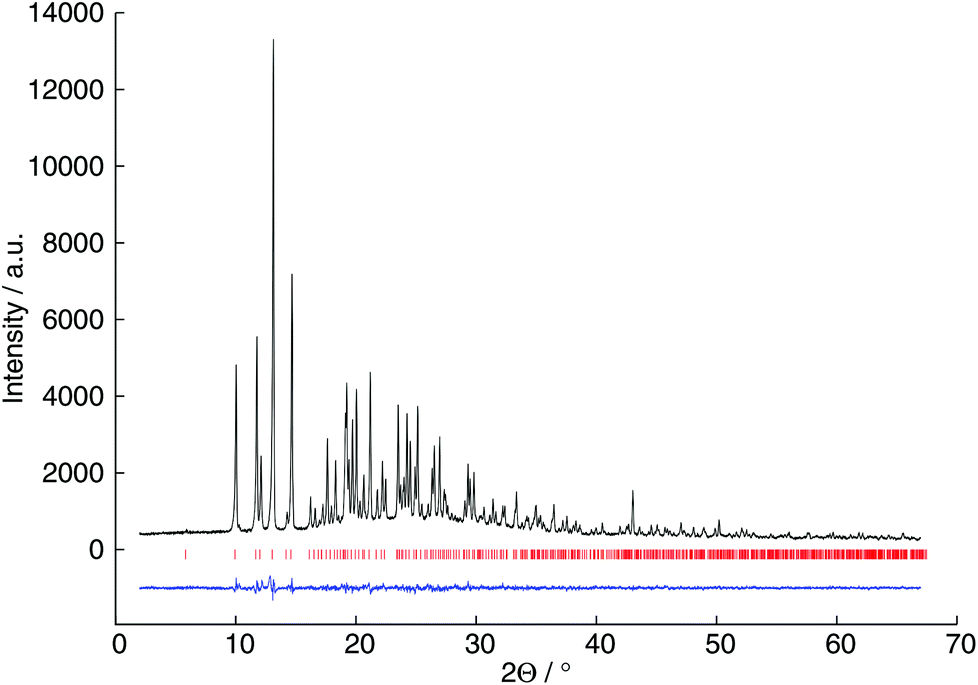 | ||
| Fig. 1 Observed (black line) powder diffraction pattern of (TMA)2HP3O9 (CuKα1, 154.06 pm) as well as the difference profile (blue line) of the Rietveld refinement. Peak positions are marked by vertical red lines. | ||
Results and discussion
All products that we were able to trace by NMR so far, are related to P4O10 by selectively breaking P–O–P bonds, thus only mono-, di-, tri, cyclotri- and tetraphosphate were present but no higher polyphosphates. If H2O is used as reagent, different hydrogenphosphates can be synthesized, for example (TMA)2HP3O9 (see below). We note in passing that the mixture of the solvent dimethyl sulfoxide and P4O10 is known in organic chemistry as “Onodera reagent” as a soft reagent for oxidizing alcohols which involves the formation of esters.45 In this contribution we analyzed the products starting from TMA nitrate and rubidium nitrate following the described recipe which proves the formation of different polyphosphates.Bistetramethylammonium hydrogencyclotriphosphate
To unambiguously identify the structure of (TMA)2HP3O9 we characterized it by X-ray diffraction and NMR spectroscopy. The X-ray diffraction data were recorded from a powdered sample in a sealed glass capillary because suitable single crystals could not be obtained, despite several tries under different conditions. The structure solution had to respect constraints obtained from 1D and 2D NMR experiments, namely a limitation to three crystallographic orbits for the P atoms within the same cyclotriphosphate group (see NMR section below) which allow the definition of an asymmetric unit made of molecular units. This turns the structure solution into a simple task, despite the likely positional disorder in the tetramethylammonium ions. After indexing and a LeBail fit, all of the likely space groups are subjected to a “multiple world simulation” within the FOX40 program. P-atoms on special positions are not to be expected because of 3 crystallographic P atoms in a single cyclotriphosphate anion evident through 31P 2D NMR spectroscopy (see below). Repeatedly, the same solution in the space group Pcab was found after parallel tempering of the 7 best space groups. The second best solution (Pca21) has an about 8 times bigger cost function than the solution in Pcab The solution is in full agreement with the observed 31P, 1H, 13C and 15N NMR spectra.All observed reflections were indexed on the basis of orthorhombic unit cell parameters a = 10.5057, b = 10.9861, c = 30.3397 Å and according to that (TMA)2HP3O9 turned out to be the only crystalline phase. A Rietveld refinement was performed in space group Pcab with a structure model that contained three phosphorus, nine oxygen, two nitrogen and eight carbon atoms in the asymmetric unit. Due to the low scattering power of hydrogen its positions are difficult to determine by X-ray diffraction. Therefore the hydrogen positions were constrained based on neutron diffraction analysis data of a TMA salt. Additional information about the hydrogen atoms are presented in the NMR section.
For the NMR study (TMA)2HP3O9 was completely dissolved in D2O to measure a 31P liquid NMR spectrum, where a single signal with a chemical shift of −20.91 ppm can be observed. This is in agreement with the spectrum of a cyclotriphosphate.46
The quantitative 1H MAS NMR spectrum (Fig. 2) features a peak at 3.1 ppm that can be assigned to the TMA and a peak at 15.3 ppm that is typical for a strong hydrogen bond47 between oxygen atoms of cyclotriphosphate units. The signal intensity ratio of 24![[thin space (1/6-em)]](https://www.rsc.org/images/entities/char_2009.gif) :1 is in agreement with the chemical formula (TMA)2HP3O9 determined from X-ray diffraction.
:1 is in agreement with the chemical formula (TMA)2HP3O9 determined from X-ray diffraction.
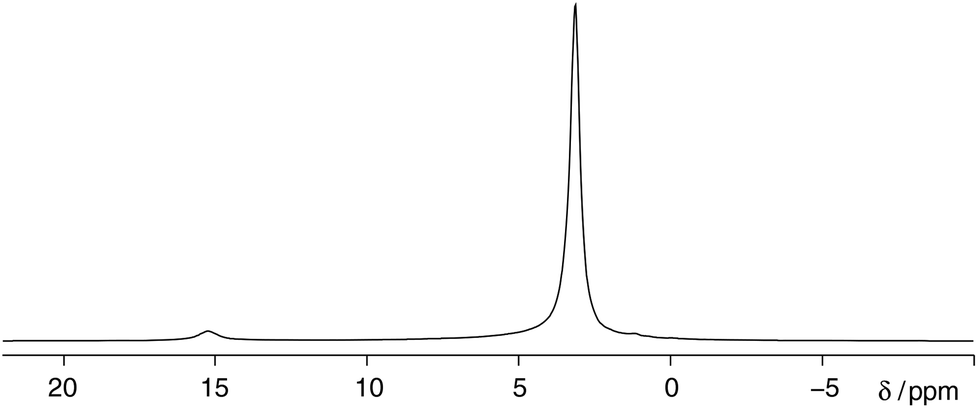 | ||
| Fig. 2 1H MAS NMR spectrum of (TMA)2HP3O9 measured at a sample spinning frequency of 25 kHz. The peak at 3.1 ppm can be assigned to the TMA cation and the peak at 15.3 ppm is typical for a strong hydrogen bond. | ||
The 31P{1H} MAS NMR spectrum of (TMA)2HP3O9 (Fig. 3) displays signals of three different crystallographic orbits of phosphorus atoms at −20.7, −24.5 and −26.5 ppm. Note that no signal is visible at δ = −45.9 ppm, which indicates that P4O10 reacts quantitatively.
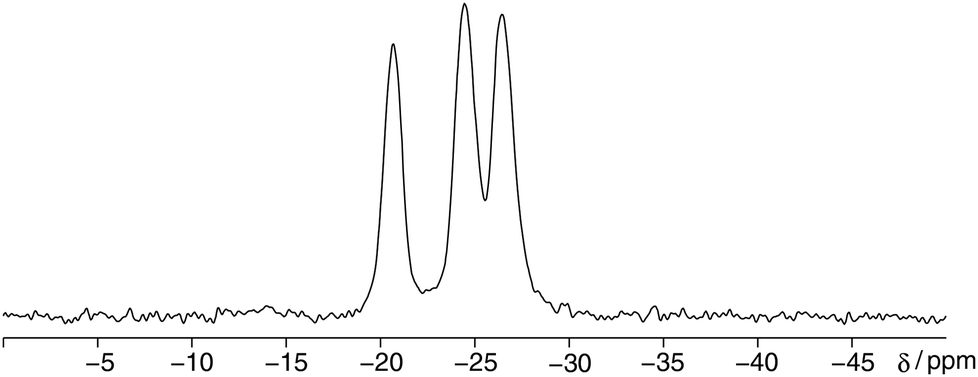 | ||
| Fig. 3 Isotropic signals in a 31P MAS NMR spectrum of (TMA)2HP3O9 obtained at a sample spinning frequency of 6 kHz. The spectrum shows three signals corresponding to three different crystallographic orbits of phosphorus atoms. | ||
The homonuclear 31P MAS single-quantum (SQ) double-quantum (DQ) correlation spectrum (Fig. 4) proves that these three signals belong to one crystalline phase due to the correlation peaks between them. Furthermore this correlation pattern is consistent with that of a cyclotriphosphate.
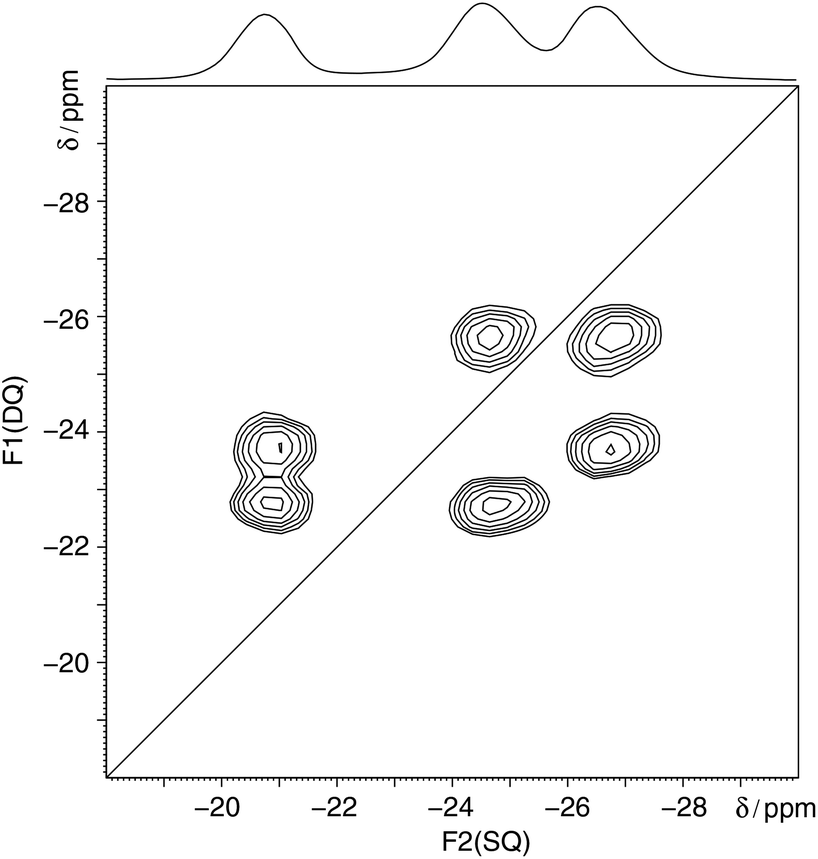 | ||
| Fig. 4 Homonuclear 31P–31P MAS NMR single-quantum double-quantum correlation spectrum of (TMA)2HP3O9 obtained at a sample spinning frequency of 6 kHz. The 1D projection at the top of the 2D spectrum stems from a separate one-pulse experiment. Correlation peaks are shown via contour plots. The diagonal line refers to the hypothetic peak position of two isochronous spins (autocorrelation diagonal).31,32 | ||
The heteronuclear 2D 31P{1H} MAS correlation spectrum of (TMA)2HP3O9 (Fig. 5) indicates spatial proximity between phosphorus and hydrogen atoms. A correlation peak can only be observed in the case of close 31P–1H vicinity. As there are correlation peaks between the 1H signal at 3.1 ppm and all three 31P signals we conclude that every phosphorus site of the cyclotriphosphate is close to a TMA molecule. In contrast the 1H signal at 15.3 ppm correlates only with the two 31P peaks at −24.5 and −26.5 ppm. This denotes that these two phosphorus sites are closer to the strong hydrogen bond than the third one. A higher correlation signal intensity can be observed for the peak at −24.5 ppm than for the one at −26.5 ppm, which indicates that the hydrogen atom in the H-bond is located closer to the P-atom with the chemical shift of −24.5 ppm. Thereby the nearest P–H distances are: P1–H97 = 2.3767, P1–H232 = 3.1455, P2–H142 = 2.9717, P2–H131 = 3.2154, P2–H111 = 3.2513, P2–H122 = 3.3473, P3–H97 = 2.5364, P3–H242 = 3.3110, P3–H111 = 3.3656 Å.
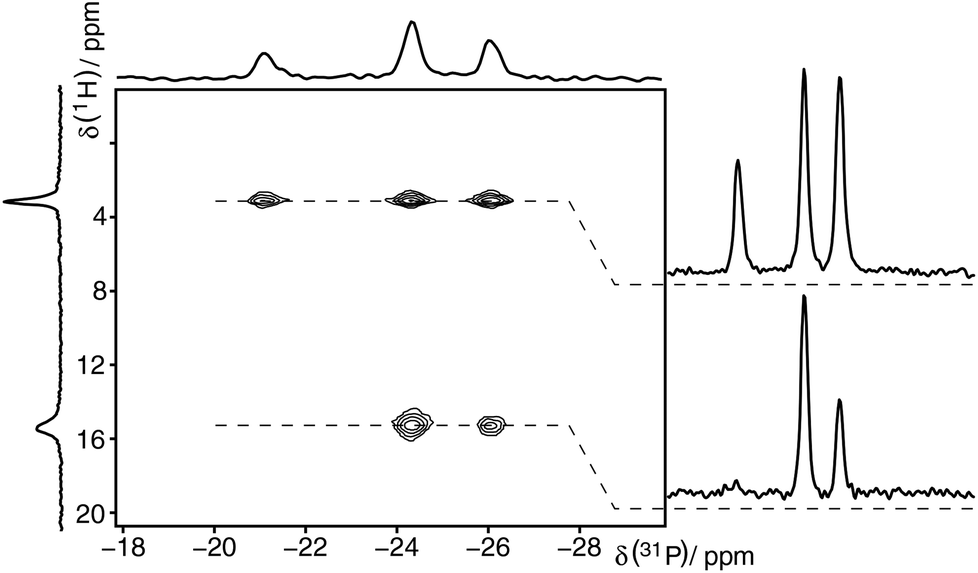 | ||
| Fig. 5 31P{1H} Heteronuclear correlation MAS NMR spectrum of (TMA)2HP3O9 measured at a sample spinning frequency of 25 kHz. Correlation peaks are shown via contour plots.34,35 | ||
The crystal structure of (TMA)2HP3O9 (Fig. 6) can be described by a chainlike arrangement of cyclotriphosphate units (orange polyhedra) which are linked by strong hydrogen bonds. The gaps are filled by the TMA cations indicated by the blue polyhedra. The empirical formula of (TMA)2HP3O9 was clearly determined by structure solution and solid-state NMR study.
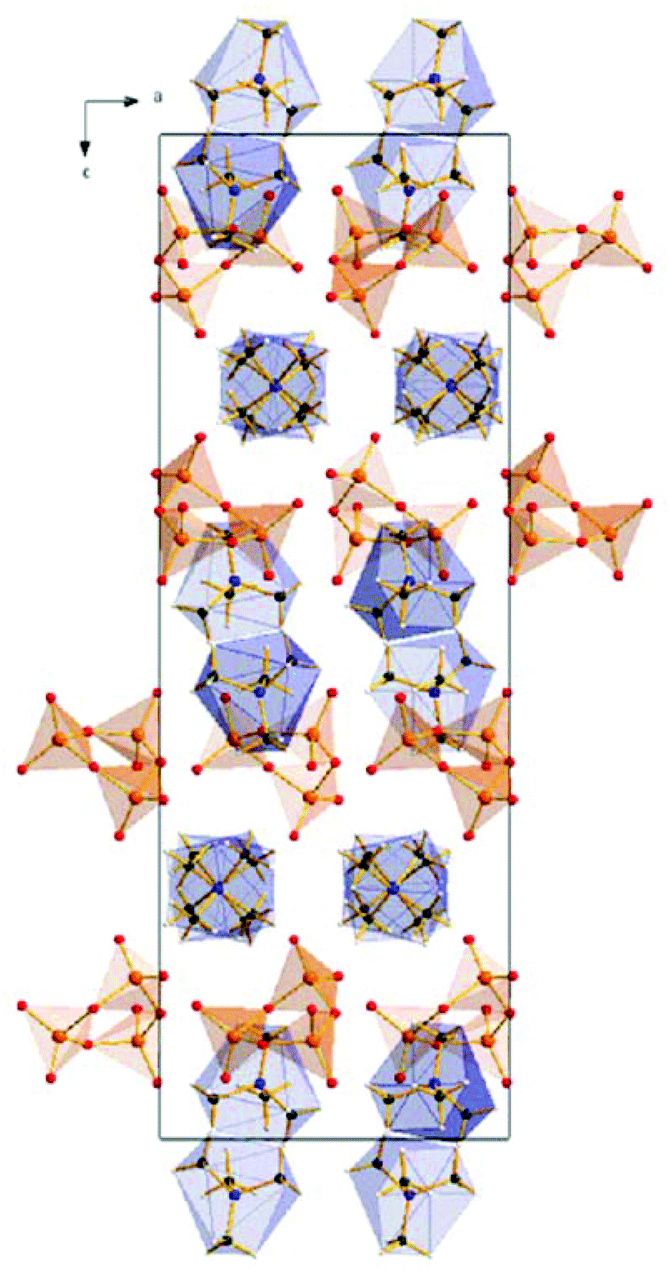 | ||
| Fig. 6 Crystal structure of (TMA)2HP3O9 viewed along [010]. Blue polyhedra: TMA, orange polyhedra: cyclotriphosphate. Orange spheres: phosphorus, red spheres: oxygen, blue spheres: nitrogen, black spheres: carbon, white spheres: hydrogen. | ||
Rubidium cyclotetraphosphate and orthophosphate
An example of an inorganic phosphate will be presented by discussing the case of the hitherto unknown phase of Rb4P4O12. The existence of this cyclotetraphosphate was confirmed using liquid and solid state NMR only, because the phase of Rb4P4O12 turned out to be X-ray amorphous. Rubidium cyclotetraphosphate occurred in mixtures with crystals of monoclinic48 RbH2PO4 and an unknown phosphorus-free crystalline side-phase. A detailed discussion of the side-phases and the amorphous character of Rb4P4O12 can be found in the ESI† together with additional experimental evidence. The term Qn here refers to phosphate groups classified by the number of bridging oxygen atoms n.To this end the sample was completely dissolved in water. The liquid-state 31P NMR spectrum shows a single peak in Q2 range with 81% and a single peak in the Q0 range with 16% of the total peak area.49 The rest (<3%) was distributed onto small peaks in the Q1 and Q2 range and is neglected in the following. This observation is consistent with a single phase or phase mixture consisting of cyclic phosphates and orthophosphate anions only.
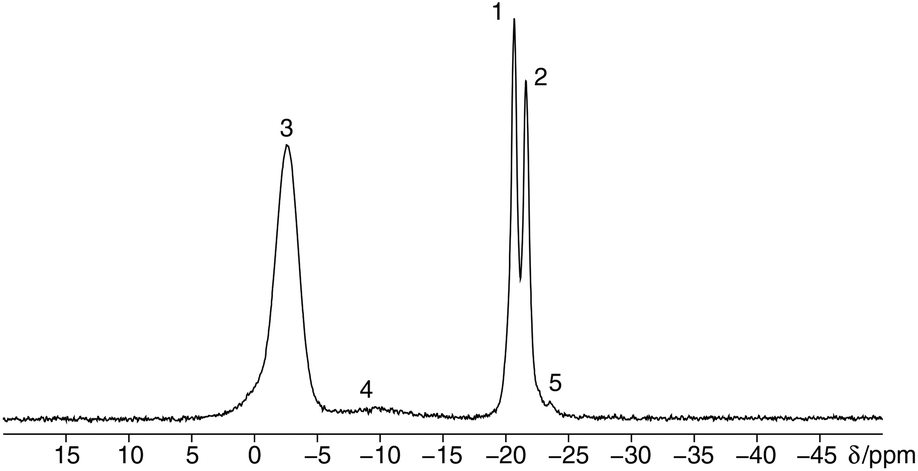
The solid state NMR spectrum agrees with the quantitative liquid state NMR analysis: the 31P{1H} MAS NMR spectrum (Fig. 7) displays peaks 1 at −20.6 and 2 at −21.7 ppm indicating the presence of two different phosphorus environments in the Q2 regime. Peaks 3 at −2.6, 4 at −9.8 and 5 at −23.5 ppm can be assigned to monoclinic RbH2PO450 and small unknown impurities, respectively. Note the absence of the P4O10 peak (δ = −45.9 ppm) which indicates that the reaction of the reagent P4O10 was again quantitative.
 | ||
| Fig. 7
31P{1H} MAS NMR spectrum of Rb4P4O12, received at a spinning frequency of 25 kHz. Peaks 1 and 2 at −20.6 and −21.7 ppm indicate two different phosphorus environments. Peak 3 at −2.6 ppm can be assigned to monoclinic RbH2PO450 and peaks 4 at −9.8 and 5 at −23.5 ppm show the marginal presence of an unknown side phase. | ||
The homonuclear 31P–31P MAS SQ-DQ correlation spectrum (Fig. 8) proves that peaks 1 and 2 belong to one phase due to the correlation peaks between them. The correlation pattern and shift range are consistent with the presence of a cyclotetraphosphate but not to a cyclotriphosphate because of the connectivity and peak areas of the Q2 peaks. Catena phosphates can be excluded due to the absence of Q1 signals.
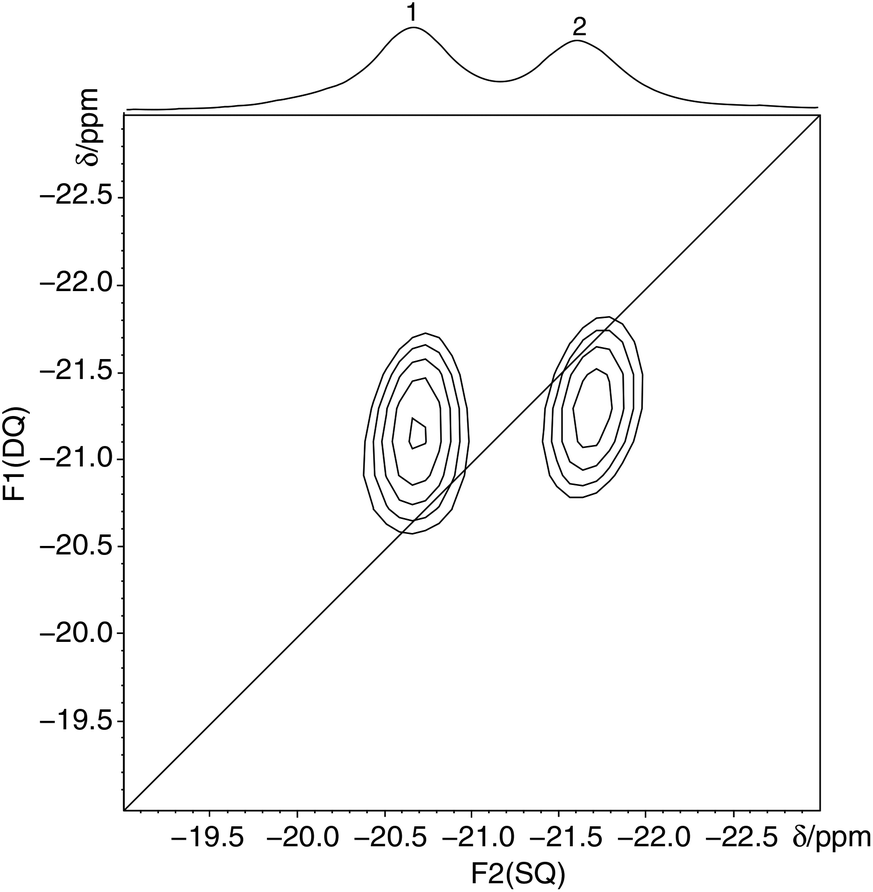 | ||
| Fig. 8 Homonuclear 31P–31P MAS NMR single-quantum double-quantum correlation spectrum of Rb4P4O12 received at a sample spinning frequency of 20 kHz. The 1D projection at the top of the 2D spectrum stems from a separate one-pulse experiment. Correlation peaks are shown via contour plots. The diagonal line refers to the hypothetic peak position of two isochronous spins (autocorrelation diagonal).34,35 | ||
Furthermore the absence of correlation peaks between Q2 and Q0 peaks means that the sample is a heterogeneous mixture of rubidium orthophosphate and rubidium cyclotetraphosphate.
The corresponding heteronuclear 2D 31P{1H} MAS correlation spectrum (Fig. 9) indicates spatial proximity between phosphorus and hydrogen atoms in monoclinic RbH2PO4. A correlation peak can only be observed in the case of 31P–1H vicinity. Absence of correlation peaks for the 31P peaks 1 and 2, suggests that the synthesized cyclotetraphosphate is hydrogen-free, in contrast to the observed correlation peaks for 31P peak 3. This hypothesis was tested with the help of heteronuclear recoupling experiments.
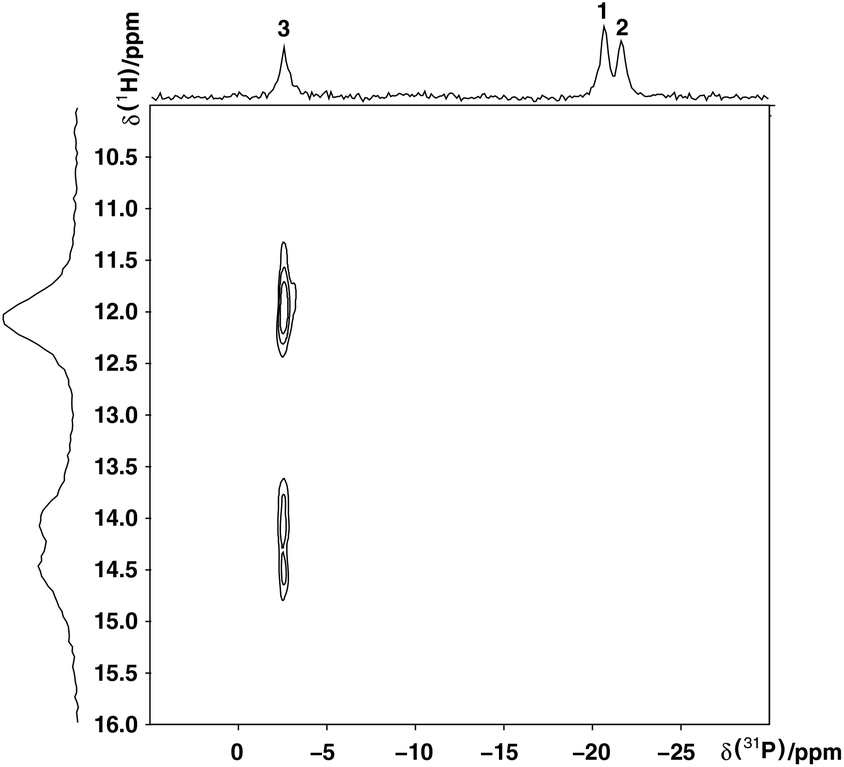 | ||
| Fig. 9 31P{1H} Heteronuclear correlation MAS NMR spectrum of Rb4P4O12 and monoclinic RbH2PO4 measured at a sample spinning frequency of 25 kHz. Correlation peaks are shown via contour plots.34,35 | ||
Fig. 10 shows 31P{1H} C-REDOR curves of the deconvoluted peaks 1 (circles), 2 (crosses) and 3 (squares). This experiment is much more sensitive to 31P–1H proximities than cross-polarization and is used to determine heteronuclear dipole–dipole coupling constants, which are closely related to internuclear distances. In agreement with the conclusions gained from the heteronuclear 31P{1H} MAS NMR spectrum (Fig. 9), peak 3 shows a dephased curve, due to hydrogen's vicinity. As expected, the deconvoluted curves from peaks 1 and 2 display almost no dephasing. We estimate that less than one percent of the Rb+-cations is replaced with H+-cations (Fig. 10). These findings allow us to unambiguously establish the molecular structure and composition of the previously unknown phase Rb4P4O12, which proves that the synthesis via nitrate decomposition in DMSO works also with inorganic cations (Table 1).
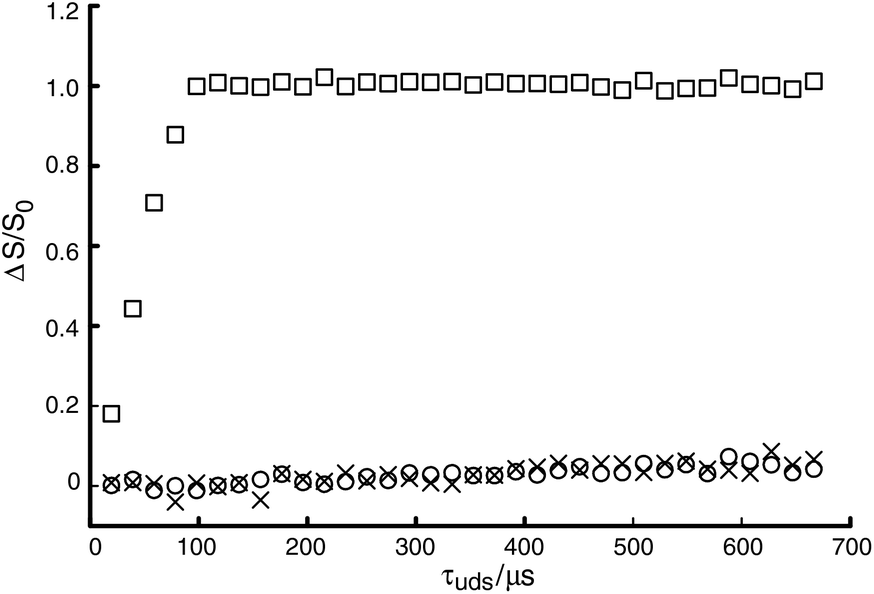 | ||
| Fig. 10 31P{1H} C-REDOR experiment of Rb4P4O12, measured at a spinning frequency of 25 kHz; circles belong to the peak 1, crosses to peak 2 and squares to peak 3 as shown in Fig. 7.37,38 | ||
| δ iso(31P)/ppm | δ iso(15N)/ppm | δ iso(13C)/ppm | |
|---|---|---|---|
| (TMA)2HP3O9 | −20.7; −24.5; −26.5 | −337.0 | −55.1 |
| Rb4P4O12 | −20.6; −21.7 | ||
| RbH2PO450 |
−2.6 | ||
| P4O10 | −45.9 |
| a Estimated standard deviations are given in parentheses. | |
|---|---|
| Crystal structure data | |
| Formula | H25C8P3O9N2 |
| Formula mass/(g mol−1) | 386.213 |
| Crystal system | Orthorhombic |
| Space group | Pcab (no. 61) |
| a/Å | 10.5057 (1) |
| b/Å | 10.9861 (2) |
| c/Å | 30.3397 (4) |
| Cell volume/Å3 | 3501.70 (8) |
| Z | 8 |
| ρ/(g cm−3) calc. from XRD | 1.46518(3) |
| Data collection | |
| Diffractometer | Stoe Stadi P |
| Radiation, monochromator | CuKα1, λ = 154.06 pm, Ge(111) |
| Detector, internal step width [°] | Linear PSD (Δ(2θ) = 5°), 0.01 |
| Temperature/K | 294(2) |
| 2θ range/° | 2.0–66.99 |
| Step width/° | 0.1 |
| Data points | 6500 |
| Number of observed reflections | 681 |
| Structure refinement | |
| Structure refinement method | Fundamental parameter model41 |
| Program used | TOPAS-Academic 4.1 |
| Background function/parameters shifted | Chebyshev/19 |
| Number of atomic parameters | 95 |
| Number of profile and other parameters | 10 |
| Constraints/restraints | 90/0 |
| χ 2 | 1.194 |
| R p | 0.0330 |
| wRp | 0.0448 |
| Atom | x | y | z | B iso (Å2) |
|---|---|---|---|---|
| a Estimated standard deviations are given in parentheses. | ||||
| P1 | 0.4381(6) | 0.6822(6) | 0.5977(2) | 3.6(2) |
| P2 | 0.4308(6) | 0.4835(6) | 0.6601(2) | 3.7(2) |
| P3 | 0.2123(7) | 0.5225(6) | 0.6021(2) | 3.9(2) |
| O1 | 0.5019(10) | 0.5669(11) | 0.6251(3) | 2.6(4) |
| O2 | 0.3110(11) | 0.4376(9) | 0.6298(3) | 2.4(4) |
| O3 | 0.2935(12) | 0.6418(11) | 0.5941(4) | 4.6(4) |
| O4 | 0.5103(11) | 0.3734(11) | 0.6622(3) | 6.1(5) |
| O5 | 0.3841(10) | 0.5485(1) | 0.6985(4) | 3.1(4) |
| O6 | 0.1877(9) | 0.4639(10) | 0.5607(4) | 4.3(4) |
| O7 | 0.1055(12) | 0.5605(9) | 0.6324(3) | 3.8(5) |
| O8 | 0.4928(9) | 0.6930(10) | 0.5558(3) | 3.0(4) |
| O9 | 0.4347(10) | 0.7847(11) | 0.6289(3) | 1.9(4) |
Conclusion
The presented novel synthesis route gives access to unknown crystalline ionic phosphates at low temperatures. The usage of anhydrous solvents allows controlling the amount of water incorporated into the crystal structures. We foresee an impact of this route onto the synthesis of organic (temperature sensitive) phosphates and onto the synthesis of water-free phosphates which are necessary for many battery materials. Furthermore the soft reaction conditions may open a new way to porous phosphates which can't be synthesized from the melt.Acknowledgements
We want to acknowledge Prof. Wolfgang Schnick for financial support, Florian Huber and Demetria Pérez Hernández for practical support, Christian Minke for technical support at the NMR, Dominik Baumann, Phillip Pust and Sebastian Schneider for getting started with TOPAS.Notes and references
- S. V. Levchik and E. D. Weil, J. Fire Sci., 2006, 24, 345–364 CrossRef CAS PubMed.
- V. Brodski, R. Peschar, H. Schenk, A. Brinkmann, E. R. H. van Eck, A. P. M. Kentgens, B. Coussens and A. Braam, J. Phys. Chem. B, 2004, 108, 15069–15076 CrossRef CAS.
- Y. E. Hyung, D. R. Vissers and K. Amine, J. Power Sources, 2003, 119–121, 383–387 CrossRef CAS.
- S. Sebti, M. Zahouily, H. B. Lazrek, J. A. Mayoral and D. J. Macquarrie, Curr. Org. Chem., 2008, 12, 203–232 CrossRef CAS.
- J. D. Bierlein and H. Vanherzeele, J. Opt. Soc. Am. B, 1989, 6, 622–633 CrossRef CAS.
- C. H. Huang, W. R. Liu and T. M. Chen, J. Phys. Chem. C, 2010, 114, 18698–18701 CAS.
- C. K. Lin, Y. Luo, H. You, Z. Quan, J. Zhang, J. Fang and J. Lin, Chem. Mater., 2006, 18, 458–464 CrossRef CAS.
- V. Makhov, N. Y. Kirikova, M. Kirm, J. Krupa, P. Liblik, A. Lushchik, C. Lushchik, E. Negodin and G. Zimmerer, Nucl. Instrum. Methods Phys. Res., Sect. A, 2002, 486, 437–442 CrossRef CAS.
- W.-J. Zhang, Power Sources, 2011, 196, 2962–2970 CrossRef CAS PubMed.
- A. K. Padhi, K. S. Nanjundaswamy and J. B. Goodenough, J. Electrochem. Soc., 1997, 144, 1188–1194 CrossRef CAS PubMed.
- M. Thackeray, Nat. Mater., 2002, 1, 81–82 CrossRef CAS PubMed.
- M. Cretin and P. Fabry, J. Eur. Ceram. Soc., 1999, 19, 2931–2940 CrossRef CAS.
- K. Arbi, M. Tabellout and J. Sanz, Solid State Ionics, 2010, 180, 1613–1619 CrossRef CAS PubMed.
- J. Fu, J. Mater. Sci., 1998, 33, 1549–1553 CrossRef CAS.
- P. Knauth, Solid State Ionics, 2009, 180, 911–916 CrossRef CAS PubMed.
- A. Durif, Crystal Chemistry of Condensed Phosphates, Plenum Press, New York, 1995 Search PubMed.
- A. Boullé, C. R. Hebd. Seances Acad. Sci., 1939, 206, 517–519 Search PubMed.
- E. Soumhi, I. Saadoune and A. Driss, J. Solid State Chem., 2001, 156, 364–369 CrossRef CAS.
- M. Mathew and L. W. Schroeder, Acta Crystallogr., Sect. B: Struct. Crystallogr. Cryst. Chem., 1979, 35, 11–13 CrossRef.
- E. Banks, R. Chianelli and R. Korenstein, Inorg. Chem., 1975, 14, 1634–1639 CrossRef CAS.
- C. Feldmann and H.-O. Jungk, J. Mater. Sci., 2002, 37, 3251–3254 CrossRef CAS.
- C. Feldmann, Adv. Funct. Mater., 2003, 13, 101–107 CrossRef CAS.
- R. A. Laudise, Chem. Eng. News, 1987, 65, 30–43 CAS.
- J. Chen and M. S. Whittingham, Electrochem. Commun., 2006, 8, 855–858 CrossRef CAS PubMed.
- J. C. Jacco, G. M. Loiacono, M. Jaso, G. Mizell and B. Greenberg, J. Cryst. Growth, 1984, 70, 484–488 CrossRef CAS.
- R. Andrieu, R. Diament, A. Durif, M. T. Pouchot and D. Tranqui, C. R. Seances Acad. Sci., Ser. B, 1966, 262, 718–721 Search PubMed.
- I. Nikčević, V. Jokanović, M. Mitrić, Z. Nedić, D. Makovec and D. Uskoković, J. Solid State Chem., 2004, 177, 2565–2574 CrossRef PubMed.
- O. Toprakci, H. A. K. Toprakci, L. Ji and X. Zhang, KONA Powder Part. J., 2010, 28, 50–73 CAS.
- H.-W. Chen, C. S. Oakes, K. Byrappa, R. E. Riman, K. Brown, K. S. TenHuisen and V. F. Janas, Mater. Chem., 2004, 14, 2425–2432 RSC.
- R. K. Harris, E. D. Becker, S. M. Cabral de Menezes, P. Granger, R. E. Hoffman and K. W. Zilm, Pure Appl. Chem., 2008, 80, 59–84 CrossRef CAS.
- M. Hohwy, H. J. Jakobsen, M. Edén, M. H. Levitt and N. C. Nielsen, J. Chem. Phys., 1998, 108, 2686–2694 CrossRef CAS PubMed.
- J. Weber, M. Seemann and J. Schmedt auf der Günne, Solid State Nucl. Magn. Reson., 2012, 43–44, 42–50 CrossRef CAS PubMed.
- G. Metz, X. L. Wu and S. O. Smith, J. Magn. Reson., Ser. A, 1994, 110, 219–227 CrossRef CAS.
- X. Zhao, W. Hoffbauer, J. Schmedt auf der Günne and M. H. Levitt, Solid State Nucl. Magn. Reson., 2004, 26, 57–64 CrossRef CAS PubMed.
- Y. S. Avadhut, J. Weber, E. Hammarberg, C. Feldmann and J. Schmedt auf der Günne, Phys. Chem. Chem. Phys., 2012, 14, 11610–11625 RSC.
- D. J. States, R. A. Haberkorn and D. J. Ruben, J. Magn. Reson., 1982, 48, 286–292 CAS.
- J. C. C. Chan and H. Eckert, J. Chem. Phys., 2001, 115, 6095–6105 CrossRef CAS PubMed.
- J. C. C. Chan, Chem. Phys. Lett., 2001, 335, 289–297 CrossRef CAS.
- A. A. Coelho, TOPAS-Academic, Version 4.1, Coelho Software, Brisbane, 2007 Search PubMed.
- V. Favre-Nicolin and R. Cherny, J. Appl. Crystallogr., 2002, 35, 734 CrossRef CAS.
- J. Bergmann, R. Kleeberg, A. Haase and B. Breidenstein, Mater. Sci. Forum, 2000, 347–349, 303–308 CrossRef CAS.
- SHELXL User Guide, http://shelx.uni-ac-gwdg.de/SHELX/shelxl_user_guide.pdf, link accessed 27.04.2014.
- F. A. Cotton, P. C. W. Leung, W. J. Roth, A. J. Schultz and J. M. Williams, J. Am. Chem. Soc., 1984, 106, 117–120 CrossRef CAS.
- T. Steiner, Angew. Chem., 2002, 114, 50–80 CrossRef.
- K. Onodera, S. Hirano and N. Kashimura, J. Am. Chem. Soc., 1965, 87, 4651–4652 CrossRef CAS.
- T. Glonek, J. R. Van Wazer, M. Mudgett and T. C. Myers, Inorg. Chem., 1972, 11, 567–570 CrossRef CAS.
- J. P. Yesinowski and H. Eckert, J. Am. Chem. Soc., 1987, 109, 6274–6282 CrossRef CAS.
- M. T. Averbouch-Pouchot and A. Durif, Acta Crystallogr., Sect. C: Cryst. Struct. Commun., 1985, 41, 665–667 CrossRef.
- Integrating the five peaks which can be observed in the 31P liquid NMR spectrum dissolved in D2O results in the following values: one peak at 0.84 ppm (Q0) with a peak area of 1.75 a.u. (15.96%), two peaks at −9.7 and −9.89 ppm (Q1) with a combined peak area of 0.32 a.u. (2.91%), one peak at −20.79 ppm (Q2) with a peak area of 0.11 a.u. (1%) and one peak at −21.55 ppm (Q2) with a peak area of 8.78 a.u. (80.1%).
- M. Vijayakumar, A. Bain and G. Goward, J. Phys. Chem. C, 2009, 113, 17950–17957 CAS.
Footnote |
| † Electronic supplementary information (ESI) available. See DOI: 10.1039/c4dt00544a |
| This journal is © The Royal Society of Chemistry 2014 |