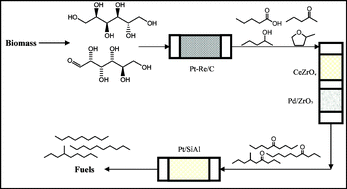
Mono-functional intermediates produced by catalytic conversion of sugars and polyols over Pt–Re/C catalysts (consisting of alcohols, ketones, carboxylic acids, and heterocyclic compounds) can be upgraded to fuel-grade compounds using two catalytic reactors operated in a cascade mode. The first reactor achieves C–C coupling of mono-functional intermediates using a dual-bed catalyst system, where the upstream catalyst bed (Ce1Zr1Ox) is employed to carry out ketonization of carboxylic acids, and the downstream catalyst bed (Pd/ZrO2) is used to achieve aldol condensation/hydrogenation of alcohols and ketones. This second bed is not significantly inhibited by CO2 and H2O produced during ketonization. The high molecular weight ketones produced by C–C coupling reactions in the dual-bed catalyst system are subsequently converted to alkanes by hydrodeoxygenation (i.e., dehydration/hydrogenation) over a Pt/SiO2–Al2O3 catalyst. Using the aforementioned approach, an aqueous feed containing 60 wt% sorbitol was converted to a liquid stream of alkanes, 53% of which consisted of C7+ alkanes with minimal branching, desirable for Diesel fuel.