
Hot off the Press
Hot off the Press highlights recently published work for the benefit of our readers. Our contributors this month have focused on the RNA world and gene regulation. New contributors are always welcome. If you are interested please contact molbiosyst@rsc.org for more information, we’d like to hear from you.
Key to the RNA world
Reviewed by: Vitor B. Pinheiro, MRC-LMB, Cambridge, UK
It is widely accepted that life is unlikely to have arisen in its present form but that there must have been intermediate stages between the prebiotic synthesis of biomolecules and the current life based on proteins and DNA/RNA. An attractive hypothesis, also called the “RNA world”, proposes that early life was entirely based on RNA, both as a store of genetic information and as enzymes. By implication, nucleotide cofactors, self-splicing introns and ribonucleoproteins (e.g. ribosome and RNase P) are relics from that world. However, while in vitro evolution has all but confirmed the ability of RNA to serve as cellular receptors as well as catalysts, RNA-catalysed replication of RNA has proved difficult. Such an RNA replicase ribozyme would be key to the RNA world hypothesis’ plausibility and it would constitute a fascinating object of study in itself.
While no RNA replicase ribozyme has been, as yet, identified in living organisms, significant steps have been achieved in vitro. An essential mechanistic step in polymerases is the (bond-forming) ligase function – the ability to efficiently catalyse the 3´ hydroxyl attack on an activated 5´-phosphate to form a 3´,5´-phosphodiester bond. The first such ligase (class I ligase) was successfully isolated from a random sequence library [1] and has been subsequently used as the basis to evolve cross-replicating ligases as well as ribozymes with polymerase activity.
The most significant achievement based on the class I ligase prior to Zaher’s and Unrau’s work [2], has been the Round-18 ribozyme isolated by Johnston and colleagues [3]. Multiple rounds of in vitro selection from a library containing an additional 76-random-nucleotide domain 3´ of the ligase core as well as some degree of variation in non-essential ligase loops identified a RNA polymerase capable of successive addition of 14 nucleotides within 24 hours in certain templates with an approximate 96.7% fidelity per residue.
Zaher and Unrau [2], starting from the Round-18 RNA polymerase ribozyme, introduced 5´insertions (up to ten nucleotides) as well as further diversity in the ligase and 3´accessory domains. They have successfully isolated a more processive enzyme, capable of up to 20 incorporations within 24 hours. While this sets a new record for an RNA polymerase ribozyme, Zaher’s and Urau’s greater achievement has been in improving the selection strategy, i.e. coupling in vitro transcription of the ribozyme with in vitro compartmentalization. In doing so, Zaher and Unrau increase the ribozyme’s local concentration and minimise cross-selection by isolating genotypes in individual compartments. Increased ribozyme concentration is expected to lead to higher activity because although Round-18 ribozyme has a kcat (catalytic rate constant) higher than 1 min−1, its Km (substrate affinity) still lags above 1 mM; this remains one of the key limitations of the class-I-ligase-based polymerase ribozymes.
Their initial selection strategy, of ribozyme capture through activity-dependent hybridization, highlights the dangers of in vitro selection parasites: incorporation of multiple repeats biasing the selected population away from the desired activity. An alternative selection strategy was implemented based on modified nucleotide incorporation (4-thioUTP) and its lower mobility in thiol-N-acryloyl-aminophenyl-mercuric acid (APM) modified PAGE. Selection with modified bases, as carried out by Zaher and Unrau, relies on a number of premises addressed by the authors: the modified base must be a substrate for both the T7 RNA polymerase synthesising the ribozyme in vitro as well as for the ribozyme itself; incorporation of the modified base (in this case 4-thioUTP) must not compromise the activity of the resulting ribozyme; and the T7 RNA polymerase does not contribute to false positives in selection.
Interestingly, it has been reported that 4-thioUTP shows increased stability for a U•G wobble and a decreased stability for the U•A pairing [4]. This raises two questions regarding the selection of polymerase ribozymes with that modified base: the contribution of potential wobbles to ribozyme function and their contribution to improved fidelity and processivity selection. Zaher and Unrau used high levels of 4-thioUTP substitution (1:4 4-thioUTP:UTP) in their reactions and consequently, most of the synthesised ribozyme population would be expected to have multiple 4-thioUTP incorporations (assuming 4-thioUTP incorporation rates by T7 RNA polymerase is comparable to its natural substrate), which the authors did not investigate further. In addition, wobble pairs during selection would be expected to lead to helix distortions that may not favour high fidelity or processive ribozyme variants. This may be an issue as further gains in fidelity and processivity are sought.
Zaher and Unrau show that B6.61 ribozyme is more processive and of higher fidelity than the original Round-18; two key features that can account for the improvements observed. An unfortunate limitation of Zaher and Unrau’s work is the choice for the longer template used to show at least 20-nucleotide incorporations: By introducing a template harbouring a long homopolymeric tract, template-independent terminal transferase activity cannot be discarded. Still, the selection strategy developed by the authors is powerful and coupled to high-throughput screening, it should allow further progress in searching for an RNA polymerase ribozyme capable of even longer extensions and ultimately processive synthesis.
The currently available RNA polymerase ribozymes have two domains: one harbouring the ligase activity and an accessory domain that is essential for the processive polymerase activity. DNA polymerases have three domains directly involved in function, named after their apparent right-hand-like structure: palm, finger and thumb domains. The palm domain harbours the residues associated with catalysis, the finger domain binds incoming nucleotides and the single-stranded template, and the protein thumb clamps double-stranded DNA and is involved in the enzyme’s processivity and fidelity. By analogy, it is possible that the current ribozymes are a domain short of their full potential.
A further domain capable of increasing the ribozyme affinity to primer-template complexes would address one of the key limitations of polymerases derived from the original class I ligase [1]. However, further lengthening of the ribozyme sequence to identify a “ribo-thumb” creates novel challenges, particularly regarding the increased complexity in the molecule’s folding: the limited vocabulary (4 natural bases) and the large contribution of Watson–Crick base pairing to ribozyme structure greatly limit the available sequence space that can be explored, as lengthening of the ribozyme increases the probability of multiple stable conformations which need not be functional.
1. Bartel, D.P. and J.W. Szostak, Isolation of new ribozymes from a large pool of random sequences [see comment], Science, 1993, 261(5127), 1411–8.
2. Zaher, H.S. and P.J. Unrau, Selection of an improved RNA polymerase ribozyme with superior extension and fidelity, RNA, 2007, 13(7), 1017–26.
3. Johnston, W.K., et al., RNA-catalyzed RNA polymerization: accurate and general RNA-templated primer extension, Science, 2001, 292(5520), 1319–25.
4. Testa, S.M., et al., Thermodynamics of RNA-RNA duplexes with 2- or 4-thiouridines: implications for antisense design and targeting a group I intron, Biochemistry, 1999, 38(50), 16655–62.
Specific gene regulation
Reviewed by: Yuan Luo, Department of Internal Medicine, UT Southwestern Medical Center.
Regulating endogenous genes using chemical or biological methods has been an active area of research, due to the fact that those methods not only are tools for studying biological functions of target genes but also may lead to therapeutic solutions to human diseases. For several years, Peter B. Dervan and his colleagues have explored the applicability of sequence-specific DNA-binding hairpin polyamides as gene silencing agents that function by interfering with particular protein–DNA interactions. In one such study, they applied this approach to regulate hypoxia-induced Vascular Endothelial Growth Factor (VEGF) expression through inhibiting the interaction between hypoxia inducible factor (HIF-1) and hypoxia response elements (HRE) in the VEGF promoter using a designed hairpin polyamide.
This paper extends that work in an important way. The problem that they tackled in this latest work is to regulate a subset of genes in the HIF-1 signaling pathway through inhibiting the HIF-1-HRE interaction with a hairpin polyamide targeted at a specific sequence found in the HREs of only some of the HREs of HIF-1-responsive genes. This has potential practical significance because under hypoxic conditions, HIF-1 activates the transcription of many genes and the inhibiton of all of these events is not clinically desirable.
The authors used an Affrymetrix Human Genome U133 Plus 2.0 Arrays and clustering analysis to compare the global effects on U251 cells of the aforementioned polyamide, a siRNA targeted at HIF-1α, and echinomycin – a natural product that binds a shorter specific sequence in HRE.
The most significant result is that the polyamide only down-regulated a subset of the transcripts directly induced by HIF-1 while the siRNA and echinomycin each inhibited all of the transcripts. Gratifyingly, the subset of genes affected by the polyamide contains the predicted polyamide binding site, 5′-ATACGT-3′, in the HRE.
Another interesting result is that a polyamide targeted at a flanking sequence 5′ to the VEGF HRE also down-regulated gene expression. This implies that polyamides binding at flanking sequences of the protein-DNA interacting site may also be effective in inhibiting that interaction.
Overall, this publication reported the first comparison of three chemical and biological approaches of regulating endogenous gene expression. It provided evidence to support that it is possible to selectively regulate a subset of the HIF-1 signaling pathway by a polyamide or a combination of polyamides targeted at particular sequences in HRE or a flanking sequence 5′ to HRE, thus laid the foundation for future research that may lead to important treatment of human diseases.
Nicholas G. Nickols, Claire S. Jacobs, Michelle E. Farkas, and Peter B. Dervan, Modulating Hypoxia-Inducible Transcription by Disrupting the HIF-1–DNA Interface, ACS Chem. Biol., 2007, 2(8), 561–571
Hot off the RSC Press
Dyeing to get into cells
Reviewed by: Elinor Richards, Royal Society of Chemistry, Cambridge, UK.
Dye-loaded microcapsules that change colour with pH can be used as indicator paper for cells.
Wolfgang Parak, from the Ludwig Maximilians University of Munich, and his colleagues have embedded a pH-sensitive dye in a polymer capsule that can transport the dye into living cells. A colour change in the dye's fluorescence indicates when it has entered a cell and this can be followed by fluorescence microscopy. The change depends on pH: capsules in the alkaline medium outside cells emit in red, capsules ingested by the cells emit in green due to the acidic pH.
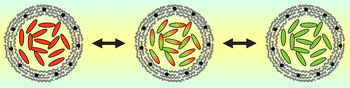
According to the German and UK researchers, the capsules could be used in cell analysis, acting as artificial cell components. ‘For any kind of cellular diagnostics it would be helpful to have a non-invasive reporter inside cells that constantly measures the concentration of important molecules and sends this information to a detector outside the cell,' said Parak. ‘This is similar to the idea of having a miniature diagnosis submarine inside the body, as has been featured in some science fiction movies.'
Parak says that the capsules need many modifications before they can be used for in vivo studies. Eventually though, he envisions them being used to develop a system that detects concentrations of several important molecules inside cells in real time and non-invasively. ‘This could be an important tool for diagnostics,' he said.
Oliver Kreft, Almudena Muñoz Javier, Gleb B. Sukhorukov and Wolfgang J. Parak, J. Mater. Chem., 2007 DOI: 10.1039/b705419j.
The measure of cell immortality
Reviewed by: Freya Mearns, Royal Society of Chemistry, Cambridge, UK.
US scientists are catching tiny amounts of DNA in a drive to develop a test for enzyme activity linked to tumour growth.
Jaromir Ruzicka and co-workers from the University of Washington in Seattle, US, are looking to develop an automated assay for telomerase activity, which occurs in 90 per cent of human tumours. In what they call ‘an essential step toward the realisation of this goal,' they have developed an assay that can detect as little as 111pg of DNA without having to amplify it.
Telomerase is an enzyme that acts on telomeres, TTAGGG nucleotide repeats at the ends of chromosomes. Each time DNA is copied before cell division, telomeres shorten because polymerases cannot copy all the way to the ends of the DNA strands. Once the telomeres reach a certain length, cells are signalled to stop dividing. But, cancer cells are essentially immortal because telomerase adds back TTAGGG repeats after each cell division, meaning that no stop signal is ever sent. The enzyme is therefore a potential target for antitumour therapies and so practical tests for its activity are needed.

One way to test for telomerase activity is to monitor elongation of short DNA primers. The telomere repeat amplification protocol (TRAP) assay is currently the most widespread assay that does this, but it relies on the polymerase chain reaction (PCR) to amplify the DNA before detection. This makes it susceptible to contamination due to prolonged sample handling and false negative results due to PCR failure.
Ruzicka's assay captures biotin-bound DNA on polysaccharide beads coated in the protein streptavidin, taking advantage of biotin's high affinity for the protein. Using the beads allowed the team to pre-concentrate the DNA for very sensitive detection using OliGreen - a compound that fluoresces upon complexing DNA.
Ruzicka explained that, by combining the bead method with instrumentation already developed by the team, their new DNA assay is not only sensitive, but can also be automated, bringing them a step closer to a practical, non-PCR alternative to the TRAP assay.
Michael Decuir, Ilkka Lähdesmäki, Andrea D. Carroll and Jaromir Ruzicka, Analyst, 2007, 132, 818
| This journal is © The Royal Society of Chemistry 2007 |