


 PLATFORM UPDATE:


Pyrolysis temperature dependence of Pb2+ removal by sewage sludge biochar: characteristic evaluation and adsorption performance
 *ac
*ac
Abstract
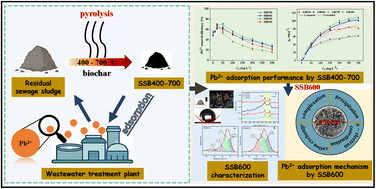
Converting sewage sludge into biochar (SSB) offers a promising path for waste reduction and pollution mitigation. This study systematically investigated the effect of pyrolysis temperature (400–700 °C) on the physicochemical properties of SSB and its Pb2+ adsorption performance. As temperature increased, carbonization and aromaticity of SSB improved progressively. The biochar produced at 600 °C (SSB600) showed optimal characteristics—high hydrophobicity, large surface area, well-developed pores, and abundant functional groups—achieving a maximum Pb2+ adsorption capacity of 131 ± 10.2 mg g−1. The Langmuir model best fit the adsorption isotherm data, while kinetic analysis using the Weber–Morris model indicated a multi-stage process where intraparticle diffusion was significant but not the sole rate-limiting step. SSB600 exhibited strong adsorption performance over a wide pH range (2–6) and in the presence of common competing cations (Na+ and NO3−), demonstrating suitability for complex water environments. Mechanism analysis revealed that Pb2+ removal was driven by multiple processes: complexation (39.2%), cation exchange (38.3%), π–electron interactions (19.2%), and precipitation (3.30%). Notably, SSB600 retained over 79% of its initial capacity after eight adsorption–desorption cycles, showing excellent regenerability. It also achieved high Pb2+ removal (>50%) at environmentally relevant concentrations (e.g., 0.5 mg L−1), with environmental safety confirmed by standardized leaching tests. This work provides a pyrolysis temperature-guided synthesis strategy, fundamental mechanistic insight, and a practical viability assessment for sludge-based adsorbents. Future work should extend to pilot-scale column tests and resource recovery, supported by life-cycle analysis.
 Please wait while we load your content...


