


 PLATFORM UPDATE:


Co-delivery of synaptogenic and angiogenic nanoparticles in MAP scaffolds enhances post-stroke synapse formation

Abstract
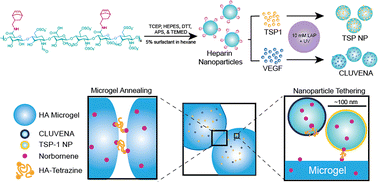
Ischemic stroke remains one of the leading causes of long-term disability worldwide, depriving patients of their quality of life and physical independence. The root cause of this loss of motor movement stems from the disruption of neuronal connections in the infarct site. Limited spontaneous neural re-wiring post-stroke does provide limited functional recovery, but more than two thirds of ischemic stroke patients suffer from long-term disability for the remainder of their lives. Here, we explore the co-delivery of synaptogenic proteins with an angiogenic biomaterial to promote synapse formation in a mouse model of ischemic stroke. The angiogenic biomaterial is based on microporous annealed particle (MAP) scaffolds containing previously reported pro-angiogenic clustered vascular endothelial growth factor (CLUVENA) heparin nanoparticles. To this material, pro-synaptogenic protein thrombospondin-1 (TSP-1) was added either in soluble or clustered nanoparticle form. Co-delivery of TSP-1 with CLUVENA within MAP scaffolds led to enhanced synapse formation in and around the infarct, despite a reduction in axonal sprouting when compared to CLUVENA delivery alone. TSP-1 treatment also resulted in increased glial scar thickness and astrocytic coverage in the peri-infarct region, potentially contributing to limited axonal integration. Overall, these findings highlight the capacity of TSP-1 to modulate the synaptic and glial landscape post-stroke.
- This article is part of the themed collections: Journal of Materials Chemistry B HOT Papers and In honour of Shelly Sakiyama-Elbert’s 50th birthday: Shaping biomaterials in neuroengineering
 Please wait while we load your content...


