


 PLATFORM UPDATE:


Boosting the reactivity of crystalline cellulose by a cold base treatment for catalytic hydrolysis with a carbon-based catalyst

Abstract
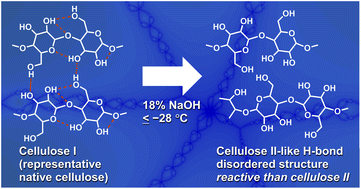
Hydrolysis of cellulose to glucose is an essential step in the second-generation biorefinery. However, the robust structure of cellulose I, the predominant crystalline allomorph in nature, has hampered this reaction. Increasing the reactivity of cellulose in an efficient manner alleviates this issue. This work demonstrates that treating cellulose I with an 18 wt% NaOH aqueous solution at low temperatures improves its reactivity. The treatment below −28 °C, liquidus temperature of the solution, elevated the yield of glucose 2.2 times in its hydrolysis reaction with a carbon-based catalyst developed for crystalline cellulose hydrolysis. Characterization of the cellulose samples has indicated that the NaOH treatment not only transforms the crystalline form into cellulose II but also, particularly at low temperatures, disrupts the hydrogen-bonding network of cellulose without affecting the macro-scale order of cellulose molecules in the cellulose II structure. This is a facile method to increase the reactivity of cellulose.
 Please wait while we load your content...


