


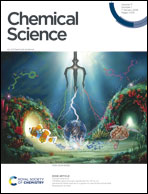
Hydrogen-bonding environment suppresses thermally activated delayed fluorescence
 *a
*a
Abstract
Thermally activated delayed fluorescence (TADF) is a promising innovation in display technology where the nonemissive triplet excitons can be thermally converted back into emissive singlet excitons through reverse intersystem crossing. Organic TADF emitters often feature donor–acceptor (D–A) architectures, whose conformations critically influence emission dynamics and efficiency. Introducing intramolecular hydrogen-bonding between D and A moieties is an emerging strategy to rigidify the structure and improve TADF emission. However the influence of environmental factors on such hydrogen-bonding interactions remains unclear. Here we investigate the impact of the hydrogen-bonding medium on TADF emission using steady-state and time-resolved emission spectroscopy. Protic solvents universally quench TADF emission, correlating with reduced prompt emission lifetimes, while delayed lifetimes remain largely unchanged. A clear kinetic isotope effect unequivocally confirms that solvent protons directly participate in hydrogen-bonding interactions with the photoexcited emitter, thereby perturbing its excited-state energetics. Ultrafast spectroscopy reveals a picosecond D-to-A intramolecular charge transfer event that slows in viscous media indicating a D–A torsional relaxation. The relaxation time further slows in a protic environment highlighting the role of solvent-emitter hydrogen-bonding interactions resulting in unfavourable excited state D–A conformations and diminished emission. These findings underscore the importance of microenvironment control in designing efficient TADF emitters for display applications and photocatalysis.

- This article is part of the themed collection: 2026 Chemical Science Covers
 Please wait while we load your content...


