


 PLATFORM UPDATE:


Protein hydrolysate derived from Stichopus horrens with antibacterial activity: preparation, characterization, and antibacterial mechanism
 *a
*a
Abstract
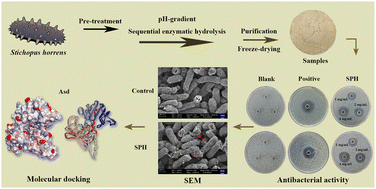
Antimicrobial peptides from marine organisms are potential alternatives to small-molecule antibiotics. Sea cucumber protein hydrolysate (SPH) from Stichopus horrens was prepared through a physico-biological method, achieving a protein peptide content of 82.9%. Structural characterization by Ultraviolet, Fourier-transform infrared, and circular dichroism spectroscopies, and X-ray diffraction, revealed diverse bioactive peptides with α-helix (8.8%), β-sheet (32.1%), β-turn (23.9%), and random coil (35.1%) conformations. Inhibition zone assays demonstrated significant antibacterial activity against both Gram-positive and Gram-negative bacteria. Scanning electron microscopy indicated an antibacterial mechanism of SPH that involves disrupting bacterial cell membrane integrity, leading to content leakage and cell lysis. Three novel antimicrobial peptide sequences (QFLRVSGPLLKYPVVGPQ, ALGLPKCGPPLGPQ, and ALGLKCPPGPLGPQ) were identified by LC-MS/MS, and molecular docking suggested the potential interactions between antimicrobial peptides with the outer membrane protein BamA and the cytosolic protein Asd, providing supportive insights into possible membrane-associated and intracellular antibacterial mechanisms. This study provides a basis for developing novel sea cucumber-derived antimicrobial peptides with food and pharmaceutical applications.
 Please wait while we load your content...


