


 PLATFORM UPDATE:


An injectable hyaluronic acid hydrogel integrating Fe(iii)-coordination and polymyxin B grafts for accelerated healing of infected diabetic wounds
 *cd
*cd
Abstract
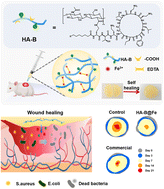
Diabetic wounds are a serious and increasingly prevalent complication in patients with diabetes, characterized by impaired skin regeneration. A major challenge for effective healing is recurrent bacterial infection, which often resists conventional treatment strategies. In this study, we grafted polymyxin B onto hyaluronic acid and employed Fe3+–EDTA as a cross-linking agent to fabricate HA-B@Fe hydrogels via ionic interactions. Based on the reversible and dynamic coordination between Fe3+ ions and the carboxyl groups of the hyaluronic acid, the resulting hydrogels exhibited shear-thinning behavior and excellent injectability. Based on the combined effects of polymyxin B and Fe3+, the HA-B@Fe hydrogel exhibited potent antimicrobial activity against a broad spectrum of bacteria, achieving >99% bactericidal rates against Escherichia coli (E. coli) and >94% against Staphylococcus aureus (S. aureus). In addition, the HA-B@Fe hydrogel demonstrated great biocompatibility, and showed significant therapeutic efficacy in a diabetic mouse wound model. The mice treated with HA-B@Fe showed a marked reduction in wound size (down to 19%), compared to a residual wound size of 32% in group treated with commercial dressings at day 7. Histopathological analysis further confirmed that HA-B@Fe treatment promoted epidermal regeneration and collagen fiber deposition, suggesting its potential as a promiseing strategy for the clinical treatment of diabetic wounds.
 Please wait while we load your content...


